
News
Shadow Minister of Health Addresses Pollution

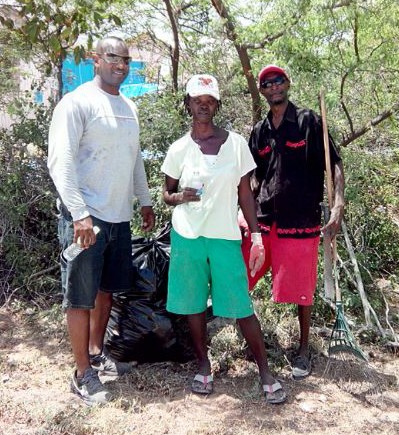

 Grand Turk, 16 Oct 2014 – Our islands are uniquely beautiful by nature. Therefore, the onus is on us to preserve it for future generations. Consider this: the average household produces one to two 19 gallon bags of rubbish in one week. Now consider the amount of rubbish that is produced on your street…then your district…then your island…then our country. Imagine most of that rubbish being scattered about your island. You may live on an island that has a schedule for garbage collection; where residents keep their properties and their surroundings tidy; and there are no uncaring persons polluting the environment with garbage and refuse. Then you can claim our slogan, “Beautiful by nature.”
As Shadow Minister for Health and the elected member for Grand Turk South and Salt Cay, I am hereby appealing to the residents on our islands to join me in my campaign to keep our islands clean. We can quantify the advantages of a clean community. The benefits run the gamut from an economic stand point to a healthy environment.
We rely on tourists who come to our shores. Do we want them to take one look and decide never to return? We can play our part by practicing healthy, cleanly habits. Let us adopt these two slogans and make them our mantras:
Put it in the can, man;
Keep our islands clean, green and pristine.
Litterers and dumpers are not welcomed in our beautiful by nature islands. Each resident can make a difference by adhering to practices that enhance our beauty rather than detract from it. We may not see road signs that warn of fines for littering, but that should not deter us from becoming civic minded, nonetheless.
“Out of all those hundreds and hundreds of islands lying in the seas and oceans of the earth, the Turks & Caicos are our islands. Grand Turk is my little one, so we just got to be aware of them and take care of them.” This is my personal creed.
I implore those among us who do not care about our islands and the environment to desist from destroying their beauty. We must all do our part, especially the Government, who I see as turning a blind eye to this situation of pollution within our islands.
On any given Cruise ship day on Grand Turk there are thousands persons on the streets, moving around, sightseeing, taking pictures, and visiting places of interest. What are they seeing and photographing? Should they see the garbage accumulating on a vacant lot opposite the old police station, near the Museum? Is this the image that the Minister of Tourism wishes to sell as the lasting image of Grand Turk? Is this what the Minister of Environment considers to be “Beautiful by Nature”? Is this how the Minister of Government Support Services lend support to the environment? And is this what the Minister of Health considers to be promoting a healthy life style? Does this Government really care about any of this? From my observations, it does not look so. I, along with other private citizens and groups, have been assisting in cleaning our island. However, we need the Government to do its part. My advice to the Government:
Provide adequate resources to the departments responsible for garbage collection and cleaning;
Promote caring for the environment;
Enforce laws for protecting our “Beautiful by Nature Country”, please.
End.
Hon Edwin Astwood
Shadow Minister of Health
MP for Grand Turk South and Salt Cay


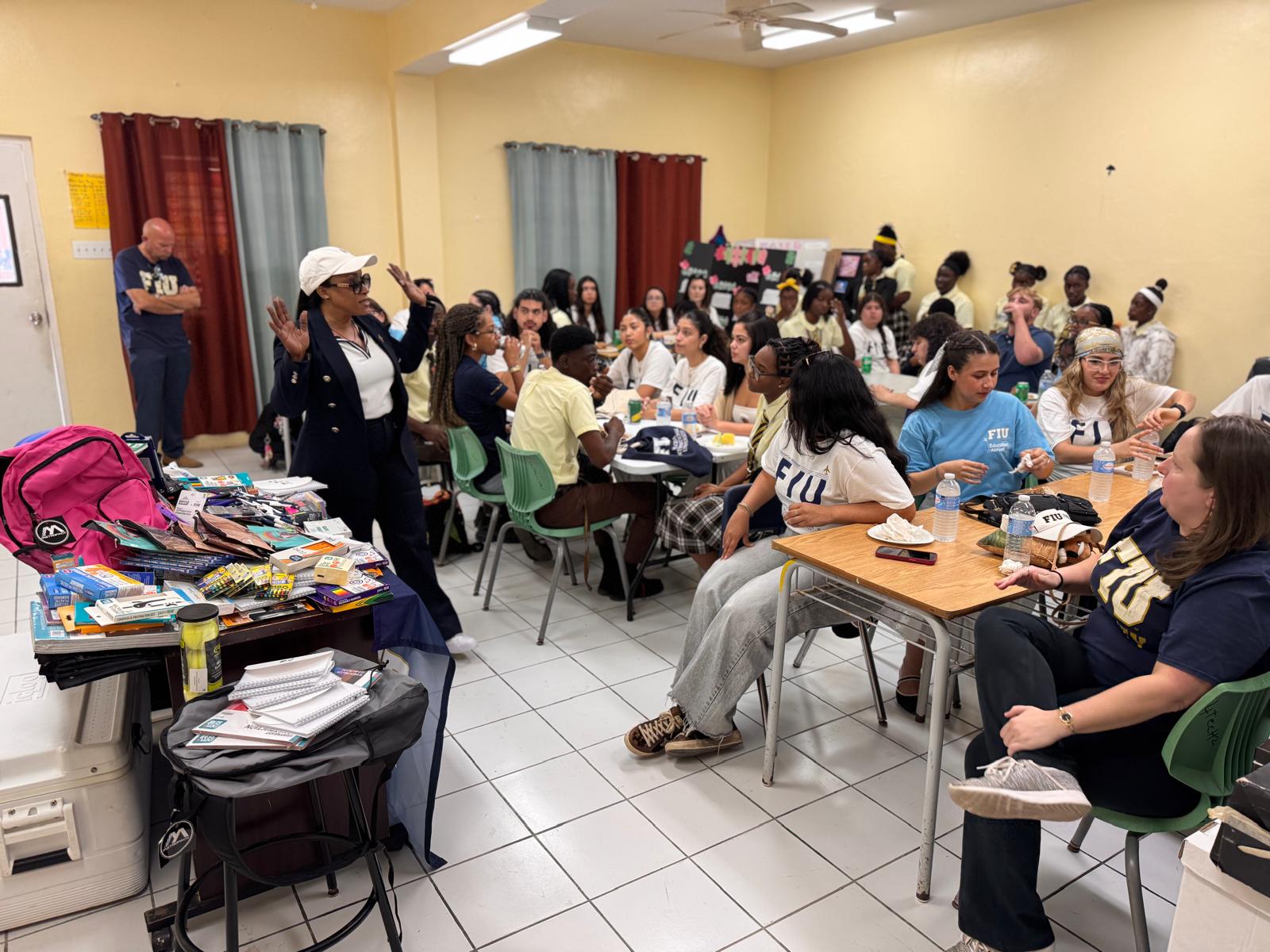
PROVIDENCIALES, Turks & Caicos Islands: — Beaches Turks and Caicos and Florida International University’s (FIU) Chaplin School of Hospitality & Tourism Management have joined forces to inspire the next generation of hospitality leaders in the Turks and Caicos Islands, partnering with Clement Howell High School and Oseta Jolly Primary School during FIU’s recent education abroad visit.
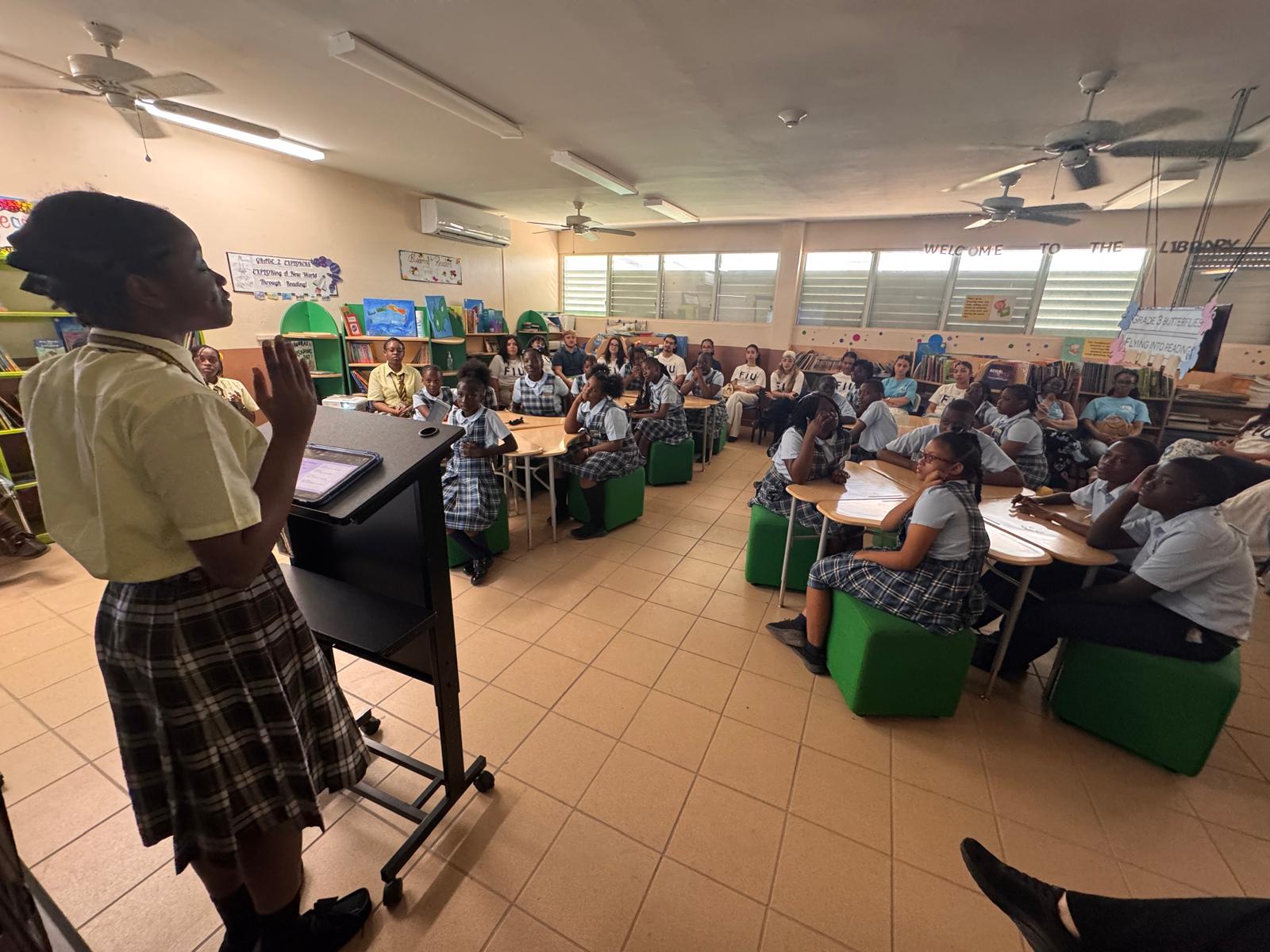
BTC & FIU training with Clement Howell High and Oseta Jolly Primary student leaders
As part of FIU’s Education Abroad programme, a delegation from the Chaplin School of Hospitality & Tourism Management travelled to Providenciales to engage students in interactive sessions on careers in tourism, leadership and customer service. Hosted by Beaches Turks and Caicos, the programme blended classroom-style presentations with on-resort exposure, underscoring the resort’s long-standing commitment to youth development and training across the islands. FIU, consistently ranked among the top hospitality management schools in the United States, used the visit to highlight international study opportunities and the global reach of a hospitality degree.
Beaches Turks and Caicos, a flagship all-inclusive family resort on Providenciales, has developed a reputation for structured training and mentorship, frequently opening its doors to local students for hands-on learning and industry immersion. This new collaboration with FIU’s Chaplin School builds on that foundation by linking local classrooms directly to a world-recognised university programme, giving students early exposure to academic pathways and professional standards in tourism.
At Clement Howell High School, FIU faculty, students and Beaches representatives met with aspiring hospitality professionals in a series of workshops and talks. Sessions focused on leadership, guest experience, innovation in tourism and the importance of regulatory standards and sustainable practices for a destination whose economy is anchored in travel and hospitality. Students also heard about internship pipelines, scholarship options and the practical steps required to transition from secondary school to university-level studies in hospitality management.
FIU alumna and Deputy Governor of the Turks and Caicos Islands, Anya Williams, delivered an energizing address, encouraging students to see themselves as future global leaders. “To build strong networks with the visiting FIU team, we have to build relationships now which will open doors to study overseas as well as mentorship and career opportunities.” Williams also highlighted how her own journey, including her time at FIU, helped shape her path to national leadership and underscored the value of combining academic excellence with service to country.
The delegation extended its outreach to Oseta Jolly Primary School. There, Clement Howell, FIU and Beaches volunteers tailored activities for younger students, introducing them to basic leadership skills. The sessions reinforced values already central to the school—respect, cleanliness and excellence.
Minister of Education, Youth, Sports and Social Services, Rachel Taylor, praised the collaboration, noting that strategic partnerships with world-class institutions are vital to aligning the national education agenda with the realities of a tourism-driven economy. She commended Beaches Turks and Caicos and FIU for investing time and resources in local students and said she looks forward to continued collaboration that will expand access to training, scholarships and international exposure for young Turks and Caicos Islanders. Taylor also emphasized that initiatives like this complement government-backed hospitality training efforts already underway with industry partners across the islands.
General Manager of Beaches Turks and Caicos, Deryk Meany, reaffirmed the resort’s commitment to developing local talent and supporting the wider community. He noted that the success of the Turks and Caicos tourism product depends on a strong developmental programme of well-trained, passionate professionals who understand both global standards and local culture.

The Bahamas, March 30, 2026 – The voice of a proud mother captured the spirit of a nation Monday night, as Bendra Rolle shared heartfelt reflections on the overwhelming Bahamian support for her son, VJ Edgecombe, during the Philadelphia 76ers matchup against the Miami Heat in Miami.
“The patriotic support and scenery at my son, VJ Edgecombe’s NBA game… was overwhelming,” Rolle said in a statement issued following the game. “The arena in Miami was lit. Bimini and the Bahamas showed up and showed out.”
Her words come amid what has already been widely described as a remarkable showing of national pride, with Bahamians traveling in large numbers to South Florida to witness the young guard’s continued rise. For Rolle, however, the moment extended far beyond basketball.
“Beyond VJ’s basketball talents, I’m so moved by his magnetic personality and personal journey to inspire and excite an entire nation—our beloved Bahamas,” she said. “I thank God for VJ’s humility and for his hunger for greatness. He never forgets how far God has brought us.”
While the Sixers did not secure the win on the night, Edgecombe delivered a solid individual performance, finishing with 13 points and five assists. He made an early impact on the game, showing confidence and poise before foul trouble disrupted his rhythm, but still managed to leave his mark in meaningful minutes.
The game itself evolved into a cultural showcase, with Bahamian flags waving throughout the arena and chants ringing out in support of Edgecombe. Much of that presence was bolstered by a coordinated travel push from Bahamasair, which helped facilitate fan travel and added to the electric atmosphere in Miami.
Rolle said the emotional weight of the moment was deeply felt by her family, as they witnessed firsthand the unity and pride of the Bahamian people.
“Thanks and love for the tears and overwhelming joy on Monday, Bahamas,” she expressed. “The Bahamian flags were love, loud, and proud. On my own behalf, VJ, and the entire family, I am ever grateful for the indescribable experience.”
Her closing words underscored what many have described as the true victory of the night—not the final score, but the powerful display of national pride and support surrounding one of The Bahamas’ rising stars.
News
50 Years of Ministerial Government: Cabinet Moves to Mark Milestone Rooted in 1976 Constitution

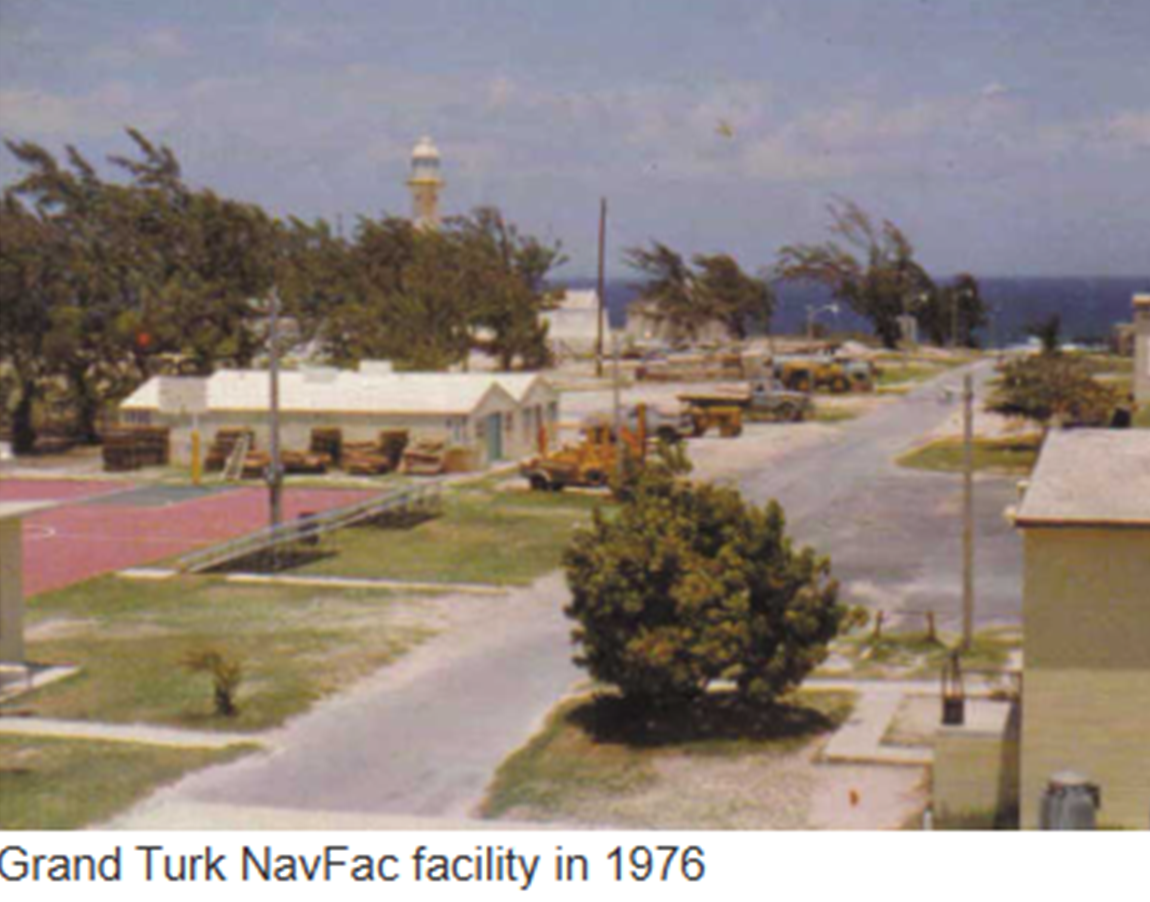
Turks and Caicos, March 30, 2026 – The Turks and Caicos Islands is preparing to mark a major political milestone, with Cabinet approving the establishment of a National Commemorative Committee to celebrate 50 years of ministerial government, a system first introduced under the 1976 Constitution.
The decision, confirmed in the February 10 Post Cabinet statement, signals a year of reflection on a governance model that fundamentally reshaped how the country is run — shifting from direct colonial administration toward locally led political leadership.
That shift was formalized in the Turks and Caicos Islands Constitution Order 1976, which laid the legal foundation for ministerial government and introduced a structured Executive and Legislative system.
At its core, the 1976 Constitution established an Executive Council, bringing together:
- a Governor,
- a Chief Minister elected by members of the Legislative Council,
- and Ministers appointed to assist in governing the Islands.
A Very Different Government Back Then
If today’s Cabinet feels crowded, the 1976 version would have seemed almost unbelievable. There were just three Ministers serving alongside the Chief Minister — a tight, compact leadership team responsible for the affairs of an entire country. No sprawling list of ministries, no long roster of portfolios — just a handful of individuals carrying the weight of governance.
Becoming a Minister wasn’t a direct vote of the people either. You first had to win a seat in the Legislative Council, and from there, the Chief Minister would recommend who should serve. The Governor then made the appointments. In other words, political trust and alignment mattered just as much as public support — and ultimate authority still rested above the local leadership.
And as for job security? There wasn’t much of it. Ministers served without fixed terms and could be removed if they lost their seat, resigned, or if the Governor revoked their appointment. Even the Chief Minister could be ousted through a vote of no confidence. Add to that the basic requirements — being at least 21, a British subject, and meeting residency rules — and it’s clear that ministerial government in 1976 was not only smaller, but far more tightly controlled.
This marked the first time elected representatives were formally given defined roles in the administration of national affairs.
Under the Constitution, the Governor retained overarching authority, but was required in many instances to act on the advice of the Executive Council, particularly in shaping policy and overseeing government operations.
The Chief Minister, meanwhile, was positioned as the central political leader, responsible for directing government business and advising on the appointment of Ministers.
Importantly, the Constitution also allowed for the assignment of responsibilities to Ministers, giving them oversight of specific areas of government — a structure that remains at the heart of today’s Cabinet system.
Section 13 of the Order made clear that Ministers could be assigned responsibility for the administration of departments or government business, embedding accountability and functional governance into the system.
The Legislative Council, established alongside the Executive, provided the law-making body, with elected and appointed members participating in debates, passing legislation, and representing the interests of the Islands.
Together, these provisions created the framework for what is now recognized as ministerial government — a hybrid system balancing local political leadership with constitutional oversight by the Governor.
The explanatory note of the 1976 Order describes it as introducing “new provisions for the Government of the Turks and Caicos Islands,” including the creation of a Legislative Council with elected members and Ministers appointed on the advice of the Chief Minister.
Fifty years on, that structure has evolved through subsequent constitutional changes, but its foundation remains rooted in the 1976 framework.
Cabinet’s decision to establish a commemorative committee suggests that the anniversary will not only celebrate political progress, but also invite reflection on how effectively the system has delivered on its promise of representation, accountability, and governance.
As the Islands approach this Golden Jubilee, attention is likely to turn not only to the achievements of ministerial government, but also to the ongoing question of how the system continues to serve a modern and rapidly developing Turks and Caicos Islands.
Developed by Deandrea Hamilton • with ChatGPT (AI) • edited by Magnetic Media.





-

 News1 week ago
Password to Paradise Radio Remotes at Beaches Turks & Caicos continue to highlight the TCI as the preferred Caribbean destination
-
 News1 week ago
Beaches Turks & Caicos adds four new PADI Dive Instructors to the cadre of professionals in the watersports department
-
 News1 week ago
Beaches Turks & Caicos shares fine dining experiences to high school students in Providenciales
-

 Bahamas News7 days ago
Bahamasair Backs Surge as Bahamians Flood South Florida for V.J. Edgecombe Showdown
-

 News7 days ago
50 Years of Ministerial Government: Cabinet Moves to Mark Milestone Rooted in 1976 Constitution
-

 News7 days ago
Fuel Costs Rise Again as Pelican Energy Warns of Global Pressures
-
 News7 days ago
Government Moves to Amend Destination Management Fee Law
-

 News7 days ago
Flow TCI Empowers Local Communities with ‘Project EmpowerHER’