
News
Crime on the Rise: Can Psychology Help?


Introduction
Crime is an expensive aspect of society and sucks a significant amount of public funds. Consistently government spends money on courts, police, probation services, and prisons. The worst part of it is the human costs that include pain, fear, and loss of life. As it pertains to the recent scenes of violent crimes that occurred in our Beautiful by Nature, Turks & Caicos Islands, I am optimistic that authorities are doing their very best to curb brutal crimes and my mind goes thus far as to assume that the established authorities are gathering every piece of intelligence to eradicate or at the very least decrease crime in our community. One thing I pray is that criminal psychology, which is an essential piece of the puzzle not overlooked.
Public perception of crimes
When violent crimes occur in any society, the tendency is set to blame people who may perceive to be accountable. For example, governments blame law enforcement for not doing enough. In reaction, law enforcement blames the government for not providing enough resources. The church blames the parents for not playing their parental roles in the household. In turn, the parents blame the church for not shepherding the congregants, especially the young people to keep moral and spiritual standards; the school system does not spare from that chain of critics. Then, society blames the criminals and those who supply firearms and ammunition.
In reality, who is to blame?
I believe we should come to a consensus that we must better understand the criminal mindset and work on it collectively since the blame does not help too much in solving crimes. Contrary to public opinion, firearms as dangerous as they can be, trigger the temptation to exercise a greater force that facilitates murders at a faster pace. But in reality, the mindset determines the course of action. This depicts the idea that if the firearms are taken away from the criminals when nothing is done to reprogram the mindset, criminals will use any other means to commit the intended crime. In his famous book Tao Te Ching (the way of Life), Lao Tsu stated, “Watch your thoughts; they become words. Watch your words; they become actions. Watch your actions; they become habits. Watch your habits; they become character. Watch your character; it becomes your destiny.”
Literature review
In a criminal psychology class, a professor made a statement that shocked the students, particularly an Islander man like me who at that time had mere knowledge of crimes. He quoted (Durkheim, 1895) “as arguing that crime is an inevitable and normal aspect of social life. He pointed out that crime is inevitable in all societies, and that the crime rate was in fact higher in more advanced, industrial societies.” Thus, understanding criminology theories are key to determining why people turn to crime, and it is a step toward reducing crime rates and making society safer.
Takeaways from the Premier’s press conference
The minister of Education divulged the findings from the unfortunate incident of violent crime in Five Cays. She believes this phenomenon emanates from the social ill, including children raised in dysfunctional homes or uncaring families. Suppose the reliability and validity of data are proven. In that case, there are significant reasons to believe that we are not facing just a scene of random crimes, but a societal problem that needs to be addressed at the highest cleverness level. I believe psychologists, sociologists, and other critical thinkers have some answers.
After decades of research on criminal minds, irrefutable evidence suggests three major psychological theories that speak to this phenomenon: psychodynamic, behavioral, and cognitive. The psychodynamic theory focuses on a person’s early childhood experience and how it influences the likelihood of committing crimes. The behavioral approach emphasizes how the perception of the world influences behavior. And cognitive theory focuses on how people manifest their perceptions can lead to a life of crime.
In conclusion, while these psychological terms and theories will be developed in the next episode, let us all admit that crime is a deterrent to the socio-economic development of our community, and the “fierce urgency of now” is to uplift conversations about crime from the traditional level to the highest standard of collective and individual intelligence and knowledge. We are all concerned and must engage in the fight with clever approaches.
Alces Dor
Psychologist










March 19, 2026 – March is Colorectal Cancer Awareness Month, a time dedicated to highlighting the importance of prevention and early detection of one of the most common cancers affecting both men and women, according to the CDC.
March is Colorectal Cancer Awareness Month and according to the CDC, colorectal cancer is the third most common cancer for both men and women.
The good news is there are ways to help prevent it, like improving your gut health.
“A healthy gut and a diverse microbiome help decrease inflammation, and chronic inflammation we know can lead to increased risk of cancer, specifically colorectal cancer,” explained Julia Zumpano, RD, registered dietitian at Cleveland Clinic.
Zumpano said we can help improve our gut health by improving our diet.
She recommends eating foods that are high in fiber, such as whole grains, fruits, vegetables, legumes, nuts and seeds.
She also suggests adding fermented and probiotic foods into your diet. Some ideas include yogurt, kefir, kimchi and sauerkraut.
Zumpano notes that it can be overwhelming to eat a bunch of new foods at once, which is why it’s best to make a gradual transition.
“I would first begin by reducing processed foods and incorporating more fiber rich foods. And you’ll see your gut symptoms improve. So, if you have any symptoms like constipation or diarrhea, those things should improve. Now if you’re finding that you’re having gastrointestinal symptoms that aren’t going away despite making positive health changes, that’s when you should seek medical attention,” she advised.
Besides keeping a healthy diet, Zumpano said it’s also important to make sure you’re getting enough physical activity as exercise has been shown to help reduce a person’s risk for colorectal cancer.
By focusing on small sustainable lifestyle changes such as eating a fiber-rich diet, supporting gut health and staying physically active, people can take meaningful steps toward lowering the risk of colorectal cancer and improving their overall health.
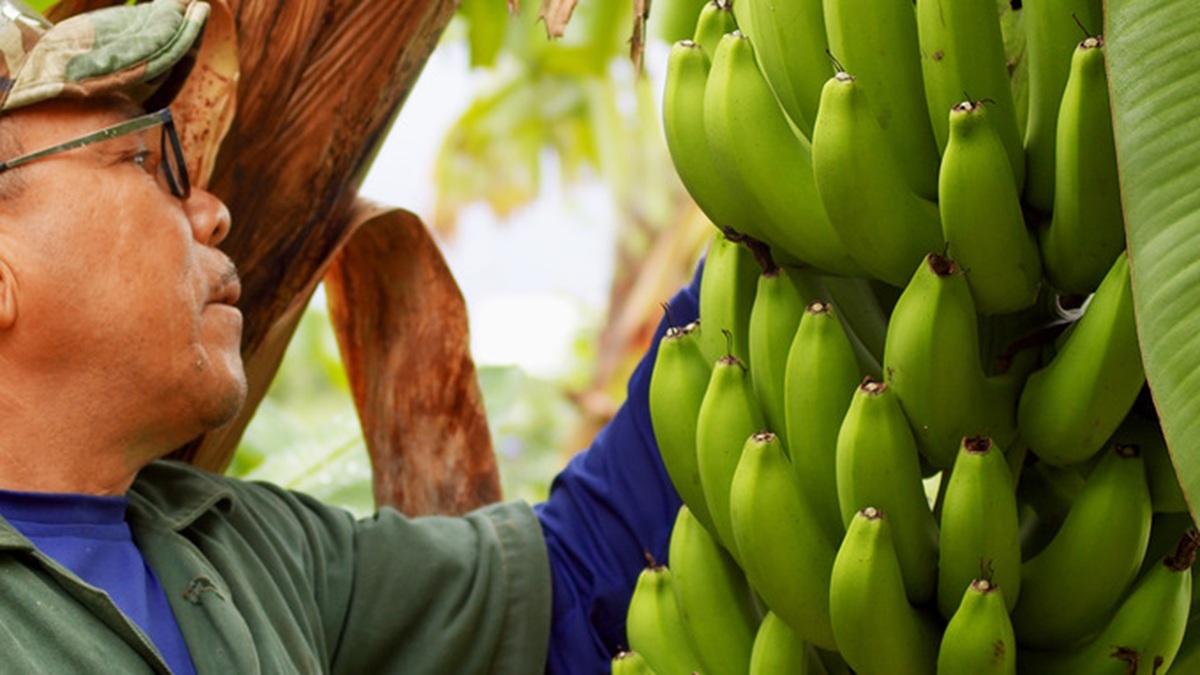
How Venezuelan farmers are learning to grow and live with a devastating plant disease
In the fields of Venezuela, where the banana has been for generations a symbol of sustenance and tradition, a shadow fell across the land. In 2023, Venezuela’s National Institute of Integral Agricultural Health (INSAI) declared a phytosanitary emergency: the fungus Fusarium Tropical Race 4 (TR4) (Fusarium oxysporum f. sp. cubense tropical race 4; syn. Fusarium odoratissimum) had arrived in producing areas in the states of Aragua, Carabobo and Cojedes.
This fungus, considered a devastating disease of banana and plantain (Musaceae) trees, can remain in the soil for more than two decades, threatening production and the lives of those who depend on it.
In the state of Aragua in the north of the country, the Renacer community had been growing bananas and plantains on 20 hectares since 2018. Then Fusarium arrived.
“When the disease hit, the entire plantation began to deteriorate. We refused to ‘die’ with the trees because that was our livelihood. The visits of INSAI confirmed that we had to chop down the banana trees. I cried a lot because I had worked with my banana trees for years,” recalls woman farmer, Lesbia Margarita García, with a broken voice.
In response, INSAI implemented measures to eliminate the affected plantations and improve the soil health by changing to other crops that allow agricultural production to recover. The Food and Agriculture Organization of the United Nations (FAO) offered assistance by providing corn seeds, tools, biosecurity inputs and training, with teams of experts helping farmers to start again.
“Planting corn, thanks to the INSAI-FAO programme, gave us a harvest that benefited everyone. We have been improving the soil,” says Lesbia Margarita with a smile. “Now we rotate crops, observe soil health and have learned how to use natural fertilizers. Expert assistance has been key.”
The pilot project works directly with affected producers in high-risk areas, promoting alternative crops such as cereals and vegetables, delivering inputs and tools to mitigate damage and applying biosecurity measures for safe and effective containment.
“Beyond the corn received, we have already planted cassava, chili peppers, beans and pumpkin. We hope that by the end of the year [2025] we will be diversified and that each season we will have something to sell. These lands do not give up,” says Lesbia Margarita with conviction.
The Renacer community is beginning to see fruits. Their products are reaching local markets, generating income and rebuilding their livelihoods.
Key actions to manage Fusarium TR4 are ongoing, including regular monitoring, continuous training, inter‑institutional coordination, updates to the national plan, information campaigns and producer impact assessments. INSAI is sustaining regulatory, surveillance measures and training —with FAO support—as part of a comprehensive long‑term strategy.
At the global level, FAO supports awareness raising, capacity building and international collaboration in the fight against Fusarium TR4 by facilitating the World Banana Forum and its Global Network on TR4.
“The objective is for countries to strengthen their operational and technical capacity, articulating actions between the public sector, the private sector and family farmers,” says Raixa Llauger, FAO Agriculture Officer in Mesoamerica. “FAO and local partners have promoted this approach in Venezuela.”
As an essential part of the activities, a comprehensive training programme was developed with activities that taught farmers how to identify the disease contain it and protect crops. In addition, FAO has distributed laboratory equipment, biosecurity tools and a multispectral drone to INSAI. Drones are an efficient and cost‑effective tool for phytosanitary surveillance, offering rapid, high‑resolution monitoring and early detection of plant pests and diseases.
Overall, the project strengthened biosecurity measures against the Fusarium fungus through the adoption of the National Action Plan and the establishment of partnerships with national and international institutions. In addition, the pilot initiative supporting smallholder farmers in key production areas and a nationwide awareness campaign with broad outreach improved surveillance, diagnosis and phytosanitary response capacities across the country.
News
Statistics Authority Highlights Trade Data as Turks & Caicos Records $227M in Imports for Q4 2025
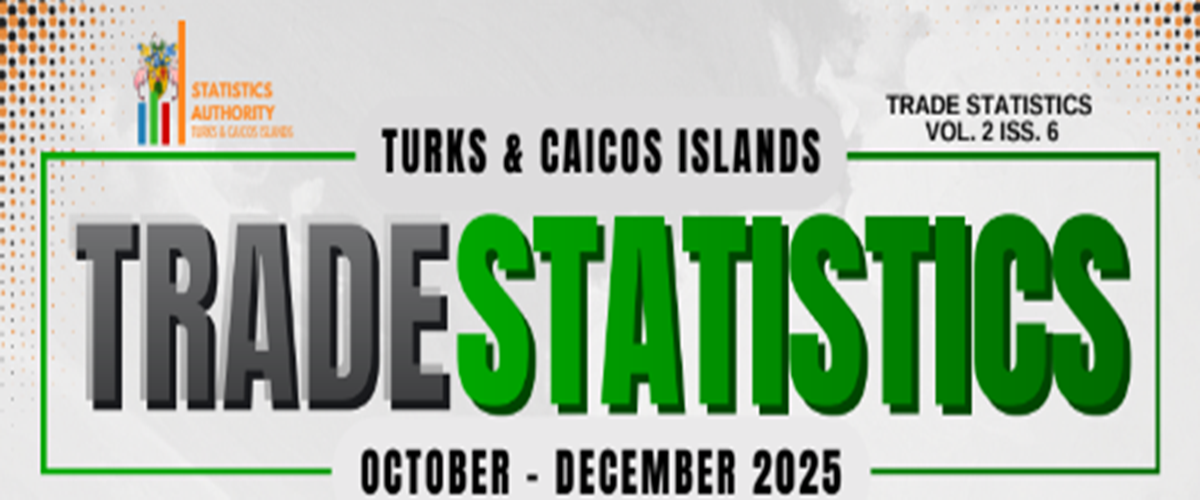
Turks and Caicos, March 18, 2026 – The Turks and Caicos Islands Statistics Authority is highlighting the importance of reliable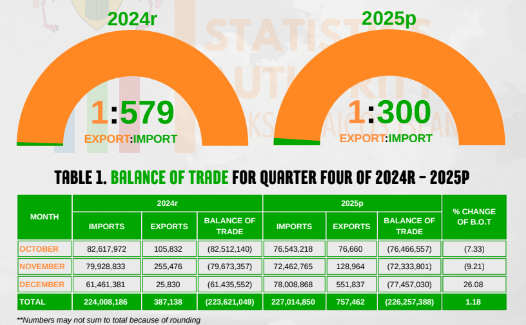 economic data following the release of its latest Trade Statistics Bulletin, which shows the country recorded approximately $227 million in imports during the fourth quarter of 2025.
The detailed report provides a clear breakdown of where goods entering the Turks and Caicos Islands are coming from, the types of products being imported, and the revenue generated from trade-related activity. The figures offer valuable insight into the level of economic activity across the country and the continued demand driven by tourism, construction, and consumer spending.
According to the bulletin, the United States remained by far the largest supplier of goods, accounting for more than $200 million in imports during the quarter. This represents the majority of all goods entering the Turks and Caicos Islands and reflects the territory’s long-standing dependence on U.S. markets for food, fuel, machinery, building materials, and consumer products.
The Dominican Republic was the second largest source of imports, supplying just over $4.1 million in goods, while The Bahamas ranked third, with approximately $1.8 million in imports recorded for the period. The report also noted increasing trade with countries such as China, Panama, Switzerland, Poland, and India, showing that businesses continue to expand their supply networks beyond traditional partners.
In terms of the types of goods being imported, the bulletin shows strong activity in categories such as food and live animals, mineral fuels, manufactured goods, machinery and transport equipment, and chemicals, all of which are essential to supporting the tourism industry, infrastructure development, and everyday life in the islands.
The report also tracks revenue collected from international trade, including fuel tax, customs processing fees, and motor vehicle licensing, providing another measure of economic performance during the quarter.
Officials say the quarterly Trade Statistics Bulletin is an important tool for government, businesses, and the public, offering accurate information presented through clear tables, charts, and graphics that make complex data easier to understand.
For a small, import-dependent economy like the Turks and Caicos Islands, access to reliable statistics remains critical. By continuing to publish detailed trade reports, the Statistics Authority helps ensure that decisions about growth, investment, and development are based on sound information.






-

 Bahamas News7 days ago
Economic and Financial Experts Assess US-China Relations; Offer Advice for The Bahamas
-

 Bahamas News7 days ago
Experts Analyze Economic Landscape; Opportunities and Challenges
-

 News7 days ago
Beaches Resorts Announces Grand Opening of Treasure Beach Village at Beaches Turks and Caicos
-

 Caribbean News7 days ago
Widow’s Testimony Recounts Night Haiti President Was Killed
-
 Uncategorized3 days ago
WHERE ARE THE LOCAL ARTISTS?
-

 News7 days ago
North and Middle Caicos Students receive educational material from Sandals Foundation and Beaches Turks and Caicos resort
-

 Health2 days ago
Gut Health Linked to Lower Colorectal Cancer Risk According to Cleveland Clinic Dietitian
-

 News7 days ago
Sandals Foundation Reading Road Trip with Canadian Broadcasters Creates Cultural Mix at Enid Capron Primary School