
News
Statistics Authority Highlights Trade Data as Turks & Caicos Records $227M in Imports for Q4 2025

Turks and Caicos, March 18, 2026 – The Turks and Caicos Islands Statistics Authority is highlighting the importance of reliable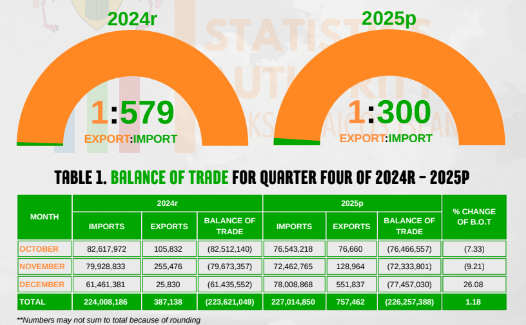 economic data following the release of its latest Trade Statistics Bulletin, which shows the country recorded approximately $227 million in imports during the fourth quarter of 2025.
The detailed report provides a clear breakdown of where goods entering the Turks and Caicos Islands are coming from, the types of products being imported, and the revenue generated from trade-related activity. The figures offer valuable insight into the level of economic activity across the country and the continued demand driven by tourism, construction, and consumer spending.
According to the bulletin, the United States remained by far the largest supplier of goods, accounting for more than $200 million in imports during the quarter. This represents the majority of all goods entering the Turks and Caicos Islands and reflects the territory’s long-standing dependence on U.S. markets for food, fuel, machinery, building materials, and consumer products.
The Dominican Republic was the second largest source of imports, supplying just over $4.1 million in goods, while The Bahamas ranked third, with approximately $1.8 million in imports recorded for the period. The report also noted increasing trade with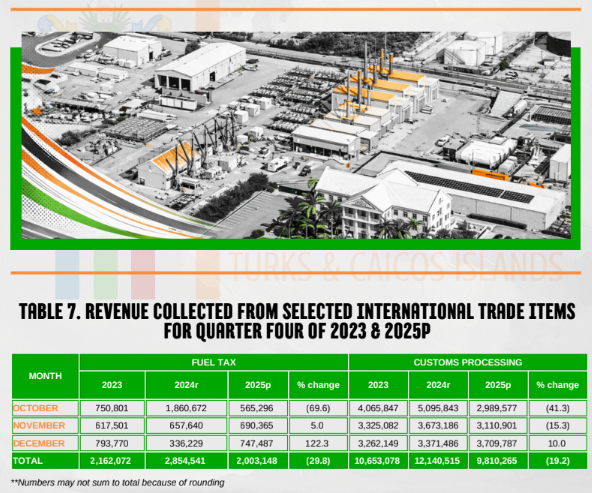 countries such as China, Panama, Switzerland, Poland, and India, showing that businesses continue to expand their supply networks beyond traditional partners.
In terms of the types of goods being imported, the bulletin shows strong activity in categories such as food and live animals, mineral fuels, manufactured goods, machinery and transport equipment, and chemicals, all of which are essential to supporting the tourism industry, infrastructure development, and everyday life in the islands.
The report also tracks revenue collected from international trade, including fuel tax, customs processing fees, and motor vehicle licensing, providing another measure of economic performance during the quarter.
Officials say the quarterly Trade Statistics Bulletin is an important tool for government, businesses, and the public, offering accurate information presented through clear tables, charts, and graphics that make complex data easier to understand.
For a small, import-dependent economy like the Turks and Caicos Islands, access to reliable statistics remains critical. By continuing to publish detailed trade reports, the Statistics Authority helps ensure that decisions about growth, investment, and development are based on sound information.




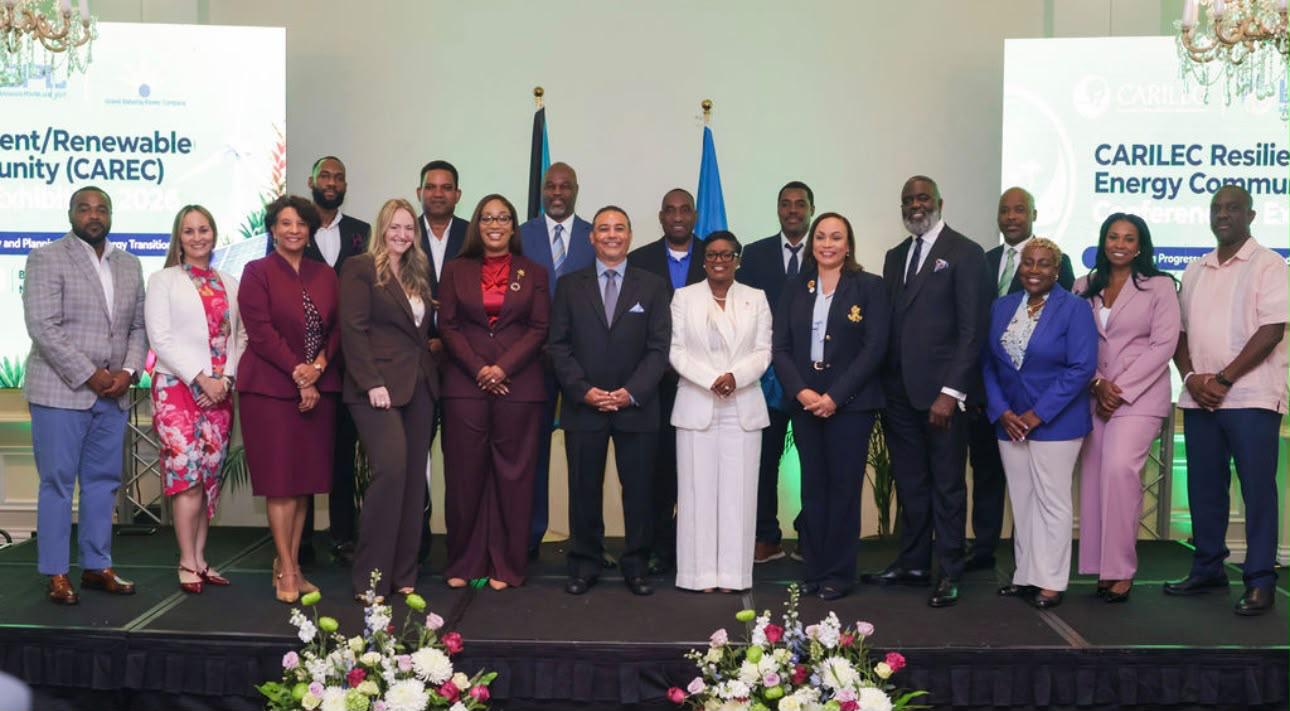
NASSAU, The Bahamas – The Bahamas’ Minister of Energy, Utilities and Aviation, The Honourable JoBeth Coleby-Davis, delivered an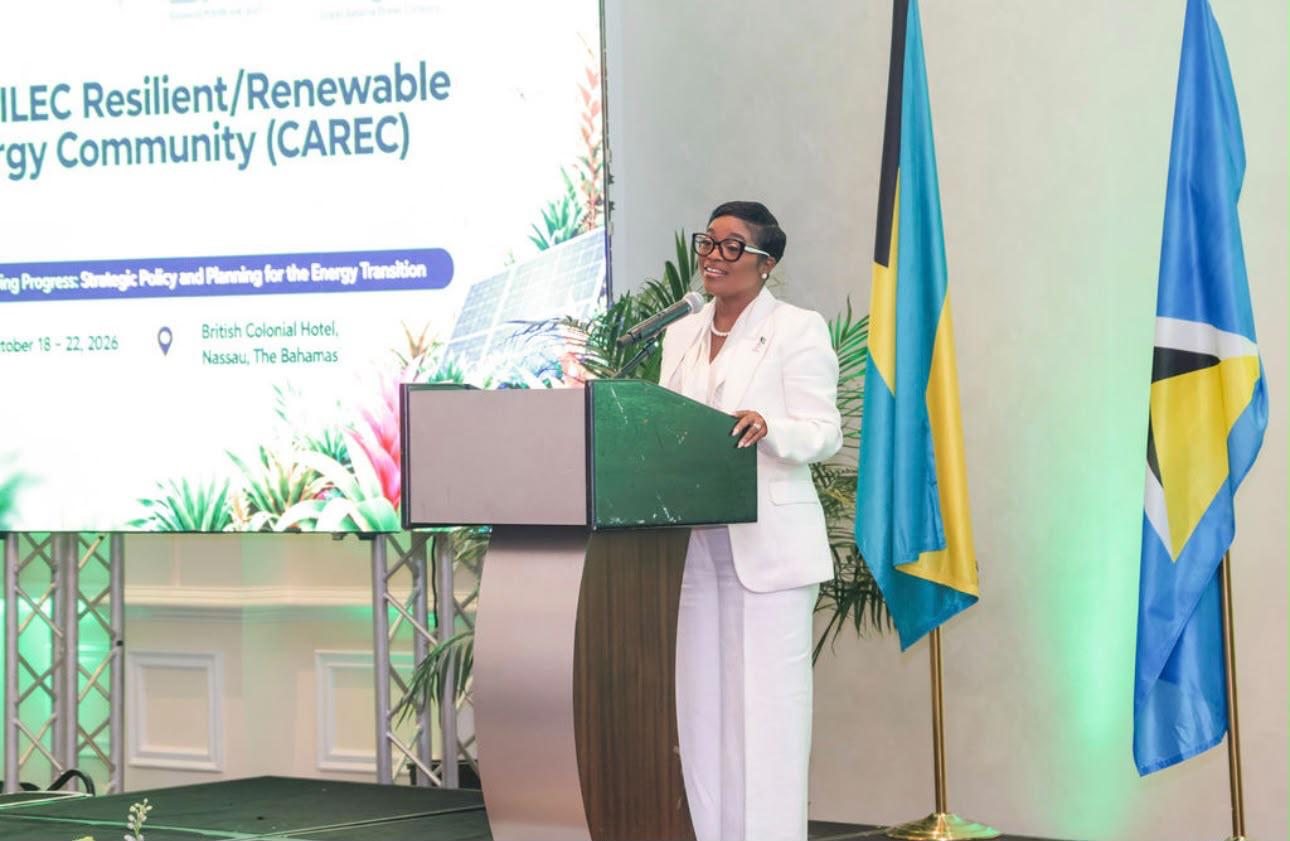 electrifying address during the opening ceremony of the 2026 CARILEC Resilient/Renewable Energy Community (CAREC) Conference and Exhibition, being held October 18–22, 2026, at the British Colonial Hotel in Nassau, The Bahamas.
Under the theme “Empowering Progress: Strategic Policy and Planning for the Energy Transition,” the event draws more than 200 industry leaders, policymakers, regulators, and energy professionals committed to advancing practical strategies for sustainable and reliable Caribbean power systems through renewable energy and emerging technologies.
During her address, titled “The New Energy Era: Transforming Policy into Progress,” Minister Coleby-Davis reminded attendees that The Bahamas’ national motto, “Forward, Upward, Onward, Together,” aptly describes what the region’s energy transition demands.
“Empowering Progress speaks directly to our national motto. Not waiting for progress, but creating the conditions that allow progress to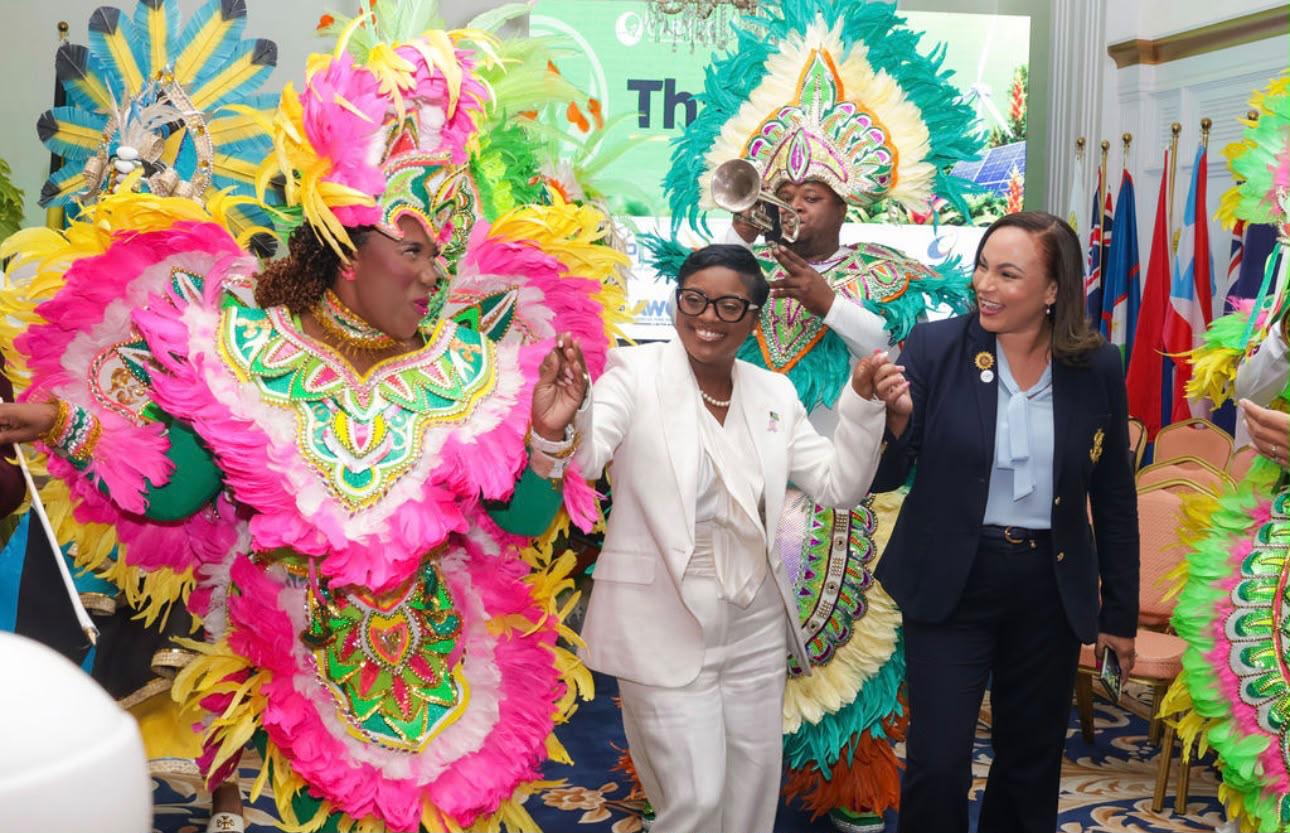 happen. Meaningful progress, however, does not occur by accident. It requires vision, sound policy, strategic planning, strong institutions, and the determination to turn decisions into results,” said Minister Coleby-Davis.
Participants acknowledged that small island developing states share similar pressures, compounded by geographical challenges, small electricity markets, ageing infrastructure, geopolitical influences, and the growing threat of severe weather.
Tasked with ushering in a new energy era across the islands while addressing the challenges posed by The Bahamas’ unique archipelagic composition, Minister Coleby-Davis said, “Every island needs a different answer, but the same logic. As an archipelagic nation, we must provide electricity across many islands, each with its own demand and infrastructure needs. Our strategy, therefore, must be national in direction, but responsive to individual communities.”
Restating her Ministry’s three core messages—that energy is an economic and security priority, technology must be viewed as a tool to support strong institutional leadership, and natural gas should be considered a bridge, not a destination—Minister Coleby-Davis reiterated that “progress must now be reflected in functioning infrastructure, effective institutions, and better electricity services: from policy commitments to coordinated implementation, and from fragmented investment decisions to long-term planning.”
Organised by CARILEC and co-hosted by Bahamas Power and Light (BPL) and Grand Bahama Power Company (GBPC), the annual Conference and Exhibition brings together the Caribbean energy community to advance practical solutions to the region’s most pressing energy challenges and accelerate progress towards more resilient, reliable, and sustainable power systems.
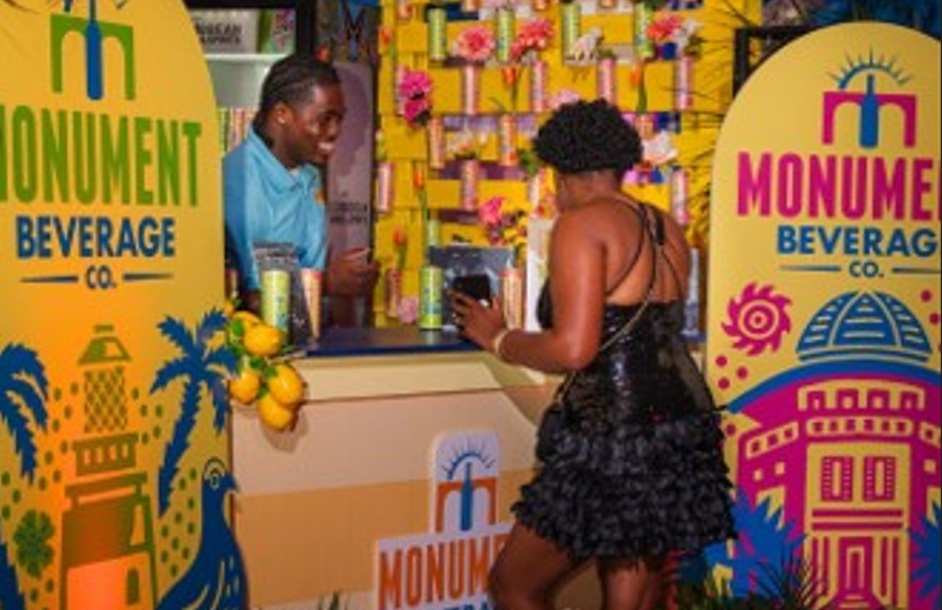
NASSAU, Bahamas — Caribbean Wines & Spirits (CWS), The Bahamas’ leading wine and spirits distributor, proudly supported Paradise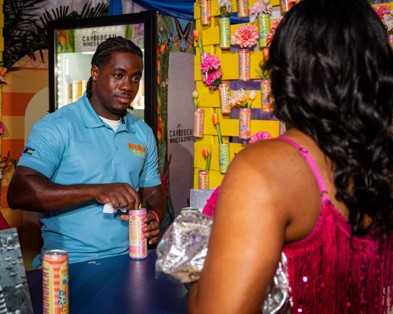 Plates, Hands for Hunger annual fundraiser with a flavorful offering of its newest product, Monument Beverage Co.
Monument, which launched this July and is available across six major islands, made its Paradise Plates debut. Guests enjoyed three bold flavors: Peach Passion, Ginger-Lime and Melon Fizz as they socialized throughout the evening.
Monument brand ambassadors engaged guests with knowledge on the ready-to-drink beverage’s unique taste and look. Many attendees were delighted to learn that Monument is 100% Bahamian-made and owned and enjoyed seeing the various national landmarks on the packaging.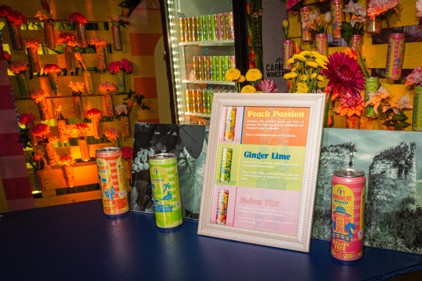
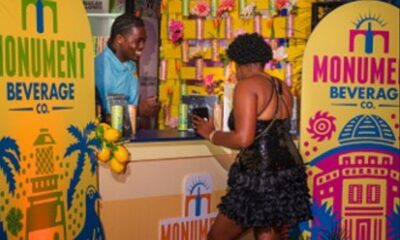
The booth was adorned with vibrant brand colors, striped arches, tropical florals and a photo worthy backdrop featuring Monument cans filled with florals cascading down the wall.
At the end of the event, the entire Monument inventory had finished, making Monument’s Paradise Plates debut a huge success.
For more details on Caribbean Wines & Spirits, new products and specials, visit www.cwsbahamas.com today.
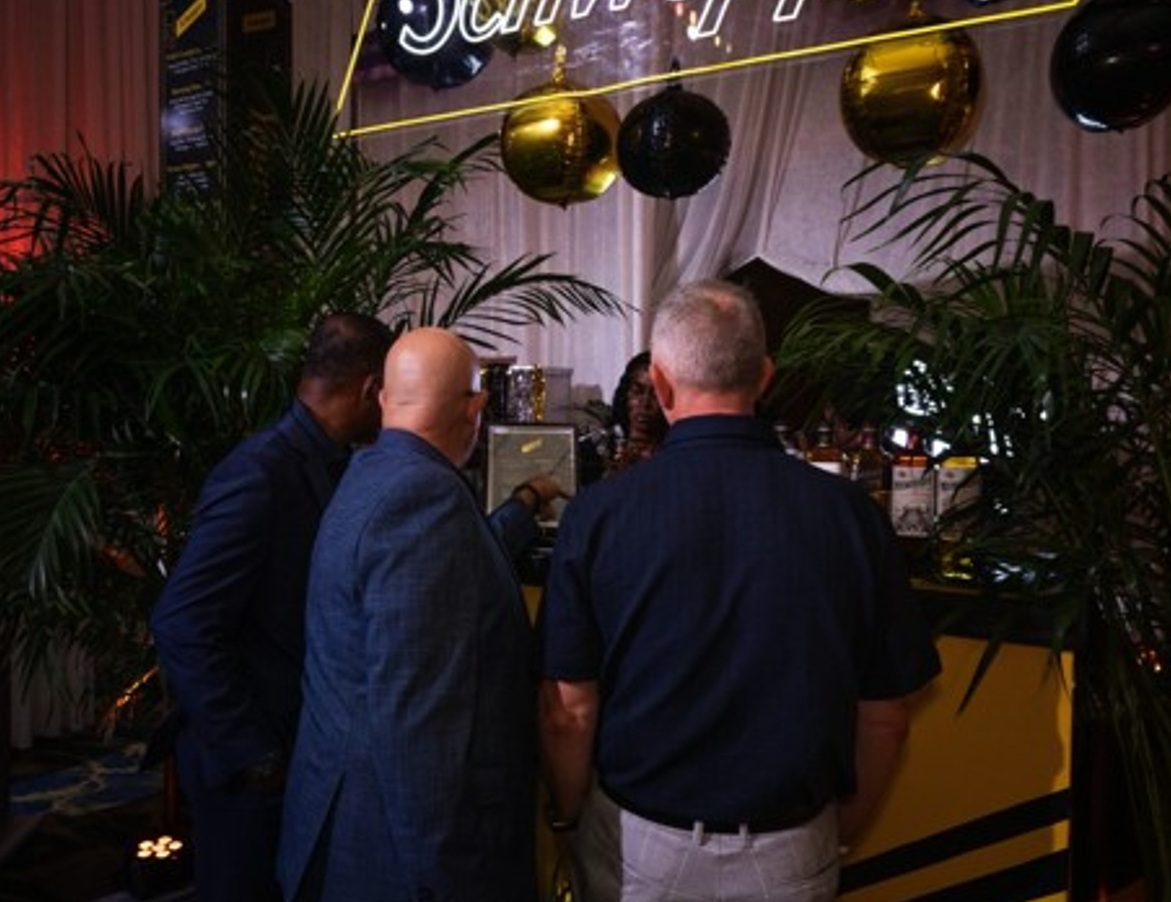
NASSAU, Bahamas — Schweppes, in collaboration with Nemiroff Vodka dazzled guests with handcrafted cocktails during Paradise Plates, Hands for Hunger’s annual fundraiser held at Atlantis’ Imperial Ballroom.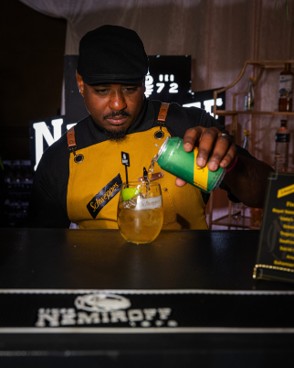
The evenings’ theme, 70’s: Paradise Disco, inspired bold and delicious sips from Schweppes and Nemiroff. The beautiful disco themed Schweppes booth, adorned with LED signs, lush greenery and hanging black and gold metallic orbs shined throughout the room.
Schweppes’ brand representatives and mixologists dressed in chic 70’s speakeasy attire engaged attendees throughout the night. Guests enjoyed receiving knowledge of each product and experiencing the vibrant energy of brand representatives.
Nemiroff Vodka, which is locally distributed by Caribbean Wines and Spirits (CWS), The Bahamas’ premier wines and spirits distributor; offered a unique variety of vodkas which made the perfect blend with Schweppes. Guests enjoyed, Nemiroff’s Honey Pepper, De Luxe, Burning Pear, Wild Cranberry, and Bold Orange vodkas throughout the night.
Fan favorite cocktails of the night were: the Wild Cranberry Tonic and the Bold Orange Fizz.
Following a positive response at Paradise Plates, CWS is offering Nemiroff and Schweppes specials at local liquor stores for the entire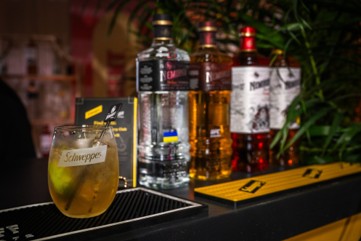 month. With the purchase of any 1-liter Nemiroff vodka, enjoy a complimentary three-pack of Schweppes mixers, to recreate the magic of Schweppes and Nemiroff.
Cara Douglas-Adderley, Senior Marketing Director for Caribbean Bottling (CBC), local producers and distributors of Coca-Cola and Dasani products and CWS shared the inspiration behind the Schweppes and Nemiroff promotion.
“We are thrilled to have paired Schweppes and Nemiroff for Paradise Plates this year, creating a premium cocktail experience for guests. After receiving such positive feedback, we wanted to extend that experience to consumers at home. Throughout October, consumers can visit their favorite watering hole, buy any 1-liter Nemiroff bottle and receive a free three-pack of Schweppes.”
Caribbean Bottling Company is proud to offer Schweppes, Coca-Cola’s premier mixer in collaboration with Caribbean Wines & Spirits and Nemiroff Vodka at Paradise Plates in support of Hands for Hunger’s mission.
For more information on CBC’s philanthropic work, new products and specials, visits www.cbcbahamas.com today.





-
 News1 week ago
Beaches Turks & Caicos gives Enid Capron Primary a pre-term facelift
-

 Independent writer1 week ago
Born Here, Raised Here, but Still Unable to Vote: Is this a Conundrum for TCI Electorate?
-

 Bahamas News2 days ago
Rosewood Exuma: A precedent-setting case for environmental law and future development in The Bahamas
-
 Bahamas News6 days ago
Monument Supports Hands for Hunger With Paradise Plates Debut
-
 Bahamas News7 days ago
Schweppes ‘the Art of Mixology’ Dazzles at Paradise Plates with Nemiroff Vodka
-
 Bahamas News1 day ago
Energy Minister Delivers Electrifying Keynote Opening Address at CAREC 2026