
Caribbean News
TCI: What if we – TOGETHER – invested the $11 Million?

#TurksandCaicos, March 8, 2021 – Spanx, now a billion dollar company was launched with just $5,000 of personal savings and family support to a then 27-year old Sara Blakely.
The Ritz-Carlton brand, which we are soon to see officially labelling a new luxury hotel on Grace Bay was started in the 1920s with just under $6 million; now the franchise has 30,000 resort rooms all over the world.
So far be it from possible to think $11 million dollars in capital couldn’t revolutionise the lives of ordinary Turks and Caicos Islanders.
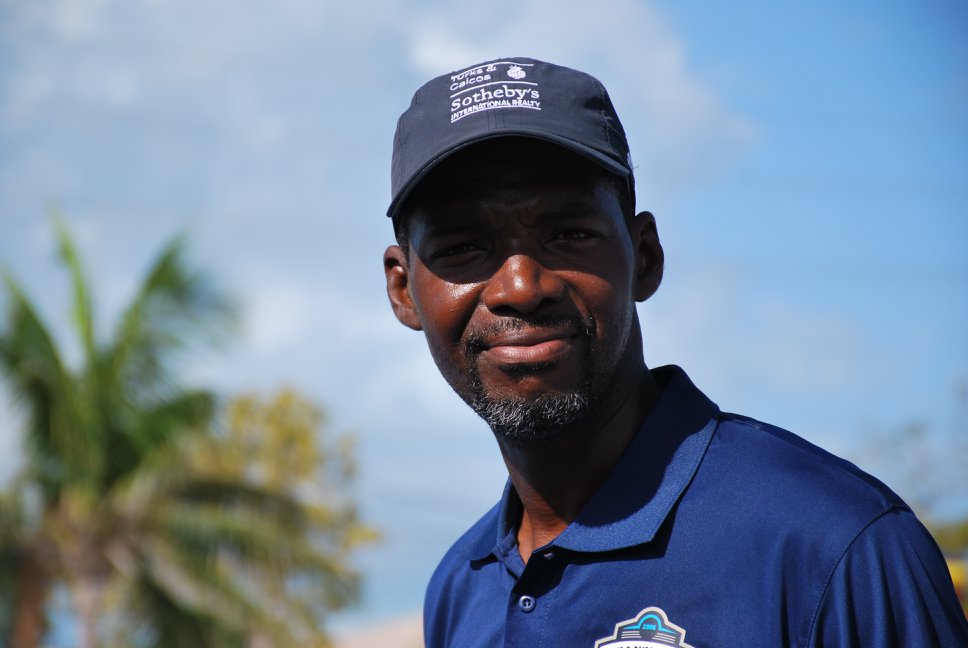
Here is the man who dares us all to dream bigger, instead of flushing a free gift down the consumer toilet.
Benneth Williams is known as a hard-working man who wears a number of caps which lead him to lend to the development of children, protection of the environment, healthier living and cultural appreciation.
“My father’s name is Arthur Williams and my mother’s name is Winefred McIntosh. I’m from Providenciales, Turks and Caicos Islands. I was brought up in the Bight, Providenciales. I went to school in South Caicos,” said Williams when we asked him to tell us who he is.
The husband and father goes on to speak about the family he has now built and his personal passions including in sports and environmental sustainability.
Eventually he gets to the meat of the matter, that the money Government is giving in a cash stimulus could become the gift that keeps on giving.
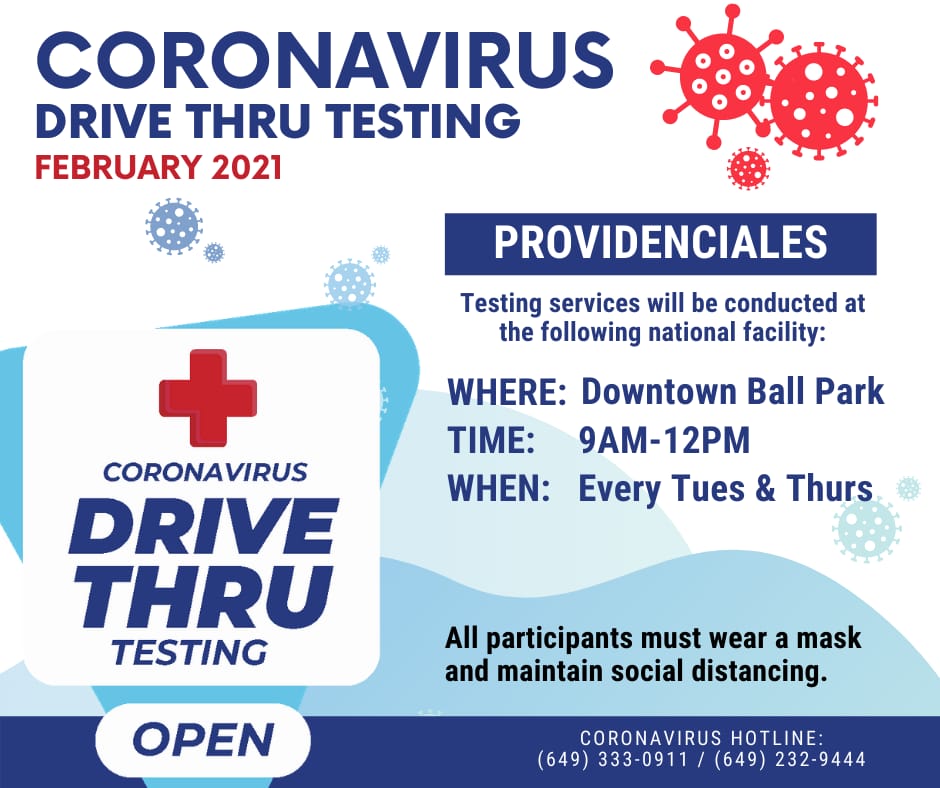
This story started with Benneth Williams sending to me advice on what to do and what not to do once I received the government-granted $1,000 cash stimulus, as a relief to economic hardships brought on by the Coronavirus Pandemic.
“Create a budget; address essential needs; add to a personal emergency fund; pay down on debt; help your local community; open a high-yield savings account; invest in yourself and improve your skills; donate to those in need…just my two cents,” said Mr. Williams on March 2, 2021 in a WhatsApp message.
Williams is a man of many opinions and many ideas about what it takes for Turks and Caicos to be better. He put those thoughts to action, when he offered in the 2016 general elections. He was not successful in the bid, but this advocate is not silenced.
“You probably don’t want to hear what I think about this $11 million dollars. I think all of us should collectively open up our own bank and use this $11 million dollars. All of us would have shares or maybe if all of us decided, we’re not going to take this money and invest it in a hotel where all of us have shares in that hotel,” said Williams who added, “I understand there is a hotel on Grace Bay where its profit last year was $126 million dollars. A hundred and twenty-six million dollars! I’m not sure if what I heard was right but you’re talking $11 million dollars investing in something where everybody, all 11,000 of us could be shareholders!”
Williams sees the cash grant as a not-to-be-wasted opportunity for financial security of islanders.
The Progressive National Party ran an election campaign which promised residents that a substantial payout of cash was what the effect of the pandemic demanded and what the people of the islands required.
Seven days after taking office, the announcement of a $1,000 hassle-free cash stimulus to all Turks and Caicos Islanders and all British Overseas Territory Citizens (resident in TCI 12-months) came. Two days later the registration portal was opened and two days after that, residents began receiving e-mail messages that they had been approved for the money.
“People should really consider this money and see what we can do with this money, because you don’t have the money now and you’re still living so maybe use it for something bigger.”
Benneth and Shauna, his wife have been married for 22-years and have three children.
One son wants to attend what Mr. Williams called, “an expensive football school…” and as parents of the talented athlete, they want to give him the best possible education and experience they can. Williams said a national coming together of this kind would make that lofty dream more of a reality for Turks and Caicos families.
“This is $11 million dollars and if you give it to me and with my $1,000 I go ahead and invest it, then five years from now what really is my investment going to be? Not much. But I think if collectively we put that money together and decide that we are going to invest it into something that is tangible and unique to the Turks and Caicos Islands we can see something that our children can say, this is the sacrifice our parents made and this is the reward I am getting right now from their investment, that they did 10 years or 15 years ago.”
Key ideas coming from the swimming and football coach were for a re-boot of a Turks and Caicos bank or a 100% Turks and Caicos Islander owned hotel, in the northwestern end of Providenciales.

“How about that? Banking with your own bank. Doing business with your own bank. Make your money, make money for you. Or what about a hotel down in Northwest Point? Nothing much is up there, but there is a hotel in that area raking in millions of dollars. Why not, we do the same thing! Villas are making money, private villas are making money and that is the same thing in northwest point. Let us invest in something that is tangible, that we can have somebody run it and all I am looking at is the bottom line so that I can get the return on my investment. Something I can use to send my kids to school, I can use to make other investments, I can help my daughter with swimming lessons, help my kid in going to the school he really wants to.”
Williams said so many islanders have to face an often heart-breaking reality when they are unable to provide for their families in more meaningful ways.
Williams said the stifling feeling of lack can all be a thing of the past if recipients of the free-cash were to merge the money for this cause of greater financial security.
“We don’t own anything in Grace Bay and that can all change. It’s just my thought, maybe we could invest the money versus all of us going to pay a company that is already raking in millions of dollars to take yourself out of a hole only to still be in indebt years from now.”
The message of Mr. Williams is not a unique one, though at this time it grabs special attention.
Economic empowerment for Turks and Caicos Islanders is often touted by politicians, preachers, corporate and civic leaders and the layman, but unlike any other time in history, the Government has been given the green light to distribute funds to help and indigenous islanders and those funds could wisely be used to build a revenue generating future.
“We can all sell this destination for ourselves but we have to do it collectively, together and that is all I’m saying.”










By Deandrea Hamilton | Editor
September 28, 2026 – Wall Street initially flinched at the $3-billion handshake. But in a matter of days, it was smoother sailing.
Perhaps the bigger Caribbean business story is not what Sandals Resorts International is getting from the deal. It is who is writing the cheque — and what that says about what Gordon “Butch” Stewart built.
As reports of Royal Caribbean Group’s Sandals deal circulated Tuesday, RCL shares plunged 6.14 percent from Monday’s $250.25 close to $234.89, on sharply elevated trading.
When the agreement became official Wednesday — approximately $3 billion for a 50 percent equity interest in Sandals and Beaches Resorts — shares slipped another 1.95 percent to $230.30 and touched $222.22 intraday. Investors were digesting both the size of the investment and committed debt financing secured through Morgan Stanley.
But by Thursday, RCL rebounded 3.77 percent, with shares continuing their recovery Friday to finish the week around $243. Analysts were also looking ahead: JPMorgan reportedly raised its RCL price target from $345 to $394, while Citi placed the company on a 90-day positive catalyst watch.
And just who is RCL?
Royal Caribbean Group is a global vacation giant, publicly traded on the New York Stock Exchange with a market value of roughly $65 billion. Its portfolio includes Royal Caribbean International, Celebrity Cruises and Silversea, alongside private destinations and an expanding vacation platform.
So when a company of that scale commits $3 billion for only half of Sandals and Beaches Resorts, the transaction puts a striking financial marker on one of the Caribbean’s greatest home-grown hospitality success stories.
The deal, expected to close in early 2027, creates a 50-50 partnership with the Stewart family and takes Royal Caribbean deeper into the all-inclusive resort business.
Butch Stewart started Sandals in Jamaica in 1981 believing a Caribbean company could compete with the world’s best.
Forty-five years later, one of the world’s biggest vacation companies is prepared to pay $3 billion just to own half of what he built.
Now that’s the handshake that does more than seal a deal — it cements a legacy.
Caribbean News
Royal Caribbean Group and Sandals Resorts Announce Landmark Partnership to Accelerate Their Leading Vacation Experiences
Royal Caribbean Group Investment to Advance Sandals and Beaches’ Growth and Broaden the Group’s Vacation Portfolio
Montego Bay, Jamaica and Miami, September 24, 2026 – Royal Caribbean Group (NYSE: RCL) and Sandals Resorts today announced the signing of an agreement to form a partnership in the all-inclusive resort space with a 50% investment from Royal Caribbean Group. Building on Sandals and Beaches Resorts’ more than four decades of leadership in Caribbean hospitality, the joint venture will create new opportunities for continued resort growth while broadening the experiences across Royal Caribbean Group’s vacation platform.
The partnership brings together two of the travel industry’s most celebrated vacation companies, pairing Sandals and Beaches’ all-inclusive resort expertise with Royal Caribbean Group’s vacation platform, including industry-leading brands – Royal Caribbean, Celebrity Cruises and Silversea – a portfolio of private destinations, new river cruising offering, and an industry-first loyalty program. United in a shared history in the Caribbean and connected by a love for their communities, the companies will offer travelers an unparalleled collection of cruise, private destination and resort experiences, serving guests across more vacation occasions and establishing their undisputed leadership in Caribbean vacations.
The joint venture expands Royal Caribbean Group into an adjacent vacation category, growing its participation in the approximately $2 trillion global vacation market, and meets the growing global demand for Sandals and Beaches Resorts by accelerating their expansion. The partnership will include Sandals and Beaches’ collection of premier all-inclusive properties across the Caribbean, and the companies will explore opportunities to broaden distribution, deepen guest engagement, and make it easier for travelers to discover vacation experiences offered across both portfolios.
“For nearly 60 years, we’ve reimagined what a vacation can be, constantly expanding the ways we inspire our guests to explore, connect and create lifelong memories,” said Jason Liberty, Chairman and CEO, Royal Caribbean Group. “We have been building a vacation platform that brings joy to millions of people around the world and creates meaningful relationships that last with our guests. Our partnership with Sandals and Beaches Resorts is an important next step on that journey – bringing together two iconic leading vacation companies to further strengthen and grow one of the most admired resort portfolios in the world. The Stewart family has created powerful and beloved brands, and we are honored to build on that legacy. Together, we see tremendous opportunity to expand the reach of Sandals and Beaches Resorts and continue turning the vacation of a lifetime into a lifetime of vacations.”
“My father, Gordon ‘Butch’ Stewart, founded Sandals Resorts with the belief that a company built in the Caribbean could stand on the world stage alongside the most respected names in hospitality. Today is proof of how far that vision can go,” said Adam Stewart, Executive Chairman of Sandals Resorts and Beaches Resorts. “This partnership is the natural next step in building on that conviction. It gives us the ability to grow faster with a partner that shares our values of exceptional hospitality, long-term investment, and the power of enduring brands. Together, we will introduce more guests to Sandals and Beaches Resorts while creating even more extraordinary experiences for those who have made our resorts part of their lives for decades.” Stewart added, “As we continue to grow, we will remain true to what has always defined us: delivering authentic vacations that exceed expectations while creating opportunities for our team members, travel advisor partners and the communities we call home. The future has never been brighter, and I know this moment would make my father incredibly proud.”
The joint venture will be governed by a board under the shared leadership of Stewart and Liberty. Stewart will maintain a leadership role in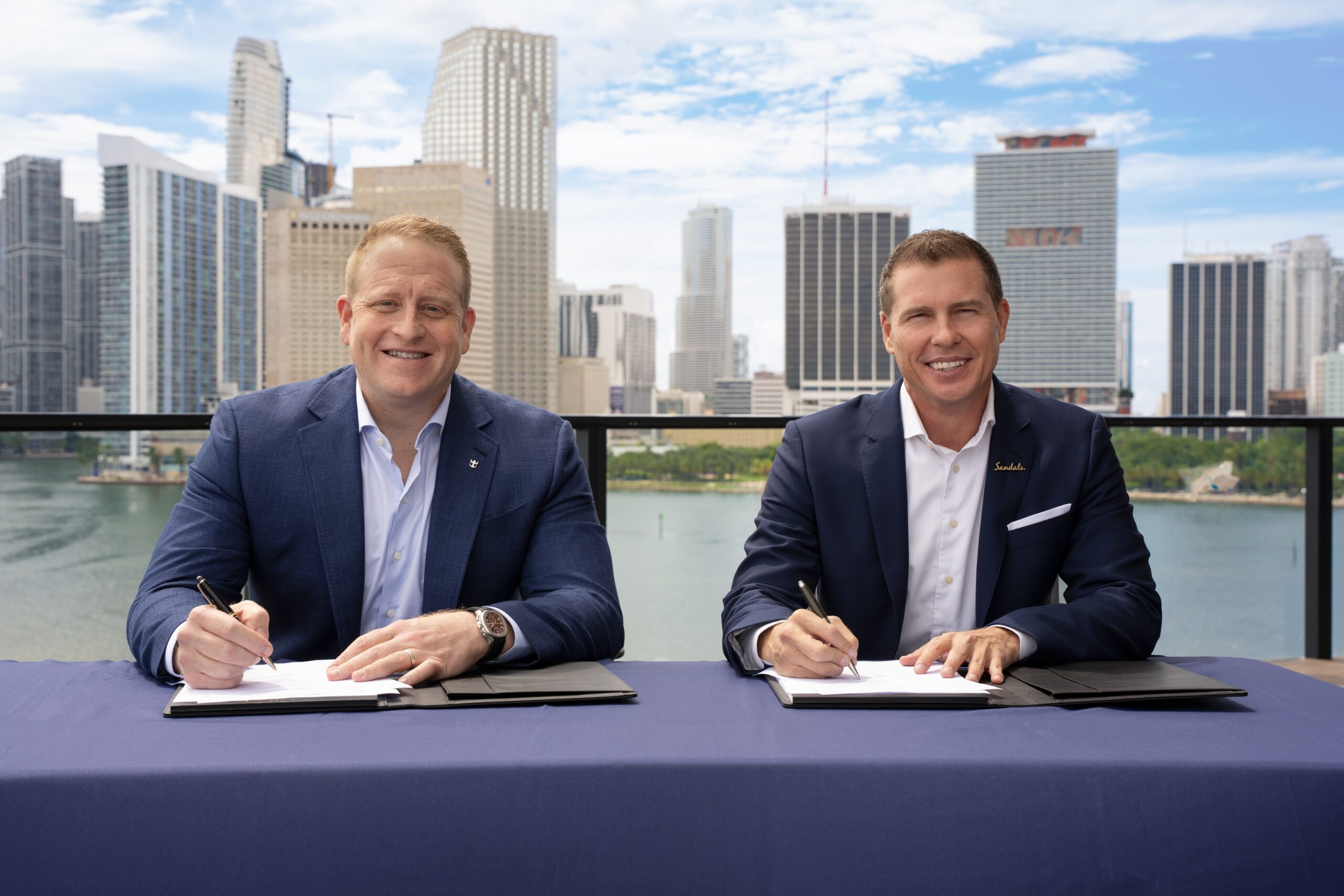 guiding the company’s long-term strategic growth as Executive Chairman of Sandals and Beaches Resorts. Existing reservations, loyalty programs, resort operations and cruise operations will continue as usual, with the partnership bringing additional resources to support future opportunities.
Under the terms of the agreement, Royal Caribbean Group will acquire a 50% equity interest in Sandals and Beaches Resorts for approximately $3 billion, representing a forward EBITDA multiple of approximately 10x. Royal Caribbean Group has secured committed debt financing from Morgan Stanley to fund the investment. The transaction is expected to close in early 2027, subject to customary approvals and closing conditions, and is expected to be accretive to earnings next year.
BofA Securities and PJT Partners acted as financial advisors, and Latham & Watkins and Jones Day acted as legal advisors to the Sandals Group. Perella Weinberg Partners and Morgan Stanley acted as financial advisors and Kirkland & Ellis LLP acted as legal advisor to Royal Caribbean Group.
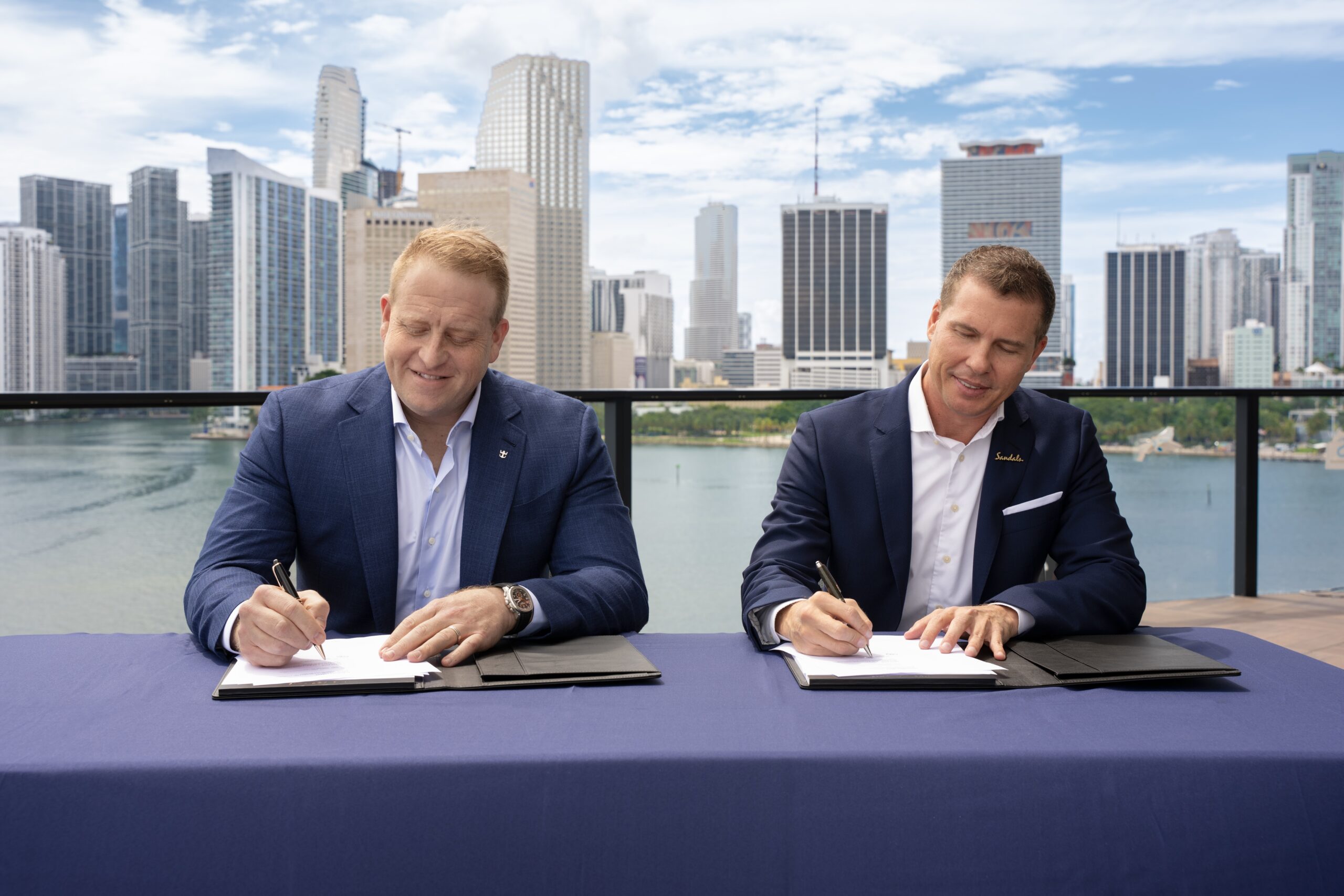
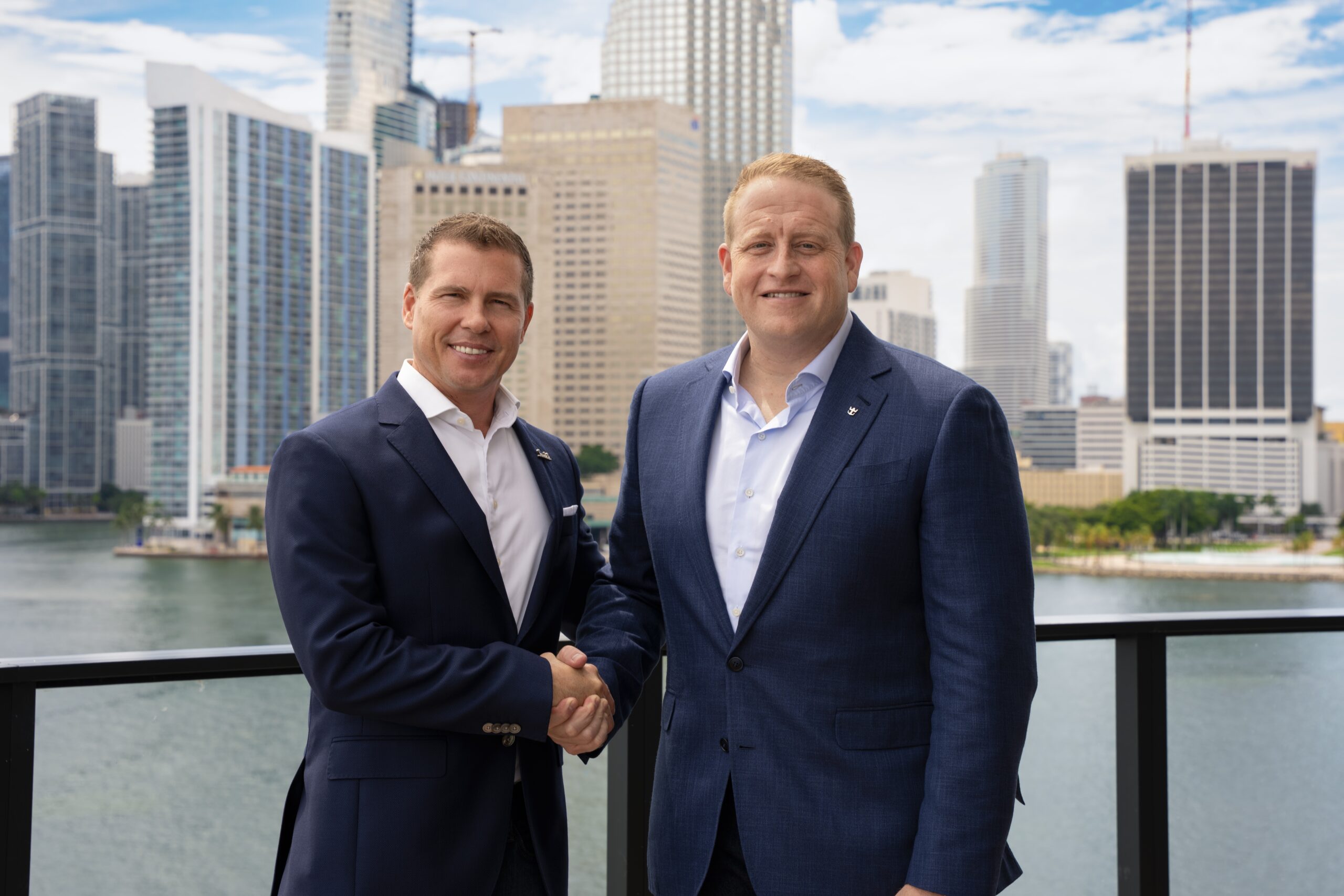
PHOTO CAPTION: Jason Liberty, Chairman and CEO of Royal Caribbean Group, and Adam Stewart, Executive Chairman of Sandals Resorts, mark the signing of an agreement to form a landmark partnership that expands Royal Caribbean Group into the all-inclusive resort space and supports the future growth of Sandals and Beaches Resorts. The signing took place at Royal Caribbean Group’s new headquarters in Miami, with the city’s skyline in the background.
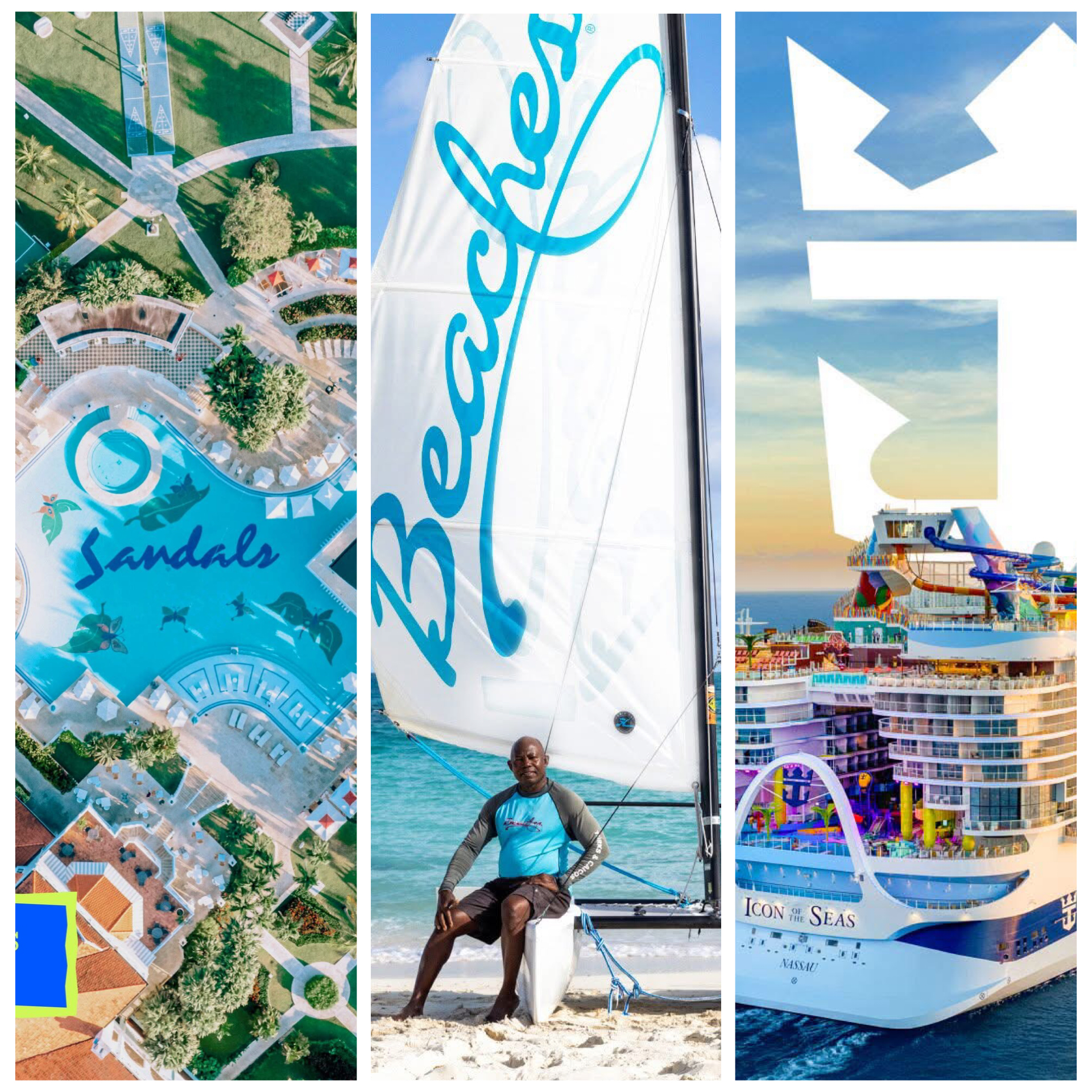
The Caribbean tourism deal first reported as a possibility on Tuesday is now a signed agreement. Royal Caribbean Group plans to pay approximately US$3 billion for a 50% stake in Sandals and Beaches Resorts, putting the value of the business at about US$6 billion. The purchase is expected to close in early 2027, subject to approvals.
Founded in Jamaica by the late Gordon “Butch” Stewart in 1981, the resort business has a presence across nine Caribbean destinations, including Jamaica, The Bahamas and Turks and Caicos. Sandals has described its workforce as nearly 20,000 people, most of them Caribbean nationals.
“My father, Gordon ‘Butch’ Stewart, founded Sandals Resorts with the belief that a company built in the Caribbean could stand on the world stage alongside the most respected names in hospitality,” said Adam Stewart in the announcement carried by PR Newswire. He will remain executive chairman, while the Stewart family retains a stake. The companies say existing reservations and resort operations will continue as usual.





-
 Bahamas News7 days ago
The Bahamas Reaffirms Support for Ukraine at International Conference in Toronto
-
 News1 week ago
Invest Turks and Caicos Islands Highlights Investment Growth and Workforce Opportunity at 5th Annual General Meeting
-
 Bahamas News5 days ago
Walk for the Cure Every Saturday This October
-
 News4 days ago
Invest Turks and Caicos Officially Opened Caya Hico Collective, Grand Turk MSME Storefront
-
 Bahamas News1 week ago
‘Even Nygard didn’t try that’ – Supreme Court hears massive 400-foot seawall was added to Rosewod Exuma behind the public’s back
-

 Health1 week ago
What To Eat and Drink When You Have the Flu
-

 Health6 days ago
TCI Hospital Marks Breast Cancer Awareness Month 2026 with “Know. Check. Act. Support.” Campaign
-
 News1 week ago
Record-breaking eye care mission transforms vision for thousands in Providenciales