
Bahamas News
Full Remarks, Bahamas Prime Minister on Emergency Powers

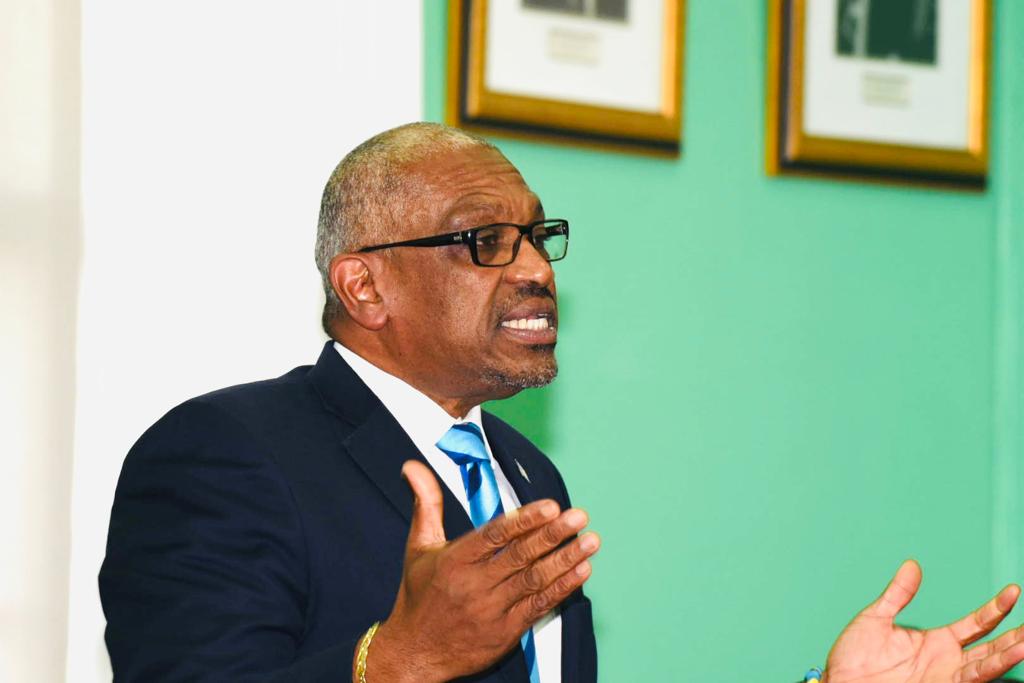
Mr. Speaker:
Late last evening health officials
confirmed two additional cases of
individuals who tested positive for
Covid-19 on New Providence.
These individuals were identified
through contact tracing.
The Ministry of Health’s
surveillance unit has aggressively
undertaken contact tracing activities
for the initial case reported.
These contact tracing
investigations have revealed that
household members of the COVID
19 positive patient traveled to
jurisdictions with known community
transmission – Canada, Trinidad
and Dubai.
These household contacts have
been quarantined and samples
taken for testing.
Other contacts, including
healthcare providers, are being
investigated to determine their level
of exposure and risk.
A total of 30 contacts of the
COVID-19 positive patient have
been identified.
The Minister of Health will provide
more details in his communication.
Mr. Speaker:
The Covid-19 pandemic is a threat
not seen in the lifetime of most people
alive today.
The world is at war with this virus.
As Prime Minister, as a medical
doctor, I will do everything in my power
to protect the Bahamian people.
Over several decades I have seen,
treated and comforted thousands of
patients.
Some were in life-and-death
circumstances.
The most difficult and painful days
in my life, were when a mother or child
or both were lost.
I took a medical oath to save lives.
But that oath only really became
real when my heart broke and I
couldn’t stop the tears after I lost a
patient or when I saw a mother crying
because she lost her baby.
This made me even more
determined to save every life I could.
This is the same resolve and
determination I am bringing to this fight
today.
As a doctor there were times when
I had to take extraordinary measures
to save mothers and new-borns
coming into the world.
As prime minister it is my mission,
my determination, my responsibility to
save and to protect every life I can
during this crisis.
We are going to defeat this threat!
Mr. Speaker:
We are at war with this virus.
As prime minister and as a medical
doctor I will lead this fight with all of my
strength and determination.
We will act decisively in order to
save lives and lessen the suffering of
our people.
Toward this end:
Exercising his powers under the
Constitution of the Commonwealth of
The Bahamas, the Governor General
has issued a proclamation of
emergency.
The proclamation of emergency
took effect on Tuesday, March 17,
- The Proclamation will give the
Government necessary and
emergency powers to aggressively
combat the Covid-19 emergency. 11
I wish to state the new emergency
measures we are enacting are to save
lives and to protect our country.
These measures are in the
Emergency Powers (Covid 19)
Regulations, 2020, we are tabling
today.
Mr. Speaker:
We live in an open, free democratic
society.
Our freedoms and right are
protected by and enshrined in our
Constitution.
Our Founders included in the
Constitution the legal provision to allow
the Governor General to make
proclamations of emergency.
The measures we seek to invoke
through these regulations derive from
the authority bestowed by our supreme
civic law.
Mr. Speaker:
The regulations allow for the
following new authority for state.
Where a health officer has
reasonable grounds to believe a
person is or may be infected or
contaminated with Covid-19, and the
health officer considers there is a risk
the person might infect or contaminate
others, the health officer may order
such a person detained for screening
and assessment.
Following such an assessment a
health officer is empowered to impose
on or in relation to that person any
other restriction or requirement the
health officer considers necessary to
remove or reduce the risk of infecting
or contaminating others.
A decision to impose such a
restriction or requirement may only be
taken if the health officer considers the
restriction proportionate to what is
sought to be achieved by imposing it.
Where such a restriction or
requirement is imposed on or in
relation to a child, an adult responsible
for the child must ensure the child
complies with the restriction or
requirement, insofar as the person is
reasonably able to do so.
A health officer may require a
person be kept in isolation, if the
health officer:
• has reasonable grounds to believe a
person is or may be infected or
contaminated with Covid-19;
• and the health officer considers that it
is necessary and proportionate to do
so in order to reduce or remove the
risk of the person infecting or
contaminating others.
We need the power to order people
into isolation to stop the spread of this
virus.
Mr. Speaker:
Broader social distancing of the
public is key to limiting Covid-19’s
spread.
Through these regulations the
Prime Minister may by order cause to
be revoked or suspended all permits
for the use of public open spaces in
any particular area, or an entire island,
or the country as a whole in the
interest of public health safety.
The Prime Minister may by order
prohibit the assembly of two or more
persons in a public place in any area
specified in the interest of public health
safety.
The Prime Minister may by order,
impose isolation on all individuals
within a particular area, island or the
entire country in the interest of public
health safety.
Where isolation has been imposed,
the Prime Minister may:
• require the closure of all educational
or religious institutions in the area
specified;
• require the closure of any business
or organisation that caters to the public
in the areas specified, unless
permitted otherwise by the order;
• prohibit the visitation by persons at
all residential care establishments;
• prohibit the visitation by people at all
correctional facilities;
• require every person to confine him
or her self at his or her place of
residence and enclosed property,
unless otherwise specified by the
order;
• permit the travel of persons to a
grocery store, gas station, pharmacy,
doctor, hospital or such other place as
may be specified in the order.
Mr. Speaker:
These regulations also provide for
curfews during the emergency
proclamation period if deemed
necessary.
The Prime Minister may by order
require every person within any area
specified to remain within doors
between such hours as specified in the
order.
The Prime Minister may by order
prohibit a person from residing in or
entering any area specified in the
order if such person is suspected of
acting or of having acted, or of being
about to act, in a manner prejudicial to:
• the public safety;
• the supply or distribution of any
necessity of life;
• or, the preservation of the peace.
Mr. Speaker:
These regulations give the Prime
Minister, when it is deemed necessary
for the emergency, the power to
requisition any building, ship, aircraft
or article in the country.
If such requisition is ordered, at the
conclusion of the requisition it shall be
ensured that there is prompt and
adequate compensation in the
circumstances to the owner or
occupier of such building, ship, aircraft
or article.
Mr. Speaker:
The regulations give the Governor
General authority to requisition
essential services for the period of the
emergency proclamation or a period
therein.
Where any essential service is
requisitioned the Governor General
shall by instrument in writing appoint
some person as controller of the
service.
“Essential services” mean any
service established, maintained or
operated by the Government, or by
any public or private enterprise, or
otherwise, for:
• the collection, storage, purification or
distribution of water for use by the
public;
• the collection, storage, treatment and
disposal of sewage or garbage or
refuse;
• the manufacture, storage or
distribution of gas for use by the
public;
• or, the removal, handling or burial of
deceased persons or disposal of dead
animals.
Mr. Speaker:
Through these regulations and in
the interest of protecting public safety
and health, the Prime Minister in
consultation with the Minister of
Finance may by order waive the
application of any rules or law
governing the procurement of goods
and services.
The Minister of Finance shall within
six weeks of the expiration of the
proclamation of emergency lay a
report before the House of Assembly
detailing:
• the total expenditure of the goods
and services procured;
• the suppliers of the goods and
services procured;
• the reasons for the use of the
suppliers of the goods and the
providers of the services.
The Prime Minister also may by order
waive or vary the payment of any fees
for the testing and medical services
rendered at any public hospital or
healthcare facility in relation to Covid
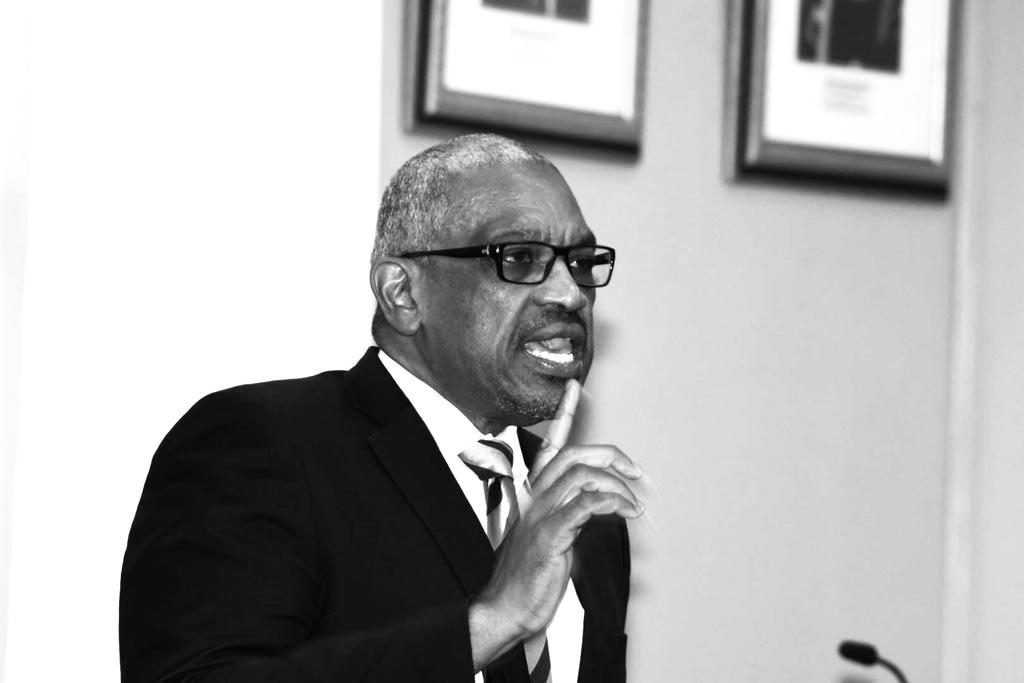
- Mr. Speaker:
There has been a problem in The
Bahamas for some time with the
creation and spread of malicious fake
news. 30
We live in a free and open society
where citizens have a right to express
their opinions.
A free press plays a vital role in
protecting our freedoms.
I am pleased that the political party
I have the privilege of leading freed the
broadcast media from state control.
Sadly, today, the malicious creation
of misinformation for the purpose of
creating harm, chaos, violence and
disorder is deeply worrisome.
There are people who create such
misinformation and disinformation for
malicious reasons.
The spread of malicious fake news
has the potential to: cause violence;
runs on financial institutions and/or
critical food and medical supplies.
Such fake news may cause
widespread panic that prevents
citizens from following directions
designed to protect their lives during a
crisis.

Under these regulations, no person
shall publish or cause to be published,
posted or re-posted over any media
platform, inclusive of social media, any
purported news or report or purported
statement of fact, knowing or having
reasonable cause to suspect the same
is: untrue or false; or may incite public
fear, panic or ethnic hatred.
Mr. Speaker:
We do not know what new
problems may emerge during this
emergency period.
Out of an abundance of caution, a
provision exists in these regulations by
which the Governor General may
authorize international or regional
military or police forces as may be
requested by the Government to serve
as peace officers and assist in:
• the storage, safe keeping or
distribution of relief supplies;
• the provision of any essential
services;
• and the maintenance of public order.
Mr. Speaker:
I have outlined the major
components of these regulations.
Some of these provisions may be
invoked. Some may not.
We have brought forward these
regulations to have the legal powers
necessary at hand to respond quickly
and decisively to this crisis.
Mr. Speaker:
We must all play a major role in the
days and weeks ahead.
We must stay united.
The Government is using the full
capacity of the law and state to win
this fight against the virus.
Each Bahamian can be part of the
battle by rejecting the spirit of
negativity that has infected too much
of our public conversation.
Do not join them.
I am so proud of our health
professionals, who labour long hours
to care for the sick and to ease the
suffering of those in pain.
They spend long hours at work
away from their families trying to keep
us safe.
Let us value their sacrifice.
Let us thank them for their service.
Let us pray that God gives them
extra wisdom, energy and
understanding to lead us to better
outcomes.
If we keep a unity of spirit and
purpose during this crisis we will come
out of it better as a people.
Bahamians built this archipelago
with their hands generation by
generation.
Each time we have faced a crisis,
our unbreakable Bahamian spirit has
come to the fore.
We have worked together.
We have helped each other.
There is no fight we cannot
overcome when we stand together,
united across this blessed and
beautiful archipelago.
Mr. Speaker:
We can and we will co-operate with
others in fighting this deadly invader.
As one people we must make the
best use of what we have.
We must once again rely on the
resilience, the imagination, the love
and the faith which have defined us
and sustained us over many
generations.
Now is not the time for panic but for
discipline.
Now is not the time for selfishness
but for sharing.
We must remain calm.
We must be civil with one another
as we, together, face this challenge.
It is going to be difficult, but all
things come to an end and so this
crisis will also end.
Mr. Speaker:
I wish to end with these words of
hope from Psalm 46:
1 God is our refuge and strength, an
ever-present help in trouble.
2 Therefore we will not fear, though
the earth give way and the mountains
fall into the heart of the sea,
43
3 though its waters roar and foam and
the mountains quake with their
surging.
4 There is a river whose streams make
glad the city of God, the holy place
where the Most High dwells.
5 God is within her, she will not fall;
God will help her at break of day.
6 Nations are in uproar, kingdoms fall;
he lifts his voice, the earth melts.
7 The LORD Almighty is with us; the
God of Jacob is our fortress.
44
8 Come and see what the LORD has
done, the desolations he has brought
on the earth.
9 He makes wars cease to the ends of
the earth. He breaks the bow and
shatters the spear; he burns the
shields with fire.
10 He says, “Be still, and know that I
am God; I will be exalted among the
nations, I will be exalted in the earth.”
11 The LORD Almighty is with us; the
God of Jacob is our fortress.
Thank you, Mr. Speaker.




The Bahamas, August 27, 2026 – The Royal Bahamas Police Force wishes to inform members of the public that several individuals are scheduled to appear before the Magistrate’s Court on Thursday, 27th August 2026, at 12:00 noon.
The individuals and charges are as follows:
An 18-year-old female is scheduled to be arraigned on the following charges:
Three (3) counts of Murder
Three (3) counts of Attempted Murder
Three (3) counts of Possession of a Firearm with Intent to Endanger Life
Three (3) counts of Possession of an Unlicensed Firearm
Two (2) counts of Possession of Ammunition
Armed Robbery
Abetment to Armed Robbery
Stealing
Receiving
The charges stem from three separate shooting incidents and an armed robbery that occurred on Friday, 21st August 2026, and Saturday, 22nd August 2026.
The first shooting occurred in the area of Soldier Road and Baillou Hill Road, resulting in the death of a 51-year-old male.
The second shooting occurred in the area of Joe Farrington Road, resulting in the death of a 52-year-old male.
The third shooting occurred in the area of Gladstone Road, resulting in the death of a 36-year-old male.
The armed robbery occurred at a business establishment in the area of Carmichael Road and Baillou Hill Road.
A 21-year-old male is scheduled to be arraigned on one charge of:
- Murder
The charge stems from a shooting incident that occurred on Tuesday, 21st July 2026, in the area of Samson Street, Nassau Village, which resulted in the death of a 28-year-old male.
A 32-year-old male is scheduled to be arraigned on the following charges:
- Murder
- Attempted Murder
These charges stem from a shooting incident that occurred on Wednesday, 24th December 2025, in the area of Graham Drive, Yellow Elder, which resulted in the death of a 25-year-old male.
RBPF, PACD
Bahamas News
Bahama Brass Band Invitation Sparks Heritage Debate Ahead of TCI Constitutional Holiday

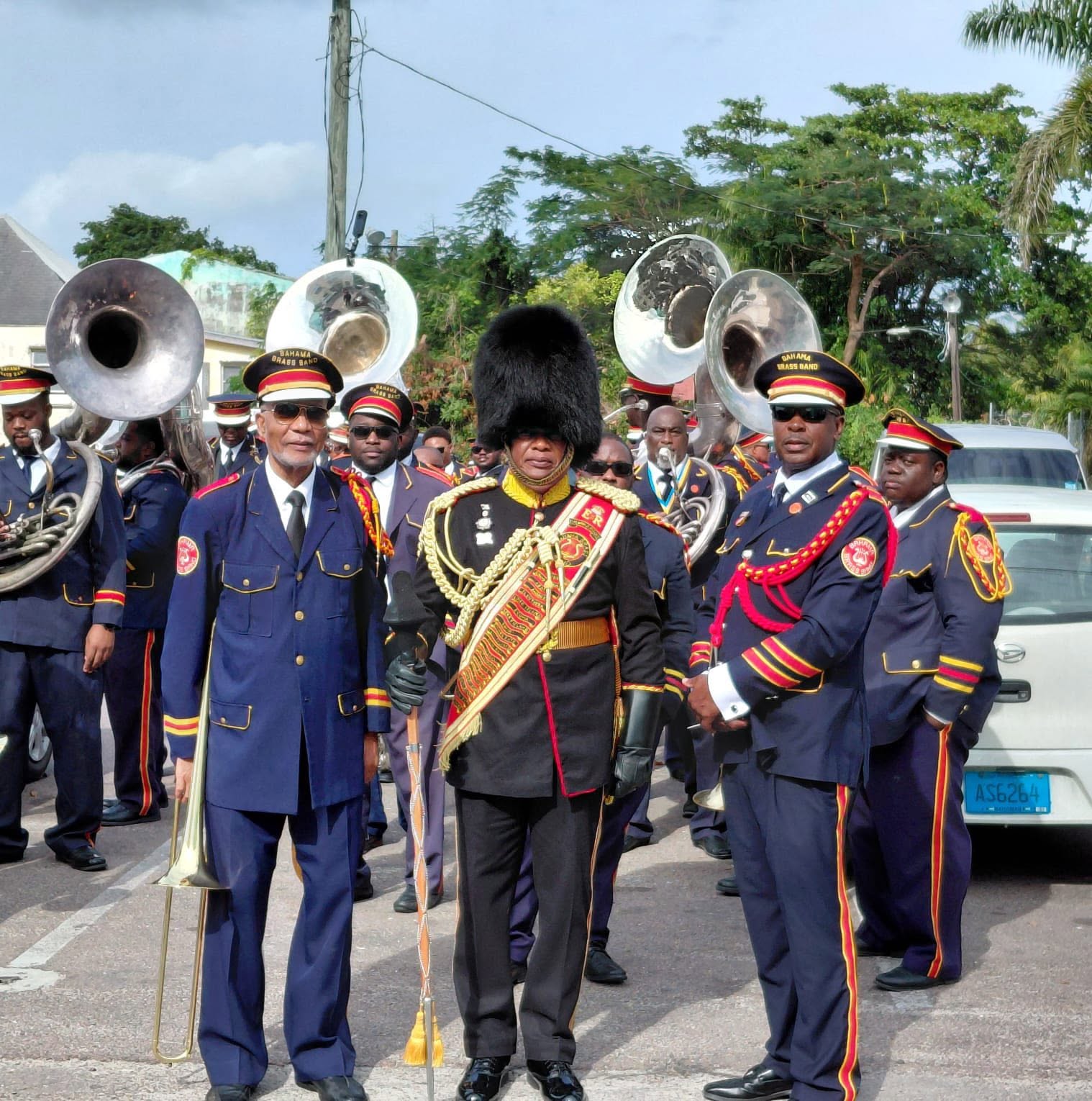
Turks and Caicos, August 20, 2026 – The planned participation of the Bahama Brass Band in the Turks and Caicos Islands’ inaugural Constitutional Holiday celebrations on August 30 has sparked public debate over culture, heritage and the historical contributions of Turks and Caicos Islanders abroad.
Organizers defended the invitation, saying the band’s inclusion is intended to highlight the deep historical ties between the two countries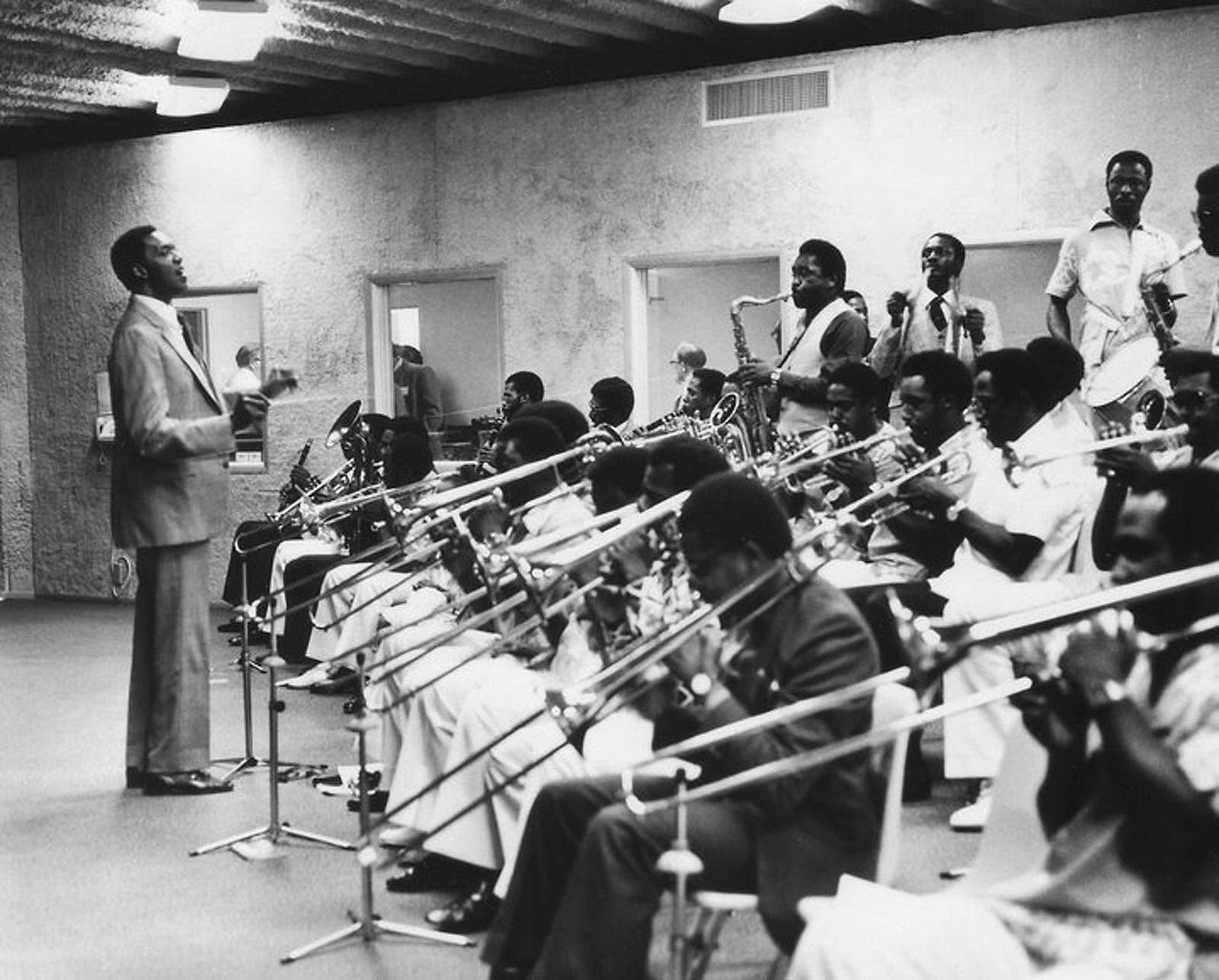 and honor Turks and Caicos men who helped establish and develop the institution in Grand Bahama.
According to the organizers, the Bahama Brass Band began in 1955 in Pine Ridge, Freeport, with Turks and Caicos Islanders, including the late Deacon Reuben Hall Sr. of Middle Caicos and Jenkins Williams and Mervin Hendfield of North Caicos, among those who helped build its foundation. The band eventually grew to more than 50 men.
The organizers also pointed to the participation of Turks and Caicos men in The Bahamas’ Independence celebrations on July 10, 1973, arguing that their contributions became part of Bahamian history while maintaining strong connections to their homeland.
Supporters say bringing the band home represents an opportunity to honor those pioneers, showcase their regional influence and expose younger generations to an important part of Turks and Caicos history.
However, concerns raised publicly described the invitation as potentially disrespectful to local culture and heritage. Organizers acknowledged those concerns, apologizing to anyone who felt overlooked or offended, while maintaining that no disrespect was intended.
The committee said the event should ultimately unite rather than divide, presenting the band’s history as evidence of the reach and resilience of Turks and Caicos heritage.
PHOTO CREDIT: Bahamas Brass Band

NASSAU, Bahamas — Caribbean Bottling Company (CBC), local producers of Dasani products, proudly sponsored the fifth annual, Caribbean Hoopfest.
The tournament brings together Bahamian high school basketball teams and visiting teams from the United States for a competitive showcase at the Kendal G. L. Isaacs Gymnasium. Following its inaugural year at the Kendal G. L. Isaacs gym and last year’s event at Loyola Hall, the tournament returned to the Kendal G. L. Isaacs gym this year.
During the weekend tournament, CBC kept athletes well hydrated with in-kind donations of Dasani Water, Powerade and Minute Maid Juices.
During the tournament’s final day, CBC provided additional support by offering Sprite No Sugar samples and inviting attendees to participate in its Spin the Wheel for a chance to win exciting prizes.
CBC was proud to support this incredible event, which provides young Bahamian athletes with valuable exposure to U.S. basketball scouts and coaches. This opportunity gives them the chance to earn scholarships, continue their education, and pursue their basketball careers in the United States.
Event organizer, Donald Francois shared his appreciation for CBC’s support.
“I want to express our sincere appreciation for Caribbean Bottling Company, who has been a tremendous supporter and an important part of the success of our program. Without CBC’s support, Caribbean Hoop Fest would not be able to function at the level it does today. And without Caribbean Hoop Fest, we would not have been able to provide the opportunities that have helped young Bahamian athletes gain exposure and pursue educational opportunities in the United States,” he expressed.
Since the program’s inception, several Bahamian student-athletes have been selected for scholarship opportunities, highlighting the tournament’s growing impact on the development and advancement of young basketball talent in The Bahamas.
They are: Kelvin McDowells – Guard, Wodson Antoine – Power Forward, Justin Lafleur – Guard and Sean John – Guard.
After another successful edition of the tournament, Francois shared what he hopes he and Caribbean Bottling Company can achieve in the future.
“Our vision is bigger than basketball. We want to use the platform of Caribbean Hoop Fest to educate, develop, and create opportunities for young people and their families throughout the Bahamas. With individuals and organizations committed to our mission, we believe we can continue to grow the program and make an even greater impact,” Francois said.
For more details on community support, events and new products visit Caribbean Bottling Company at www.cbcbahamas.com today.





-

 Education1 week ago
Department of Education Concludes Four-Day TCI National Standards Secondary School Curriculum Implementation Training
-

 Independent writer6 days ago
Fifty Years of Ministerial Government: Honouring Our Past, Embracing Our Present and Preparing for Our Destiny
-
 News1 week ago
UNDER 40 DAYS: COMMITTEE FORMED—BUT WHO IS ON IT?
-
 Health5 days ago
Know the Possible Warning Signs of Prostate Cancer
-

 News1 week ago
Invest TCI Brings Entrepreneurs and Bankers to the Table
-

 News3 days ago
Liberty Business launches in Turks and Caicos Islands
-
 Education3 days ago
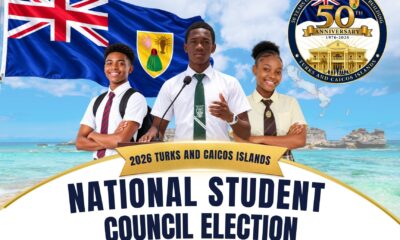
TCI Schools Invited to Participate in 2026 National Student Council Election