
News
Shareholders Applaud Bank Execs, Directors at AGM for $53 Million Profit Commonwealth Bank ‘Most Profitable of All Banks’ Execs tell Shareholders















Providenciales, Turks and Caicos Islands (November 6th, 2026) – The Turks and Caicos Islands welcomes Porter Airlines as it begins its service to the destination with its inaugural Toronto (YYZ) to Providenciales (PLS) route on Friday, November 6th. The airline will service the route five times weekly from the Toronto Pearson International Airport.
On December 17th, Porter will launch its Ottawa to PLS flight, a new route for the Turks and Caicos Islands. That route will be serviced twice weekly from Ottawa International Airport (YOW).
Minister of Tourism, Hon. Zhavargo Jolly said the expansion of air service from Canada reflects the growing strength of that market to the Turks and Caicos Islands.
“Canada is showing strong and growing interest in the Turks and Caicos Islands, and we are pleased to see that reflected in the expansion of air service from the market. Porter Airlines’ new nonstop flights from Toronto and Ottawa strengthen our connectivity with Canada and give travellers more convenient options for reaching our islands. Canadians have always shown a genuine appreciation for the culture, heritage, natural beauty and, of course, the people of the Turks and Caicos Islands. Perhaps it is that shared warmth and friendliness that keeps bringing them back, and our partnership with Porter will simply make it easier for Canadians to continue showing their love for our Beautiful by Nature islands. Toronto builds on an important existing market for us, while Ottawa opens an entirely new gateway to the Turks and Caicos Islands. This increased access will make it easier for more Canadians to discover and enjoy our destination, while supporting the continued growth of this important market.”
Hon. Arlington Musgrove, minister responsible for aviation, Turks and Caicos commended his team at the Turks and Caicos Islands Airports Authority (TCIAA) for developing this relationship with Porter.
“The launch of Porter Airlines’ new services from Toronto and Ottawa to the Turks and Caicos Islands is another important milestone in strengthening our connectivity with the Canadian market. Canada remains an important source market for our tourism industry, and these new routes will give Canadians more choice and easier access to the warmth, beauty, and hospitality of the Turks and Caicos Islands. I commend the Turks and Caicos Islands Airports Authority for leading this initiative and for its continued efforts to develop air service and build strong relationships with our airline partners. I also extend our sincere appreciation to Porter Airlines for its confidence in the Turks and Caicos Islands and for choosing our destination as part of its growing network of sun destinations. We warmly welcome Porter, its passengers and crew to our shores and look forward to a successful and lasting partnership,” he said.
To celebrate and promote the new flights, Experience Turks and Caicos hosted a reception in Ottawa for travel advisors and media. Organised by VoX International, our marketing agency in Canada, the event featured remarks by Market Intelligence Manager, Sharissa Lightbourne and Chairman of the TCIAA, Dwayne Gardiner. Nikeva Ariza, Director of Corporate Affairs, Communications and Public Engagement was also in attendance.
The new flights are operated by Porter’s 132-seat Embraer E195-E2. The aircraft features a two-by-two seating configuration, meaning no middle seats for any passenger. Porter’s elevated onboard experience includes complimentary beer and wine served in glassware, premium Canadian snacks, and free, fast WiFi for every passenger.
To book your flight, visit www.flyporter.com.

Providenciales, Turks and Caicos Islands (November 4th, 2026) – The Turks and Caicos Islands recorded its highest number of stayover arrivals for the third quarter of the year, with approximately 130,000 visitors welcomed between July and September, representing a three percent increase over the same period in 2025.
Preliminary figures from Experience Turks and Caicos show that the destination recorded 514,670 stayover arrivals for the first nine months of 2026, an increase of 25,048 visitors, or five percent, compared with the same period last year. Growth was recorded in every month from January through September, underscoring the destination’s continued appeal among travellers and the sustained demand for its tourism product.
Stay Over Arrivals by Quarter (2025/2026)
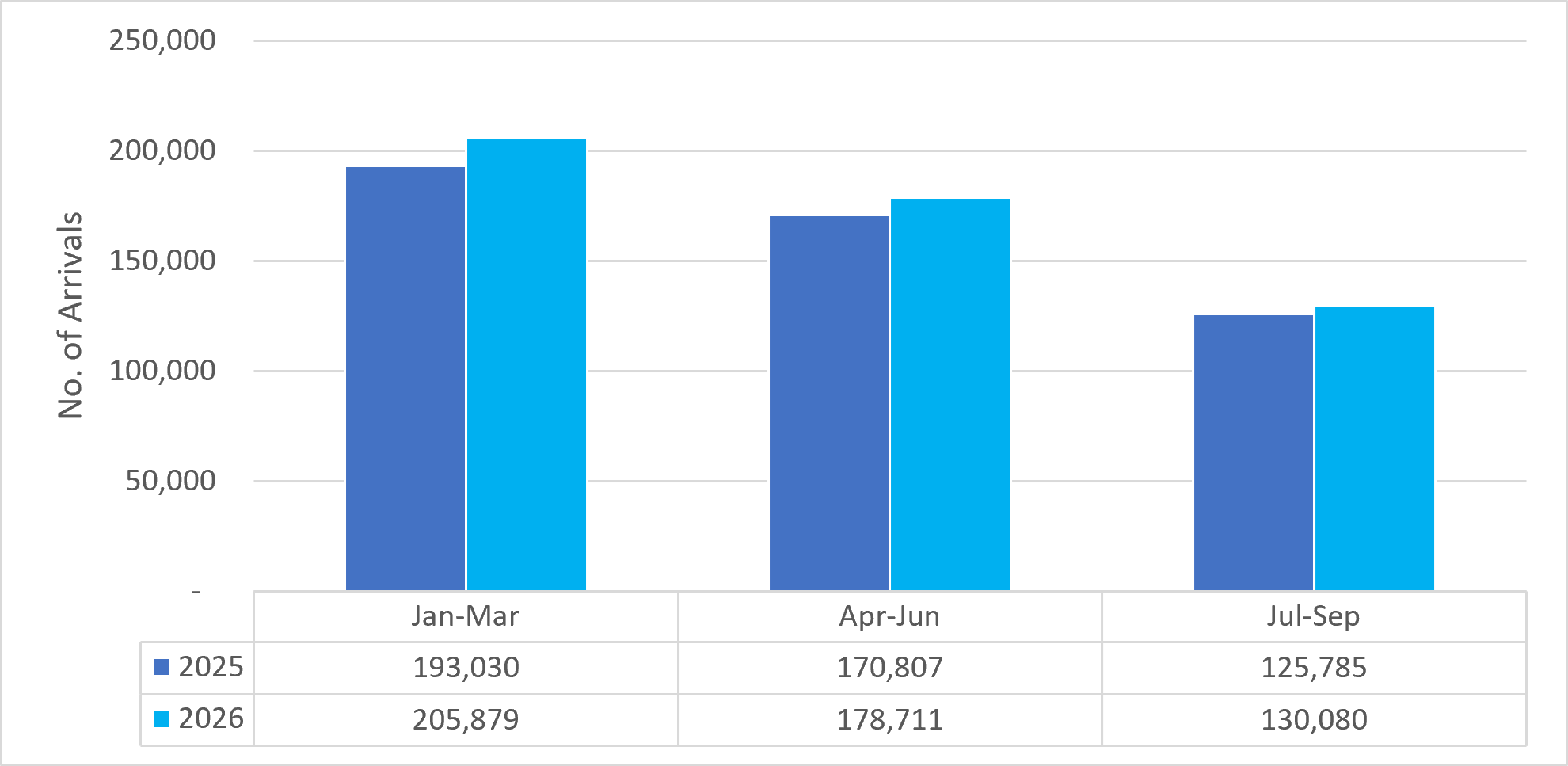
September closed the quarter on a positive note, with 20,204 stayover arrivals, seven percent more than the 18,795 recorded in September 2025. The year-to-date total of 514,670 is the highest number of stayover arrivals ever recorded for the January-to-September period.
Commenting on the record stayover arrivals, Minister of Tourism, Hon. Zhavargo Jolly said: “These record arrivals are an encouraging achievement for the Turks and Caicos Islands and a reflection of the continued confidence visitors have in our destination. However, I’ve always maintained that the true measure of tourism’s success cannot simply be the number of visitors arriving on our shores. It must also be measured by the opportunities we create for our people.”
“Our vision is to build a stronger, higher-value tourism industry where Turks and Caicos Islanders are not simply employees, but entrepreneurs, business owners and active participants in the economic opportunities tourism creates. This is why our recent Community Connect meetings across the sister islands were so important. We want to engage directly with our communities, understand their challenges and ensure that as our tourism industry grows, the opportunities for our people grow alongside it. Ultimately, tourism must do more than bring people to our shores. It must improve the lives of the people who call these islands home.”
Cruise arrivals reflect return to regular itineraries
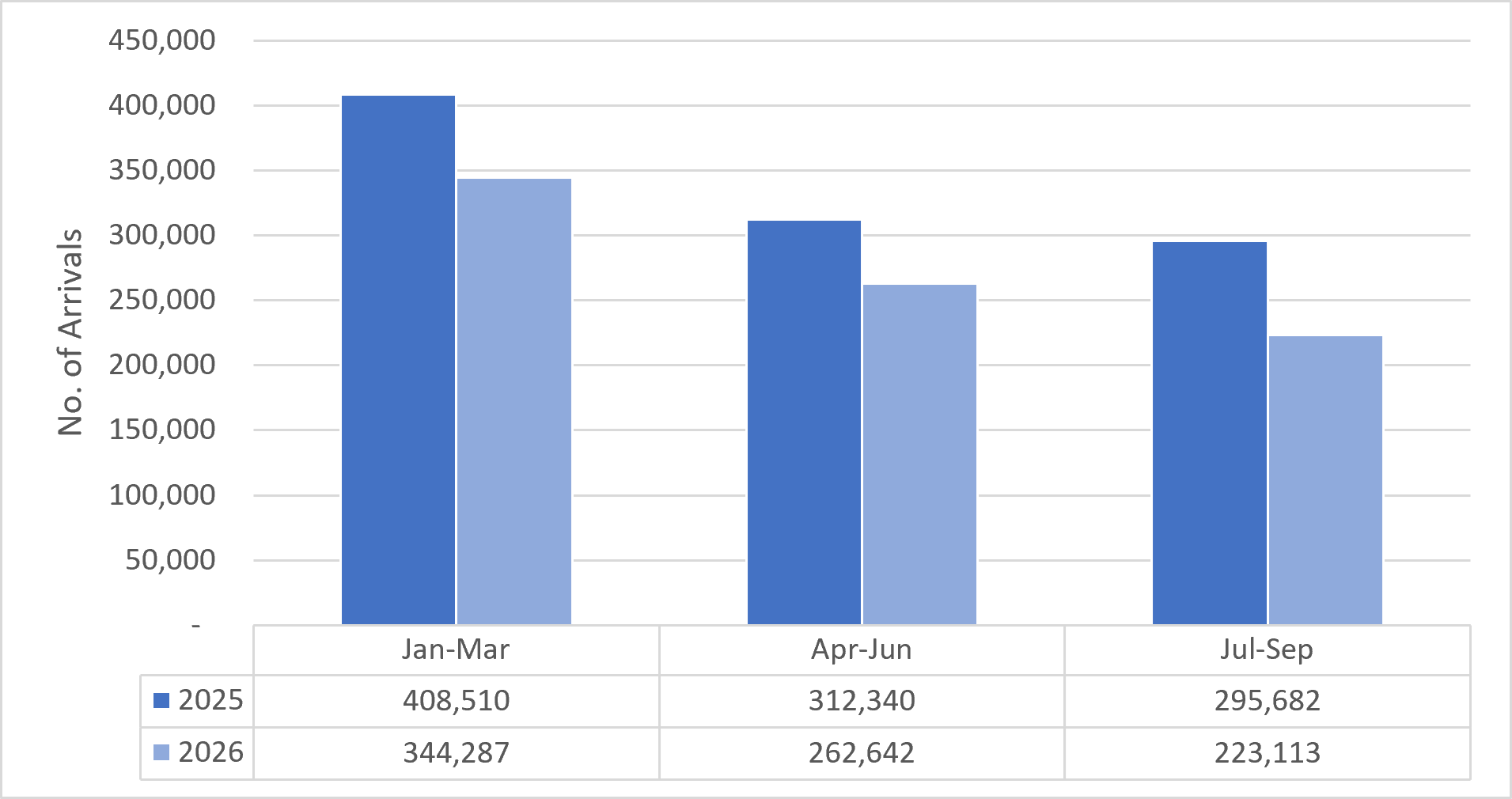
Cruise passenger arrivals at the Grand Turk Cruise Port followed a different trend during the first nine months of 2026, with figures reflecting a return to more typical cruise itineraries following an unusually strong period in 2025.
Last year, cruise lines added Grand Turk to their itineraries, resulting in exceptionally high passenger volumes and cruise calls. With itineraries returning to more regular patterns this year, cruise passenger arrivals declined year over year throughout the first nine months.
The destination received 62,095 cruise passengers in September, a 22 percent decrease from the 79,341 recorded in September 2025. From January through September, total cruise passenger arrivals stood at 838,533, compared with 1,016,532 during the same period last year, representing an 18 percent decline.
Cruise Arrivals by Quarter (2025/2026)
While the cruise figures reflect a normalisation from last year’s elevated numbers, the continued growth in stayover arrivals provides a positive indicator of the destination’s performance in its overnight visitor market.
It is projected that the month-on-month increases in stayover arrivals will continue into the upcoming winter season, especially with the additional airlift expected from new and existing gateways in Canada and the US.
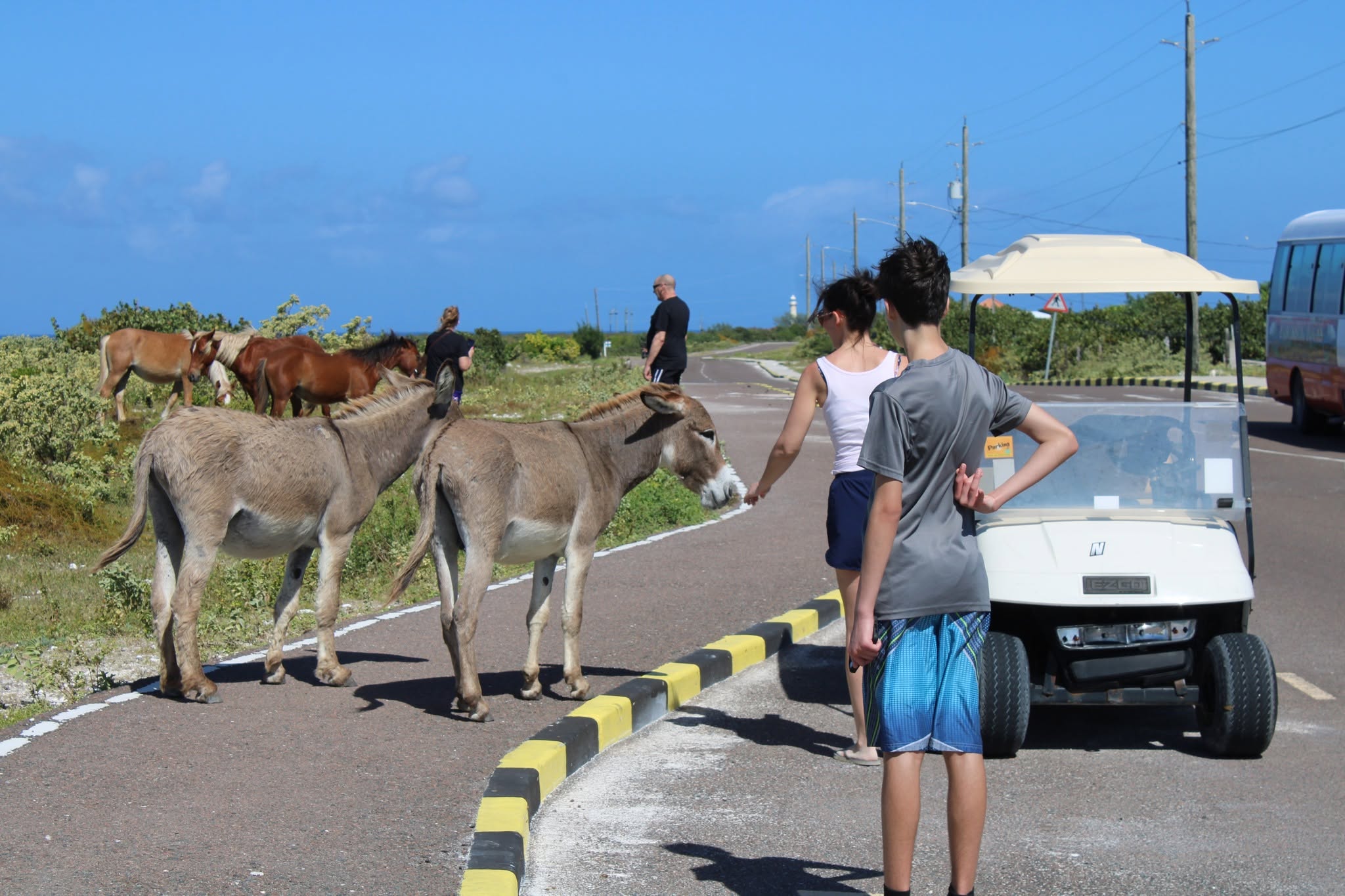
Turks and Caicos, October 31, 2026 – Once again, I feel compelled to put pen to paper on this matter. You don’t expect to slam your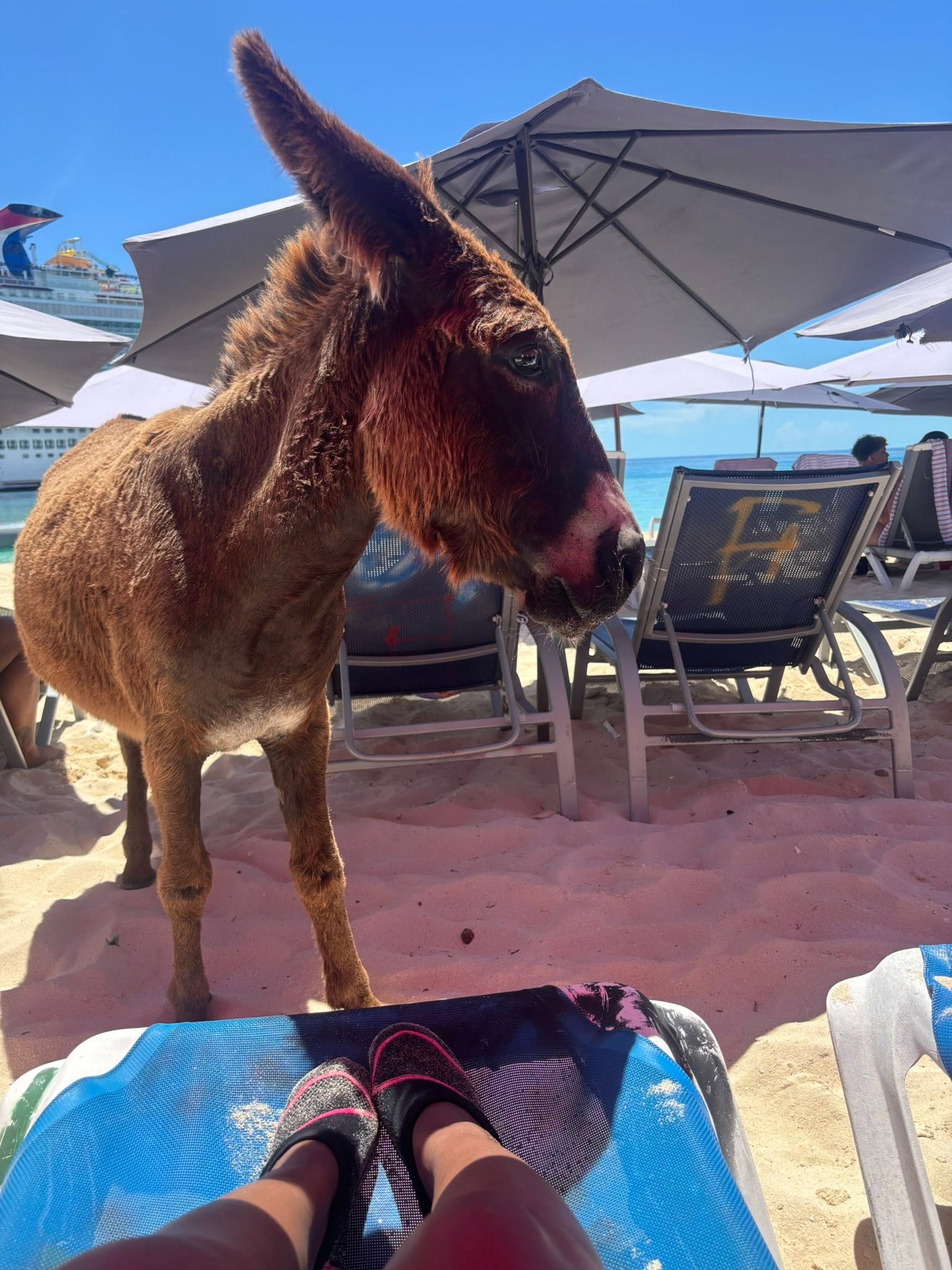 brakes in paradise. But in Grand Turk, it’s becoming routine.
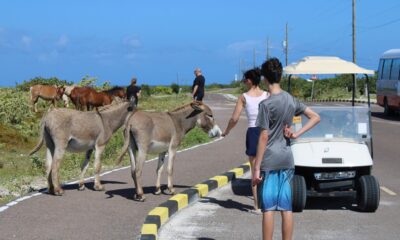
Donkeys roam along roadsides, darting into traffic, while packs of dogs linger around neighborhoods. Tourists and residents alike face dangerous encounters with animals that, while symbolic of Grand Turk’s identity, now pose very real threats to public safety and themselves.
I’ve had near misses myself, and I’m not alone. This is no longer simply an island charm issue; it’s an unfolding dilemma that demands attention.
Grand Turk has a long history of romanticizing its animals. Donkeys, once essential to the island’s salt trade in the 1800s, are now part of its distinctive character. Yet neither they nor the growing population of free-roaming dogs are being adequately managed.
Estimates place the donkey population at around 500 on an island measuring just 10.5 square miles, with approximately 4,000–5,000 residents and tourist numbers that can double on cruise ship days. Add dogs that are quasi-owned—fed occasionally out of pity or when they wander onto someone’s property, but rarely properly cared for or contained—and the scale of the problem becomes clearer.
Feeding a dog occasionally is not the same as taking responsibility for it. The same applies to owners who fail to provide adequate fencing, allowing their dogs to roam freely through neighborhoods and onto public roads. Responsible ownership requires more than occasional feeding; it means ensuring an animal’s welfare while protecting the wider community.
Tourists may marvel at roadside donkeys or follow a friendly dog to the beach. But they don’t necessarily witness the accidents, injuries, property damage, and scattered garbage. Nor do they see how open grazing areas are disappearing beneath roads, homes, and new developments.
So, whose space is it now? Are the animals invading ours, or are we gradually taking theirs, leaving less vegetation for them to feed on?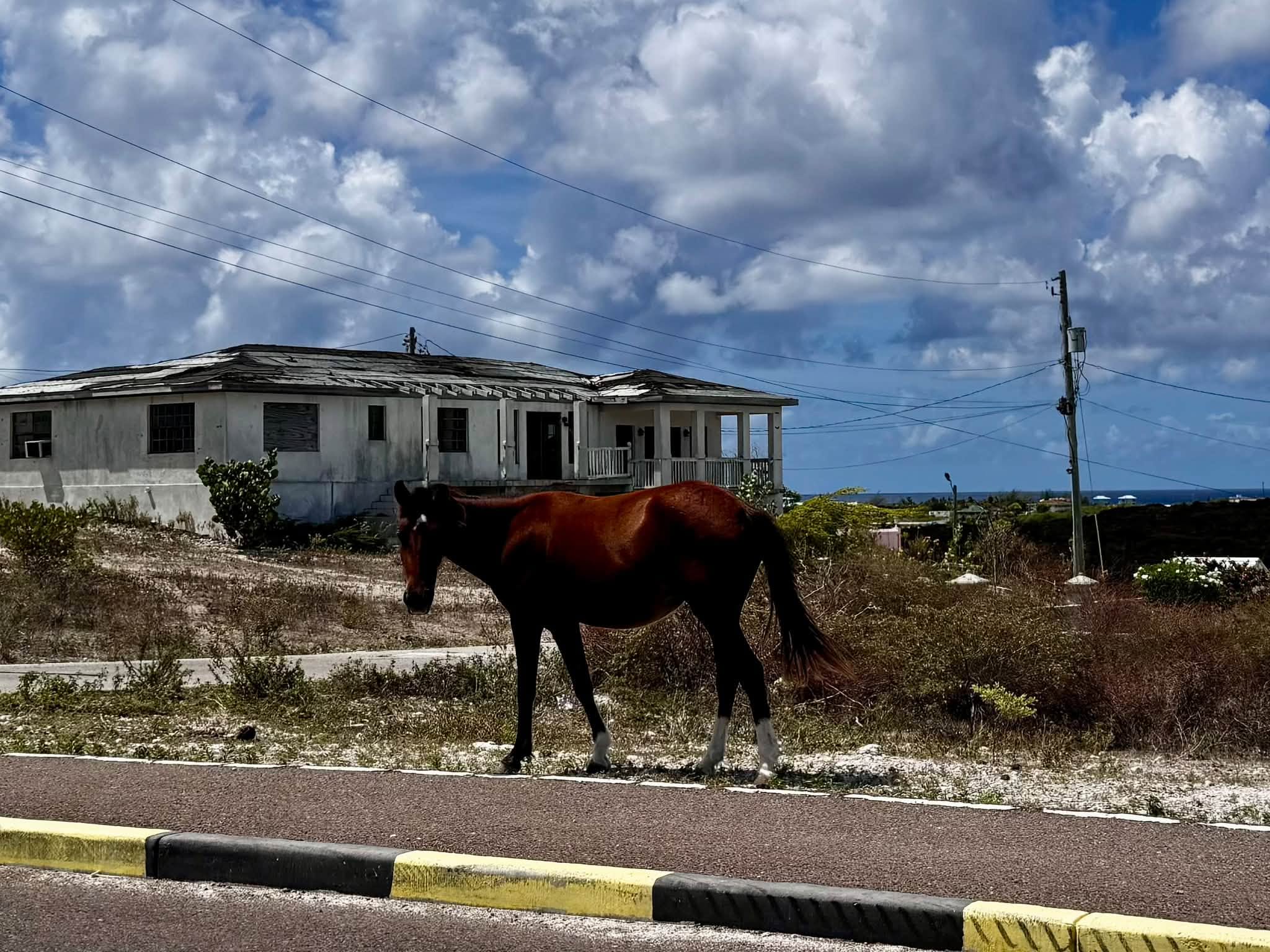
This is not simply a debate about animals. It is about responsibility, planning, and public safety.
Grand Turk’s Department of Agriculture faces a challenging predicament. The Turks & Caicos Society for the Prevention of Cruelty to Animals (TCSPCA) does what it can, but without adequate funding and government support, its capacity remains limited. Volunteers continue to step forward, yet goodwill alone cannot resolve a problem of this magnitude.
There are several suggestions from avid Hooves & Paws TCI volunteers: Establish satellite watering holes away from high-traffic areas, properly maintain existing ones, or explore the creation of a donkey sanctuary etc.
We have recently welcomed the long-awaited arrival of a full-time veterinarian, but that alone is not enough. Support vehicles, appropriate facilities, and equipment for the safe and humane capture and treatment of animals are also essential.
There is another uncomfortable question that deserves an answer: Is the Department investing in the training and resources needed for the humane euthanasia of severely injured animals when recovery is no longer possible, rather than leaving police officers to resort to shooting them?
There may be emergencies in which officers must act immediately to protect human life. However, emergency responses should not replace a properly funded animal management programme. Severely injured animals deserve a humane, professional response, with veterinary guidance wherever circumstances permit.
We have also heard concerning reports of animal mutilation. Such reports warrant serious attention and, where appropriate, proper investigation. Animal welfare must be part of this conversation, not an afterthought.
If Grand Turk wants to preserve its Beautiful by Nature identity, it needs more than slogans. It needs enforcement, practical solutions, and a willingness to acknowledge that some animals are suffering while others pose genuine dangers to residents and visitors.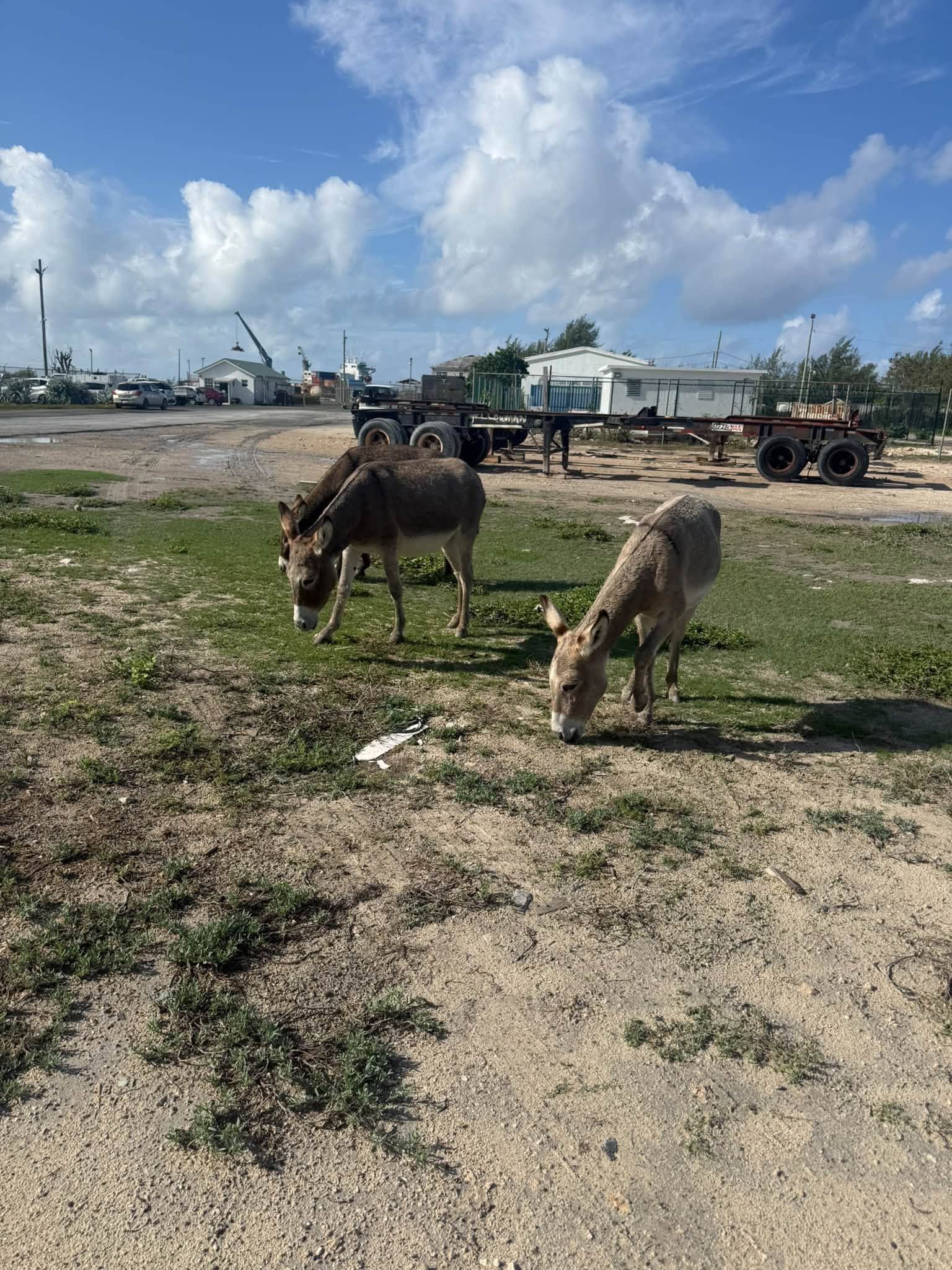
No one wants to strip the island of its character. Donkeys, dogs, horses, cows, and even the occasional roaming of goats or roosters contribute to the experience that makes Grand Turk memorable. But when charm becomes a hazard and beauty collides with danger, it is time to stop romanticizing the situation and start organizing around solutions.
There is no single, perfect answer. But continuing to do too little only increases the risk of more accidents, more suffering, and further damage to the environment we claim to cherish.
The wild can still be free, and humans and animals can coexist. But that balance requires responsible ownership, humane treatment, effective enforcement, adequate resources, and government leadership.
This administration must work alongside local volunteers, expatriate residents, animal welfare organizations, and the private sector to develop sustainable strategies before neglect leads to irreversible consequences.
Grand Turk’s animals are part of our heritage. Protecting that heritage means protecting the animals, the people who share this island with them, and the visitors who come here expecting paradise.
Ed Forbes





-
 Independent writer1 week ago
Wild, Free, and Out of Control: Grand Turk’s Animal Debacle Is No Island Secret
-

 News4 days ago
Porter Airlines Begins Nonstop Service to Turks and Caicos Islands with Toronto to PLS route
-

 News6 days ago
Turks and Caicos Islands Records Highest Third-Quarter Stayover Arrivals
-

 Bahamas News4 days ago
Inspired Abroad, Proudly Bahamian