
Bahamas News
A year later, stranded tug and barge still scars reef in Fowl Cays National Park – residents demand accountability


March 27, 2025—ABACO | A full year has passed since fierce winds and churning waves threw a tugboat and barge onto the delicate corals of Fowl Cays National Park. Despite multiple attempts to free the vessels, they remain a rusting eyesore—and a threat to the reef’s future. Locals, dive operators, and a coalition of nonprofits, led by the Perry Institute for Marine Science (PIMS), want to know: why hasn’t it moved?
David Knowles, Chief Park Warden at the Bahamas National Trust (BNT) overseeing all national parks in Abaco, vividly recalls the day the tug and barge slammed onto the reef. “It’s the same story we’ve seen again and again,” he says. “Weather shifts, a channel is miscalculated, and suddenly a boat is on the reef. But what’s unique here is how long it’s stayed.” BNT, which manages Fowl Cays National Park along with more than 30 other protected areas, quickly issued a public statement after the grounding, urging the vessel’s immediate removal to prevent further damage.
The barge, reportedly loaded with construction supplies bound for a development on Abaco, poses ongoing hazards to divers and boaters, with twisted beams and stray materials scattered across the seabed.
Over the past year, authorities and salvage teams have attempted to refloat the tug on four separate occasions without success. During these attempts, the tug’s stern repeatedly grounded on an adjacent section of reef, pulverizing corals below into rubble and sand.
Part of the frustration stems from a simple question: who should pay to fix this? Under Bahamian law, the owner is legally responsible for the salvage, environmental remediation, and the safe removal of any cargo. But in practice, these groundings often become a bureaucratic tangle.
“It’s easy to point fingers at those in charge,” says Denise Mizell, Abaco Program Manager for PIMS who has organized major cleanup efforts at the site since its grounding, “but they can only do so much without cooperation and funding from the owner’s insurance. Meanwhile, corals keep getting crushed, and people who treasure these waters feel powerless.”

Denise Mizell
Guided by its vision—“Thriving Seas, Empowered Communities”—PIMS is a global nonprofit that uses science to discover new solutions, create opportunities for people, and inspire action to protect ocean life. Their work spans coral reefs and mangroves, sustainable fisheries research, and education programs in The Bahamas. By collaborating with local communities, PIMS helps create sustainable job opportunities in ocean conservation, encouraging environmental stewardship and supporting family livelihoods. Working side by side with Friends of the Environment (FRIENDS), Bahamas National Trust (BNT), Bahamas Marine Mammal Research Organisation (BMMRO), local dive shops, and volunteers, PIMS has led efforts to remove debris from the barge still harming the reef. According to divers on these missions, the cargo of pea rock and sand from the barge spilled overboard, covering reef-building corals and smothering fragile habitats. Divers have collected rope, planks, twisted metal, and other debris drifting onto the reef, sometimes fire extinguishers, chart books and plastic light covers mixed among shattered elkhorn coral. Elkhorn coral, categorized as critically endangered by the International Union for Conservation of Nature (IUCN), is one of the Caribbean’s most important reef-building species.
For many Bahamians, that image cuts to the heart of the issue. The country’s famed coral reefs, especially the branching elkhorn coral that shelters fish nurseries, have already been hammered by disease, hurricanes, and pollution. Tourists come from around the globe to snorkel and dive here, pouring hundreds of millions of dollars into the local economy. Meanwhile, a single grounding can devastate decades of coral growth and disrupt the ecosystem that supports tourism and contributes to nearby fisheries. When storms roll in, the tug and barge shift, scraping the reef anew. Ropes snag, anchor chains drag, and once-vibrant coral heads splinter under the weight of shifting metal.
“It’s gut-wrenching to see such negligence,” says Troy Albury of Dive Guana. As President of Save Guana Cay Reef and Fire Chief for Guana Fire and Rescue, he wears many hats in this close-knit community. Albury regularly leads underwater tours and has watched debris from the stranded barge creep into neighboring dive sites. “It’s a threat to everything people love about Abaco—the fish, even the tourism jobs. Every week, visitors ask, ‘Why is there a barge on the reef?’ and I don’t have a good answer.”
The Government has powerful tools on paper. Under the Environmental Planning and Protection Act of 2019 and international conventions like the Nairobi International Convention on the Removal of Wrecks, owners must carry wreck removal insurance and face stiff penalties if they fail to remove a grounded vessel. The Port Department can also coordinate with other agencies to order salvage operations, or, in some cases, remove the vessel itself and bill the owner.
Olivia Patterson-Maura, Executive Director of Friends of the Environment —whose environmental education and conservation programs are a renowned staple in the Abaco community—believes that lasting solutions require government and private stakeholders to pull together. “Everyone wants to protect The Bahamas’ reefs—tour operators, local communities, government agencies,” she says. “We really want to collaborate on practical steps that get the wreck out of the park and restore the site, but we need more than non-profit organizations to step up to the plate. This is a national treasure, and it’s in all our interests to remove it before more damage occurs.”
The tug and barge lie about half a mile from a coral nursery run by the Reef Rescue Network—a collaborative restoration effort led by PIMS and local stakeholders—where fragments of elkhorn and staghorn corals are grown with the hope of replanting them on endangered reefs. Each time storms agitate the stranded vessels, divers see more broken coral littering the seafloor.
“Every time the tug shifts in heavy swells, it scrapes away more of the reef. We’ll dive back down and find broken coral colonies, half-buried gorgonians, and fresh rubble. It’s heartbreaking to watch the corals get pounded over and over,” said Dr. Charlotte Dunn, a volunteer diver and President of The Bahamas Marine Mammal Research Organisation, non-profit dedicated to long-term field studies of marine mammals in The Bahamas.
In the face of shifting winds and unreliable actors, community members are stepping up. Residents who rely on these waters for fishing, diving, and tourism wait anxiously for updates, questioning when visible progress will finally happen. Few doubt the complexity of large-scale salvage jobs. Yet the question remains: in a place where coral reefs generate hundreds of millions of dollars in tourism revenue and shield coastlines from storms, how can a stranded barge be allowed to linger an entire year?
Mizell and her volunteer teams plan to return to the wreck site soon, armed with gloves, mesh bags, and determination to collect whatever new debris has dislodged. Each dive might remove only a fraction of the junk, but for those who love these waters, every fragment is worth saving. When asked why they persist with such incremental work, Mizell’s answer is simple: “We do it because we all care about the state of our ocean. The reef can’t wait.”
Media Contact:
Written by Lily Haines | PIMS | WhatsApp +1 (613) 791-6045 | lhaines@perryinstitute.org


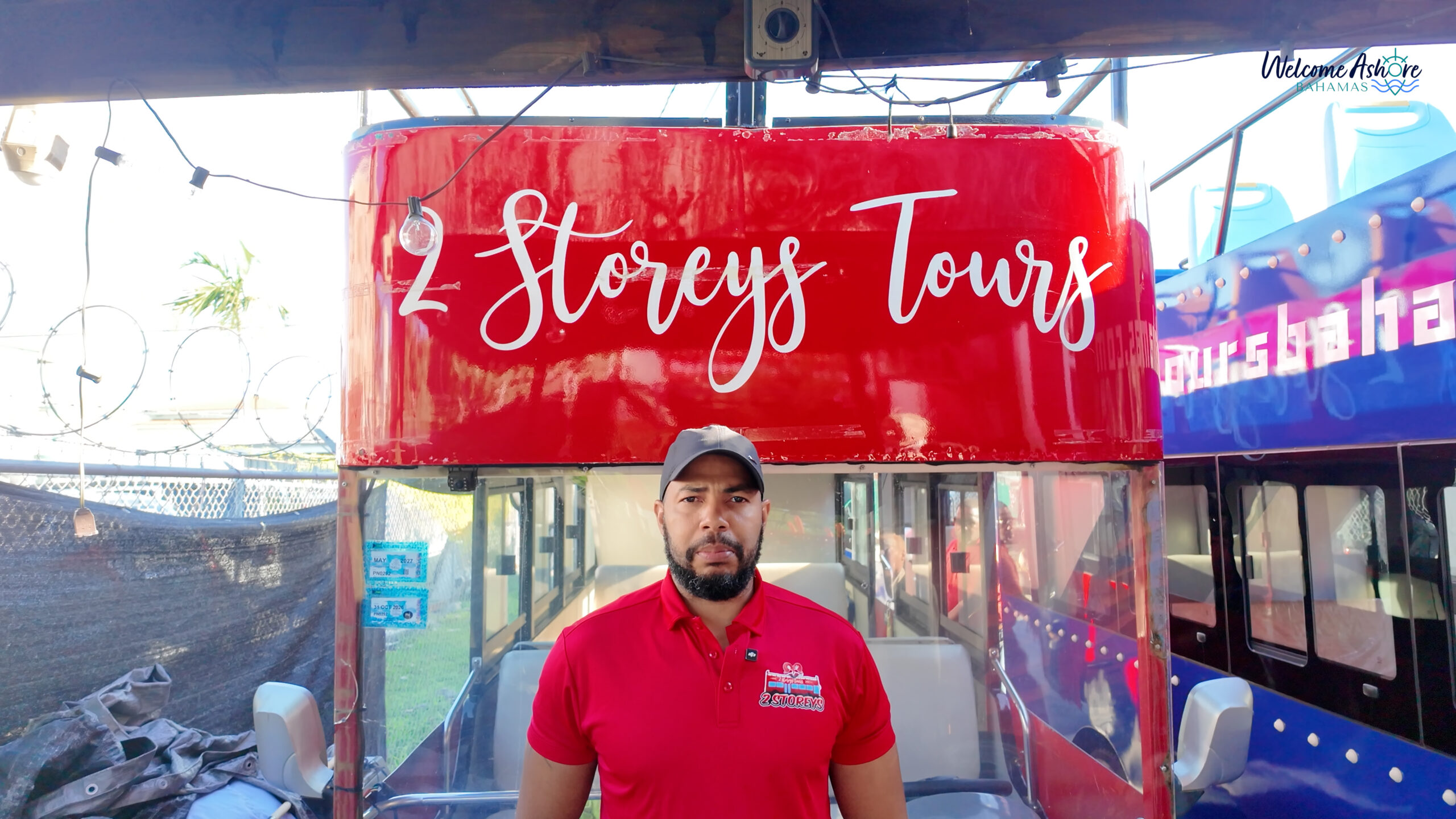
DEAR EDITOR,
Sometimes the best ideas come from experiences far away from home.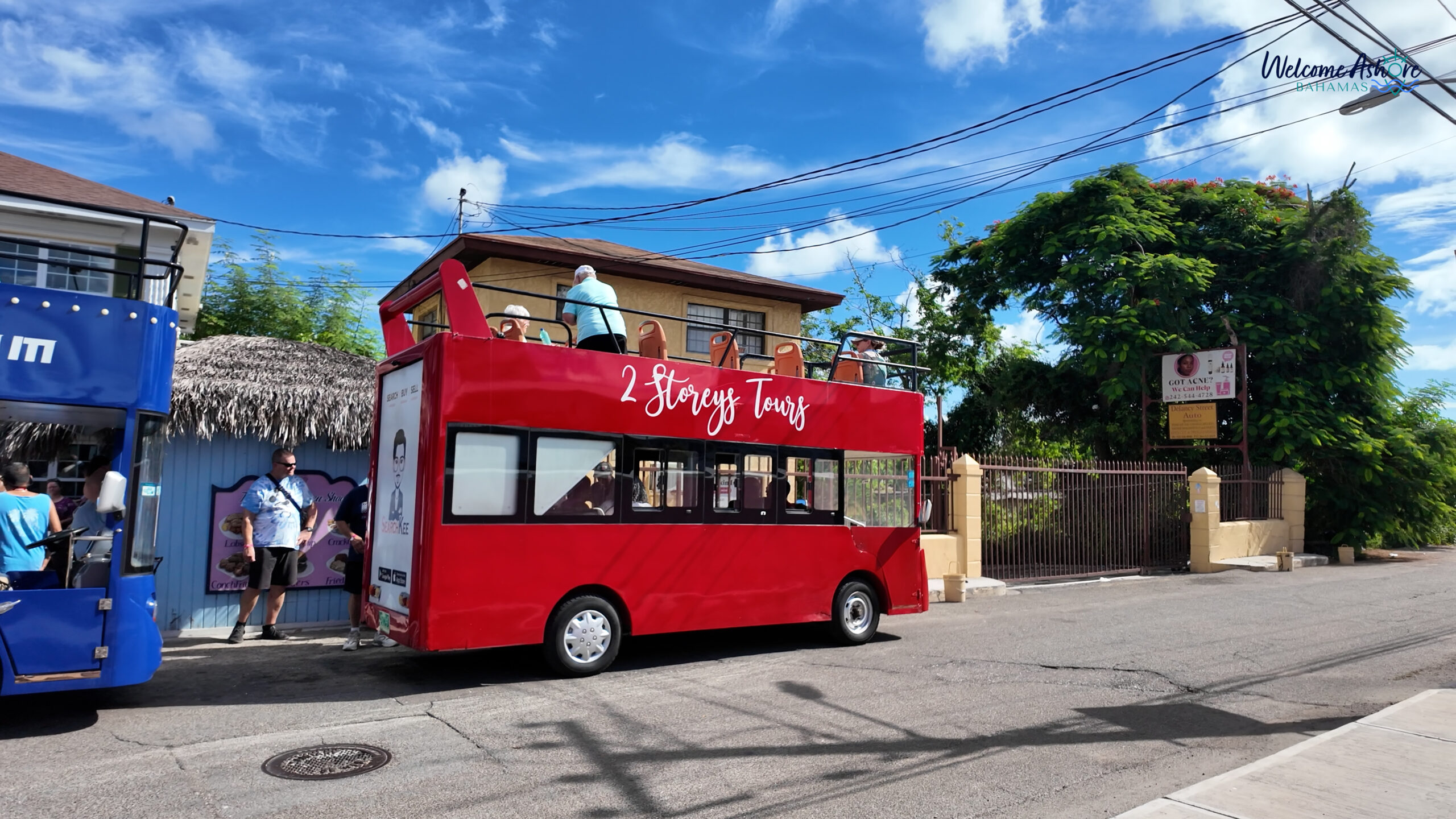
It was while I was living in Europe that I saw how excited people were about England’s iconic double-decker buses. It was a symbol of culture – and visitors looked forward to the ride as an experience in itself rather than just a method of transportation.
That sparked a thought: What if we brought that same excitement to The Bahamas, but made it uniquely Bahamian?
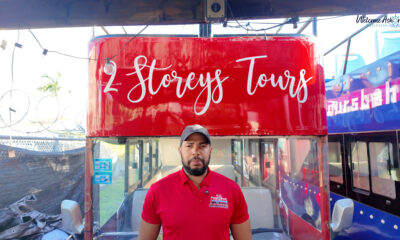
In November 2024, that thought became 2 Storeys Tours. I wanted visitors to see Nassau in a way they had not been able to before. That meant they could come straight off a cruise ship and onto a double-decker to see what makes our country what it is – to see our beautiful waters and to discover what makes us Bahamian.
We wanted to create something memorable, something visitors would associate with their Bahamian vacation, just as people associate double-decker buses with England.
The bus may catch your attention, but The Bahamas is what makes the experience unforgettable.
We also believe tourism should create opportunities for Bahamians.
We started less than five years ago with one very used double decker bus.
Now thanks to cruise ship business, we have quadrupled the size of our little fleet. We now have four shiny new red and blue buses, so we can say Welcome Ashore in style.
Depending on the season, between 70 and 80 percent of our business is cruise-passenger driven. Even during the slower season for hotels, the cruise ships arrive filled with people looking to explore historic Nassau and we are giving them the closest to a bird’s eye view as they can get. And they love it.
Turning an idea into a functioning business has been an exciting journey, but certainly not without challenges. From planning and preparation to finally seeing our buses on the road, the experience has taught us patience, perseverance, and the importance of believing in a vision.
We are proud of how far we’ve come, and even more excited about what lies ahead.
Building partnerships helped us to get to where we are today – building them further will take us to where we can reach tomorrow.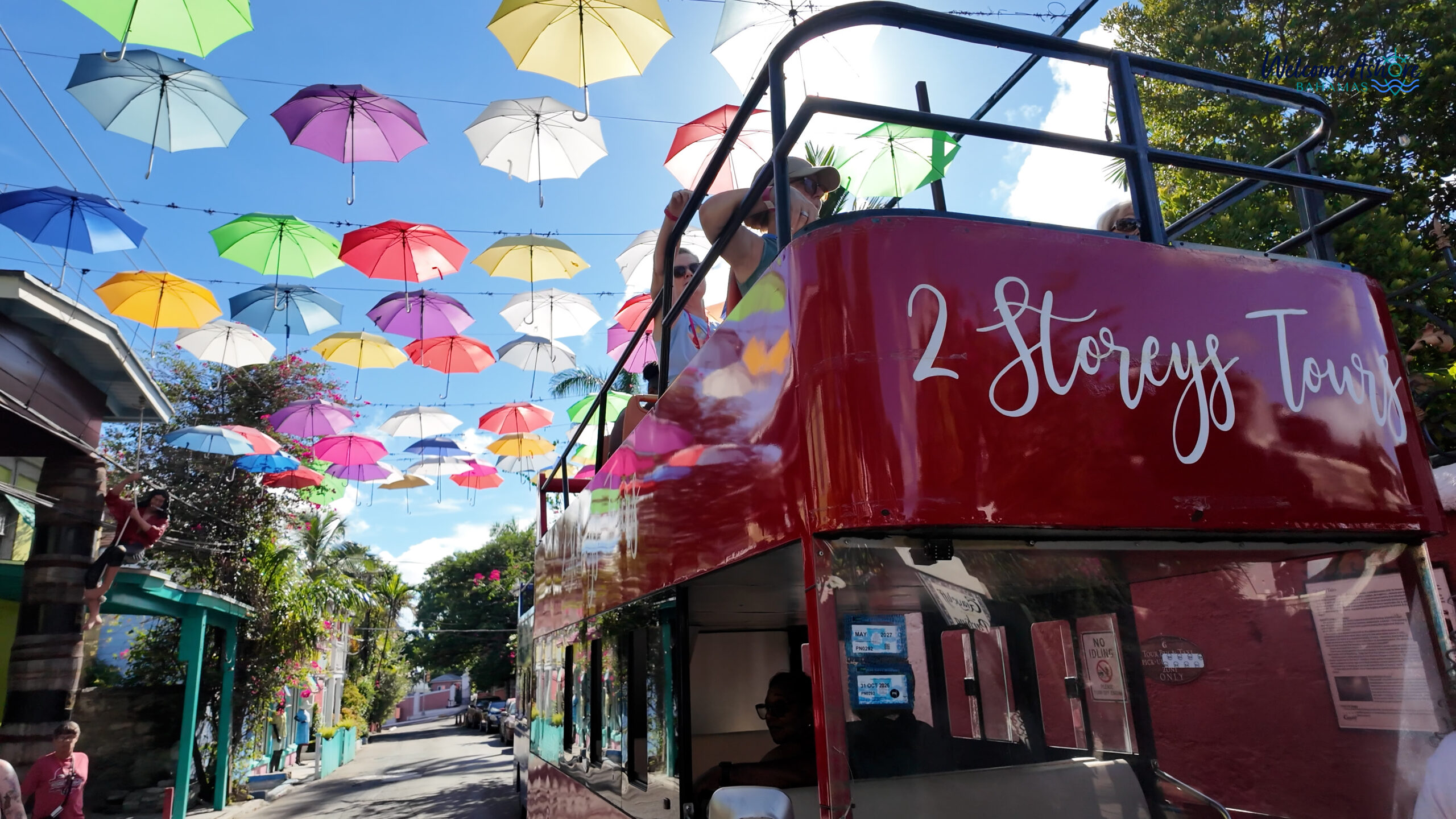
Our ambition is to make 2 Storeys Tours a recognised and trusted name in Bahamian tourism. We want to continue improving our tours, developing new experiences, embracing environmentally responsible tourism, and building meaningful relationships – and eventually take the 2 Storeys Tours experience beyond Nassau to other islands.
Above all, we want to build something that lasts.
Looking back, it’s incredible to think that an observation while living in Europe could lead to a business right here at home.
What began as an idea became a business with a purpose, and we’re only getting started.
Our inspiration came from abroad. Our passion comes from home. And our future is proudly Bahamian.
By: KEEVON MAYNARD
President, 2 Storeys Tours
Bahamas News
Federal Investigation into Florida Turnpike Tragedy that Killed Three Children of Bahamian Mother

NTSB examining roadside assistance driver’s actions, SUV speed and seat belt use after six people perish in fiery collision
ORLANDO, FLORIDA — October 29, 2026 — Federal investigators have joined the investigation into a horrific Florida Turnpike collision that claimed six lives, including all three children of a Bahamian mother, as questions intensify over what caused the deadly crash.
The United States National Transportation Safety Board (NTSB) has confirmed that it is opening an investigation into the October 23 accident, which occurred around 9:31 p.m. near mile marker 252 in Orange County.
The agency’s involvement brings federal scrutiny to a tragedy that has devastated several families and prompted an extraordinary outpouring of sympathy and disbelief.
Among those killed were siblings Charles Milton, Jakara Milton and Dalvena Green, the three adult children of Marshall Clarke-Milton and her husband, Charles Milton Sr.
The siblings were traveling with three others to Universal Orlando’s Halloween Horror Nights, reportedly on their first trip together.
They never arrived.
FEDERAL INVESTIGATORS EXAMINE WHAT WENT WRONG
The NTSB confirmed to FOX 35 Orlando that its investigation will examine the training and performance of the roadside assistance driver, the actions of the SUV driver, including speed, and whether the occupants were wearing seat belts.
The agency investigates serious transportation accidents to identify safety failures and recommend measures that could prevent similar tragedies.
Its involvement does not establish wrongdoing by either driver.
The Florida Highway Patrol is conducting a separate investigation into the collision.
According to the preliminary police account, a Road Ranger roadside assistance truck had been parked in the highway median before its driver received instructions to assist a disabled box truck on the opposite shoulder.
As the Road Ranger moved across the northbound lanes, it collided with a 2023 Chevrolet Traverse carrying six adults.
Both vehicles left the roadway and caught fire.
All six occupants of the SUV died at the scene. The Road Ranger driver survived with minor injuries.
MOTHER CHALLENGES EARLY ACCOUNT
Witnesses reportedly told investigators that the SUV was traveling at high speed without its headlights illuminated.
However, those observations have not been established as the definitive cause of the collision.
Clarke-Milton has challenged suggestions that her children or their companions were responsible, urging investigators to examine the evidence before reaching conclusions.
She wants investigators to establish the SUV’s actual speed and determine whether its headlights were operating.
The family’s concerns underscore the importance of the continuing investigations, particularly given the movement of the roadside assistance vehicle across active highway lanes.
ALL THREE CHILDREN LOST
For Clarke-Milton, the investigation unfolds against an almost incomprehensible personal tragedy.
She lost all three of her children simultaneously.
In an emotional interview with FOX 35 Orlando, the grieving mother described the terrible feeling that overcame her when she could not reach them.
“My heart sank,” she said, recalling the moment she feared her children were involved.
The siblings were among six people whose lives ended during what should have been an enjoyable evening together.
The other victims included Timothy Williams and Shawn Palmer. A sixth person’s identity had not been publicly confirmed in the latest reports reviewed.
The family’s heartbreak has resonated across The Bahamas and beyond, with expressions of sympathy accompanying calls for answers.
SEARCH FOR ANSWERS CONTINUES
The Florida Highway Patrol has indicated that a crash report is expected within approximately ten days of the accident.
The NTSB’s investigation will examine broader transportation safety concerns, including the operation of roadside assistance vehicles and the circumstances surrounding the collision.
For the grieving families, the findings cannot reverse the tragedy.
But they may establish what happened on that stretch of Florida’s Turnpike and whether anything could have prevented six people from losing their lives.
For one Bahamian mother, the loss is especially devastating.
Three children left for an evening of entertainment. Not one came home.
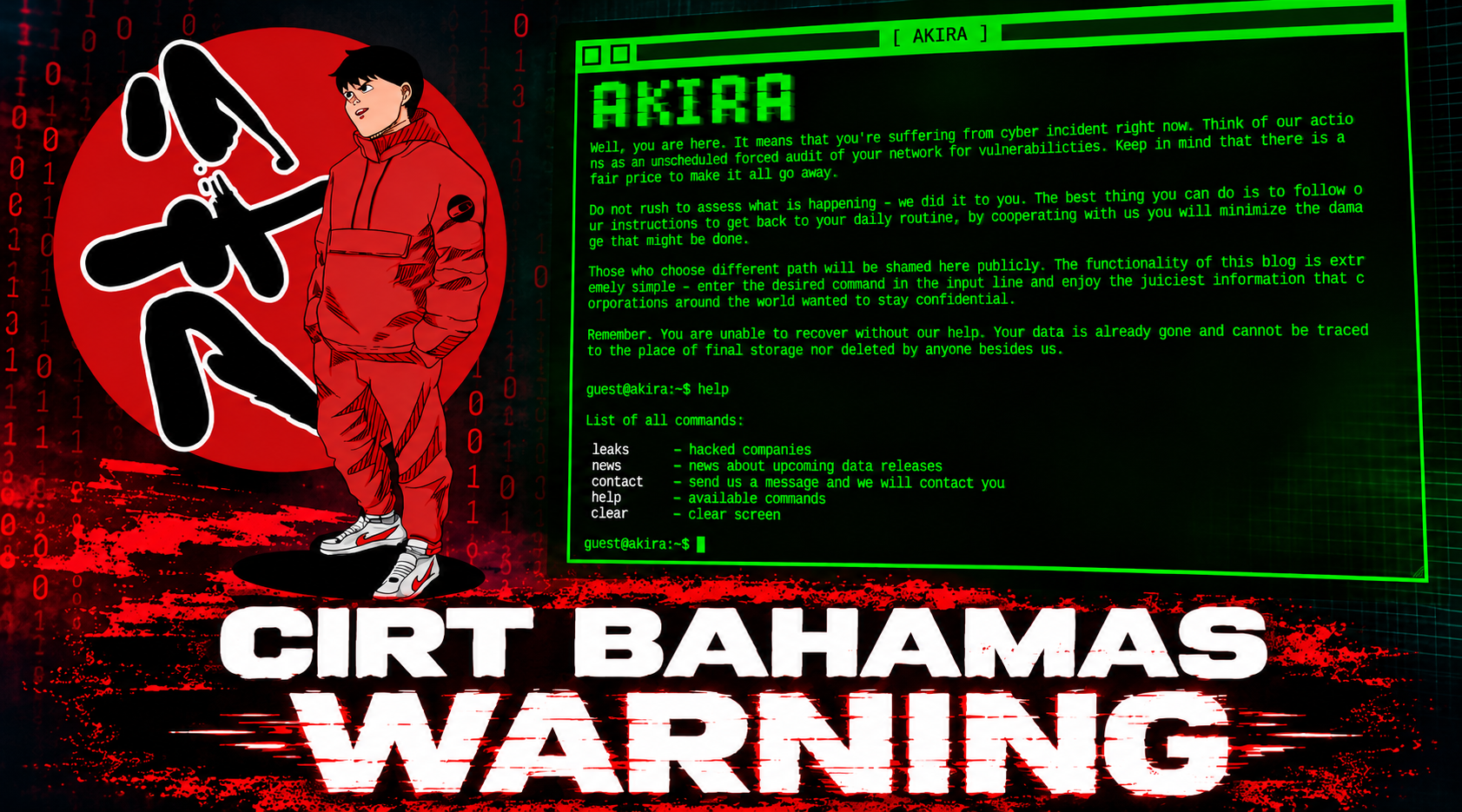
Nassau, The Bahamas, October 22, 2026 — The National Computer Incident Response Team of The Bahamas (CIRT-BS) has issued a cybersecurity advisory warning businesses, government institutions and other organisations about the growing threat posed by Akira ransomware, a cybercriminal operation capable of stealing sensitive information, disrupting networks and demanding ransom payments.
Active since March 2023, Akira operates through a Ransomware-as-a-Service model, with affiliates exploiting weaknesses in computer networks to gain unauthorised access.
Once inside, attackers can steal confidential data, disable recovery systems and encrypt files, preventing organisations from accessing critical information.
Particularly concerning is Akira’s use of double extortion, threatening to publish stolen information unless victims pay. Some attacks involve data theft without encryption.
The October 22 advisory identifies vulnerabilities involving Cisco and SonicWall firewalls, VPN services, Microsoft Remote Desktop Protocol, Veeam backup systems and outdated Windows and Linux operating systems. VMware ESXi and Nutanix AHV environments are also potential targets.
Attackers may exploit unpatched software, stolen login credentials and inadequately secured remote-access applications, including AnyDesk and RustDesk.
Warning signs include unexpected administrator accounts, unusual remote logins, unauthorised software installations, suspicious backup activity, mass file changes and ransom notes.
CIRT-BS recommends immediate security updates, multifactor authentication, restricted remote access, stronger network monitoring and secure backups maintained separately from operational systems.
Organisations should also remove unnecessary internet exposure of remote desktop services, limit administrative privileges and regularly test backup restoration.
The advisory does not identify any confirmed Akira attack against a Bahamian organisation but highlights vulnerabilities that could expose institutions to serious financial and operational disruption.
Cybersecurity incidents can be reported to CIRT-BS at soc@cirt.bs or through its official website.





-
 News6 days ago
Porter Airlines Begins Nonstop Service to Turks and Caicos Islands with Toronto to PLS route
-

 News1 week ago
Turks and Caicos Islands Records Highest Third-Quarter Stayover Arrivals
-
 Bahamas News6 days ago
Inspired Abroad, Proudly Bahamian
-
 News15 hours ago
The Cassandra I remember: A fighting spirit, now elected to serve