News
Targeted Attack; Three Shot, Two Dead

Deandrea Hamilton, Dana Malcolm and Wilkie Arthur
Editorial Staff
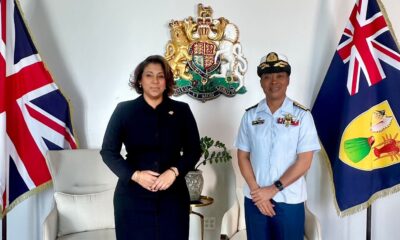
#TurksandCaicos, October 23, 2023 – The double homicide of Thursday afternoon was a “targeted” incident, according to the national security leaders of the Turks and Caicos Islands, Daleeni Daniel-Selveratnam, TCI Governor and Rodney Adams, Acting Police Commissioner. The distinction of the bold daytime shooting is crucial because it was yet another spray of gunfire erupting in a highly trafficked area for residents and tourists.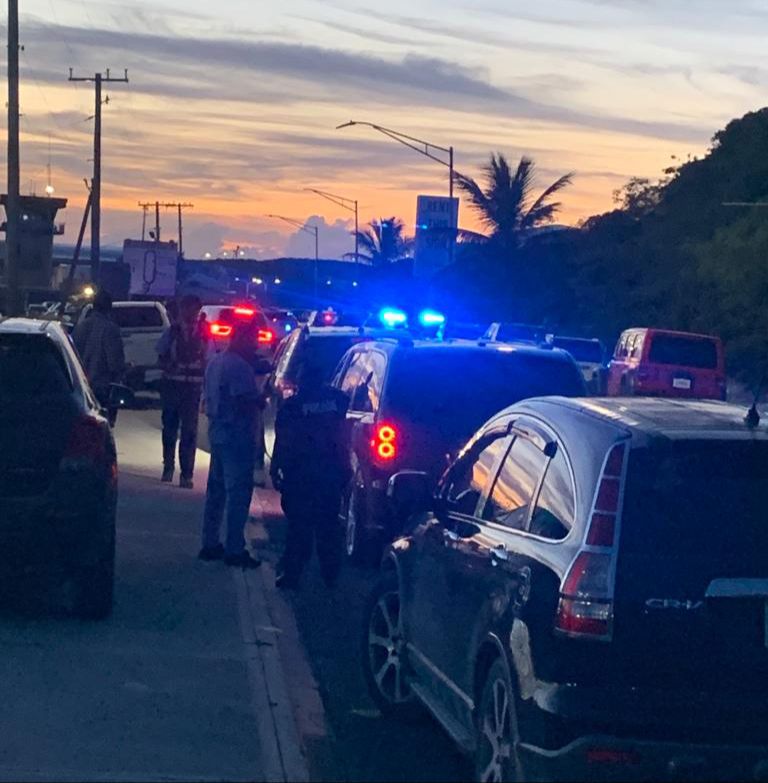
In a Friday (October 20) joint statement Daniel-Selveratnam and Adams confirmed that it was Jumilla Isma, 24 and Mike Forbes, 19 who were gunned down in a vehicle as they approached the Providenciales International Airport terminal around 5:52pm.
“Based on our preliminary investigation, this was a targeted incident,” said Rodney Adams.
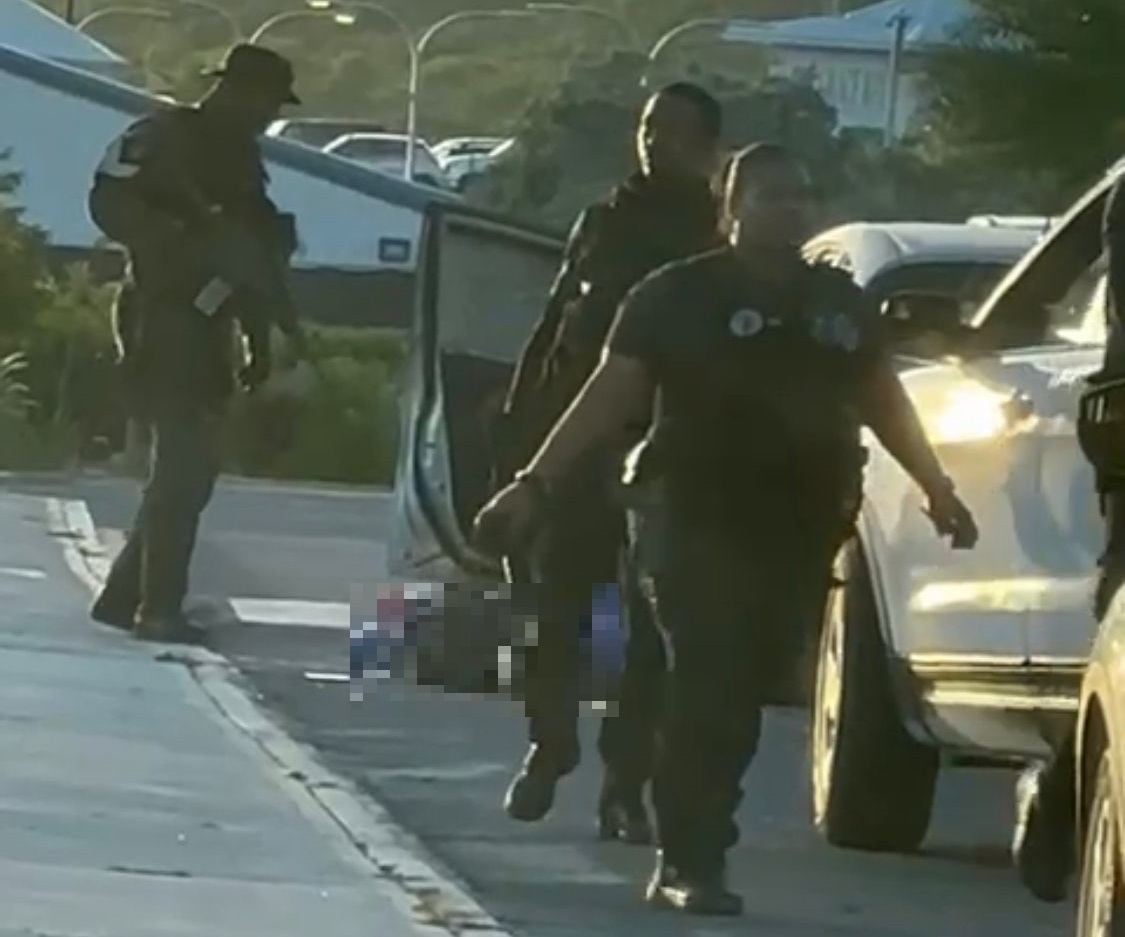
The scene, once news broke of the shooting, was crowded with police vehicles, heavily armed officers and residents who had come to see if what they were hearing was true.
It was a grizzly sight. Bodies, blood, car doors of a silver coloured Honda Fit were flung open and early reports that there were two dead, at least one other man injured.
Bone-chilling shrills and screams in the distance could be heard from loved ones. One woman, described as Jumilla’s sisters was speaking to their mother on cell phone, delivering news of the young man’s death.
“…Jim on the ground Mummy. (loud sobbing) Mummy dat’s Jim!!!! (woman pacing) Mummy, Jim DEAD!!!”
It was clearly an ambush and many speaking off-the-record to Magnetic Media informed, young Jumilla Isma was a wanted man. Not by TCI Police, but by others who had vowed payback for crimes allegedly committed by the 24-year-old; heartless crimes, which they believed, he had managed to outrun even in the courtroom.
A widely circulated and suspicious cell phone video showed an unsuspecting Isma earlier on Thursday leaving the airport terminal area wearing a blue shirt, dark pants and his long dreadlocks wrapped; he had just checked-in for a British Airways flight, our news organization was informed; that flight is scheduled for a 6:43 p.m. departure from the PLS.
It is unknown who was filming the man’s movements and why he left the airport, but Jumilla Isma upon return to board that plane, would face a fatal interception. Yards away from the spot where he was last caught on camera alive and well, he would die. There was a mixture of reactions; tremendous grief for loved ones and unbridled joy for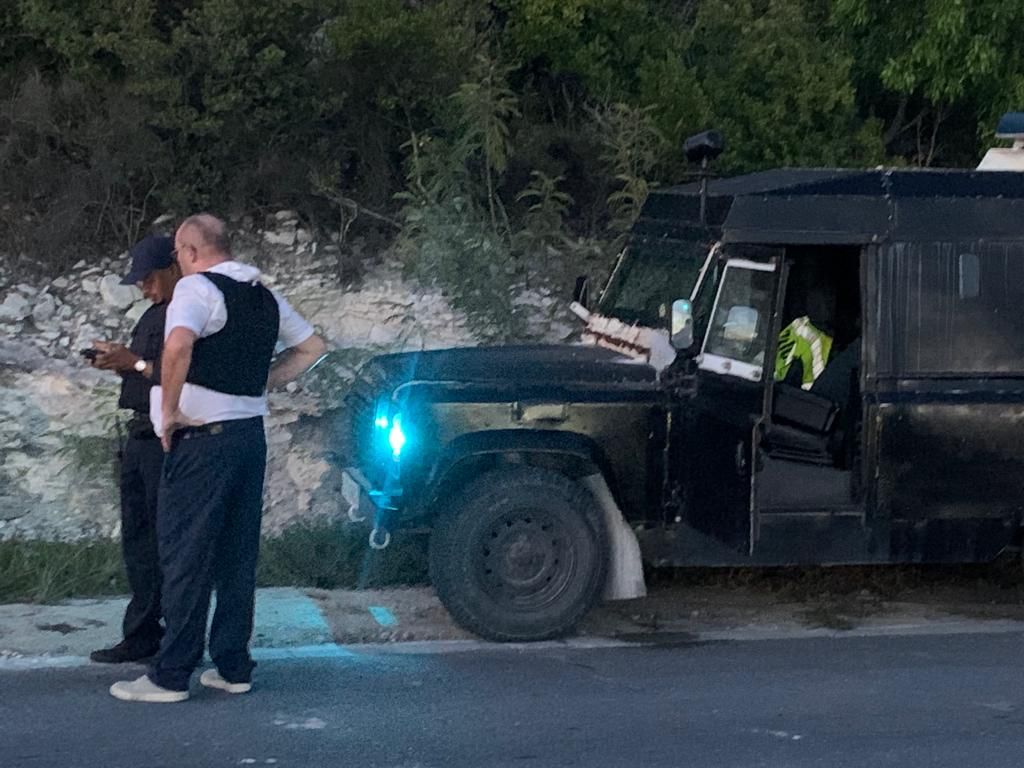 others who believed the young man got what he deserved.
Again, captured on cell phone, was a sizeable crowd of undistinguishable people and voices clearly celebrating as they filmed the loud cheering and the British Airways plane in the evening sky, departing Providenciales without Isma as a passenger. Most of the shouts were in Creole.
But the Governor is incensed by the brazen action.
“I am appalled at the nature of yesterday’s fatal incident. Such disregard for human life causes irreparable damage and consequential impact to the safety and security of our islands. I want to reassure the public of the multi-agency enforcement efforts to protect and secure our communities. I urge anyone with information to contact the police to assist their investigations to bring the perpetrators to justice,” said the Governor.
The fatal shooting, so near the airport also created a disruptive detour and a frightening situation for those working there.
Magnetic Media observed tourists and residents being denied entry to the airport, as the only way to the terminal meant a drive through the crime scene. We are told it resulted in travellers either missing flights or being delayed.
Workers at the PLS were also shaken, many abandoned their work stations and hid out once they heard the barrage of bullets.
DCP Rodney Adams, Acting TCI Police Commissioner who was captured in cell phone video at the airport after the shooting of the three men, in the statement issued on Friday said he wants video of the crime if you have it. Reach out to the SCU or the Serious Crime Unit at 649-232-8752.
“The Force is taking every action including deploying all required resources to bring those responsible to justice. Additional patrols are in place to ensure safety and security across all communities of the TCI. I wish to give residents and visitors the reassurance that their safety is our number one priority.” 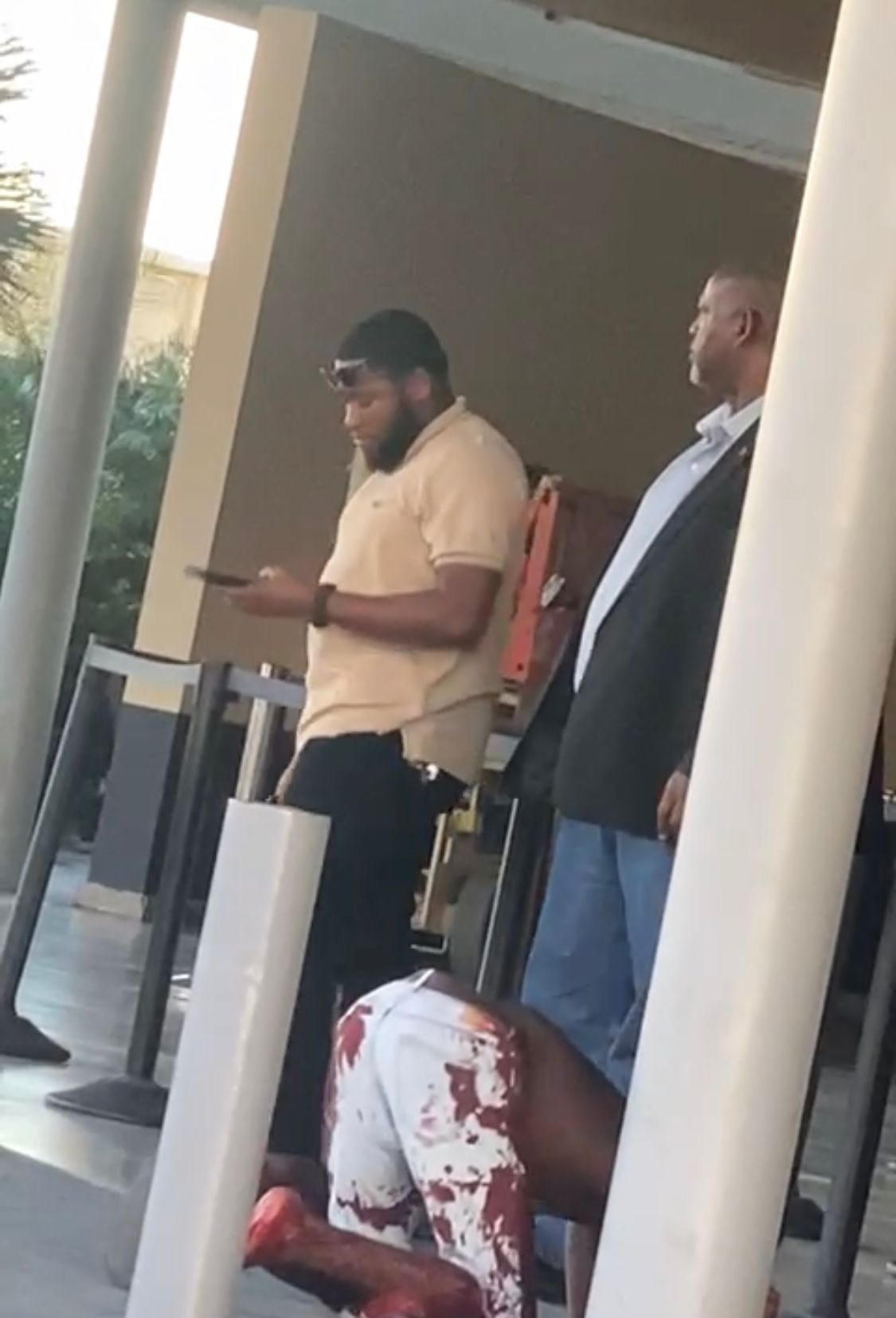
One man, who is unnamed, survived the attack.
Again, cell phone video of that man captured him kneeled down in the arrivals terminal of the Provo airport; the man was distressed and clearly under the watch by members of the Police Force. His short pants were stained with blood, so was his right arm. He held his shoulder with what looked to be his shirt, which he was no longer wearing. The man was able to walk, appeared to be barely lucid, perhaps in shock; those at the airport speaking to us under the promise of anonymity said he ran to the airport, away from ambush.
The man was injured in the attack however and detained at hospital and it is likely his detainment that has caused the suspension of visitation at the Cheshire Hall Medical Center, which is also now guarded by armed police.
More comments of grave concern about the boldness of the crime came on Friday including from Washington Misick, Turks and Caicos Premier and the Opposition, People’s Democratic Movement.




The Bahamas, August 27, 2026 – The Royal Bahamas Police Force wishes to inform members of the public that several individuals are scheduled to appear before the Magistrate’s Court on Thursday, 27th August 2026, at 12:00 noon.
The individuals and charges are as follows:
An 18-year-old female is scheduled to be arraigned on the following charges:
Three (3) counts of Murder
Three (3) counts of Attempted Murder
Three (3) counts of Possession of a Firearm with Intent to Endanger Life
Three (3) counts of Possession of an Unlicensed Firearm
Two (2) counts of Possession of Ammunition
Armed Robbery
Abetment to Armed Robbery
Stealing
Receiving
The charges stem from three separate shooting incidents and an armed robbery that occurred on Friday, 21st August 2026, and Saturday, 22nd August 2026.
The first shooting occurred in the area of Soldier Road and Baillou Hill Road, resulting in the death of a 51-year-old male.
The second shooting occurred in the area of Joe Farrington Road, resulting in the death of a 52-year-old male.
The third shooting occurred in the area of Gladstone Road, resulting in the death of a 36-year-old male.
The armed robbery occurred at a business establishment in the area of Carmichael Road and Baillou Hill Road.
A 21-year-old male is scheduled to be arraigned on one charge of:
- Murder
The charge stems from a shooting incident that occurred on Tuesday, 21st July 2026, in the area of Samson Street, Nassau Village, which resulted in the death of a 28-year-old male.
A 32-year-old male is scheduled to be arraigned on the following charges:
- Murder
- Attempted Murder
These charges stem from a shooting incident that occurred on Wednesday, 24th December 2025, in the area of Graham Drive, Yellow Elder, which resulted in the death of a 25-year-old male.
RBPF, PACD
by Deandrea Hamilton | Editor
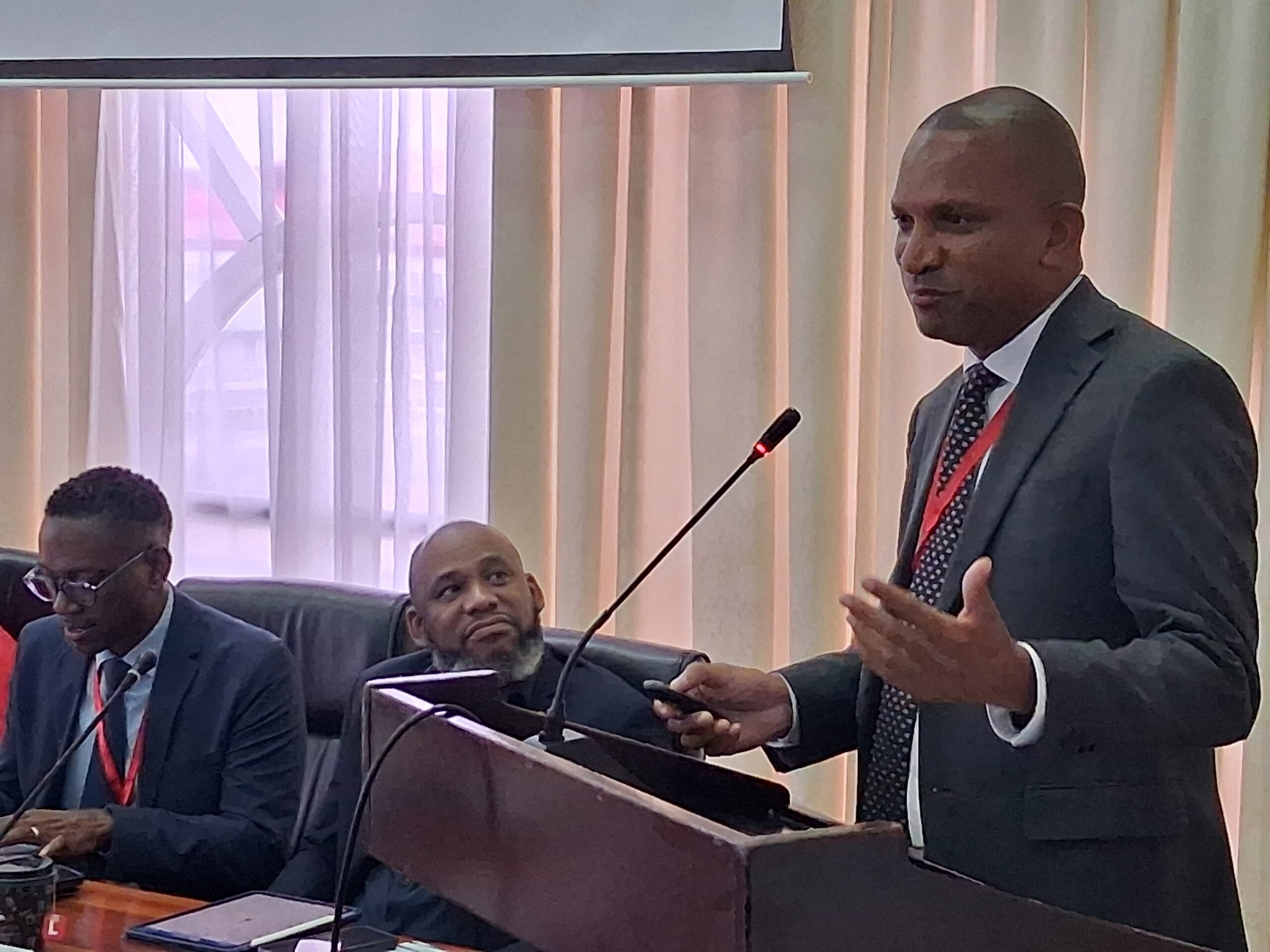
PROVIDENCIALES, TCI — In a country where government press conferences are virtually non-existent, ministers are often difficult for journalists to access and regular broadcast television news has disappeared, TCI Innovation, Technology and Energy Minister E. Jay Saunders has challenged Caribbean media to become “impossible to ignore.”
Speaking at the Caribbean Broadcasting Union gathering, Saunders argued that the Caribbean does not have a relevance problem but a “discoverability and positioning problem.”
Discoverability is precisely the issue in Saunders’ home country. Even Government’s own attempts at video news broadcasting have struggled against the realities of consistently producing a daily, weekly or even monthly newscast.
The difficulties confronting TCI media extend well beyond algorithms: limited advertising revenue, underfunding, shortages of trained professionals and insufficient human capacity leave newsrooms struggling for both staff and stamina.
Then there is the reality of operating in one of the region’s smallest societies. Politicians, journalists, advertisers, businesses and the subjects of stories often exist within the same tight economic and social circles. A controversial report that might create a ripple elsewhere can produce a tsunami in TCI, intensifying concerns among journalists about commercial and professional victimisation.
Saunders believes AI can help.
He urged Caribbean media to use the technology to transform one original story into television, radio, web, podcast, social and translated content without multiplying newsroom workload.
He also wants regional journalism structured so AI systems can find, understand and trust Caribbean sources, moving media beyond traditional SEO into Answer Engine Optimisation.
His ultimate message was emphatic: “Use AI not to make Caribbean media more artificial — but to make Caribbean voices more visible.”
For Turks and Caicos media, however, becoming visible may require more than technology. It requires an environment in which journalism can survive.
That last sentence is where I think we land the plane. It acknowledges that EJ actually has some us
Bahamas News
Bahama Brass Band Invitation Sparks Heritage Debate Ahead of TCI Constitutional Holiday
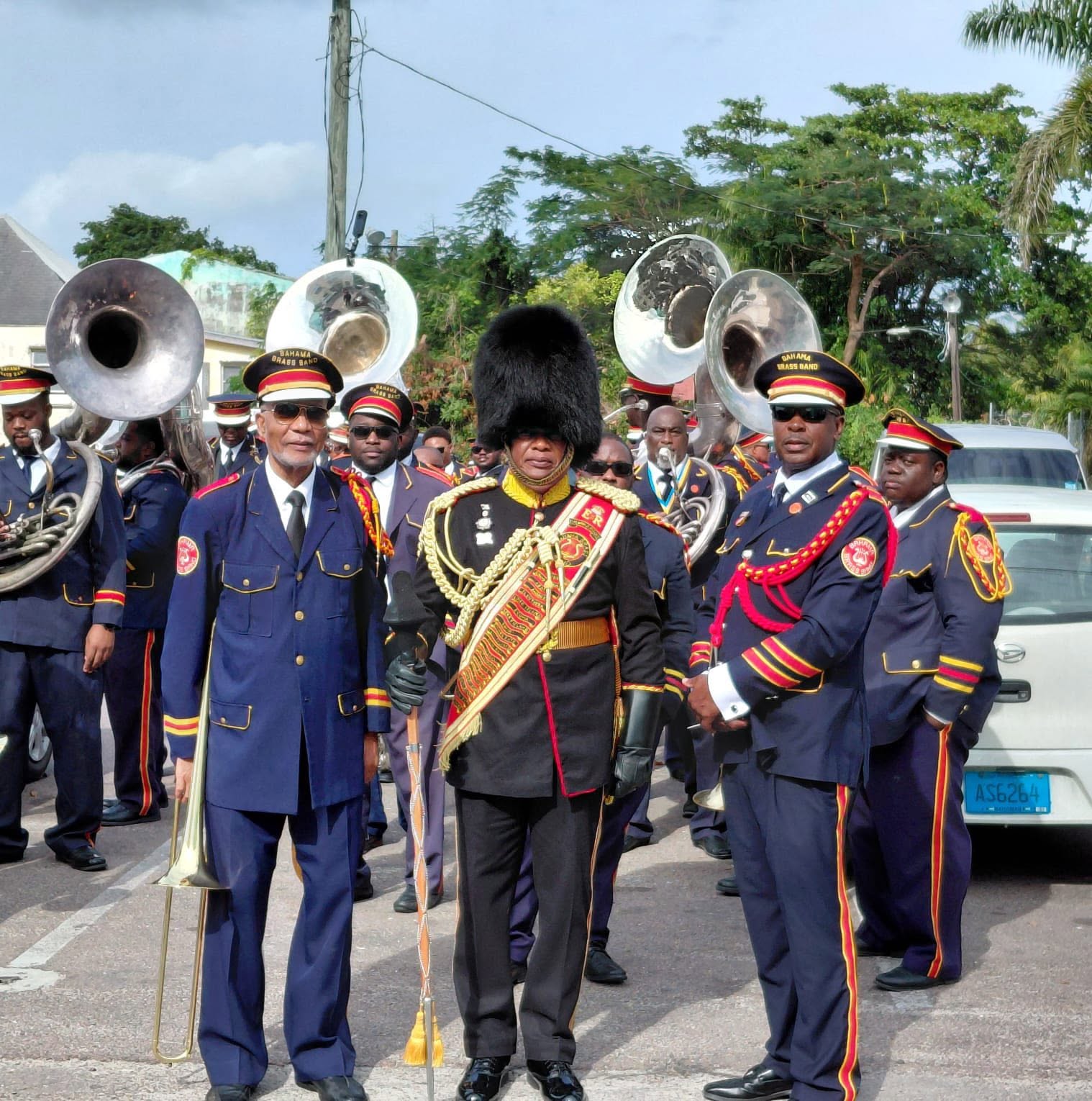
Turks and Caicos, August 20, 2026 – The planned participation of the Bahama Brass Band in the Turks and Caicos Islands’ inaugural Constitutional Holiday celebrations on August 30 has sparked public debate over culture, heritage and the historical contributions of Turks and Caicos Islanders abroad.
Organizers defended the invitation, saying the band’s inclusion is intended to highlight the deep historical ties between the two countries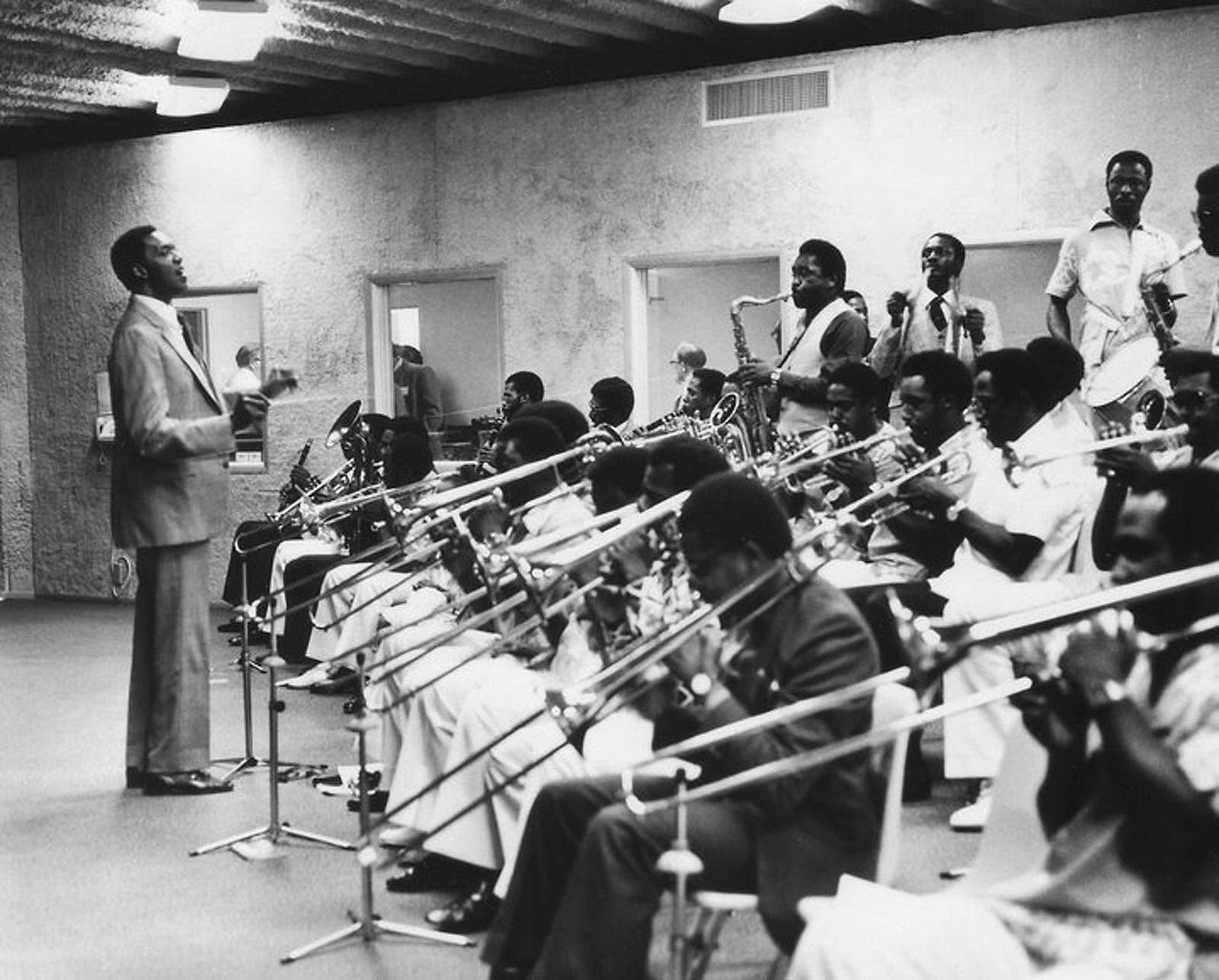 and honor Turks and Caicos men who helped establish and develop the institution in Grand Bahama.
According to the organizers, the Bahama Brass Band began in 1955 in Pine Ridge, Freeport, with Turks and Caicos Islanders, including the late Deacon Reuben Hall Sr. of Middle Caicos and Jenkins Williams and Mervin Hendfield of North Caicos, among those who helped build its foundation. The band eventually grew to more than 50 men.
The organizers also pointed to the participation of Turks and Caicos men in The Bahamas’ Independence celebrations on July 10, 1973, arguing that their contributions became part of Bahamian history while maintaining strong connections to their homeland.
Supporters say bringing the band home represents an opportunity to honor those pioneers, showcase their regional influence and expose younger generations to an important part of Turks and Caicos history.
However, concerns raised publicly described the invitation as potentially disrespectful to local culture and heritage. Organizers acknowledged those concerns, apologizing to anyone who felt overlooked or offended, while maintaining that no disrespect was intended.
The committee said the event should ultimately unite rather than divide, presenting the band’s history as evidence of the reach and resilience of Turks and Caicos heritage.
PHOTO CREDIT: Bahamas Brass Band