
News
The Public Sector Employees Pension Fund Bill 2022


#TurksandCaicos, March 18, 2022 – Mr. Speaker, I am pleased to present the Public Sector Employees Pension Fund Bill 2022, on behalf of the Public Service and the wider public sector of the Turks and Caicos Islands. The presentation and anticipated approval of this Bill will mark an important date in the history of the public service of the Turks and Caicos Islands.
Mr. Speaker, it goes without saying that the Public Sector plays an integral role in supporting the government of the day in carrying out its mandate in all facets of society, including education, healthcare, security and safety in these islands.
Mr. Speaker, I am sure that I speak on behalf of all members of this Honourable House in expressing our sincere gratitude to public sector workers across the Turks and Caicos Islands for the important roles that they play and believe that it is the right of every public sector worker to not only be provided with the tools that allow them to appropriately carry out the roles that are recruited to do, but that they also receive fair compensation and benefits for doing so.
The public service underwent a number of changes in previous years including a significant reduction in manpower as well as revisions to civil servants’ pay and benefits in 2012 due to fiscal hardship experienced at that time.
Since 2012, the civil service benefited from the implementation of a new pay and grading system, an across the board salary increase as well as a number of other investments, however the implementation of this new pension and gratuity program will mark a milestone achievement.
The Public Sector Employee Pension Fund Bill 2022 is being proposed to create a Defined Contribution Pension Plan for Public Sector workers.
Prior to April 6, 1992 the Turks and Caicos Islands Government provided a fully funded Public Service Pension to all employees.
This practice ceased on April 6, 1992 when the National Insurance Scheme was established. However, post 1992 employees were still paid a gratuity for their years of service.
This practice however, ceased during the interim period in 2012 due to the government’s fiscal instability at that time.
This resulted in post 1992 employees during the period April 2012 to present, with the exception of vacation pay which is nonexistent for unwell persons that would have utilized all of their leave, not receiving any form of terminal benefit for their years of service to the government and people of these islands.
This has caused numerous concerns as there is a disparity in the benefits received by different persons in the civil service; a number of which have expressed difficulty in being able to transition into retirement at the age of 60 as there is no payment to assist as was previously the case.
Additionally, if a person passes away while in service there is no benefit to be received by their families, some of which are young children that still require significant care and financial resources.
Whilst persons post 1992 are entitled to a NIB Pension, this alone is considered to be inadequate as the maximum payment is 60% of final average insurable earnings, with those who earn more than the ceiling, now $4,000 per month having an even lower replacement rate.
As the current situation caused hardship on a number of public servants and has had the impact of demoralizing public servants, a Benefits Committee was established under the Chairmanship of the Deputy Governor in 2018 to review the feasibility of the reestablishment of a Turks and Caicos Islands Government Pension and or Gratuity Program for its employees.
The Office of the Deputy Governor in the financial year 2018/2019 received funding for a consultancy to assist in carrying out a Review Towards the Reestablishment of a TCIG Pension and Gratuity Program resulting in the award of a contract to Morneau Shepell now Lifeworks.
In March 2020 a report was presented to the Cabinet which gave options for consideration, with the Defined Contribution Program being the preferred option and a request for funding for implementation. The report and recommendations was noted by the then Cabinet.
In May 2021 the report was presented to the Cabinet again with a request for implementation, subsequently resulting the approval of $2m for seed funding for implementation.
The Pension and Benefits Committee consisting of membership from the Ministry of Finance, Chambers, HR, the Treasury, and Senior Permanent Secretaries held over 20 meetings throughout the intervening period to consider options, to make policy recommendations and to carry out consultation with the CSA, Statutory Bodies, general public service and private sector regarding implementation.
The result of which is the presentation of a Bill today which not only encompasses the public service and interested statutory bodies, but also makes provisions for participation by the wider private sector in these islands thereby creating at some later stage a TCI Multi Employer Pension Program.
This Bill seeks to establish a defined contribution pension fund for public sector employees. The purpose of the Fund is ensure that eligible public sector employees are provided with some form of benefits when they leave the public sector due to termination, resignation, retrenchment, retirement or become disabled or that the benefits is paid to their beneficiary if the officer dies. Most public sector employees do not currently have an employer linked pension arrangement. This plan is being established primarily to supplement employees NIB Retirement benefit, enabling them to have additional income in old age. It is also intended to provide an option for public sector employees to save more than the minimum required and have those savings professionally invested at a reduced cost. The Fund will work like a savings account. Every month members and their employers will pay mandatory contributions into the into Fund at the rate of 3% employee and 3% employer. In addition to the mandatory contribution, members will also be able to make voluntary contributions to the Fund. The maximum voluntary contributions deductible from salary is 10%. The Board or invest managers will then invest this money so that it grows. The money made from investing the contributions is added directly to members’ accounts in the form of interest.
Mr. Speaker, the Bill is made up of six Parts.
PART I of the Bill contains the preliminary provisions. Clauses 1 and 2 of the Bill make provision for the short title, commencement and interpretation.
PART II of the Bill establishes the Public Sector Employees Pension Fund. It sets out the purposes of the Fund. It makes provision for membership of the Fund and management and administration of the Fund. It provides that in the Fund shall be held by the Public Sector Employees Board in trust for the members of the Fund. It also provides for payment of contributions into the Fund. The contribution payable to the Fund shall be 3% of the employee’s monthly salary and 3% will be contributed by the employer. Members can also pay voluntary contributions into the Fund of up to 10% of their monthly salary.
PART III of the Bill provides for the payment of benefits. The following benefits are payable, namely: normal, early and late retirement benefits, disability retirement benefit and benefits to a member’s beneficiary on the death of a member etc.
PART IV of the Bill establishes the Public Sector Employees Pension Board, which is the body charged with the responsibility of administering and enforcing the provisions of the Ordinance and management of the Fund. The Board is vested with several responsibilities including that to administer the Fund. The conduct of business and affairs of the Board shall be as provided in this Part. Clause 37 to 53 contain provision outlining the composition of the Board; the functions of the Board, meeting and the procedures for meeting, as well as how decisions are to be made by the Board.
PART V of the Bill sets out the financial provisions applicable to the Fund. These include accounting and audit procedure. It sets the requirements for financial statements, annual reports and actuarial review of the Fund. The Board is required to carry out periodic reviews of its operations and to submit a report of such to the Governor and the Minister. The Minister shall cause a copy to be laid before the House of Assembly
PART VI of the Bill contains Miscellaneous provisions and deals with a number of general provisions. Clause 60 to 70 makes provision for how claims are to be made, determination of claims and questions, correction of mistakes, confidentiality, etc.
Some of the benefits of this new program is that:
- Savings accumulate over persons’ career
- Both the employer and the employees contribute; although TCIG has taken a decision to cover the full costs on behalf of its employees
- Benefits for early exit, death and disability are easily offered
- Voluntary additional employee contributions are possible
- There are Portable benefits
Under the new scheme 6% of employees basic salary will be paid into the pension scheme for their benefit.
Government has also taken a decision to compensate all current employees for their previous years of service by approving a 3% past service credit for all years previously served.
This is just a few of the benefits under this new program, which will make a monumental change for the benefit of the public service in these islands.
This legislation marks the beginning of a new and very important chapter for the public service of the Turks and Caicos Islands.
It has taken a lot of hard work and a commitment to significant financial resources to allow us to be where we are today, but we are proud of this initiative and truly believe that it will be to the benefit of the public service of the Turks and Caicos Islands.
We are grateful to the government of the Turks and Caicos Islands for supporting the implementation of this new program through: the funding of the initial consultancy; funding of $2m for the initial deposit into the new Pension Fund; the commitment to cover both the employee and employer contribution to commence this program and the commitment to fund the past service credit of approximately $23m to compensate all current staff for their previous years of service.
We wish to record our thanks to the members of the Benefits Committee chaired by Her Excellency Anya Williams for their hard work, dedication and commitment to the establishment of this program, in particular the Attorney Generals Chambers led by the Attorney General Honourable Rhondalee Braithwaite Knowles, Senior Legislative Drafter Ms. Desiree Downes; Permanent Secretary of National Secretary and former Director of the Deputy Governor’s Office Mr. Tito Lightbourne; Permanent Secretary of Finance Mrs. Athenee Harvey-Basden; Permanent Secretary of Education Mr. Wesley Clerveaux; HR Director Mr. Mark Greenway; Accountant General Mr. Hemant Sinanan and Managing Partner of Life Works Mr. Derek Osborne, all members of the TCIG Benefits Committee.
We also express our thanks to the President and members of the Civil Service Association in particular Mr. Demarco Williams for his support throughout and to the entire public service for their patience and understanding while we worked tirelessly to bring this program to fruition.
Today is a good day for the public service of these islands!
RESPONSE TO THE DEBATE
Mr. Speaker, some portions of today’s debate brought to mind that old saying, “Don’t let perfect be an enemy of the good”.
Mr. Speaker, I almost got up on a point of order to say complain that I was being accused of improper motives. Not at all Mr. Speaker, nothing of the sort. Mr. Speaker, this Bill does not seek to exclude any public office holder, elected or otherwise.
In fact, Mr. Speaker, the Bill defines the Minister as the Minister of Finance in section 2.
Clause 57. (1) of the Bill the Board is required to —
(a) prepare a report with regard to the state of affairs, the business and the financial position of the Fund, the degree in which the purpose of the fund has been furthered and of its activities during the last preceding year and shall furnish that report to the Governor and the Minister not later than the 30 September.
(b) submit to the Governor, the Minister and the Chief Auditor every account certified by the Auditor together with the report of the Auditor thereon, within one month of such certification;
(c) submit annually to the Governor and the Minister an account of the securities in which monies of the Fund are for the time being invested.
Mr. Speaker, as I indicated in my address, it is the Minister shall cause a copy of every account or report submitted to him under this section to be laid before the House of Assembly.
Additionally, in respect of the actuarial review of operation of Fund, clause 58. (1) of the Bill further requires the Board, with the assistance of an actuary, to review the operation of this Ordinance during the period ending with 31 March in every third year; and at each such review shall make a report to the Governor and Minister on the financial condition of the Fund and the adequacy or otherwise of contributions to support benefits, having regard to its liabilities under the Ordinance.
The Minister must then, as soon as possible after receiving a report in accordance with subsection (1), lay a copy of it before the House of Assembly.
The fundamental principle that underpins the drafting of this Bill Mr. Speaker, is found in the Constitution. A provision that has been in our Constitution since the very first Constitution and not connected to any allegation or aspirations against anyone.
Mr. Speaker, that grant and withholding of pensions, etc. is captured in section 96 of the Constitution which provides that:
(1) The power to grant any award under any pensions law in force in the Islands (other than an award to which, under that law, the person to whom it is payable is entitled as of right) and, in accordance with any provisions in that respect contained in any such law, to withhold, reduce in amount or suspend any award payable under any such law is hereby vested in the Governor, acting in his or her discretion.
(2) In that section “pensions law” means any law relating to the grant to any person, or to the widow or widower, children, dependants or personal representatives of that person, of an award in respect of the services of that person in a public office, and includes any instrument made under any such law.
That it Mr. Speaker, nothing more. Nothing sinister.
Mr. Speaker, the Hon. Leader of the Opposition has only recently reminded us, this aphorism: “don’t let perfect be an enemy of the good” which is an old Italian proverb first made popular by Voltaire who used it in his poem La Bégueule. The literal translation is, the best is not the enemy of the good.
Other philosophers and writers have expressed the thought in slightly different ways. Confucius: “Better a diamond with a flaw than a pebble without.” Shakespeare: “Striving to better, oft we mar what’s well.”
Mr. Speaker, we know that perfection is impossible to achieve, so pursuing it is sometimes counterproductive, inefficient and produce diminishing returns. We need to know when good is good enough.
Obviously, there are situations when setting the highest standard is important. I want my pharmacist to be fastidious when filling my prescriptions and pilots should be perfectionistic when evaluating a plane’s airworthiness.
But Mr. Speaker, don’t let perfect become an enemy of good and Mr. Speaker, the majority of members’ contributions have shown, this is very good bill and something that we can and should all be proud of.
Mr. Speaker, there are 2,437 established and waged positions budgeted in the public service, including the RTCIPF. This Bill would ensure that those persons have a pension and gratuity when they leave public service, not to mention the many other persons employed across the public sector.
Mr. Speaker, save for about 100 of those persons who are eligible for pension under the Pensions Ordinance and the minority who are entitled to gratuity, every other person would leave the public service without anything at all, no matter how long or how well they have served. Mr. Speaker, under these proposals, it doesn’t matter if a qualifying person resigns, is terminated, retires, is made redundant, or however he or she leaves the public service with something. And if, God forbid, he or she dies, his or her beneficiary is able to receive a benefit. Mr. Speaker, this is a very good Bill.
Mr. Speaker, although I am proud to be a member of this Honourable House, I am not a politician and I do not subscribe to the politicization of these proposals because I made clear in my address to the Bill that the former and the current administrations had a role to play in bringing this Bill to the House today. Mr. Speaker this Bill arrived here today following a collaborative, consultative process, having had the benefit of professional advice and careful consideration. Further careful consideration will have to be given to what to do for those persons who left the service without anything at all, but Mr. Speaker, the government should rightly be proud of this initiative Mr. Speaker because this is a watershed moment in the sense that it marks an important historical change of course and an important development toward retirement security for current and future public sector workers.
Pension (Amendment) Bill 2022
Mr. Speaker, on behalf of the Public Service, I am pleased to present the Pension (Amendment) Bill 2022.
This Bill seeks to amend the Pensions Ordinance to provide the circumstances in which pension may be granted under the Ordinance to a public officer employed in the public service prior to 6th April 1992 and to restore the option for a public officer to whom a pension is granted under the Ordinance to elect to be paid a gratuity and reduced pension.
Mr. Speaker, prior to April 6, 1992 the Turks and Caicos Government provided a fully funded pension to all public officers appointed to permanent and pensionable posts. That program remains in place for all persons appointed prior to 6th April 1992 permanent and pensionable public officers save that an amendment was made in 2012 which removed the right to elect to receive a gratuity payment and a reduced pension.
The above amendments ensure that all 100 persons currently enrolled in the previous pre 1992 program are secured their right to apply for a pension and have the opportunity to benefit from a gratuity payment.
Clauses 3 of the Bill seek to amend the section 6(a) of Ordinance by repealing and substituting subparagraph (i) to provide that pension or gratuity may be granted to an officer who retires from the public service on or after he attains the age of sixty years or after completing thirty years of service, or in special cases with the approval of the Governor, fifty-five years.
An officer who retires on completing 30 years of service and to whom a pension is granted may in lieu of such pension be paid, immediately upon his retirement, a gratuity calculated in accordance with regulation 23 and reduced pension calculated in accordance with regulation 23 after he attains the age of sixty years.
Clause 4 of the Bill seeks to amend the Ordinance by repealing and substituting section 8 to provide for compulsory retirement at any time after attaining the age of sixty years or after completing thirty years of service, or in special cases, with the approval of the Governor, at any time after attaining the age of fifty-five years.
Clause 5 of the Bill seeks to repeal section 13 which provides that pension granted under the Ordinance may cease on imprisonment of the person to whom a pension has been granted.
Clause 6 of the Bill seeks to amend the Pensions Regulations contained in the Schedule to the Ordinance by repealing and substituting regulation 23 to restore the option for a public officer to whom a pension is granted under the Ordinance to elect to be paid a gratuity and reduced pension.

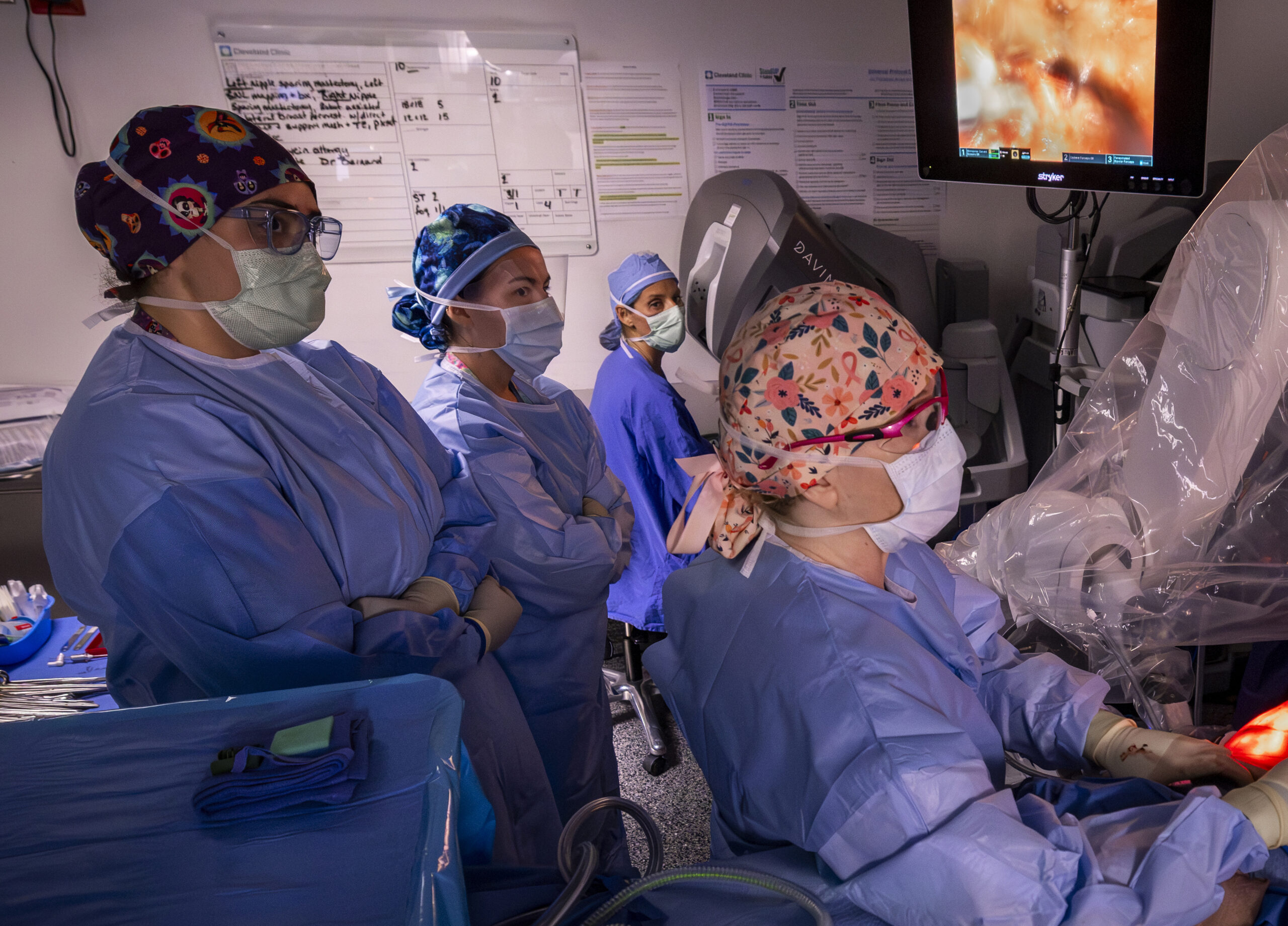
Health system is among only a handful in the U.S. to offer the minimally invasive robotic procedure Cleveland Clinic is among the first hospitals in the country – and the first in Ohio – to perform a robotic nipple-sparing mastectomy procedure, following recent clearance by the U.S. Food and Drug Administration.
Stephanie Valente, D.O., and a surgical team recently performed the first robotic nipple-sparing mastectomy with immediate breast cancer reconstruction at Cleveland Clinic Fairview Hospital. The procedure offers a new minimally invasive approach to breast cancer surgery and risk-reducing mastectomy for patients at elevated risk.
This milestone places Cleveland Clinic among a select group of centers nationwide offering the advanced technology and brings one of the newest innovations in breast cancer surgery to patients in Northeast Ohio.
“This robotic approach offers greater precision through a much smaller incision, which can mean less visible scarring and faster recovery,” said Dr. Valente, director of the Cleveland Clinic Breast Surgery Fellowship Program and director of the West Region Multidisciplinary Breast Program. “Compared with the traditional procedure, which requires a larger incision, this approach can improve cosmetic outcomes, preserve the skin and nipple, and support a more natural appearance after surgery.”
During the procedure, surgeons use a 3D camera and robotic instruments inserted through a small incision of one inch, typically hidden along the side of the breast rather than across the underside, to remove breast tissue while preserving the nipple, areola and skin. The robotic platform, the da Vinci SP Surgical System, provides enhanced visualization and precision while minimizing disruption to the overlying skin.
Robotic surgery gives the surgeon better visualization of the operative field in what is typically a technically challenging procedure. This enhanced view can improve nerve identification and preservation, reduce blood loss and allow surgeons to perform the same oncologic operation through a one-inch incision rather than the traditional five-inch open incision.
The robotic approach removes the same breast tissue as a conventional mastectomy, while changing how the surgeon accesses the breast. For some patients, breast reconstruction can be performed during the same operation.
This approach is designed to reduce scarring, enhance cosmetic outcomes, preserve the natural skin envelope and nipple, improve sensation and accelerate recovery. For some patients, the less visible incision may also support confidence and body image after surgery. The procedure further expands Cleveland Clinic’s minimally invasive breast surgery options, which include endoscopic nipple-sparing mastectomy.
“As a field, we haven’t had many new options for patients with breast surgery for a decade now, so we are pleased to now have these minimally invasive procedures available for our patients,” said Dr. Valente. “Innovations like this support a more patient-centered experience as they allow us to address both the physical and emotional realities of breast cancer.”

Providenciales, Turks and Caicos Islands – Friday, 2nd October 2026: Invest Turks and Caicos officially opened Caya Hico Collective, the Grand Turk MSME Storefront, on Friday, September 18, 2026, marking a significant milestone in the Agency’s ongoing efforts to support local entrepreneurs, expand access to market opportunities, and strengthen the small business ecosystem.
Caya Hico Collective has been established as a dedicated retail space to showcase and sell locally made products, initially featuring entrepreneurs participating in the MSME Programme. As the initiative develops, there are plans to expand participation to include other small businesses producing locally made goods, including those not directly supported under the Programme. The storefront will provide local businesses with greater exposure and direct access to both residents and the thousands of visitors who arrive in Grand Turk each year creating stronger linkages between local entrepreneurs and the tourism economy. The store currently features fourteen (14) inaugural vendors, representing a diverse selection of local businesses and products from across the Turks and Caicos Islands.
Speaking on the significance of the initiative, Ms. Alexa Cooper, Chief Domestic Investment Officer, said:
“This storefront represents a practical and meaningful step in supporting our MSMEs by providing access to market, one of the most critical components of business growth. It is a space where local talent, creativity and entrepreneurship can be showcased, supported and connected with new customers.”
A Name Chosen by Grand Turk’s Youth
The name Caya Hico Collective was selected through the Grand Turk MSME Storefront Naming Competition, an initiative conducted in partnership with H.J. Robinson High School. Students were invited to propose an original name that reflected Grand Turk’s identity, culture and heritage while also being suitable for a storefront showcasing locally made products.
Following an independent judging process, Mauvarii Selver was selected as the competition winner for the submission Caya Hico Collective.
The name was recognised for its cultural and historical significance, distinctiveness and strong storytelling potential. “Caya Hico” is derived from the Lucayan term meaning “string of islands,” reflecting the archipelagic identity and heritage of the Turks and Caicos Islands. The use of “Collective” further reflects the purpose of the storefront: bringing together products from multiple local entrepreneurs under one shared retail platform. Together, the name Caya Hico Collective connects the Islands’ heritage with the initiative’s vision of bringing local businesses, products and creativity together in one space.
The naming competition provided students with an opportunity to participate directly in a real-world branding exercise and contribute to an initiative that will form part of Grand Turk’s commercial and tourism landscape.
Mauvarii was formally recognised during the opening ceremony, alongside the other students who participated in the naming competition, the inaugural MSME vendors, and key stakeholders whose contributions supported the successful development and opening of the storefront.
Angela Musgrove, Chief Executive Officer of Invest Turks and Caicos, added:
“Caya Hico Collective is more than a retail space. It reflects our continued focus on strengthening linkages between local businesses and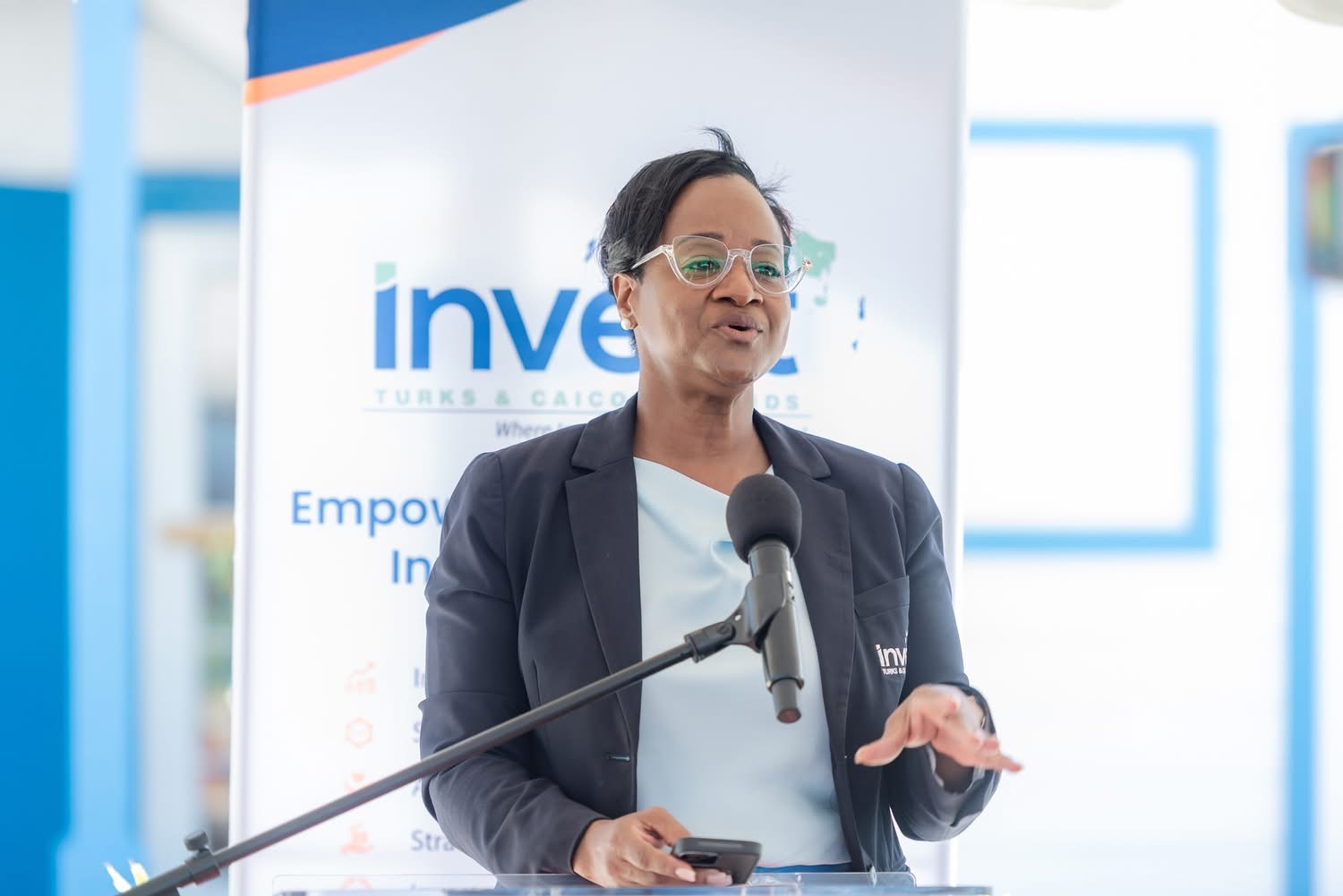 the tourism sector, creating more opportunities for MSMEs to reach visitors, increasing sales and participate more fully in the tourism economy. At the same time, it gives visitors greater access to authentic products that reflect the creativity and culture of the Turks and Caicos Islands.”
Supporting Local Enterprise and Tourism Linkages
Caya Hico Collective is expected to serve as an important platform for local entrepreneurs by increasing the visibility of locally produced goods, creating additional sales opportunities and providing visitors with greater access to authentic products from the Turks and Caicos Islands.
Through the storefront, Invest Turks and Caicos aims to encourage residents and visitors alike to discover, purchase and support locally made products, while creating a stronger connection between entrepreneurship, culture and the visitor experience in Grand Turk. The initiative is intended to increase opportunities for local businesses to benefit from tourism activity by connecting visitors directly with locally made products that showcase the creativity and talent of entrepreneurs across the Turks and Caicos Islands. This forms part of Invest Turks and Caicos’ broader commitment to promoting economic diversification, sustainable business development and stronger linkages between local enterprises and the tourism sector.

Nassau, Bahamas, 1 October 2026 – Every Saturday this month, communities across The Bahamas will take steps in support of cancer patients and survivors as CIBC Caribbean’s Walk for the Cure returns to New Providence, Abaco, Eleuthera, and Grand Bahama.
CIBC Caribbean Head of Country, Terrance Gibson, said, “Each Saturday in October represents another community coming together, another opportunity to raise awareness and, most importantly, more support for the organizations that are doing this work every day.”
The month of activities begins this Saturday, October 3, in New Providence, with participants gathering at the Goodman’s Bay Corporate Centre for a 6:30am start.
CIBC Caribbean Walk Champion, Antionette Fox, said the series of walks gives communities across the country an opportunity to contribute to a cause that directly supports Bahamian cancer organizations.
“Every Saturday for the month of October, there will be a walk that you can participate in to contribute towards this worthy cause,” Fox said.
In New Providence, the morning will extend beyond the walk itself, with Zumba, wellness activities, informational vendors, and opportunities for participants to connect with organizations working directly with cancer patients and survivors.
Gennie Dean Caring and Sharing Cancer Support Group President Duquesa Dean said participants do not have to complete the full route to be part of the morning.
“Just come out…there is something for everyone, come for the community,” Dean said. “There’s a survivor ceremony, so come and participate and celebrate the people who have gone through cancer and are here as evidence that you could live after a cancer diagnosis.”
The Gennie Dean Caring and Sharing Cancer Support Group is one of eight cancer organizations in The Bahamas that benefit from funds raised through Walk for the Cure. The others are the Sister Sister Breast Cancer Support Groups of New Providence and Grand Bahama, Cancer Society of The Bahamas, the Cancer Societies of Abaco, Eleuthera, and Grand Bahama, and the Cancer Association of Grand Bahama.
Dean explained that CIBC Caribbean covers the cost of staging WFTC, allowing donations raised to support the work of beneficiary organizations.
For her organization, that assistance translates into tangible support for people navigating cancer, including food assistance, financial aid, prosthetic breasts, and mastectomy bras, as well as programs such as Step Into Wellness, which promotes movement and healthy living among cancer patients and survivors.
Corporate partners are also helping to strengthen this year’s effort. Bamboo Shack has joined the initiative as a gold sponsor, with representative Ghandi Pinder sharing that the cause has a personal significance for her.
Pinder recalled shaving her hair in solidarity with her sister after she was diagnosed with an aggressive form of breast cancer and began losing her hair during chemotherapy.
“We see you, we’re here with you, we’re in it with you,” Pinder said of Bamboo Shack’s message to those affected by cancer.
She also encouraged more of Corporate Bahamas to support initiatives that directly impact the communities they serve.
“At Bamboo Shack, we always say a better Bahamas begins with you… Together, we can make a difference,” she said.
Registration for Walk for the Cure is $30 for adults and $15 for children and can be completed at any CIBC Caribbean branch. CIBC Caribbean clients can also donate through online banking.
The New Providence Walk begins promptly at 6:30am on Saturday, October 3, at the Goodman’s Bay Corporate Centre, followed by Walk for the Cure events in other islands each Saturday throughout October. The Grand Bahama WFTC event will be held on October 10 and the Abaco and Eleuthera WFTC events will occur on October 17 and October 24 respectively.
Gibson added, “Some will walk for themselves, some in celebration of a survivor, and others in memory of someone they have lost. Whatever brings you to Walk for the Cure, every person who shows up becomes part of a much bigger expression of support for those affected by cancer.”





-

 Bahamas News1 week ago
Walk for the Cure Every Saturday This October
-

 News1 week ago
Invest Turks and Caicos Officially Opened Caya Hico Collective, Grand Turk MSME Storefront
-

 Health1 week ago
TCI Hospital Marks Breast Cancer Awareness Month 2026 with “Know. Check. Act. Support.” Campaign
-
 Health6 days ago
Cleveland Clinic First in Ohio to Perform Robotic Nipple-Sparing Mastectomy