
Caribbean News
Vaccine Mandate hits like a HURRICANE; Cancellations crush September prospects

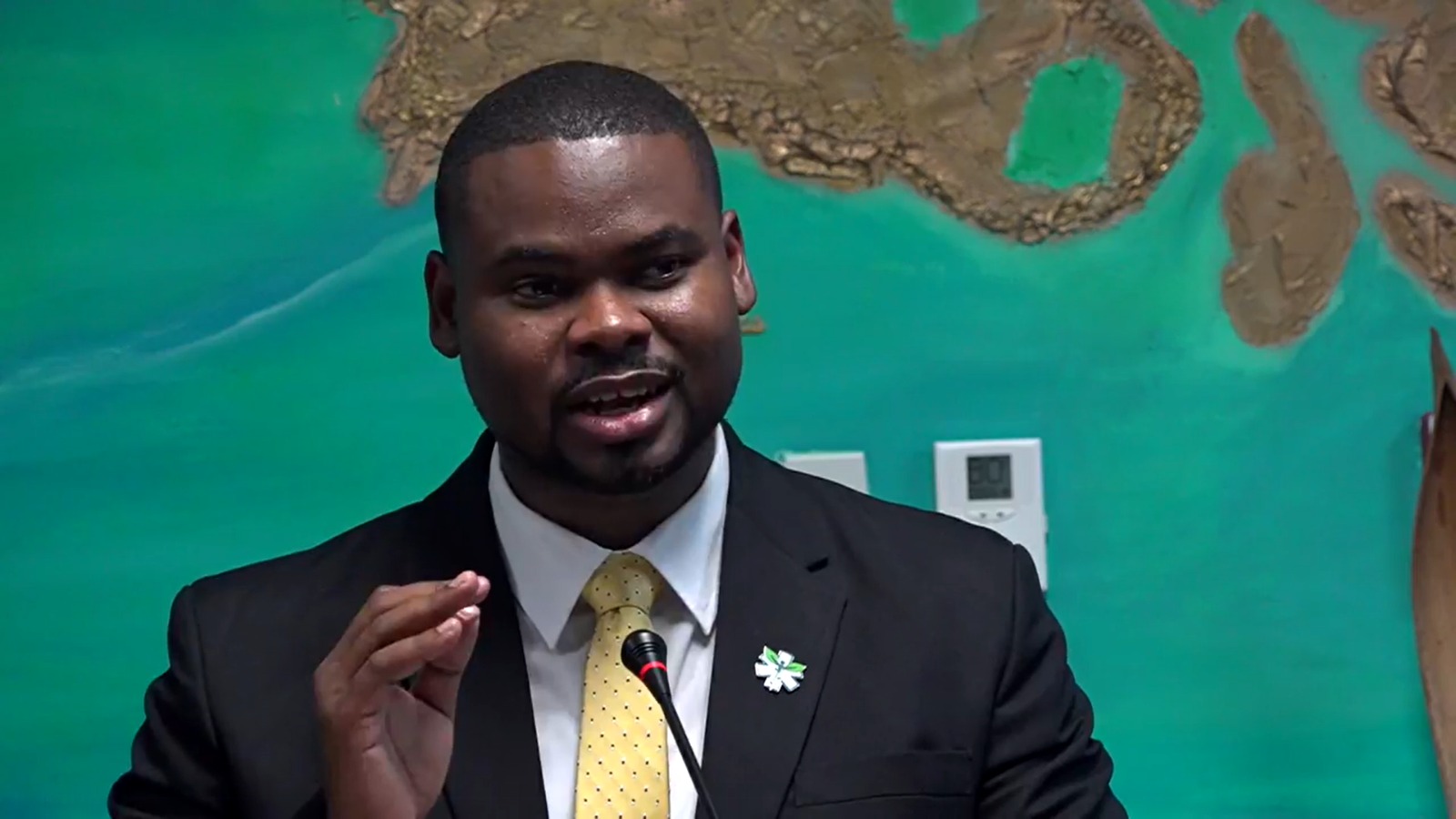
#TurksandCaicos, September 9, 2021 – The Minister of Health is finding it difficult to believe that cancellations are as high as residents are claiming. In a tone deaf presentation the minister pointed to visitor arrival numbers at the airport, the usual September slow down, hurricane hits and nefarious attempts at fearmongering as the basis for his lack of faith on the figures.
“What I am saying is that when you compare to where we usually were, to where we are now, and again we are still in COVID and we’re doing better, and I am also saying that (hey) safety first, and I’m also saying that cancellations happen. Because, usually around September 6 or 8 in the Turks and Caicos, we usually get a big hurricane. So if a hurricane hit the Turks and Caicos Islands right now – God forbid, knock on wood – they would have the same level of cancellations or more. Now this was a decision, one is man-made, one is natural but it is the same result,” said Hon Jamell Robinson, TCI Minister of Health.
The minister was speaking at a Wednesday night press conference where among other things, he got on the defence about claims of cancellations and estimations on losses suffered due to a new travel entry requirement. Visitors, over the age of 16, are now required to be fully vaccinated with Pfizer, AstraZeneca, Moderna or the Johnson & Johnson coronavirus vaccine, in order to be green-lighted for travel to the Turks and Caicos. Cancellations are estimated to be in the tens of thousands inclusive of resorts, airlines, tours and excursions, boutique activities and concierge services.
The Turks and Caicos Hotel and Tourism Association reports 13,000 cancellations from September to mid-November for 12 of its largest member properties including the Hartling Group, Grace Bay Resorts and Beaches Turks and Caicos. One member, said Stacy Cox, TCHTA Executive Director, reported 5k cancelled vacations.
Similar reports came from smaller business operators which suffered the trickle-down effect of the decision announced on August 12, for activation a mere three weeks later.
“It isn’t a case where anyone is discounting what may have happened in terms of their totality of their cancellations, yes, but it’s not as if them being in the business long term, they haven’t seen these types of scenarios where they have this level of passengers coming into the country because this is traditionally the time, most properties do their renovations,” Minister Robinson on Wednesday.
The minister’s comments were most suited to the larger tourism stakeholders and it demonstrated what the small and micro companies have been vocalizing since the announcement, which came on his debut as the new health minister; that he is out of touch with the wider marketplace and smaller operations.
“I have people cancelling and no one consulted the small businesses. I have lost eight jobs between September and October; that’s $20,000 gone. I have bills to pay, rent to pay and my landlord is not understanding that what happened is outside of my control. No one engaged the small business person and I wish they had.”
A business owner in North Caicos offered that the activation of the new policy was so sudden that even “if guests who had bookings in September wanted to get vaccinated, they would hardly have had the opportunity to do so. It was not thought out, it was just too sudden.”
Another entrepreneur offered the decision may have been more “appreciated if it were 90 days off.”
Several were infuriated that the consultation on the decision was so narrow; banks which “may have to extend me some late payment courtesies because I lost all of my villa reservations informed me they were not asked to consider negative repercussions for borrowers. It was a big blow.”
The Minister said his visit to the airport on September 4, which was after the new vaccine mandate policy took effect, there were 1,274 passengers on Saturday. The figure topped the best daily total in September 2019, when a slightly lesser 1,131 guests were recorded.
“The highest passenger arrivals for any day during September (2019) was 1131;so despite all the fearmongering, coming from certain quarters within the TCI, we are simply experiencing a pre-Covid slow season. No more, no less.”
However, records reflect that from September 3- October 15, 2019, Beaches Resort, which accounts for 70 per cent of visitor arrivals, was closed therefore passengers were expectantly less in number.
This year, Beaches Resort is opened with no plans to shut for the season.
In fact, we found that in 2018, while Beaches Resort remained open, 12 other major properties including Gansevoort, Point Grace, Meridian Club and Ocean Clubs were closed.
In September 2017, Turks and Caicos was scarred and debilitated by hurricanes Irma and Maria and in 2020, the pandemic and a closed Beaches Resort plunged arrival numbers and helped the TCI sink into an economic depression.
These factors are very likely among the reasons the year 2021 was proving to truthfully be a banner year for many.
With keen interest in Turks and Caicos vacations, visitors were flocking to the destination in almost pre-pandemic fashion. Pent up demand, low infection numbers, high vaccine uptake, proximity to the U.S. and the natural allure of the islands was drawing a healthy number of tourists. With that interest came more cases of Covid-19.
The PNP Administration, in its fortnightly Cabinet Meeting came to the controversial decision after reviewing a six week period where 68 percent of infections or 90 of 133 people with coronavirus were tourists.
Tourists, including vacation home owners in the Turks and Caicos would have to be fully vaccinated once over the age of 16; returning residents who were vaccinated needed to prove they were fully vaccinated prior to departure from the islands and returning residents who were unvaccinated, had to provide a negative PCR or Antigen test in order to get approve through the TCI Assured portal.
Additionally, these residents are now required to quarantine with their entire household for seven days, a test is required on day five of the return.
The Cabinet also agreed to shorten the time for negative tests, from five days to three days; this is mandatory for everyone except vaccinated returning residents.
“This actually provides us with some breathing room, to be able to get the cases down as well as reposition our brand because it is not as if we haven’t done it in the past,” explained Minister Robinson who added, the high vaccination rate and vaccine only tourist policy are great selling points which can increase interest in the destination.
Though pressured to do so, the Minister was reticent about fingering the entity or entities he believes is guilty of “fear mongering.”
There was no information from the Minister on what Government is doing to now track if there are new bookings as a result of the vaccine mandate.

By Deandrea Hamilton | Editor
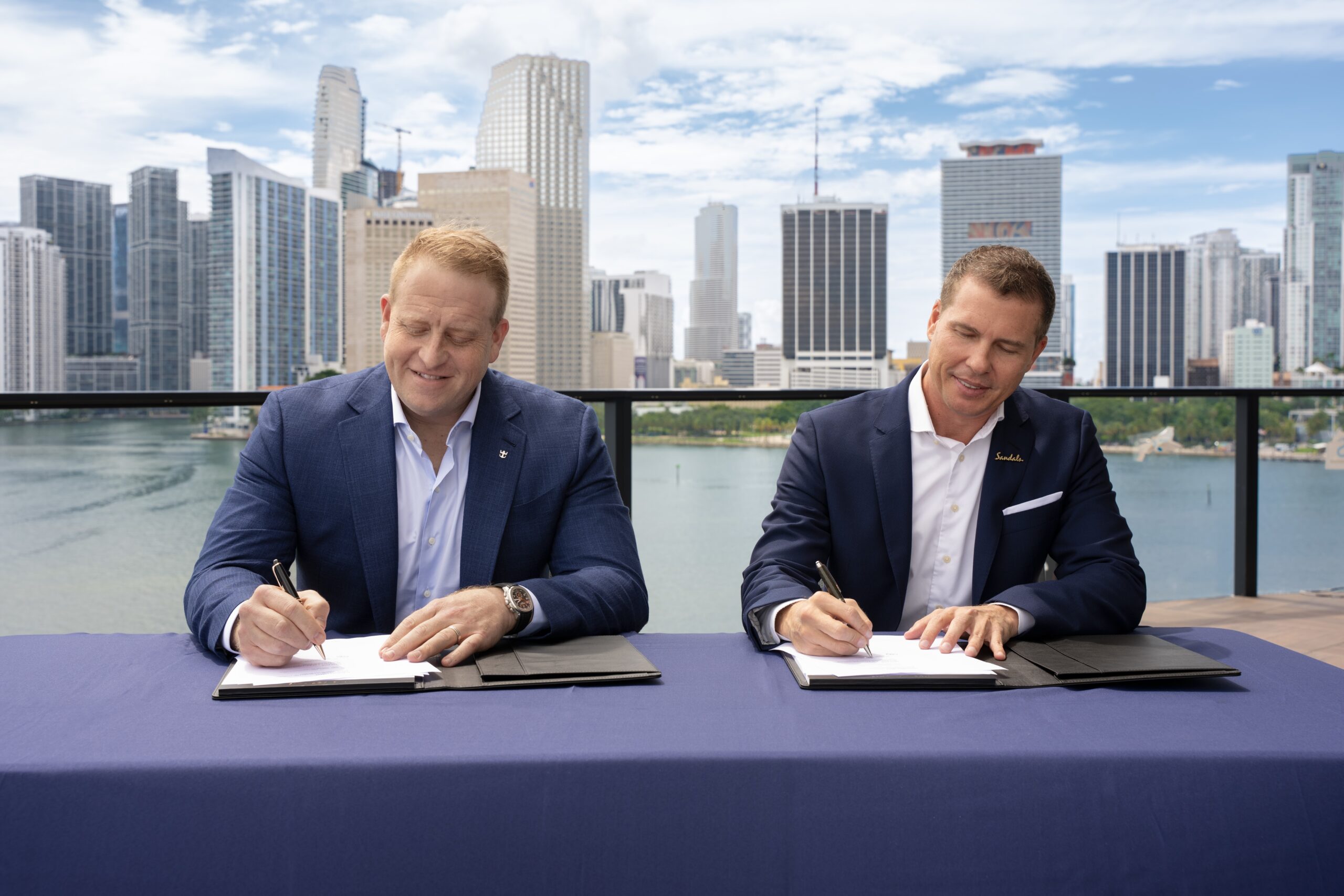
September 28, 2026 – Wall Street initially flinched at the $3-billion handshake. But in a matter of days, it was smoother sailing.
Perhaps the bigger Caribbean business story is not what Sandals Resorts International is getting from the deal. It is who is writing the cheque — and what that says about what Gordon “Butch” Stewart built.
As reports of Royal Caribbean Group’s Sandals deal circulated Tuesday, RCL shares plunged 6.14 percent from Monday’s $250.25 close to $234.89, on sharply elevated trading.
When the agreement became official Wednesday — approximately $3 billion for a 50 percent equity interest in Sandals and Beaches Resorts — shares slipped another 1.95 percent to $230.30 and touched $222.22 intraday. Investors were digesting both the size of the investment and committed debt financing secured through Morgan Stanley.
But by Thursday, RCL rebounded 3.77 percent, with shares continuing their recovery Friday to finish the week around $243. Analysts were also looking ahead: JPMorgan reportedly raised its RCL price target from $345 to $394, while Citi placed the company on a 90-day positive catalyst watch.
And just who is RCL?
Royal Caribbean Group is a global vacation giant, publicly traded on the New York Stock Exchange with a market value of roughly $65 billion. Its portfolio includes Royal Caribbean International, Celebrity Cruises and Silversea, alongside private destinations and an expanding vacation platform.
So when a company of that scale commits $3 billion for only half of Sandals and Beaches Resorts, the transaction puts a striking financial marker on one of the Caribbean’s greatest home-grown hospitality success stories.
The deal, expected to close in early 2027, creates a 50-50 partnership with the Stewart family and takes Royal Caribbean deeper into the all-inclusive resort business.
Butch Stewart started Sandals in Jamaica in 1981 believing a Caribbean company could compete with the world’s best.
Forty-five years later, one of the world’s biggest vacation companies is prepared to pay $3 billion just to own half of what he built.
Now that’s the handshake that does more than seal a deal — it cements a legacy.
Caribbean News
Royal Caribbean Group and Sandals Resorts Announce Landmark Partnership to Accelerate Their Leading Vacation Experiences
Royal Caribbean Group Investment to Advance Sandals and Beaches’ Growth and Broaden the Group’s Vacation Portfolio
Montego Bay, Jamaica and Miami, September 24, 2026 – Royal Caribbean Group (NYSE: RCL) and Sandals Resorts today announced the signing of an agreement to form a partnership in the all-inclusive resort space with a 50% investment from Royal Caribbean Group. Building on Sandals and Beaches Resorts’ more than four decades of leadership in Caribbean hospitality, the joint venture will create new opportunities for continued resort growth while broadening the experiences across Royal Caribbean Group’s vacation platform.
The partnership brings together two of the travel industry’s most celebrated vacation companies, pairing Sandals and Beaches’ all-inclusive resort expertise with Royal Caribbean Group’s vacation platform, including industry-leading brands – Royal Caribbean, Celebrity Cruises and Silversea – a portfolio of private destinations, new river cruising offering, and an industry-first loyalty program. United in a shared history in the Caribbean and connected by a love for their communities, the companies will offer travelers an unparalleled collection of cruise, private destination and resort experiences, serving guests across more vacation occasions and establishing their undisputed leadership in Caribbean vacations.
The joint venture expands Royal Caribbean Group into an adjacent vacation category, growing its participation in the approximately $2 trillion global vacation market, and meets the growing global demand for Sandals and Beaches Resorts by accelerating their expansion. The partnership will include Sandals and Beaches’ collection of premier all-inclusive properties across the Caribbean, and the companies will explore opportunities to broaden distribution, deepen guest engagement, and make it easier for travelers to discover vacation experiences offered across both portfolios.
“For nearly 60 years, we’ve reimagined what a vacation can be, constantly expanding the ways we inspire our guests to explore, connect and create lifelong memories,” said Jason Liberty, Chairman and CEO, Royal Caribbean Group. “We have been building a vacation platform that brings joy to millions of people around the world and creates meaningful relationships that last with our guests. Our partnership with Sandals and Beaches Resorts is an important next step on that journey – bringing together two iconic leading vacation companies to further strengthen and grow one of the most admired resort portfolios in the world. The Stewart family has created powerful and beloved brands, and we are honored to build on that legacy. Together, we see tremendous opportunity to expand the reach of Sandals and Beaches Resorts and continue turning the vacation of a lifetime into a lifetime of vacations.”
“My father, Gordon ‘Butch’ Stewart, founded Sandals Resorts with the belief that a company built in the Caribbean could stand on the world stage alongside the most respected names in hospitality. Today is proof of how far that vision can go,” said Adam Stewart, Executive Chairman of Sandals Resorts and Beaches Resorts. “This partnership is the natural next step in building on that conviction. It gives us the ability to grow faster with a partner that shares our values of exceptional hospitality, long-term investment, and the power of enduring brands. Together, we will introduce more guests to Sandals and Beaches Resorts while creating even more extraordinary experiences for those who have made our resorts part of their lives for decades.” Stewart added, “As we continue to grow, we will remain true to what has always defined us: delivering authentic vacations that exceed expectations while creating opportunities for our team members, travel advisor partners and the communities we call home. The future has never been brighter, and I know this moment would make my father incredibly proud.”
The joint venture will be governed by a board under the shared leadership of Stewart and Liberty. Stewart will maintain a leadership role in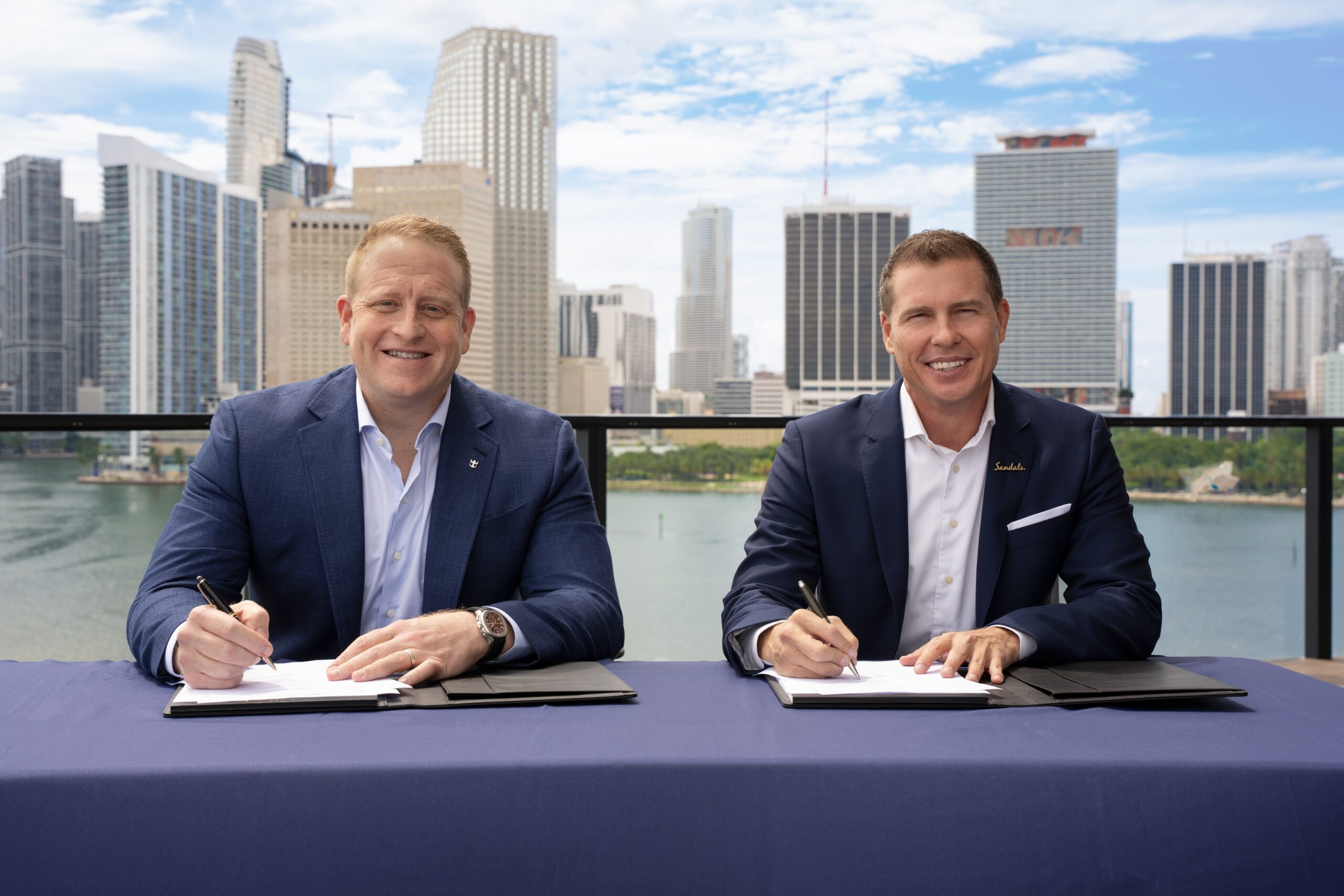 guiding the company’s long-term strategic growth as Executive Chairman of Sandals and Beaches Resorts. Existing reservations, loyalty programs, resort operations and cruise operations will continue as usual, with the partnership bringing additional resources to support future opportunities.
Under the terms of the agreement, Royal Caribbean Group will acquire a 50% equity interest in Sandals and Beaches Resorts for approximately $3 billion, representing a forward EBITDA multiple of approximately 10x. Royal Caribbean Group has secured committed debt financing from Morgan Stanley to fund the investment. The transaction is expected to close in early 2027, subject to customary approvals and closing conditions, and is expected to be accretive to earnings next year.
BofA Securities and PJT Partners acted as financial advisors, and Latham & Watkins and Jones Day acted as legal advisors to the Sandals Group. Perella Weinberg Partners and Morgan Stanley acted as financial advisors and Kirkland & Ellis LLP acted as legal advisor to Royal Caribbean Group.
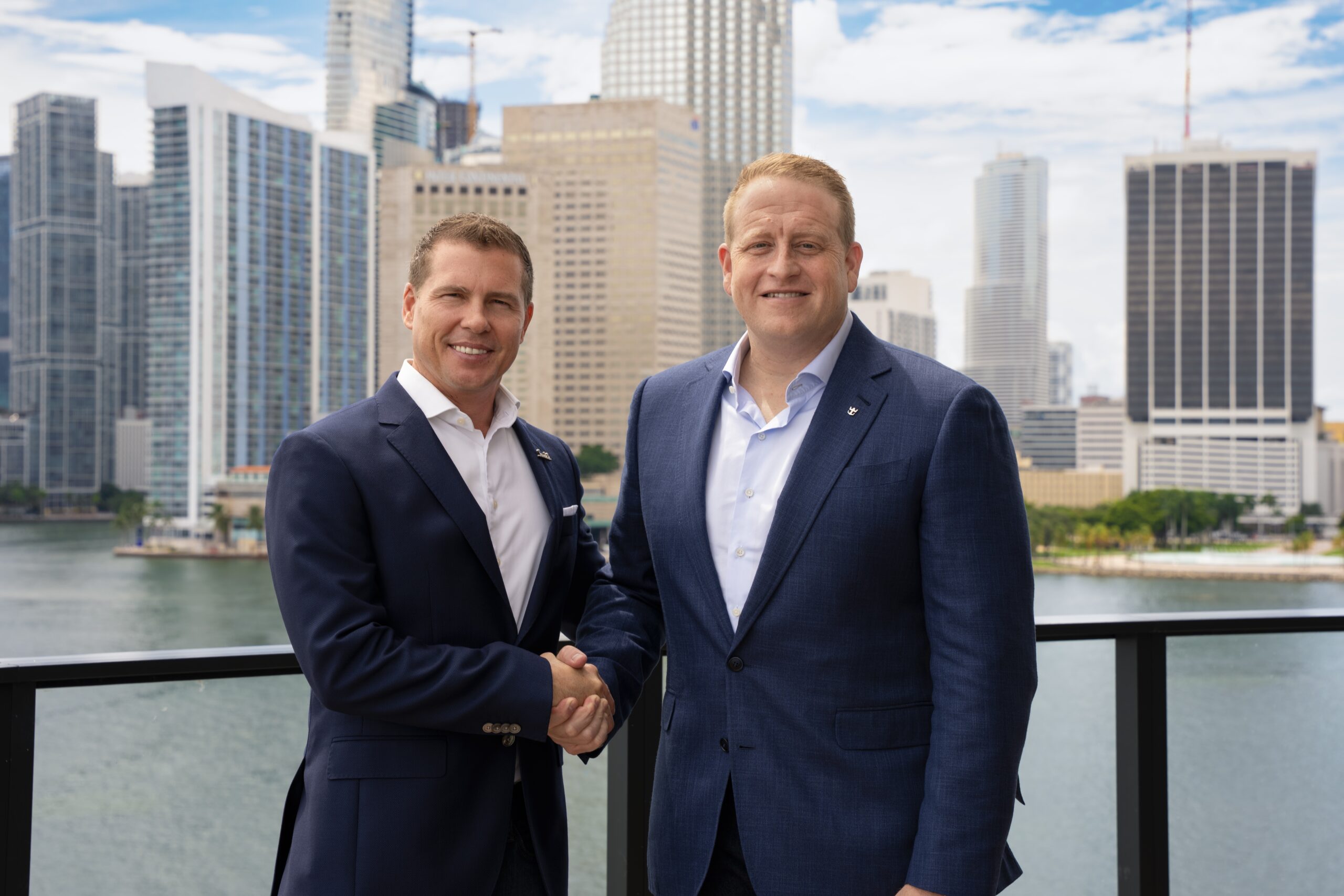
PHOTO CAPTION: Jason Liberty, Chairman and CEO of Royal Caribbean Group, and Adam Stewart, Executive Chairman of Sandals Resorts, mark the signing of an agreement to form a landmark partnership that expands Royal Caribbean Group into the all-inclusive resort space and supports the future growth of Sandals and Beaches Resorts. The signing took place at Royal Caribbean Group’s new headquarters in Miami, with the city’s skyline in the background.
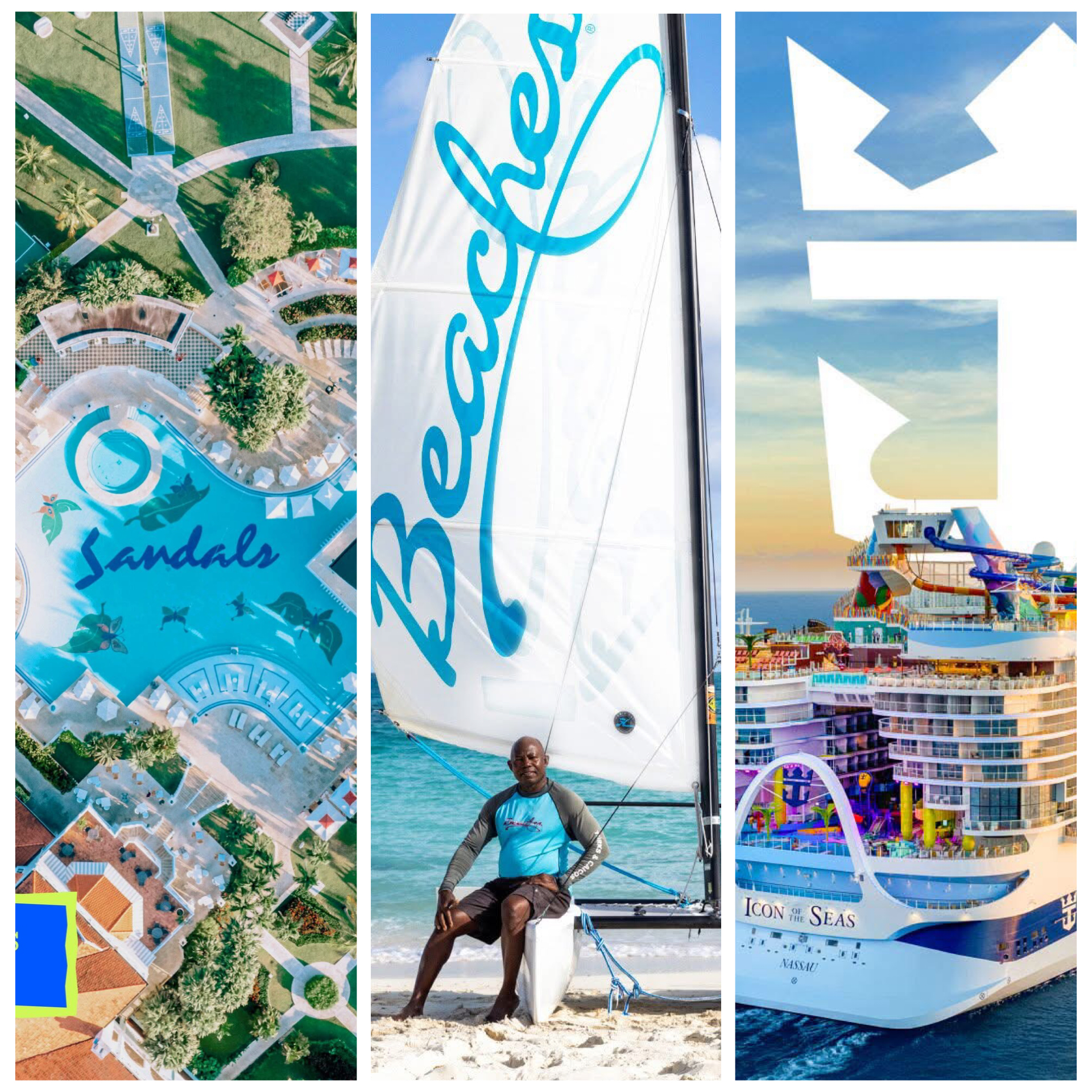
The Caribbean tourism deal first reported as a possibility on Tuesday is now a signed agreement. Royal Caribbean Group plans to pay approximately US$3 billion for a 50% stake in Sandals and Beaches Resorts, putting the value of the business at about US$6 billion. The purchase is expected to close in early 2027, subject to approvals.
Founded in Jamaica by the late Gordon “Butch” Stewart in 1981, the resort business has a presence across nine Caribbean destinations, including Jamaica, The Bahamas and Turks and Caicos. Sandals has described its workforce as nearly 20,000 people, most of them Caribbean nationals.
“My father, Gordon ‘Butch’ Stewart, founded Sandals Resorts with the belief that a company built in the Caribbean could stand on the world stage alongside the most respected names in hospitality,” said Adam Stewart in the announcement carried by PR Newswire. He will remain executive chairman, while the Stewart family retains a stake. The companies say existing reservations and resort operations will continue as usual.





-
 News1 week ago
Beaches Turks & Caicos strengthens year-round commitment with local craft vendors and transport operators
-
 News6 days ago
Beaches Turks & Caicos gives Enid Capron Primary a pre-term facelift
-
 Independent writer3 days ago
Born Here, Raised Here, but Still Unable to Vote: Is this a Conundrum for TCI Electorate?
-
 News7 days ago
Stakeholders Strengthen Collaboration on Housing and Informal Settlements at World Habitat Day Roundtable
-

 Bahamas News1 week ago
Two Months On, The Bahamas Academy of Sciences Turns Fifty Years of Research into Action
-
 Bahamas News2 days ago
Monument Supports Hands for Hunger With Paradise Plates Debut
-

 Education7 days ago
TCICC Earns International Recognition at Ignition Community Conference 2026
-
 Bahamas News3 days ago
Schweppes ‘the Art of Mixology’ Dazzles at Paradise Plates with Nemiroff Vodka