
News
TCIG Continues to Recogniza its Heroes During Social Workers Month – March 2015


Providenciales, 01 Apr 2015 – As the Department of Social Development and Gender Affairs, Ministry of Environment and Home Affairs, continues to recognize Social Work Month 2015, we celebrate the dedicated and committed Social Workers for the roles they have played in the Turks and Caicos Islands in “Paving the way for change”.
The question was asked these serving officers “Why social work?” It is amazing to see that the most common factor is the desire to help others and bring about change in the communities they live and serve.
These are the Social Workers of the Turks and Caicos Islands:
 Nicole Wint
Social Worker, South Caicos
Inline images 2
I believe it was Confucius who said “If you choose a job you love, you will never have to work a day in your life.” This is one philosophy that had stuck with me throughout my Social Work Career. The one thing I have always known I would like to do with my life is to assist others and intercede on their behalf.
I was the youngest one in my class in College. People habitually asked me what I knew about Social Work being so young. Sometimes I would ask myself the same question but after realizing that my zeal to mediate on the behalf of others would not diminish, I knew I had chosen the right path.
Having spent the last eight years as a professional Social Worker, I realize more each day that I am fulfilling my purpose. I am a better person due to my profession. I have learned how to be humble and put the needs of others before my own. Frankly, I would not have it any other way.
 Olivia Daye
Senior Social Worker, Providenciales
Inline images 3
I entered the Social Work profession out of a genuine desire to improve the lives of others. Making a difference in someone’s life, no matter how small or how great has always been important to me. As a child growing up, my first career choice was to become a medical doctor and as such, I was mentored by one. I observed my mentor giving of herself to the children of a Children’s Home that was located in close proximity to where she had her private practice. She got so involved to the point where she adopted two of the children from the home.
My parents also were highly involved in the nurturing of other children and caring for persons in need within our community. The influence of these positive role models in my life inspired me to make a difference in the lives of others. Working with different personalities of varying background on a day-to day basis has proven to be challenging and sometimes overwhelming but no doubt rewarding. For me, my work is not just an interest but a divine calling. I have been in this profession for 13 years and in spite of the challenges encountered, I am still very passionate about improving the lives of others.
 Jaala Kennedy
Social Worker, Grand Turk
Inline images 4
I reflect on the theme for Social Work Month 2015 “Pave the way for Change” and my reason for pursuing the profession of Social Work. I realized that today it is somewhat different from what drove me to become a social worker ten years ago.
I initially wanted to empower others. Today I have decided to continue striving in this noble profession because it allows me the opportunity to be empowered myself.
The clients I have served and encountered as a Social Worker have amazed me by their unexplainable bravery to fight the odds they daily face by choosing to
Believe despite their persecutions
Dream beyond their current situations
Live in spite of their limitations
I have recently decided to broaden my prospective and adopt the mindset of many I serve and have dared to believe, dream and live. These are the first three steps needed in paving the way for change in this profession and the world in which we live.
 Tania Allen-Lewis
Senior Social Worker, Grand Turk
Inline images 5
To say that Social Work was my first area of interest as a Profession would be disingenuous because my desire was to become a Psychologist. Although this desire was not actualized and has not vanished, I strongly believe that it was my destiny to become a part of the Social Work Profession because of the innate qualities that makes me who I am
Matthew 22:14 says that “Many are called but few are chosen”. Throughout my eight years of experience as a Social Worker, there is no doubt in my mind that one has to be chosen for such a Profession as this. I have always been of the opinion that if everyone contributes positively in the communities they live and help their fellow men by way of giving of themselves and their support, this world will be a better place.
The theme for Social Work Month 2015 “Social Work pave the way for change” not only encompasses what Social Workers have done to bring about change in their communities but also the positive changes brought about within all of us.
Tiffany Thomas-Browne
Deputy Director, Grand Turk
Inline images 6
I first became fascinated with the field of Social Work by observing a Social Worker who was practicing and working directly in the field. I was amazed and excited with the way she conducted investigations, interviews, interacted and engaged the client on a child abuse case.
I got my foot wet and was introduced to this field as a Clerical Officer/Welfare Assistant in South Caicos in 1999. I grew a keen interest and became inquisitive on how to become a Social Worker. I observed that there were certain skills that one must possess including: compassion, empathy, problem solving, confidentiality, communication and an overall passion and desire to help people help themselves.
What’s most fulfilling about my career is being able to connect, engage and get through to clients; seeing clients follow through with services and eventually leave the system; and providing counseling, mentoring and long-standing programs. We will continue to pave the way for change.
Are you committed to our cause? If so, join us! Become a Social Worker and begin paving the way for change.















enabling digital transformation across key sectors and supporting enterprise customers
Providenciales, Turks and Caicos Islands (September 17, 2026) – Liberty Business has officially launched in the Turks and Caicos Islands, signalling the company’s continued transformation and strengthening its commitment to helping businesses navigate digital change, drive growth and build greater resilience.
The announcement was made during a special stakeholder event attended by government representatives, business leaders, industry partners, customers and members of the media, marking the next chapter in the company’s long-standing relationship with the Turks and Caicos Islands.
“Today represents far more than the introduction of a new name. It reflects our continued evolution as a business and our commitment to being a trusted technology partner for organisations navigating an increasingly digital economy,” said Susanna O’Sullivan, Vice President General Manager, Flow North Caribbean, Liberty Caribbean.
“Through Liberty Business, we are bringing together the strength and capabilities of Liberty Caribbean with local expertise to help businesses across the Turks and Caicos Islands connect, protect, innovate and grow. We want to be a partner that understands the ambitions of our customers and works alongside them to create meaningful business value.”
Liberty Caribbean is the operator of Flow, Liberty Business and BTC, serving customers across more than twenty markets in the region.
The launch of Liberty Business builds on the company’s long-standing presence in the Turks and Caicos Islands and its continued investment in communications infrastructure, technology and digital capabilities across the Caribbean.
Today, Liberty Caribbean operates one of the region’s most extensive communications networks, supported by approximately 50,000 kilometres of subsea and terrestrial fibre infrastructure, helping enable resilient, secure and high-performance connectivity across the region.
For businesses, the evolution comes at a time when technology is playing an increasingly important role in productivity, customer experience, cybersecurity, business continuity and growth.
“Businesses today need more than connectivity. They need technology solutions that can help them operate efficiently, protect their information, support their people and respond to change. We are excited to begin this next chapter with businesses in the Turks and Caicos Islands and to work together to build a smarter, stronger, more resilient and more connected digital future,” said O’Sullivan.
Liberty Business brings together an integrated portfolio of enterprise solutions, including advanced connectivity, cybersecurity, cloud services, data centre solutions, managed services, enterprise mobility and unified communications under a single brand dedicated to supporting the evolving needs of business customers.
Also speaking at the launch, Joanne Missick, Country Manager, Flow Turks and Caicos Islands, said the introduction of Liberty Business demonstrates the company’s commitment to evolving alongside the local business community.
“The Turks and Caicos Islands is a dynamic market with tremendous potential, and our businesses are increasingly embracing technology as an enabler of growth,” said Missick.
“From tourism and hospitality to financial services, real estate, construction, professional services and entrepreneurship, organisations are looking for ways to become more efficient, secure and resilient. Liberty Business gives us the opportunity to engage our customers differently – understanding their individual needs and helping them identify technology solutions that can support their ambitions.”
Missick added that the company’s approach is centred on building lasting relationships with businesses and providing solutions that address real-world challenges.

Providenciales, Turks and Caicos Islands – Thursday, 17 September 2026: The Ministry of Education, Youth, Sports and Culture has partnered with the Turks and Caicos Islands Elections Department to bring an exciting national election experience directly to high school students across the country with the launch of the 2026 National Student Council (NSC) Election.
Held under the theme “Your Voice. Your Country. Your Future.”, the initiative will give students from all 14 public and private high schools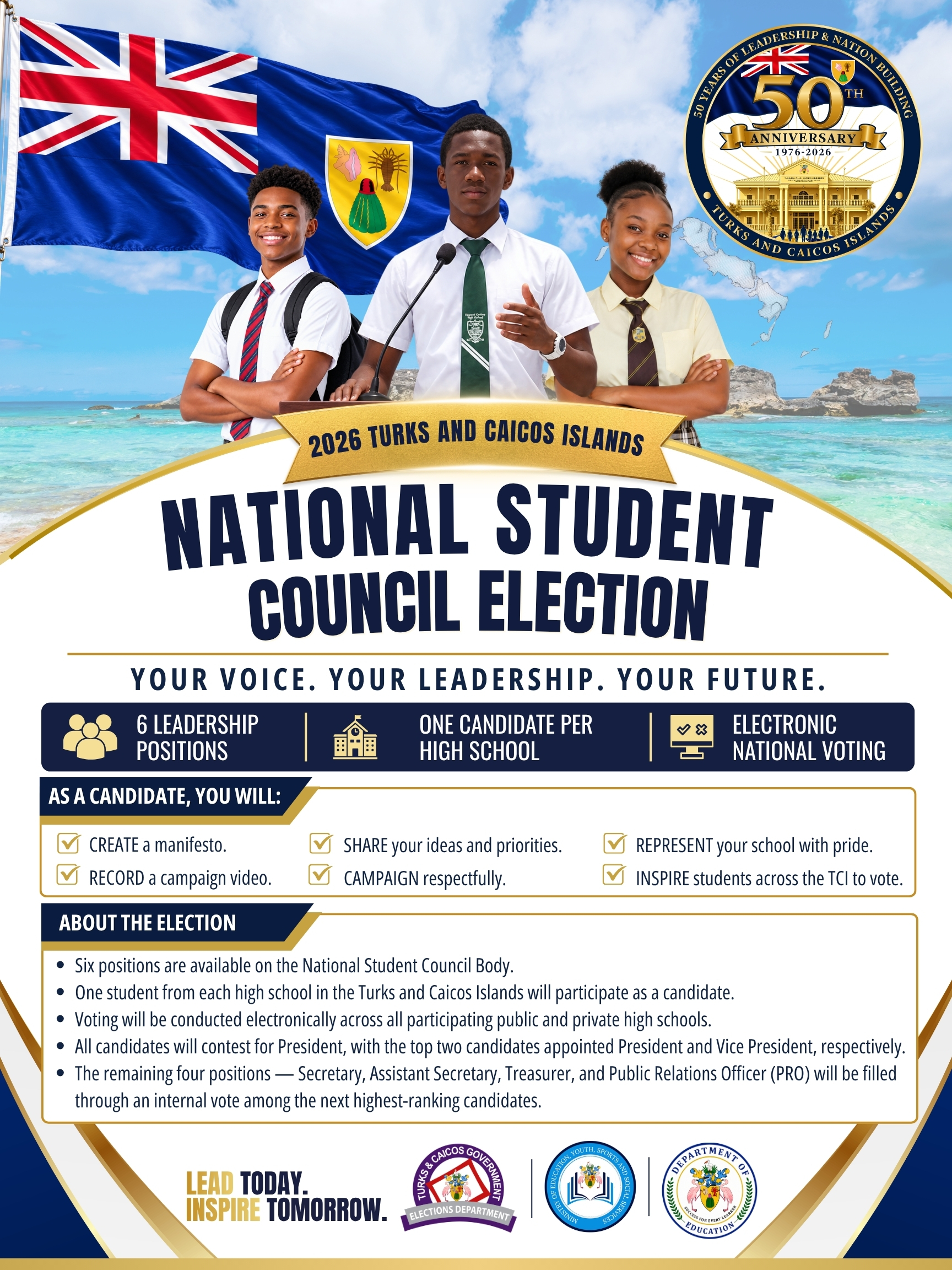 the chance to campaign, vote and compete for national student leadership positions, while gaining first-hand experience of the electoral process.
Minister of Education, Hon. Rachel Taylor, said the initiative gives young people a national platform to share their ideas and develop their leadership skills.
“Our young people have ideas, opinions and perspectives that deserve to be heard, and this election gives them a national platform to use their voices in a meaningful way. We want our students to step forward with confidence, share the issues that matter to them and experience what it means to lead and represent others.” She continued, “I am particularly excited to see students from schools across the Turks and Caicos Islands getting involved, supporting their candidates and participating in the voting process. I encourage every school to embrace this opportunity and help us create an experience that our students will learn from and enjoy.”
Each high school will nominate one student candidate to represent their school at the national level. Candidates will campaign for the positions of President and Vice President, sharing their ideas, priorities and plans with student voters across the Turks and Caicos Islands. Both positions will be decided by electronic vote among high school students across the country.
The remaining four positions on the six-member National Student Council: Secretary, Assistant Secretary, Treasurer and Public Relations Officer. will be determined through an internal vote among the top candidates following the national election.
The election will mirror several elements of the Turks and Caicos Islands’ electoral process. Candidates will choose a party name, colour and symbol, develop a manifesto and campaign slogan, and make their case to student voters. Their names, party information and symbols will appear on an electronic ballot, giving students the opportunity to experience the process as both candidates and voters.
Acting Elections Supervisor Willette Pratt stated that the timing of the initiative is particularly significant as the country continues its focus on civic awareness and youth participation.
“Coming on the heels of Constitution Day and as we prepare to celebrate National Youth Week this September, this is a timely opportunity to put civic education into practice. We want young people to understand that democracy is not only about casting a vote; it is about being informed, participating and understanding that their voice matters. We are excited to see our schools and students embrace the experience.”
Once students are selected and endorsed by their school, candidates must submit a completed Candidate Information Form, a Student Manifesto of no more than 250 words, and a 45- to 60-second Campaign Video PSA introducing themselves and outlining the issues and priorities they hope to champion.
Candidates are expected to campaign fairly and respectfully, focusing on ideas, student issues and their plans as aspiring student leaders. Personal attacks, bullying, false or misleading information, and offering gifts or incentives in exchange for votes are prohibited. Breaches of the campaign code of conduct may result in the loss of campaign privileges or disqualification.
For candidates, it is a chance to share their ideas and test their leadership skills on a national platform. For student voters, it is an opportunity to have a say in who represents them and experience the electoral process first-hand.
With candidate selection underway, the Elections Department and Ministry of Education are looking forward to seeing students step forward, bring their ideas to the campaign and, ultimately, seeing young voters across the country make their choice at the ballot.
The 2026 National Student Council Election is an opportunity for young people to do more than learn about leadership and democracy — it gives them the chance to take part. Your Voice. Your Country. Your Future.
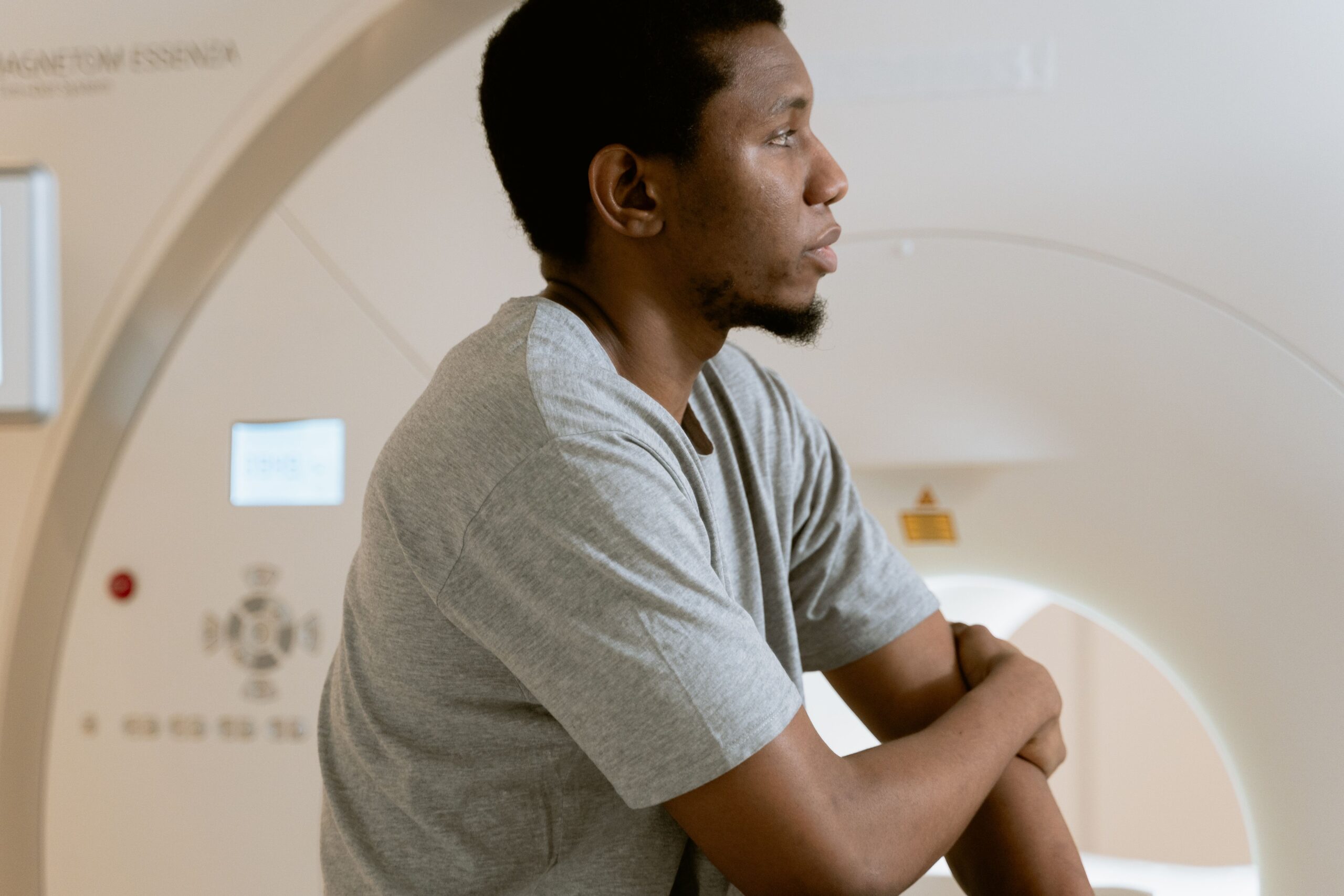
September is Prostate Cancer Awareness Month – which means it is time to watch out for the warning signs. Possible signs include slow urine flow and loss of bladder control — but if this common cancer is caught before it spreads, the prognosis is good.
Your prostate is only about the size of a walnut. But this small gland can cause big problems if left unchecked.
Warning signs of prostate cancer
“Most men with prostate cancer don’t have symptoms at first,” says urologist Christopher Weight, MD. But if you notice certain warning signs, like changes in your pee routine or pain, it’s a good idea to visit a urologist.
Prostate cancer is one of the most common cancers in men. But when it’s found early, it’s also one of the most treatable. Knowing the signs and talking with a healthcare provider about screening could save your life.
So, what should you look out for?
Slow or weak urine flow
Trouble starting to pee — called urinary hesitancy — is common as men get older. You may also notice slow flow or dribbling. Or your flow may stop altogether. The most common cause is benign prostatic hyperplasia. Still, if you experience these symptoms, it’s important to get your prostate checked.
Frequent need to urinate
A frequent and sometimes urgent need to urinate, especially at night, may be a sign of nerve damage or an infection. Or it could indicate that a tumor is putting pressure on your bladder and urethra.
Painful or burning urination
Pain or burning when you pee — called dysuria — is usually linked to a urinary tract infection (UTI). But in some cases, it can signal prostate cancer. This is especially true when it’s paired with other symptoms.
Blood in your urine
Another possible warning sign of prostate cancer is hematuria, or blood in your pee. Though this can be associated with other health issues, including a UTI, it’s worth checking out.
Prostate pain
Unexplained prostate pain — especially when sitting — can be an early sign of trouble. “It might also mean an infection, but only your urologist can say for certain,” Dr. Weight says.
Loss of bladder or bowel control
Bladder or bowel incontinence can happen with age or other medical conditions. But if you’re leaking urine or can’t control bowel movements, talk to a doctor to rule out prostate cancer.
Changes in sexual function
These symptoms can stem from many causes, but they may also signal prostate cancer. Talk to a urologist if you notice:
- Painful ejaculation
- Decreased volume of ejaculation
- Inability to keep an erection
- Blood in your semen (hematospermia)
Sexual health is a vital part of your overall well-being. So, if something feels off, it’s not just OK to speak up — it’s vital.
Later-stage signs
These symptoms often only appear when prostate cancer has spread:
- Ongoing pain in your lower back, hips or chest
- Numbness in your legs or feet
“Of course, there are endless other reasons that your back may hurt or that you have tingling in your toes that are entirely separate from any prostate troubles. But they can also be signs of later stages of prostate cancer,” Dr. Weight clarifies.
Importance of prostate cancer screening
“Since early-stage prostate cancer doesn’t cause symptoms, many men don’t know they have it,” Dr. Weight notes. “That’s why regular screening is so important — it helps catch prostate cancer early, when treatment is most effective.”
A healthcare provider may recommend screening if you’re between the ages of 55 and 69, or earlier if you have a family history or other risk factors.
Screening might feel uncomfortable to think about, but skipping it could mean missing a chance to catch prostate cancer early, when it’s easier to treat.
“A simple blood test, often followed by a physical exam if needed, gives your doctor important information about your prostate health,” Dr Weight says.
Early detection doesn’t just improve treatment options — it can also give you peace of mind.
Lower your risk of prostate cancer
“You can’t do anything about some of the risk factors for prostate cancer, like age or family history,” Dr. Weight recognizes. “But you can make lifestyle choices that support a healthier prostate.”
These small steps may make a difference:
- Get regular prostate screenings.
- Maintain a healthy weight.
- Exercise regularly.
- Eat a nutritious diet.
- Quit smoking.
“When prostate cancer is diagnosed before it spreads to other parts of the body, about 99% of people live at least five years after diagnosis,” he continues. “But the survival rate is much lower if the cancer has spread.”
That’s why it’s so important to stay proactive. Regular screenings, healthy habits and paying attention to changes in your body can make all the difference. Talk to a provider about the right plan for you.
CREDIT: CLEVELAND CLINIC





-

 Education1 week ago
Department of Education Concludes Four-Day TCI National Standards Secondary School Curriculum Implementation Training
-

 Independent writer6 days ago
Fifty Years of Ministerial Government: Honouring Our Past, Embracing Our Present and Preparing for Our Destiny
-
 News1 week ago
UNDER 40 DAYS: COMMITTEE FORMED—BUT WHO IS ON IT?
-

 Health4 days ago
Know the Possible Warning Signs of Prostate Cancer
-

 News1 week ago
Invest TCI Brings Entrepreneurs and Bankers to the Table
-

 News3 days ago
Liberty Business launches in Turks and Caicos Islands
-

 Education3 days ago
TCI Schools Invited to Participate in 2026 National Student Council Election