
Uncategorized
WHERE ARE THE LOCAL ARTISTS?

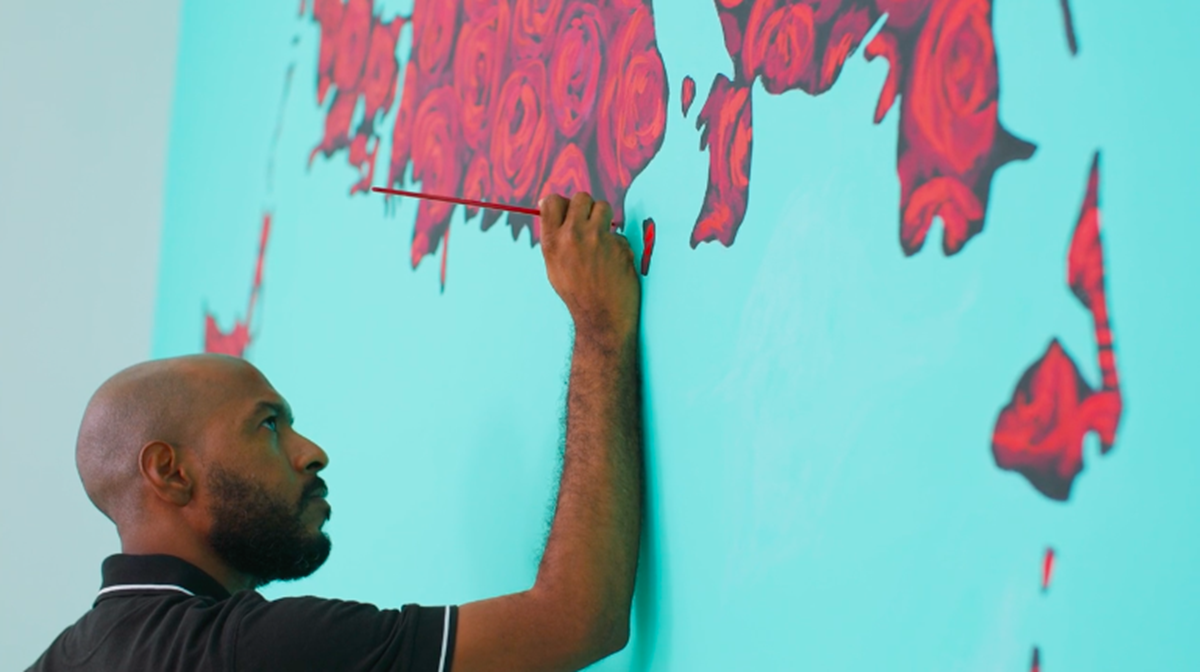
Turks and Caicos, March 18, 2026 – Across the Turks and Caicos Islands, the skyline is changing. New resorts rise along the Northern coastline of Providenciales, promising luxury, exclusivity, and world-class experiences designed for the global traveler. These developments are often celebrated as progress, as evidence of economic growth and international relevance.
But beneath that narrative lies a quieter question: who is this development truly for, if it does not meaningfully include the culture of the place it occupies?
More specifically, where are the local artists?
Modern tourism is no longer defined by architecture alone. Today’s traveler is not simply purchasing a room. They are seeking experience, identity, and connection to a place. In response, hospitality brands increasingly market authenticity as a defining feature of luxury.
Encouragingly, there are emerging examples within the Turks and Caicos Islands where this principle is present. Recent developments such as Beaches Resort’s new village extension, Treasure Beach and The Strand TCI have made intentional efforts to incorporate local visual artists into their properties, signalling an understanding that art is not an accessory, but an essential component of place-making.
These efforts demonstrate what is possible. Yet, across many developments, this level of integration remains inconsistent or non-existent. In comparison, the yet to open properties like the Andaz feature videos claiming to be rooted in culture while promoting Nigerian-Canadian and Trinidadian artists; whose work will adorn its walls and shape the narrative of “local culture” to its visitors. There are whispers of developments transporting artists all expenses paid to create and outfit their properties with art.
Instead of commissioning local artists, properties also rely on imported, mass-produced décor or artwork sourced from overseas. The result is a visual identity that could belong anywhere. A resort may sit on TCI Soil, but its interiors frequently tell no story of the islands themselves. This is more than an aesthetic oversight. It is a missed cultural and economic opportunity.
Local artists are not merely decorative contributors. They are interpreters of place, translating the land, its flora, and its lived experience into visual form. In a destination like the Turks and Caicos Islands, where identity is deeply tied to landscape and memory, art plays a critical role in shaping how a place is understood and remembered.
To exclude local artists from major developments is, in effect, to remove one of the most direct expressions of national identity from the visitor experience.
There is also a clear economic cost.
When developments bypass local creatives, funds that could circulate within the domestic economy instead flow outward. This is a form of economic leakage that is rarely discussed but widely felt. Commissioning local artists, licensing their work, and integrating it into design and branding are not acts of charity. They’re investments in a local creative economy with the potential to grow alongside tourism itself.
There remains an outdated assumption that meeting international standards requires looking outward rather than inward. But globally, the opposite is increasingly true. The most competitive destinations are those that embed local culture into their offerings in meaningful ways. Authenticity is no longer optional; it is expected.
The Turks and Caicos Islands should not aspire to look like everywhere else. Its value lies in being unmistakably itself. The positive steps taken by developments such as Beaches’ Treasure Beach and The Strand TCI should not be viewed as exceptions, but as a model. They show that integrating local artists is both achievable and beneficial, enhancing the guest experience while supporting the domestic economy.
This raises an important question for policymakers and developers alike: what would it look like to make this approach standard practice? Practical solutions already exist. Development frameworks/agreements can encourage or require a percentage of project budgets to be allocated to local art. Our newly launched national artist registry by the Department of Culture could streamline procurement and ensure professional standards. Partnerships between developers and cultural institutions could allow artists to be involved from the earliest design stages, rather than as an afterthought.
Hotels themselves can play a role by hosting exhibitions, supporting artist residencies, and incorporating locally produced work into their guest experience. Beyond one-time purchases, licensing agreements can allow artists to benefit from the continued use of their work across branding and digital platforms. None of this is radical. It is standard practice in destinations that understand the long-term value of cultural identity.
At its core, this issue is about more than art. It is about how a country chooses to represent itself, and who is included in that representation. The Turks and Caicos Islands is not simply a collection of beaches and luxery buildings. It is a living culture, shaped by its people, its history, and its environment. Its artists are part of that fabric, producing work that reflects and preserve what makes these islands distinct.
To build a tourism industry that does not meaningfully include them is to create a version of the country that is incomplete.
As development continues, the question is not whether the islands will grow. Growth is already underway. The question is whether that growth will be rooted in the identity of the place, or whether it will continue to operate around it.
In a global market where authenticity carries increasing value, the answer should be clear.
I leave you to ponder:
Turks and Caicos, where are YOUR artists?
About HezronH:
“We are all blended with a swath of experiences; walking, breathing, and thinking creatures full of insight and emotions expelled through every single pore. Our aura illuminates spaces of darkness and drives ideas through vision, endowing minds with fragments of personality shimmering through a kaleidoscope of colour.”
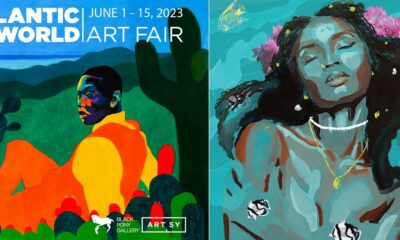
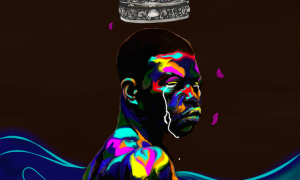
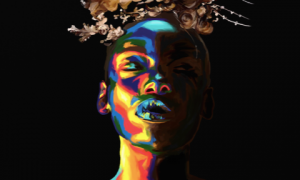
Turks and Caicos Islands’ artist Hezron Henry’s work is an exploration of this concept, via his practice. His body of work consists of oil stick, oil pastel and acrylic on paper, canvas, and digital painting, adapting both traditional and modern painting mediums to his signature style. His art is laden with vibrant colours and a link is established highlighting the emotive power of colour. Drawing inspiration from his youth, collecting comics, and his everyday interactions as an adult, he bridges youthful vibrancy and rule-breaking with the depth of an individual’s search for belonging in a region, still underrepresented, and overlooked.
Hezron infuses his portraits with introspection and longing while vivid colours harken to a palette present in Fauvism.
His passion is honest artistic expression, creating an experience people can enjoy and connect with on an ethereal level.
As one of Turks and Caicos’ most prolific artists he has exhibited in cities across Australia, New Zealand, the UK, Trinidad & Tobago at CARIFESTA, Portland (USA), and at Art Takes 2021 (NYC). Hezron has also had the pleasure of being featured in several publications: Beautiful Bizarre Magazine, Wacom’s “The Next Level,” Turks and Caicos Magazine, and selected as “Curators’ Picks: Emerging” on international art platform Artsy.
Select Achievements/Exhibitions/Publications/Projects
2024 – Indelible Imprints, Group Show, SaveArtSpace x Gallery 90220, Los Angeles
2024 – Feature, Cacique (interCaribbean In-Flight Magazine), Apr – Jun
2024 – Interview, Up and Away (Bahamasair In-Flight Magazine), Apr – Jun
2023 – Curators’ Picks: Emerging – Artsy
2023 – Curators’ Choice: Atlantic World Art Fair
2023 – Print It!, Group Exhibit, Leeds, UK
2022 – Caribbean Metaverse Art Week, Decentraland
2022 – Deus: The Quest for Divinity, Solo Show, Black Pony Gallery, Artsy Viewing Room
2021 – Expression Against Oppression, Group Exhibit, SaveArtSpace, Portland
2020 – Drawn Vol. 4: Leaders in Contemporary Illustration
2020 – Exclusive Evening of Art Exhibition, Group Show, Providenciales
2019 – Across Boundaries Exhibition, Group Show, Trinidad and Tobago National Museum
2019 – Apparel Collab, Konk
2018 – Fabric Prints, bēchë 2019 Collection
2017 – EP Cover, Maskanoo, Lady Livz
2017 – The Next Level Exhibition, Group Show: Sydney, Melbourne & Auckland





By Deandrea Hamilton
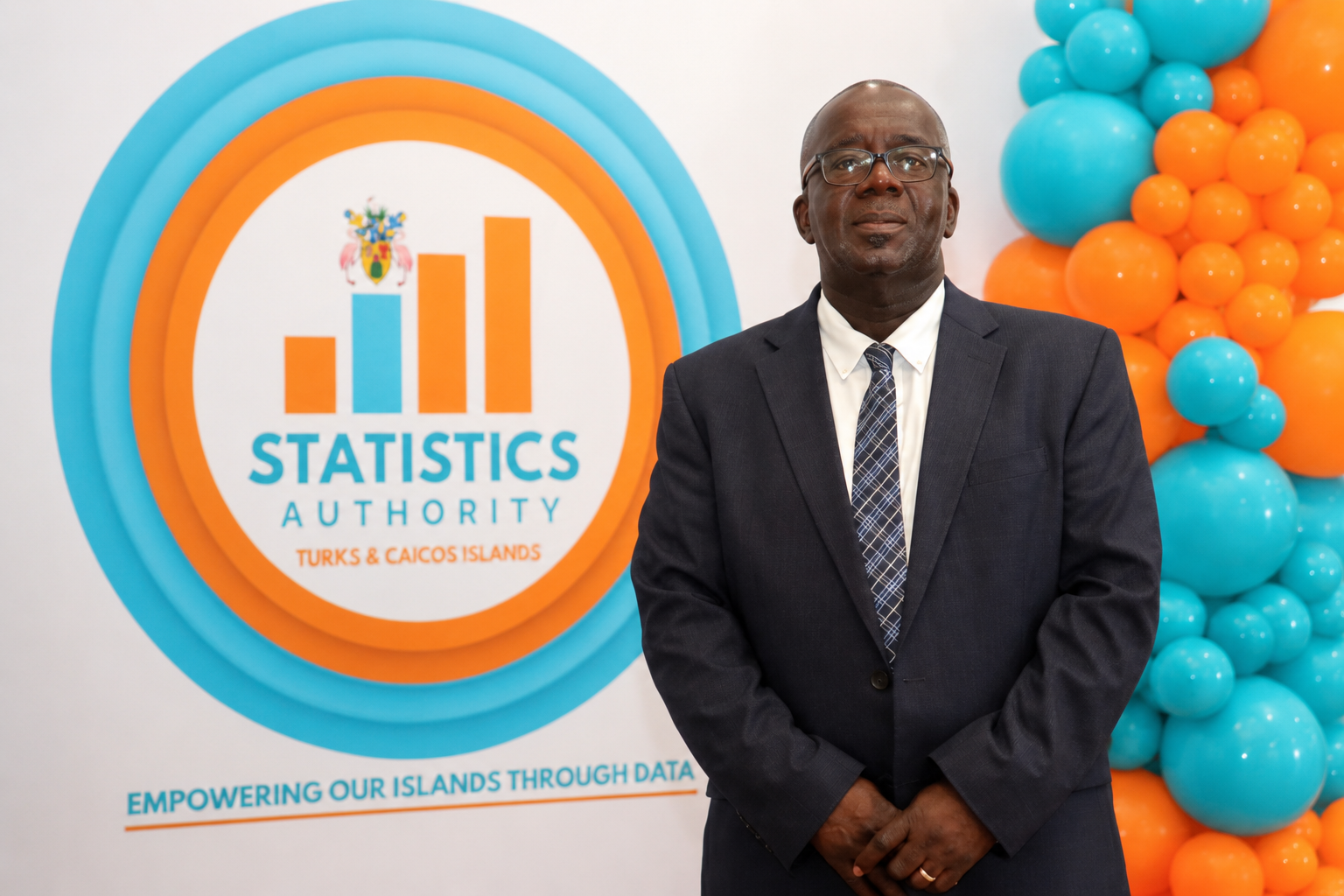
GRAND TURK, Turks and Caicos Islands — Long before it became the Turks and Caicos Islands Statistics Authority, it was a small government unit quietly collecting information for policymakers. It existed largely in the background, producing figures on population, trade, employment and economic activity.
On Tuesday, May 26, that department entered a new era.
In a ceremony themed “Empowering Our Islands Through Data,” the Statistics Department officially became the Turks and Caicos Islands Statistics Authority, a milestone years in the making and one many in attendance attributed to the vision, persistence and leadership of longtime statistician Shirlen Forbes.
The launch itself reflected the values Forbes has championed throughout his career — inclusion, respect for institutional history and investment in the next generation.
Former and current staff were recognized. Tributes were paid to those who laid the foundation decades ago. Students from Enid Capron Primary School performed. Musicians including Robin Forbes, Dexter Landy, Vernal “Samsol” Lightbourn and Aleta “Apple” Astwood contributed cultural selections, while leaders from across government, CARICOM and the Opposition gathered under one roof.
The occasion also featured remarks from Pastor Bradley Handfield, Chairman of the Board of Directors of the Turks and Caicos Islands Statistics Authority, who described the launch as more than the creation of a new institution.
In his welcome message, Handfield said the Authority represents a renewed national commitment to data integrity, independence and excellence. He noted that reliable statistics underpin effective governance, business confidence and informed public discourse, while helping the country track social and economic progress and make better decisions for the future.
What stood out most was the genuine affection in the room.
The event united generations of statisticians, administrators and public servants who had contributed to the evolution of statistical services in the Turks and Caicos Islands. It was evident that Forbes had not forgotten those who came before him.
That commitment to people was highlighted by Acting Governor Anya Williams, who praised the department as one of the best-run entities in government and singled out Forbes for elevating both the institution and its staff.
“There are some departments that if they wrote today and said they wanted to become a statutory body, I would say, ‘Great, can I sign right now?’ But the Statistics Department was not one of those,” Williams said. She described it as a department with a long-standing record of excellence, crediting former leaders including Jones and Kathleen Forbes before noting that Shirlen Forbes had “taken it to another level.”
Her Excellency Williams spoke passionately about Forbes’ emphasis on training and higher education.
She recalled attending a University of the West Indies graduation where members of the department earned master’s degrees, achievements she directly linked to Forbes’ leadership.
“Sometimes they complain that they feel like they’re in school because Mr. Forbes always has them doing something,” she joked, before explaining that his focus extends beyond qualifications.
“For him it’s about empowerment.”
That philosophy has shaped a department that now stands at the centre of national planning.
The historical timeline presented at the launch traced the journey from a statistical unit operating under the Financial Secretary’s Office, through its disbandment in 1993, re-establishment in 1998-99 with support from the Caribbean Development Bank and CARTAC, modernization during the 2000s and 2010s, and ultimately the creation of the Statistics Authority. The Statistics Act of 2012 further strengthened the legal framework for the collection and protection of official data.
Premier Charles Washington Misick acknowledged that while politicians establish policy, professionals such as Forbes make implementation possible.
“My job is to set policy and direction, but it takes people like yourself to implement and deliver,” Misick said. “I’ll take my hat off to you.”
The Premier described statistics as critical to decision-making and national development, noting that modern governments cannot plan effectively without reliable data. He then formally declared the launch of the Statistics Authority.
Yet perhaps the most memorable aspect of the occasion was not the unveiling of a logo, mission statement or statutory framework.
It was the recognition that behind every census, survey, labour report and economic indicator are people dedicated to helping a country understand itself.
For decades, Shirlen Forbes has been one of those people.
Now, with the creation of the Turks and Caicos Islands Statistics Authority, his work stands as a reminder that nation-building is not only done in Parliament or Cabinet rooms. Sometimes it is done quietly, one dataset, one report and one trained professional at a time.
And on May 26, the Turks and Caicos Islands paused to say thank you.
Uncategorized
Sandals Resorts International and Ministry of Tourism Leveraging Radio Remotes to Boost Visitor Arrivals
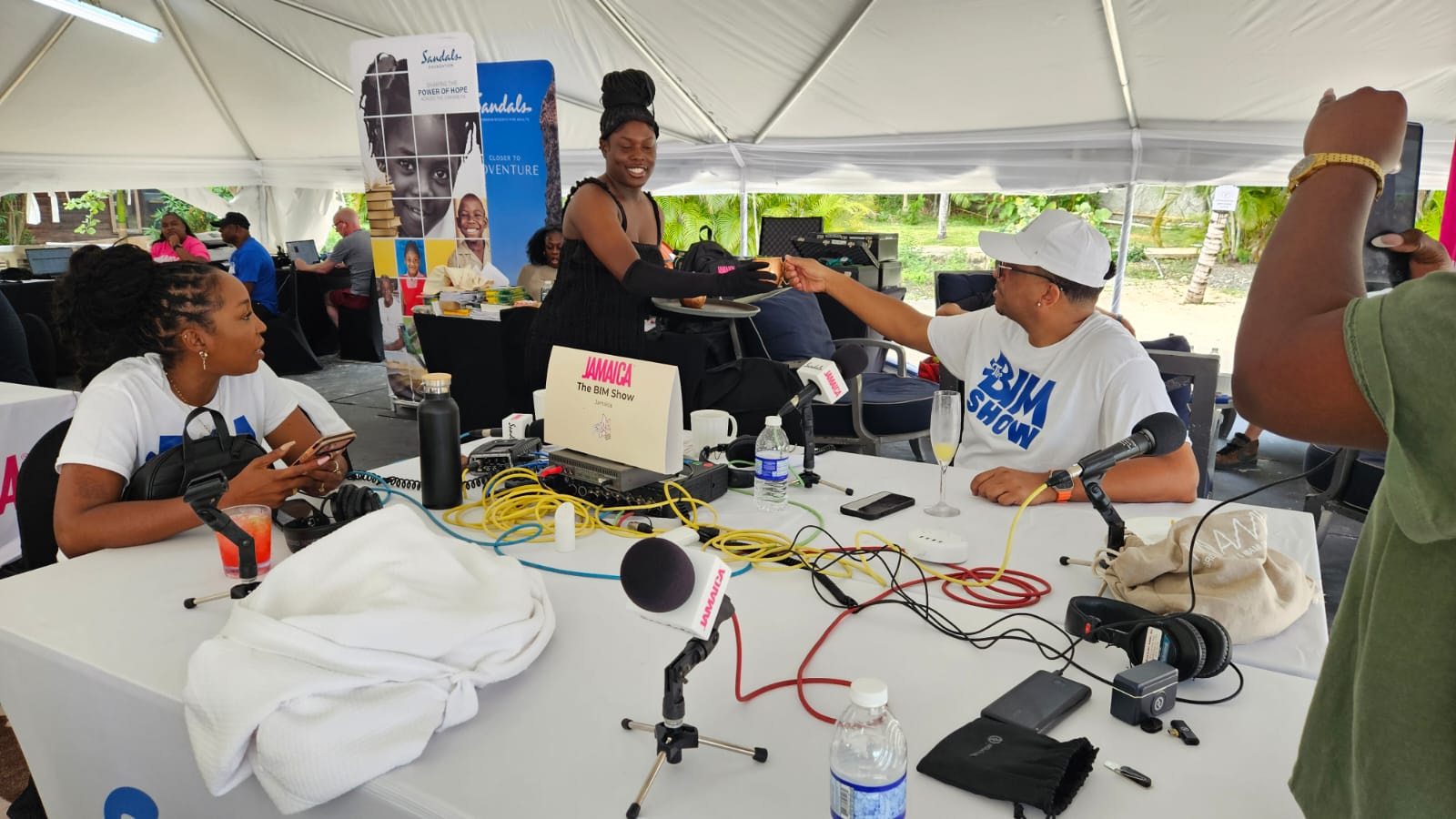
MONTEGO BAY, May 11 (JIS): A week of live radio remotes from Sandals Ochi Beach Resort in St. Ann has showcased Jamaica’s resilient rebound from Hurricane Melissa, with Canadian and British hosts praising the island’s hospitality sector as not just reopened for business but “top tier and second to none”.
A joint venture between Sandals Resorts International and the Ministry of Tourism connected 11 international radio stations and one local outlet, including ‘The Bim Show’ on Fyah 105, to deliver on‑the‑ground impressions to an audience of nearly three million listeners.
During a seven‑day stay at Sandals Ochi, the hosts conducted live broadcasts back to their home bases, toured the Ocho Rios area, and interviewed Sandals staff as well as students from the Exchange All-Age School in St. Ann.
The initiative also provided first‑hand observations of Jamaica’s ongoing tourism recovery and the enduring warmth of the island’s people.
“First-class stuff… Jamaica is such an amazingly beautiful place. If you didn’t know, there is no way you could tell that six months ago, the island experienced a category-five hurricane, which caused so much damage. [It is] such an amazing place; amazing and beautiful people,” Brian West, a radio host from Hamilton, Ontario, Canada said.
Broadcaster from London, England, Jada Sachira, shared similar sentiments.
“It was such a wonderful experience; I thoroughly enjoyed the experience. The people have been so friendly and hard-working… everyone doing their part to ensure that visitors are well taken care of and to enjoy the Jamaican tourism product. Just breathtakingly beautiful. I want to come back for a longer stay,” she stated.
Another Canadia radio host, Patty Brown, underscored Jamaica’s iconic worker‑driven hospitality.
“You just have to come and see… that’s what I told my listeners. The Jamaican experience is simply magical… my first time here but definitely won’t be my last,” she stated.
Regional Public Relations Manager for Sandals Ochi Beach Resort, Lyndsay Isaacs, noted that the radio remotes have historically been highly successful, offering a tangible window into Jamaica’s tourism product for listeners.
“It’s a case of reporting back to their listeners what they have experienced first-hand. Sandals, along with the Ministry of Tourism, have been doing this kind of radio remotes for years and we find it very successful. It’s different and more emotional this time, seeing that we have been in a recovery state following Hurricane Melissa, which badly affected the sector. But look at us now – fully open for business,” Ms. Isaacs stated.
Mayor of St. Ann’s Bay, Councillor Michael Belnavis, praised the event for highlighting community hospitality and economic resilience.
“This radio remote has highlighted Jamaica’s unity and endurance in rebuilding the tourism sector. The people of St. Ann, and Jamaica as a whole, have demonstrated that hospitality is in our DNA,’ Mr. Belnavis stated.
Poko Loko Floating Bar’s owner Anthony Warren, offered another insider’s view, noting that positive results should come from the on-the-ground visits and live broadcasts from the radio hosts.
Meanwhile, Minister of Tourism, Hon. Edmund Bartlett, said the initiative is a strong signal of Jamaica’s competitive rebound in Caribbean travel.
“The radio remote’s reach is a testament to Jamaica’s continued relevance as a premier tourism destination. We have not only recovered but we have also elevated the Jamaican experience to a level that is unmatched in the region,” Mr. Bartlett said.
The collaborative event, which mobilised 11 international radio stations and one local outlet, demonstrates Jamaica’s aggressive post‑Melissa recovery strategy and reinforces the island’s reputation for warm hospitality and world‑class attractions.
Radio remotes have been popularly used as a vehicle by both the Ministry of Tourism and Sandals Resorts International as a means of reaching out directly to radio audiences in Jamaica’s biggest source markets: the United States, Canada and the United Kingdom.
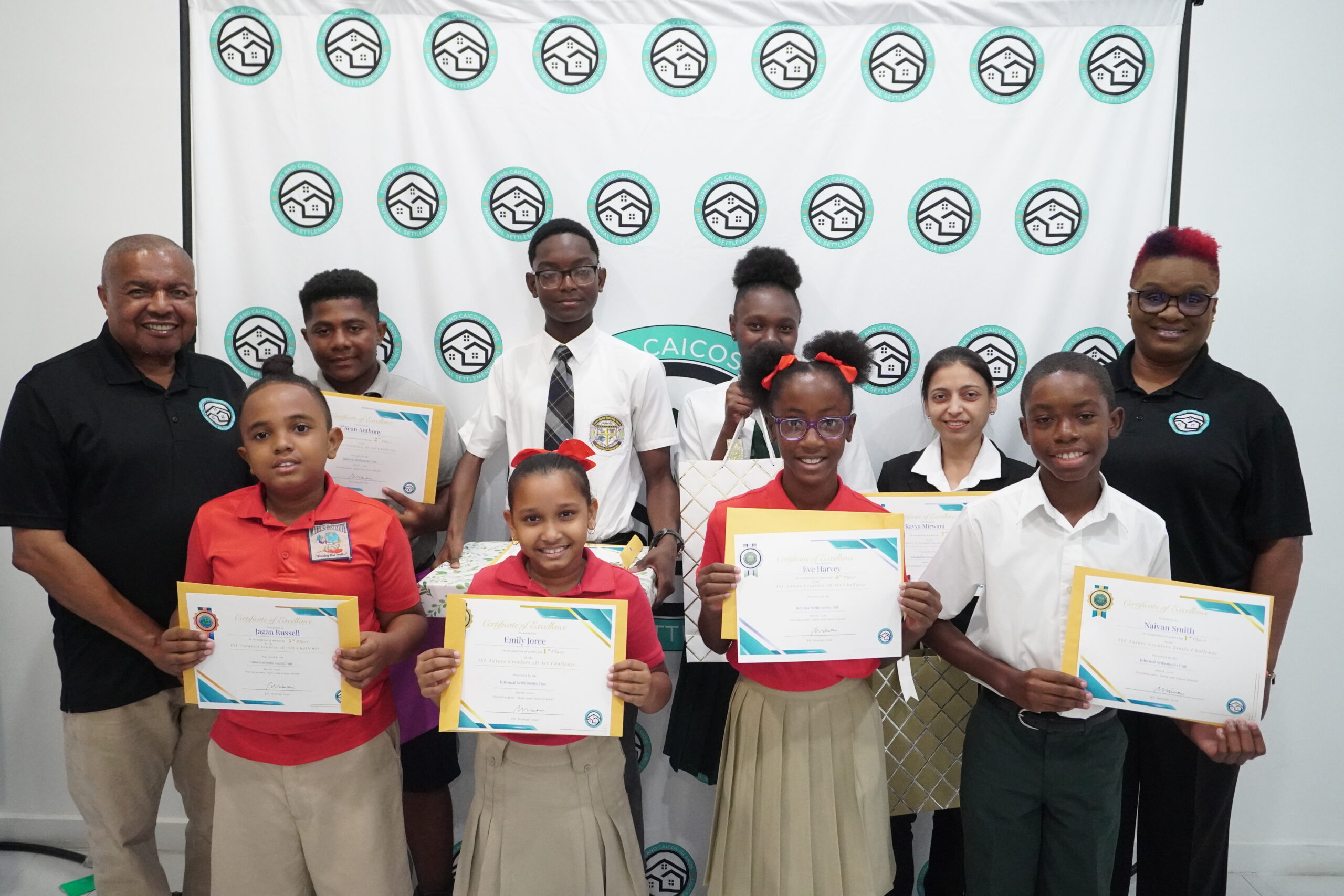
Providenciales, Turks and Caicos Islands – March 26, 2026 – The Informal Settlements Unit (ISU) successfully hosted its Future Creators Challenge Prize Distribution Ceremony on Wednesday, March 25, 2026, at its office in Providenciales, recognising outstanding student creativity and participation from across the Turks and Caicos Islands with winners hailing from Providenciales and North Caicos.
The Future Creators Challenge formed a central component of the ISU’s Youth Outreach Programme, an initiative designed to engage young people in understanding the challenges associated with informal settlements while encouraging critical thinking, creativity, and solution-oriented perspectives on national development. Through a combination of educational content, school engagement, and creative competitions, the programme provided students with an opportunity to explore issues of community development in accessible and meaningful ways.
Students competed across three categories: 2D Art, Essay Writing, and Jingle Creation, producing submissions that demonstrated both creativity and thoughtful engagement with the themes of the programme.
The following students were recognised for their outstanding performances:
2D Art Challenge
1st Place – Emily Joree – MILLS Institute
2nd Place – T’Sean Anthony – Thelma Lightbourne Primary School
3rd Place – Jagan Russell – MILLS Institute
4th Place – Eve Harvey – MILLS Institute
Essay Challenge
1st Place – Jordan Pierre – Louis Garland Thomas High School
2nd Place – Kavya Mirwani – British West Indies Collegiate
3rd Place – Mirsendy Obei – Raymond Gardiner High School
Jingle Challenge
1st Place – Naivan Smith – Raymond Gardiner High School
In addition to individual awards, MILLS Institute was presented with a special prize in recognition of submitting the highest number of entries to the ISU Future Creators Challenge, reflecting exceptional student participation and institutional support.
In remarks delivered during the session, ISU Strategic Lead Justice Carlos Simons KC underscored the importance of youth participation in shaping the future of the Turks and Caicos Islands, noting that “the future of the Turks and Caicos Islands depends on young people like you who are willing to engage, to imagine solutions, and to play a role in the development of your communities.” He further encouraged students to continue playing an active role in national development, expressing that he hoped “this is only the beginning of your journey as agents of change here in the TCI.”
The ISU extends its sincere appreciation to all participating schools, students, and teachers as well as the Ministry of Education, Youth, Sports and Culture, whose support contributed to the success of this inaugural Youth Outreach Programme initiative.
The Unit remains committed to expanding its engagement with young people across the Turks and Caicos Islands through innovative, inclusive engagement efforts that support awareness, education, and long-term national development.





-
 Education1 week ago
Department of Education Concludes Four-Day TCI National Standards Secondary School Curriculum Implementation Training
-

 Independent writer6 days ago
Fifty Years of Ministerial Government: Honouring Our Past, Embracing Our Present and Preparing for Our Destiny
-
 News1 week ago
UNDER 40 DAYS: COMMITTEE FORMED—BUT WHO IS ON IT?
-

 Health5 days ago
Know the Possible Warning Signs of Prostate Cancer
-

 News1 week ago
Invest TCI Brings Entrepreneurs and Bankers to the Table
-

 News3 days ago
Liberty Business launches in Turks and Caicos Islands
-
 Education3 days ago
TCI Schools Invited to Participate in 2026 National Student Council Election