
USA
Diddy still in Prison, Convicted of Mann Act Violations; Sentencing in October



ABACO, BAHAMAS — Nearly two months after American sailor Lynette Hooker vanished in waters off Abaco, investigators are preparing to conduct a new search based on GPS and navigation data that reportedly challenges the account originally provided by her husband.
The case, which first drew international attention in early April, began when Brian Hooker told authorities that his wife was swept away after falling from an inflatable dinghy during rough conditions in waters near Elbow Cay.
Initial search efforts involving Bahamian and U.S. authorities covered extensive areas of the Sea of Abaco but failed to locate the missing Michigan woman.
Now, according to multiple U.S. media reports, investigators have obtained electronic navigation and GPS data that appears to place the couple’s dinghy in a different location from where searchers initially concentrated their efforts.
The new information has prompted authorities to reopen search operations and seek permission for divers to examine a more targeted area of the Sea of Abaco.
Unlike the broad search that followed Hooker’s disappearance, the renewed effort is expected to focus on a relatively shallow section of water, reportedly about 25 feet deep. Investigators believe the location may offer a better opportunity to recover evidence and potentially answer lingering questions surrounding the disappearance.
The latest development marks a significant shift in the investigation.
What began as a maritime search-and-rescue operation has evolved into a complex multinational investigation involving Bahamian authorities, the United States Coast Guard and the Federal Bureau of Investigation.
Brian Hooker was detained and questioned by Bahamian authorities following his wife’s disappearance but was later released without charges. While investigators have never publicly accused him of a crime, reports indicate he remains a person of interest as authorities continue to examine the circumstances surrounding the case.
Hooker has repeatedly denied any wrongdoing and has maintained that his wife accidentally fell overboard.
The investigation has intensified in recent weeks. U.S. authorities have reportedly seized the couple’s sailboat, Soulmate, transporting the vessel to Florida for forensic examination. Investigators are said to be reviewing onboard electronics, digital records and other potential evidence as part of the ongoing inquiry.
The case has also attracted attention from Lynette Hooker’s family, who have continued to press for answers and support efforts to locate her.
The renewed search comes after Brian Hooker returned to the United States following the disappearance. Reports indicate he cited family reasons, including concerns about his mother’s health, for leaving The Bahamas.
For investigators, however, the focus now appears fixed on the newly identified search area and the electronic evidence that led them there.
Whether the latest operation produces answers remains to be seen. But nearly eight weeks after Lynette Hooker disappeared in the waters of Abaco, authorities believe new technology and new information may finally provide a clearer picture of what happened that night.
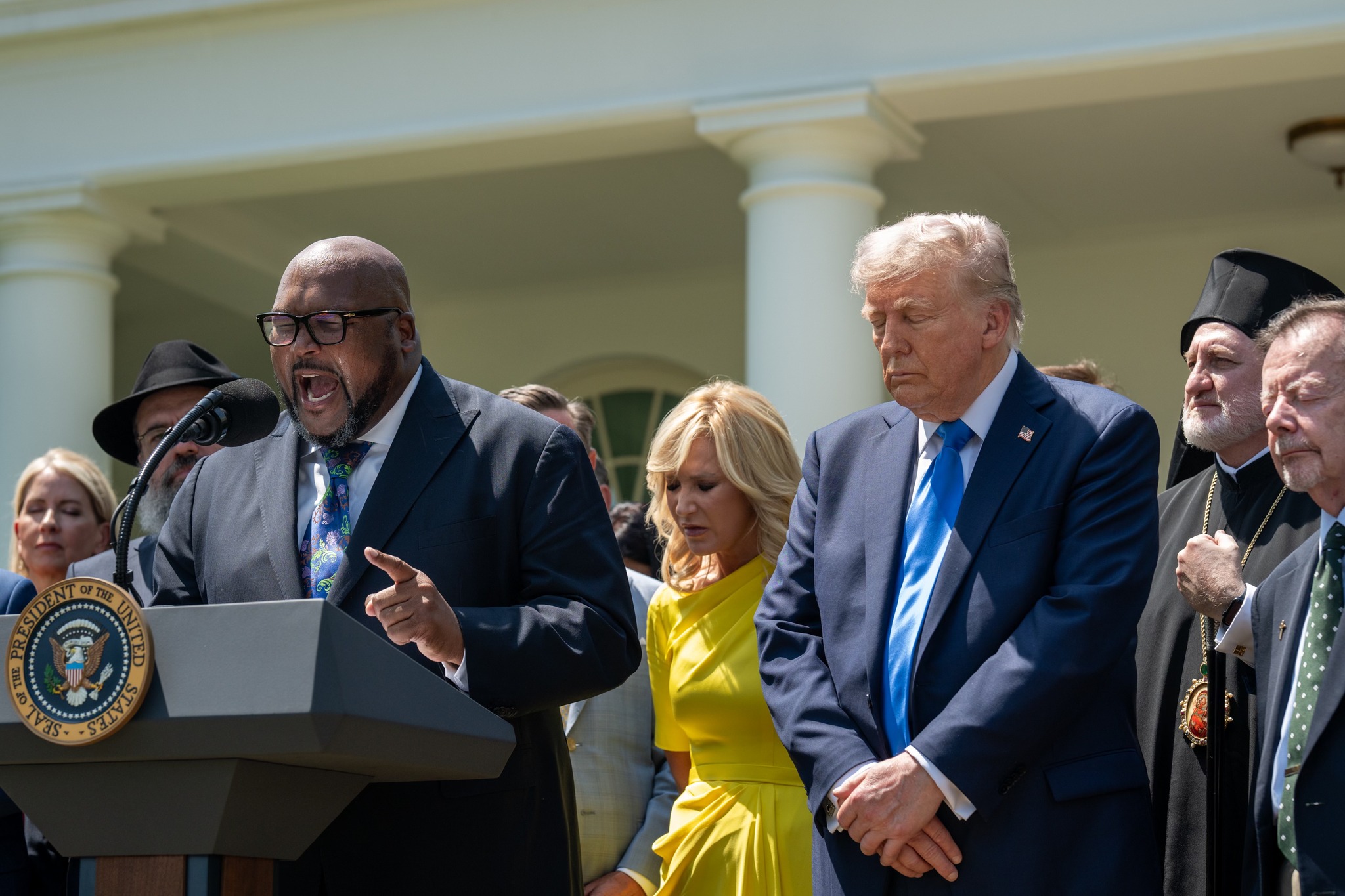
USA, May 22, 2026 – Thousands gathered on the National Mall in Washington, D.C. on Sunday for “Rededicate 250,” a large-scale prayer and patriotism event tied to America’s upcoming 250th anniversary celebrations in 2026.
The day-long gathering centered on faith, national unity and what organizers described as a call to “rededicate” the United States to God and country under the theme, “One Nation Under God.”
Hosted under the Freedom 250 banner, the event featured worship music, public prayers, patriotic tributes and speeches from high-profile political and religious figures. Organizers said the rally was designed to inspire Americans to reflect on the nation’s founding principles and spiritual heritage ahead of the semiquincentennial celebrations next year.
Multiple media outlets reported that thousands attended the event, though no official crowd estimate was immediately released. Giant screens, patriotic imagery and religious symbols lined the National Mall as participants waved American flags, sang hymns and joined in collective prayer.
A recorded message from former U.S. President Donald Trump was aired during the program, while several conservative leaders and evangelical figures also addressed the crowd. Scripture readings and references to America’s Christian roots featured heavily throughout the presentations.
One of the most talked-about moments came in a recorded message from former U.S. President Donald Trump, who appeared seated behind what appeared to be the historic Resolute Desk as he delivered a scripture reading and message to attendees. Trump read from 2 Chronicles 7:14, the often-quoted biblical passage which states: “If my people, which are called by my name, shall humble themselves, and pray… then will I hear from heaven, and will forgive their sin, and will heal their land.” The verse was used to reinforce the event’s central theme of national prayer, repentance and renewal.
The event also drew criticism from opponents who argued it blurred the line between religion and politics, with some activists raising concerns about Christian nationalism and the increasing role of faith-based references in public life.
Still, supporters defended the gathering as a peaceful and constitutionally protected expression of faith, patriotism and freedom of assembly.
Angle by Deandrea Hamilton. Built with ChatGPT (AI). Magnetic Media — CAPTURING LIFE.
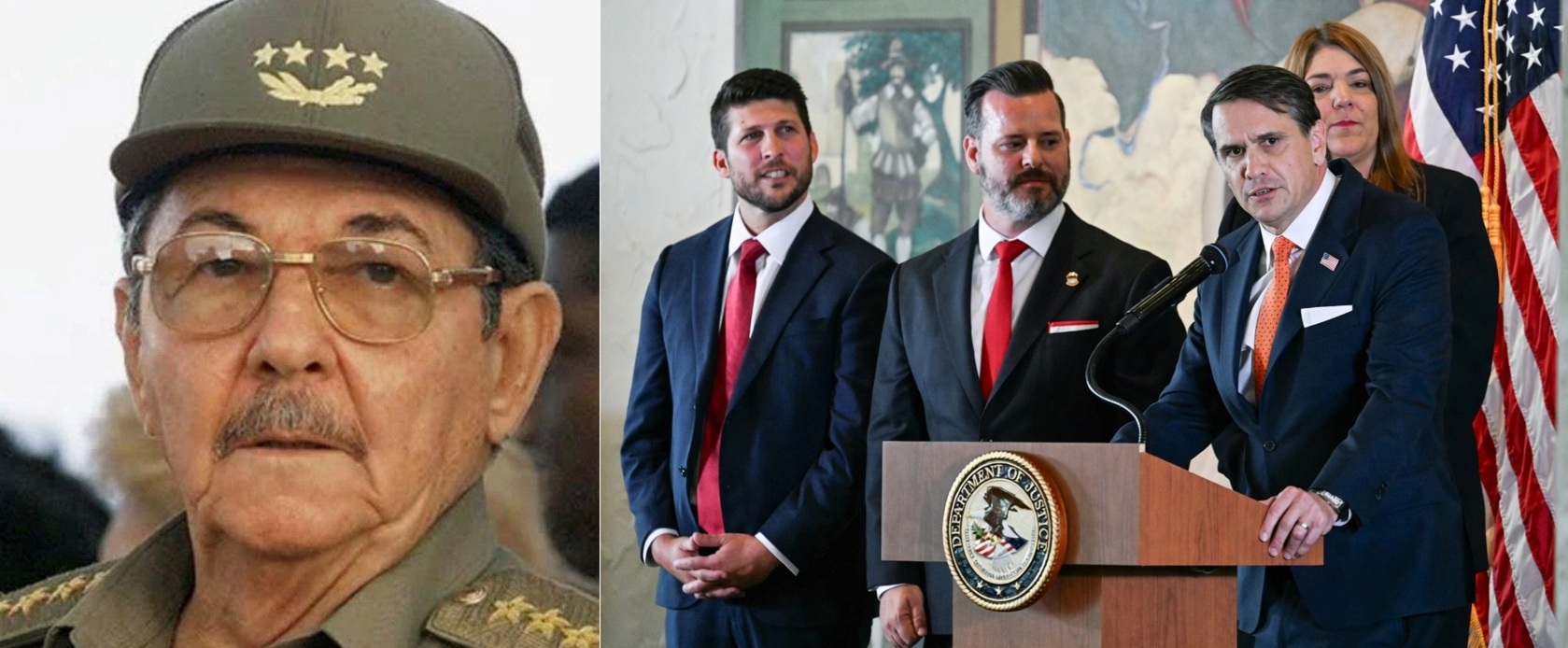
USA, May 22, 2026 – Nearly 30 years after one of the deadliest confrontations between Cuba and the United States, the U.S. government now wants former Cuban leader Raúl Castro brought to American soil to stand trial over the 1996 shootdown of two civilian aircraft.
To make that happen, U.S. prosecutors formally indicted the 94-year-old former president and longtime defense minister on May 20, accusing him of helping direct the military operation which killed four men connected to the Miami-based humanitarian group “Brothers to the Rescue.”
The indictment was announced by Acting U.S. Attorney Hayden O’Byrne in Miami and includes charges of:
- conspiracy to commit murder,
- destruction of aircraft,
- murder of U.S. nationals,
- and murder in international airspace.
Also named in the indictment are former Cuban Air Force chief Rubén Martínez Puente, pilots Lorenzo Alberto Pérez-Pérez and Francisco Pérez-Pérez, along with several senior Cuban military officers accused of participating in or authorizing the mission.
U.S. officials allege the Cuban fighter jets deliberately targeted the unarmed civilian planes while they were flying in international airspace on February 24, 1996. Cuba has long insisted the aircraft repeatedly violated Cuban airspace and posed a national security threat.
The attack killed Carlos Costa, Pablo Morales, Mario de la Peña and Armando Alejandre Jr., all linked to the anti-Castro exile group which conducted flights searching for Cuban migrants at sea.
While Castro is highly unlikely to ever appear in a U.S. courtroom, the indictment signals Washington’s renewed hardline posture toward Havana and reopens painful wounds from one of the Cold War era’s most controversial incidents in the Caribbean region.
Angle by Deandrea Hamilton. Built with ChatGPT (AI). Magnetic Media — CAPTURING LIFE.





-

 Health1 week ago
Cleveland Clinic First in Ohio to Perform Robotic Nipple-Sparing Mastectomy
-

 News5 days ago
Beaches Turks & Caicos strengthens year-round commitment with local craft vendors and transport operators
-

 News4 days ago
Beaches Turks & Caicos gives Enid Capron Primary a pre-term facelift
-

 Independent writer13 hours ago
Born Here, Raised Here, but Still Unable to Vote: Is this a Conundrum for TCI Electorate?
-

 Bahamas News6 days ago
Two Months On, The Bahamas Academy of Sciences Turns Fifty Years of Research into Action
-
 News4 days ago
Stakeholders Strengthen Collaboration on Housing and Informal Settlements at World Habitat Day Roundtable
-

 Education4 days ago
TCICC Earns International Recognition at Ignition Community Conference 2026