
Bahamas News
Perry Institute for Marine Science Celebrates the Opening of the Bahamas Coral Gene Bank at Atlantis Paradise Island


— The nation’s first coral gene bank will preserve, propagate and replant coral to reverse devastation from rising ocean temperatures and a rapidly spreading disease –
PARADISE ISLAND, The Bahamas (June 13, 2025) — The Bahamas has launched an aggressive national conservation initiative to address and reverse the devastating effects of warming ocean temperatures and a disease ravaging its coral reefs. The country’s first coral gene bank is operated and managed by coral experts from the Perry Institute of Marine Science. The biosecure facility opened today at Atlantis Paradise Island to house, propagate, and replant healthy coral on damaged reefs.
“Coral has become increasingly endangered over the years, but the introduction of Stony Coral Tissue Loss Disease completely changed the game and created extreme urgency to act,” said Perry Institute for Marine Science (PIMS) Executive Director Dr. Craig Dahlgren. “Transmitted among corals through direct contact and water circulation, the disease has spread to all major Bahamian islands and causes a high death rate in corals. Treatments are emerging slowly, but corals need to be rescued and isolated from the disease while these methods are perfected.”
Part of the Association of Zoos and Aquariums’ global Saving Animals from Extinction (SAFE) program, onsite management of the new bank is led by PIMS experts, including a former Bahamas Agriculture and Marine Science Institute (BAMSI) graduate and student interns from BAMSI and the University of The Bahamas, with support from marine-life experts at Atlantis.
“Our collective vision is not only to preserve coral currently under threat, but also to foster new generations of corals that, when planted, are more resilient to disease and other dangers. Longstanding support and funding from our contributors and supporters, including Disney Conservation Fund, Atlantis Paradise Island, and Atlantis Blue Project Foundation, have been essential in making this national effort possible.”
“Our investment in the Coral Gene Bank builds on Disney’s decades-long commitment to protecting coral in The Bahamas,” said Andy Stamper, Conservation Science Manager for Disney Conservation. “This facility is a vital step toward preserving biodiversity and restoring reef health for generations to come.”
The Bahamas Coral Gene Bank can accommodate up to 200 large, mature coral colonies, in addition to smaller fragments and juvenile corals. PIMS has already rescued and relocated fifteen coral species to the biosecure Gene Bank research facility. Coral fragments collected from the ocean are placed in pristine, on-site aquaria, and once stable, they grow and reproduce quickly with the aid of innovative reproduction techniques such as lunar-cycle simulations.
PHOTO CAPTIONS:
Header: A proud moment for coral conservation: Scientists from Perry Institute for Marine Science, Atlantis, and partner organizations stand over the newly established coral gene bank at Atlantis Paradise Island, having just populated its tanks with rescued coral colonies.
1st insert: One coral at a time—This fragment of a highly susceptible coral species is now safe inside the Bahamas Coral Gene Bank. Here, it can grow and reproduce under expert care, protected from the deadly Stony Coral Tissue Loss Disease.
2nd insert: Hope in their hands: Two coral researchers at the Bahamas Coral Gene Bank share a moment of joy after placing healthy coral colonies into their new biosecure home—an act that could help restore entire reef systems.
About the Perry Institute for Marine Science (PIMS):
For more than 50 years, Perry Institute for Marine Science (PIMS) has advanced ocean stewardship around the world. Guided by our vision “Thriving Seas, Empowered Communities,” our scientists pair cutting‑edge research with hands-on conservation to protect coral reefs, mangroves, fisheries, and coastal habitats while supporting sustainable livelihoods. We collaborate with governments, NGOs, schools, and forward‑thinking businesses to turn data into action—whether restoring reefs through our Reef Rescue Network, mapping coastal ecosystems with drone and photogrammetry technology, or training the next generation of marine leaders. By discovering solutions, creating opportunities, and inspiring action, PIMS works to ensure a healthy ocean for people and the planet alike. Learn more at www.perryinstitute.org.





The Bahamas, March 30, 2026 – The voice of a proud mother captured the spirit of a nation Monday night, as Bendra Rolle shared heartfelt reflections on the overwhelming Bahamian support for her son, VJ Edgecombe, during the Philadelphia 76ers matchup against the Miami Heat in Miami.
“The patriotic support and scenery at my son, VJ Edgecombe’s NBA game… was overwhelming,” Rolle said in a statement issued following the game. “The arena in Miami was lit. Bimini and the Bahamas showed up and showed out.”
Her words come amid what has already been widely described as a remarkable showing of national pride, with Bahamians traveling in large numbers to South Florida to witness the young guard’s continued rise. For Rolle, however, the moment extended far beyond basketball.
“Beyond VJ’s basketball talents, I’m so moved by his magnetic personality and personal journey to inspire and excite an entire nation—our beloved Bahamas,” she said. “I thank God for VJ’s humility and for his hunger for greatness. He never forgets how far God has brought us.”
While the Sixers did not secure the win on the night, Edgecombe delivered a solid individual performance, finishing with 13 points and five assists. He made an early impact on the game, showing confidence and poise before foul trouble disrupted his rhythm, but still managed to leave his mark in meaningful minutes.
The game itself evolved into a cultural showcase, with Bahamian flags waving throughout the arena and chants ringing out in support of Edgecombe. Much of that presence was bolstered by a coordinated travel push from Bahamasair, which helped facilitate fan travel and added to the electric atmosphere in Miami.
Rolle said the emotional weight of the moment was deeply felt by her family, as they witnessed firsthand the unity and pride of the Bahamian people.
“Thanks and love for the tears and overwhelming joy on Monday, Bahamas,” she expressed. “The Bahamian flags were love, loud, and proud. On my own behalf, VJ, and the entire family, I am ever grateful for the indescribable experience.”
Her closing words underscored what many have described as the true victory of the night—not the final score, but the powerful display of national pride and support surrounding one of The Bahamas’ rising stars.

PHOTO BY SIXERS NATION
Bahamian pride is already on full display in South Florida, with fans arriving in strong numbers ahead of tonight’s highly anticipated NBA matchup featuring VJ Edgecombe and the Philadelphia 76ers.
Helping to power that movement was Bahamasair, which rolled out a strategic promotion to facilitate travel, turning the game into a full-scale national showing.
And the celebration started early.
A “Bahamas Invades Florida” pre-party over the weekend set the tone, with Bahamian fans, DJs and supporters converging in Fort Lauderdale to build momentum ahead of the game. The event, marketed as a major cultural gathering, has spilled into Miami, where a strong Bahamian presence is expected inside the arena tonight.
This is no ordinary road game.
The Sixers enter the matchup healthy and are favoured to win, adding to the anticipation surrounding what many expect to be a standout performance by the Biminite guard.
Edgecombe, the third overall pick in the 2025 NBA Draft, has been electric in his rookie season — delivering high-scoring performances and quickly establishing himself as one of the league’s most exciting young talents.
But beyond the stats, it’s the moment that matters.
With South Florida just a short flight away, Bahamians have seized the opportunity to show up in force — flags, energy and all — transforming the game into something far bigger than basketball.
A national turnout.
A rising star.
And a night where the Bahamas is expected to be felt — from tip-off to final buzzer.
Angle by Deandrea Hamilton. Built with ChatGPT (AI). Magnetic Media — CAPTURING LIFE.

The Bahamas, March 18, 2026 – Twenty days into the latest Middle East escalation, the United Nations is warning the conflict is spreading beyond its original battlefield, as the death toll rises and governments around the world issue urgent travel advisories — including The Bahamas.
In a March 17 statement, the UN Secretary-General’s office said the war must stop and called for all Security Council resolutions to be respected, noting with concern that countries in the Gulf continue to be targeted, raising fears of a wider regional confrontation.
The current round of fighting began February 28 with strikes involving the United States, Israel and Iranian-linked forces, followed by missile and drone attacks across Iraq, Lebanon and parts of the Gulf.
International monitors report more than 1,300 people killed in Iran alone, with additional casualties reported in Lebanon, Israel and Gulf states. U.S. officials confirm at least 13 American service members have died since the escalation began, while reports indicate additional senior Iranian military leaders were killed in recent strikes.
Despite the growing violence, several NATO countries including the United Kingdom, France and Germany have not joined offensive operations, instead calling for diplomacy to prevent the conflict from widening.
The Bahamas Ministry of Foreign Affairs has also issued a travel advisory, warning Bahamian nationals to avoid travel to Israel, Palestine, Iran and Lebanon and to reconsider travel across much of the Gulf region due to the risk of sudden escalation, flight disruptions and security threats.
Officials say Bahamians already in the region should remain vigilant and be prepared for rapidly changing conditions.
Angle by Deandrea Hamilton. Built with ChatGPT (AI). Magnetic Media — CAPTURING LIFE.





-

 News4 days ago
Password to Paradise Radio Remotes at Beaches Turks & Caicos continue to highlight the TCI as the preferred Caribbean destination
-

 News5 days ago
Beaches Turks & Caicos adds four new PADI Dive Instructors to the cadre of professionals in the watersports department
-

 Health1 week ago
Turks and Caicos Islands Hospital Celebrates Patient Safety Awareness Month: “Team Up for Patient Safety”
-
 News5 days ago
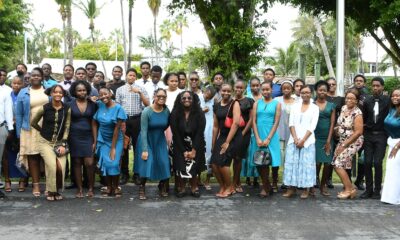
Beaches Turks & Caicos shares fine dining experiences to high school students in Providenciales
-

 Bahamas News3 days ago
Bahamasair Backs Surge as Bahamians Flood South Florida for V.J. Edgecombe Showdown
-

 News1 week ago
Flow TCI supports ‘Stars of Tomorrow’ at Inter-Primary Track and Field Championships
-

 News1 week ago
The Turks and Caicos Islands Featured in Top Canadian Publications
-

 News1 week ago
ISU Community Caravan Delivers Essential Services to Granny Hill North