
News
Contractors express discontent about Contract Award System


Dana Malcom
Staff Writer
#TurksandCaicos, January 20, 2024 – Despite government efforts to bridge the gap between local contractors and tenders, contractors in the Turks and Caicos Islands say they are still frustrated with the system.
“Some of these construction projects have already started so $800 million is not available and the person who will get these contracts will not give Turks Islanders the jobs let’s be – real,” one resident complained.
The conversation was sparked again when Jamell Robinson, Minister of Physical Planning and Infrastructure Development, (PPID) called on the contractors to attend meetings from January 3-11 in all five island communities to help them properly create and submit tender applications.
Enduring complaints from some residents who reached out to the news team included concerns that even with properly submitted tenders, locals were overlooked. Additionally, other residents expressed concern that for the larger contracts, won by overseas contractors, enough Turks and Caicos Islanders were not being considered for secondary jobs.
In January 2022, a Contractors Association had been announced as under construction by some locals, to help organize and protect local builders. At that time the government had been in the consultation phase for a new Construction Contractors’ Bill.
Over the past year, several government-contractor sessions have been held including the annual Contractors Symposium where Robinson updated on the bill which is now in the draft stage.
Even with the shared concerns, dialogue between the government and contractors is progressing. When we spoke to the Minister of PPID about the meeting, he said
“The meeting was excellent and the presentations were well received by the contractors. There were a lot of questions about the tender process that were answered. I’m happy with the outcome.”
It’s not just government tenders that contractors are hoping to get in on. They also want to be considered for major private constructions. This has been a long-standing complaint of local contractors who feel they are often left out of the multi-million dollar construction industry in the Turks and Caicos Islands. New construction is the backbone of real estate in the country according to realtors who say resale is low in the TCI.






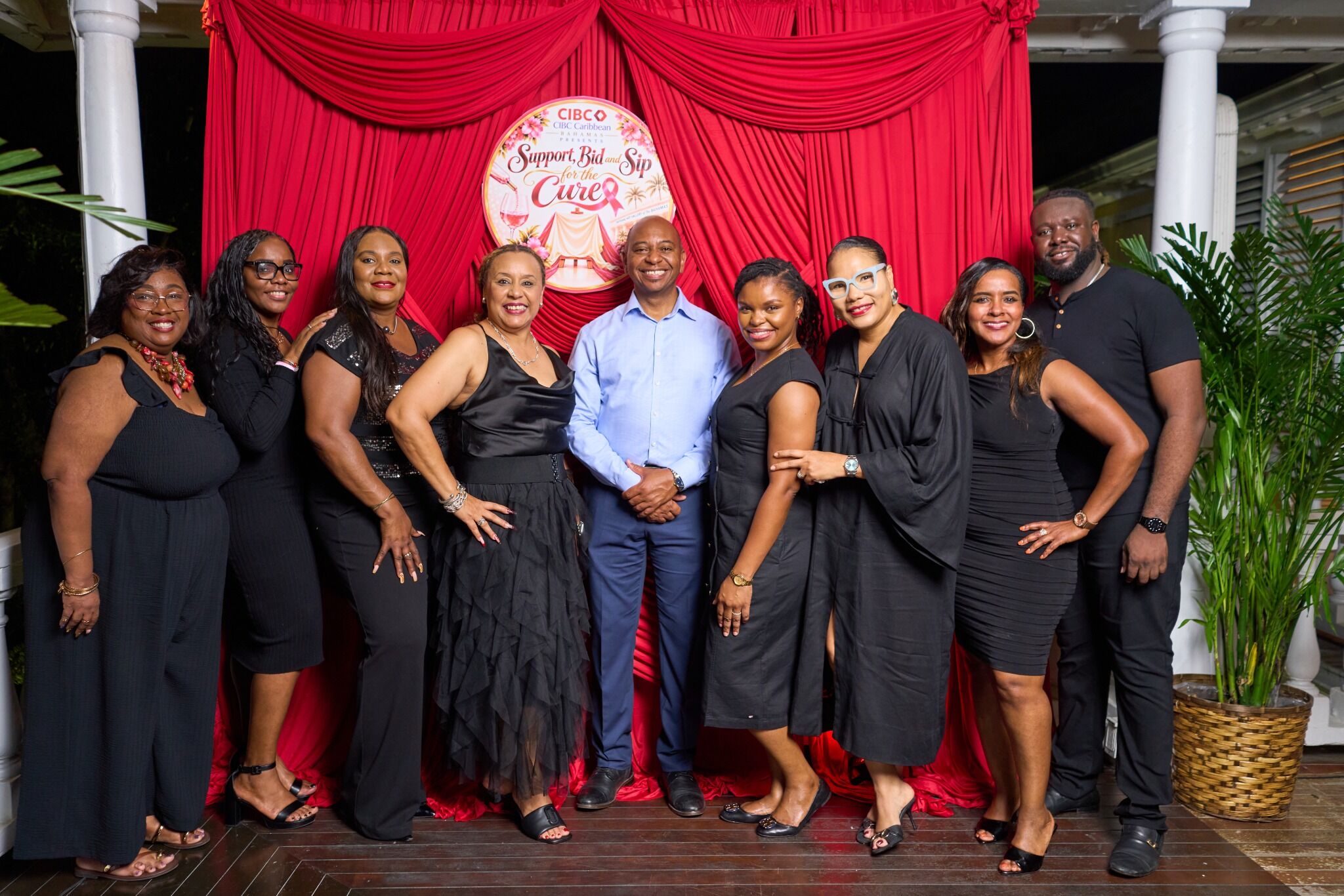
Nassau, Bahamas, 23 November 2026 – With 15 years of Walk for the Cure now successfully concluded, CIBC Caribbean is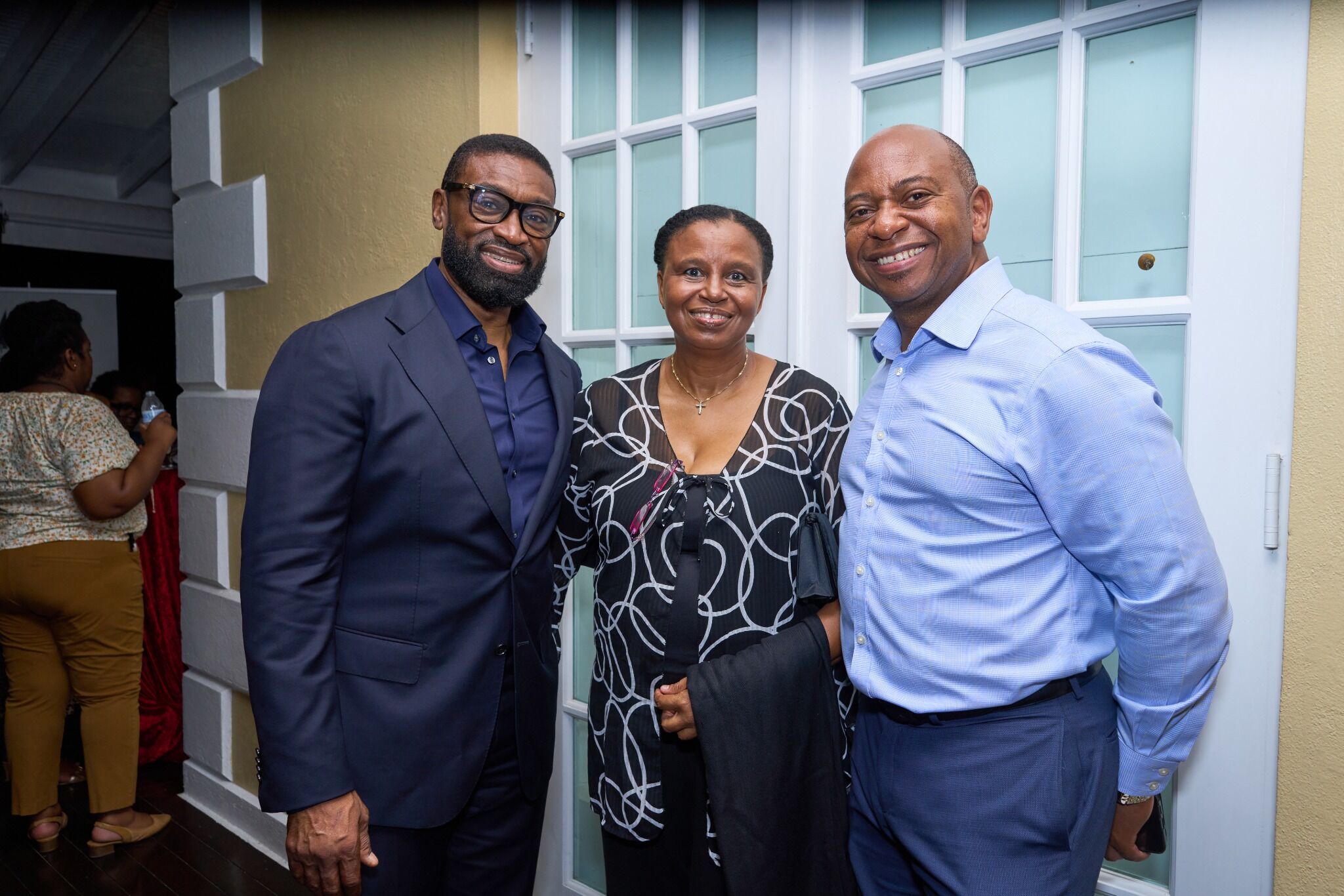 introducing new ways to build on its fundraising efforts in support of a worthy cause.
The latest addition is Sip for the Cure, which brings together art, culture and philanthropy to raise additional funds for cancer organizations across The Bahamas. Hosted by Das Quay, the recent event featured a silent auction, including an exclusive piece by renowned Bahamian artist His Excellency Jamaal Rolle, along with performances by the R.M. Bailey Senior High School Junkanoo Group and Rhythm in Motion Studios.
CIBC Caribbean Head of Country Terrance Gibson said the new initiative reflects the bank’s commitment to finding meaningful ways to engage supporters beyond the traditional walks.
“Walk for the Cure has shown us what is possible when people come together with a shared purpose. Sip for the Cure is an extension of that commitment, creating another opportunity for people to give and help make a difference in the lives of those affected by cancer,” Gibson said.
“While this event marks the close of another fundraising season, the need for support continues long after the last walk. Our hope is that Sip for the Cure will grow into an annual tradition, allowing us to build on what we have achieved and extend the reach of the support we provide.”
Held at the National Art Gallery of The Bahamas, the event followed four Walk for the Cure events hosted in New Providence, Grand Bahama, Abaco and Eleuthera throughout October. The event also provided an opportunity for CIBC Caribbean to recognize the individuals, businesses and community partners whose contributions have supported the flagship fundraiser over its 15-year history.


Photo Captions:
1st insert: From left are Charles Sealy II, Cheyvonne Bethell, and CIBC Caribbean Head of Country Terrance Gibson.
2nd insert: Pictured beside CIBC Marketing Manager F. Leann Albury-Mitchell are student artists Ayira Roache, left, and Chloe Sawyer, right.
3rd insert: Standing beside an exclusive piece by his Excellency Jamaal Rolle, left, is CIBC Caribbean Head of International Corporate Banking Tonia Cartwright, right.
Bahamas News
Nearly 1,500 UK Parliamentarians to Weigh In on Bahamas–Turks and Caicos Maritime Boundary Treaty
By Deandrea Hamilton | Editor
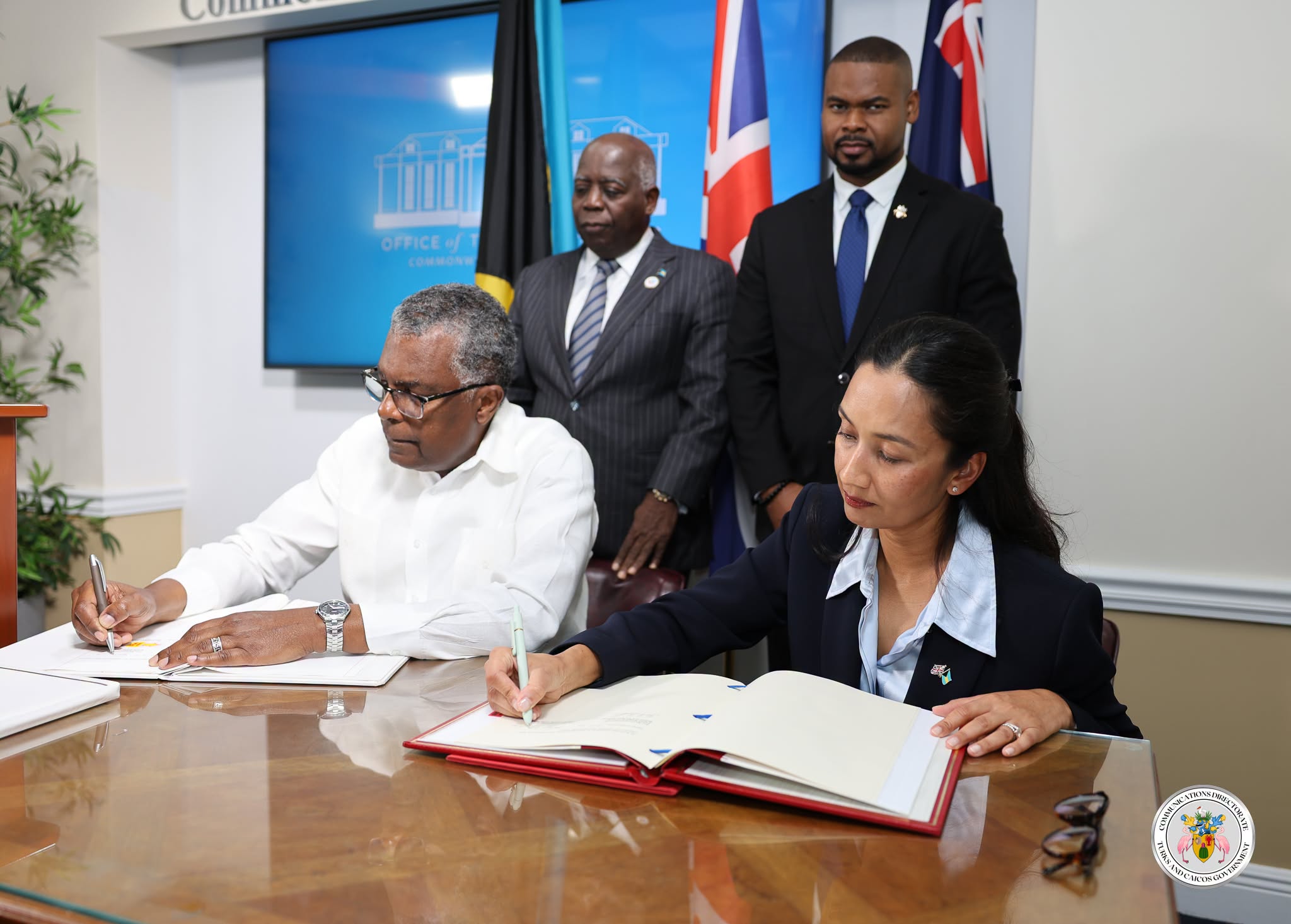
A historic maritime boundary treaty between The Bahamas and the Turks and Caicos Islands is heading for scrutiny by 650 elected members of the United Kingdom’s House of Commons and approximately 796 members of the House of Lords before it can become legally binding.
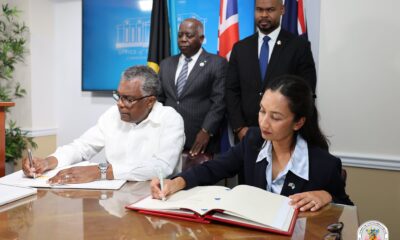
The agreement was signed in Nassau on Monday, November 16, 2026, by Bahamian Foreign Affairs and Immigration Minister Frederick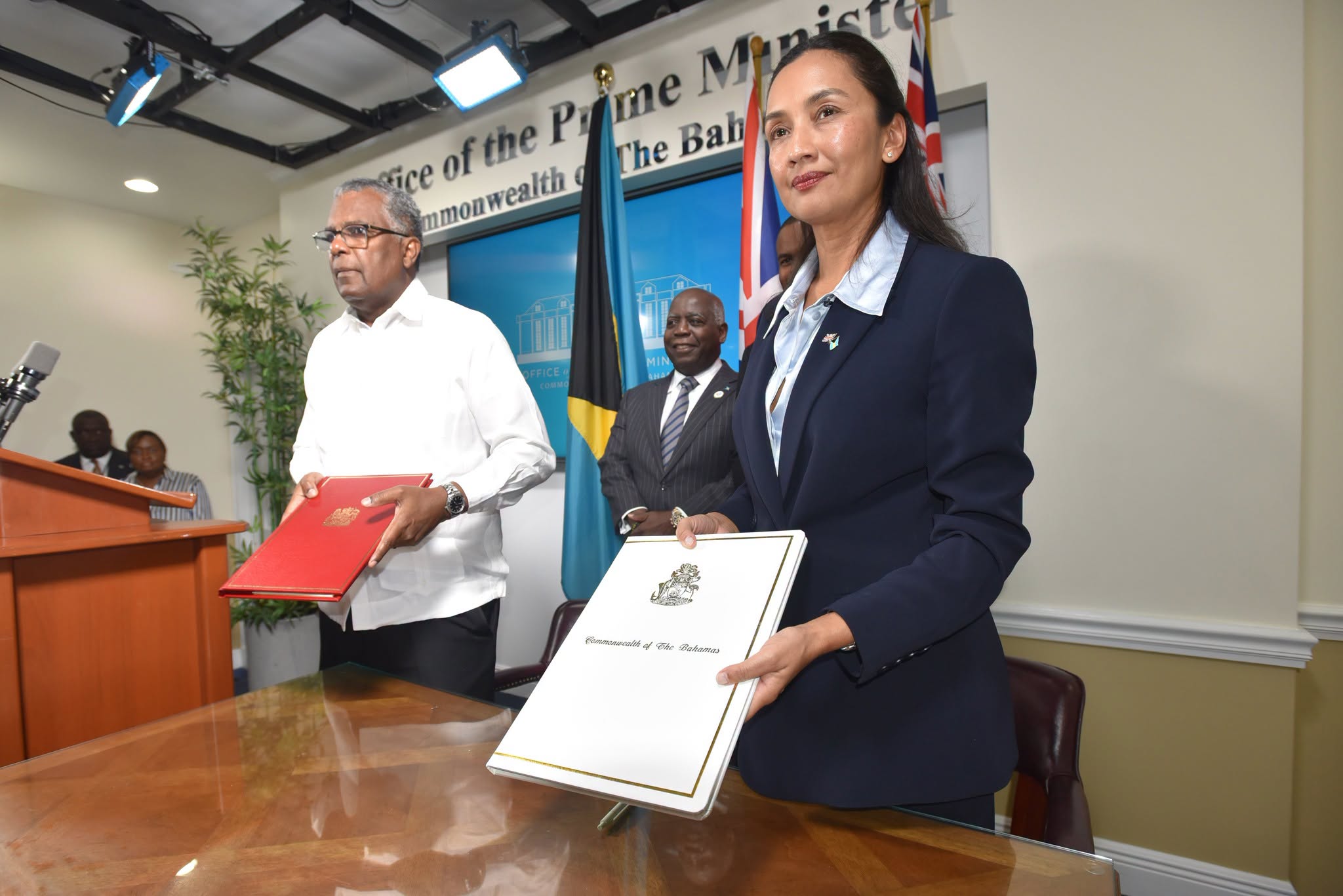 Mitchell and British High Commissioner Smita Rossetti, representing the United Kingdom. Looking on were Bahamian Prime Minister Philip Davis and Turks and Caicos Deputy Premier Jamel Robinson.
Although the treaty draws a delimitation line across the Atlantic Ocean, that line runs much deeper than the surface.
It establishes a boundary through the water column, across the seabed and into the subsoil beneath it, defining maritime rights and jurisdiction involving fisheries, underwater resources and security operations.
The boundary separates maritime areas between Mayaguana and Inagua in The Bahamas and the Caicos Islands.
But the signatures do not make the treaty immediately enforceable.
Under British parliamentary procedures, the agreement must be presented to both Houses for 21 sitting days, allowing parliamentarians to scrutinize its provisions and potentially object to ratification.
A parliamentary vote is not automatically required. However, the House of Commons can formally delay ratification, while the House of Lords may register objections.
The process reflects the Turks and Caicos Islands’ constitutional relationship with Britain, which retains responsibility for its international treaty arrangements.
Deputy Premier Jamel Robinson emphasized the territory’s involvement in the negotiations.
“Our Government has been actively engaged in the negotiations, ensuring that the interests of our people and our maritime communities were represented throughout the process.”
He added that the agreement strengthens the foundation for maritime security, responsible fisheries management and cooperation between the neighboring jurisdictions.
Negotiations began in 1992, with a technical agreement reached in 1996 that was never ratified. Talks resumed in 2023, following changes to The Bahamas’ archipelagic baselines in 2008.
Prime Minister Philip Davis welcomed the conclusion of negotiations spanning more than three decades.
“It gives fishermen and law enforcement officers on both sides an agreed line, and it will strengthen the close cooperation between our security services.”
Davis also acknowledged the longstanding friendship between the two island communities.
“Our peoples have been friends for generations, and today’s Agreement builds on that friendship.”
Once both governments complete their domestic procedures, the treaty will enter into force on the 30th day following the final notification.
For two Caribbean neighbors, the agreement settles a 34-year-old boundary question, but its final legal journey now passes through Westminster.
Ed Forbes | Concerned Citizen
Public safety must always be a priority, and government has a responsibility to ensure vehicles operating on public roads meet appropriate safety standards. However, new policies affecting small businesses and residents must also consider economic and social consequences.
The Department of Motor Vehicles’ recently published restrictions on golf carts and ATVs raise important questions.
I understand restricting golf carts on the busy roads of Providenciales, where growth and traffic have placed significant pressure on infrastructure. But should the same approach automatically apply to Grand Turk, North, Middle and South Caicos?
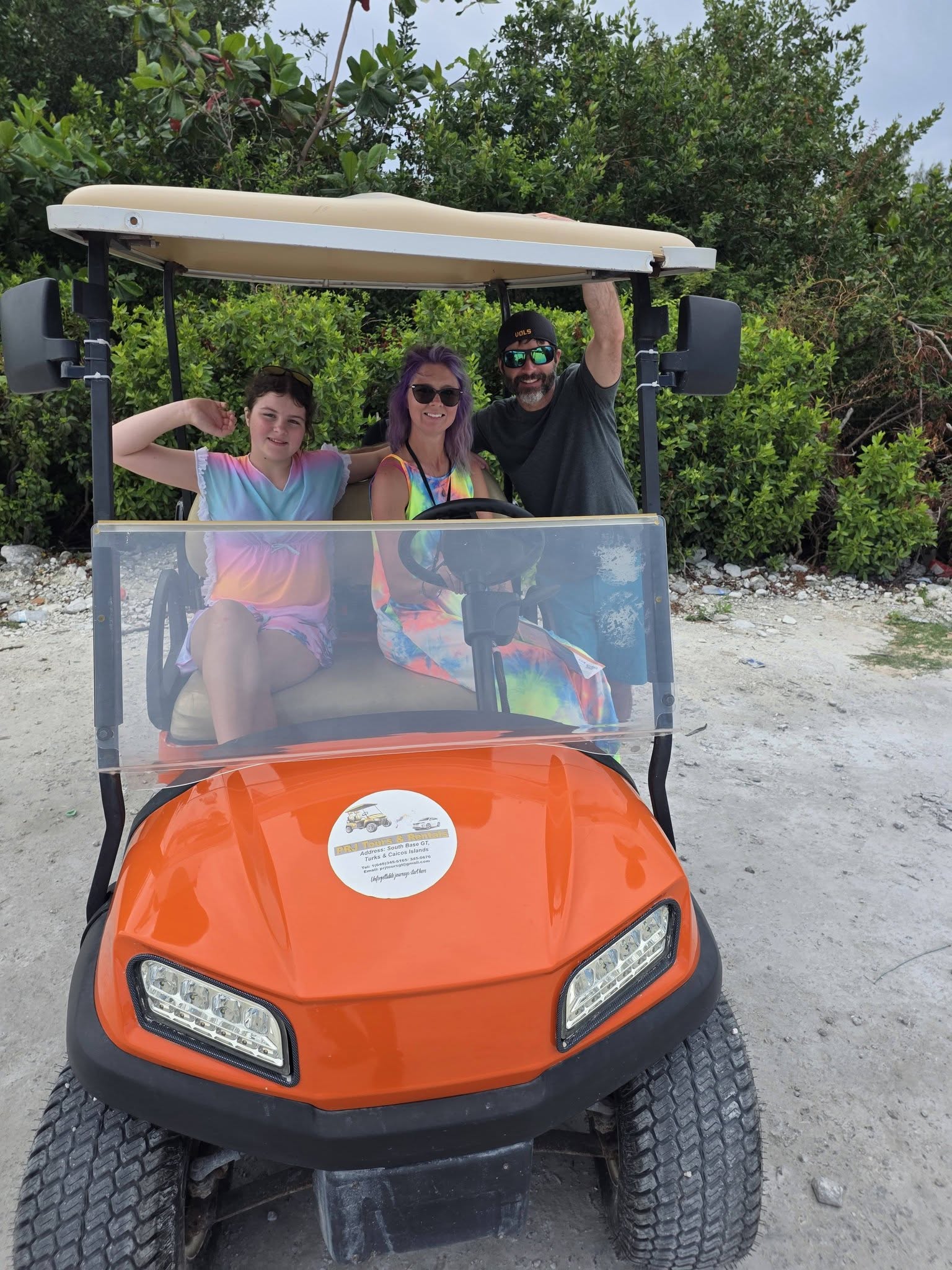
Grand Turk’s tourism economy relies partly on golf cart rentals. Cruise visitors use them to explore attractions, restaurants and local businesses. Restrictions could affect livelihoods beyond rental operators, particularly as cruise arrivals decline.
What happens to residents who purchased golf carts for personal transportation? Will existing owners be grandfathered? And how will Airbnb operators who include golf carts in guest packages be affected?
Why not regulate rather than eliminate nighttime use? Roadworthiness standards, functioning lights, mirrors, seat belts, insurance, inspections and driver-age requirements could improve safety.
Electric golf carts also support environmentally responsible transportation. Shouldn’t suitable green mobility be encouraged?
Commercial tours could face designated routes or restrictions on congested roads while approved vehicles remain available for independent transportation.
Government must explain the legal basis, implementation timeline and treatment of existing licenses, and whether affected communities were consulted.
Good public policy balances safety with economic realities. Different islands have different transportation needs.
Regulate, Don’t Eliminate. Protect Our People, Preserve Our Livelihoods and Keep Grand Turk Moving Forward.





-
 Bahamas News1 week ago
Sunset and friendship as guests join Governor General at 700ft table for inaugural The Longest Table event in The Bahamas
-
 News1 week ago
Experience Turks and Caicos Completes Revitalization of Grand Turk Bird Watching Trails, Advancing Sustainable Tourism Opportunities
-

 Bahamas News2 days ago
CIBC Caribbean Introduces Sip for the Cure
-
 Bahamas News3 days ago
Nearly 1,500 UK Parliamentarians to Weigh In on Bahamas–Turks and Caicos Maritime Boundary Treaty
-
 Independent writer3 days ago
Golf Cart Restrictions: What Happens to Grand Turk’s Tourism Economy?