
Bahamas News
Five Bahamian Businesses Receive Funding Through Royal Caribbean International’s Kickstarter Programme

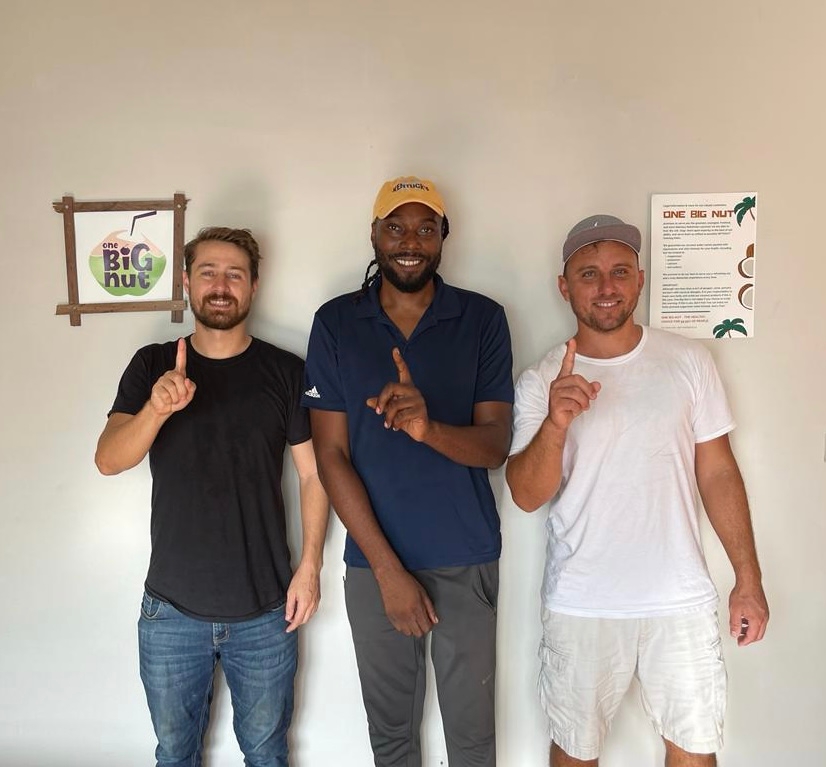
#TheBahamas, December 20, 2022 – After eight-weeks of small business training, five innovative and creative entrepreneurs from Royal Caribbean International’s Kickstarter Programme were awarded funding following the first cohort’s final pitch competition.
The first group to go through the program focused on a wide range of tourism-based businesses, several of which are now set to shake up the way things are done within the local industry. From tour companies to rentals for travelers with young children, the ideas of the prize winners considered the many unique facets of Bahamian tourism.
One Big Nut, the startup that took home top prize is bringing fresh perspective to Nassau’s West Bay Street staple — coconut water — and making getting that healthy coconut water fix easier. Whether for sipping on its own or mixing in “gully wash”, fresh coconut water is much-loved, but not always easy to come by and worries about handling can overshadow the longing for a good gulp.
Co-founder Alex Holden said the company is bringing technology and tradition together, using state of the art equipment to hasten the process of extracting coconut water.
“At One Big Nut we are offering more than just coconut water. We are providing a safe, comfortable, and authentic cultural experience,” he said.
“You can sit down and sip while our friendly staff serves you. Our coconuts come pre-chilled, pre-drilled, and ready to drink, making them more refreshing and fun than any coconut water you could buy from the roadside or the food store.”
Crystal Campbell, director of business integration and destination development at Royal Caribbean International, helped judge the pitch competition. She said One Big Nut received the top prize after receiving the top score in all the judging categories, including innovation and impact, viability, sustainability, capacity, and overall presentation and delivery.
“Their concept reinvented the coconut vendor seen across the Bahamas,” said Campbell.
“They not only sought to create sustainable kiosks that are fun and inviting, but also simplify the process for the vendors with advanced equipment.”
Holden said he didn’t expect to win the competition, but noted that the funding will help to buy machinery and build the “giant coconut” they will operate out of. But Holden noted that the program provided more value than just the funding opportunity.
“The one-on-one tutoring was one of the most valuable parts of the program,” he said.
“Also competing against talented Bahamians with great business ideas forces you to sharpen your skills. We would recommend every Bahamian entrepreneur sign up for the program — just bring your most creative idea and don’t be afraid to think outside of the box.”
The Kickstarter Programme, which is a collaborative effort with the Small Business Development Centre (SBDC), provides entrepreneurs with learning and funding opportunities to help start their businesses.
SBDC Executive Director Samantha Rolle thanked Royal Caribbean for its ongoing partnership.
“SBDC’s partnership with Royal Caribbean Group continues to be instrumental in curating entrepreneurial funding and training programs which open doors for a variety of Bahamian businesses in the tourism industry,” she said.
The program begins with an eight-week training boot camp and culminates with a pitch competition where competitors get the opportunity to win up to $15,000 in funding for their ventures.
Baha Moments, a bespoke tour company founded by D’Asante Small, was another one of the top performers in the recent pitch competition, taking the second-place position with a prize of $10,000 in funding.
Small said she developed the idea for her business in 2020.
“In the midst of the pandemic, I developed what I believe will be a catalyst to the transformation of our tourism industry in The Bahamas,” she said.
“I was inspired to reimagine the way Bahamians access the tourism industry and the way our visitors access Bahamian experiences.”
Small said Baha Moments focuses on curating unique experiences in collaboration with vendors to ensure customers enjoy their time while receiving local perspectives and an infusion of Bahamian culture.
She said she decided to participate in the Kickstarter Program to tap into the cruise industry directly to gain insight and industry feedback, given it is a target market for her company.
Small said the program was insightful, noting it helped her finetune elements of her business plan, website and marketing plan.
“The next step for us is our digital launch, which this seed money will assist to engage influencers and launch our digital ads,” she said.
The third-place prize of $7,500 in funding was won by Lignum Vitae, a Grand Bahama-based store specializing in locally produced goods.
Owner Ariel Ferree said the idea for the store was conceived to both highlight Bahamian creators and innovators while providing sustainable shopping solutions.
“We want to make it as easy as possible for people to embrace a more eco-conscious lifestyle without even knowing it, because one of the biggest things that we can do is sourcing as many things locally as we can,” she said.
Ferree said Lignum Vitae will carry products ranging from home decor to jewelry and fashion items to locally pressed oil and more.
“It’s going to be a market and deli so people can try some of the goods as well,” she said.
Ferree said that in addition to the funding opportunity, the Kickstarter program provided her with unique networking and learning opportunities.
“Through the program, I was able to connect with some of the people, from Grand Bahama specifically,” she said.
“…A lot of them are the makers and the growers and some people I’m working with to have some of their products in Lignum Vitae.”
Tishka Moss, the owner of Traveling Tots Rentals, said she also was drawn to the program because of the learning opportunities.
“It was the education aspect that drew me to apply to the boot camp,” she said.
Moss received a $5,000 prize to help fund her business, which was started earlier this year.
Traveling Tots Rentals provides rental cribs, highchairs, strollers, car seats and other equipment needed for traveling with young children.
“It was such a hassle traveling with my young sons, and I thought about all the tourists who come to Nassau with the same issue,” said Moss.
And while she already had a steady stream of rentals before the Kickstarter program, Moss said she plans to use the funds to upgrade her website to provide a more user-friendly experience.
For Misty Johnson, who owns AmaziTours, the $5000 loan prize is a stepping stone toward a big dream.
Johnson, who is based in Freeport, said ultimately, she wants to start an amphibious tour. But she knows getting there will take time and improvising.
“In order for us to get to that, we need to do something else to raise some money,” she said.
“So, we thought of barbecue boats, which is also a unique tour.”
She said the funding will help her begin the barbecue tours, which allow groups to tour the waters of Grand Bahama and wind up on the beach for a barbeque they will always remember on the barbeque boat. “I knew I wouldn’t have been able to secure an amphibious bike with the prize money, but it’s a start for us to get the barbecue boat,” Johnson said.
Johnson thanked Royal Caribbean for the opportunity to participate the program.
“This has provided not only the opportunity to launch AMaziTours, but it has also given me a wealth of knowledge,” she said.
“Without this course, I wouldn’t be able to confidently pursue opportunities afforded to small businesses like AMaziTours.”
Photo Caption: Alex Holden, Theo McClain and Kowaski Lindley, owners of One Big Nut, won $15,000 in funding through the Royal Caribbean Kickstarter Programme.

Bahamas News
Two Months On, The Bahamas Academy of Sciences Turns Fifty Years of Research into Action
First peer-reviewed paper published, policy brief delivered to Minister Lightbourne, a seat at Climate Week, and a growing public audience for Bahamian science
NASSAU, The Bahamas, 7 October 2026 — Two months after putting fifty years of research on The Bahamas “on the record” at its first public event in July, The Bahamas Academy of Sciences (BAS) has been turning that evidence into action.
Since July, the Academy has published its first peer-reviewed paper, presented its findings to Government through a policy brief, taken Bahamian science to Climate Week in Nassau and New York, and launched a growing public conversation in which Bahamians can ask scientists questions and get answers. The Academy’s new policy brief, “Prioritising National Research Needs for The Bahamas,” is attached to this release.
“In July we said the record was open. Since then, we have been working to put it to use,” said BAS President Dr. Krista Sherman. “Fifty years of research revealed where The Bahamas is strong and where the gaps are: water, food, energy, long-term monitoring. Our job as the national academy is to share that evidence with the decision-makers and the public they serve, and to build the Bahamian research capacity to fill those gaps.”
THE RECORD, NOW PEER-REVIEWED AND PUBLIC
The Academy’s first publication, “Fifty Years of Research in The Commonwealth of The Bahamas: A Quantitative Thematic Analysis of Scholarly Output,” is now published in the international journal Gulf and Caribbean Research. Led by Dr. Amina Moss (University of Stirling) with BAS members Dr.
Krista Sherman, Dr. Williamson Gustave, Dr. Kathleen Sullivan Sealey, Dr. Charlotte Dunn, Dr. Nicola Smith, Lindy Knowles and Dr. Christy Gibson, the study analyses 12,113 scholarly records published about The Bahamas between 1975 and 2025.
It shows a rich scientific legacy, particularly in geology, fisheries, oceanography and conservation, while also highlighting persistent gaps in areas of direct national importance: groundwater resources, food systems, renewable energy, social-ecological governance and locally led, long-term monitoring. The full paper is free to read at https://doi.org/10.18785/gcr.3701.15.
FROM THE RECORD TO POLICY
Building on this research, BAS has prepared a policy brief, “Prioritising National Research Needs for The Bahamas,” which translates the findings into a set of ten strategic priorities.
The policy brief calls for greater investment in locally led, policy-aligned and climate-ready research, including:
- a national research agenda aligned with Vision 2040;
- stronger local scientific capacity, laboratories and field stations;
- rebuilt long-term monitoring of reefs, fisheries, coasts and mangroves;
- targeted research on groundwater, food systems and renewable energy;
- a national environmental and health data repository; and public health research on the risks facing small island states.
In September, Dr. Sherman presented the brief to the Hon. Zane Lightbourne, Minister of the Environment and Natural Resources, during a courtesy call. The visit is the first in a series of introductory meetings with Government ministries over the coming months. Through these meetings, the Academy will introduce its work and explore opportunities for collaboration in science, the environment, sustainability, conservation and climate resilience. The policy brief also maps research priorities to relevant national legislation and policies, from the Environmental Planning and Protection Act to the National Health Strategy 2026–2030.
BAHAMIAN SCIENCE AT CLIMATE WEEK, FROM NASSAU TO NEW YORK
BAS also brought Bahamian scientific expertise to Climate Week 2026.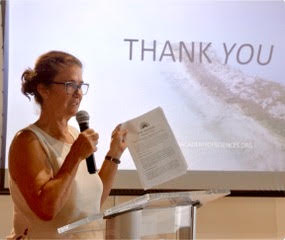
On Monday, 21 September, BAS Board member Dr. Kathleen Sullivan Sealey, Professor Emerita at the University of Miami, presented “Coasts and Climate Change” at the opening day of Climate Week in The Bahamas, hosted by the Baha Mar Resort Foundation at ECCHO, under the theme “At the Edge of the Water.” Dr. Sullivan Sealey explained why The Bahamas’ low-lying carbonate islands face growing risk from sea-level rise and storms, and how historical losses of coral reefs, seagrass, mangroves and dunes have weakened the islands’ natural defences. More importantly, she highlighted actions communities can take to reduce these risks.
During Climate Week, the Academy also released a science statement, “Climate Change and Ocean Warming Impacts on The Bahamas: What Does the Science Tell Us?”, a synthesis of the environmental, ecological, social and economic impacts facing the archipelago.
In New York, BAS Vice President Dr. Adelle Thomas, Vice-Chair of Working Group II of the Intergovernmental Panel on Climate Change (IPCC), brought the realities of vulnerable small island states to Climate Week NYC.
A GROWING PUBLIC AUDIENCE FOR BAHAMIAN SCIENCE
The Academy’s public campaign, 242 #ForTheRecord, has also been building a presence across its five platforms since launching in mid-July. Its most successful format has been the simplest: Bahamians ask a question and a BAS scientist answers it. So far, the “You Ask/Science Responds” series has tackled questions on how climate change will affect Bahamian farming (Dr. Williamson Gustave) and the science of blue holes (Dr. Krista Sherman). An upcoming episode will examine the effects of high temperatures on public health. Question-led content is reaching roughly twice the audience of the Academy’s institutional posts. During its first month, the campaign generated more than 18,500 views and over 200 shares across its platforms.
To extend the conversations to more Bahamians, beyond the traditional science-curious audiences,
BAS has also formalised collaborations with two local content creators, Kaché Knowles (“I is a Bahamian Bey”) and Stephen Hanna (“Schin Nguyen”). Their first joint pieces will appear before the campaign closes on 30 November.
WHAT COMES NEXT
For BAS, putting the record to work is only the beginning. Over the coming months, the Academy will:
- continue introductory meetings with Government ministries and agencies;
- host its Future Scientists classroom event with Bahamian students in early November;
- launch its YouTube channel with a video-podcast series on Bahamian scientists in November;
- begin work on its second peer-reviewed publication, “A Horizon Scan on Emerging Environmental Issues in The Bahamas Over the Next Decade”; and
- offer “Introduction to Statistics using Excel,” a short, practical course in early 2027 that will give early-career scientists and resource managers in The Bahamas hands-on skills in organising, analysing and summarising their own data.
“Research is most valuable when it can be used,” said Dr. Sherman. “The Bahamas has an extraordinary scientific record. Now we need to ensure that record informs the questions we ask, the decisions we make, and the science we build here at home.”
See BAS Climate Statement and BAS Policy Briefing 50 Years of Bahamian Research here: BAS Climate Statement,
BAS Policy Briefing_50 Years of Bahamian Research
PHOTO CAPTIONS:
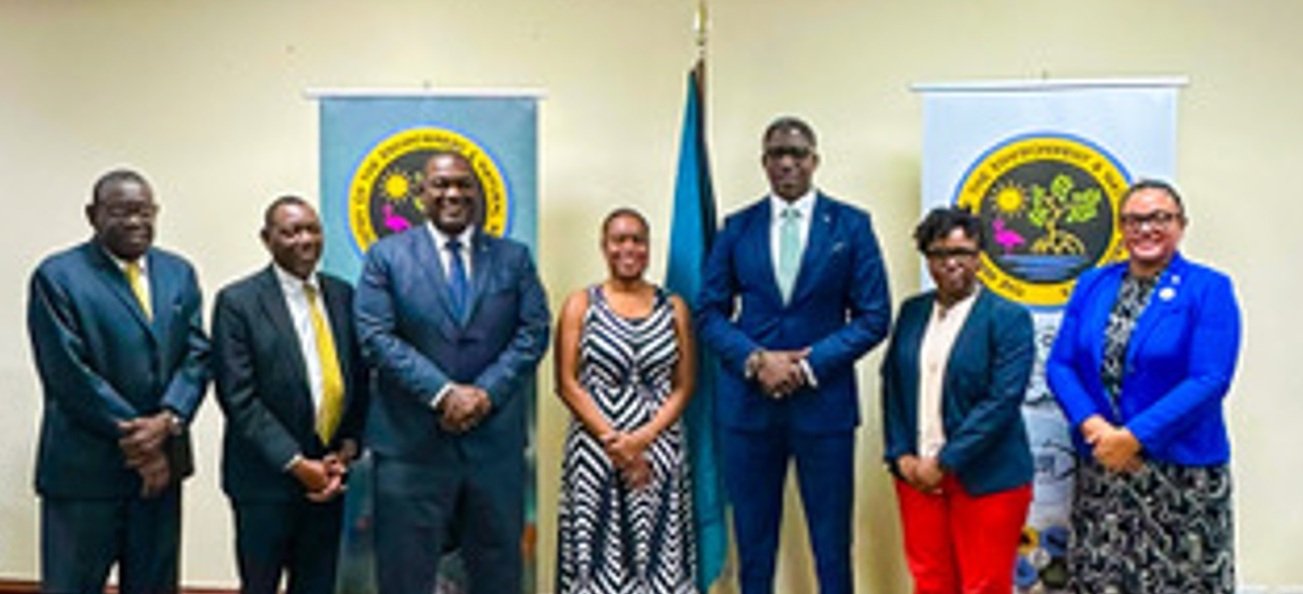
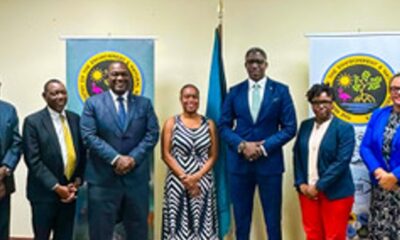
Header: BAS President Dr. Krista Sherman met the Minister of the Environment and Natural Resources and his team on 17 September 2026. L–R: Mr. David Davis, Permanent Secretary; Mr. Ricardo Deveaux, Acting Under Secretary; The Hon. S. Obie Roberts, Parliamentary Secretary; Dr. Krista Sherman, BAS President; The Hon. Zane Lightbourne, Minister; Dr. Rhianna Neely-Murphy, Director, Department of Environmental Planning and Protection; Ms. Danielle Hanek, Acting Director, Forestry Unit.
Credit: Ministry of Environment and Natural Resources.
Insert: Kathleen Sullivan Sealey, BAS Board member, presents the Academy’s science statement at Climate Week in The Bahamas, ECCHO, 21 September 2026.
Credit: Amaeleo Carey.
PRESS RELEASE: BAS
Nassau, Bahamas, 1 October 2026 – Every Saturday this month, communities across The Bahamas will take steps in support of cancer patients and survivors as CIBC Caribbean’s Walk for the Cure returns to New Providence, Abaco, Eleuthera, and Grand Bahama.
CIBC Caribbean Head of Country, Terrance Gibson, said, “Each Saturday in October represents another community coming together,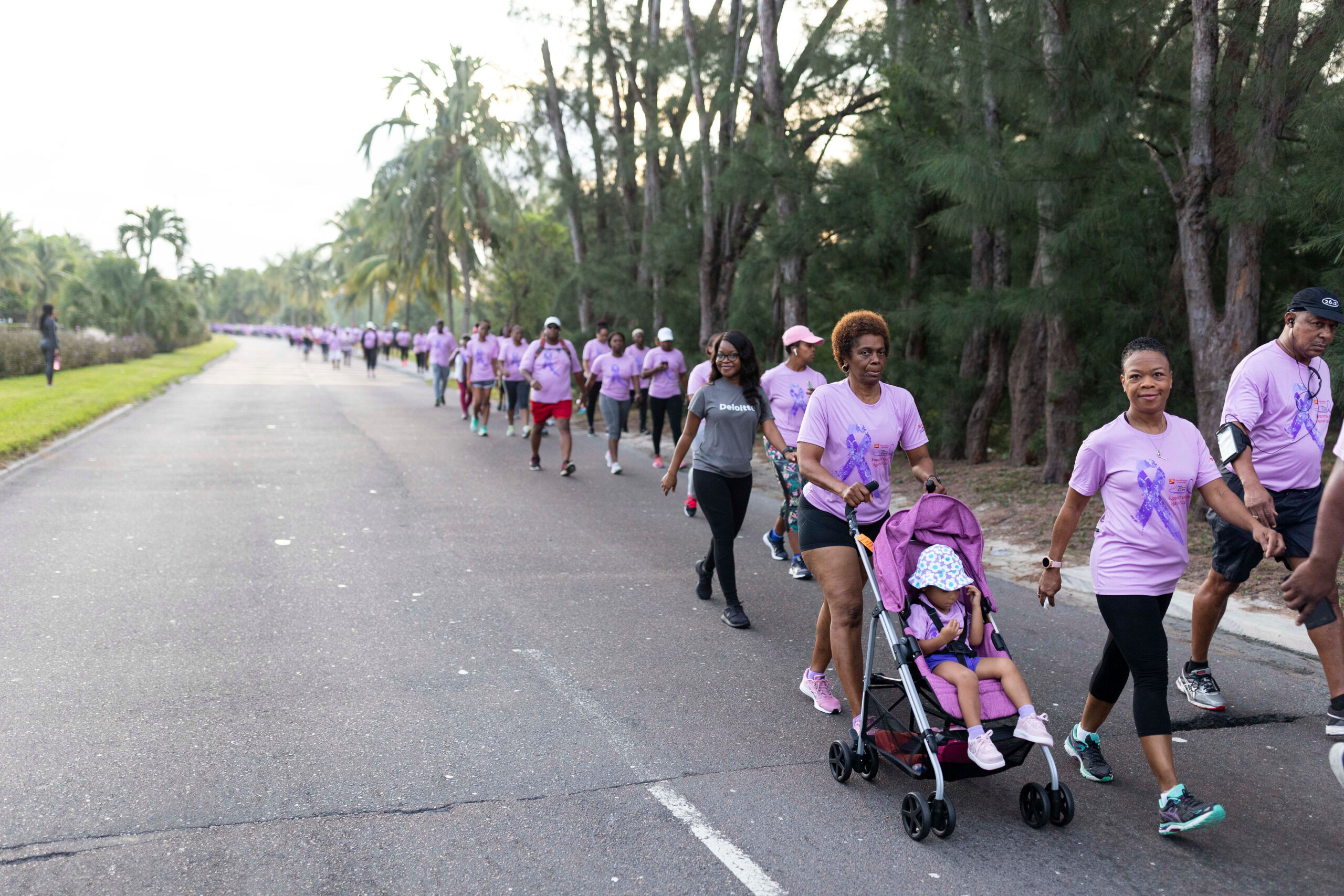 another opportunity to raise awareness and, most importantly, more support for the organizations that are doing this work every day.”
The month of activities begins this Saturday, October 3, in New Providence, with participants gathering at the Goodman’s Bay Corporate Centre for a 6:30am start.
CIBC Caribbean Walk Champion, Antionette Fox, said the series of walks gives communities across the country an opportunity to contribute to a cause that directly supports Bahamian cancer organizations.
“Every Saturday for the month of October, there will be a walk that you can participate in to contribute towards this worthy cause,” Fox said.
In New Providence, the morning will extend beyond the walk itself, with Zumba, wellness activities, informational vendors, and opportunities for participants to connect with organizations working directly with cancer patients and survivors.
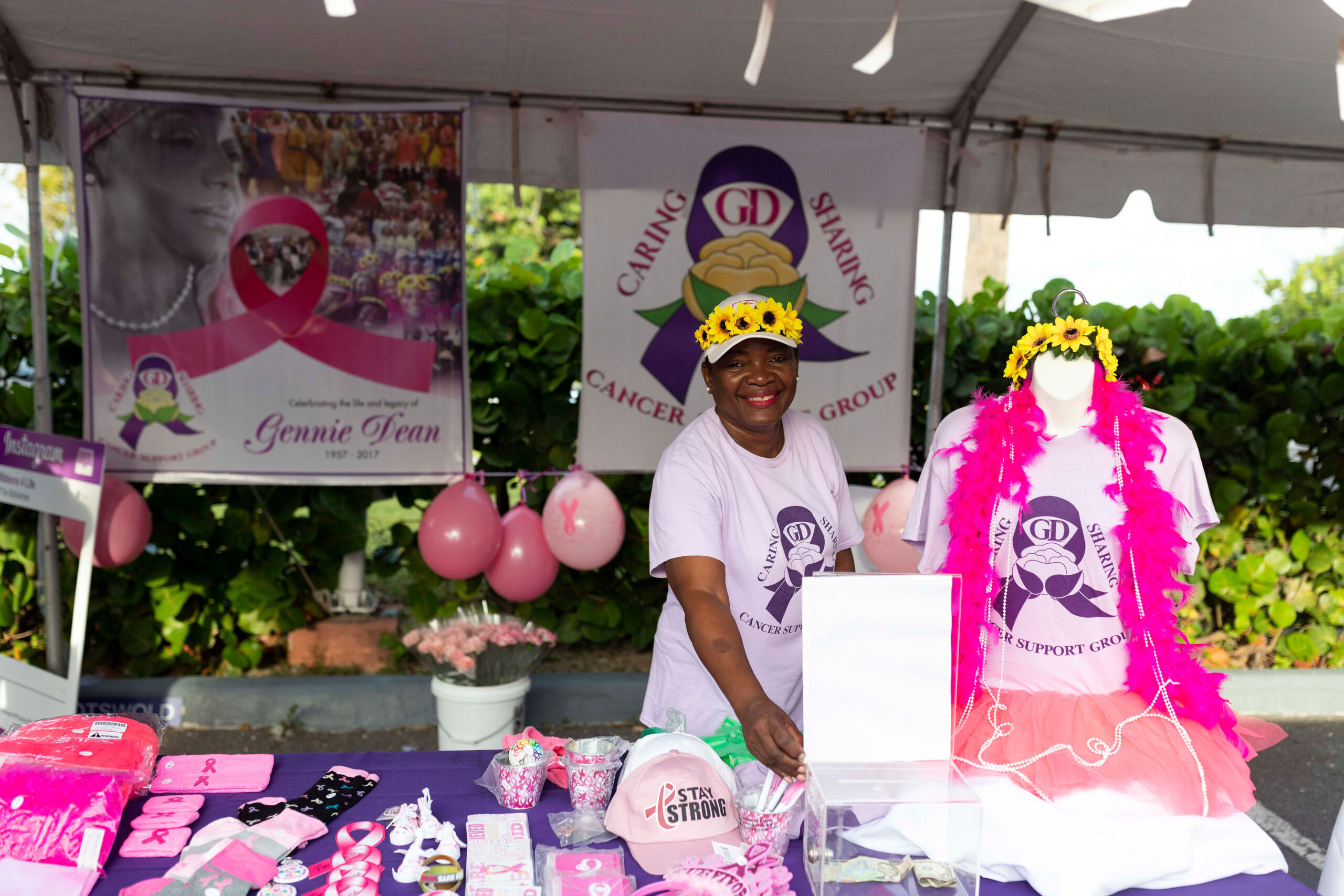
Gennie Dean Caring and Sharing Cancer Support Group President Duquesa Dean said participants do not have to complete the full route to be part of the morning.
“Just come out…there is something for everyone, come for the community,” Dean said. “There’s a survivor ceremony, so come and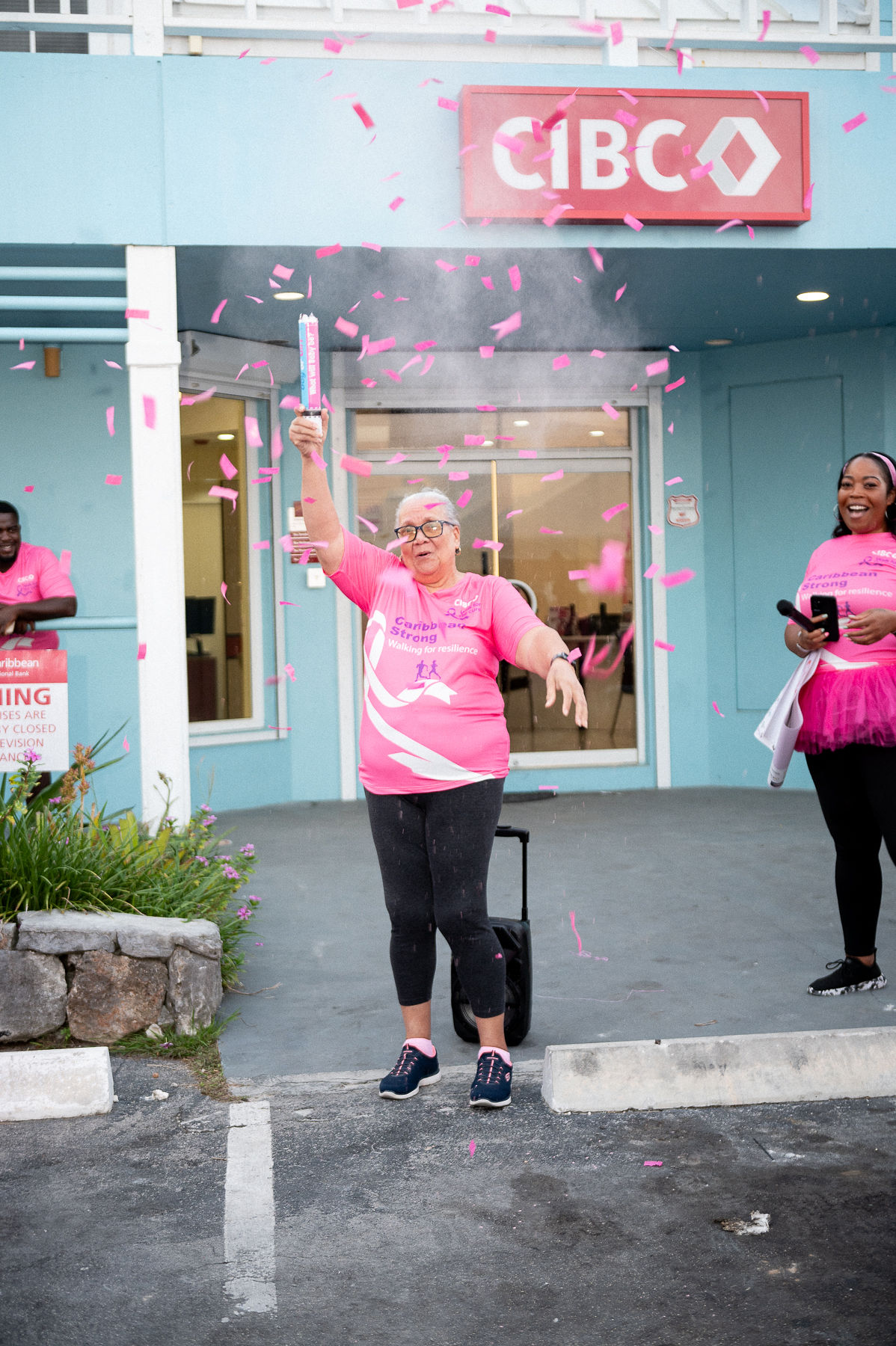 participate and celebrate the people who have gone through cancer and are here as evidence that you could live after a cancer diagnosis.”
The Gennie Dean Caring and Sharing Cancer Support Group is one of eight cancer organizations in The Bahamas that benefit from funds raised through Walk for the Cure. The others are the Sister Sister Breast Cancer Support Groups of New Providence and Grand Bahama, Cancer Society of The Bahamas, the Cancer Societies of Abaco, Eleuthera, and Grand Bahama, and the Cancer Association of Grand Bahama.
Dean explained that CIBC Caribbean covers the cost of staging WFTC, allowing donations raised to support the work of beneficiary organizations.
For her organization, that assistance translates into tangible support for people navigating cancer, including food assistance, financial aid, prosthetic breasts, and mastectomy bras, as well as programs such as Step Into Wellness, which promotes movement and healthy living among cancer patients and survivors.
Corporate partners are also helping to strengthen this year’s effort. Bamboo Shack has joined the initiative as a gold sponsor, with representative Ghandi Pinder sharing that the cause has a personal significance for her.
Pinder recalled shaving her hair in solidarity with her sister after she was diagnosed with an aggressive form of breast cancer and began losing her hair during chemotherapy.
“We see you, we’re here with you, we’re in it with you,” Pinder said of Bamboo Shack’s message to those affected by cancer.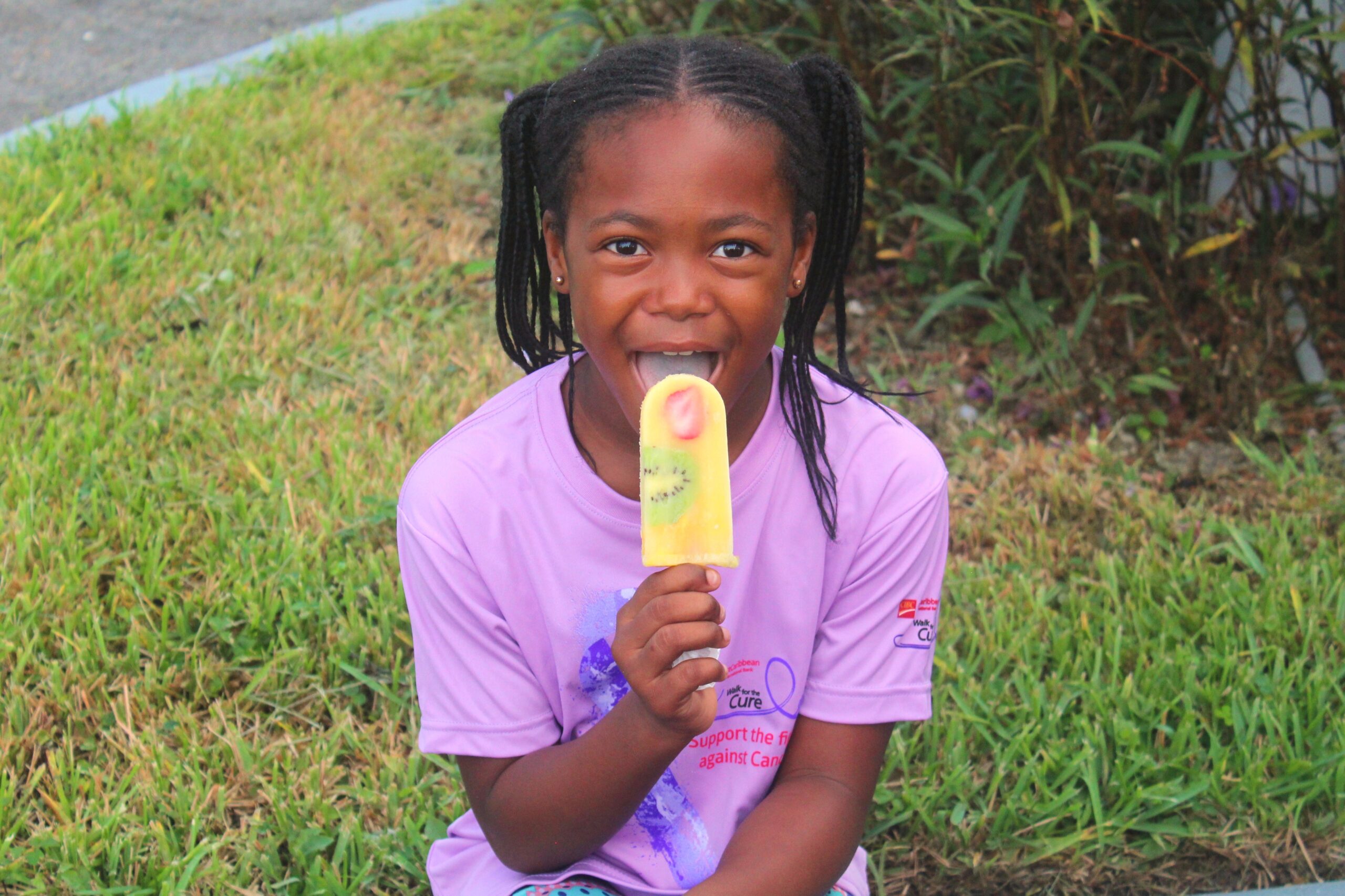
She also encouraged more of Corporate Bahamas to support initiatives that directly impact the communities they serve.
“At Bamboo Shack, we always say a better Bahamas begins with you… Together, we can make a difference,” she said.
Registration for Walk for the Cure is $30 for adults and $15 for children and can be completed at any CIBC Caribbean branch. CIBC Caribbean clients can also donate through online banking.
The New Providence Walk begins promptly at 6:30am on Saturday, October 3, at the Goodman’s Bay Corporate Centre, followed by Walk for the Cure events in other islands each Saturday throughout October. The Grand Bahama WFTC event will be held on October 10 and the Abaco and Eleuthera WFTC events will occur on October 17 and October 24 respectively.
Gibson added, “Some will walk for themselves, some in celebration of a survivor, and others in memory of someone they have lost. Whatever brings you to Walk for the Cure, every person who shows up becomes part of a much bigger expression of support for those affected by cancer.”
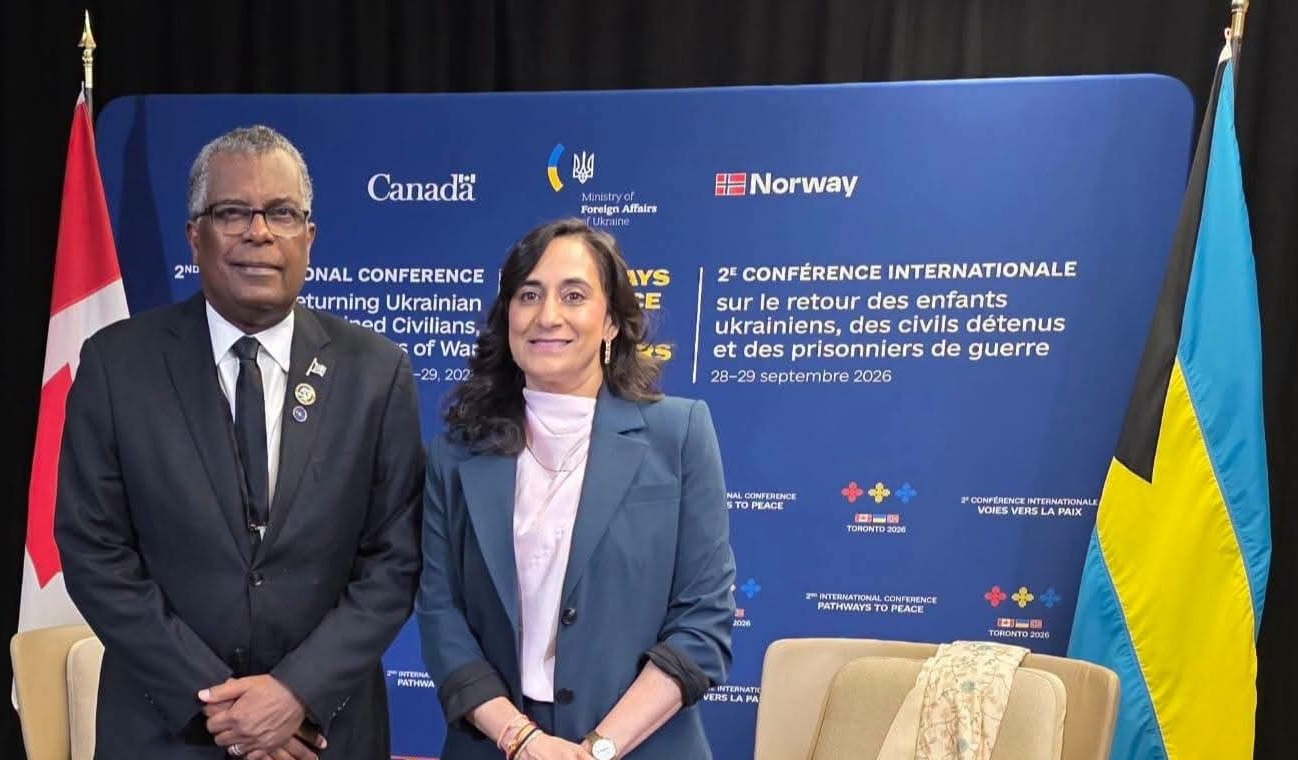
TORONTO, Canada —Minister of Foreign Affairs and Immigration Fred Mitchell has reaffirmed The Bahamas’ support for Ukraine’s territorial integrity and the international effort to secure the return of Ukrainian children, detained civilians and prisoners of war.
Speaking at the two-day Second International Conference on Returning Ukrainian Children, Detained Civilians, and Prisoners of War, held in Toronto on September 28 and 29, Minister Mitchell thanked Canada, Norway and Ukraine for convening the conference and said The Bahamas was honoured to participate.
“I first want to add my thanks to Canada, Norway and Ukraine for convening this important conference,” Minister Mitchell said. “We are honoured to have been invited and to be here.”
Minister Mitchell said The Bahamas supported the position expressed by Antigua and Barbuda from the CARICOM Region, while also drawing on remarks delivered by Prime Minister Philip Davis at them United Nations.
He said The Bahamas’ own history made it impossible for the country to remain silent when them territorial integrity of another state is under attack.
“Just a couple of days ago, our Prime Minister spoke at the United Nations about a people with a history of struggle for identity, arising out of the struggle against slavery, and how we cannot be silent in the face of the attack on the territorial integrity of another state,” Minister Mitchell said.
He noted that Canada and other countries have stood alongside Caribbean nations as they confront their own regional challenges, including the situation in Haiti and difficulties facing Cuba.
“We are a region which is far away from Ukraine, but we identify with the struggle,” he said. “In this case, we want to be sure that our voices are heard in support of the defence of the territorial integrity and the people of Ukraine.”
Minister Mitchell said the principle of territorial integrity carries lessons well beyond the current conflict and deserves particular attention from smaller states.
“We think that the question of territorial integrity is a lesson for all to inwardly digest,” he said, adding that The Bahamas particularly appreciated Canada’s approach to its role as a “middle power” in international affairs.
The minister also reflected on the broader historical context surrounding Russia and Ukraine. Referring to a recent interview with Russian President Vladimir Putin that he encountered on social media, Mitchell described the discussion as an example of historical revisionism.
He recalled the days of writings and experiences of Soviet-era dissidents including Aleksandr Solzhenitsyn and Andrei Sakharov, as well as the struggles that took place during the Soviet period and the eventual collapse of the Soviet Union.
Minister Mitchell said the historical interpretation presented in Putin’s remarks offered a markedly different account of those developments and placed responsibility for the situation in Ukraine on what Putin described as Western intellectual elites and their actions.
“That was very interesting,” he noted.
Drawing on the work of political scientist Samuel Huntington, Minister Mitchell suggested that political systems can retain characteristics of their predecessors even after major upheavals or revolutions.
“The Czar has been replaced, but what do we have today?” he asked. “A kind of pre-emptory, antidemocratic, autocratic behaviour attacking another state?”
Minister Mitchell concluded by reaffirming The Bahamas’ support for the objectives of the Toronto conference and calling for practical opportunities for the country to contribute.
“So I am, on behalf of The Bahamas, supporting the aims of this important conference,” he said. “Please assure us, or let us know, what practical ways we can help.”
He said The Bahamas’ participation itself was an important first step.
“We hope that, in this instance, the fact that we are here and that our voice has been added to this cause is at least a good start.”





-
 Health1 week ago
Cleveland Clinic First in Ohio to Perform Robotic Nipple-Sparing Mastectomy
-
 News4 days ago
Beaches Turks & Caicos strengthens year-round commitment with local craft vendors and transport operators
-
 News2 days ago
Beaches Turks & Caicos gives Enid Capron Primary a pre-term facelift
-
 Bahamas News5 days ago
Two Months On, The Bahamas Academy of Sciences Turns Fifty Years of Research into Action