Connect with us

Caribbean News

Unlocking Sustainable Tourism: Grenada to Welcome a Diverse Lineup of Industry Leaders at CTO’s Sustainable Tourism Conference

Published

on

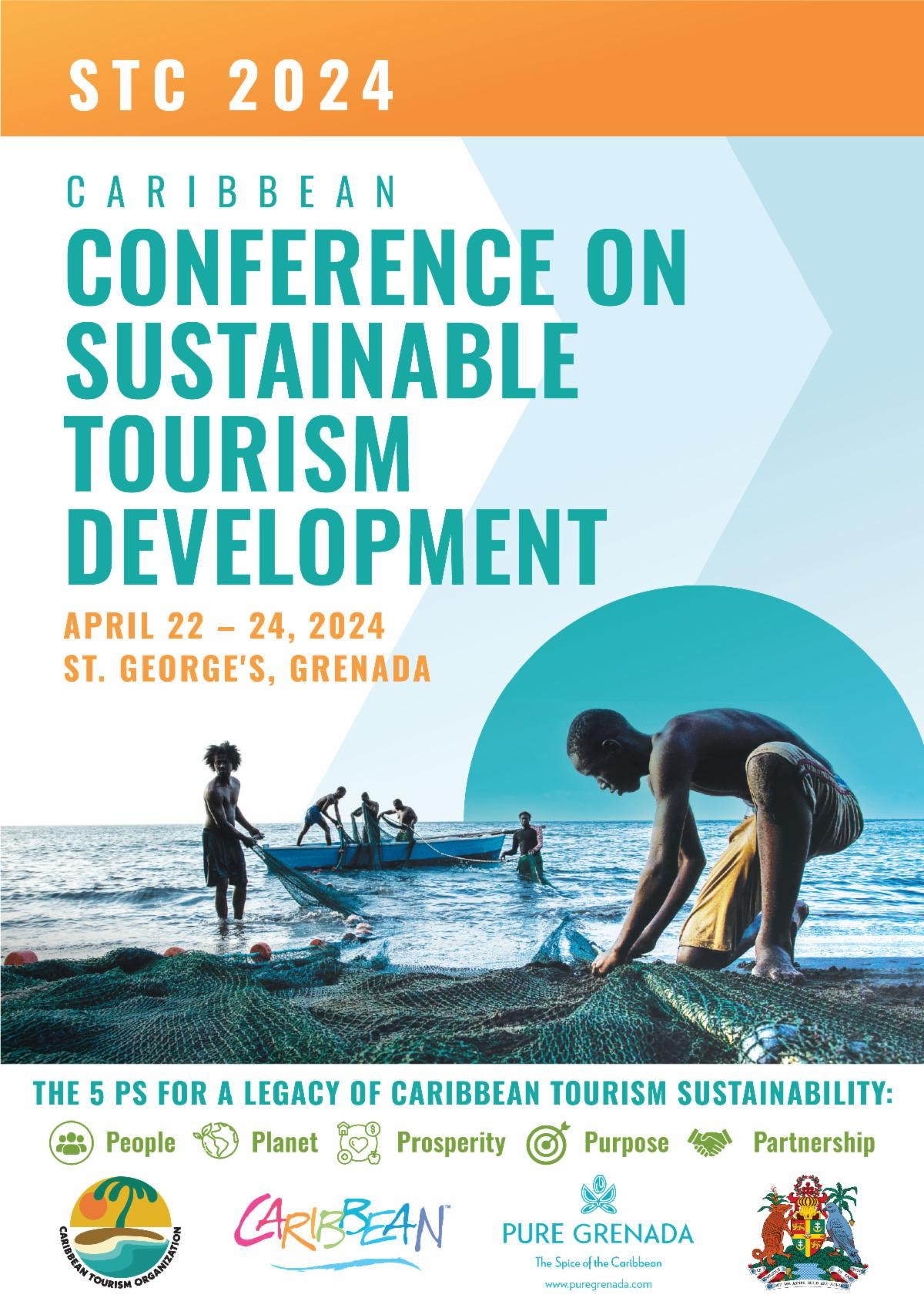
GRENADA (April 21, 2024) – The Caribbean Tourism Organization (CTO), in partnership with the Grenada Tourism Authority, has curated a dynamic lineup of industry leaders and development partners for its Sustainable Tourism Conference (STC 2024). The gathering aims to explore new strategies for enhancing sustainable tourism amidst evolving global challenges.

Slated for April 22-24, 2024, and centered around the theme The 5 Ps – People, Planet, Prosperity, Purpose and Partnership, the event brings together experts who will discuss creating innovative tourism experiences that capitalize on the Caribbean’s rich natural and cultural resources and presents strategies and best practice solutions to benefit from emerging opportunities and address sustainable tourism challenges.

Adam Stewart, Executive Chairman of Sandals Resorts International and a renowned leader in sustainable tourism, will deliver the keynote address on April 22. His remarks are expected to inspire a series of productive discussions on building a resilient and responsible tourism infrastructure in the region.

The conference will feature an impressive roster of speakers sharing their expertise on sustainable tourism development during the following sessions:

GENERAL SESSION I – Planet: Preserving Paradise – Nurturing Nature for a Sustainable Future (April 22, 10:30 am – 11:45 am): This session recognizes the vital connections between the health of our planet and the well-being of all living beings, including humans. Emphasizing the urgent need for conservation action, participants will engage in discussions that transcend rhetoric, focusing instead on tangible solutions and practical interventions. Speakers include:

  • Christopher Corbin, Coordinator, Cartagena Convention Secretariat, United Nations Environment Programme (UNEP)
  • Giselle Carr, Head of Brand and Communications, InPlanet
  • Maria Fowell, Senior Technical Specialist-Tourism, Economic Development Unit, Organisation of Eastern Caribbean States Commission
  • Rosana John, Attorney-at-Law, Dentons Delany
  • Michael Russek, Artist, Designer, Fabricator & Eco Creator
  • Maxine Welsh (Moderator), Director, The Nature Conservancy, Eastern Caribbean Division

GENERAL SESSION II – People: Breaking Barriers, Building Bridges: Harnessing Equity, Education, and Empowerment in Tourism (April 22, 11:45 am – 1:00 pm): The session will explore the pivotal role of diversity, equity, inclusion and education within the tourism sector to empower individuals and drive sustainable development. Speakers include:

  • Tonni Brodber, Representative of UN Women Multi-Country Office, Caribbean
  • Dr. Acolla Lewis Cameron, Dean, Faculty of Social Sciences, University of the West Indies, St. Augustine Campus
  • Amrita Bhalla, Managing Director, A.B. Consulting
  • Melnecia Marshall, Deputy CEO, St. Kitts Tourism Authority
  • Christopher Lee, Executive Recruiter & Consultant, BIPOC Executive Search
  • Richard Young (Moderator), Fashion Director & Creative Consultant, Richard Young Inc.

GENERAL SESSION III – Indigenous Excellence: Championing Community, Country and Congruence with Destination Grenada (April 22, 2:15 pm – 3:30 pm): As Grenada celebrates 50 years of independence in 2024, this session highlights the nation’s achievements in fostering Indigenous Excellence through public and private partnerships. Speakers include:

  • Dr. Angus Friday, Strategic Partnerships Director, Waitt Institute, and Executive Chairman, Atlantean BioSphere Program
  • Tiffany Geer, Marketing Manager, Event Coordinator and Dive Master, Aquanauts Grenada
  • Dr. Guido Marcelle, Pharmacognosist, Environmentalist and Practicing Natural Farmer
  • Mr. Phil Saye, Director, Grenada Fund for Conservation
  • Petra Roach (Moderator), Chief Executive Officer, Grenada Tourism Authority

MASTER CLASS – Building Resilience Across the 5Ps: Strategies for Tourism Resilience & Competitiveness (April 22, 3:45 pm – 4:45 pm): This dynamic session will explore strategies to bolster resilience within the Caribbean tourism sector, focusing on environmental sustainability, comprehensive disaster management, climate variability and climate change. Speakers include:

  • Dr. Deborah Brown, Disaster Recovery Specialist, Caribbean Disaster Emergency Management Agency
  • Barry Collymore, Owner and Executive Chairman, Mount Cinnamon Beach Resort; Co-Founder of West Indies School of Hospitality (WISH)
  • Dr. Roché Mahon, Social Scientist, Caribbean Institute for Meteorology & Hydrology
  • Prof. Lloyd G. Waller (Moderator), Professor of Digital Transformation Policy and Governance, University of the West Indies; Executive Director, Global Tourism Resilience and Crisis Management Centre

Market & Industry Insights Panel (April 23, 8:15 am – 9:00 am): A panel convening experts from the primary source markets and key industry stakeholders to offer perspectives on the latest policies, trends, and developments shaping the tourism landscape. Speakers include:

  • Carol Rose, Head of Sustainability, ABTA, The Travel Association
  • Hannah Swift, Country Manager – Caribbean, Virgin Atlantic Airways Ltd.
  • Dr. Allison T. Walker, Chief Surveillance Officer, Travelers’ Health Branch, Centers for Disease Control and Prevention
  • Rich Pruitt, Vice President of Environmental Operation, Carnival Cruise Line
  • Kendra Hopkin Stewart, Deputy Managing Director, Blue Horizons Garden Resort; President, Grenada Hotel and Tourism Association
  • Frank Comito (Moderator), Special Advisor and Former CEO/DG, Caribbean Hotel and Tourism Association

Inter-Ministerial Dialogue on Cooperation and Intersectoral Linkages (April 23, 9:00 am – 9:30 am): This fireside chat will feature spirited contributions from four Ministers of the Government of Grenada on modern challenges and solutions in sustainable development and disaster risk reduction. Speakers include:

  • Senator Adrian Thomas, Minister for Tourism, Creative Economy & Culture, Grenada
  • Lennox Andrews, Minister for Economic Development, Planning, Agriculture and Lands, Forestry, Marine Resources & Cooperatives, Grenada
  • Kerryne James, Minister for Climate Resilience, Environment & Renewable Energy, Grenada
  • Senator Jonathan La Crette, Minister of Youth and Sports, Grenada
  • Bevan Springer (Moderator), President, Marketplace Excellence Corporation

GENERAL SESSION IV – Prosperity: Pathways to Prosperity for Sustainable Futures: Sustainable Tourism Financing Donors’ Roundtable (April 23, 9:30 am – 10:30 am): This panel features an illustrious gathering of representatives from primary donor agencies, regional and international development organizations, and financial institutions supporting the Caribbean’s sustainable development. Speakers include:

  • Dr. Louise Twining-Ward, Senior Private Sector Specialist, The World Bank
  • Dr. Stacy Richards-Kennedy, Regional Manager for the Caribbean, CAF – Development Bank of Latin America & the Caribbean
  • Petipha Lewis, Director, Board of the Caribbean Biodiversity Fund; Chair, Network of Caribbean Chambers of Commerce (CARICHAM); Executive Director and Secretary to the Board of Directors of the Grenada Chamber of Industry and Commerce
  • Chris McNair, Programme Specialist, Business Development, CARICOM Development Fund
  • Wayne Elliott, Productivity & Innovation Coordinator, Compete Caribbean Partnership Facility
  • Amanda Charles (Moderator), Sustainable Tourism Specialist, Caribbean Tourism Organization

GENERAL SESSION V – Purpose: Purpose Driven Tourism: Uniting Purpose with Passion for Sustainable Tourism (April 23, 11:00 am – 12:15 pm): This session brings together industry leaders, stakeholders and enthusiasts to explore the intersection of purpose and passion in sustainable travel. Discussions will explore how travelers and tourism providers can align their values and aspirations with meaningful experiences contributing to sustainable development goals. Speakers include:

  • Alicia Johnson, Author, Lonely Planet
  • Dr. Thérèse Yarde, Caribbean Fellow/Senior Director, Caribbean SIDS Programming, Conservation International
  • Kirpa Grewal, Co-Chair, Volunteerism Committee and Executive Committee Member, Women in Cleantech & Sustainability Board of Directors
  • Kitaka Mawuto, Chief Executive Officer, Elevate Media
  • Russ Fielden, Owner, True Blue Bay Resort
  • Michael Carabash (Moderator), Partner, DMC LLP

GENERAL SESSION VI – Partnership: Synergizing Sustainability: Fostering Public, Private, and Community Partnerships in Tourism (April 23, 12:15 pm – 1:30 pm): This session focuses on the transformative power of multi-stakeholder partnerships in advancing sustainability within the tourism industry. It aims to chart new pathways toward inclusive and responsible tourism development by fostering collaboration.

  • Michael Akin, President, LINK Strategic Partners
  • Marc Melville, CEO, Chukka Caribbean Adventures Group
  • Trevor Jonas Benson, President & Chief Executive Officer, Bannikin
  • Annie Bertrand, Public-Private-Community Partnership Consultant, SIDS Global Business Network
  • Glenn Mandziuk, CEO, Sustainable Hospitality Alliance
  • Michelle Mason, Social Impact and Recognition Manager, Sustainable Hospitality Alliance
  • Kennedy Pemberton (Moderator), Director of Operations, Green Case Consulting

MASTER CLASS – Fu-Tech Tourism: Demystifying the Myths and Exploring the Risks, Benefits and New Opportunities (April 23, 2:45 pm – 3:45 pm): Engage with the future of technology (Fu-Tech) in tourism through this enlightening discussion. The session will debunk myths and explore the risks, benefits, and new opportunities presented by emerging technologies, setting the stage for innovation in the industry. Speakers include:

  • Ed Limon, Co-Founder and Producer, Winged Whale Media
  • Kyle Maloney, Tech Ecosystem Builder; Digital Marketer; Investor; Co-Founder, Tech Beat Retreat
  • Stacey Hines, Founder & CEO, Epic Transformation
  • Orlando Romain (Moderator), Advisor, Grenada Ministry of Planning and Economic Development, with responsibility for ICT and the Creative Economy

CONVERGENCE POINT – Bridging Perspectives for Future Tourism (April 23, 4:00 pm – 4:45 pm): The closing session is designed to bring together diverse perspectives and stimulate dialogue and action that will help shape the future of Caribbean tourism. It explores how stakeholders are working to address challenges, meet market demands, tap into new trends and promote responsible tourism while embracing The 5Ps: People, Planet, Prosperity, Purpose and Partnership. Speakers include:

  • Shelley V. Worrell, Founder, I AM CaribBeing and Little Caribbean NYC
  • Rodney Payne, Chief Executive Officer, Destination Think
  • Oneidge Walrond, Minister of Tourism, Industry & Commerce, Guyana
  • Aria Laidlow-Ferdinand, Technical Officer, Caribbean Natural Resource Institute (CANARI)
  • Krisma McDonald, Director of Sustainability, Six Senses La Sagesse
  • Tenille Clarke (Moderator), Managing Director, Chambers Media Solutions

Partners and sponsors for STC 2024 include LINK Strategic Partners, Little Caribbean NYC, Royal Caribbean International, Silversands Grenada Beach Resort, and Six Senses La Sagesse Grenada Resort.

Airline partners include interCaribbean Airways and Virgin Atlantic.

Sponsors of the Caribbean Sustainable Tourism Awards are the Grenada Hotel and Tourism Association, Grenada Investment Development Corporation, International Institute of Tourism Studies at the GW School of Business, and World Sustainable Travel and Hospitality Awards.

Media partners signed up for the conference are Breaking Travel News, Caribbean Broadcasting Union, Caribbean Media Corporation, and Wanderlust.

Visit caribbeanstc.com for more information about the conference, speakers, sessions and registration details. To learn more about the Grenada Tourism Authority, visit puregrenada.com.

Caribbean News

Pres Ali declares three days of national mourning following MV Barima tragedy July 21, 2026

Published

on

His Excellency Dr Mohamed Irfaan Ali has declared three days of national mourning following the tragic loss of lives in the M.V. Barima incident, as the nation continues to grieve alongside the families and communities affected.

The period of national mourning will be observed from Wednesday, July 22, through Friday, July 24, 2026, in honour of the victims of the tragedy. During this time, the National Flag will be flown at half-mast on all Government buildings and other appropriate locations across the country.

As part of the observances, Wednesday, July 22, has been designated a National Day of Prayer. A National Day of Prayer and Remembrance will be held at the Kingston Seawall in Georgetown, bringing together citizens in solidarity to honour the lives lost and offer support to grieving families.

The programme of remembrance will continue with a Night of Reflection and Prayer in Port Kaituma on Thursday, July 23, followed by another observance in Mabaruma on Friday, July 24.

The government is also encouraging religious organisations, civic groups and citizens throughout Guyana to organise candlelight vigils and moments of prayer during the three days as the nation collectively reflects on the tragedy and pays tribute to the victims. The declaration of national mourning underscores the government’s commitment to standing with the bereaved families and affected communities as Guyana mourns one of the country’s most heartbreaking maritime tragedies.

Continue Reading

Bahamas News

CARICOM Targets Affordability as Bahamas, TCI Continue to Feel the Pinch  

Published

on

By Deandrea Hamilton


Cheaper shipping. Lower energy costs. Better access to healthcare. Stronger consumer protections.

Those are among the measures CARICOM Heads of Government believe could finally begin reducing the stubbornly high cost of living for millions of people across the Caribbean.

Meeting in Saint Lucia, regional leaders agreed that making life more affordable must become one of the Community’s highest priorities. Their emerging strategy includes reducing freight costs through a regional ferry service, accelerating renewable energy projects to lessen dependence on imported fuel, expanding regional healthcare partnerships, strengthening consumer protection, and encouraging governments to adopt successful cost-of-living measures already being implemented across the Caribbean.

“Our discussions over the past four days were guided by one central objective – ensuring that CARICOM delivers results that people can see and feel in their everyday lives,” CARICOM Chairman and Saint Lucia Prime Minister Philip J. Pierre said.

Few places may welcome that relief more than The Bahamas and the Turks and Caicos Islands.

Although inflation has moderated in both countries from the sharp increases experienced following the pandemic, the cost of living remains stubbornly high. Families continue to complain about grocery bills that stretch household budgets, rising housing costs, expensive electricity, healthcare expenses and fuel prices that remain among the highest in the region.

Governments have responded.

In The Bahamas, successive reductions in Value Added Tax on selected goods and other targeted tax measures have sought to ease pressure on consumers. In the Turks and Caicos Islands, the Government this weekend opens applications for its $500 Cost of Living Relief Programme, acknowledging that many households continue to struggle despite the country’s economic success.

Yet affordability remains elusive.

The contradiction is difficult to ignore.

The Turks and Caicos Islands continues to post one of the region’s strongest tourism-driven economies, with robust investment, record visitor spending and sustained construction activity. The Bahamas has also strengthened its economic position, earning improved sovereign credit ratings as tourism, government revenues and fiscal performance continue to recover.

Yet those encouraging economic indicators have not translated into noticeably lower household expenses.

The reason is largely structural.

Both The Bahamas and the Turks and Caicos Islands produce relatively little of what they consume. Food, fuel, medicines, vehicles, building materials and countless household essentials are imported. Both countries also record significant trade deficits, illustrating their dependence on overseas suppliers. Every increase in global shipping costs, fuel prices or supply chain disruptions is eventually reflected in supermarket prices, utility bills and the cost of everyday living.

That is why CARICOM’s agenda matters.

If regional leaders succeed in lowering freight costs through an inter-island ferry network, expanding renewable energy, improving regional cargo movement, strengthening consumer protections and making healthcare more accessible through cooperation, the benefits could extend far beyond government balance sheets.

For Bahamians and Turks and Caicos Islanders, success will not be measured by another tourism record or another credit rating upgrade. It will be measured at the supermarket checkout, on the monthly electricity bill, at the gas pump and in the simple ability to afford a better quality of life.

Continue Reading

Caribbean News

From Pathways to Investment: Tackling the US $6 Billion Food Challenge for the Caribbean

Published

on

By Kenroy Roach

The Caribbean’s food systems challenge is fast evolving into a broader development challenge.

Despite decades of policy attention and investment, the region remains one of the most food import-dependent in the world, spending over US$6 billion annually. At the same time, countries continue to grapple with food insecurity, high rates of diet-related non-communicable diseases, climate vulnerability, and exposure to external shocks that can disrupt supply chains and drive up food prices almost overnight.

For Small Island Developing States (SIDS), food security has shifted from an agriculture focus alone, it’s about economic resilience, health, climate resilience and sustainable growth.

Recognizing this reality, Caribbean governments have elevated food systems transformation as a regional priority through the CARICOM 25 x 25 Plus Five Agenda, which seeks to reduce food import dependence while strengthening domestic production, regional trade, and resilience. Across Barbados and the Eastern Caribbean, governments have also developed National Food Systems Pathways that identify the investments, partnerships, and policy reforms needed to transform food systems and accelerate progress toward the Sustainable Development Goals (SDGs).

Yet one challenge has remained persistent: financing.

In the face of high levels of public debt and limited fiscal space, while public investment remains critical, Caribbean governments simply cannot shoulder the financing burden alone. Transforming food systems at scale requires mobilizing far greater private capital, alongside development finance and public resources.

This was the rationale behind the recent convened in Barbados.

The Forum brought together governments, investors, international financial institutions, private sector leaders, regional organizations, and the United Nations around a simple proposition: food systems should be viewed not only as a development priority, but also as an investable asset class.

A distinguishing feature of the innovative gathering was its focus on attracting private investment—particularly private equity, impact investment, and blended finance solutions capable of supporting businesses and infrastructure across food value chains. By helping enterprises access growth capital and connecting investors with scalable opportunities, the initiative sought to unlock financing that complements public investment rather than adding to already constrained public balance sheets.

A key outcome was the launch of a regional Deal Book comprising approximately US$320 million in investment opportunities across seven countries, spanning agriculture, fisheries, agro-processing, logistics, and strategic food systems infrastructure. The Deal Book created a practical bridge between capital seeking opportunities and opportunities seeking capital, while enabling direct engagement between governments, enterprises, and investors.

The results were encouraging.

Across four sector-focused deal rooms, participants explored investment-ready and near-investment-ready opportunities and discussed blended finance private equity, risk-sharing, and partnerships to advance projects toward implementation.

The Forum highlighted a shift in perspective: food systems are now seen as strategic drivers of economic diversification, resilience, competitiveness, and growth. Investments across production, processing, logistics, and distribution can strengthen regional supply chains, create new businesses, generate jobs, and reduce vulnerability to external shocks.

For the United Nations, this experience reinforced an important lesson.

Transforming food systems requires more than the technical expertise of individual agencies. It requires integrated solutions that connect agriculture, nutrition, health, climate resilience, trade, private sector development, and financing.

This is where the Resident Coordinator System plays a critical role.

Across Barbados and the Eastern Caribbean, the Resident Coordinator Office has united UN system capabilities around a common food systems agenda. Working with FAO, WFP, the UN Food Systems Coordination Hub, and other partners, the RCO has helped align policy support, technical expertise, partnerships, and financing with nationally identified priorities.

The Forum demonstrated this integrated approach by convening governments, investors, development finance institutions, private sector actors, and UN agencies around a common objective. It showcased the UN’s comparative advantage as a trusted broker capable of connecting development priorities with investment opportunities.

The Forum’s success will be measured not by dialogue generated, but by investments mobilized, businesses expanded, and progress made toward resilient, competitive Caribbean food systems across the Caribbean.

Its most important outcome may therefore be what comes next.

The work starts now.

Kenroy Roach is Head of the UN Resident Coordinator Office for Barbados and the Eastern Caribbean

Continue Reading

FIND US ON FACEBOOK

TRENDING