
Caribbean News
Striking parallels as Turks and Caicos and Jamaica find law and order fading away by extreme gang-fueled crime

By Dana Malcolm
Staff Wrtier
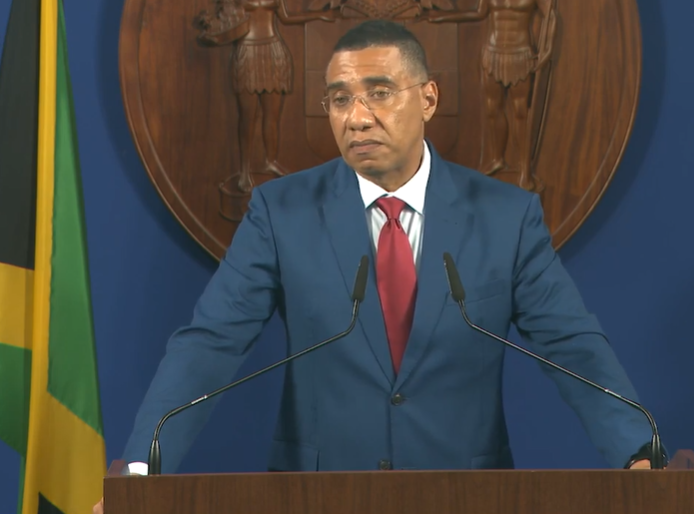
#Jamaica, November 18, 2022 – Earlier this week Jamaican Prime Minister Andrew Holness announced he was instituting more States of Emergency (SOE) in seven parishes in Jamaica. The SOEs which allow for manned checkpoints, curfews, patrols and other military aided peacekeeping efforts were being used because, the Prime Minister maintained, “The level of crime in our country is over and above the capacity of our regular law enforcement,” he said. “It is clear that we are facing an emergency. Even war torn countries have a murder rate less than Jamaica. Gangs are morphing– they are trying to corrupt the state.”
The factors driving this extraordinary level of crime are eerily similar to the factors driving a major uptick of crime in the Turks and Caicos Islands.
Antonette Weymss-Gorman, head of the Jamaica Defense Force Rear Admiral explained what exactly the country was fighting.
“Through our analysis and intelligence gathering we continue to recognize the influence of gangs as a primary contributor to violence with with illegal weapons and ammunition. Their criminal and violent actions continue to be fueled by the ill-gotten gains of extortion, contract killings, lottery scamming and other forms of criminality,” She explained that infighting was taking down innocents as well.
“These gangs are continuously engaged in intense intra and inter-gang conflicts which are a leading cause of high levels of murders and shootings across the country.”
Jamaica and certainly by now the Turks and Caicos sit very near the top of the list for the highest murder rates in the region and the world. While the TCI’s murder rate may skate below the global radar this year thanks to being considered a part of the UK residents of both countries, who have to face the violence may be wondering, how did it get this bad?
Major crime waves like these in relatively small-island states can seem like they came out of nowhere but Holness belays that assumption saying a lack of preparation contributed heavily to the crises.
“It is not a situation that is unique to Jamaica. Many island states have not looked at national security in the sophisticated way that they needed to over the last thirty years to make the investments they needed in intelligence gathering, communication, transportation, border control, and investments in the training of our security forces.”
It’s an observation that rings particularly true in the Turks and Caicos as country leaders have just begun in the last few years to seriously put in the work to create a border force, a defense force in the form of the Regiment, armored vehicles, a coast guard and digital security capabilities at our ports. All of this work is ongoing, some of it in early stages still.
Meanwhile criminals have made inroads into the Islands and set up their own chain of command and shipping routes as evidenced by the recent bust of several shipments of weapons in the US that were bound for the TCI.
Nigel Dakin, Governor of the Turks and Caicos Islands had indicated he would not be bringing in any military operation until it was absolutely needed because soldiers are not trained to police. However, residents have over weeks been awaken to the sound the sight of military styled choppers overhead and this week, coordinated road checks slowed traffic to a crawl.
Jamaica, while executing these extreme measures over the next four weeks, is promising to adhere to the human rights of residents and visitors; having already been bruised by several Supreme Court law suits alleging abuses.
For now both governments continue to grapple with their respective, but connected, crime waves.







Caribbean News
From Pathways to Investment: Tackling the US $6 Billion Food Challenge for the Caribbean
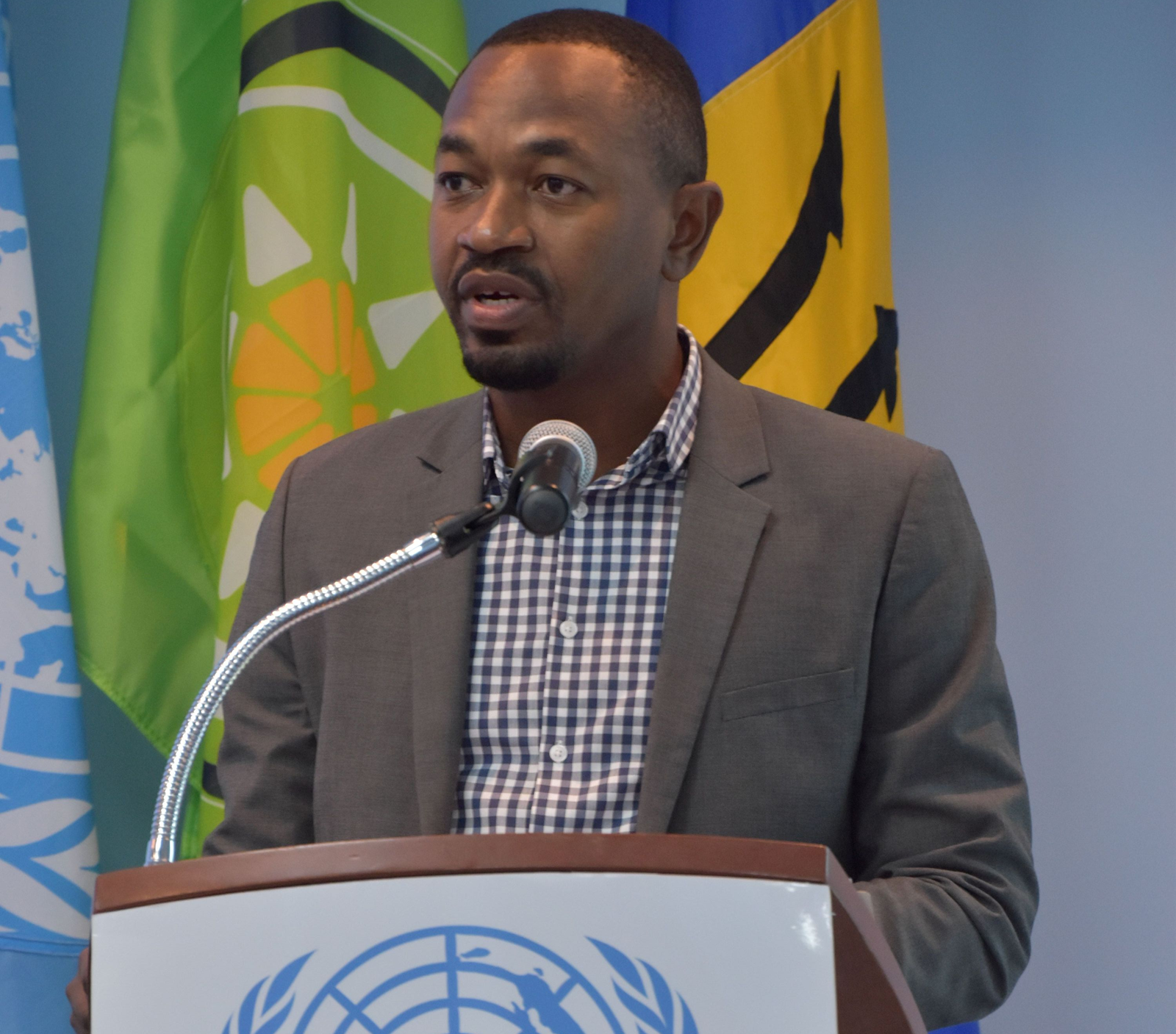
By Kenroy Roach
The Caribbean’s food systems challenge is fast evolving into a broader development challenge.
Despite decades of policy attention and investment, the region remains one of the most food import-dependent in the world, spending over US$6 billion annually. At the same time, countries continue to grapple with food insecurity, high rates of diet-related non-communicable diseases, climate vulnerability, and exposure to external shocks that can disrupt supply chains and drive up food prices almost overnight.
For Small Island Developing States (SIDS), food security has shifted from an agriculture focus alone, it’s about economic resilience, health, climate resilience and sustainable growth.
Recognizing this reality, Caribbean governments have elevated food systems transformation as a regional priority through the CARICOM 25 x 25 Plus Five Agenda, which seeks to reduce food import dependence while strengthening domestic production, regional trade, and resilience. Across Barbados and the Eastern Caribbean, governments have also developed National Food Systems Pathways that identify the investments, partnerships, and policy reforms needed to transform food systems and accelerate progress toward the Sustainable Development Goals (SDGs).
Yet one challenge has remained persistent: financing.
In the face of high levels of public debt and limited fiscal space, while public investment remains critical, Caribbean governments simply cannot shoulder the financing burden alone. Transforming food systems at scale requires mobilizing far greater private capital, alongside development finance and public resources.
This was the rationale behind the recent convened in Barbados.
The Forum brought together governments, investors, international financial institutions, private sector leaders, regional organizations, and the United Nations around a simple proposition: food systems should be viewed not only as a development priority, but also as an investable asset class.
A distinguishing feature of the innovative gathering was its focus on attracting private investment—particularly private equity, impact investment, and blended finance solutions capable of supporting businesses and infrastructure across food value chains. By helping enterprises access growth capital and connecting investors with scalable opportunities, the initiative sought to unlock financing that complements public investment rather than adding to already constrained public balance sheets.
A key outcome was the launch of a regional Deal Book comprising approximately US$320 million in investment opportunities across seven countries, spanning agriculture, fisheries, agro-processing, logistics, and strategic food systems infrastructure. The Deal Book created a practical bridge between capital seeking opportunities and opportunities seeking capital, while enabling direct engagement between governments, enterprises, and investors.
The results were encouraging.
Across four sector-focused deal rooms, participants explored investment-ready and near-investment-ready opportunities and discussed blended finance private equity, risk-sharing, and partnerships to advance projects toward implementation.
The Forum highlighted a shift in perspective: food systems are now seen as strategic drivers of economic diversification, resilience, competitiveness, and growth. Investments across production, processing, logistics, and distribution can strengthen regional supply chains, create new businesses, generate jobs, and reduce vulnerability to external shocks.
For the United Nations, this experience reinforced an important lesson.
Transforming food systems requires more than the technical expertise of individual agencies. It requires integrated solutions that connect agriculture, nutrition, health, climate resilience, trade, private sector development, and financing.
This is where the Resident Coordinator System plays a critical role.
Across Barbados and the Eastern Caribbean, the Resident Coordinator Office has united UN system capabilities around a common food systems agenda. Working with FAO, WFP, the UN Food Systems Coordination Hub, and other partners, the RCO has helped align policy support, technical expertise, partnerships, and financing with nationally identified priorities.
The Forum demonstrated this integrated approach by convening governments, investors, development finance institutions, private sector actors, and UN agencies around a common objective. It showcased the UN’s comparative advantage as a trusted broker capable of connecting development priorities with investment opportunities.
The Forum’s success will be measured not by dialogue generated, but by investments mobilized, businesses expanded, and progress made toward resilient, competitive Caribbean food systems across the Caribbean.
Its most important outcome may therefore be what comes next.
The work starts now.
Kenroy Roach is Head of the UN Resident Coordinator Office for Barbados and the Eastern Caribbean
Deandrea Hamilton | Editor
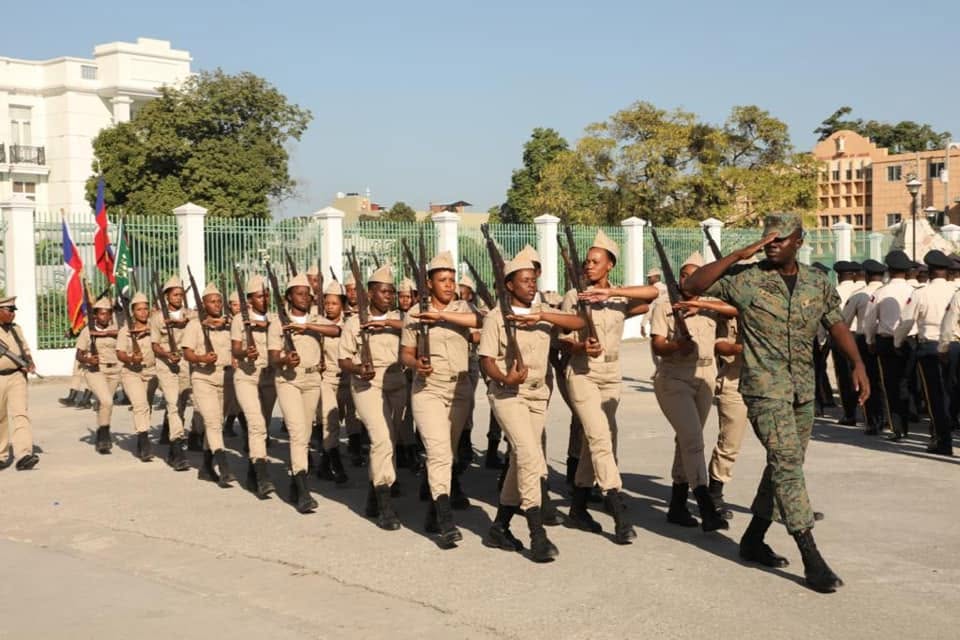
What if we rejected the notion that Haitians flourish best only when they are outside of Haiti? What if the next great Haitian success story is not another exodus, but a hearty homecoming? For years, the conversation has been steered toward ushering Haitians out of Haiti. Having witnessed the indomitability of the Haitian people, I feel compelled to point out that a U.S. Supreme Court decision may force us to see what has been staring us in the face all along: the solution may be hundreds of thousands of Haitians themselves.
As thousands of Haitians in the United States prepare for the end of Temporary Protected Status (TPS)—a humanitarian programme created under U.S. law as a temporary protection, not a permanent immigration pathway—the conversation should extend beyond American immigration policy. It should turn to Haiti’s future.
History offers perspective. An estimated 20,000 to 30,000 Haitian revolutionaries defeated Napoleon’s forces and secured independence in 1804, making Haiti the first Black republic and the second independent nation in the Western Hemisphere. Now imagine the force of more than 300,000 Haitians returning with skills, discipline and experience gained in the world’s largest economy.
Add to that, Haiti is itself sending a clear message: the country needs its people.
I found a report from the Armed Forces of Haiti (FAd’H) which recently announced that 17,722 applicants came forward in just 11 days during its latest recruitment campaign. A second recruitment phase is planned and will specifically target professionals in law, engineering, medicine and other technical fields, as the country works to strengthen institutions, restore security and prepare for the future.
Coincidentally—or perhaps providentially—many of the Haitians now facing the end of TPS are not returning empty-handed. They include thousands of nursing assistants, caregivers, mechanics, delivery drivers, warehouse workers, agricultural workers, hotel employees, cooks, retail workers, security officers, landscapers, school assistants and property managers. They are returning with years of experience gained inside the world’s largest economy. They have learned trades, embraced innovation, worked within structured systems, met professional standards and developed the practical skills every successful nation depends upon.
These are not simply returning migrants. They may be the human capital Haiti needs most.
For generations, Haitians have become experts at surviving and thriving in other lands. They have endured political upheaval, natural disasters, poverty, insecurity and displacement with extraordinary resilience. But survival and escape cannot build their nation. At some point, survival must give way to rebuilding. And hope for home must command action. It requires people willing to invest not only in their families, but in the future of the country itself.
For decades, the Haitian diaspora has faithfully sustained families through remittances. That generosity has been indispensable. But rebuilding Haiti will require something remittances alone cannot provide. It will require human capital—teachers in classrooms, nurses in clinics, engineers on construction sites, entrepreneurs creating jobs, police protecting communities, judges strengthening the rule of law, and citizens committed to rebuilding the institutions that hold a nation together.
Anyone who has spent time in Haiti knows it is far more than the headlines. It is a nation of breathtaking mountains, secret waterfalls, fertile valleys and rice paddies. It is a land of remarkable creativity, deep faith, natural entrepreneurs, rich culture and resilient people. It is the oldest republic in Latin America and the Caribbean and the first Black republic in the modern world. Above all, it is a country worth fighting for.
Perhaps the fight itself now needs to change.
For too long, the world has defined Haiti by its crises. Haitians know it by its promise. The next fight should not simply be to survive, but to rebuild—to inject a new generation of skilled workers, professionals and entrepreneurs into a nation that desperately needs their mental muscle, their experience and their vision.
Returning home will not be easy, but what if returning became rewarding and the contribution of these thousands of Haitians became the catalyst for transforming or reforming the nation they call home?
No country can export its builders forever and expect to become stronger. Haiti has spent decades sharing its greatest resource with the world—its people. Perhaps the next chapter in Haiti’s remarkable story is not another exodus, but this very homecoming.
The next chapter of Haiti’s story should not be written at an airport departure gate, nor should it be framed only as horror for those whose TPS protections are ending. The real test now is whether advocates, attorneys, governments and the wider Caribbean do more than wave goodbye. We must help more than 330,000 Haitians find their footing, settle back in, put their skills to work and build the Haiti that generations of Haitians have always deserved.
Research & Development supported by ChatGPT AI
Caribbean News
Sandals® and Beaches® Resorts Launch Rebranded Loyalty Program, ‘Island Insiders Club’

~All-inclusive resort company elevates rewards program, offering expanded benefits and member-only events & experiences, rooted in the spirit of the islands~
MONTEGO BAY, JAMAICA, July 2, 2026 — Sandals and Beaches Resorts unveiled today the introduction of its new Island Insiders Club, the next chapter of its refreshed loyalty program. Replacing the long-running Sandals Select Rewards program (established in 2008), the new program is designed to elevate the guest experience with a more immersive approach to awards and recognition. Effective July 1, 2026, the transition will preserve members’ current status and existing benefits, while expanding access to enhanced rewards, exclusive events and enriched experiences that bring members closer to the Caribbean.
“We are expanding how loyalty shows up across every stay to encapsulate what our loyal members already are — an inside part of the Sandals and Beaches family,” stated # SVP of Loyalty at Unique Vacations, Inc., worldwide representative of Sandals and Beaches Resorts. “We developed this program side-by-side with the guests who know the resorts, the islands, and the people best, drawing on extensive focus groups, surveys, and direct feedback. The result is a loyalty experience that goes far beyond points, and is felt in every welcome home.”
Guests can enroll in Island Insiders Club before their very first visit, and begin earning status after their first stay. The program features seven levels of loyalty, the highest being Ambassador, followed by Pearl, Diamond, Emerald, Sapphire, Coral and Shell (which replaces the former Select tier).
More Access. More Recognition. More Caribbean.
Sandals Select Rewards members will roll over to the Island Insiders Club on July 1, 2026, maintaining their status and benefits with no reset.
Island Insiders Club highlights include:
- Choice of Insider Reward: A flexible credit that lets Insiders choose the experiences that best match their vacation style, from relaxing at the Red Lane Spa to embarking on an adventure with Island Routes.
- The Insiders Shop: A private online merchandise store featuring premium collections and limited-edition drops, including handcrafted artisanal pieces, available exclusively for Island Insiders.
- Room Upgrade Hotline: Now available exclusively for members, Insiders can request a room upgrade 30 days prior to travel and receive up to 50% off their upgrade when they call a dedicated number.
- Dedicated VIP Concierge Line: A one-stop, full-service customer care team supporting Diamond, Pearl, and Ambassador members throughout their vacation journey, helping to book their flights, tours, special requests and more.
- Expanded Insider Experiences, On and Off Resort: Exclusive Insider events including specialty weeks focused on diving, autism inclusion, and culinary experiences on resort. Plus, access to a series of experiential events across the globe.
- 20% off Managers Wine List Discount: Returning members receive 20% off the Manager’s Wine List, offering another elevated touch for dinners, celebrations, and special moments on resort.
- $200 Laundry Service Credit: Ambassador members will receive a $200 laundry service credit, adding an extra layer of ease and convenience to longer stays.
- Complimentary Week Stay: A complimentary 7-night stay at any resort of choice is awarded to members after every 70 paid nights.
- New Member Incentive: Those “newly inside” who book and travel will receive 5,000 bonus points after their first stay.
As always, Insiders enjoy special access to cabanas, a complimentary photo on every trip, member discounts on everything from retail and watersports to candlelight dinners, and added savings on future stays at the loyalty lounge.
New Name, New Look and a Nod to Nostalgia
The Island Insiders Club’s refreshed visual identity is built around a simple pair of sandals, now the signature symbol of Island Insiders Club and a throwback to an Insider tradition that’s been worn for decades, from vintage gold and silver pendants in the early days to the leather necklaces shared at member events today.
The new brand look will roll out across consumer touchpoints in the months ahead, from dedicated Island Insiders Club lounges to on resort signage, marketing and sales channels, digital and more, bringing Island Insiders Club to life through a modern design and multiplatform approach.
An Exclusive Inside Scoop
In true Insider fashion, Island Insiders Club was first unveiled to the brand’s most loyal members during a special “Step Inside Our Sandals” video conference. Designed as an Insider-first briefing, the call gives top members an early look at brand news and upcoming developments. Hosted by Peter Menges, the event walked members through the highlights of the new program, what to expect, and the refreshed look and feel of Island Insiders Club, before Sandals and Beaches Resorts’ Executive Chairman Adam Stewart gave an exclusive look at what’s next and the reimagining of three iconic Sandals Resorts in Jamaica.
For more information about Island Insiders Club or to become a member, visit: www.sandals.com/islandinsidersclub.
Go behind-the-scenes of the Island Insiders Club with Peter Menges on the Sandals Palmcast and read the latest on the Sandals blog.





-

 Caribbean News6 days ago
Returning Haitians Could Be the Answer Haiti Has Been Praying For
-
 News1 week ago
Community Comes Together as ISU Community Engagement Exercise Delivers Essential Services in Kew Town
-
 Health6 days ago
Turks & Caicos Hotel and Tourism Association Secures Landmark Health Insurance Partnership for Tourism Workforce
-

 News6 days ago
COURT DENIES BAIL; MISICK, HANCHELL AND CHAL MISICK TO REMAIN BEHIND BARS DURING APPEAL
-

 News7 days ago
Turks & Caicos Visitors Spend $670 Million in 90 Days as Survey Reveals Top Resorts
-

 Bahamas News5 days ago
Prime Minister Commissions Completed Rooftop Solar Installations at UB
-

 News6 days ago
Warning Puts Spotlight on Governor’s Constitutional Responsibility for Financial Services
-
 Caribbean News5 days ago
From Pathways to Investment: Tackling the US $6 Billion Food Challenge for the Caribbean