
News
TCIs Murder Rate would rank in World’s Top 5 due to “Bloody September”


By Dana Malcolm
Staff Writer
#TurksandCaicos, October 6, 2022 – In the 26 days since Magnetic Media last reported on the TCI’s murder rate it has risen to 73.4 per 100,000 people up from 45.5 per 100,000 people.
In early September MM reported the country was “on par with some of the most violent Caribbean countries” now the Turks and Caicos is above most of the most violent countries in the world. This is because of its exceedingly small population vs the significant number of killings.
The rate was again calculated by Magnetic Media using formulas from the California Attorney General’s office, population data provided by Deputy Premier and Minister with responsibility for Statistics and crime data provided by the Royal Turks and Caicos Islands Police Force. 
The Turks and Caicos population is listed as 35,000 residents.
Last month, the TCI murder rate had exceeded that of Jamaica; the Dominican Republic; The Bahamas; and Trinidad and Tobago. This month the Turks and Caicos ranks above South Africa (40 per 100,000 according to the Global Initiative Against Transnational Organized Crime).
In addition, it ranks above some of the countries with the highest rates in the world for 2021 including Honduras (56.52), Venezuela (56.33), Virgin Islands (49.26) Jamaica (47.01) and Lesotho (41.2).
The Turks and Caicos is not usually listed on lists detailing the highest murder rates globally by virtue of it being an overseas territory of the United Kingdom rather than a nation of its own. If the TCI was ranked independently, it would be in one of the top five spots.
In comparison, and on the more peaceful side of the scale, the World Bank says Singapore, a country home to some 5.7 million people has a murder rate of a solid zero, at last check. The TCI also dramatically tops the British Virgin Islands (BVI) and Bermuda, other British overseas territory, the latter is currently struggling with gang violence having had four homicides in 2022.
The Turks and Caicos, in September and early October recorded 15 murders. So far in 2022, there have been 26 murders in the TCI.













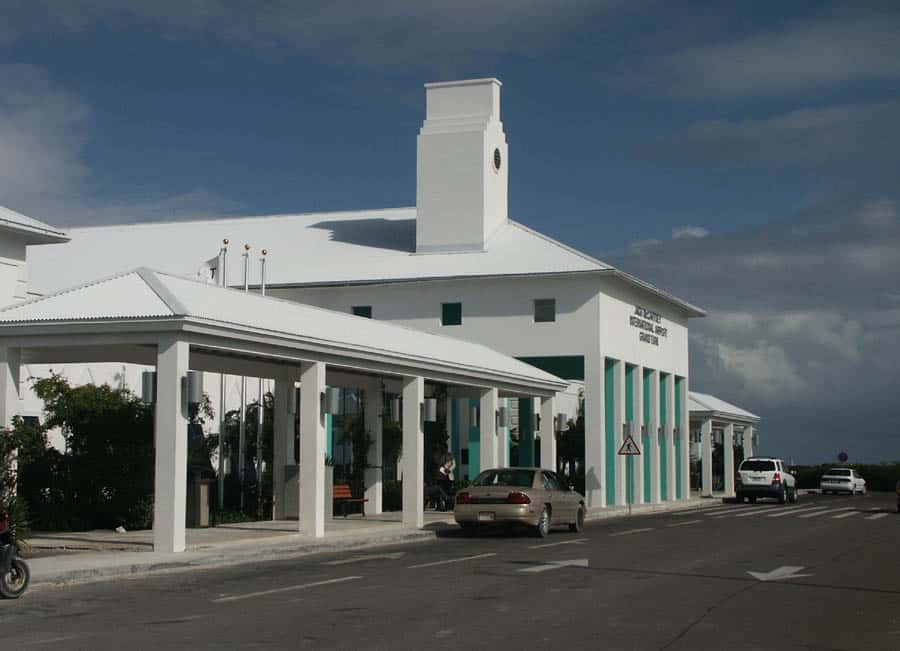
Turks and Caicos Islands – March 10, 2026 – Commercial flights between Grand Turk and South Caicos have been temporarily discontinued, leaving residents without a direct air link between the two islands since March 1.
The Turks and Caicos Islands Government confirmed the suspension in a statement Tuesday, explaining that the route — which operates under a government subsidy — is currently under review as officials reassess the tender process used to award the service.
The Ministry of Finance, Economic Development, Investment and Trade said the government is “working diligently to assess available options” to restore reliable air service between the islands as quickly as possible.
While the statement did not identify which airline had been operating the route, historically Caicos Express Airways and interCaribbean Airways have provided flights between South Caicos and Grand Turk using small twin-engine aircraft.
Officials acknowledged the disruption has caused concern among residents, noting that inter-island air travel is critical for access to essential services, business activity and government operations.
The government emphasized that the suspension does not affect flights between Grand Turk and Salt Cay, which continue to operate normally.
The review now underway will determine the next provider for the subsidized route. Authorities say the process must be conducted in a “fair, transparent and efficient manner” before service can resume.
For residents of the two islands, however, the immediate issue remains transportation — with many now forced to reroute through Providenciales or rely on limited sea travel until the air connection is restored.
Further updates are expected once the government completes its review and awards a new operating arrangement.
Angle by Deandrea Hamilton. Built with ChatGPT (AI). Magnetic Media — CAPTURING LIFE.

GLOBAL — Laws promising equality for women and girls exist in many countries around the world, yet millions still struggle to access justice when their rights are violated.
That stark reality is highlighted in a United Nations report titled “Ensuring and Strengthening Access to Justice for All Women and Girls,” released ahead of International Women’s Day and the 70th session of the Commission on the Status of Women, which begins March 9 in New York.
The report points to what experts call an “implementation gap” — the disconnect between laws that guarantee equality and the real-world ability of women and girls to enforce those rights.
While legal frameworks promoting gender equality have expanded globally, the report warns that many women continue to face significant barriers when seeking justice.
Among the most common obstacles are high legal costs, long distances to courts and services, language barriers, and low levels of legal literacy. Many women also face what researchers describe as “time poverty,” balancing work and caregiving responsibilities that make pursuing legal action difficult.
Bias and stigma within justice systems themselves can also discourage women from reporting abuse or seeking legal remedies.
The report notes that girls often face distinct and overlooked barriers. In many cases, justice systems lack child-centred procedures, making it difficult for girls to safely report harm or access legal protection. Issues such as child marriage and early pregnancy can further complicate their ability to assert their rights, particularly when they remain legally dependent on family members who may also be the source of harm.
Older women also face unique challenges, often shaped by lifelong patterns of discrimination and economic disadvantage. Gendered ageism can undermine their credibility, with complaints involving violence, neglect, health rights, pensions or property disputes sometimes dismissed or ignored.
The United Nations report also highlights structural weaknesses within justice systems, including limited budgets, shortages of trained personnel and poor coordination between institutions responsible for delivering justice services.
Another factor contributing to the enforcement gap is the continued male dominance within justice sector leadership, which researchers say can discourage women from engaging with institutions meant to protect them.
The findings come as the United Nations marks International Women’s Day under the theme “Rights. Justice. Action. For ALL Women and Girls,” a call for governments to move beyond commitments on paper and ensure that laws protecting women are fully enforced.
Global leaders say closing the gap between legislation and real-world outcomes remains one of the most urgent challenges in achieving gender equality and ensuring that women and girls everywhere can live safe, healthy and purposeful lives.
Developed by Deandrea Hamilton • with ChatGPT (AI) • edited by Magnetic Media.

CARIBBEAN — Jamaica has become the 13th CARICOM member state to accede to the African Export-Import Bank Establishment Agreement, further strengthening economic ties between Africa and the Caribbean.
The development was confirmed during the 50th CARICOM Heads of Government Meeting, where an Afreximbank delegation led by George Elombi and Kanayo Awani met with Jamaica’s Prime Minister Andrew Holness to advance cooperation.
Prime Minister Holness thanked the bank for its support following Jamaica’s recent hurricane, noting that Afreximbank financing helped restore critical infrastructure including water, electricity, sewage systems and roads, while also assisting reconstruction efforts aimed at building stronger resilience to future disasters.
The meeting also focused on broader development opportunities tied to Jamaica’s membership in the agreement. Discussions included rebuilding and modernising infrastructure such as railways, hospitals and other public facilities, while strengthening regional transportation and trade networks to improve the movement of people and goods across the Caribbean.
Afreximbank has been expanding its presence in the Caribbean as part of its strategy to connect Africa with the region often referred to as “Global Africa.” The bank has already committed billions of dollars in financing and trade support to Caribbean economies in recent years, including funding for infrastructure, trade facilitation and private sector investment.
By joining the agreement, Jamaica gains expanded access to Afreximbank’s financial instruments, technical support and trade networks designed to promote commerce between Africa and CARICOM states.
Regional leaders say the growing partnership could unlock new opportunities in areas such as trade, logistics, tourism, manufacturing and cultural exchange, strengthening economic cooperation between the two regions with deep historical and diaspora ties.
Angle by Deandrea Hamilton. Built with ChatGPT (AI). Magnetic Media — CAPTURING LIFE.





-
 Health1 week ago
Chile becomes the first country in the Americas to be verified by WHO for the elimination of leprosy
-

 Caribbean News4 days ago
Jamaica Joins Afreximbank Agreement, Strengthening Africa–Caribbean Partnership
-

 News1 week ago
Police Commissioner Honoured with Distinguished Civic Service Award at TCHTA Star Awards
-

 Bahamas News1 week ago
Dredging Is Not Just About Size — It Is About What Is Being Destroyed, Warns Save Exuma Alliance Regarding Yntegra’s Proposed Rosewood Resort
-

 News1 week ago
Flow TCI powers Inter-High Track and Field Championships
-

 Education7 days ago
Message from Hon. Rachel M. Taylor, Minister of Education, Youth, Sports & Culture
-

 News3 days ago
Rights Without Justice: How Weak Enforcement Fails Women and Girls
-

 News5 days ago
Treasure Beach Village Opens at Beaches; Tourism Leaders Expect Surge in Bookings