
Education
TCI Hospital Announces Educational Summer Programmes for 2022

#TurksandCaicos, June 25, 2022 – InterHealth Canada – Turks and Caicos Islands Hospital announce its annual educational summer Ready and Clinic Observership programmes which are scheduled to run in July 2022. Both programmes intend to raise awareness of healthcare careers and to help improve local capacity in the long term.
The Ready observership program offers third-form high schools, both public and private students, a behind-the-scenes look and in-depth knowledge about professions in health care delivered over five days. The program commences on Monday, July 11th to July 15th, 2022, with health care workers’ feature practical and theory presentations.
The Clinic Exploration program targets students pursuing healthcare-related courses at a tertiary level institution and ordinarily resides in the Turks and Caicos Islands. The 10-day program, from July 18th to July 29th, 2022, comprises onsite sessions that include a skills lab on phlebotomy, suturing, vital signs, manual handling, applying splints, and Heart Saver, and Basic Life Support training. A 20- minute presentation is required for participants at the conclusion of the programme.
“Our summer programme offers youngsters a great opportunity to gain meaningful experience in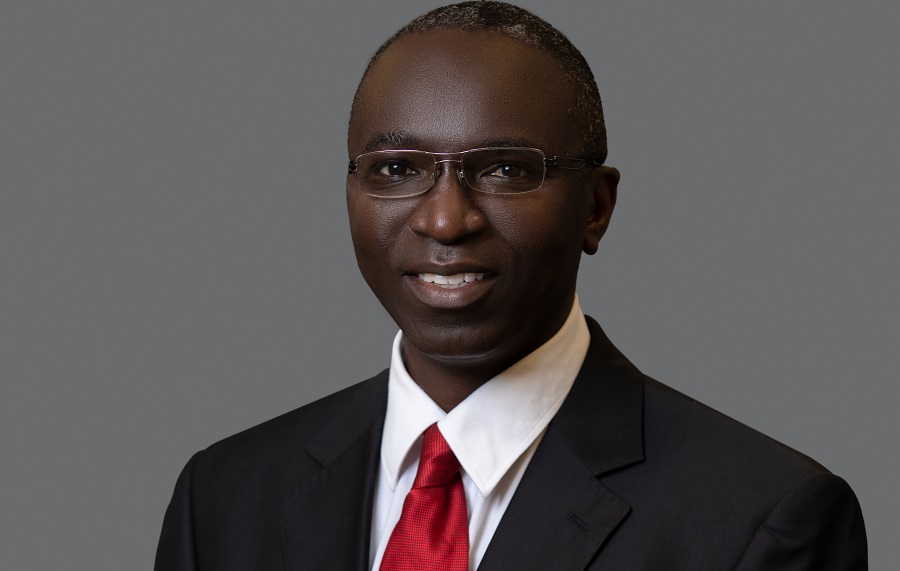 a Hospital setting”, said Acting Chief of Medical Services Dr. Sani Amatti.
“An opportunity to explore career opportunities in health and medicine. Participants will gain both theoretical knowledge and practical skills. They will engage with physicians and other healthcare associates from various medical disciplines within the organization while learning about the everyday aspects of their speciality areas”, added Dr Amatti.
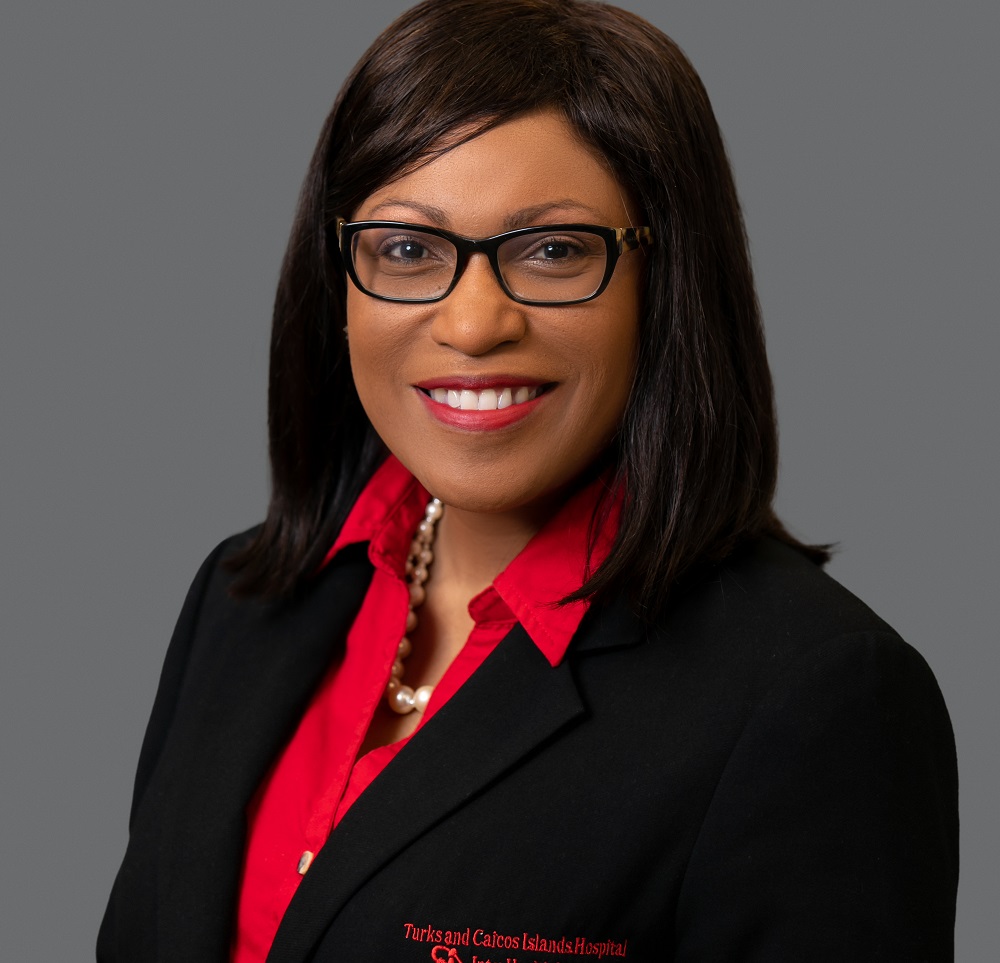
Chief Executive Officer of the TCI Hospital, Dr Denise Braithwaite-Tennant, stated, “For the past nine years except for 2020 because of COVID-19, we have always looked forward to hosting a group of talented young people who are interested in the plethora of fields in health and medicine. We want to mentor our young people and motivate them to be innovative, creative, empathetic and caring, think critically, and be passionate while elevating their awareness about careers within the hospital. Human capital is the most important asset for healthcare and there remains a global shortage further exacerbated by the COVID-19 pandemic. During the COVID-19 pandemic similar to other hospitals, we have faced significant challenges recruiting health care workers, especially nurses. The World Health Organization estimates a projected shortfall of 18 million health workers by 2030, mostly in low- and lower-middle-income countries. It is therefore imperative that we continue to intentionally create opportunities for our young people to engage with us and promote careers in health care”.
Parents and students can visit our social media pages and website to register with a deadline for the programmes on July 4th, 2022. It would be best if students were vaccinated to participate in both programmes.
The Turks and Caicos Islands Hospital is accredited and became a licensed teaching facility on July 26th, 2021.

Bahamas News
Two Months On, The Bahamas Academy of Sciences Turns Fifty Years of Research into Action
First peer-reviewed paper published, policy brief delivered to Minister Lightbourne, a seat at Climate Week, and a growing public audience for Bahamian science
NASSAU, The Bahamas, 7 October 2026 — Two months after putting fifty years of research on The Bahamas “on the record” at its first public event in July, The Bahamas Academy of Sciences (BAS) has been turning that evidence into action.
Since July, the Academy has published its first peer-reviewed paper, presented its findings to Government through a policy brief, taken Bahamian science to Climate Week in Nassau and New York, and launched a growing public conversation in which Bahamians can ask scientists questions and get answers. The Academy’s new policy brief, “Prioritising National Research Needs for The Bahamas,” is attached to this release.
“In July we said the record was open. Since then, we have been working to put it to use,” said BAS President Dr. Krista Sherman. “Fifty years of research revealed where The Bahamas is strong and where the gaps are: water, food, energy, long-term monitoring. Our job as the national academy is to share that evidence with the decision-makers and the public they serve, and to build the Bahamian research capacity to fill those gaps.”
THE RECORD, NOW PEER-REVIEWED AND PUBLIC
The Academy’s first publication, “Fifty Years of Research in The Commonwealth of The Bahamas: A Quantitative Thematic Analysis of Scholarly Output,” is now published in the international journal Gulf and Caribbean Research. Led by Dr. Amina Moss (University of Stirling) with BAS members Dr.
Krista Sherman, Dr. Williamson Gustave, Dr. Kathleen Sullivan Sealey, Dr. Charlotte Dunn, Dr. Nicola Smith, Lindy Knowles and Dr. Christy Gibson, the study analyses 12,113 scholarly records published about The Bahamas between 1975 and 2025.
It shows a rich scientific legacy, particularly in geology, fisheries, oceanography and conservation, while also highlighting persistent gaps in areas of direct national importance: groundwater resources, food systems, renewable energy, social-ecological governance and locally led, long-term monitoring. The full paper is free to read at https://doi.org/10.18785/gcr.3701.15.
FROM THE RECORD TO POLICY
Building on this research, BAS has prepared a policy brief, “Prioritising National Research Needs for The Bahamas,” which translates the findings into a set of ten strategic priorities.
The policy brief calls for greater investment in locally led, policy-aligned and climate-ready research, including:
- a national research agenda aligned with Vision 2040;
- stronger local scientific capacity, laboratories and field stations;
- rebuilt long-term monitoring of reefs, fisheries, coasts and mangroves;
- targeted research on groundwater, food systems and renewable energy;
- a national environmental and health data repository; and public health research on the risks facing small island states.
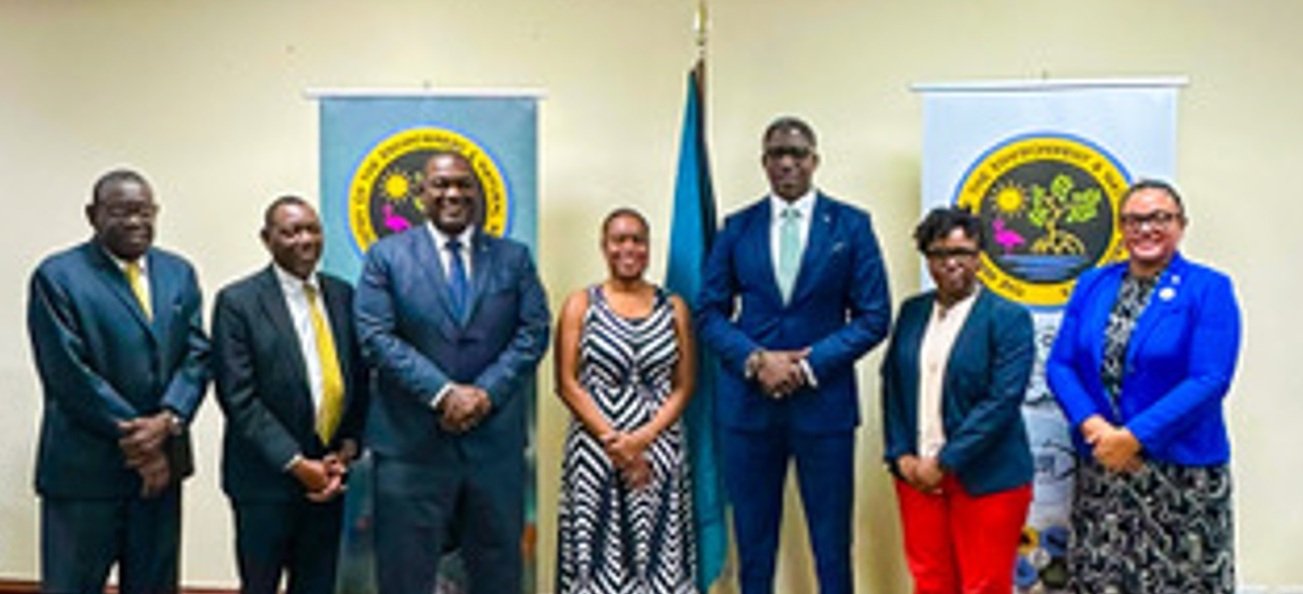
In September, Dr. Sherman presented the brief to the Hon. Zane Lightbourne, Minister of the Environment and Natural Resources, during a courtesy call. The visit is the first in a series of introductory meetings with Government ministries over the coming months. Through these meetings, the Academy will introduce its work and explore opportunities for collaboration in science, the environment, sustainability, conservation and climate resilience. The policy brief also maps research priorities to relevant national legislation and policies, from the Environmental Planning and Protection Act to the National Health Strategy 2026–2030.
BAHAMIAN SCIENCE AT CLIMATE WEEK, FROM NASSAU TO NEW YORK
BAS also brought Bahamian scientific expertise to Climate Week 2026.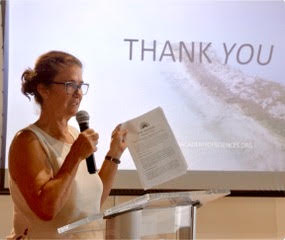
On Monday, 21 September, BAS Board member Dr. Kathleen Sullivan Sealey, Professor Emerita at the University of Miami, presented “Coasts and Climate Change” at the opening day of Climate Week in The Bahamas, hosted by the Baha Mar Resort Foundation at ECCHO, under the theme “At the Edge of the Water.” Dr. Sullivan Sealey explained why The Bahamas’ low-lying carbonate islands face growing risk from sea-level rise and storms, and how historical losses of coral reefs, seagrass, mangroves and dunes have weakened the islands’ natural defences. More importantly, she highlighted actions communities can take to reduce these risks.
During Climate Week, the Academy also released a science statement, “Climate Change and Ocean Warming Impacts on The Bahamas: What Does the Science Tell Us?”, a synthesis of the environmental, ecological, social and economic impacts facing the archipelago.
In New York, BAS Vice President Dr. Adelle Thomas, Vice-Chair of Working Group II of the Intergovernmental Panel on Climate Change (IPCC), brought the realities of vulnerable small island states to Climate Week NYC.
A GROWING PUBLIC AUDIENCE FOR BAHAMIAN SCIENCE
The Academy’s public campaign, 242 #ForTheRecord, has also been building a presence across its five platforms since launching in mid-July. Its most successful format has been the simplest: Bahamians ask a question and a BAS scientist answers it. So far, the “You Ask/Science Responds” series has tackled questions on how climate change will affect Bahamian farming (Dr. Williamson Gustave) and the science of blue holes (Dr. Krista Sherman). An upcoming episode will examine the effects of high temperatures on public health. Question-led content is reaching roughly twice the audience of the Academy’s institutional posts. During its first month, the campaign generated more than 18,500 views and over 200 shares across its platforms.
To extend the conversations to more Bahamians, beyond the traditional science-curious audiences,
BAS has also formalised collaborations with two local content creators, Kaché Knowles (“I is a Bahamian Bey”) and Stephen Hanna (“Schin Nguyen”). Their first joint pieces will appear before the campaign closes on 30 November.
WHAT COMES NEXT
For BAS, putting the record to work is only the beginning. Over the coming months, the Academy will:
- continue introductory meetings with Government ministries and agencies;
- host its Future Scientists classroom event with Bahamian students in early November;
- launch its YouTube channel with a video-podcast series on Bahamian scientists in November;
- begin work on its second peer-reviewed publication, “A Horizon Scan on Emerging Environmental Issues in The Bahamas Over the Next Decade”; and
- offer “Introduction to Statistics using Excel,” a short, practical course in early 2027 that will give early-career scientists and resource managers in The Bahamas hands-on skills in organising, analysing and summarising their own data.
“Research is most valuable when it can be used,” said Dr. Sherman. “The Bahamas has an extraordinary scientific record. Now we need to ensure that record informs the questions we ask, the decisions we make, and the science we build here at home.”
See BAS Climate Statement and BAS Policy Briefing 50 Years of Bahamian Research here: BAS Climate Statement,
BAS Policy Briefing_50 Years of Bahamian Research
PHOTO CAPTIONS:
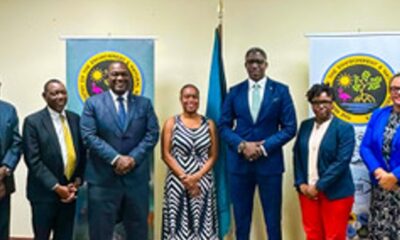
Header: BAS President Dr. Krista Sherman met the Minister of the Environment and Natural Resources and his team on 17 September 2026. L–R: Mr. David Davis, Permanent Secretary; Mr. Ricardo Deveaux, Acting Under Secretary; The Hon. S. Obie Roberts, Parliamentary Secretary; Dr. Krista Sherman, BAS President; The Hon. Zane Lightbourne, Minister; Dr. Rhianna Neely-Murphy, Director, Department of Environmental Planning and Protection; Ms. Danielle Hanek, Acting Director, Forestry Unit.
Credit: Ministry of Environment and Natural Resources.
Insert: Kathleen Sullivan Sealey, BAS Board member, presents the Academy’s science statement at Climate Week in The Bahamas, ECCHO, 21 September 2026.
Credit: Amaeleo Carey.
PRESS RELEASE: BAS
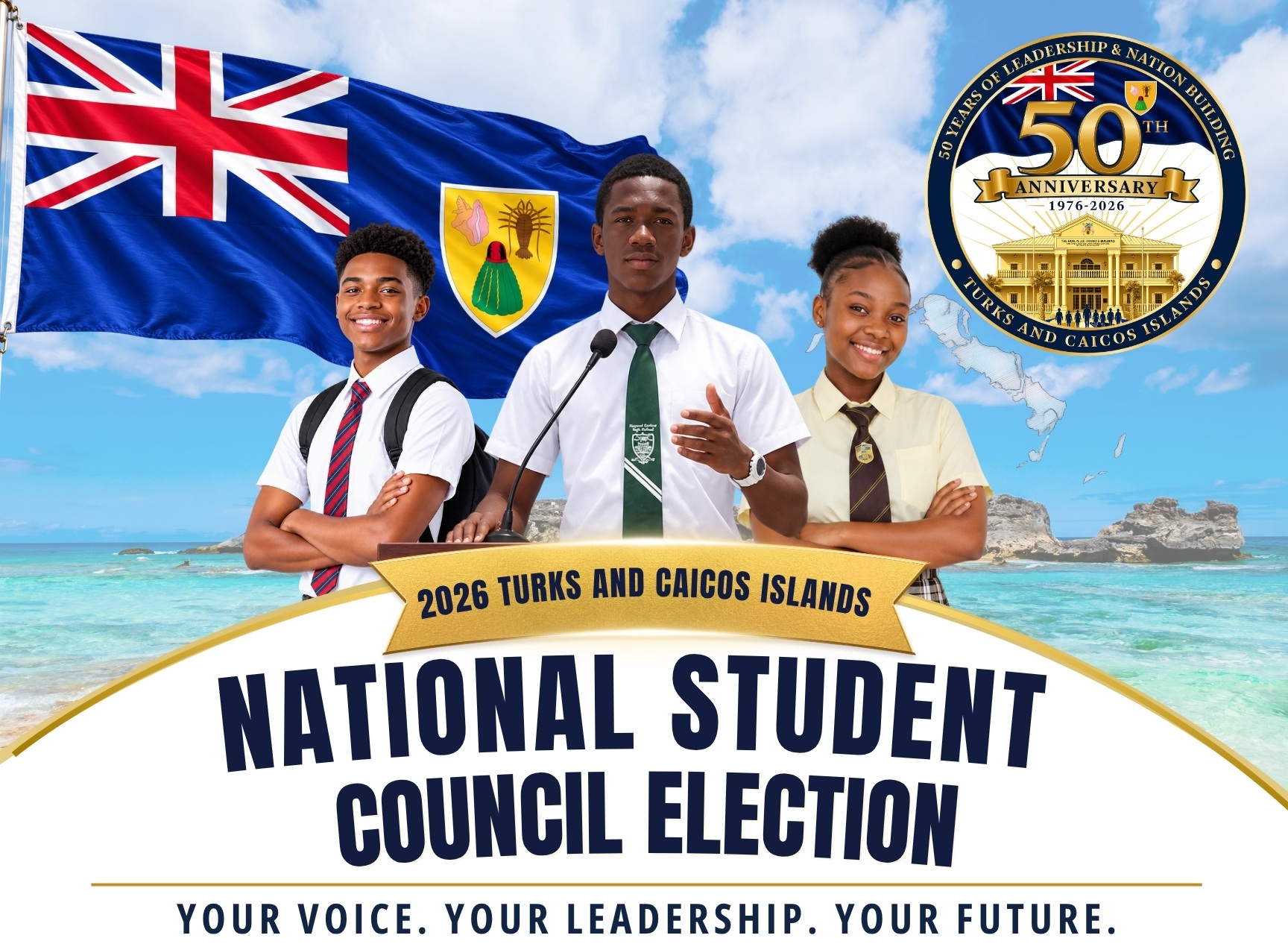
Providenciales, Turks and Caicos Islands – Thursday, 17 September 2026: The Ministry of Education, Youth, Sports and Culture has partnered with the Turks and Caicos Islands Elections Department to bring an exciting national election experience directly to high school students across the country with the launch of the 2026 National Student Council (NSC) Election.
Held under the theme “Your Voice. Your Country. Your Future.”, the initiative will give students from all 14 public and private high schools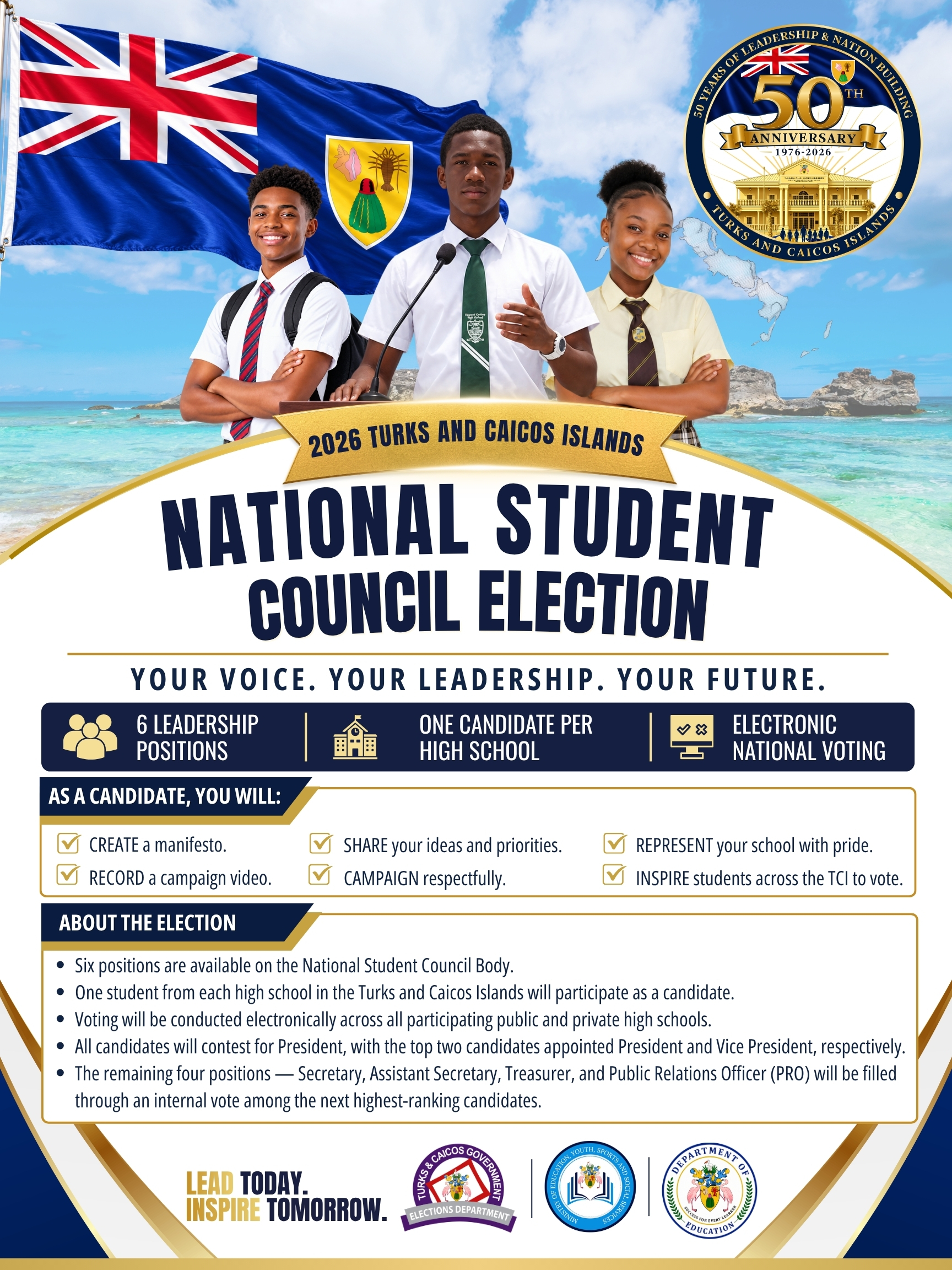 the chance to campaign, vote and compete for national student leadership positions, while gaining first-hand experience of the electoral process.
Minister of Education, Hon. Rachel Taylor, said the initiative gives young people a national platform to share their ideas and develop their leadership skills.
“Our young people have ideas, opinions and perspectives that deserve to be heard, and this election gives them a national platform to use their voices in a meaningful way. We want our students to step forward with confidence, share the issues that matter to them and experience what it means to lead and represent others.” She continued, “I am particularly excited to see students from schools across the Turks and Caicos Islands getting involved, supporting their candidates and participating in the voting process. I encourage every school to embrace this opportunity and help us create an experience that our students will learn from and enjoy.”
Each high school will nominate one student candidate to represent their school at the national level. Candidates will campaign for the positions of President and Vice President, sharing their ideas, priorities and plans with student voters across the Turks and Caicos Islands. Both positions will be decided by electronic vote among high school students across the country.
The remaining four positions on the six-member National Student Council: Secretary, Assistant Secretary, Treasurer and Public Relations Officer. will be determined through an internal vote among the top candidates following the national election.
The election will mirror several elements of the Turks and Caicos Islands’ electoral process. Candidates will choose a party name, colour and symbol, develop a manifesto and campaign slogan, and make their case to student voters. Their names, party information and symbols will appear on an electronic ballot, giving students the opportunity to experience the process as both candidates and voters.
Acting Elections Supervisor Willette Pratt stated that the timing of the initiative is particularly significant as the country continues its focus on civic awareness and youth participation.
“Coming on the heels of Constitution Day and as we prepare to celebrate National Youth Week this September, this is a timely opportunity to put civic education into practice. We want young people to understand that democracy is not only about casting a vote; it is about being informed, participating and understanding that their voice matters. We are excited to see our schools and students embrace the experience.”
Once students are selected and endorsed by their school, candidates must submit a completed Candidate Information Form, a Student Manifesto of no more than 250 words, and a 45- to 60-second Campaign Video PSA introducing themselves and outlining the issues and priorities they hope to champion.
Candidates are expected to campaign fairly and respectfully, focusing on ideas, student issues and their plans as aspiring student leaders. Personal attacks, bullying, false or misleading information, and offering gifts or incentives in exchange for votes are prohibited. Breaches of the campaign code of conduct may result in the loss of campaign privileges or disqualification.
For candidates, it is a chance to share their ideas and test their leadership skills on a national platform. For student voters, it is an opportunity to have a say in who represents them and experience the electoral process first-hand.
With candidate selection underway, the Elections Department and Ministry of Education are looking forward to seeing students step forward, bring their ideas to the campaign and, ultimately, seeing young voters across the country make their choice at the ballot.
The 2026 National Student Council Election is an opportunity for young people to do more than learn about leadership and democracy — it gives them the chance to take part. Your Voice. Your Country. Your Future.
Education
Department of Education Concludes Four-Day TCI National Standards Secondary School Curriculum Implementation Training
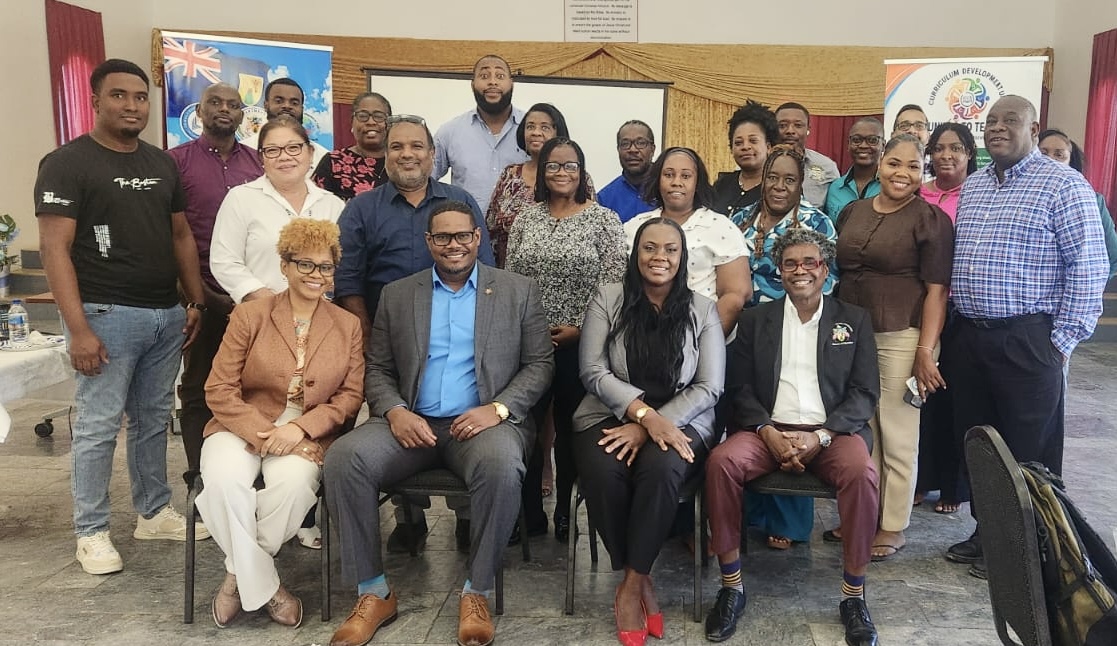
Providenciales, Turks and Caicos Islands: The Department of Education, through its Curriculum Development Unit, successfully concluded a four-day TCI National Standards Secondary School Curriculum Implementation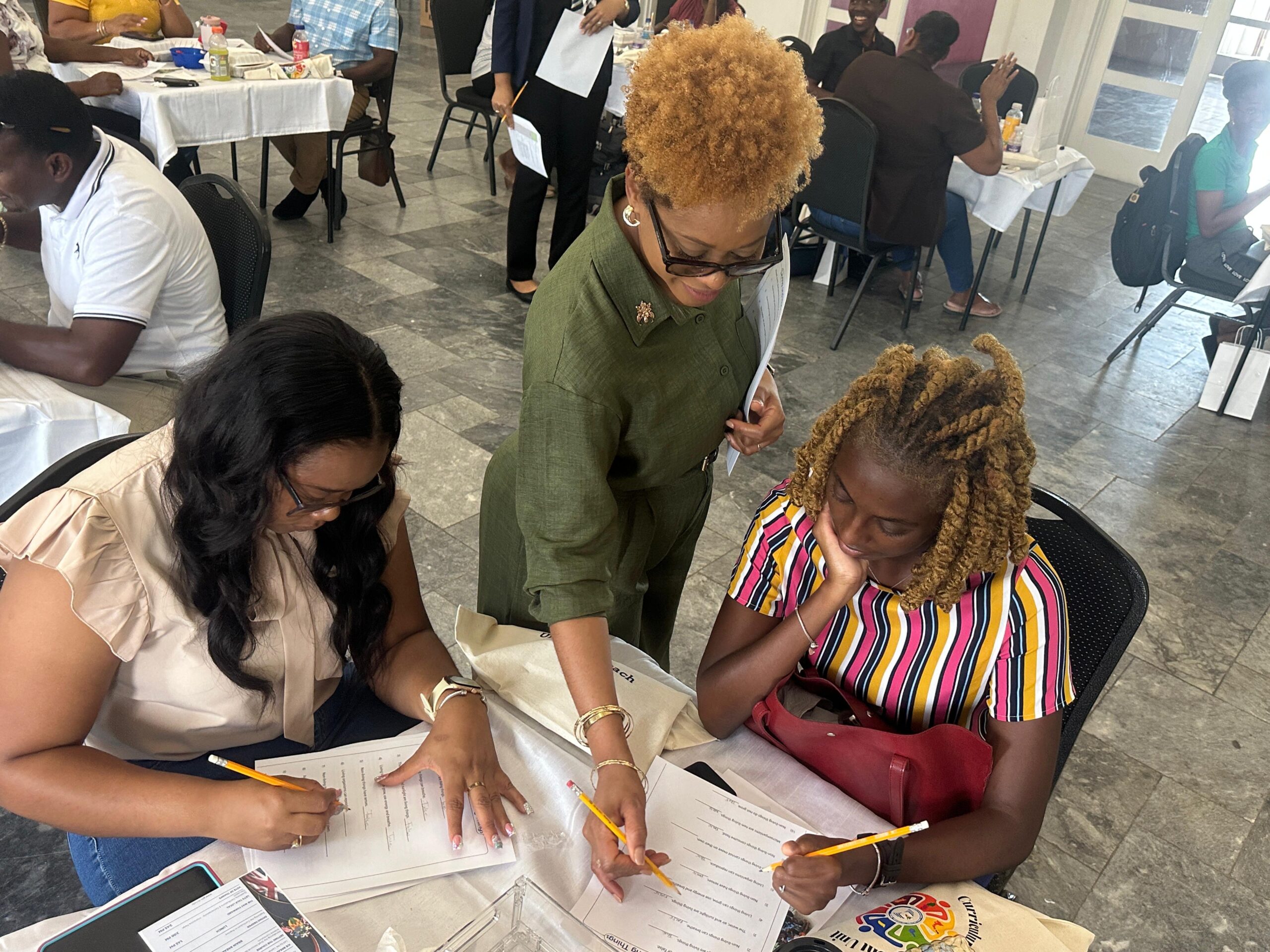 Training, bringing together secondary school teachers, curriculum officers, education officials, facilitators and key stakeholders in preparation for the piloting of the Turks and Caicos Islands’ draft national secondary curricula.
The training focused on Social Studies, Mathematics, English Language and General Science. Teachers explored the draft curricula, learning objectives, content, instructional approaches and assessment expectations, while considering how the standards can be translated into meaningful classroom practice. The curricula are grounded in research, educational data, national priorities, comparative curriculum analysis and the distinctive context of the Turks and Caicos Islands.
The Honourable Rachel Taylor, Minister of Education, Youth, Sports and Culture, commended Mrs Cleon Astwood, Head of the Curriculum Development Unit, and her team for their dedication and the significant progress made in developing the National Standards Curricula for secondary education. She also recognised the invaluable contribution of educators across the Turks and Caicos Islands, whose professional expertise, classroom experience, and feedback are essential to ensuring that the curricula are relevant, responsive, and aligned with the evolving needs of TCI learners.
“The development of our National Standards Curricula is an important investment in the future of our children and, ultimately, in the future of the Turks and Caicos Islands. Education must continue to evolve to meet the changing needs of our learners, our society, and our economy. Our teachers are at the heart of this process. Their knowledge, professional experience, and insight from the classroom are critical to ensuring that the curricula we develop are academically sound, relevant to our local context, and practical to implement. I commend our Curriculum Development Unit and our educators for the tremendous work being undertaken and for their continued commitment to strengthening the quality of education we provide to every child in the Turks and Caicos Islands.”
Educators were also addressed by Mr James Astwood, Permanent Secretary; Mr Mark Garland, Director of Education; and Ms Elisann Delancy, Deputy Director of Education, who emphasised embracing change, professional collaboration and continuous improvement.
A central focus of the training was the role teachers will play during the pilot phase. Teachers were encouraged to critically engage with the draft documents, paying attention to the clarity and appropriateness of objectives, sequencing and progression, instructional time, resources, gaps, omissions and areas requiring clarification or revision. Their classroom experiences and documented feedback will help strengthen the curricula before finalisation and national implementation.
The Social Studies session also emphasised Local Studies. A panel featuring Mrs Lisa Talbot of the Turks and Caicos National Museum, Dr Carlton Mills, Mrs Joan Astwood-Sutton and Ms Cynclair Musgrove provided historical and cultural perspectives to support accurate, culturally relevant classroom instruction.
Mrs Cleon Astwood noted: “Curriculum development cannot take place in isolation from the teachers who will ultimately bring these documents to life. As they pilot these documents, we expect them to question, test, reflect and provide meaningful feedback. Constructive professional dialogue is necessary if we are to produce strong, relevant curricula that genuinely meet the needs of our students and our education system.”
With the training concluded, participating teachers will now implement and evaluate the draft curricula in authentic classroom settings, document strengths and challenges, and submit recommendations to the Curriculum Development Unit. The Department of Education extends its appreciation to all teachers, school leaders, facilitators, historians, stakeholders and Ministry and Department officials who contributed to the successful four-day exercise.





-
 News1 week ago
Invest Turks and Caicos Officially Opened Caya Hico Collective, Grand Turk MSME Storefront
-
 Health6 days ago
Cleveland Clinic First in Ohio to Perform Robotic Nipple-Sparing Mastectomy
-
 News1 day ago
Beaches Turks & Caicos gives Enid Capron Primary a pre-term facelift
-
 News3 days ago
Beaches Turks & Caicos strengthens year-round commitment with local craft vendors and transport operators
-
 Bahamas News4 days ago
Two Months On, The Bahamas Academy of Sciences Turns Fifty Years of Research into Action