
Bahamas News
Two Months On, The Bahamas Academy of Sciences Turns Fifty Years of Research into Action

First peer-reviewed paper published, policy brief delivered to Minister Lightbourne, a seat at Climate Week, and a growing public audience for Bahamian science
NASSAU, The Bahamas, 7 October 2026 — Two months after putting fifty years of research on The Bahamas “on the record” at its first public event in July, The Bahamas Academy of Sciences (BAS) has been turning that evidence into action.
Since July, the Academy has published its first peer-reviewed paper, presented its findings to Government through a policy brief, taken Bahamian science to Climate Week in Nassau and New York, and launched a growing public conversation in which Bahamians can ask scientists questions and get answers. The Academy’s new policy brief, “Prioritising National Research Needs for The Bahamas,” is attached to this release.
“In July we said the record was open. Since then, we have been working to put it to use,” said BAS President Dr. Krista Sherman. “Fifty years of research revealed where The Bahamas is strong and where the gaps are: water, food, energy, long-term monitoring. Our job as the national academy is to share that evidence with the decision-makers and the public they serve, and to build the Bahamian research capacity to fill those gaps.”
THE RECORD, NOW PEER-REVIEWED AND PUBLIC
The Academy’s first publication, “Fifty Years of Research in The Commonwealth of The Bahamas: A Quantitative Thematic Analysis of Scholarly Output,” is now published in the international journal Gulf and Caribbean Research. Led by Dr. Amina Moss (University of Stirling) with BAS members Dr.
Krista Sherman, Dr. Williamson Gustave, Dr. Kathleen Sullivan Sealey, Dr. Charlotte Dunn, Dr. Nicola Smith, Lindy Knowles and Dr. Christy Gibson, the study analyses 12,113 scholarly records published about The Bahamas between 1975 and 2025.
It shows a rich scientific legacy, particularly in geology, fisheries, oceanography and conservation, while also highlighting persistent gaps in areas of direct national importance: groundwater resources, food systems, renewable energy, social-ecological governance and locally led, long-term monitoring. The full paper is free to read at https://doi.org/10.18785/gcr.3701.15.
FROM THE RECORD TO POLICY
Building on this research, BAS has prepared a policy brief, “Prioritising National Research Needs for The Bahamas,” which translates the findings into a set of ten strategic priorities.
The policy brief calls for greater investment in locally led, policy-aligned and climate-ready research, including:
- a national research agenda aligned with Vision 2040;
- stronger local scientific capacity, laboratories and field stations;
- rebuilt long-term monitoring of reefs, fisheries, coasts and mangroves;
- targeted research on groundwater, food systems and renewable energy;
- a national environmental and health data repository; and public health research on the risks facing small island states.
In September, Dr. Sherman presented the brief to the Hon. Zane Lightbourne, Minister of the Environment and Natural Resources, during a courtesy call. The visit is the first in a series of introductory meetings with Government ministries over the coming months. Through these meetings, the Academy will introduce its work and explore opportunities for collaboration in science, the environment, sustainability, conservation and climate resilience. The policy brief also maps research priorities to relevant national legislation and policies, from the Environmental Planning and Protection Act to the National Health Strategy 2026–2030.
BAHAMIAN SCIENCE AT CLIMATE WEEK, FROM NASSAU TO NEW YORK
BAS also brought Bahamian scientific expertise to Climate Week 2026.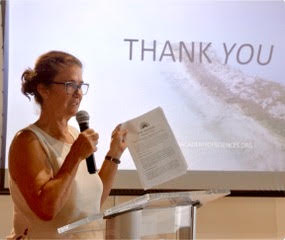
On Monday, 21 September, BAS Board member Dr. Kathleen Sullivan Sealey, Professor Emerita at the University of Miami, presented “Coasts and Climate Change” at the opening day of Climate Week in The Bahamas, hosted by the Baha Mar Resort Foundation at ECCHO, under the theme “At the Edge of the Water.” Dr. Sullivan Sealey explained why The Bahamas’ low-lying carbonate islands face growing risk from sea-level rise and storms, and how historical losses of coral reefs, seagrass, mangroves and dunes have weakened the islands’ natural defences. More importantly, she highlighted actions communities can take to reduce these risks.
During Climate Week, the Academy also released a science statement, “Climate Change and Ocean Warming Impacts on The Bahamas: What Does the Science Tell Us?”, a synthesis of the environmental, ecological, social and economic impacts facing the archipelago.
In New York, BAS Vice President Dr. Adelle Thomas, Vice-Chair of Working Group II of the Intergovernmental Panel on Climate Change (IPCC), brought the realities of vulnerable small island states to Climate Week NYC.
A GROWING PUBLIC AUDIENCE FOR BAHAMIAN SCIENCE
The Academy’s public campaign, 242 #ForTheRecord, has also been building a presence across its five platforms since launching in mid-July. Its most successful format has been the simplest: Bahamians ask a question and a BAS scientist answers it. So far, the “You Ask/Science Responds” series has tackled questions on how climate change will affect Bahamian farming (Dr. Williamson Gustave) and the science of blue holes (Dr. Krista Sherman). An upcoming episode will examine the effects of high temperatures on public health. Question-led content is reaching roughly twice the audience of the Academy’s institutional posts. During its first month, the campaign generated more than 18,500 views and over 200 shares across its platforms.
To extend the conversations to more Bahamians, beyond the traditional science-curious audiences,
BAS has also formalised collaborations with two local content creators, Kaché Knowles (“I is a Bahamian Bey”) and Stephen Hanna (“Schin Nguyen”). Their first joint pieces will appear before the campaign closes on 30 November.
WHAT COMES NEXT
For BAS, putting the record to work is only the beginning. Over the coming months, the Academy will:
- continue introductory meetings with Government ministries and agencies;
- host its Future Scientists classroom event with Bahamian students in early November;
- launch its YouTube channel with a video-podcast series on Bahamian scientists in November;
- begin work on its second peer-reviewed publication, “A Horizon Scan on Emerging Environmental Issues in The Bahamas Over the Next Decade”; and
- offer “Introduction to Statistics using Excel,” a short, practical course in early 2027 that will give early-career scientists and resource managers in The Bahamas hands-on skills in organising, analysing and summarising their own data.
“Research is most valuable when it can be used,” said Dr. Sherman. “The Bahamas has an extraordinary scientific record. Now we need to ensure that record informs the questions we ask, the decisions we make, and the science we build here at home.”
See BAS Climate Statement and BAS Policy Briefing 50 Years of Bahamian Research here: BAS Climate Statement,
BAS Policy Briefing_50 Years of Bahamian Research
PHOTO CAPTIONS:
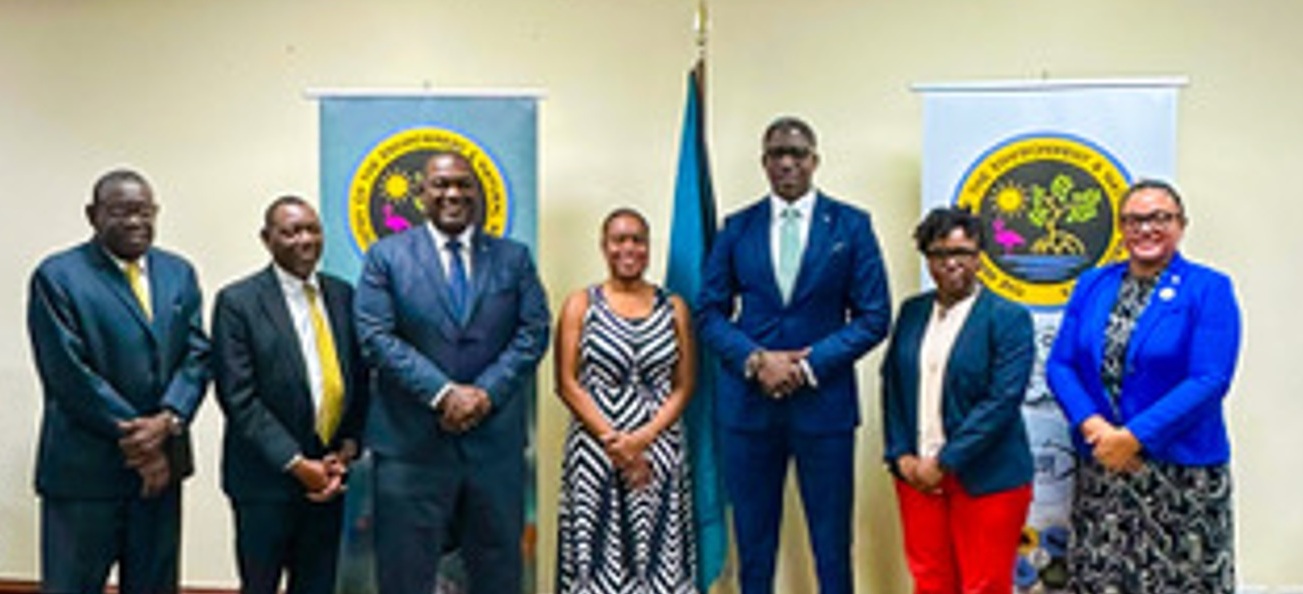
Header: BAS President Dr. Krista Sherman met the Minister of the Environment and Natural Resources and his team on 17 September 2026. L–R: Mr. David Davis, Permanent Secretary; Mr. Ricardo Deveaux, Acting Under Secretary; The Hon. S. Obie Roberts, Parliamentary Secretary; Dr. Krista Sherman, BAS President; The Hon. Zane Lightbourne, Minister; Dr. Rhianna Neely-Murphy, Director, Department of Environmental Planning and Protection; Ms. Danielle Hanek, Acting Director, Forestry Unit.
Credit: Ministry of Environment and Natural Resources.
Insert: Kathleen Sullivan Sealey, BAS Board member, presents the Academy’s science statement at Climate Week in The Bahamas, ECCHO, 21 September 2026.
Credit: Amaeleo Carey.
PRESS RELEASE: BAS




Bahamas News
Federal Investigation into Florida Turnpike Tragedy that Killed Three Children of Bahamian Mother

NTSB examining roadside assistance driver’s actions, SUV speed and seat belt use after six people perish in fiery collision
ORLANDO, FLORIDA — October 29, 2026 — Federal investigators have joined the investigation into a horrific Florida Turnpike collision that claimed six lives, including all three children of a Bahamian mother, as questions intensify over what caused the deadly crash.
The United States National Transportation Safety Board (NTSB) has confirmed that it is opening an investigation into the October 23 accident, which occurred around 9:31 p.m. near mile marker 252 in Orange County.
The agency’s involvement brings federal scrutiny to a tragedy that has devastated several families and prompted an extraordinary outpouring of sympathy and disbelief.
Among those killed were siblings Charles Milton, Jakara Milton and Dalvena Green, the three adult children of Marshall Clarke-Milton and her husband, Charles Milton Sr.
The siblings were traveling with three others to Universal Orlando’s Halloween Horror Nights, reportedly on their first trip together.
They never arrived.
FEDERAL INVESTIGATORS EXAMINE WHAT WENT WRONG
The NTSB confirmed to FOX 35 Orlando that its investigation will examine the training and performance of the roadside assistance driver, the actions of the SUV driver, including speed, and whether the occupants were wearing seat belts.
The agency investigates serious transportation accidents to identify safety failures and recommend measures that could prevent similar tragedies.
Its involvement does not establish wrongdoing by either driver.
The Florida Highway Patrol is conducting a separate investigation into the collision.
According to the preliminary police account, a Road Ranger roadside assistance truck had been parked in the highway median before its driver received instructions to assist a disabled box truck on the opposite shoulder.
As the Road Ranger moved across the northbound lanes, it collided with a 2023 Chevrolet Traverse carrying six adults.
Both vehicles left the roadway and caught fire.
All six occupants of the SUV died at the scene. The Road Ranger driver survived with minor injuries.
MOTHER CHALLENGES EARLY ACCOUNT
Witnesses reportedly told investigators that the SUV was traveling at high speed without its headlights illuminated.
However, those observations have not been established as the definitive cause of the collision.
Clarke-Milton has challenged suggestions that her children or their companions were responsible, urging investigators to examine the evidence before reaching conclusions.
She wants investigators to establish the SUV’s actual speed and determine whether its headlights were operating.
The family’s concerns underscore the importance of the continuing investigations, particularly given the movement of the roadside assistance vehicle across active highway lanes.
ALL THREE CHILDREN LOST
For Clarke-Milton, the investigation unfolds against an almost incomprehensible personal tragedy.
She lost all three of her children simultaneously.
In an emotional interview with FOX 35 Orlando, the grieving mother described the terrible feeling that overcame her when she could not reach them.
“My heart sank,” she said, recalling the moment she feared her children were involved.
The siblings were among six people whose lives ended during what should have been an enjoyable evening together.
The other victims included Timothy Williams and Shawn Palmer. A sixth person’s identity had not been publicly confirmed in the latest reports reviewed.
The family’s heartbreak has resonated across The Bahamas and beyond, with expressions of sympathy accompanying calls for answers.
SEARCH FOR ANSWERS CONTINUES
The Florida Highway Patrol has indicated that a crash report is expected within approximately ten days of the accident.
The NTSB’s investigation will examine broader transportation safety concerns, including the operation of roadside assistance vehicles and the circumstances surrounding the collision.
For the grieving families, the findings cannot reverse the tragedy.
But they may establish what happened on that stretch of Florida’s Turnpike and whether anything could have prevented six people from losing their lives.
For one Bahamian mother, the loss is especially devastating.
Three children left for an evening of entertainment. Not one came home.
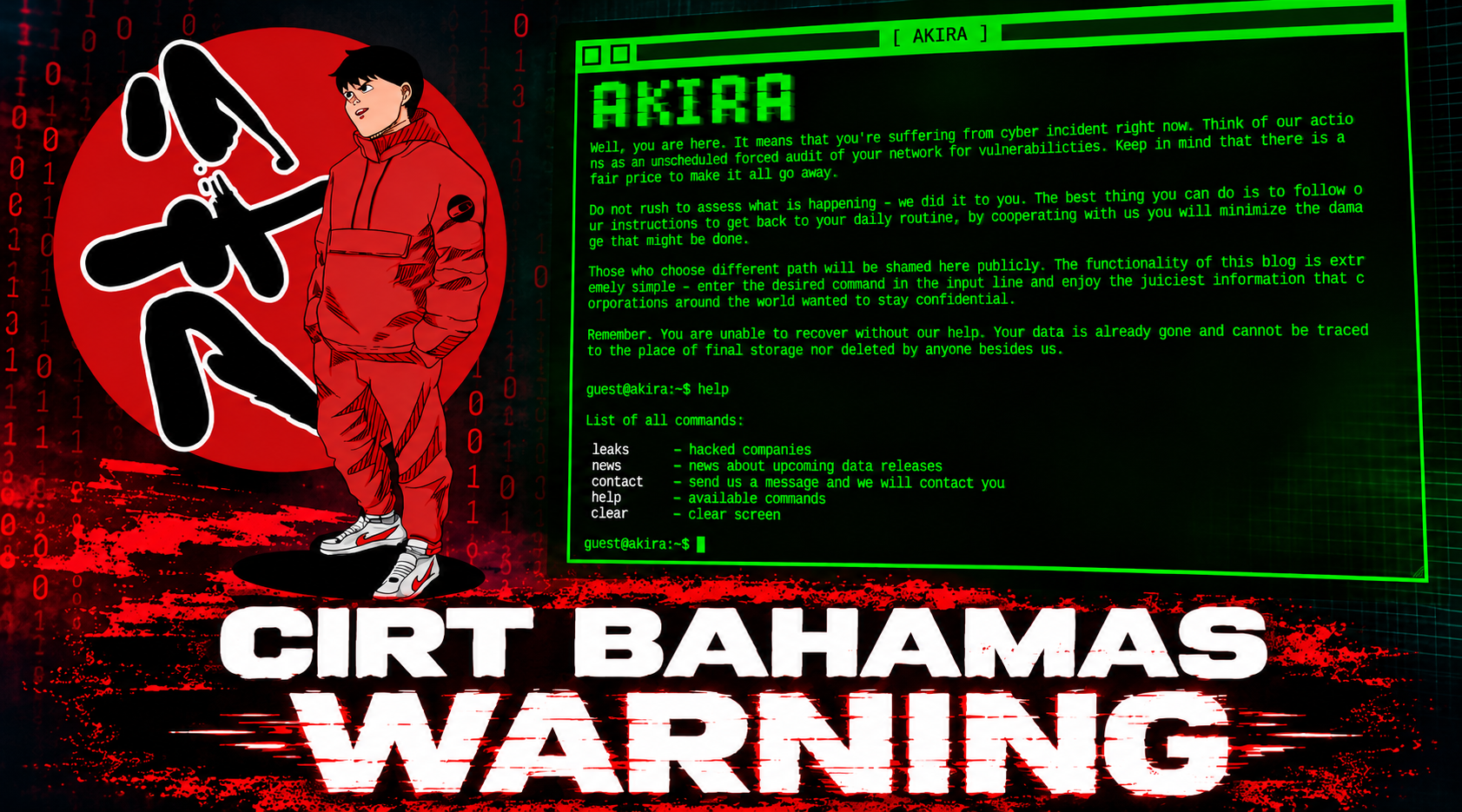
Nassau, The Bahamas, October 22, 2026 — The National Computer Incident Response Team of The Bahamas (CIRT-BS) has issued a cybersecurity advisory warning businesses, government institutions and other organisations about the growing threat posed by Akira ransomware, a cybercriminal operation capable of stealing sensitive information, disrupting networks and demanding ransom payments.
Active since March 2023, Akira operates through a Ransomware-as-a-Service model, with affiliates exploiting weaknesses in computer networks to gain unauthorised access.
Once inside, attackers can steal confidential data, disable recovery systems and encrypt files, preventing organisations from accessing critical information.
Particularly concerning is Akira’s use of double extortion, threatening to publish stolen information unless victims pay. Some attacks involve data theft without encryption.
The October 22 advisory identifies vulnerabilities involving Cisco and SonicWall firewalls, VPN services, Microsoft Remote Desktop Protocol, Veeam backup systems and outdated Windows and Linux operating systems. VMware ESXi and Nutanix AHV environments are also potential targets.
Attackers may exploit unpatched software, stolen login credentials and inadequately secured remote-access applications, including AnyDesk and RustDesk.
Warning signs include unexpected administrator accounts, unusual remote logins, unauthorised software installations, suspicious backup activity, mass file changes and ransom notes.
CIRT-BS recommends immediate security updates, multifactor authentication, restricted remote access, stronger network monitoring and secure backups maintained separately from operational systems.
Organisations should also remove unnecessary internet exposure of remote desktop services, limit administrative privileges and regularly test backup restoration.
The advisory does not identify any confirmed Akira attack against a Bahamian organisation but highlights vulnerabilities that could expose institutions to serious financial and operational disruption.
Cybersecurity incidents can be reported to CIRT-BS at soc@cirt.bs or through its official website.
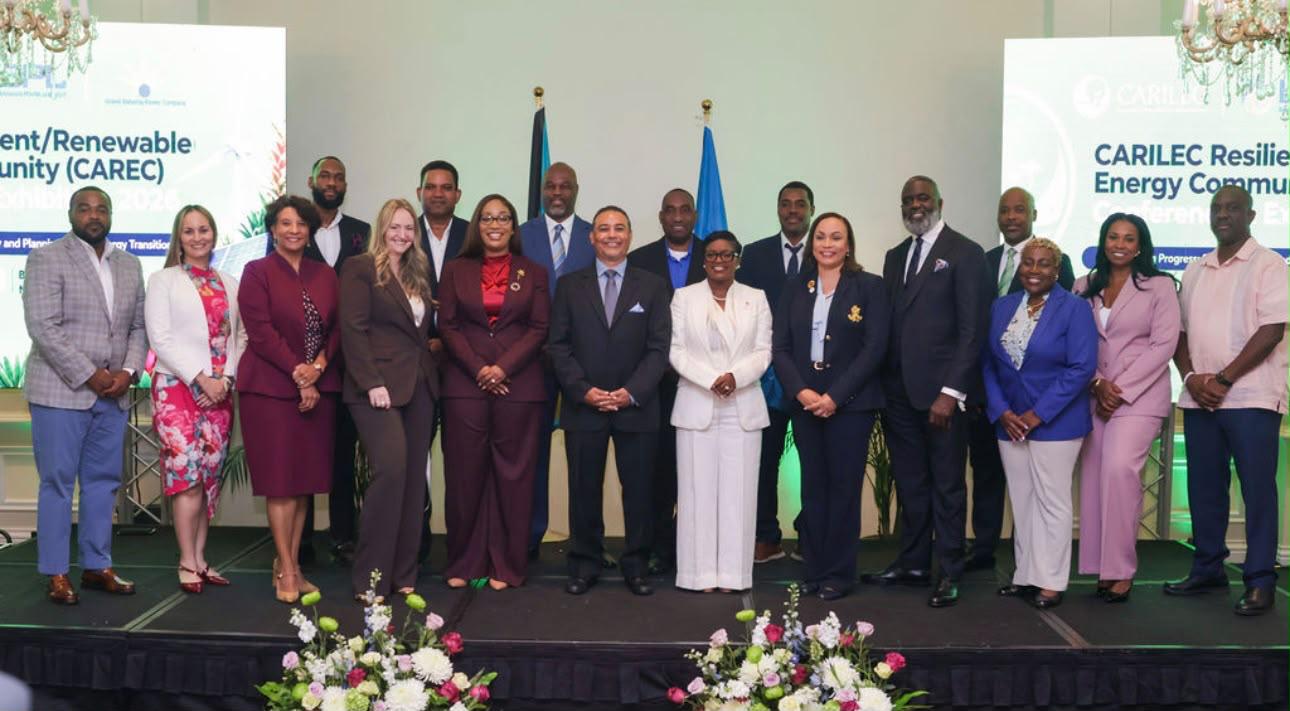
NASSAU, The Bahamas – The Bahamas’ Minister of Energy, Utilities and Aviation, The Honourable JoBeth Coleby-Davis, delivered an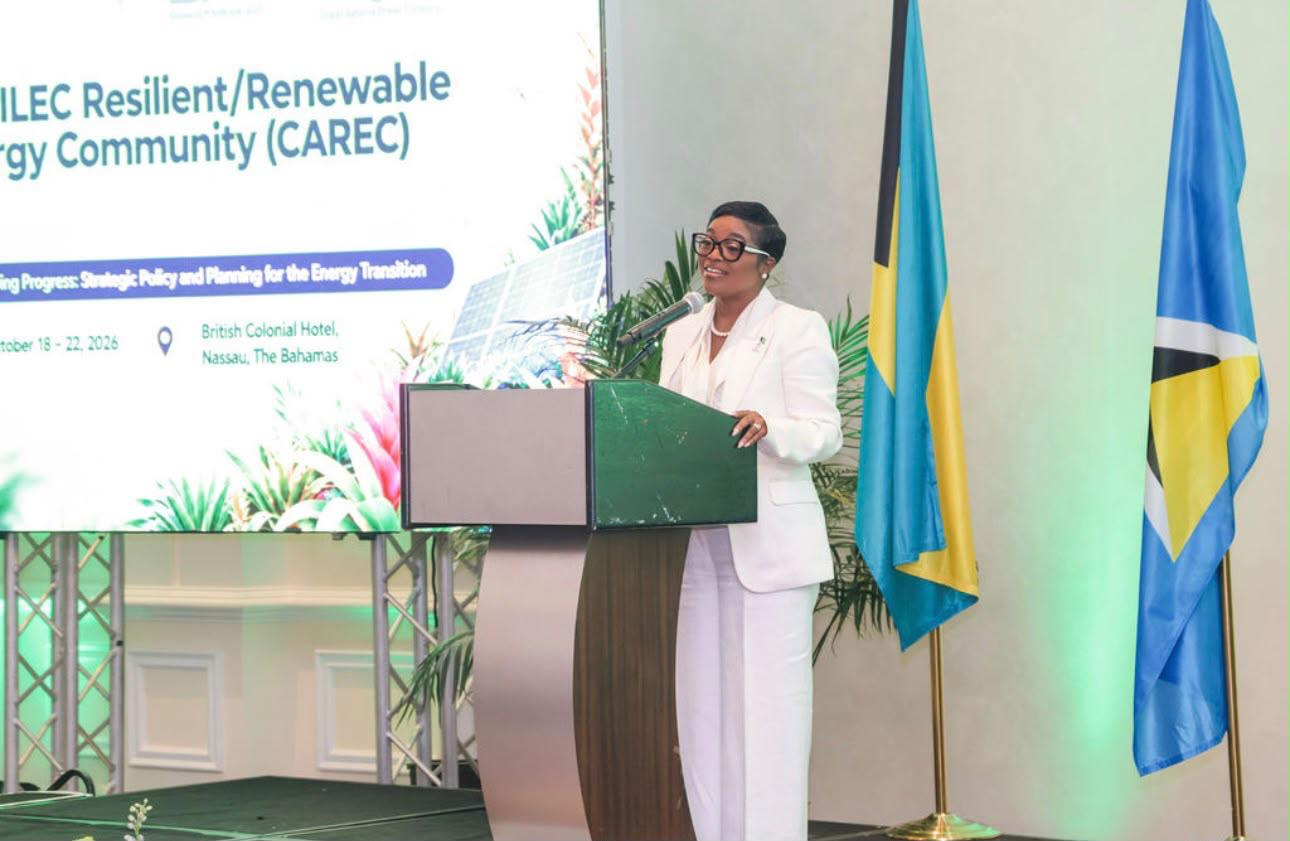 electrifying address during the opening ceremony of the 2026 CARILEC Resilient/Renewable Energy Community (CAREC) Conference and Exhibition, being held October 18–22, 2026, at the British Colonial Hotel in Nassau, The Bahamas.
Under the theme “Empowering Progress: Strategic Policy and Planning for the Energy Transition,” the event draws more than 200 industry leaders, policymakers, regulators, and energy professionals committed to advancing practical strategies for sustainable and reliable Caribbean power systems through renewable energy and emerging technologies.
During her address, titled “The New Energy Era: Transforming Policy into Progress,” Minister Coleby-Davis reminded attendees that The Bahamas’ national motto, “Forward, Upward, Onward, Together,” aptly describes what the region’s energy transition demands.
“Empowering Progress speaks directly to our national motto. Not waiting for progress, but creating the conditions that allow progress to happen. Meaningful progress, however, does not occur by accident. It requires vision, sound policy, strategic planning, strong institutions, and the determination to turn decisions into results,” said Minister Coleby-Davis.
Participants acknowledged that small island developing states share similar pressures, compounded by geographical challenges, small electricity markets, ageing infrastructure, geopolitical influences, and the growing threat of severe weather.
Tasked with ushering in a new energy era across the islands while addressing the challenges posed by The Bahamas’ unique archipelagic composition, Minister Coleby-Davis said, “Every island needs a different answer, but the same logic. As an archipelagic nation, we must provide electricity across many islands, each with its own demand and infrastructure needs. Our strategy, therefore, must be national in direction, but responsive to individual communities.”
Restating her Ministry’s three core messages—that energy is an economic and security priority, technology must be viewed as a tool to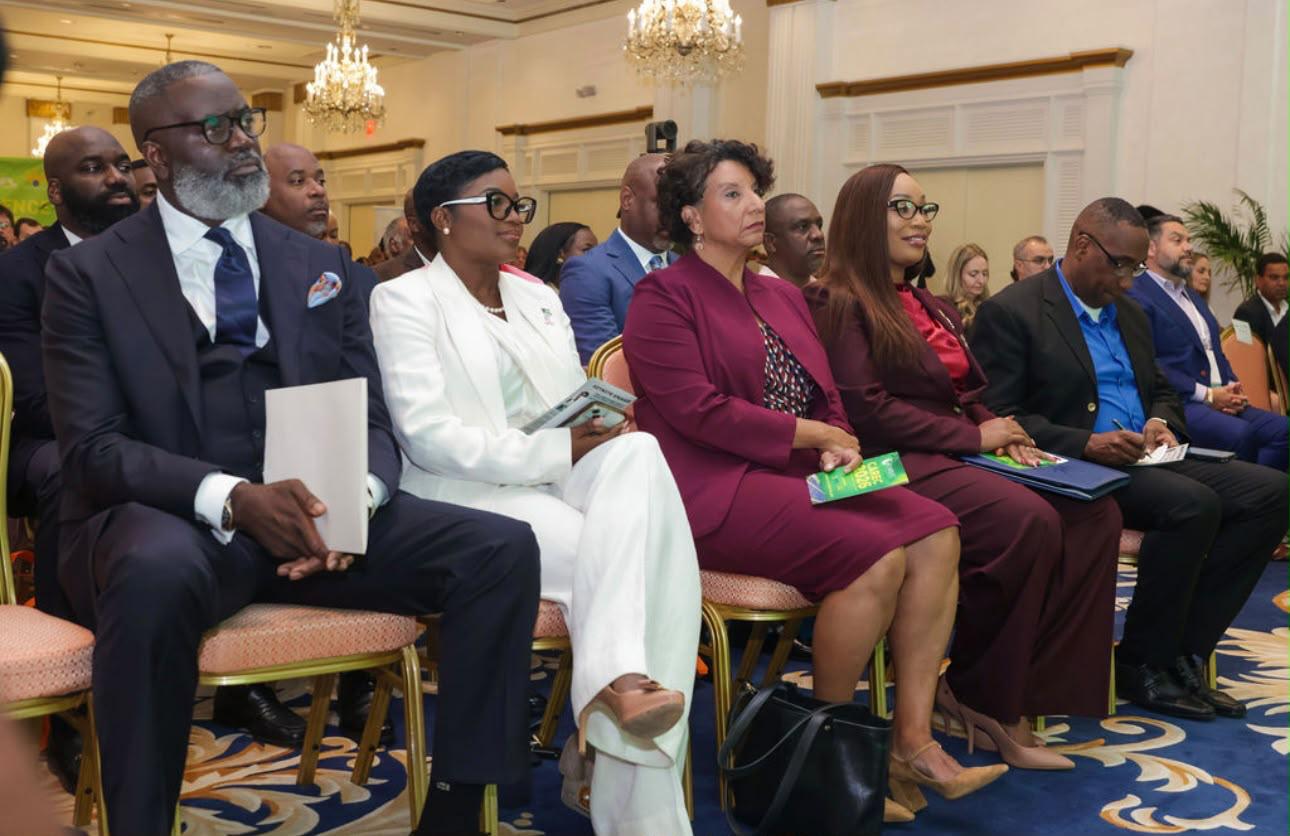 support strong institutional leadership, and natural gas should be considered a bridge, not a destination—Minister Coleby-Davis reiterated that “progress must now be reflected in functioning infrastructure, effective institutions, and better electricity services: from policy commitments to coordinated implementation, and from fragmented investment decisions to long-term planning.”
Organised by CARILEC and co-hosted by Bahamas Power and Light (BPL) and Grand Bahama Power Company (GBPC), the annual Conference and Exhibition brings together the Caribbean energy community to advance practical solutions to the region’s most pressing energy challenges and accelerate progress towards more resilient, reliable, and sustainable power systems.





-
 News1 week ago
Imagine Turks & Caicos Represented in UK Parliament; New Report Favours It
-
 Bahamas News1 week ago
Bahamas Issues Cybersecurity Alert Over Akira Ransomware Threat
-
 News1 week ago
BermudAir Launches Service to the Turks and Caicos Islands on October 26th, Expanding Air Connectivity Ahead of Winter Season
-

 Bahamas News2 days ago
Federal Investigation into Florida Turnpike Tragedy that Killed Three Children of Bahamian Mother
-
 News3 days ago
Joyful Collaboration between 2 Regional Foundations Uplifts Tourism Professionals in Turks & Caicos
-
 News6 days ago
Multi-Agency Enforcement Exercise Targets Illegal Occupation of Crown Land in Five Cays
-
 News1 week ago
DDME Celebrates International Day for Disaster Risk Reduction