
Bahamas News
Prime Minister Davis Gives Briefing on The Bahamas’ Interactions at CHOGM in Rwanda

By: Eric Rose
Bahamas Information Services
#TheBahamas, June 28, 2022 – During the press briefing upon his return from the Commonwealth Heads of Government Meeting (CHOGM) in Rwanda, Prime Minister and Minister of Finance the Hon. Philip Davis noted that, as he closely followed the news from The Bahamas the week prior, he was able to candidly exchange views with other leaders at CHOGM about what was happening in The Bahamas, compared to what was happening in their countries.
“I was able to learn some of the ways in which they are tackling the same challenges, and some of the ways in which they are creating new opportunities for their people,” Prime Minister Davis said, during the briefing in the VIP Lounge of the Lynden Pindling International Airport, on June 27, 2022.
Among those present at the press briefing included Deputy Prime Minister and Minister of Tourism, Investments and Aviation the Hon. Chester Cooper; Minister of Health and Wellness, the Hon. Dr. Michael Darville; Permanent Secretary in the Office of the Prime Minister David Davis; Minister of State in the Office of the Prime Minister, the Hon. Myles K. LaRoda; Commissioner of Police Paul Rolle; and Mrs. Ann Marie Davis, of the Office of the Spouse of the Prime Minister.
Prime Minister Davis pointed out that, like many other small island states, The Bahamas was being hit by global challenges, which are not of its own making. He said that the activities of larger nations were creating and exacerbating pressures on The Bahamas’ economy and national development.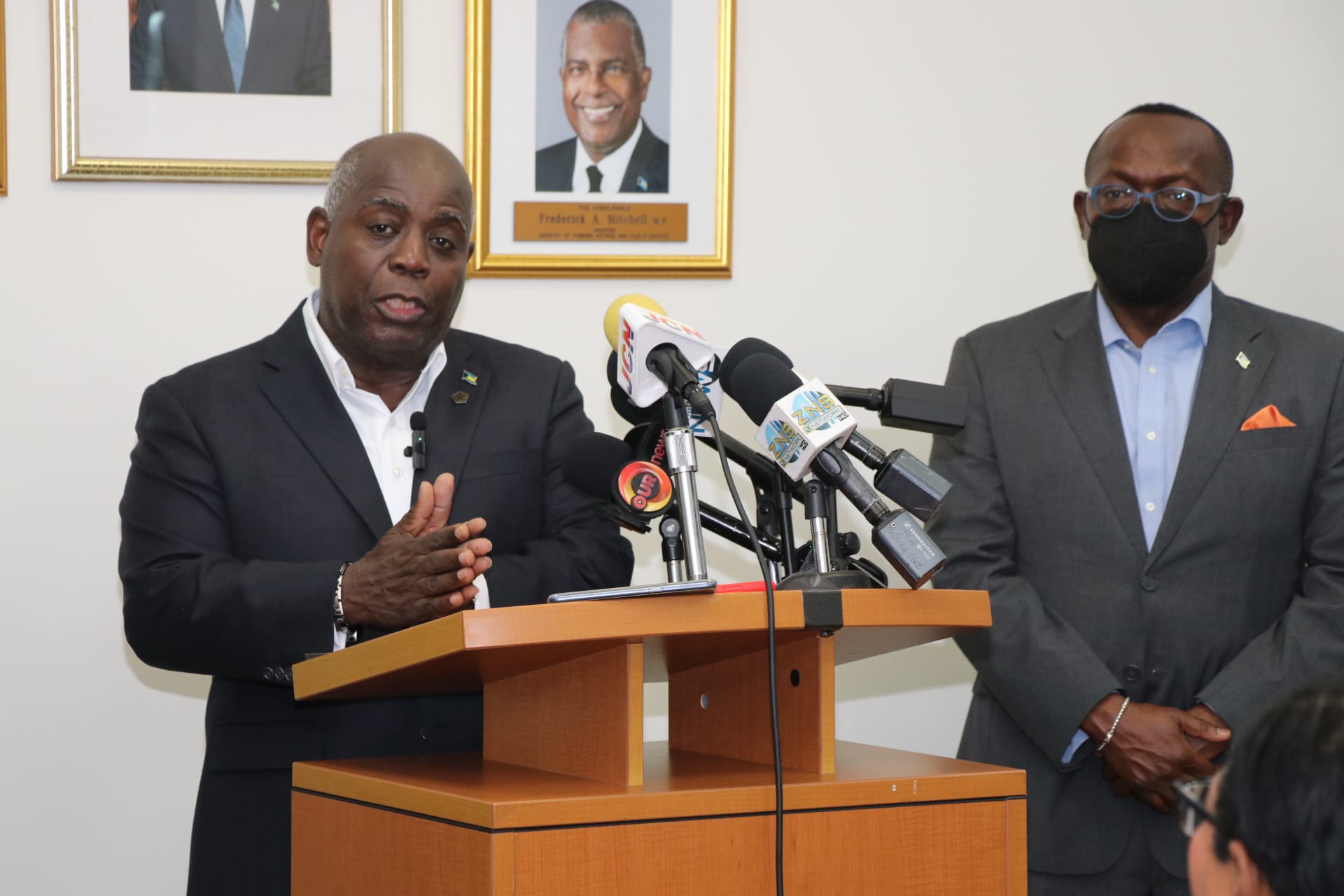
“Whether it’s the pollution from the industrialised world that ultimately result in storms like Hurricane Dorian, or the behaviour of authoritarian leaders that cause global instability, CHOGM provided an opportunity to challenge some of those leaders directly,” Prime Minister Davis said.
“In my contribution to the Business Forum, in which I was one of only a small number of leaders who was invited to make a presentation, I emphatically made the point that ‘none of us will succeed if we try to do things on our own’,” he added.
“It is a similar point I made to the Bahamian people at the start of our administration: that our country will only succeed if we all work together, in partnership,” Prime Minister Davis continued. “The meetings and discussions we had at CHOGM emphatically reinforced the point: by working together we can achieve so much more than by trying to go it alone.”
Prime Minister Davis said that he was happy to report that his Government’s international efforts were “bearing fruit”.
He said: “Our voice is being heard. Other countries want to strengthen their relationships with us. Other world leaders and business people want to invest in us. And international organisations want to help us.”
“We are at an ‘inflection point’, a moment when we can see our fortunes changing. We are now in the kinds of discussions where we can not only make our needs known, but have our requests honoured.”
Prime Minister Davis noted that the global idea of The Bahamas was shifting, and people wanted to do business with the nation.
“This kind of influence and these kinds of outcomes have become possible because of our decision to make our foreign policy work better and harder for us,” he said.
“For example, the pressure that we have been applying in terms of receiving funding and support to protect ourselves against the impact of climate change, that pressure is yielding results,” Prime Minister Davis added. “Before too long, we will be able to say more about the specific offers of funding and support that we have received.
“In terms of the big picture, there’s still a way to go before the polluting countries fulfil their stated obligations; but slowly and surely, The Bahamas is starting to benefit.”
Prime Minister Davis pointed out that, at CHOGM 2022, his Government settled formal diplomatic relations with its host, Rwanda, and also with Tuvalu and Gabon.
“We are grateful to the President of Rwanda, who conferred special courtesies upon us,” he said. “On the first day we were there, we were honoured when he invited me to escort him into the opening session, and referred to me, referred to The Bahamas, as his special guest.”
“The next day we were all deeply moved to visit a memorial in Kigali, the Rwandan capital, paying tribute to the millions who died in the genocide there in 1994, just 28 years ago,” Prime Minister Davis added. “On that single site alone were buried some 250,000 people, more than half our population. I cannot describe the feeling of walking on such hallowed ground.
“To witness some of the horrors of that time, and to now see the modern state which they have since built, prompted tears of sympathy and admiration.”
“We can take what we’ve learned and apply it to our own national development,” Prime Minister Davis continued. “And they are keen to learn from us about how to build their tourism industry.
“As so many countries do, they recognise The Bahamas as world leaders in the sector.”
Prime Minster Davis noted that his delegation also held a number of meetings with other countries and organisations.
“The discussions covered multiple issues, as diverse as the emerging threats of new healthcare challenges, such as microbial infections, and how to secure energy supplies,” he said.
“We also participated strongly in events developing strategies to improve and promote the rights and welfare of young people and of women.
Prime Minister Davis said that he was proud to see the Office of The Spouse “so prominently engaged in the Women’s Forum”.
“Issues especially affecting women in The Bahamas were well-represented, from ways to better and fairer employment, to dealing with issues of gender-based violence,” he said.
Prime Minister Davis pointed out that in his delegation with the President of Botswana, they agreed to mutually support each other by Botswana helping The Bahamas to develop its livestock industry, and The Bahamas offering them support, again in developing tourism.
“As with so many of the African leaders we met, we recognised in each others’ faces, people who not only look like us, but people who remind us of specific individuals at home,” Prime Minister Davis said. “And as the President of Botswana said, they want to reconnect and strengthen ties with our brothers and sisters who were so cruelly taken from us hundreds of years ago.
“He has accepted our invitation to attend some of the celebrations surrounding the 50th Anniversary of Independence, and in return, invited us not just to engage in the technical issues of mutual interest, but also to get to know a little of their culture.”
“If we continue on this path, and succeed in The Bahamas becoming a kind of bridge between the Caribbean and Africa, opportunities for Bahamians and The Bahamas will continue to grow manifold,” he added.
Prime Minister Davis said that, in time, he hopes that many more Bahamians could be facilitated to visit, and even work for a while, in some of the countries “with whom we share so many ancient ties”.
“We were pleased to host a dinner for a small number of Bahamians who are already living in Rwanda or neighbouring countries,” he said. “Travel certainly broadens the mind, and our country will be richer from the kind of exposure these experiences will bring to each of us.”
Prime Minister Davis said that, in wider discussions about strategies about managing the economy, dealing with crime, improving housing and access to financial services, better protecting and managing the resources in our oceans and seas, time and again, the voice of the Bahamian people was strongly heard, and people expressed their enthusiasm in working with the nation.
“We have already issued a statement on the outcome from CHOGM,” he added. “We were especially pleased with the re-election of Patricia Scotland as Secretary-General.
Prime Minister Davis noted that The Bahamas played “an extremely active role” in encouraging others to join the nation in its support. He pointed out that, behind the scenes, over many months, there were efforts by some states to go against convention, and deny automatic re-election of the first female Secretary-General, whom he termed “a strong Caribbean woman”.
“We not only thought it unfair, but have benefitted from several of her initiatives, such as ‘The Commonwealth Blue Charter’,” Prime Minister said. “Their recent Ocean Action report, ‘An Ocean of Opportunity’, contains much which can benefit The Bahamas.
“I encourage you all to read it.”
“I also encourage you to read the formal documents which the Leaders produced, including the Final Communique, the Leaders’ Statement, the Commonwealth Living Lands Charter, the declaration on Sustainable Urbanisation, and so on,” he added.
“At the moment these documents may seem far away from the struggles which so many of us are facing every day.
“But these agreements, they will help to guide and shape our future.”
Prime Minister Davis said that if Bahamians wanted to safeguard and protect their tomorrows, then those were the kinds of actions the nation needed to “start taking today”.
“We return home inspired, confident that we have worked hard, productively and well on behalf of The Bahamian people,” he said.
“And of course, it’s always good to be home.
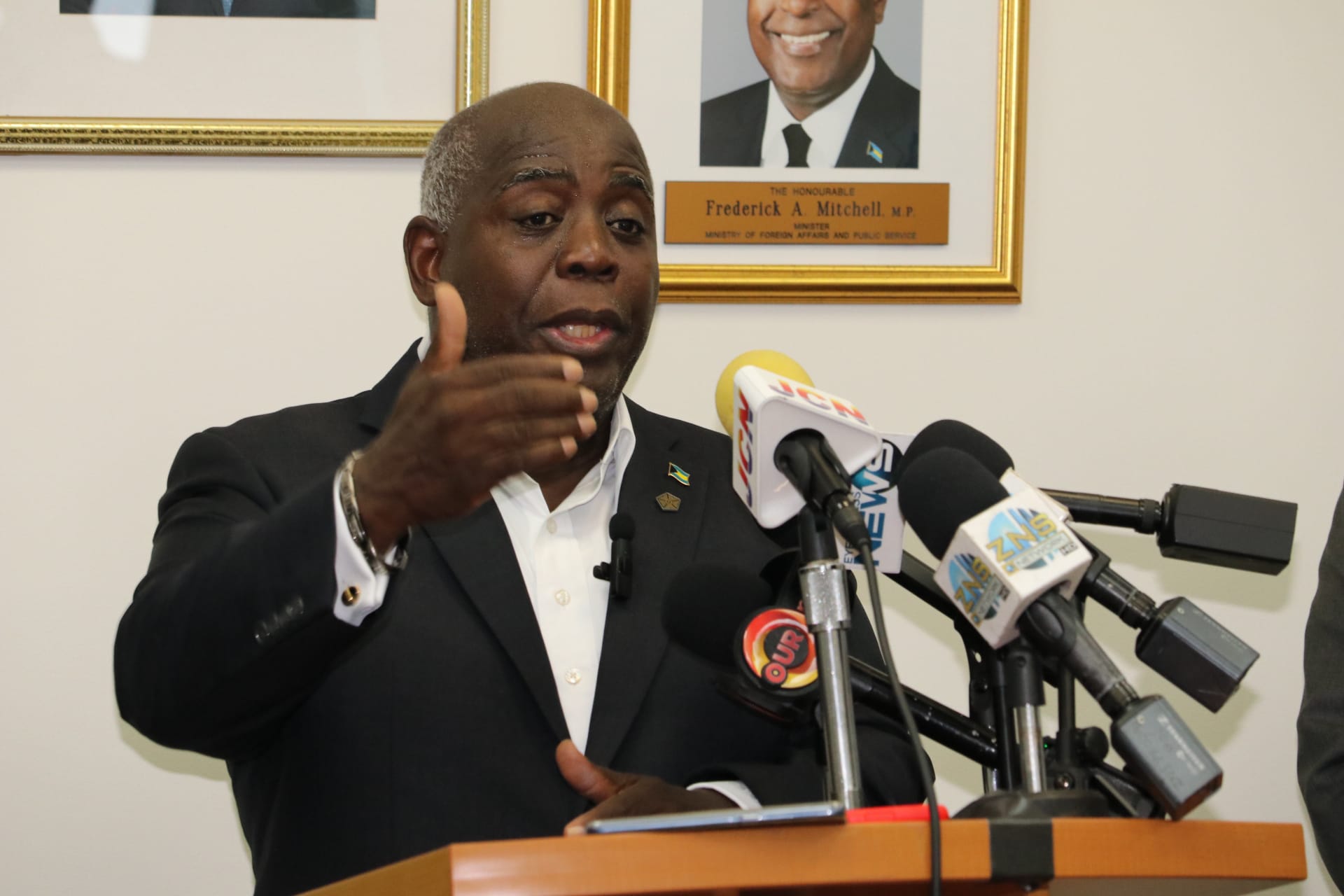
PHOTO CAPTION: Prime Minister and Minister of Finance the Hon. Philip Davis speaks, on June 27, 2022, in the VIP Lounge of the Lynden Pindling International Airport, at a press briefing upon his return from the Commonwealth Heads of Government Meeting (CHOGM), in Rwanda. (BIS Photos/Eric Rose)

Bahamas News
The Bahamas Celebrates Andrew Young at 94 – A Legend Honoured with Love at Baha Mar Gala
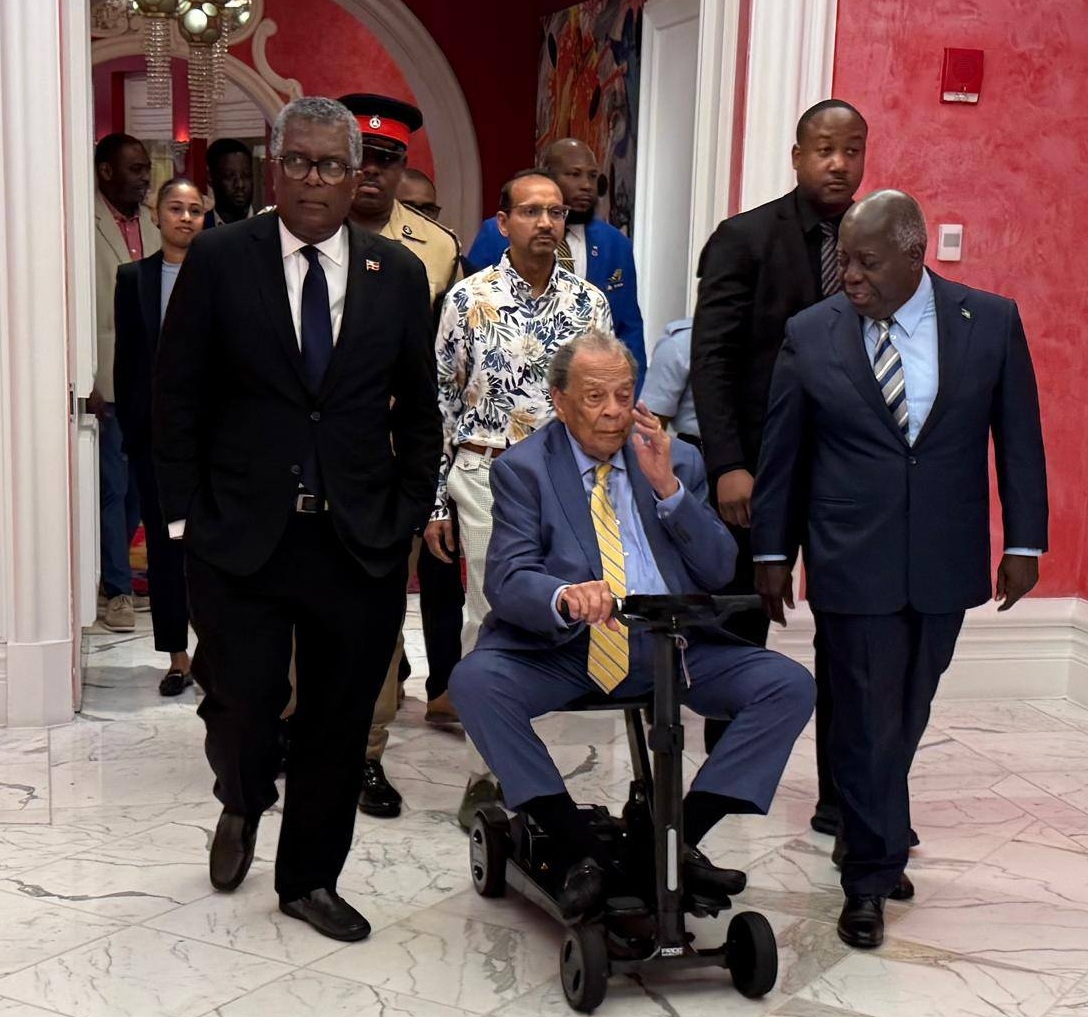
The Bahamas, March 18, 2026 – The Bahamas showed its deep affection for one of the world’s most respected civil rights leaders as Ambassador Andrew Jackson Young Jr. celebrated his 94th birthday in grand style at a gala held at the Eccho Art Gallery, Grand Hyatt Baha Mar on March 12, 2026.
The evening was filled with tributes, laughter and cultural pride, reflecting what many guests described as a genuine bond between Young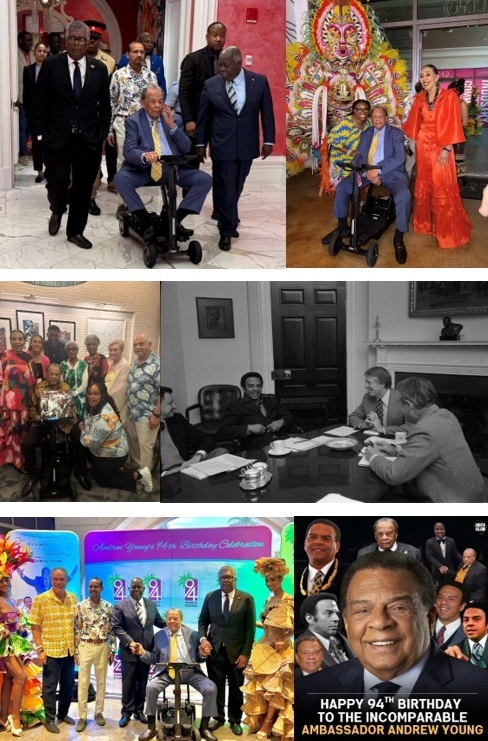 and The Bahamas — a country he has long admired and visited often. Those in attendance said the celebration felt less like a formal event and more like a heartfelt tribute to a man whose life has helped shape modern history.
Prime Minister Philip Davis, Foreign Affairs Minister Fred Mitchell, Bahamas Ambassador to the United States Wendall Jones, and U.S. Ambassador to The Bahamas Herschel Walker were among the dignitaries offering remarks, along with Andrew Young Foundation President Gaurav Kumar and other international guests.
The event was co-hosted by veteran broadcaster Karyn Greer of WSB-TV Channel 2 Action News and Bahamian journalist Dr. Deborah Bartlett, who both reflected on Young’s lifelong commitment to justice, diplomacy and public service.
Born in 1932, Andrew Young is widely regarded as one of the most influential figures of the American civil rights movement. He worked closely with Dr. Martin Luther King Jr., served as a key leader in the Southern Christian Leadership Conference, and later became a U.S. Congressman, U.S. Ambassador to the United Nations under President Jimmy Carter, and Mayor of Atlanta.
Over the decades, Young has been honoured by multiple U.S. presidents, including receiving the Presidential Medal of Freedom, the nation’s highest civilian award, from President Bill Clinton. His diplomatic work, civil rights leadership and global humanitarian efforts have earned him recognition across the world.
Guests noted that even at 94, Young remains active, engaged and passionate about international cooperation and human rights, continuing to inspire new generations.
His wife, Carolyn McClain Young, delivered the vote of thanks, expressing gratitude for what she called the warmth and love shown by the Bahamian people.
The celebration ended in true island fashion with a Junkanoo rush-out, bringing guests to their feet in a joyful close to an evening that blended history, culture and admiration.
For many in attendance, the message of the night was simple — Andrew Young loves The Bahamas, and The Bahamas loves him right back.
Developed by Deandrea Hamilton • with ChatGPT (AI) • edited by Magnetic Media.
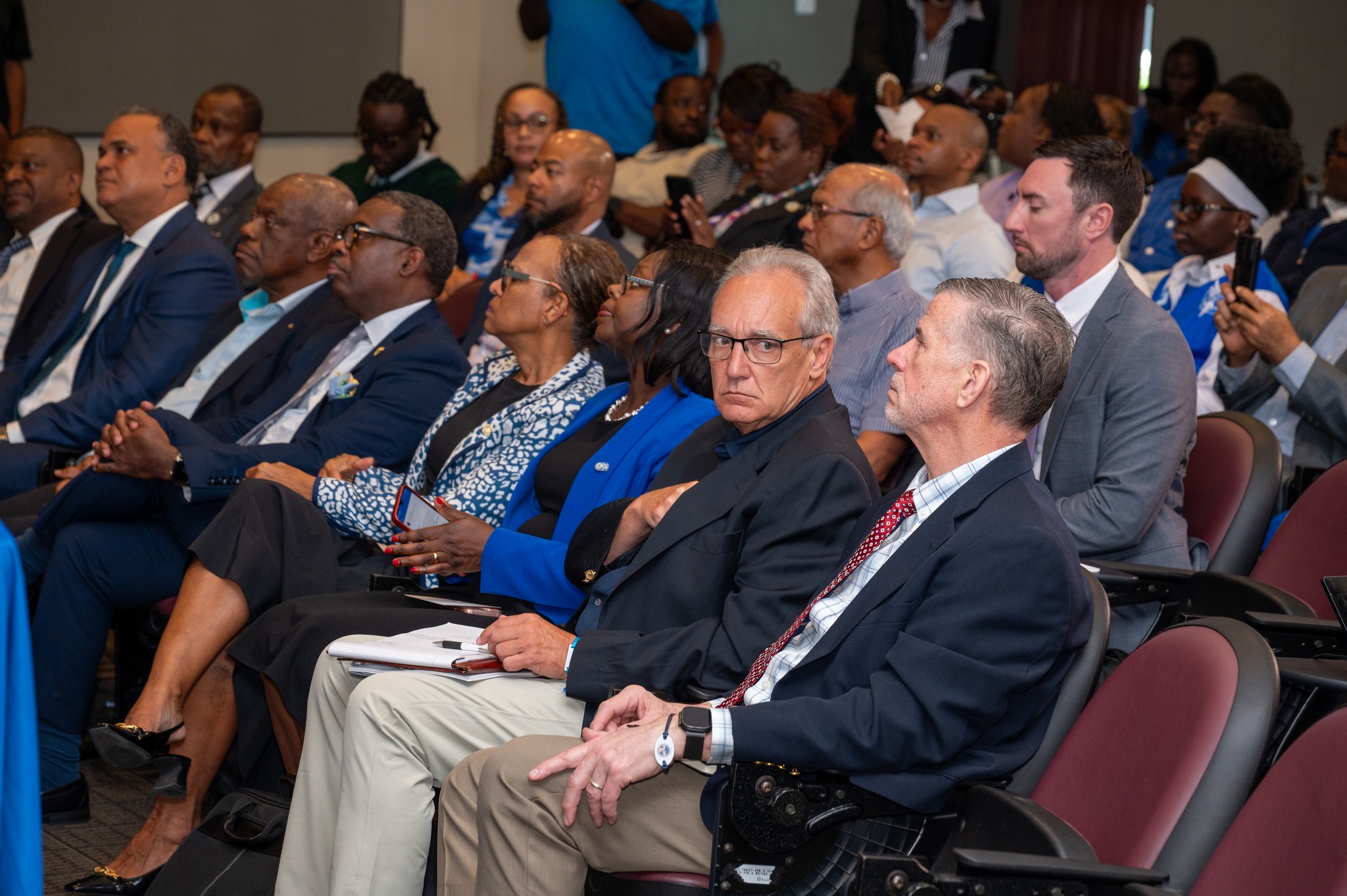
Nassau, THE BAHAMAS – From pressures on the independence of the US Federal Reserve and relations with China to the instability facing the global economic landscape and how it all impacts The Bahamas’ economy and prospects, Tuesday’s Central Banking Series hosted by University of The Bahamas (UB) in partnership with the Global Interdependence Center (GIC) peeled back the layers of the most critical factors impacting the world’s economic landscape.
At the one-day summit, top economic strategists, policymakers, academics, and economists gave frank and considered insights on the range of opportunities and challenges. In facilitating the high-level talks, UB’s Government and Public Policy Institute (GPPI) continues to provide the platform for evidence-based dialogue on public policy and reform.
“By convening world-class thinkers, policymakers, and practitioners here in Nassau, we affirm that The Bahamas is not solely a subject of global economic forces, but also a participant in the conversations that shape them,” said UB President Dr. Robert Blaine, III.
In his remarks, Minister of Economic Affairs Senator the Honourable Michael Halkitis acknowledged the ripple effects of financial shifts which put pressure on the Bahamian economy, yet he acknowledged that the economy is on the rise. He expressed confidence in the country’s readiness to adapt, citing a deep talent pool and expanding foreign and domestic investments.
“What makes this period particularly significant is the breadth of investment activity across sectors,” said Minister Halkitis, a UB alumnus. “Tourism development remains strong, but it is not the sole driver of growth. Investments are expanding into renewable energy, maritime services, digital infrastructure, agriculture, logistics and the blue and green economies.”
Economist and Former President and CEO of the Federal Reserve of Richmond, Dr. Jeffrey Lacker offered a sobering view on the independence of the US Federal Reserve, a topic that has attracted much national and international in the face of blistering pronouncements by US President Donald Trump.
Dr. Lacker said the Federal Reserve’s choice of monetary policy instrument and setting of the overnight interest rate that it controls should be “free of executive branch and congressional meddling.”
“And by meddling, what I mean is overtly expressed policy direction, opinions about where policies should go, expressed in a way that carries with it the implied threat of adverse consequences to either the individual or the institution, either in the form of legislative changes or some sort of political harassment,” he said.
“The value of insulating day-to-day, meeting-to-meeting monetary policy from pressure from elected officials with an eye on their next election is widely recognized. Neglecting that pressure, caving into that pressure is a road to short-termism, or short-term stimulus at the cost of inflation later on.”
Other pertinent conversations at the summit focused on digital initiatives for financial inclusion, monetary and fiscal policies and strategies in The Bahamas, and the impact of AI on macroeconomic conditions. There was also a special presentation on the history and value of gold. Students from Government High School were among the audience members gaining knowledge from experts.
“When we determined the theme for this year, being Challenges and Opportunities in a Dynamic Global Environment, we did not know what was going to evolve in recent times,” said GPPI Executive Director Zhivargo Laing, referring to the war that the US and Israel initiated against Iran. “So I would like to think that maybe there was a little bit of insight that was taking place during the course of our discussions. But we are here again for the third time with our partners at the GIC to entertain a deep discussion on just what are those challenges and opportunities in this very dynamic environment in which we find ourselves.”

Nassau, The Bahamas — The People’s Republic of China, in the span of two decades, has transformed itself into an economic superpower the world can scarcely function without. This was one of the perspectives that added context to crucial conversations about the US-China outlook at the Central Banking Summit held at University of The Bahamas (UB) on Tuesday.
“China has gone from being, conceptually, a non-economy. It has gone from being a $2 trillion economy in 2000; today it is a $20 trillion economy. There has never been growth like that anywhere on the planet,” said Michael Drury, chief economist, McVean Trading.
In the Caribbean region and for The Bahamas, China has become both a critical link in the global supply chain and, at times, a financial partner when the price tag of major infrastructure projects proves difficult to carry alone.
During the summit, facilitated by UB’s Government and Public Policy Institute (GPPI) in partnership with the Global Interdependence Center (GIC), the outlook on US-China relations and how the world will be impacted was a key topic of discussion.
Drury appeared on a panel with Zhivargo Laing, Executive Director of UB’s GPPI. Both gave insight into China’s rapid economic rise and its growing influence over global manufacturing and trade.
“The wish was that China would become a capitalist democracy, and it was on its way there until President Xi Jinping took control of the country in 2012. [Xi] is a Marxist. When you are a Marxist, you believe capitalism will destroy itself,” Drury explained.
Drury, who also serves as an executive and assistant program director with the GlC, noted that the statistics surrounding China’s meteoric manufacturing expansion often evoke strong reactions when presented to audiences across the US.
“The solution for the United States in freeing itself from China’s manufacturing dominance is to find somewhere it can produce goods without depending on China. There is no such place on earth. China produces 30 percent of all manufactured goods,” he said.
The discussion also examined recent efforts by the US to reclaim manufacturing capacity and reverse trends Washington believes could compromise national security.
“The spoken goal of wanting to return manufacturing to the United States essentially means restoring enough production capacity to support national defence,” Drury explained. “The auto industry built the bombers and tanks during World War II. If you don’t have an auto industry, you don’t have an industry you can flip into national defence production.”
For The Bahamas, the geopolitical dynamics has become increasingly challenging to navigate with the latest example being the proposed specialty hospital project for which the Government of The Bahamas has secured Chinese financial backing. In response, the US, through its newly appointed ambassador, has publicly encouraged The Bahamas to reconsider the arrangement.
Laing, former Minister of Economic Affairs and a UB graduate, offered this contextual view: that The Bahamas understands the importance of maintaining strong relationships with both global powers.
“If we were going to have concerns about any country being overly influential in The Bahamas, it would be the United States of America. Why? Eighty-plus percent of our tourism comes from the United States. We have one of the only U.S. pre-clearance facilities in the world. There are substantial American investments in The Bahamas. Our currency is pegged to the United States. And if we ever needed help in this country, we have no doubt who we would turn to,” Laing said.
Laing noted that the influence of the United States extends beyond economics and geopolitics into the cultural and personal realms.
“We love to go to the United States. We go for education, healthcare, and socializing. But for practical reasons, we also nurture relationships with countries around the world. The Bahamas is not a war state.”
As competition between the two global giants intensifies, Laing offered this advice for policymakers navigating the geopolitical landscape.
“It will continue to be very competitive between these two giants, and if I were advising policymakers in The Bahamas, I would say: keep hugging your friends and shaking the hands of your associates.”





-

 Bahamas News1 week ago
Economic and Financial Experts Assess US-China Relations; Offer Advice for The Bahamas
-
 Government4 days ago
$6M Digital Transformation Drive to expand E-Government, National ID and Biometric Borders
-
 Bahamas News1 week ago
Experts Analyze Economic Landscape; Opportunities and Challenges
-
 News1 week ago
Beaches Resorts Announces Grand Opening of Treasure Beach Village at Beaches Turks and Caicos
-
 Caribbean News1 week ago
Widow’s Testimony Recounts Night Haiti President Was Killed
-
 News4 days ago
NATIONAL SECURITY SHIFT: PREMIER CONFIRMS REGIMENT EXPANSION
-

 News1 week ago
North and Middle Caicos Students receive educational material from Sandals Foundation and Beaches Turks and Caicos resort
-
 Uncategorized4 days ago
WHERE ARE THE LOCAL ARTISTS?