
Health
Johnson & Johnson stop production of Covid-19 vaccine; what it may signal


By Dana Malcolm
Staff Writer
February 16, 2022 – Johnson & Johnson has officially halted production at all of its Covid-19 vaccine producing facilities; this comes after last week’s announcement that some production would be stopped for the pharmaceutical company to shift focus to a new vaccine, unrelated to Covid-19.
The move comes as vaccination drives slow in higher income countries especially those in Europe and they begin to cancel Covid-19 restrictions.
Johnson & Johnson said, “We strive to improve human health and have worked tirelessly to … build a global manufacturing network across four continents to produce our COVID-19 vaccine. Our manufacturing sites produce multiple products as we have an obligation to supply life changing medicines to patients around the world and bring forward our innovative pipeline of new medicines and vaccines. We manage our production planning accordingly and are currently supplying from our extensive global network based on the demand for our vaccine and the needs of our patients and customers.”
The pharmaceutical company announced on February 8 that the plant would cease COVID19 operations temporarily to work on another vaccine for a different virus The New York Times reports.
The move prompted immediate fears from organizations like COVAX and the African Union which depends on the Johnson & Johnson vaccine to meet their quotas and distribute the vaccines to poorer countries worldwide.
Despite the controversy surrounding the vaccine and its effects in relation to blood clotting Johnson & Johnson has been one of the most distributed brands in the world.
The company has said that they supply based on the needs of patients and customers but only 54 per cent of the world has been fully vaccinated against COVID-19 so far. Notable is the staggering unevenness of the vaccination: only 11 per cent of the population has received one dose of a vaccine in low income countries. Conversely, high income countries have successfully vaccinated over 78 per cent of their populations.
Johnson & Johnson is currently in use in 82 different countries worldwide.
This begs the question of why Johnson & Johnson is stopping production when there are so many persons in lower income countries especially still depending on its vaccine
The NY Times also reports that neither COVAX or The African Union were informed of the decision by Johnson & Johnson beforehand.
The African Union said, “This is not the time to be switching production lines of anything, when the lives of people across the developing world hang in the balance.”
COVAX expressed similar sentiments. They said that Johnson & Johnson had already let them down in 2021 and they couldn’t of the word to be let down in 2022.
In response J&J said “We are focused on ensuring our vaccine is available where people are in need, and we continue to fulfill our contractual obligations in relation to the COVAX Facility and the African Union, we currently have millions of doses of our COVID-19 vaccine in inventory.”
Johnson & Johnson struggled with vaccines expiring before they were able to be used early in production. The FDA extended the expiry dates in July last year from the initial four and a half months.
The vaccines currently have a shelf life of six months.











March 19, 2026 – March is Colorectal Cancer Awareness Month, a time dedicated to highlighting the importance of prevention and early detection of one of the most common cancers affecting both men and women, according to the CDC.
March is Colorectal Cancer Awareness Month and according to the CDC, colorectal cancer is the third most common cancer for both men and women.
The good news is there are ways to help prevent it, like improving your gut health.
“A healthy gut and a diverse microbiome help decrease inflammation, and chronic inflammation we know can lead to increased risk of cancer, specifically colorectal cancer,” explained Julia Zumpano, RD, registered dietitian at Cleveland Clinic.
Zumpano said we can help improve our gut health by improving our diet.
She recommends eating foods that are high in fiber, such as whole grains, fruits, vegetables, legumes, nuts and seeds.
She also suggests adding fermented and probiotic foods into your diet. Some ideas include yogurt, kefir, kimchi and sauerkraut.
Zumpano notes that it can be overwhelming to eat a bunch of new foods at once, which is why it’s best to make a gradual transition.
“I would first begin by reducing processed foods and incorporating more fiber rich foods. And you’ll see your gut symptoms improve. So, if you have any symptoms like constipation or diarrhea, those things should improve. Now if you’re finding that you’re having gastrointestinal symptoms that aren’t going away despite making positive health changes, that’s when you should seek medical attention,” she advised.
Besides keeping a healthy diet, Zumpano said it’s also important to make sure you’re getting enough physical activity as exercise has been shown to help reduce a person’s risk for colorectal cancer.
By focusing on small sustainable lifestyle changes such as eating a fiber-rich diet, supporting gut health and staying physically active, people can take meaningful steps toward lowering the risk of colorectal cancer and improving their overall health.
Health
Chile becomes the first country in the Americas to be verified by WHO for the elimination of leprosy
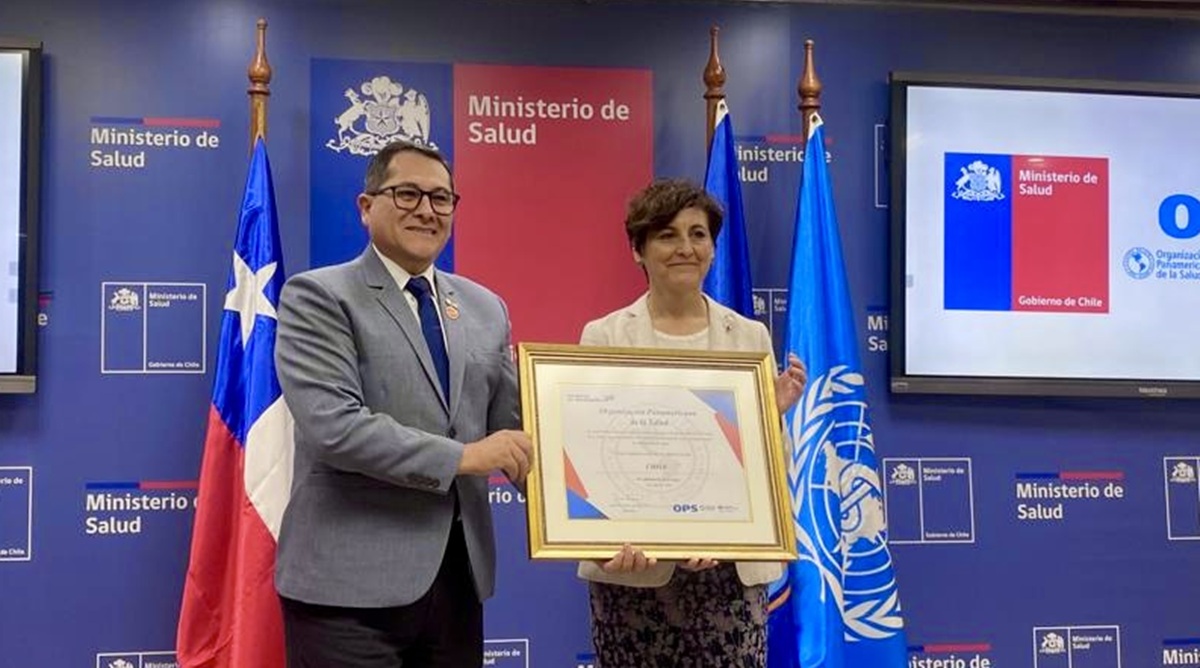
Santiago/Washington, D.C./Geneva, 4 March 2026 (PAHO/WHO) – The World Health Organization (WHO), together with the Pan American Health Organization (PAHO), congratulates Chile for becoming the first country in the Americas—and the second globally—to be officially verified as having eliminated leprosy disease.
Leprosy (Hansen disease) was historically recorded in Chile at the end of the 19th century on Rapa Nui (Easter Island). The disease was limited in mainland Chile, with sporadic introductions, contained through isolation and treatment measures in the Island, where the last secondary cases were managed by the late 1990s.
Since then, Chile has not reported any locally acquired case of leprosy for more than 30 years, with the last locally acquired case detected in 1993. However, the disease was never removed from the country’s public health agenda; it has remained a notifiable condition, monitored through mandatory reporting, integrated surveillance, and continuous clinical readiness across the health system.
“This landmark public health achievement is a powerful testament to what leadership, science, and solidarity can accomplish,” said Dr Tedros Adhanom Ghebreyesus, WHO Director-General. “Chile’s elimination of leprosy sends a clear message to the world: with sustained commitment, inclusive health services, integrated public health strategies, early detection and universal access to care, we can consign ancient diseases to history.”
The verification recognizes more than three decades of sustained public health action, robust surveillance, long-term political commitment, and a health system that has remained vigilant even in the absence of local transmission.
“Chile’s achievement demonstrates that eliminating leprosy is achievable and requires building strong systems that can detect, respond to, and provide comprehensive care for people affected by the disease, including those living with chronic disabilities,” said PAHO Director Dr. Jarbas Barbosa. “Being the first country in the Americas to be confirmed as eliminating leprosy sends a powerful message to the Region—that diseases strongly linked to groups living in vulnerable conditions can be eliminated, contributing to interrupt the vicious circle between disease and poverty.”
At the request of Chile’s Ministry of Health, PAHO and WHO convened an independent expert panel in 2025 to assess whether elimination had been achieved and could be sustained over time. The panel conducted a thorough assessment, reviewing epidemiological data, surveillance mechanisms, case management protocols, and sustainability plans. Its findings confirmed the absence of local transmission and validated Chile’s capacity to detect and respond to future cases occurring among the non-autochthonous population.
“This is very good news and a source of great pride for our country. Chile has received verification of the elimination of leprosy disease, becoming the first country in the Americas and the second globally to achieve this recognition,” said Ximena Aguilera, Chile’s Minister of Health. “This milestone reflects decades of sustained public health efforts, including prevention strategies, early diagnosis, effective treatment, continuous follow-up, and the commitment of health teams across the country. It also reaffirms our responsibility to maintain active surveillance and ensure respectful, stigma-free care for all.”
Sustained training, surveillance and holistic care in a low-incidence setting
Between 2012 and 2023, Chile reported 47 cases nationwide, none of which were locally acquired.
Chile’s integrated model ensures early detection and comprehensive care: primary care centers serve as the entry point for suspected cases, with timely referrals to specialized dermatology services for diagnosis, treatment, and follow-up. Clinicians receive training aligned with WHO’s Towards zero leprosy strategy. The system prioritizes early intervention, disability prevention, and holistic care, including physiotherapy and rehabilitation services, ensuring that anyone affected by leprosy receives continuous support for both acute and long-term health needs to promote full recovery and social inclusion.
A milestone for the Region of the Americas
Chile’s accomplishment paves the way for other nations, illustrating the impact of political will, cross-sector collaboration, and adaptive planning in low-incidence settings.
Since 1995, PAHO, in coordination with WHO, has provided multidrug therapy (MDT) free of charge to countries in the Americas, including Chile. This uninterrupted access to treatment, combined with national supply systems, has been essential to curing patients, preventing disability, and interrupting transmission.
PAHO has also supported Chile in aligning surveillance with international standards, strengthening laboratory capacity, and maintaining clinical expertise in a low-incidence context, where many health professionals may never encounter a case during their careers.
Ensuring access and coverage for everyone
Chile’s elimination of leprosy has been achieved within a broader legal and social framework that protects human rights, promotes inclusion, and prevents discrimination. National legislation guarantees equal access to health care, social protection, and disability services, ensuring that people affected by leprosy receive care without stigma or exclusion.
Chile’s mixed public–private health system, with strong regulatory oversight, further strengthens equitable access, including for migrants and other vulnerable populations.
Sustaining elimination
Aligned with WHO’s Towards zero leprosy strategy and PAHO’s Disease Elimination Initiative, Chile’s experience demonstrates that elimination is not defined solely by the absence of disease, but by a sustained health system capable of detecting, responding to, and providing holistic care whenever a case appears.
Moving into the post-elimination phase, Chile is encouraged to continue reporting to WHO, maintain sensitive surveillance, and ensure that clinical expertise is retained for future sporadic cases as well as any cases acquired outside the country. The verification panel also recommended formally designating a referral centre and leveraging WHO Academy’s online training for health workers and staff, strengthening long-term capacity and preparedness.

(Providenciales – Monday, March 2, 2026) TCI Hospital proudly announces the successful achievement of its Heart Strong TCI initiative, a comprehensive Heart Month campaign focused on raising awareness and strengthening cardiovascular disease prevention efforts across the Turks and Caicos Islands.
Heart disease remains the leading cause of death in the Turks and Caicos Islands, highlighting the critical need for sustained public education, risk-factor reduction, and early intervention. The Heart Strong TCI initiative was designed to actively engage the community through education, outreach, and physical activity.
Key Activities Included:
Educational Training Sessions
Healthcare professionals conducted structured sessions addressing hypertension, diabetes, cholesterol management, nutrition, exercise, smoking cessation, and the early warning signs of heart disease.
House Call Talk Show Feature
A dedicated Heart Month episode of the hospital’s House Call program provided expert discussion on cardiovascular risk factors and prevention strategies, empowering viewers with practical, evidence-based guidance.
Red Fridays Awareness Campaign
Throughout the month, staff wore red every Friday to increase visibility around heart disease awareness and reinforce the campaign’s message within the community.
Heart Strong 5K Walk/Run
In collaboration with the Rotary Club, TCI Hospital hosted a community-wide 5K walk/run to promote physical activity as a cornerstone of heart health. The walk/run also provided an opportunity for community screening.
Digital Health Education Campaign
To expand its reach, TCI Hospital also shared ongoing heart health education tips and prevention messages across its social media platforms, including Facebook, LinkedIn, and Instagram. These posts provided actionable guidance on diet, exercise, blood pressure control, and lifestyle modification, and encouraging community members to learn CPR.
Heart Strong TCI: A Continuous Commitment
While Heart Month has officially ended, Heart Strong TCI represents an ongoing institutional commitment to cardiovascular disease prevention and awareness. TCI Hospital will continue to prioritize:
- Community-based education initiatives
- Preventative screening and early detection programs
- Lifestyle and wellness promotion
- Strategic partnerships that advance public health outcomes
“Heart Strong TCI is not limited to a single month,” CEO, Dr. Denise Braithwaite-Tennant. “Cardiovascular disease prevention requires sustained effort. We remain committed to promoting healthy hearts across the Turks and Caicos Islands year-round.”
For more information about cardiovascular health services or upcoming screening initiatives, please contact TCI Hospital at 649-941-2800 in Providenciales, 649-941-2900 in Grand Turk or email us at info@interhealthcanada.tc
About TCI Hospital
TCI Hospital is dedicated to delivering high-quality healthcare services to the people of the Turks and Caicos Islands, with a strong emphasis on prevention, education, and community wellness.





-

 Bahamas News1 week ago
Economic and Financial Experts Assess US-China Relations; Offer Advice for The Bahamas
-

 Bahamas News1 week ago
Experts Analyze Economic Landscape; Opportunities and Challenges
-

 News1 week ago
Beaches Resorts Announces Grand Opening of Treasure Beach Village at Beaches Turks and Caicos
-

 Government4 days ago
$6M Digital Transformation Drive to expand E-Government, National ID and Biometric Borders
-

 Caribbean News1 week ago
Widow’s Testimony Recounts Night Haiti President Was Killed
-

 News4 days ago
NATIONAL SECURITY SHIFT: PREMIER CONFIRMS REGIMENT EXPANSION
-

 News1 week ago
North and Middle Caicos Students receive educational material from Sandals Foundation and Beaches Turks and Caicos resort
-

 Uncategorized4 days ago
WHERE ARE THE LOCAL ARTISTS?