
News
TCI: Juniper Hole re-claimed 13-years later at lucky $8 Million price tag

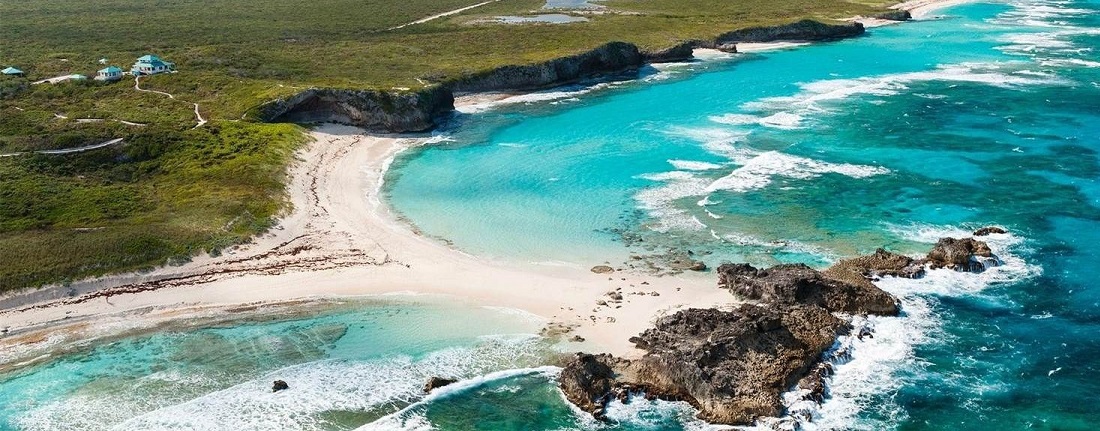
#TurksandCaicos, May 30, 2021 – Juniper Point, better known as Juniper Hole goes down in TCI history as one of the largest land sales ever, it is also likely the most infamous… though initially thought to be some 2500 acres, it is confirmed by the Attorney General Rhonda Lee Braithwaite Knowles, QC as 1000 acres.
Premier Washington Misick, in his first 100 days in office managed to negotiate a deal with British Caribbean Bank that has seen the treasured yet controversial, Juniper Point property in Middle Caicos returned to the Turks and Caicos Islands Government and it has cost the country far less than it could have.
“British Caribbean Bank had a lien on it for the money they’ve paid to Government for it, which was an investment but they actually held the lien because they loaned the money towards it. We were able to negotiate repurchasing the land back, 1,000 acres for the same amount of money, or just a little bit more in terms of the interest, than what they had paid to lend out to acquire the land. So, that thousand acres of Juniper Hole is coming back to the Government,” said Hon E. Jay Saunders, Deputy Premier, in a Thursday May 20, press conference where he fleshed out decisions made in the previous day’s Cabinet session.
The Deputy Premier, E. Jay Saunders confirmed that Juniper Hole’s reclaim was complete and when asked what it cost the government to get it back; he said around $8 million dollars.

“It’s about $8 million, slightly above eight and definitely less than $9 Million all-in. So we paid basically, the money that was loaned to be paid to the government. It’s not any money that Government is losing because that is the money paid to acquire the land from Government, paid out by British Caribbean Bank.”
According to the evidence presented in the Special Investigation and Prosecution Trial, (SIPT) the investor Juniper Hole Development Ltd paid $7.5 million for the land.
It was particularly outrageous to scrutinizing eyes because the land had been valuated at $24 million; which meant the developer got a 60 per cent discount on the property which was not only pristine but historic.
Juniper Point is picturesque, a sanctuary for birdlife and significantly it is the site of the Crossing Place Trail; the refurbished paths link North and Middle Caicos and were the point of crossing when tide was low between the two largest, greenest islands; land which was supposed to go to the Turks and Caicos National Trust but which – due to the suspect and seemingly insensitive sale – appeared to be on its way to being erased by Juniper Hole Development Ltd.
One plan published was to construct as many as 1000 villas, a marina and a golf course, a project so massive it would have spanned both North and Middle Caicos, according to the SIPT.
The sketchy transaction involved islanders who were allegedly asked to be shareholders, allegedly signed up – unwittingly – to be guarantors of a loan at British Caribbean Bank and had received payments as part of the elaborate scheme.
Concern was had over the land transfer which SIPT trial notes say went to Standfield Green Law firm instead of the usual course, to the Developer. Then Governor Richard Tauwhare was reportedly shocked by events which in his view, went constitutionally contrary to decisions taken at Executive Council.
From up to four developers who wanted to own the spot, to Development Agreements which were said to have been forced on the AGs Chambers, to advice from TC Invest shunned, to incorrect billing which led to the low payment of $7 and a half million dollars, the case continues to bring into disrepute, allegedly, the PNP Government of that day but the PNP Government of this day, has brought welcomed resolve, 13 years later and while the cost to do so could have been easily in the tens of millions of dollars, it was not.
With $8 million, which is roughly what the Government got paid for the property in February of 2008, Juniper Point better known as Juniper Hole is back where it belongs, with the people of the TCI.

Bahamas News
Diamond Stubbs, 17 • Betrica Brown, 19 • Stania Webb, 19 • Fourth victim yet to be identified

Deandrea Hamilton | Editor
Six road deaths in two days leave a nation searching for answers
NASSAU, The Bahamas – A nation that only days ago celebrated graduations, scholarships and bright futures is now united in grief as six lives were lost on Bahamian roads in just two days, including four young women whose deaths have shaken the country to its core.
The names Diamond Stubbs, 17; Betrica Brown, 19; and Stania Webb, 19 have become the heartbreaking symbol of one of the country’s deadliest road tragedies in recent memory. A fourth young woman, believed to be 18 years old, had not been publicly identified by authorities up to publication time, as families continued to mourn and await official confirmation.
The four were among eight occupants travelling in a gray Mazda when it crashed into a tree on Shirley Street shortly after 1 a.m. Sunday. Police said the 19-year-old driver reportedly struck a pothole, looked back toward his passengers and lost control before the vehicle slammed into the tree. Three young women died at the scene, while a fourth later succumbed to her injuries in hospital. Four others, including the driver, remain hospitalized as investigations continue.
The tragedy’s impact reached the House of Assembly on Monday, where Members observed a moment of silence – led by Prime Minister Philip Davis – in honour of the young women whose lives were cut tragically short.
What has resonated most across the country is not simply how they died, but who they were.
Diamond Stubbs had just graduated from Old Bight High School in Cat Island as valedictorian and head girl. She was preparing to attend Langston University in Oklahoma on scholarship and was remembered by her father as an exceptional student who earned virtually every academic award presented at graduation while inspiring other young people to pursue their dreams.
Betrica Brown, who called both Cat Island and Abaco her homes, had recently travelled to Nassau to secure her student visa. Youth and Sports Minister Mario Bowleg said she was preparing to begin college on a volleyball scholarship.
Stania Webb had already distinguished herself at Langston University, where she earned both President’s List and Honour Roll recognition after graduating from Old Bight High School at just 16 years old. Family members remembered her as a quiet, ambitious young woman deeply committed to her Christian faith and education.
Speaking in Parliament, Prime Minister Philip Davis described the loss as heartbreaking, extending condolences to the families, classmates and loved ones whose lives have been forever changed. He urged Bahamians to keep those still hospitalized and the grieving families in their prayers. Similar expressions of sympathy came from across the political divide, churches, schools and communities throughout the country.
Some residents were also chided for sharing gruesome and graphic photos and video in the hours following the shocking car crash. Relatives said it made a difficult, heartbreaking time more unbearable.
Condolences poured in from government and Christian ministers; The Bahamas Union of Teachers; The Bahamas Christian council and other leaders from across the islands.
The national tragedy extended beyond New Providence. Also on Sunday, 26-year-old Nica Julien lost her life in a separate traffic collision in Grand Bahama. Then, on Monday, a road traffic accident claimed the life of a 30-year-old man on the highway of Abaco.
Together, the six deaths have transformed what should have been a season of celebration with graduations and independence festivities in play, into one of national mourning, leaving families, communities and an entire country searching for answers—and praying that no more names are added to the list.

Providenciales, Turks and Caicos Islands – Friday, 26 June 2026: The Department of Disaster Management and Emergencies (DDME) successfully hosted its Hurricane Preparedness Expo this past Friday, 19 June 2026, at the Dillon Hall in Grand Turk. Residents and visitors attending the event, took full advantage of the opportunity to learn more about hurricane preparedness while participating in exciting activities and receiving complimentary tokens.
The expo brought together several key partners and stakeholders, including the TCI Red Cross, Do it Center (Building Materials), Pelican Energy TCI, Interhealth Canada, TCI Regiment, Health Promotion and Advocacy Unit, Aged Care and Rehabilitation TCI, the Environmental Health Department, Survey and Mapping Department and the Public Works Department. These stakeholders and vendors contributed to the event’s success by sharing valuable information and products aimed at helping individuals and families prepare for the hurricane season.
Both the Director and Deputy Director for DDME addressed attendees and emphasised the importance of remaining vigilant throughout the Atlantic Hurricane Season. DDME Director, Lt. Col (Ret’d) Jason Hills stated, “Preparedness is not a one-time activity but an ongoing responsibility. We encourage everyone to take the necessary steps by staying informed and ensuring their emergency plans and supplies are up to date,” DDME Deputy Director Ms. Kevaun Lucas added that, “It only takes one storm to change lives and communities forever. That is why preparedness cannot wait until a hurricane is on our doorstep, take the time now so you will not be caught off guard later.”
DDME would like to take this opportunity to express gratitude to all vendors and persons from the Grand Turk community that attended this event. We also express our sincere thanks to The Hon. Otis Morris and Hon. Sharon Simons for their presence and participation.
The Hurricane Preparedness Expo forms part of the DDME’s ongoing public awareness and community outreach initiatives during the Atlantic Hurricane Season. These events aim to strengthen preparedness and resilience across the country. The public is warmly encouraged to attend DDME initiatives and take an active role in hurricane preparedness.
UPCOMING CHURCH SERVICE
Sunday, 28 June 2026 • St. Mary’s Pro-Cathedral, Grand Turk | 9:00 AM (New time)
OTHER UPCOMING EVENT
Saturday, 4 July 2026 • Community Hurricane Scavenger Hunt, Meeting point: Oseta Jolly Primary School, Providenciales | 2:00 pm – 5:00 pm

Providenciales, Turks and Caicos Islands (June 26th, 2026) — The Turks and Caicos Islands is celebrating another major airlift milestone with the announcement that United Airlines will launch new nonstop service between Denver International Airport (DEN) and Howard Hamilton International Airport in Providenciales (PLS) beginning December 2026.*
The new weekly service marks a significant expansion of United Airlines’ established presence in the Turks and Caicos Islands and is the result of extensive negotiations with the Turks and Caicos Islands Airports Authority (TCIAA).
This announcement comes on the heels of the Turks and Caicos Islands’ successful roadshow in Denver, where the delegation, led by the Premier, Hon. Charles Washington Misick, was warmly welcomed by Governor Jared Polis, who proclaimed May 20th, 2026, as Turks and Caicos Islands Friendship Day in Colorado in recognition of the growing ties between the destination and the state.
Premier, Hon. Charles Washington Misick, said this new route will open up new opportunities for the Turks and Caicos Islands.
“This new direct service between Denver and Providenciales is tremendously exciting for the Turks and Caicos Islands. Denver is one of America’s great aviation gateways, opening convenient access to Colorado, California, and the entire western United States. Having already established strong links to the eastern and midwestern markets, we are delighted to now extend our reach to the west. We are confident this route will unlock significant opportunities for tourism, business, and investment and further strengthen our ties with the United States,” he said.
Minister of Tourism, Hon. Zhavargo Jolly, welcomed the announcement as a strong endorsement of the destination’s growing appeal and the Ministry’s continued efforts to diversify source markets and expand airlift.
“This new service between Denver and Providenciales represents another important step in expanding the global reach of the Turks and Caicos Islands. For many years, our strongest air connections have been concentrated along the East Coast and in the Midwest of the United States. Today, we continue our strategic expansion westward, creating direct access to one of North America’s most dynamic and affluent regions. This route strengthens our ability to attract visitors whose interests align naturally with the Turks and Caicos Islands’ tourism product—from luxury travel and wellness experiences to diving, outdoor adventure, and second-home ownership,” he said.
Minister of Physical Planning and Infrastructure Development, Hon. Arlington Musgrove, described the announcement as another important step in strengthening the destination’s connectivity and competitiveness.
“This new service is the result of continued collaboration between the Government, the Turks and Caicos Islands Airports Authority, Experience Turks and Caicos and our airline partners. Expanding air access is critical to sustaining tourism growth, and we are pleased that United Airlines continues to recognise the immense opportunity that exists here in the Turks and Caicos Islands,” the Minister said. “As part of our broader strategic vision, we have been deliberately cultivating and developing routes from the western portion of North America — a market of enormous potential — with the goal of securing greater overall air capacity into our destination.”
“We’re excited to give our customers yet another non-stop option between the Caribbean and Denver,” said Tom Kozlowski, Senior Manager of Latin, Caribbean, & Hawaii Network Planning, United Airlines. “United is the largest carrier in Denver, and this new addition will be the westernmost service from Turks and Caicos to the US, opening new tourism opportunities. We know our customers in Denver and surrounds will enjoy easier access to beautiful beaches, unique island charm, and vibrant culture in one of the Caribbean’s most sought-after destinations.”
The addition of the Denver route further strengthens the Turks and Caicos Islands’ airlift portfolio and builds on recent successes in expanding access from key and emerging markets. Experience Turks and Caicos and the Turks and Caicos Islands Airports Authority will continue working closely with airline partners to identify opportunities for strategic growth and enhanced connectivity.
The new route will be operated by a Boeing 737 MAX 9 aircraft featuring 179 seats, including 20 in business class and 159 in economy.
The tentative flight schedule is below:
| Route | Start Date/Frequency | Departure Time | Arrival Time | Aircraft |
| DEN – PLS | Dec. 19, Weekly on Saturdays | 10:00 | 17:00 | Boeing 737 MAX 9 |
| PLS – DEN | Dec. 19, Weekly on Saturdays | 13:35 | 17:21 | Boeing 737 MAX 9 |
Schedule subject to change.
Customers can book flights at united.com and on the United app.
*Subject to Government approval





-
 Bahamas News4 days ago
He’s Not Dusting Off Yesterday’s Plan… He’s Trying to Rebuild Government
-

 News3 days ago
Turks and Caicos Islands Expands US Reach with New United Airlines Denver Route
-
 Crime6 days ago
Human Trafficking Probe Revealed as Police Warn of Growing Teen Crime Concern
-

 News3 days ago
DDME Hurricane Preparedness Expo, Huge success in The Nation’s Capital
-

 Bahamas News4 days ago
Twist of Timing Shifts Focus in Jonathan Gardiner Case
-

 Crime7 days ago
Rape Only Major Crime Category to Increase in Turks and Caicos
-

 Bahamas News1 week ago
Kemp Road Dog Attack Turns Fatal; Questions Grow Over Long-Standing Complaints
-

 Bahamas News13 hours ago
Diamond Stubbs, 17 • Betrica Brown, 19 • Stania Webb, 19 • Fourth victim yet to be identified