
Caribbean News
APPOINTMENT OF GOVERNOR’s APPOINTED MEMBERS – ADDRESS 25th FEBRUARY 2021

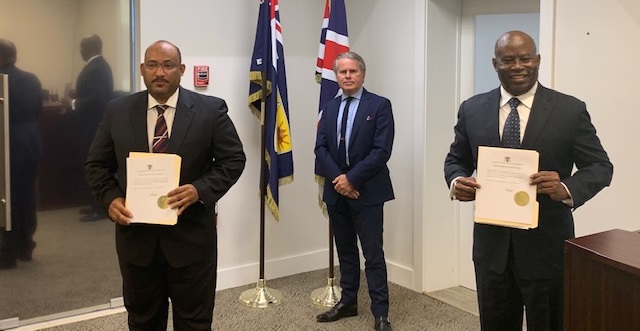
#TurksandCaicos, February 26, 2021 – There has already been speculation regarding my choice of appointed members. Tracking social media I know passions run high on this and some good decent people have reached out to me expressing worries and concerns.
The last 48 hours have, as a result, only reinforced in my mind a truth that whatever ones position is on who a ‘Turks and Caicos Islander’ is – and who therefore should have a voice in the Legislature – there is a need for a national conversation on this issue. It stars to go the heart of the Islands present and future identity and it would seem to me that for so long as there is confusion about this then a properly unified nation, at ease with itself, is rather difficult to achieve.
That belief is reinforced because in every conversation I have, I do not know of a senior politician or informed private citizen, who has given this thought, who does not recognise that the question around unity or disunity, inclusion or exclusion, is a pressing issue here in TCI.
People might not agree on how it should be settled, but they do believe it does need to start to be settled. It is though very hard for an elected politician to talk in these terms publicly because of the strength of feeling it generates from those who elect them. So I hope I can play some part in catalysing and sustaining that debate over the course of this Parliament through those I appoint.
Whatever the solution is, that comes out of that conversation, it will need to be designed and managed by the Turks and Caicos Islanders– whereby – TCI can build an inclusive society particularly for those who were born here, who have yet to properly integrate, but who clearly are part of these Islands future.
I stress from the outset I offer no preferred solution, or indeed any solution. I am quite clear the issue is one for Turks and Caicos Islanders alone to resolve but what I do hope to do is generate a conversation that moves beyond short bursts of anger or frustration on social media – or quiet resentment in many communities – into a set of reflections and interventions on the floor of the House of Assembly which is where mature serious debate, on matters of national importance, should occur.
The Constitution:
I have said in the past how important the Constitution is and that whatever I do I am bounded by the law. With regard to guiding me, as to who I should appoint to the House of Assembly, Section 48 (which brings in Section 46(c)) compels me to appoint only Turks and Caicos Islanders. I cannot appoint a foreigner. If the persons I am about to appoint are considered by you to be ‘foreigners’ then you are at odds with the foundational legal document that all others on the Islands are built from. That alone is worth a proper conversation.
Linked to that it is worth saying that there is nothing, anywhere, in the Constitution that differentiates between different types of Turks and Caicos Islanders. In law a Turks and Caicos Islander is a Turks and Caicos Islander. To me that seems to be a fundamental foundation of any democratic society going back as far as ancient Greece. So within the Constitution, and under the law, every Turks and Caicos Islander has equal status. Some may not like that, but that is the legal position.
The second section of the Constitution that guides me on my selection is Section 47. That directs that my selection should be: ‘so far as possible from among persons representing shades of opinion which would not otherwise be represented in the House
Should the Governor’s Members Be Part of the Opposition:
This takes me to my first point. A number of people have suggested – from both sides of the political divide (although none of them past or present elected politicians because they have a good understanding of this point) that there is an expectation on me to appoint members who can provide an active opposition to the Government and they justify this because the Opposition benches have been depleted down to two.
I can see the ‘in the moment’ argument for this, but I see nothing in the Constitution that suggests, in any sense, that the Governor’s appointees should provide an ‘opposition’ to the ‘will as expressed by the people’. This seems to me a dangerous assertion. It is the people who have decided the relative ratios of the two opposing Benches and I certainly do not want to set a precedent that the Governor today, or in the future, seeks to make appointments to oppose the Government.
Once appointed by me the two Members of the House will take no direction from me – they will vote with their conscience as Turks and Caicos Islanders – but in appointing them I make an assumption that if the Government are seeking to pass legislation that was in their manifesto, which the people voted for, there should be some presumption of support unless the legislation is poorly considered or badly drafted.
What I do expect the members who I appoint to do is to ‘constructively challenge’, to scrutinise legislation line-by-line, and spending, and have the skill to do that. I also expect them to be able to bring real diversity of view – to help the House think through first and second order consequences that they may not have considered. I do not expect the Governor’s appointed members to be deliberately contrary, or grand-stand, but instead to be sober, wise and considered.
Respecting all Turks and Caicos Islanders.
Now to my second point. It would, I’m told via some on social media, be hugely disrespectful for me to not appoint ‘indigenous Turks and Caicos Islanders’. Of course one of the past appointed members – who has retired – was just such an appointment, non-indigenous, and I think most agree, he added great value to the work of the House.
But sticking with the broader point, for those who know me, you will I hope find it hard to find an example of where I have shown disrespect to anyone – in person or in social media – including my harshest critic – let alone an entire group of people, a group of people I have come not just to respect, but to genuinely admire. And in terms of appointing Turks and Caicos Islanders I quickly appointed a Deputy Commissioner, appointed for the first time a Judge (albeit temporarily because no long-term vacancy existed) and appointed the first Turks and Caicos Islands Resident Magistrate. The latter two are ground breaking appointments and show no disrespect. And in forming the Regiment I’ve ensured the Regular Officers of that Regiment, are all Turks and Caicos Islanders and invested in them.
There are unquestionably many ‘indigenous’ Islanders who I could appoint on merit, I’d go so far as to say there are some who are quite brilliant and some know exactly who they are because I’ve had conversations with them on this issue as I started to make my choices. But the key point for me is, because many are young, and many are brilliant, and many have big ideas for these Islands, I’d prefer they stood before the electorate than were brought into the House by me.
A Governor’s appointed member has limits placed on them that an individual with a big and expansive vision, and dream for the Islands, would be constrained from delivering. To effect this sort of change you need to be on the Government bench. I am confident that any indigenous Turks and Caicos Islander, of the quality I would want to appoint, the electorate of TCI would want to appoint, as well. So I encourage the very best of our Turks and Caicos Islanders to stand before the electorate.
Set against this I am much less confident that those of the same quality, who are not indigenous Islanders, particularly if they come from ethnic or national backgrounds that appear here to carry stigma, would presently be selected as candidates, let alone elected. I don’t criticise this in anyway, there are reasons for it that I understand. But I think the Constitution both calls on me, and enables me, to help such people still serve at the highest levels of government.
Selection Criteria:
In terms of selection criteria – I had four. First I wanted to choose those who could cover as many matters as possible that I hold Constitutional responsibility for (Policing, national security and financial services are examples). Second, an interest in issues I described in my inauguration speech (wealth creation, tourism, the vulnerable, child welfare); third, that they could contribute to good governance (so could scrutinise legislation line-by-line, or understood finances and budgets and had understanding of countering corruption, money laundering and human rights) and finally; d) had the gravitas and wisdom to hold and sustain an independent position in the House witout being overly influenced.
My Choice:
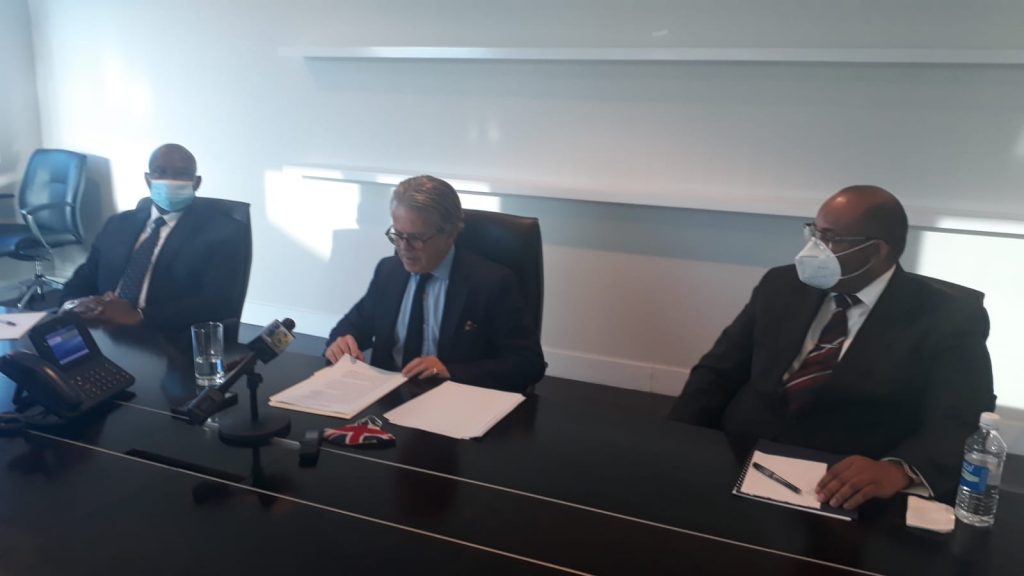
As a result, I have chosen to appoint Harold Charles and Willin Belliard as the Governor’s appointed members. I wish to also say that the one other name I have seen in social media – that apparently was my choice – was wrong, was fake news, never considered and never approached. Some of the venom directed at that individual requires, I’d have thought, an apology.
So to Harold and to Willin. Both are passionate Turks and Caicos Islanders. If you’ve met either you will know this. They have completely committed to TCI. Harold was of course born in Haiti, speaks Creole, and is well connected to the Haitian Community but he is also embedded in the Turks and Caicos Island community and there are few people I’ve heard speak as passionately and optimistically about TCI as Harold. He is the Islands adopted son – from the poorest of beginnings – and grateful for it.
Willin was born in the Dominican Republic, speaks Spanish, and is well connected to the Dominican community. But likewise, Willin’s home and his family’s future are embedded here in TCI and, as an ex-Police Officer, demonstrated he was prepared to put his life on the line, for the people of TCI, and committed to run towards danger rather than away from it for many years.
Harold Charles:
I said in my Inauguration speech that I would respect those who created wealth, and by implication created employment on the Islands. Harold has, though-out his career, certainly done that. For some time he was the second largest employer on the Islands, directly and indirectly.
I also said, in that speech that I had great respect for those who put themselves before the electorate and Harold did this in 2012, not successfully, but he provided an alternative Political Party offering something different. I hope Harold, through his actions, encourages others to stand knowing that there is a route into the House – if not immediately – by showing early courage and commitment to the democratic process. I’d certainly suggest my successor considers in the future some who stood in this year’s election – as Independents – who were unsuccessful but were of genuine quality.
Harold also clearly has an eye for finance, so in matters relating to budget I hope he can bring his financial rigour into the House. Tourism remains our overwhelming industry and aviation is its backbone. This is the main artery of the Territory’s financial life support – and as we recover our Tourist industry from the pandemic I hope Harold’s deep knowledge of this industry, particularly at a time when our international airport requires renewal, will be of help to his colleagues.
And Harold brings into the House real knowledge of our neighbouring country – Haiti – who frustrates and undermines us with our greatest national security problems. I hope he can use his influence in his community, and whatever influence he has in Haiti, to help us defend our borders and drive home the message that while legal controlled migration here is welcomed, at the pace or not the elected government dictates, illegal immigration undermines and stigmatises the Haitian community here and generates tensions that should not be present. The message he can deliver is simple. Come here legally you are very welcome. Come here illegally, you are not.
Beyond that Harold’s life experience is frankly inspirational. It’s well known in the Islands as a genuine rags to riches story generated through hard work and entrepreneurial flair. He is, I hope, a role model to all young people here in TCI, whatever their background, that it’s possible to rise from the most humble of beginnings to a position where you receive international recognition and you can serve the Territory in its Legislature. In 2014 Harold was presented with TCI’s National Honour for twenty years of outstanding and exemplary public service.
Willin Belliard:
And so to Willin. He is a former Police Officer, with commendations from a past Chief Justice and the UK House for Commons for a successful investigation into a major $200 million fraud. A highlight of his policing career is the law enforcement work, as a founding member of the Financial Intelligence Unit of the RTCIPF, to bring to justice the ringleader of a major Ponzi scheme, resulting in the only such conviction in the islands’ history and protecting the islands reputation in the financial services sector. As a result he brings the interests of front line law enforcement into the House. I hope there will now be a Representative in the House who can talk intelligently about the challenge and future of Policing and I hope the Leadership of the Police Force can keep him well briefed in this regard so he is current.
He is also an Attorney. Policing on its own cannot solve the problem of crime in TCI. It also needs an excellent, modern, efficient Justice system. The Chief Justice is leading on this and I hope Willin will help support her agenda, along with other Attorney’s, in the Legislature.
Having trained at the London Bar – Willin should also bring an Attorney’s eye to the line-by-line scrutiny of legislation. I hope all in the House commit to careful scrutiny of legislation that a Government, with a very powerful majority, will bring to the House. As an Attorney he has also worked on issues here relating to Human Rights, holding the Government to account, and I see Human Rights as an invaluable safety catch in terms of good governance as well as the protection of the individual.
Willin has, until recently, been a member of the Board of the Financial Intelligence Agency, a position he will now need to relinquish as it is a body subject to oversight by the House of Assembly. I know both political parties wish to diversify the economy and I hope the knowledge Willin brings to the House is helpful.
Finally, Willin has spent the past months consulting on a significant anti-corruption investigation in another jurisdiction. The insight he gained from that will, I hope, help inform his thinking when it comes to issues relating to procurement and capital projects.
Children and Education:
There are certain things that both Harold and Willin have in common. Both had to work very hard to get to where they got to. Neither started with great privilege in life. As a result both have a fierce understanding of the gift of education and the curse if it is denied; both I believe will fight passionately for children’s rights and be very supportive of a Government who are focussed on our children – both their education and their welfare.
I hope both Harold and Willin will also be role models demonstrating how legal (and I do stress the word ‘legal’) immigrants to these Islands – or people born of immigrants to these Islands – can enrich the Islands future and aspire to serve.
Just Two Among Fifteen
Beyond their skill and character, beyond their status as a citizen of these Islands, any who worry that there are now members in the House of Assembly who can explicitly bring into the House the views of the legal, lawful, immigrant community, be they first or second generation, need only reflect that these are just two members amongst 15, and the Government has such a strong majority that their ‘will’ simply cannot be frustrated so long as they act within the law.
I do hope both benches welcome Harold and Willin not only as colleagues but as fellow Turks and Caicos Islanders; I do hope debate in the House can be enriched by their presence; I do hope the skills they bring are valued, and; I do hope it helps further build a society where division is increasingly replaced by a process of managed integration, and increasing inclusion.
Helping generate what I think is an important conversation that needs to be had throughout the term of this Parliament, is the end of my public contribution on this matter. If I am criticised for starting a debate, and putting forward Turks and Caicos Islanders who can contribute to that debate, seems a rather modest contribution to make. The really hard work is of course for Turks and Caicos Islanders to take the conversation wherever they wish, and work out the long term future of how a population that was just 7,000 in 1980, and which is on track to grow to 70,000 by 2040, can increasingly be at ease on matters relating to identity and inclusion.
Only One Term:
Finally I have made it clear to both my appointees that my recommendation to any successor will be that they should not be reappointed after one term. That is because I believe the maximum number of people should be cycled through these roles bringing the maximum amount of opportunity and diversity to the Chamber. But also because, as Governor, I do not wish to impose on the public purse by having members of the House of Assembly that I appoint profit from the generous pension provision, following two terms of office, without having had to stand before the electorate.
Conclusion:
To conclude, I have been very consistent that this issue has to be decided and concluded by Turks and Caicos’ Islanders. But my responsibilities as the Governor of all these Islands brings with is a responsibility to every person who lives here, under the law. It is therefore incumbent on me – if I see a chronic problem – that is not being tackled – to highlight it. The stalling of the long awaited ‘Islander Commission’ last year – the one route to gain Islander status in TCI, so long delayed, worried me.
I restate I have no view as to who should get status in these Islands that decision is only to be made by Turks and Caicos Islanders – but I have an obligation, placed on me by the Constitution, that such a route must exist. With the election concluded I will look for it to restart its work imminently.
I wish all the appointed members well, including those from the political parties, and I hope the debate, that I believe my appointments will generate will help take forward an over-due national conversation that results in a more inclusive TCI where the status of being a TCI Islander, however that status was achieved, and however that process in the future is managed, is a badge of solid national unity and shared national pride.
So may God Bless the Turks and Caicos and may God bless the Turks and Caicos Islanders.








By Deandrea Hamilton | Editor
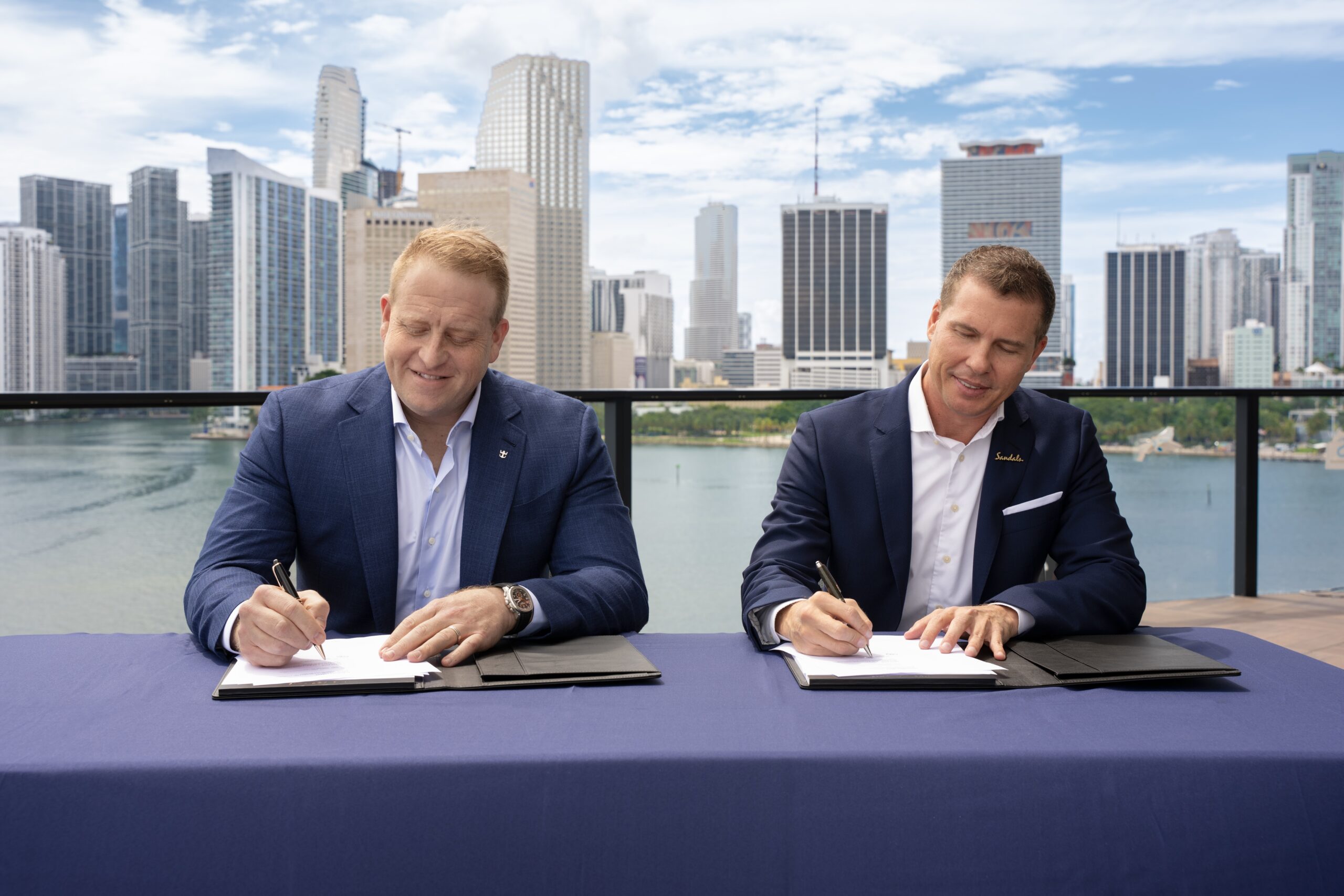
September 28, 2026 – Wall Street initially flinched at the $3-billion handshake. But in a matter of days, it was smoother sailing.
Perhaps the bigger Caribbean business story is not what Sandals Resorts International is getting from the deal. It is who is writing the cheque — and what that says about what Gordon “Butch” Stewart built.
As reports of Royal Caribbean Group’s Sandals deal circulated Tuesday, RCL shares plunged 6.14 percent from Monday’s $250.25 close to $234.89, on sharply elevated trading.
When the agreement became official Wednesday — approximately $3 billion for a 50 percent equity interest in Sandals and Beaches Resorts — shares slipped another 1.95 percent to $230.30 and touched $222.22 intraday. Investors were digesting both the size of the investment and committed debt financing secured through Morgan Stanley.
But by Thursday, RCL rebounded 3.77 percent, with shares continuing their recovery Friday to finish the week around $243. Analysts were also looking ahead: JPMorgan reportedly raised its RCL price target from $345 to $394, while Citi placed the company on a 90-day positive catalyst watch.
And just who is RCL?
Royal Caribbean Group is a global vacation giant, publicly traded on the New York Stock Exchange with a market value of roughly $65 billion. Its portfolio includes Royal Caribbean International, Celebrity Cruises and Silversea, alongside private destinations and an expanding vacation platform.
So when a company of that scale commits $3 billion for only half of Sandals and Beaches Resorts, the transaction puts a striking financial marker on one of the Caribbean’s greatest home-grown hospitality success stories.
The deal, expected to close in early 2027, creates a 50-50 partnership with the Stewart family and takes Royal Caribbean deeper into the all-inclusive resort business.
Butch Stewart started Sandals in Jamaica in 1981 believing a Caribbean company could compete with the world’s best.
Forty-five years later, one of the world’s biggest vacation companies is prepared to pay $3 billion just to own half of what he built.
Now that’s the handshake that does more than seal a deal — it cements a legacy.
Caribbean News
Royal Caribbean Group and Sandals Resorts Announce Landmark Partnership to Accelerate Their Leading Vacation Experiences
Royal Caribbean Group Investment to Advance Sandals and Beaches’ Growth and Broaden the Group’s Vacation Portfolio
Montego Bay, Jamaica and Miami, September 24, 2026 – Royal Caribbean Group (NYSE: RCL) and Sandals Resorts today announced the signing of an agreement to form a partnership in the all-inclusive resort space with a 50% investment from Royal Caribbean Group. Building on Sandals and Beaches Resorts’ more than four decades of leadership in Caribbean hospitality, the joint venture will create new opportunities for continued resort growth while broadening the experiences across Royal Caribbean Group’s vacation platform.
The partnership brings together two of the travel industry’s most celebrated vacation companies, pairing Sandals and Beaches’ all-inclusive resort expertise with Royal Caribbean Group’s vacation platform, including industry-leading brands – Royal Caribbean, Celebrity Cruises and Silversea – a portfolio of private destinations, new river cruising offering, and an industry-first loyalty program. United in a shared history in the Caribbean and connected by a love for their communities, the companies will offer travelers an unparalleled collection of cruise, private destination and resort experiences, serving guests across more vacation occasions and establishing their undisputed leadership in Caribbean vacations.
The joint venture expands Royal Caribbean Group into an adjacent vacation category, growing its participation in the approximately $2 trillion global vacation market, and meets the growing global demand for Sandals and Beaches Resorts by accelerating their expansion. The partnership will include Sandals and Beaches’ collection of premier all-inclusive properties across the Caribbean, and the companies will explore opportunities to broaden distribution, deepen guest engagement, and make it easier for travelers to discover vacation experiences offered across both portfolios.
“For nearly 60 years, we’ve reimagined what a vacation can be, constantly expanding the ways we inspire our guests to explore, connect and create lifelong memories,” said Jason Liberty, Chairman and CEO, Royal Caribbean Group. “We have been building a vacation platform that brings joy to millions of people around the world and creates meaningful relationships that last with our guests. Our partnership with Sandals and Beaches Resorts is an important next step on that journey – bringing together two iconic leading vacation companies to further strengthen and grow one of the most admired resort portfolios in the world. The Stewart family has created powerful and beloved brands, and we are honored to build on that legacy. Together, we see tremendous opportunity to expand the reach of Sandals and Beaches Resorts and continue turning the vacation of a lifetime into a lifetime of vacations.”
“My father, Gordon ‘Butch’ Stewart, founded Sandals Resorts with the belief that a company built in the Caribbean could stand on the world stage alongside the most respected names in hospitality. Today is proof of how far that vision can go,” said Adam Stewart, Executive Chairman of Sandals Resorts and Beaches Resorts. “This partnership is the natural next step in building on that conviction. It gives us the ability to grow faster with a partner that shares our values of exceptional hospitality, long-term investment, and the power of enduring brands. Together, we will introduce more guests to Sandals and Beaches Resorts while creating even more extraordinary experiences for those who have made our resorts part of their lives for decades.” Stewart added, “As we continue to grow, we will remain true to what has always defined us: delivering authentic vacations that exceed expectations while creating opportunities for our team members, travel advisor partners and the communities we call home. The future has never been brighter, and I know this moment would make my father incredibly proud.”
The joint venture will be governed by a board under the shared leadership of Stewart and Liberty. Stewart will maintain a leadership role in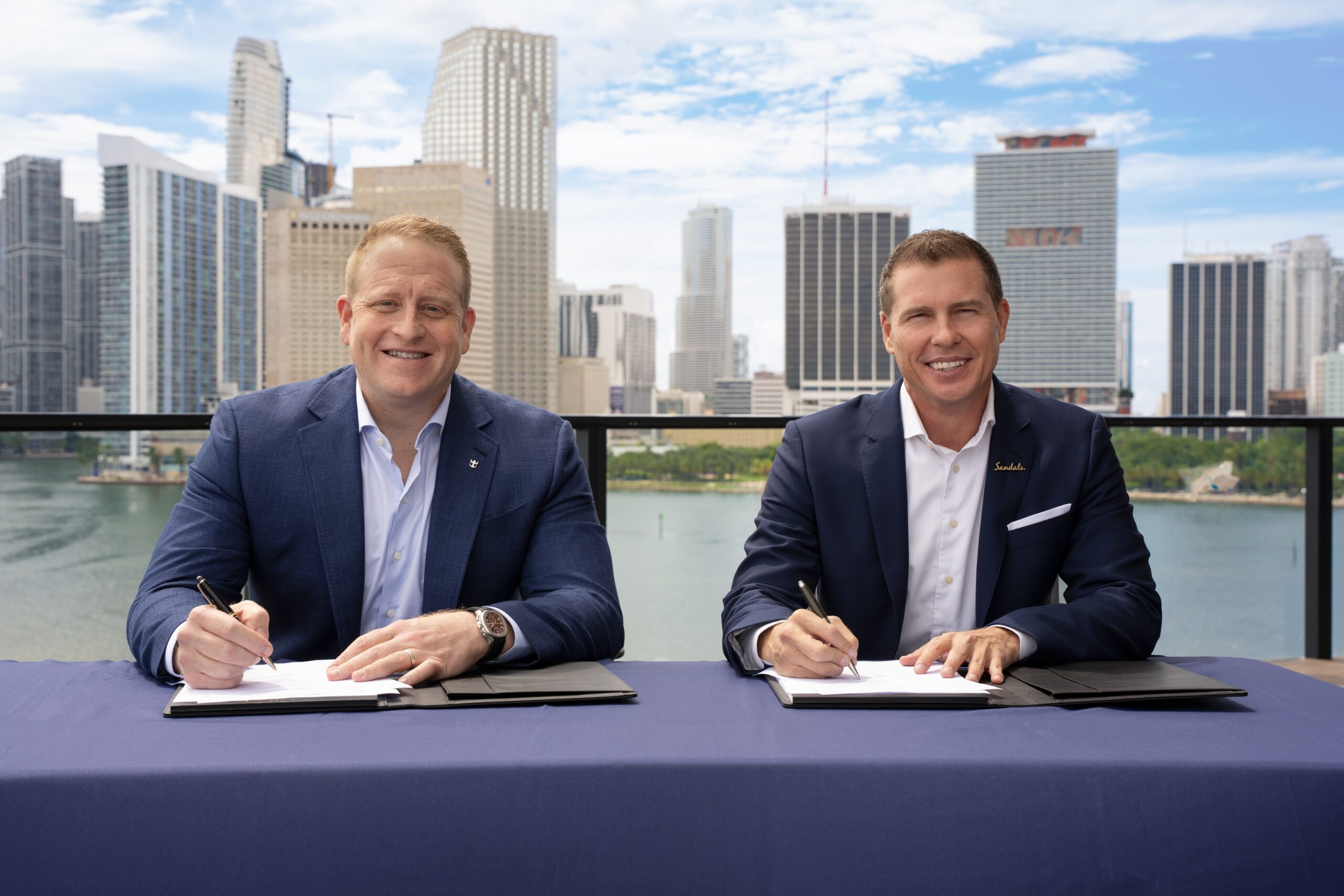 guiding the company’s long-term strategic growth as Executive Chairman of Sandals and Beaches Resorts. Existing reservations, loyalty programs, resort operations and cruise operations will continue as usual, with the partnership bringing additional resources to support future opportunities.
Under the terms of the agreement, Royal Caribbean Group will acquire a 50% equity interest in Sandals and Beaches Resorts for approximately $3 billion, representing a forward EBITDA multiple of approximately 10x. Royal Caribbean Group has secured committed debt financing from Morgan Stanley to fund the investment. The transaction is expected to close in early 2027, subject to customary approvals and closing conditions, and is expected to be accretive to earnings next year.
BofA Securities and PJT Partners acted as financial advisors, and Latham & Watkins and Jones Day acted as legal advisors to the Sandals Group. Perella Weinberg Partners and Morgan Stanley acted as financial advisors and Kirkland & Ellis LLP acted as legal advisor to Royal Caribbean Group.
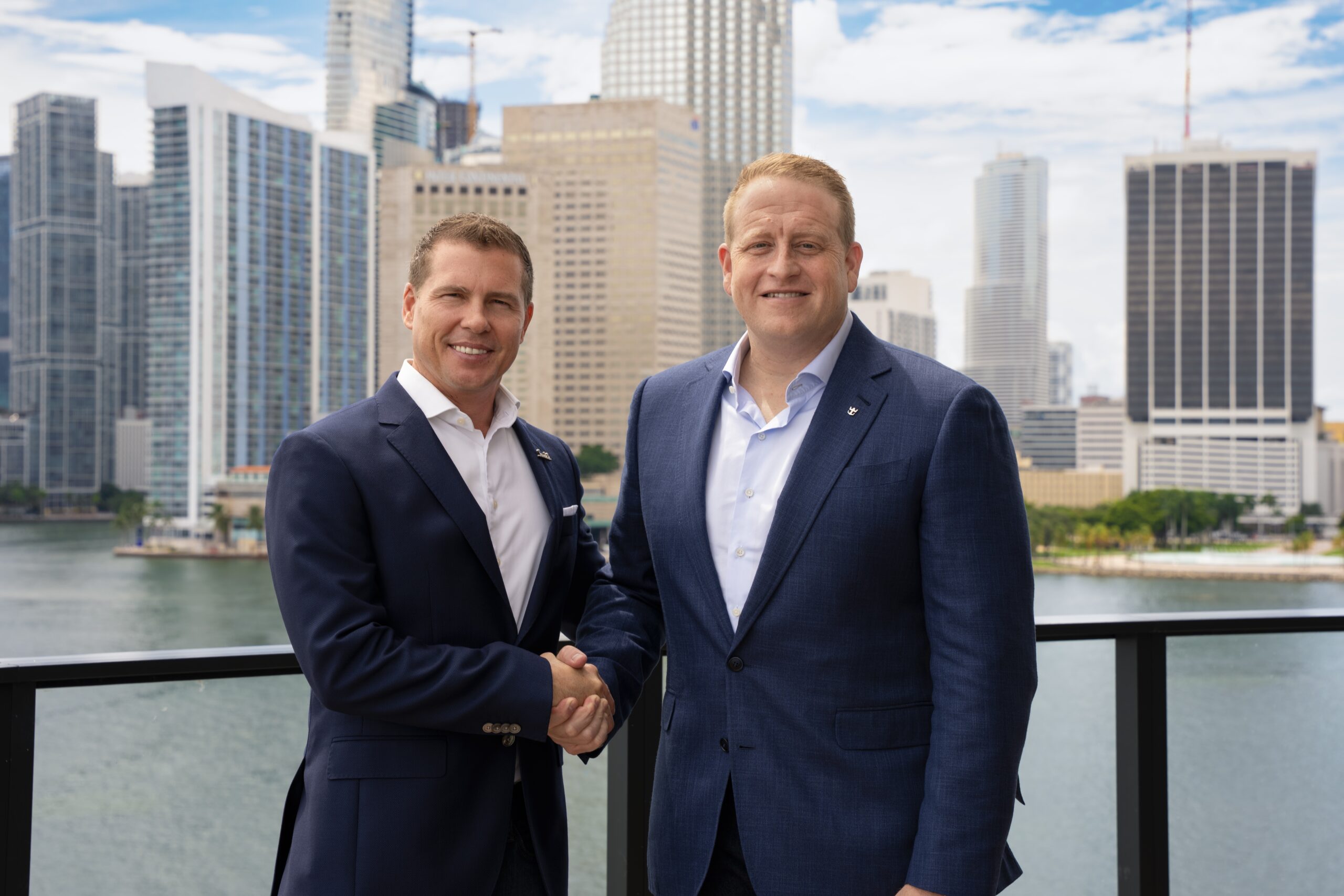
PHOTO CAPTION: Jason Liberty, Chairman and CEO of Royal Caribbean Group, and Adam Stewart, Executive Chairman of Sandals Resorts, mark the signing of an agreement to form a landmark partnership that expands Royal Caribbean Group into the all-inclusive resort space and supports the future growth of Sandals and Beaches Resorts. The signing took place at Royal Caribbean Group’s new headquarters in Miami, with the city’s skyline in the background.
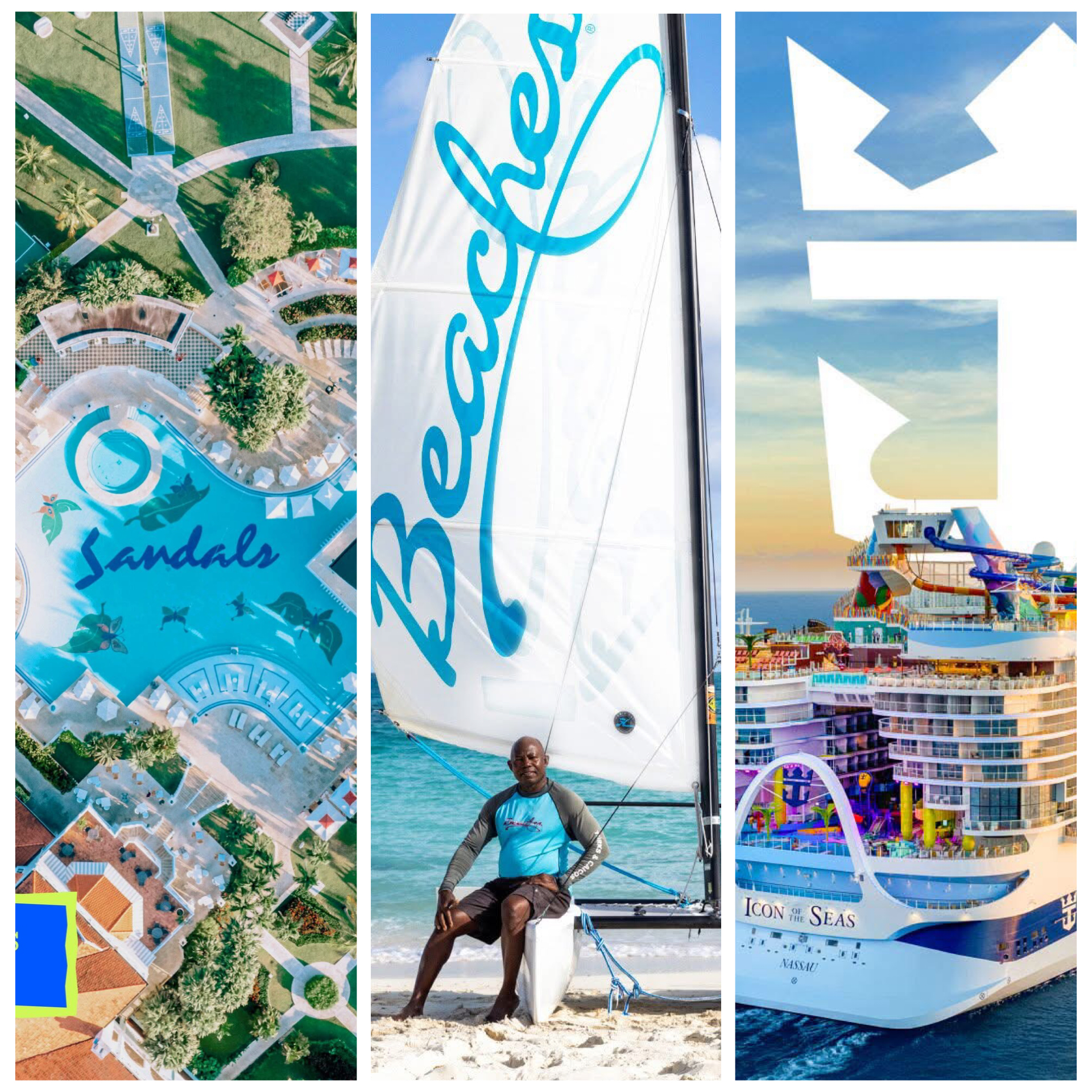
The Caribbean tourism deal first reported as a possibility on Tuesday is now a signed agreement. Royal Caribbean Group plans to pay approximately US$3 billion for a 50% stake in Sandals and Beaches Resorts, putting the value of the business at about US$6 billion. The purchase is expected to close in early 2027, subject to approvals.
Founded in Jamaica by the late Gordon “Butch” Stewart in 1981, the resort business has a presence across nine Caribbean destinations, including Jamaica, The Bahamas and Turks and Caicos. Sandals has described its workforce as nearly 20,000 people, most of them Caribbean nationals.
“My father, Gordon ‘Butch’ Stewart, founded Sandals Resorts with the belief that a company built in the Caribbean could stand on the world stage alongside the most respected names in hospitality,” said Adam Stewart in the announcement carried by PR Newswire. He will remain executive chairman, while the Stewart family retains a stake. The companies say existing reservations and resort operations will continue as usual.





-
 News5 days ago
Imagine Turks & Caicos Represented in UK Parliament; New Report Favours It
-

 News1 week ago
Invest TCI Strengthens Regional Investment Connections at Caribbean Investment Forum 2026 in Barbados
-

 Bahamas News5 days ago
Bahamas Issues Cybersecurity Alert Over Akira Ransomware Threat
-
 Bahamas News1 week ago
Rosewood Exuma: A precedent-setting case for environmental law and future development in The Bahamas
-

 Bahamas News1 week ago
Energy Minister Delivers Electrifying Keynote Opening Address at CAREC 2026
-
 News5 days ago
BermudAir Launches Service to the Turks and Caicos Islands on October 26th, Expanding Air Connectivity Ahead of Winter Season
-

 News6 days ago
Crown Land Unit Leads Multi-Agency Enforcement Exercise in Five Cays
-

 News2 days ago
Multi-Agency Enforcement Exercise Targets Illegal Occupation of Crown Land in Five Cays