
TCI News
Slow down! TC Reef Fund launches ‘more consultation time’ petition on oil exploration


#Providenciales, Turks and Caicos Islands – October 18, 2020 — For those on the front line of environmental protection and preservation, the Turks and Caicos Islands Government is moving too rapidly toward creating legislation which allows petroleum or oil exploration in TCI waters and on TCI land; over 600 people have so far signed a petition to extend the time and improve the consultation process.
In a poorly promoted process, residents of the Turks and Caicos Islands are asked to comment on the legislation which remains unavailable at the government’s website.
On October 1 the invitation for public consultation was issued by email and posted to the TCI government website. The consultation process was due to expire on October 14 according to the notice issued by the Department of Energy & Utilities of the Ministry of Home Affairs.
Many question whether there is any real interest in public input when there was no public education, no public or official announcement about the consideration of oil exploration and when the Bill is nowhere to be found.

The Turks and Caicos Reef Fund, in a letter to authorities, made a case against the rapid pace and missing information toward the consultation process of such an environmentally invasive and potentially damaging industry.
“Firstly, two weeks is not a sufficient amount of time to allow for true public consultation and understanding of the proposed Bill. Furthermore, there is no copy of the Draft Bill available for download anywhere on the Government’s website. Only through multiple contacts working together was I able to get a copy of the Draft Bill. Without access to the information, there is no ‘public consultation’. I am now aware that it was printed in the recent copy of the Weekly News which was published on the 10th October, giving anyone who purchased the paper 4 days to digest the Bill.”
The Turks and Caicos Reef Fund also believes the Bill, if one gets their hands on a copy, is difficult to digest.
“I have some top notch environmental lawyers reading the bill and making comments so that we the people can understand. TCIG should give us a digestible version of the Bill as, I’m not a lawyer and it’s a dense 43 page document! The stakeholders are fishermen and people working in watersports, I doubt they can understand this document either.”
The draft legislation called: Petroleum Exploration and Exploitation Bill 2020, essentially outlines what will be permitted to happen, who is allowed to enter the market and who will manage the industry.
Specifically the draft says: “This Ordinance applies to activities for and associated with the search for and recovery of petroleum in the territorial waters, exclusive economic zone, continental shelf and land of the Islands.”
A Commissioner, as is stated in the draft, will govern the industry with six key functions. Some of those functions are: “to consider and determine applications for licences; (b) monitor licensees and determine whether licensees are in compliance with the terms and conditions of the licences and this Ordinance and (c) to monitor the effectiveness of the Ordinance and any Regulations in providing for the supervision and regulation of the activities undertaken by the licensees within the islands to internationally accepted standards…” – Excerpt from draft Petroleum Exploration and Exploitation Draft Bill 2020.

Concerns may be calmed by the fact that the draft explicitly states, the exploration process does not include drilling and no exploration can take place in areas protected under the National Parks Ordinance.
Still, the distribution, access and mixed messages linked to the consultation on the draft law is sloppily done.
“Currently, as of mid-day on the 13th October 2020, there is an update on gov.tc stating that public consultation has been extended by a week. The information however is incongruous as it now says that there is a two-week on-line consultation from 1st October to 21st October, 2020 (this is a three-week period) whilst also saying that consultation has been extended by one week to the 21st November, 2020. This extension of time for public consultation has no meaning if the Draft Bill is not available and consultation meetings aren’t happening.”

The TC Reef Fund has reminded the Ministry of Home Affairs of best practices when it comes to consultation by outlining the guidance for conducting meaningful public consultation as crafted by the International Finance Corporation (IFC), a recognized authority on environmental assessment and public consultation.
Among the eight actions shared with TCIG’s Ministry of Home Affairs are: identification and engagement with key stakeholder groups; provision of a workable strategy and timeframe to the public for the proposed project; provision of available information to give background of the proposal and a public information campaign which ensures affected people are aware and have sufficient time to respond.
Consultation should make the effort to reach out to specialty groups including women, vulnerable and religious groups and the process should include public meetings and hearings, surveys and polls and in the end, reflect the concerns of the people of the Turks and Caicos Islands.




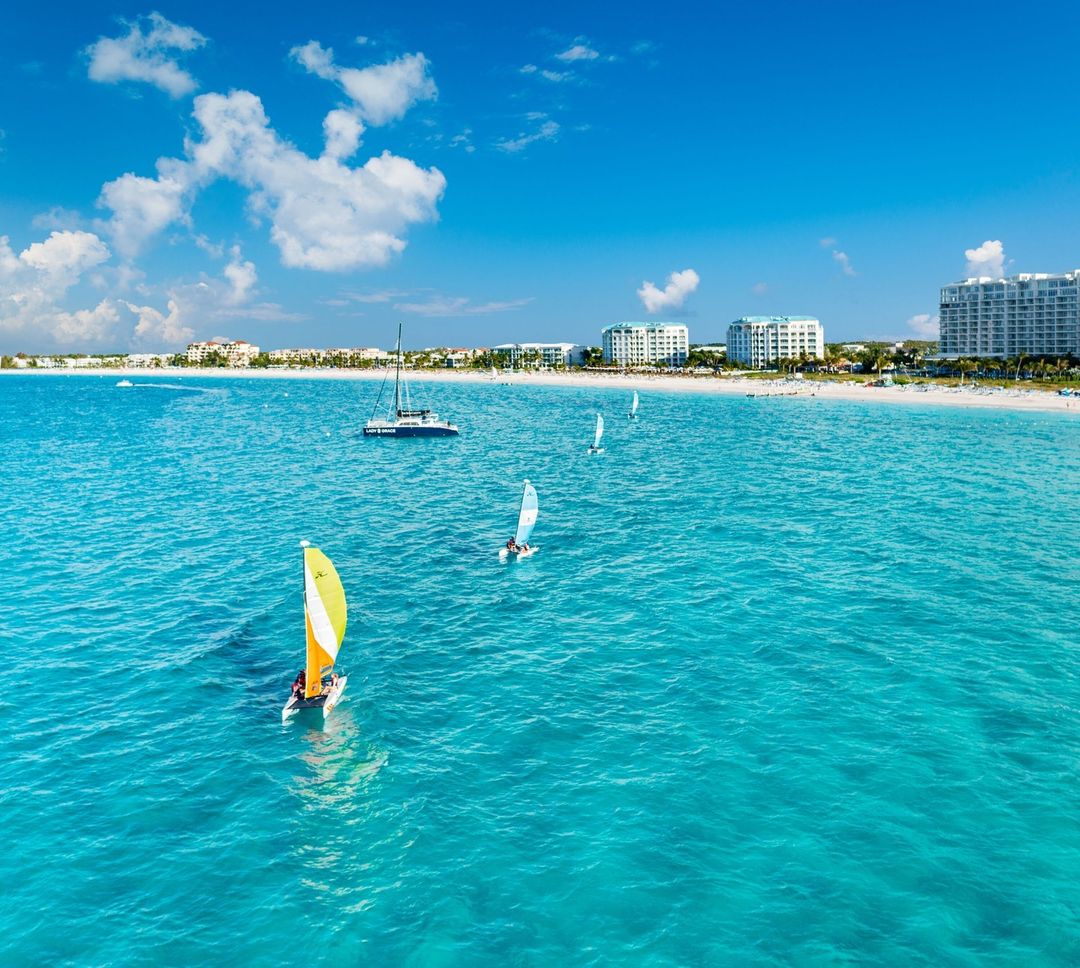
Almost two million visitors recorded in 2025
PROVIDENCIALES, TURKS AND CAICOS ISLANDS – The Turks and Caicos Islands saw an increase in stayover arrivals in December, seven percent higher than the corresponding period in 2024.
Preliminary data suggests that stay over arrivals by air for the month of December was 66,427 in comparison to 62,610 in December 2024.
From January to December 2025, preliminary visitor arrival numbers totalled 640,754; on par with the number recorded for the same period of 2024.
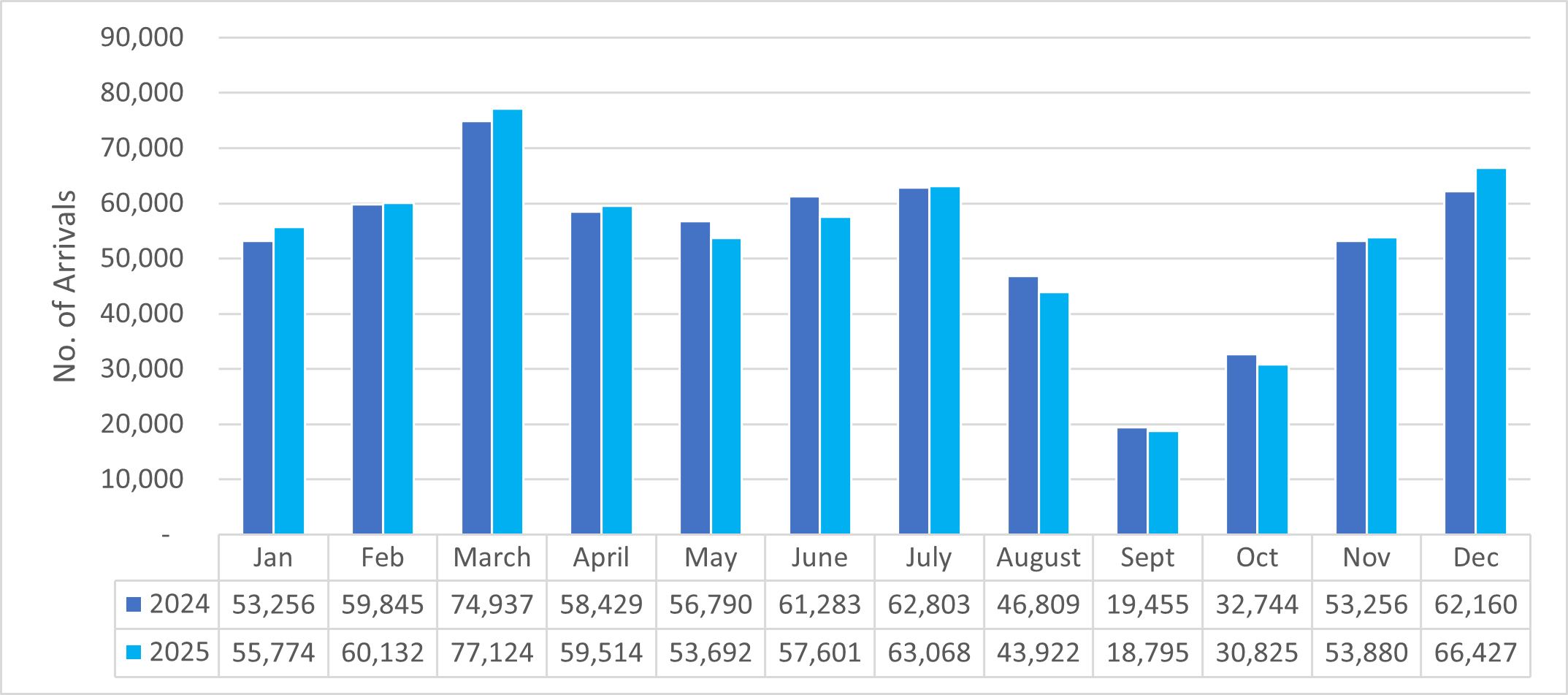
Stay Over Arrivals YTD December 2024/2025
The first quarter of the calendar year attracted the largest number of arrivals with visitor arrivals three percent higher than the first quarter of 2024. Reduced airlift from the United Kingdom and the United States, most notably the Virgin Atlantic and JetBlue services, was however felt from the second quarter (April to June). As a result, visitor arrivals dropped three percent in the second quarter.
By the third quarter of this year (July to September), geopolitical and economic conditions in the key source markets, namely the United States, led to further contraction of arrivals. In the last quarter of 2025, arrivals were impacted in October due to the passage of Hurricane Melissa but additional airlift from the USA and Canada resulted in an increase in arrivals in November and December.
Mr. Paul Pennicook, Interim CEO Consultant of Experience Turks and Caicos, said December’s increase in stayover arrivals is an encouraging indicator of the sustained interest in the Turks and Caicos Islands as a premier destination.
“While we note and continue to monitor geopolitical shifts that affect us, Experience Turks and Caicos is focused on increasing marketing initiatives in our primary source markets. We have spent the last two years investing in groundwork such as crucial travel advisor training to assist them in selling the destination more effectively. In the next fiscal, we will be building on those initiatives with co-op activities with partners as well as out of home advertising to increase visitation to our destination,” he said.
In Cruise, the preliminary count of passenger arrivals for the month of December 2025 was 129,346, a 22 percent increase over last December. This growth follows the berthing of 11 additional ships in Grand Turk this month.
From January to December, the cruise sector continued to outperform the same period last year, as the 1.3 million total cruise passengers recorded, marks a five percent Year-on-Year increase. 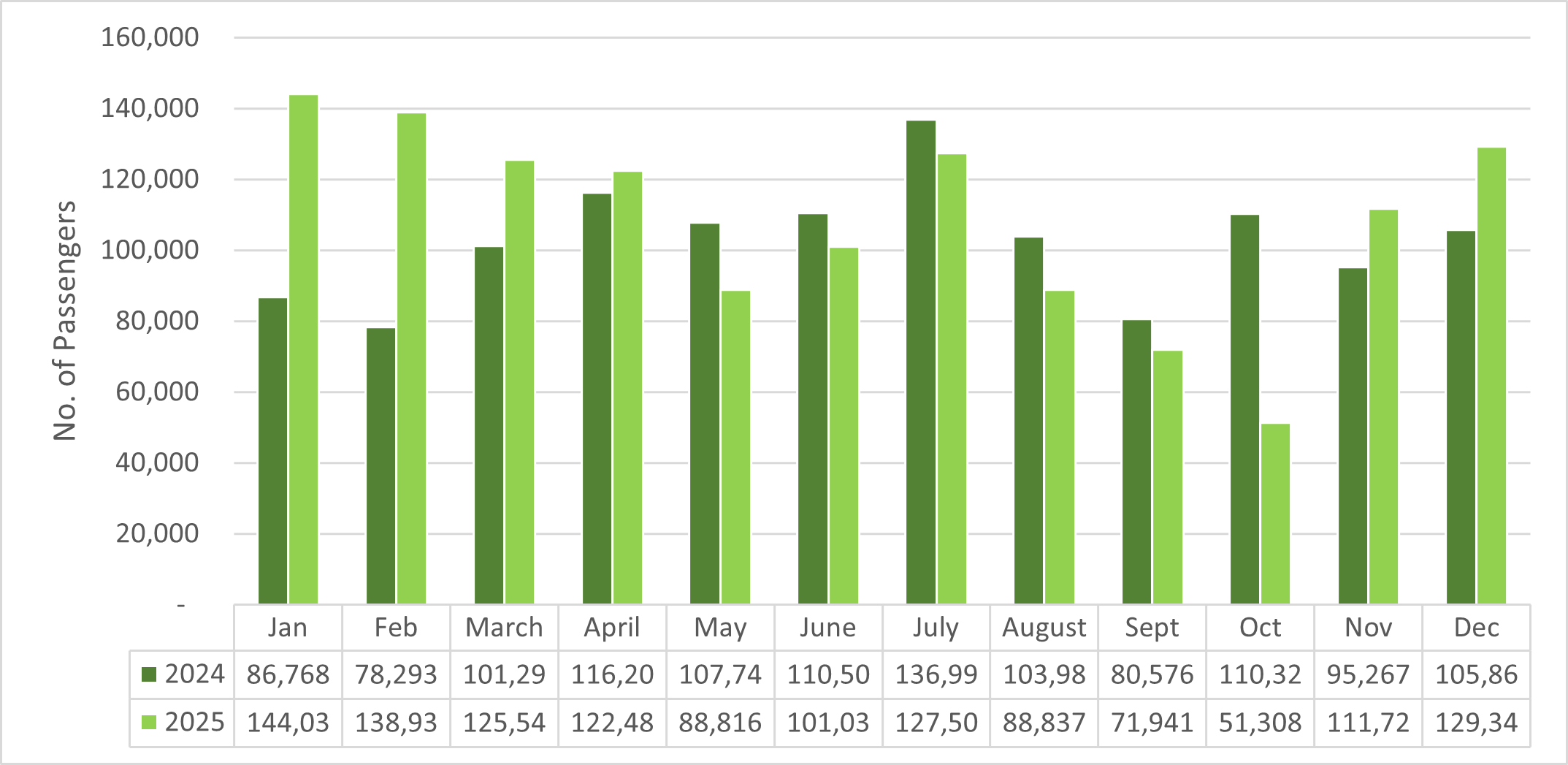
The cruise sector experienced significant growth in the first quarter of 2025, with passenger arrivals surpassing last quarter by 53 percent. In the second and third quarter however, several cruise lines adjusted their itineraries as vessels were pulled from the fleet or from the Caribbean region, which resulted in fewer passengers.
Arrivals dropped seven percent and 10 percent in the second and third quarters, respectively. Double digit growth was recorded in the last two months of Quarter 4. This growth however, was not sufficient to outweigh the drop in arrivals experienced in October, following the cancellation of cruise calls due to the passage of Hurricane Melissa. Despite the late-quarter rebound, arrivals for the final quarter of 2025 closed six percent below the same period in 2024.

News
The Department of Trade, Industry & Fair Competition to Host Export Readiness Workshop Under the theme “Empowering TCI Businesses for Local Growth and Global Markets.”

Providenciales, Turks and Caicos Islands – Wednesday, 11 February 2026: The Informal Settlements Unit (ISU) coordinated a multi-agency enforcement operation on Thursday, 29 January 2026, led by the Planning Department, with support from the Crown Land Unit, the Turks and Caicos Islands Border Force, and security provided by the Royal Turks and Caicos Islands Police Force. The operation, carried out at three different locations in Providenciales, formed part of ongoing government efforts to address unauthorised development and illegal occupation of land in accordance with governing legislation.
The operation commenced in Blue Hills, where five Section 58 Enforcement Notices were issued on unauthorised structures identified on Block and Parcel 60502/48.
Enforcement activity then moved to a second location off the Leeward Highway near Caicos Lodge, where six Section 58 Enforcement Notices were issued on additional unauthorised structures on Block and Parcel 60802/66.
The final phase of the operation took place in The Bight, where three unauthorised structures were removed, with all debris cleared from the site in keeping with established safety and environmental protocols.
The Informal Settlements Unit remains committed to working alongside its partner agencies to support lawful development, protect public and private land, and ensure that planning regulations are enforced in a coordinated and transparent manner across the Turks and Caicos Islands. Similar joint operations will continue as part of the Government’s wider strategy to address unauthorised development and informal settlement activity.





-

 TCI News7 days ago
Experience Turks and Caicos and Aquila Host Product Development Workshops to Strengthen Sister Islands Tourism
-
 News5 days ago
The Department of Trade, Industry & Fair Competition to Host Export Readiness Workshop Under the theme “Empowering TCI Businesses for Local Growth and Global Markets.”
-

 Bahamas News2 days ago
Tens of Millions Announced – Where is the Development?
-

 News4 days ago
Strong December Performance Signals Continued Demand for the Turks and Caicos Islands
-

 News6 days ago
Multi-Agency Planning Enforcement Operation Conducted at multiple locations in Providenciales
-
 Bahamas News19 hours ago
Groundbreaking for Grand Bahama Aquatic Centre
-

 Health18 hours ago
What to Look for with Self-Checks at Home
-

 Caribbean News5 days ago
Mottley Sworn in After Historic Clean Sweep in Barbados Election