TCI News
Governor’s Remarks: March 25 National Address – Response to COVID-19
Published
6 years agoon
FULL STATEMENT — By now I suspect that, if you are listening, you have stopped doing what you were doing and you will have paused. You will understand the importance of what you’ve just heard. What the Premier announced isn’t an announcement to listen to as you do something else. This isn’t the background noise to your normal day. What was just said was important.
In my own words I’m now going to amplify what was just said, reinforce what was just said, associate myself completely with what was just said. Amplification and repetition at this point is probably helpful
Whoever you are on the Island: old or young; citizen, resident or visitor; whichever Island you live on; whatever your ethnicity; however, you make your living; whether you are rich or poor you are now one. We are now using emergency powers that came into effect last night, on your behalf, for the good of the community. This is going to impact you in very significant ways, for at least the next three weeks and perhaps beyond.
We are about to go through one shared unifying experience. How we come out of it at the other end will almost entirely depend on your sense of civic duty; your sense of community spirit while not being connected to your wider community. Your integrity as a person in doing the right thing not just with self interest in mind but the overall good of your country. No one can get through this without all others acting responsibly.
What we are about to announce is driven by one motivation; to protect you and to protect the overall population of these Islands.
We have – for some days – been working on the assumption that CORVID19 had to be present on the Islands – the identification of our first confirmed case came only on Monday. We first heard of this news at 3 am on Monday morning. The Premier told the public at 9:30 am the same day. We are determined to be straight and clear with you – we have to be one informed team – announcements today follows that desire for clarity and also for pre-emptive action.
We are in unprecedented times, that in itself is perhaps an under-statement. The Islands are used to being significantly disrupted through disaster. Indeed, the resilience of our people is one of these Islands great strengths and will need to be so again.
What we are not used to is facing that disaster alongside the rest of humanity at a moment when the international system is itself facing the greatest challenge of our lifetimes akin – I think – to at least that suffered during the great depression of the 1930’s. The world will change in the next decade in a way that it wouldn’t had this not occurred. It’s a moment in time that will be studied long into the future.
For the moment we cannot predict, nor can we change, the future of what is occurring outside our borders. For the next months we have to take our destiny in our own hands and make the very best decisions we can for these Islands. Being clear we need now – as a people – to entirely change our way of life, if we are to get through this next month as safely as we can.
There are many challenges but for the purpose of this month let’s be clear on the two that are most pressing and absolutely have to be dealt with now; no question.
First is our health. We are a small Island state. We have as a result limited capacity but also a limited ability to flex capacity. Large countries with highly developed health care systems – such as the UK and Italy – have had their health systems overwhelmed very quickly. If the virus grips this country, if it grows exponentially, our medical provision will to be overwhelmed and overwhelmed quickly.
The second is our economy. Macro certainly but also micro – how this impacts on individuals and on families. We have – or until the end of last week we had – an economy that was built on one pillar – tourism – or put another way international travel. As international travel stops, and it was stopping before the closure of our borders, so too does the economy stop.
As a result, today’s announcement should be seen as one, of two. The announcement today just deals with how we are going to suppress the threat posed to our public health by the virus. These measures – remarkable measures – were agreed in Cabinet late yesterday. They do not come into full force until Friday evening – although there will be a night-time curfew on Thursday – which will give time for the public to prepare. Our aim throughout has been not to surprise you. We need to balance moving now as quickly as we can, set against ensuring the country can go into this next period balanced and stable.
Before they come into force, and following a further Cabinet tomorrow, the Premier will announce a set of economic support and stimulus measures for the country. So by the end of the week you will understand how – in the immediate future – Government intends to tackle these two great challenges of our public health and our overall economic well-being. In both cases we are moving at a pace Government – no Government – has ever worked at before with the most limited of ever changing data. We can’t deliver you perfection, or anything close to perfection, we can though take some big decisions now that buy us some time.
While it is straightforward to call out the two great challenges we face, it’s also worth pausing for a moment to reflect that we start with a set of advantages. Much of what we announce today is driven by the determination that we do not lose the advantage we presently enjoy compared to most. There is a window here where if we are bold we might just come through this far less impacted than others; we don’t intend to shy away from that opportunity or responsibility. If we fail it won’t be because of indecision. So what are those advantages:
First, we still only have one confirmed case of CORVID19. Almost all other countries have taken the actions we are about to take long after this point. Globally, everyone who is now gripped by the virus tells us to move early, not late.
As of midnight, last night, we have Emergency Powers in place. We are the only Overseas Territory who has done this. In doing so the Government continues to work as one. Myself and the Premier are in the same place, able if you like to finish each other’s sentences. Cabinet Government and consensus is the order of the day. We have the powers bestowed on the Governor which are going to allow us to act at pace and rigour, but we also have the legitimacy, in this time of crisis, that democracy can deliver.
We start this crisis with the Government finances in good shape. It has well over 100 million in reserves. It finished the year with a financial surplus. It carries very little debt. This year was the first year its financial plan didn’t need to be cleared with the UK. It has a BBB+ credit rating. The UK has immediately agreed for the Premier to run, if she needs, a deficit budget. Money is cheap to borrow in the international markets. The Governments past prudence has bought itself some time, space and International credibility to support its people. Again many countries would wish to start from this position.
We also have the UK. She too is going through her own version of this – indeed she is deeper into this pandemic crisis than we want TCI ever to get. But the UK in the end holds the contingent financial liabilities for these Islands and remains one of the largest economies in the world; a back-stop most other Caribbean states would welcome at this time. She is sourcing health materials for us. She has been providing advice to our clinicians. I have military aid to call on to support us, as I need. Indeed, I spoke to the UK’s Chief of Defence Staff – General Nick Carter – who commands all the UK’s land, air and naval forces this morning. HMS Medway is in the region.
We also have not taken our eye off our priority of sloop interdiction. The waters between us and Haiti are being patrolled and our maritime police, our radar and immigration assets, remain vigilant and ready and will remain so throughout this period; indeed, they will be reinforced.
Crucially we have you – the public of TCI. You understand adversity and you understand hardship. You have been through three hurricanes in twelve years. Compared to most other countries in the world you know we can do this, and we know we can get through this, if we stick together and behave responsibly.
We know that we have to act for the good of the community at moments like this. Selfishness at this time is a social taboo. The actions we will need to take in a pandemic are different from those taken in a hurricane but the underlying human instinct – being steady, knowing it will pass, knowing that short term hardship will be replaced by a future normality, is the most powerful thought and many populations around the world have not got your experience. They can’t imagine it will end; they can’t imagine things will be better; you can because you know it does happen.
Because these Islands understand disaster we are well prepared for them. I have said in the past we have weeks of supply of food on the Island. The truth is, it’s months. There’s no indication our food supply chain will be impacted. And Government – in preparation for hurricane – has its own supply of food as a contingency. In the coming days be as responsible in our super-markets and stores as you have been to date. How we behave there will tell us a lot about how we will behave elsewhere.
We produce our water from the sea. So long as we have fuel (and again our fuel supply line is in great shape) to run our desalination plants we have fresh drinking water. We have a world class power provider and – unlike in a hurricane – we will have excellent and guaranteed communications. Our health service is small – it can’t cope with a pandemic – but our health service professionals are amazing. It’s not an accident that we are in good shape at present; their advice has been exemplary.
Which brings me to the most important advantage we have, the advantage I said we were not going to squander. Unlike many we are ahead of the curve in terms of what we already have in place compared to how the virus has spread elsewhere.
We have seen other countries react, we have seen what has worked and what has not. You, yourselves, will have been tracking this through the international media. Through the UK’s global network, we have been in very close touch with multiple foreign governments and been able to track their reactions – not from the press – but from talking to their officials, Heads of Government and medical professional. As I say, all their advice (and many are saying this in hindsight rather than foresight) is when you move, move quickly and move with great purpose.
That overall thought framed our discussion in Cabinet. How do we use the fact that we are slightly ahead to our advantage. The complete consensus in Cabinet, supported by expert medical advice that has guided us throughout, was to use our Emergency Powers to lock down the country. To do everything in our power to prevent the spread of the disease. To do what’s called ‘flatten the curve’. So while there will undoubtedly be cases, and there will be fatalities, we prevent the dramatic exponential rises we have seen elsewhere. It’s that ‘out of control spread’ we have to stop. We can only stop it through a complete national effort.
Put simply we intend – with your support – because this now has to be a single national effort – to place the country in lock down with families quarantined together. That will, overnight, significantly reduce the infection rate. It will also allow us to understand who is and who is not infected. It will allow us to prioritise treatment. Night-time curfews (8pm to 5am) will start on Thursday evening. From Saturday morning (5am) a curfew, except by exceptions captured in regulations, will be enforced until midnight on 15th April.
Once the period is over, it gives us the best possible chance of restarting a local economy – to get money moving through the Islands – before the point we can open our borders – or indeed other countries and their nationals start travelling again. Short term pain for long term gain.
The Premier and myself will be on RTC this evening at 6pm to go over (and if necessary go over again, the detail). The regulations will also be posted on Government websites. Let me now explain the broad thrust of what is now going to happen.
Even as of today rules are in place that prevent a gathering of 25 or more. Do not be foolish tonight; this isn’t like a hurricane where a ‘lock down party is in order’. It’s potentially fatal. You are endangering yourself and you are endangering others if you break this law. It’s best you use the time this evening to prepare.
So once again, to conform how we roll this out, from 8pm on Thursday until 5am on Friday a full curfew will be in place; enforced by law. Curfew will lift at 5am on Friday. The curfew will be re-imposed at 8pm on Friday.
Friday therefore will be the last working day in the office, and the last normal day in terms of social interaction. In giving you Thursday and Friday as normal working days we want to give you the best chance to prepare for the next three weeks as we can.
From Saturday morning we will settle into a rhythm of strictly enforced night-time curfews running from 8pm to 5am. During the period between 5am and 8pm you will be expected to remain in your homes, with your family or those living under the same roof as you. Think of it as a day-time curfew with named exceptions.
Of those there will be exceptions for essential workers (detailed in the regulations) when they are travelling to and from their place of work but only when they are engaged in that specific travel or work related activity.
Families living under one roof will be able to exercise together for 1.5 hours. Aside from those you directly live with, there will be no gathering of more than two. The beaches will be closed.
Understand what we are trying to do and use your own good judgement. We are doing all we can to stop the spread and if a case is identified rapidly control the numbers impacted.
The supermarkets, banks and gas stations will function; their use will be limited and controlled. We will ensure people have access to food and visits to the supermarket will be permitted but limited.
We have considered banning inter-island travel but will not do so until we are certain that food stocks on relevant islands are well prepared. But we strongly discourage anything but the most vital inter-island travel. We mean vital. We do not rule out regulation to prevent inter-island travel and you should use the next two days to position yourself with your family members that you intend to see this period out with.
Only those aspects of Government and public service that have to function, will function. Working from home will be the order of the day. Much can be done and we expect the public service to continue to work from home, as required.
There will now be provisions in law that allow us to enforce self quarantine or for people to be ordered to a place of quarantine, where there are suspected cases. Breaking these requirements, now breaks the law, and those foolish enough to do so will not only be placed in Government supervised quarantine they will also face criminal penalty.
Another change. As of today all residents of the Islands will prohibited from entering the Islands for a period of 21 days from 26th March. This will allow us to control the introduction of any new cases into the Island and allow a time to contain any suspected cases. We urge residents overseas to self-quarantine – this is for your safety.
Also – and please listen carefully to this – for those who defy the curfew or quarantine through the use of their vehicles, those vehicles are subject to confiscation at the point of arrest and, subject to a court order, to further forfeiture of their vehicle.
Those designated as essential workers – in the public and private sector – will I know step up; we know you will – your country needs you. Some immigration officers will be assigned as Special Constables and support the Police.
At the top, Government will split in terms of Cabinet operating as two groups, half meeting as a group – because unity of Government is essential in these times – and decisions we need to make are hard – and half connecting remotely. The Deputy Governor will be on Grand Turk and will be able to stand up an alternative Government, if that is needed.
The House of Assembly will continue to function; it must to allow budgets to be passed and even in times of crisis democratic engagement is essential. Saving the islands and her population will be the overriding aim for every politician during this remarkable period but that doesn’t stop debate or democratic accountability.
To remind you, even before we imposed these measures, as you woke up this morning, there is to be no gathering of over 25 people. There are provisions now in place to stop the spreading of misinformation linked to this emergency, and I will be looking to make examples where I see misinformation designed to cause alarm or spread hate or fear. Our schools are of course closed. With exceptions to cargo, food and the like, our borders did shut at midnight.
With due humility I say that Government – anywhere in the world – at the best of times – is not perfect. There was no plan here – there was no plan anywhere – as to how any country let alone this small Island chain would manage with a pandemic that has shut down the globe. The regulations we pass – that much thought has gone into – may very well need to be adjusted. We can think through how this will impact the many, but not all. We will be opening up an email address where we can look at individual cases where serious and unintended consequences need to be addressed. I said at my inauguration that I would care, serve be clear and listen. This is the best moment to hold me to that.
All my instincts and experiences of dealing with comparatively minor crisis and emergencies, up until this point, tell me that good decisions made early are far better than perfect decisions made late. Cabinet is in complete agreement on this. I hope the public agrees.
It just may be that these Islands – because of the inherent advantages I described at the start – are going to show the world that it is possible to deal with this crisis, calmly, intelligently and purposefully.
Whether we collectively succeed, or not, the one thing I know above all others is that our behaviours here – to one another – putting our future and our society before the immediacy of the moment – is going to be remembered.
Those living through this will tell a future generation how you, your friends, your neighbours, and those you never knew but came to respect, behaved and how through that behaviour the Islands rapidly returned to their previous prosperity. Because that will come. You know it, in different circumstances you’ve been here before. And in the end it will come not because of rules and regulations and because people were told what to do, but because this population knew what it had to do – and it did it.
And may God Bless these Turks and Caicos Islands.
Magnetic Media is a Telly Award winning multi-media company specializing in creating compelling and socially uplifting TV and Radio broadcast programming as a means for advertising and public relations exposure for its clients.
You may like
-
TCI Boat Club Donates $7,000 to TCI SNAP Centre from 11th Annual Poker Run
-
Startling News: Turks and Caicos Records July COVID-19 Death as Regular Tracking Resumes & global cases up 11%
-
TCI Ministry of Health Monitoring SARS-CoV-2 Variant NB.1.8.1 and Reminds Public of Preventive Measures
-
TCI Health Officials on Alert as COVID Variant Emerges and Cases Rise in Key Travel Destinations
-
New COVID-19 Variant NB.1.8.1 Spreads Globally, Monitored by WHO
-
Jamaica Better Equipped To Deal With Another Crisis Such As Covid-19 Pandemic -PM
News
Beaches Turks & Caicos, FIU train next generation of hospitality leaders in Providenciales
Published
11 hours agoon
April 5, 2026
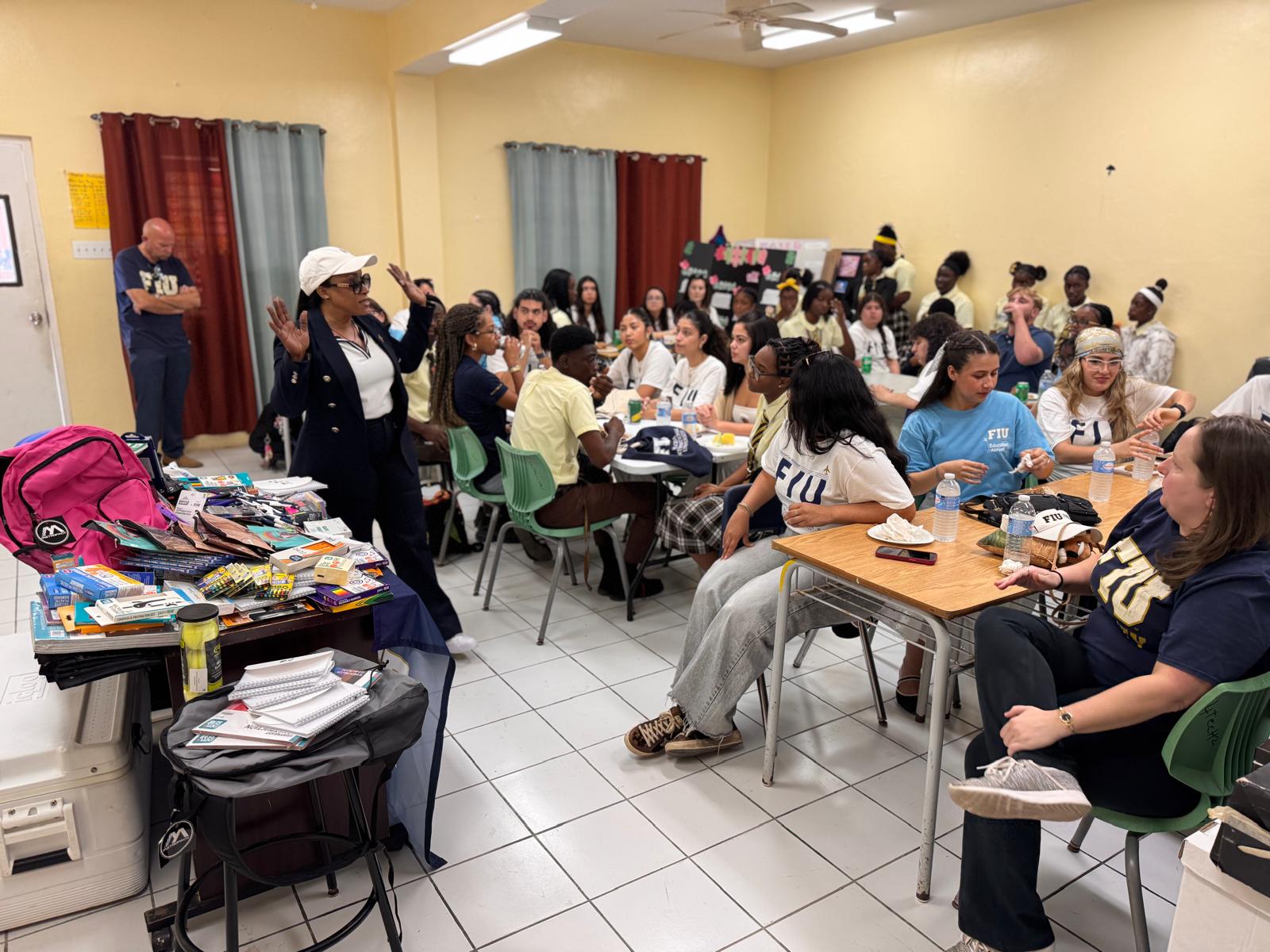
PROVIDENCIALES, Turks & Caicos Islands: — Beaches Turks and Caicos and Florida International University’s (FIU) Chaplin School of Hospitality & Tourism Management have joined forces to inspire the next generation of hospitality leaders in the Turks and Caicos Islands, partnering with Clement Howell High School and Oseta Jolly Primary School during FIU’s recent education abroad visit.
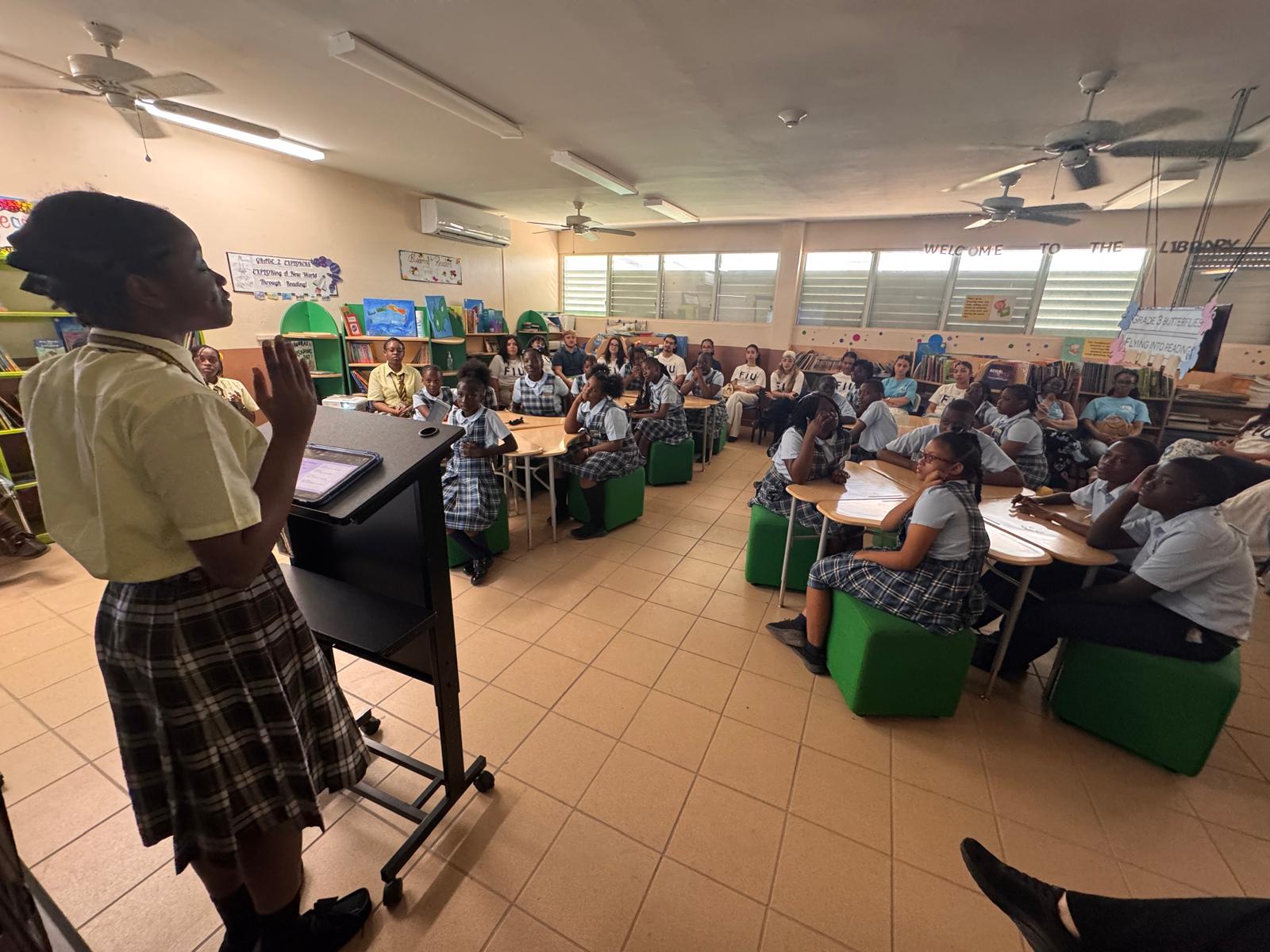
As part of FIU’s Education Abroad programme, a delegation from the Chaplin School of Hospitality & Tourism Management travelled to Providenciales to engage students in interactive sessions on careers in tourism, leadership and customer service. Hosted by Beaches Turks and Caicos, the programme blended classroom-style presentations with on-resort exposure, underscoring the resort’s long-standing commitment to youth development and training across the islands. FIU, consistently ranked among the top hospitality management schools in the United States, used the visit to highlight international study opportunities and the global reach of a hospitality degree.
Beaches Turks and Caicos, a flagship all-inclusive family resort on Providenciales, has developed a reputation for structured training and mentorship, frequently opening its doors to local students for hands-on learning and industry immersion. This new collaboration with FIU’s Chaplin School builds on that foundation by linking local classrooms directly to a world-recognised university programme, giving students early exposure to academic pathways and professional standards in tourism.
At Clement Howell High School, FIU faculty, students and Beaches representatives met with aspiring hospitality professionals in a series of workshops and talks. Sessions focused on leadership, guest experience, innovation in tourism and the importance of regulatory standards and sustainable practices for a destination whose economy is anchored in travel and hospitality. Students also heard about internship pipelines, scholarship options and the practical steps required to transition from secondary school to university-level studies in hospitality management.
FIU alumna and Deputy Governor of the Turks and Caicos Islands, Anya Williams, delivered an energizing address, encouraging students to

see themselves as future global leaders. “To build strong networks with the visiting FIU team, we have to build relationships now which will open doors to study overseas as well as mentorship and career opportunities.” Williams also highlighted how her own journey, including her time at FIU, helped shape her path to national leadership and underscored the value of combining academic excellence with service to country.
The delegation extended its outreach to Oseta Jolly Primary School. There, Clement Howell, FIU and Beaches volunteers tailored activities for younger students, introducing them to basic leadership skills. The sessions reinforced values already central to the school—respect, cleanliness and excellence.
Minister of Education, Youth, Sports and Social Services, Rachel Taylor, praised the collaboration, noting that strategic partnerships with world-class institutions are vital to aligning the national education agenda with the realities of a tourism-driven economy. She commended Beaches Turks and Caicos and FIU for investing time and resources in local students and said she looks forward to continued collaboration that will expand access to training, scholarships and international exposure for young Turks and Caicos Islanders. Taylor also emphasized that initiatives like this complement government-backed hospitality training efforts already underway with industry partners across the islands.
General Manager of Beaches Turks and Caicos, Deryk Meany, reaffirmed the resort’s commitment to developing local talent and supporting the wider community. He noted that the success of the Turks and Caicos tourism product depends on a strong developmental programme of well-trained, passionate professionals who understand both global standards and local culture.
News
50 Years of Ministerial Government: Cabinet Moves to Mark Milestone Rooted in 1976 Constitution
Published
7 days agoon
March 30, 2026
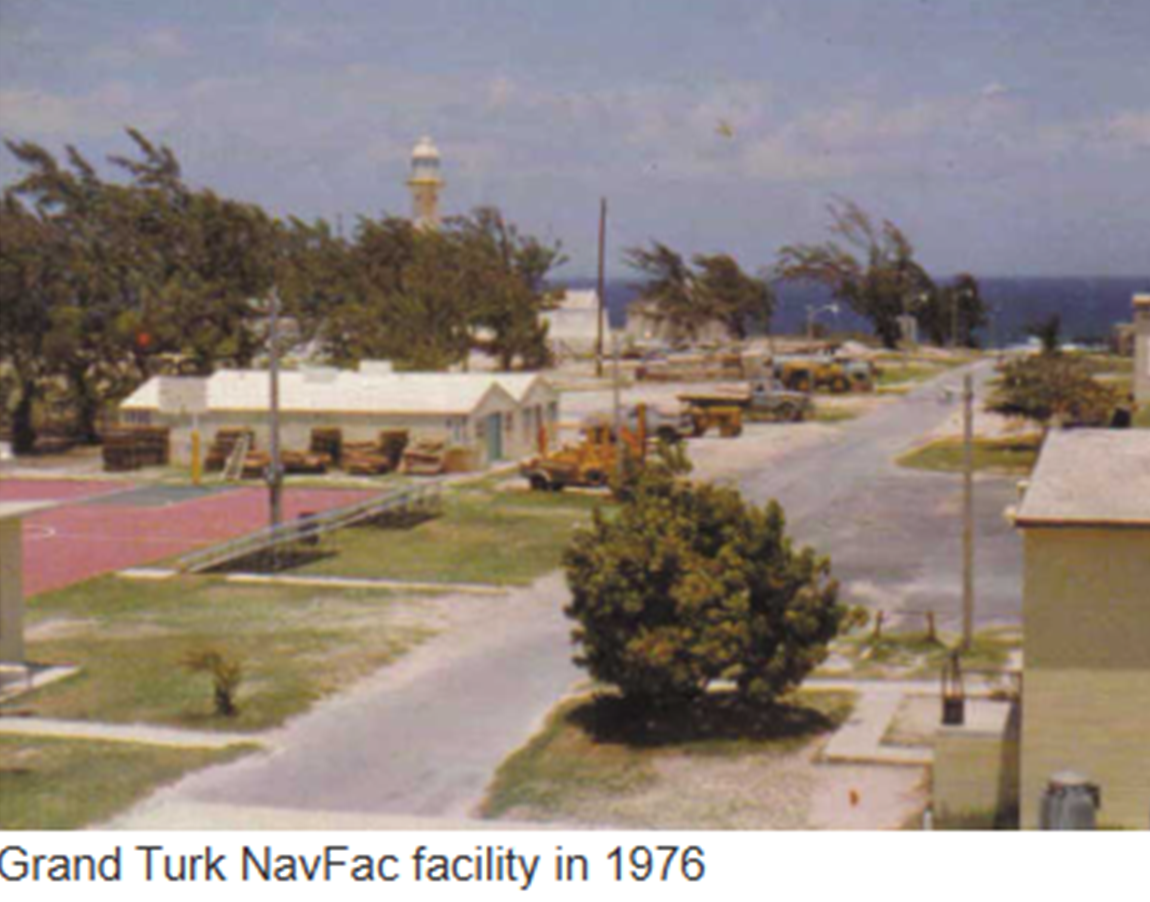
Turks and Caicos, March 30, 2026 – The Turks and Caicos Islands is preparing to mark a major political milestone, with Cabinet approving the establishment of a National Commemorative Committee to celebrate 50 years of ministerial government, a system first introduced under the 1976 Constitution.
The decision, confirmed in the February 10 Post Cabinet statement, signals a year of reflection on a governance model that fundamentally reshaped how the country is run — shifting from direct colonial administration toward locally led political leadership.
That shift was formalized in the Turks and Caicos Islands Constitution Order 1976, which laid the legal foundation for ministerial
government and introduced a structured Executive and Legislative system.
At its core, the 1976 Constitution established an Executive Council, bringing together:
- a Governor,
- a Chief Minister elected by members of the Legislative Council,
- and Ministers appointed to assist in governing the Islands.
A Very Different Government Back Then
If today’s Cabinet feels crowded, the 1976 version would have seemed almost unbelievable. There were just three Ministers serving alongside the Chief Minister — a tight, compact leadership team responsible for the affairs of an entire country. No sprawling list of ministries, no long roster of portfolios — just a handful of individuals carrying the weight of governance.
Becoming a Minister wasn’t a direct vote of the people either. You first had to win a seat in the Legislative Council, and from there, the Chief Minister would recommend who should serve. The Governor then made the appointments. In other words, political trust and alignment mattered just as much as public support — and ultimate authority still rested above the local leadership.
And as for job security? There wasn’t much of it. Ministers served without fixed terms and could be removed if they lost their seat, resigned, or if the Governor revoked their appointment. Even the Chief Minister could be ousted through a vote of no confidence. Add to that the basic requirements — being at least 21, a British subject, and meeting residency rules — and it’s clear that ministerial government in 1976 was not only smaller, but far more tightly controlled.
This marked the first time elected representatives were formally given defined roles in the administration of national affairs.
Under the Constitution, the Governor retained overarching authority, but was required in many instances to act on the advice of the Executive Council, particularly in shaping policy and overseeing government operations.
The Chief Minister, meanwhile, was positioned as the central political leader, responsible for directing government business and advising on the appointment of Ministers.
Importantly, the Constitution also allowed for the assignment of responsibilities to Ministers, giving them oversight of specific areas of government — a structure that remains at the heart of today’s Cabinet system.
Section 13 of the Order made clear that Ministers could be assigned responsibility for the administration of departments or government
business, embedding accountability and functional governance into the system.
The Legislative Council, established alongside the Executive, provided the law-making body, with elected and appointed members participating in debates, passing legislation, and representing the interests of the Islands.
Together, these provisions created the framework for what is now recognized as ministerial government — a hybrid system balancing local political leadership with constitutional oversight by the Governor.
The explanatory note of the 1976 Order describes it as introducing “new provisions for the Government of the Turks and Caicos Islands,” including the creation of a Legislative Council with elected members and Ministers appointed on the advice of the Chief Minister.
Fifty years on, that structure has evolved through subsequent constitutional changes, but its foundation remains rooted in the 1976 framework.
Cabinet’s decision to establish a commemorative committee suggests that the anniversary will not only celebrate political progress, but also invite reflection on how effectively the system has delivered on its promise of representation, accountability, and governance.
As the Islands approach this Golden Jubilee, attention is likely to turn not only to the achievements of ministerial government, but also to the ongoing question of how the system continues to serve a modern and rapidly developing Turks and Caicos Islands.
Developed by Deandrea Hamilton • with ChatGPT (AI) • edited by Magnetic Media.
News
Government Moves to Amend Destination Management Fee Law
Published
7 days agoon
March 30, 2026
Turks and Caicos, March 30, 2026 – The Turks and Caicos Islands Government has signaled changes to its tourism funding framework, with Cabinet approving draft amendments to the Destination Management Fee Act 2023.
The decision was confirmed in the Post Cabinet statement following the February 5 meeting, chaired by Governor Dileeni Daniel-
Selvaratnam, where members agreed to move forward with revisions to the law governing the collection and administration of the fee.
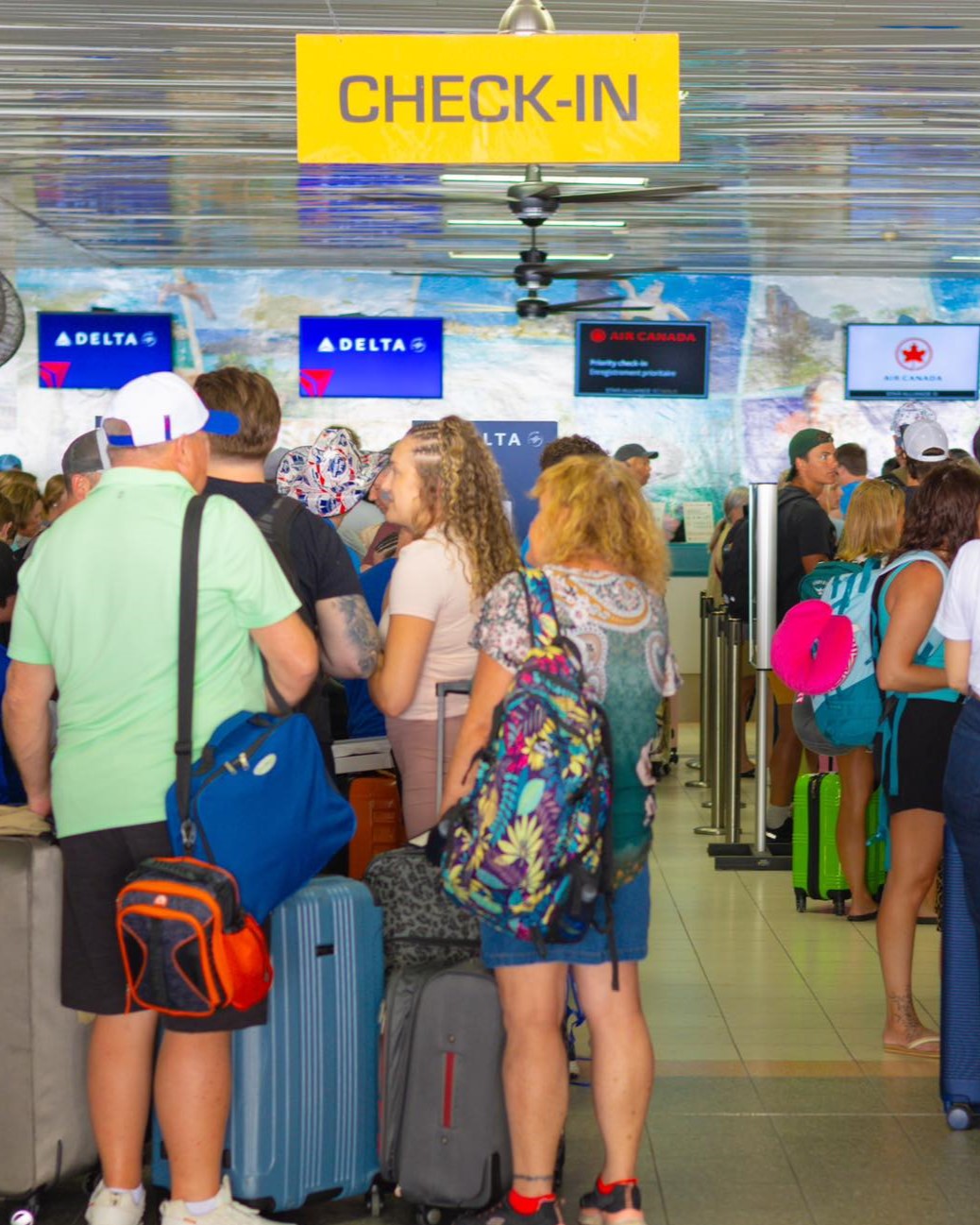
The Destination Management Fee, introduced in 2023, is applied to travelers entering the country and is embedded within the cost of travel. The charge was designed to support tourism-related development, including marketing, infrastructure, and sustainability initiatives.
At the time of its introduction, the fee was linked to the establishment of a Destination Management and Marketing Organisation (DMMO), which was expected to coordinate tourism strategy and enhance the visitor experience.
However, recent developments have shifted that landscape.
The DMMO has since been discontinued, raising new questions about how funds generated through the fee are being managed and what structure will now guide tourism development efforts.
The Cabinet note does not outline what specific changes are being proposed under the amended legislation.
It also does not indicate whether adjustments will be made to:
- who pays the fee,
- how it is collected, or
- how the revenue is allocated and overseen.
The move to amend the law comes amid broader government efforts to strengthen revenue collection and compliance, including updates
provided to Cabinet on the work of the Drag-Net Steering Committee — a multi-agency initiative focused on improving government revenue systems.
The lack of detail surrounding the amendments leaves several key questions unanswered, particularly given the fee’s direct impact on both visitors and residents and its role in supporting the country’s tourism economy.
Any changes to the Act would require further legislative steps, including presentation to the House of Assembly, before taking effect.
For now, the Cabinet’s approval signals that the government is moving to revise a policy that is already in force — but without yet disclosing how those revisions will alter the current system.
As tourism remains the backbone of the Turks and Caicos Islands economy, clarity on the future of the Destination Management Fee — and the framework it supports — is expected to be closely watched in the weeks ahead.
Developed by Deandrea Hamilton • with ChatGPT (AI) • edited by Magnetic Media.
Photo Credit: TCIAA
TRENDING
-
News1 week agoPassword to Paradise Radio Remotes at Beaches Turks & Caicos continue to highlight the TCI as the preferred Caribbean destination
-
News1 week agoBeaches Turks & Caicos adds four new PADI Dive Instructors to the cadre of professionals in the watersports department
-
News1 week agoBeaches Turks & Caicos shares fine dining experiences to high school students in Providenciales
-
Bahamas News7 days agoBahamasair Backs Surge as Bahamians Flood South Florida for V.J. Edgecombe Showdown
-
News7 days ago50 Years of Ministerial Government: Cabinet Moves to Mark Milestone Rooted in 1976 Constitution
-

News7 days agoFuel Costs Rise Again as Pelican Energy Warns of Global Pressures
-
News7 days agoGovernment Moves to Amend Destination Management Fee Law
-

News7 days agoFlow TCI Empowers Local Communities with ‘Project EmpowerHER’