
TCI News
TCI: Resolution of Prison Staff Concerns


#Providenciales, October 17, 2019 – Turks and Caicos – Following several incidents of assault against Prison Officers by inmates over several months, a number of Prison Officers refused to report to their work stations on the morning of October 17th 2019 which resulted in the need to call an emergency meeting with staff.

The meeting was convened at 10:00am at the Police Headquarters in Grand Turk and was chaired by the Acting Governor, Her Excellency Anya Williams supported by the Acting Minister of Home Affairs, the Honourable Edwin Astwood, the Permanent Secretary of Home Affairs, Mrs. Clara Gardiner, Deputy Permanent Secretary, Mrs. Bridgette Newman, Prison Superintendent, Mr. Grahame Hawkins and Assistant Superintendent of Police, Mr. Clifford Henry.
The Prison Officers raised a number of concerns relating to their working conditions, pay, benefits, security and safety, which were all discussed during the meeting.
Commenting on the meeting and its outcome, Acting Governor Her Excellency Anya Williams stated “Following a number of incidents of unrest and assault at the Prison, it was necessary to convene an emergency meeting with the Prison Officers to assure them that it was safe for them to return to work and that their concerns would be addressed.
A number of the matters raised were already in the process of being dealt with as substantial investments have been and will continue to be made in the infrastructure of the Prison and staff working conditions.
The UK recently funded a new fencing and lighting project for the prison, which once completed, will be followed by the reconstruction of the Yellow Wing, which was destroyed by fire following the hurricanes in 2017 and was subsequently tendered and awarded earlier this year.
In addition to this, the government has announced its intention to construct a new Remand Center in Providenciales to reduce the movement of prisoners for court purposes and the construction of a new Prison in Grand Turk to better address custody and rehabilitation.
The Prison has continued to see increases in staff over the years and progress is being made to providing staff with insurance, protective equipment and other resources to staff.
We understand and appreciate the challenges that our Prison Officers face every day in the carriage of their duties, and we are grateful for the jobs that they do and commit to working in partnership to address their concerns and to improve the overall state of the Prison.”
Acting Minister of Home Affairs, the Honourable Edwin Astwood said: “As acting Minister with responsibility for the Prison which is located on Grand Turk where I am based and serve the community, it was important to be present to join the Acting Governor, the Ministry of Home Affairs, and other senior officials to participate in communicating the Government’s efforts to address staff concerns and longstanding physical infrastructure issues at Her Majesty’s Prison. From our discussions, I am confident that a great deal of effort and work has already gone into resolving many of the issues raised and it is only a matter of weeks before some of them will materialize. Through this medium, I want to express the Government’s appreciation to management and staff for the work they do daily and reiterate our commitment to continue to provide meaningful support.”
Prison Superintendent Grahame Hawkins commented: “In the context of meals, prisoners received their breakfast at 9:30am this morning, their lunch meal at 12:30pm and will get their evening meal on time this evening.
In addition, The Police tactical team have also attended the prison today, as part of mutual support, with the intention of searching a number of areas and cells. The searching is being led by the prison team, with the assistance of the police. The intention is to demonstrate that the police and prison work together to make sure that the prison and those within it understand that security and safety is important.”
Upon conclusion of the meeting, the staff returned to their duties at 11:30am this morning.
Release: TCIG

By Magnetic Media Newsroom
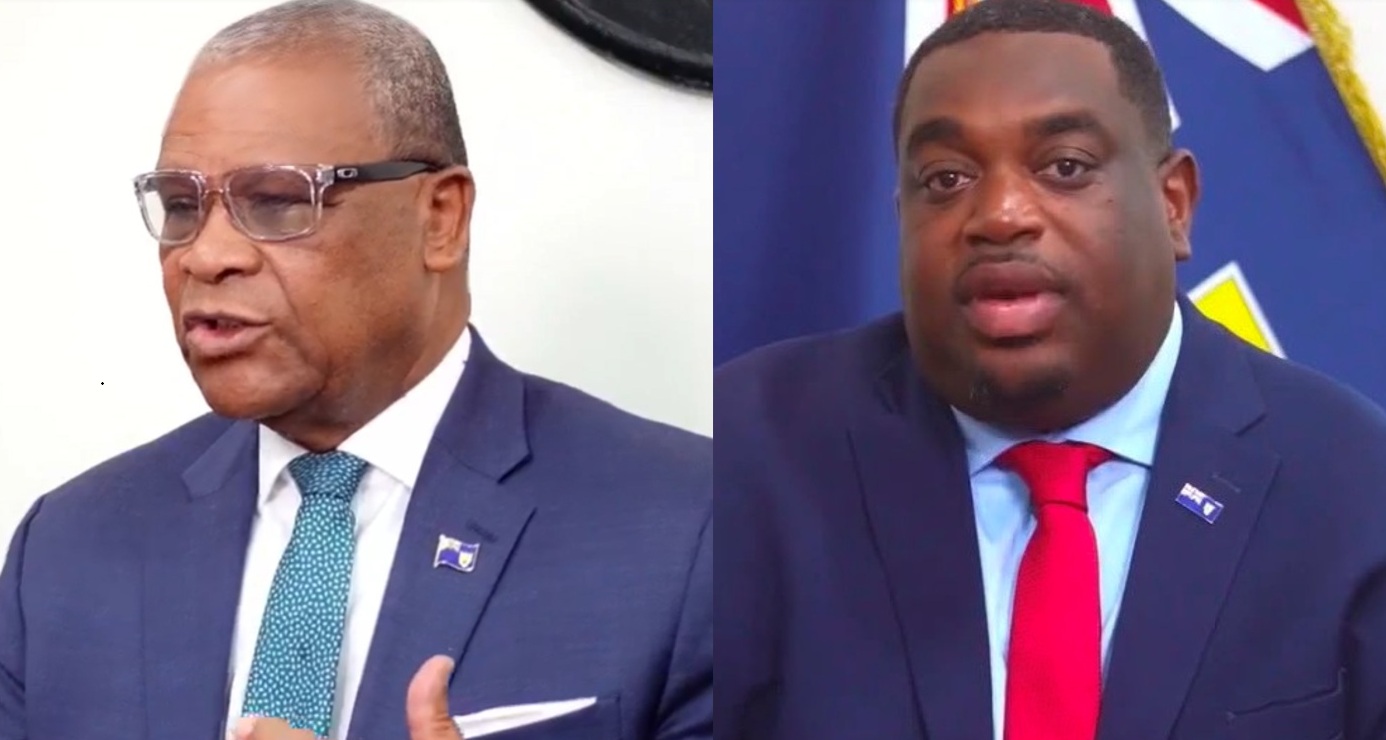
PROVIDENCIALES, Turks and Caicos Islands — The Turks and Caicos Islands Government says the breakdown of its relationship with InterHealth Canada presents an opportunity to reshape healthcare delivery, with plans to expand local medical services, strengthen primary care and reduce dependence on overseas treatment.
During a national briefing following InterHealth Canada’s notice terminating its hospital contract, Premier Charles Washington Misick acknowledged publicly for the first time that Government and InterHealth had been negotiating an exit from the arrangement for more than a year after what he described as an “irretrievably broken down” relationship.
Despite the contractual dispute, Misick and Health Minister Kyle Knowles stressed that healthcare services will continue uninterrupted during the transition.
“Allow us to do our job,” Knowles appealed, assuring residents that Government is actively managing the transition and safeguarding patient care.
The Premier outlined what amounts to a broader healthcare transformation built around four connected levels of care: strengthened community-based primary healthcare; expanded polyclinic services; enhanced hospital-based secondary care with greater specialist capacity; and overseas tertiary treatment only for cases that cannot be managed locally.
Among the proposals are the long-discussed establishment of intensive care units, expanded use of currently unfinished hospital space, recruitment of more resident specialist physicians and stronger contract management to oversee future healthcare agreements.
Knowles said the new polyclinic model will broaden services available outside the hospitals, including dentistry, ophthalmology, laboratory services, diagnostic imaging, gynaecology and preventative screening, helping to reduce pressure on emergency departments while improving early intervention.
Misick also acknowledged that while the hospital system significantly improved healthcare access after opening in 2010, Government believes further reform is necessary to improve affordability, sustainability and the range of services available within the Turks and Caicos Islands.
The briefing marked the Government’s most comprehensive explanation to date of its plans beyond the InterHealth contract, signalling that officials now see the transition as an opportunity to redesign healthcare delivery rather than simply replace one operator with another.
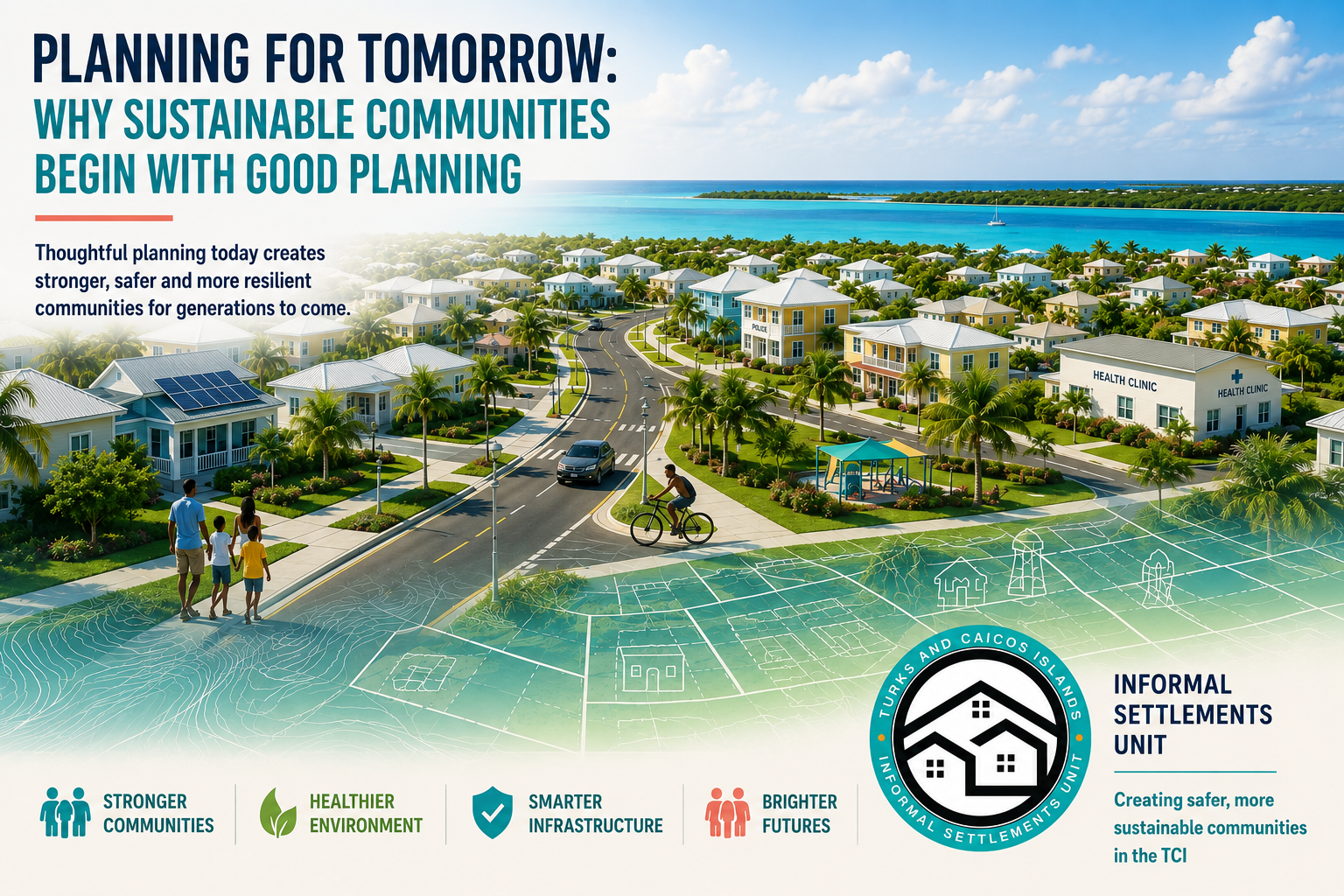
Turks and Caicos – Every thriving community tells a story long before the first home is built. The placement of roads, the routing of utilities, the protection of natural resources and the provision of schools, healthcare and emergency services are all the result of decisions made through careful planning. While these elements are often taken for granted, they form the foundation of safe, functional and sustainable communities.
As populations grow and communities evolve, planning becomes increasingly important. It helps ensure that development takes place in locations that can support it, that infrastructure keeps pace with demand, and that public services remain accessible to those who depend on them. Good planning also considers the future, creating communities that can adapt to changing needs while preserving the quality of life enjoyed by current and future generations.
Where development occurs without adequate planning, however, the effects can be felt far beyond the boundaries of a single neighbourhood. Roads may be unable to accommodate emergency vehicles, utilities can become overstretched, and environmental resources may come under increasing pressure. Delivering public services in these circumstances often becomes more difficult and more costly, creating challenges that affect entire communities rather than individual properties alone.
For this reason, sustainable development can only emanate from careful planning. It must be ensured that homes, infrastructure and essential services develop together in a coordinated and responsible way. Every planning decision contributes to the broader picture of how communities function, grow and respond to future demands.
Supporting that process requires reliable information. Accurate data helps planners and policymakers understand where growth is occurring, identify emerging needs and make informed decisions about infrastructure, housing and public services. It also strengthens collaboration among government agencies by providing a shared understanding of the challenges and opportunities facing communities.
Within the Turks and Caicos Islands, this collaborative approach is reflected in the work of the Informal Settlements Unit (ISU), which supports a range of initiatives aimed at improving the understanding of informal settlement development. Through activities such as GIS mapping, the Social Needs Assessment Survey and collaboration with partner agencies, the ISU contributes valuable information that helps support evidence-based planning and long-term decision-making.
Strong communities are not built overnight. They are shaped through thoughtful planning, informed decisions and cooperation across government and the wider community. As the Turks and Caicos Islands population continues to grow, maintaining that focus will be essential to creating communities that are safe, resilient and equipped to meet the needs of generations to come.
Education
Turks and Caicos Islands Students Excel at Cycle 13 WizdomCRM Regional AI Game National Awards Ceremony
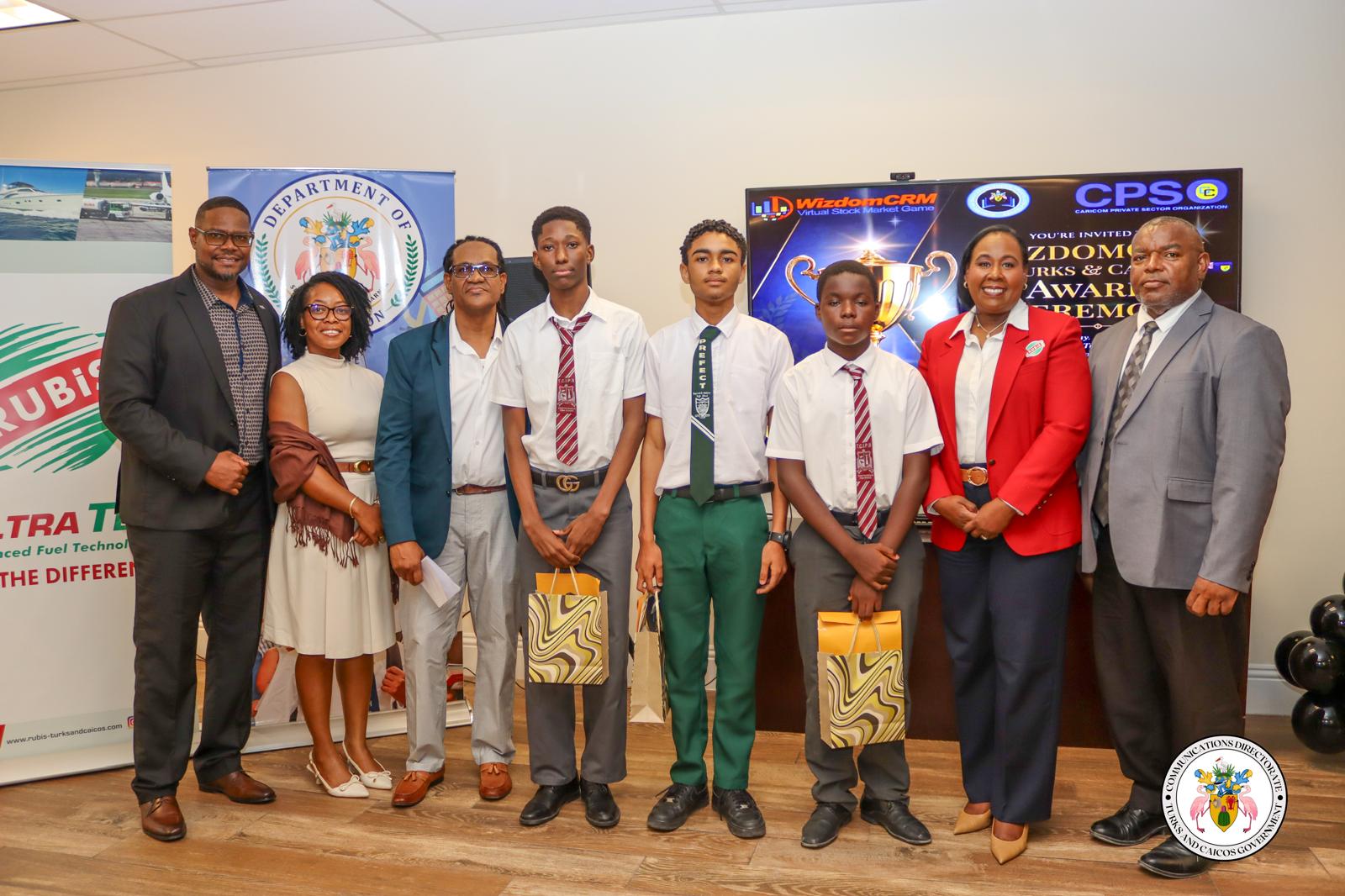
Providenciales, Turks and Caicos Islands – Wednesday, 22 July 2026: The Ministry of Education, Youth, Sports and Culture proudly congratulates the students of the Turks and Caicos Islands on their outstanding performance at the Cycle 13 WizdomCRM Regional Virtual Sustainable Stock Market AI Game National Awards Ceremony.
The ceremony was held on Thursday, 16 July 2026, at the Blue Haven Resort, under the theme “Champions Today. AI Leaders Tomorrow.” It was hosted by the Ministry in collaboration with WizdomCRM.
Students across the Caribbean took part in the investment challenge, each beginning with a virtual portfolio of USD $25,000 and working to grow it through simulated investments on regional and international stock markets. Throughout the competition, students were guided by Mr. Rabbit, WizdomCRM’s AI Tutor, and supported by E-Classroom sessions, building financial literacy, critical thinking and investment skills.
The Turks and Caicos Islands emerged as the region’s top-performing territory, claiming the top six regional positions, securing 14 of the Caribbean’s Top 20 places, and placing four schools on the regional leaderboard. Leading the region was Marc Roubentz-Perceus of TCIPS Comprehensive High School, who grew his portfolio to USD $370,336.63. He was followed by Joshua Creese of Raymond Gardiner High School in second place, and Stendro Chalas of TCIPS Comprehensive High School in third. Raymond Gardiner High School was also recognised as the Top School for Cycle 13.
Hon. Rachel M. Taylor, Minister of Education, Youth, Sports and Culture, said: “I congratulate every student who took part in Cycle 13. You
have demonstrated the confidence to compete with the very best students regionally, and you have shown our country what is possible. This success is not luck; it is the result of an ecosystem built by students, teachers, parents, school leaders and partners who continue to invest in educational excellence. As we look ahead, the Ministry is in active discussions with WizdomCRM to expand access to its AI-powered learning tools, including Super AI, the AI Tutor, the Plagiarism Checker and the Grammar Checker, so that our young people are equipped with the future-ready skills they need to succeed.”
The Ministry extends sincere appreciation to the dedicated teachers who mentored the students, and to Rubis Turks and Caicos, whose sponsorship provided the cash prizes awarded to the top three regional champions. The Ministry also thanks WizdomCRM, participating schools, parents and stakeholders for their partnership in this achievement, which reflects the Ministry’s continued commitment to innovation, digital learning and youth development across the Turks and Caicos Islands.
WIZDOM CRM – Top Performers Cycle 13
| Position | Name | School | Portfolio Value | Regional Placement |
| 1st | Marc Roubentz-Perceus | TCIPS Comprehensive High School | $ 370,336.63 | 1st |
| 2nd | Joshua Creese | Raymond Gardiner High School | $ 264,841.31 | 2nd |
| 3rd | Stendro Chalas | TCIPS Comprehensive High School | $ 247,738.09 | 3rd |
| 4th | Ojed’harlie Jolissaint | Wesley Methodist School | $ 227,389.60 | 4th |
| 5th | Tyshawn Wright | Raymond Gardiner High School | $ 189,064.18 | 5th |
| 6th | Jah’keem Missick | Raymond Gardiner High School | $ 173,654.58 | 6th |
| 7th | Curvin Handfield | Raymond Gardiner High School | $ 156,984.89 | 8th |
| 8th | Chadazea Darville | Wesley Methodist School | $ 147,428.43 | 9th |
| 9th | Vivaan Castleton | British West Indies Collegiate | $ 120,833.83 | 14th |
| 10th | Damendine Simplus | TCIPS Comprehensive High School | $ 118,660.55 | 15th |
| 11th | Dyvion Louis | Raymond Gardiner High School | $ 111,572.81 | 16th |
| 12th | Colin Moriarty | British West Indies Collegiate | $ 106,854.81 | 17th |
| 13th | Kensley Felix | TCIPS Comprehensive High School | $ 101,285.06 | 18th |
| 14th | Redjino Saint-Louis | Raymond Gardiner High School | $ 99,927.39 | 19th |
TEACHERS
- Fexnel Colvert – TCIPS Comprehensive High School
- Valerie Olice – Raymond Gardiner High School
- Warren French – Wesley Methodist School
- Phyllis Boucher – British West Indies Collegiate
Top Performing School: Raymond Gardiner High School





-

 Education5 days ago
Turks and Caicos Islands Students Excel at Cycle 13 WizdomCRM Regional AI Game National Awards Ceremony
-

 News1 week ago
Six Unauthorised Structures Demolished During Multi-Agency Planning Enforcement Operation
-
 Caribbean News6 days ago
Pres Ali declares three days of national mourning following MV Barima tragedy July 21, 2026
-

 News6 days ago
ANDY BURNHAM, NEW UK PM’S FIRST ORDER: LOWER THE COST OF LIVING
-
 Government5 days ago
Parnell Urges Premier to Step Aside, Proposes Bipartisan Board to Guide Healthcare Transition
-

 Government4 days ago
Government Outlines New Healthcare Vision as Interhealth Exit Accelerates Reform
-

 News4 days ago
Planning for Tomorrow: Why Sustainable Communities Begin with Good Planning
-

 Bahamas News4 days ago
Caught in the Net, Not Accused of Wrongdoing