
TCI News
TCI: Airport firefighters draw public support during strike, labelled as ‘one of the finest’ by Provo Air Center

#Providenciales, August 10, 2019 – Turks and Caicos – Memes, social media commentary, voice notes and at least one private sector partner lent support to the disgruntled fire fighters of the Providenciales International Airport, PLS in their stance for better work conditions.

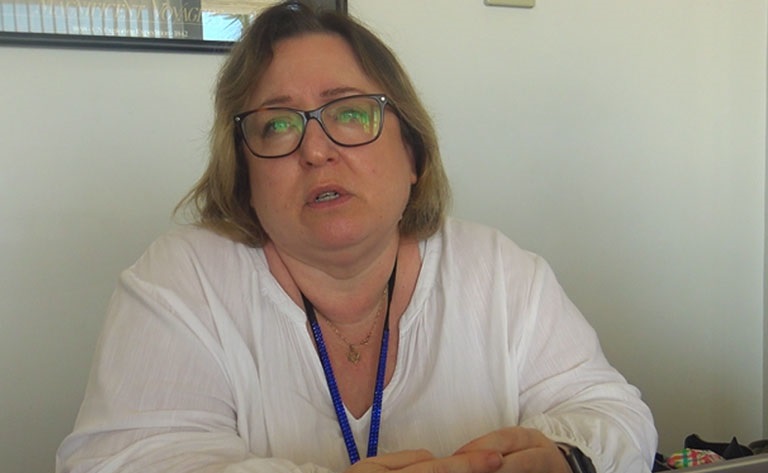
“Thank God, I haven’t had to see the fire fighters in major action yet but I’ve seen them operate and react to a lot of minor incidents. We have one of the finest in the Caribbean. These guys and women are an elite fire fighting force and I think that we need to recognize them and we need to treat them as such. So, I feel for them, I understand what their complaints are and I hope that we are all going to be speaking to our representatives and encouraging the Airports Authority to do their best with them,” said Deborah Aharon, CEO of Provo Air Center during an interview with Magnetic Media on Friday.
Twenty of the 25 fire crew walked off the job on Thursday, citing their frustration at requests for improvements and fairness on the job as reaching a breaking point with the Turks and Caicos Islands Airports Authority, TCIAA.
Aharon, who has been in the airline business for over 20-years explained, “We rely on them, as we learned today, if they’re not working, nobody is moving. To me they are heroes just for showing up every day.”
The fire fighters claimed, “employment abuse” by the TCIAA and their strike left the airport with insufficient fire fighters and crippled operations at the country’s busiest airport. Flights on Friday were delayed and some cancelled as a result of manpower shortage. The incident almost forced cancellations at the Fixed Base Operators, FBOs or private airports.
“In the beginning, it was a little bit scary because everybody had to stop; interCaribbean, United, Delta and I think they had to make special arrangements to get American off on-time today, which was a blessings, they came up with work-arounds and some of the fire fighters started coming in to help. For the FBO, the problem is that most of the one percent visitors are coming in on large private jets, they are coming in on Challengers, Gulf Streams and those are fire-fighting category six. So, for most of the day we were operating at category five, so that meant that some of our customers could not come in today or could not take off. Luckily the Airports Authority worked it out, just before I had to start notifying customers.”
The 23 men and two women which make up the fire crew at their airport told Magnetic Media that they were treated unfairly by the Airports Authority. Overtime pay was unpaid and sometimes their hours were adversely manipulated, the fire station where the crew could spend up to 16-hours on shift, was run down according to the spokesperson for the group.
Speaking to us at her office at Provo Air Center, which is located on Aviation Drive, Aharon said: “I don’t know much about it (the complaints) but I would certainly hope that the Airports Authority is going to put every effort into making sure that they have the comfortable working environment that they need.”

The fire fighters on Friday afternoon managed to secure a meeting with the Premier, the Governor and the Deputy Chairman of the TCIAA board; it led to an amicable end to the stalemate and a return to work with the crew feeling optimistic about concerns finally being addressed.
For Provo Air Center, which handles the lion share of private flights to Providenciales, this was great news.
“I really hesitated to notify customers, because we don’t want this to get out into the world. So, I think we dodged a major bullet today. I hope that they’re going to keep the dialogue going and they’re going to reach a good agreement in order for us not to have to face this again.”
Both Provo Air Center and Blue Heron Aviation share a site with the Providenciales International Airport. The fire fighters stationed at PLS are trained, equipped and mandated by international regulations to be on emergency stand-by in the event planes landing at either of the three facilities, experience trouble.
#magneticmedianews
#airportfirefightersstrike
#provoaircenter








Turks and Caicos, April 06, 2026 – Technical excellence early in their jumps became the defining factor for two Turks and Caicos athletes, as David Hall soared to gold in a nail-biting Under-20 high jump final at the 53rd CARIFTA Games in Grenada. Herwens Guerrier added to the country’s success with a 1.90 metre clearance to secure silver in the Under-17 division, finishing in a tightly contested field where all three medalists cleared the same height.
Both events were decided on countback — meaning the medals were determined not just by height cleared, but by which athlete did so with fewer failed attempts, highlighting the importance of precision and composure under pressure.
A wave of national pride followed the results, with congratulatory messages pouring in for the athletes who delivered under pressure on the regional stage. In a statement, Dileeni Daniel-Selvaratnam praised both competitors, saying their “hard work, discipline and determination have made the entire nation proud,” while encouraging the wider team to continue striving as competition unfolded at the Kirani James National Stadium in Grenada.
Team Turks and Caicos finished just outside of the top ten among 28 competing nations, and anticipation is already building for what is expected to be a spirited homecoming for the standout athletes, whose performances have ignited pride across the islands.
The 53rd staging of the CARIFTA Games, held at the Kirani James National Stadium in Grenada, unfolded under warm, at times testing conditions, with intermittent showers and shifting winds challenging athletes across disciplines.
Jamaica once again asserted its dominance, capturing its 40th consecutive CARIFTA title, continuing an unmatched run in regional athletics. Among the standout performers was Shanoya Douglas, whose electrifying run in the Under-20 200 metres earned her the prestigious Austin Sealy Award — the Games’ highest individual honour — after she shattered the long-standing record of Bahamian Shaunae Miller-Uibo, who went on to become an Olympic gold medalist in the 400 metres. Douglas clocked an impressive 22.11 seconds to rewrite the CARIFTA record books.
For Turks and Caicos, however, the spotlight remained firmly on the field, where two high jumpers delivered performances defined by discipline and growth. Hall’s gold medal-winning clearance of 2.00 metres marked a significant step forward in his development, improving on his 1.89 metre silver medal performance at the 2025 Inter-High Championships. Guerrier’s 1.90 metre effort in the Under-17 division similarly places him among the country’s top emerging talents, signalling a strong future for the event locally.
Angle by Deandrea Hamilton. Built with ChatGPT (AI). Magnetic Media — CAPTURING LIFE.

PROVIDENCIALES, Turks and Caicos Islands — It’s that time again — a period of compliance, accountability and transparency for those entrusted with public office and captured under the category of “Specified Persons in Public Life.”
The Integrity Commission is reminding all individuals who fall within this category that they are legally required to file their Declarations of Income, Assets and Liabilities, in accordance with Section 39 of the Integrity Commission Ordinance.
The declaration window is now officially open, running from April 1 to June 30, 2026, and applies to a wide cross-section of senior public officials, statutory board members and others operating within the machinery of government.
This is not a routine administrative exercise. It is a cornerstone of good governance — designed to ensure that those in positions of power are transparent about their financial interests, and to guard against corruption, conflicts of interest and illicit enrichment.
Who Must File
The Commission outlines several categories of individuals required to submit declarations this cycle.
They include:
- Persons who last filed on or before June 30, 2024
- Individuals newly appointed to statutory boards or government positions from April 1, 2026 onward
- Those who have demitted office, resigned or whose contracts have ended — who must file within 90 days of leaving their post
- Individuals who may not have previously realized they fall under the legal requirement
The net is wide — and intentionally so.
“Specified Persons in Public Life” includes elected officials, senior civil servants, financial officers, law enforcement leadership, members of statutory bodies, and other key decision-makers whose roles carry influence over public resources and policy.
Among them are Members of the House of Assembly, Cabinet Ministers, Permanent Secretaries, Heads of Department, senior police officers, and individuals serving on public boards and commissions.
The Commission notes that the full schedule of designated roles is extensive, and persons are encouraged to consult the official list available through its office or website to confirm whether they are captured under the law.
How to File
Unlike many modern reporting systems, this process remains deliberately controlled.
All declarations must be:
- Submitted in person
- Delivered by appointment only
- Accompanied by supporting documentation
Declarants will be contacted directly with their assigned appointment details, including date, time and location. The Commission has made it clear — submissions through third parties, email or mail will not be accepted.
This approach reinforces the seriousness of the process and ensures the integrity of submissions.
Declaration forms are available via the Commission’s website, and assistance is accessible through its Providenciales office for those needing clarification.
Penalties for Non-Compliance
The warning from the Commission is unambiguous.
Failure to file a declaration without reasonable cause is a criminal offence.
Penalties include:
- Up to one year imprisonment
- A fine of up to $15,000
- Or both
Additionally, the Commission is mandated to publish the names of non-compliant individuals in the official Gazette — a move that carries both legal and reputational consequences.
Confidential but Critical
While the process is strict, the Commission emphasizes that all declarations are confidential documents, handled with discretion.
Still, the purpose is clear: transparency does not always mean public disclosure — but it does mean accountability to an independent oversight body.
In a region where public trust can be fragile, these filings serve as a quiet but powerful mechanism to reinforce confidence in governance.
For Turks and Caicos, this annual exercise is more than paperwork — it is a test of integrity at the highest levels.
And for those required to file, the message is simple: comply, disclose, and do it on time.
For more information or to confirm filing obligations, individuals are encouraged to contact the Integrity Commission directly.
Angle by Deandrea Hamilton. Built with ChatGPT (AI). Magnetic Media — CAPTURING LIFE.
News
CALL 649-338-4008 OR 649-338-2684 IF A CHILD IS AT RISK: TCI Confronts Alarming Reality During Child Abuse Prevention Month

06PROVIDENCIALES, Turks and Caicos Islands — The Turks and Caicos Islands, a small British Overseas Territory though it is, is grappling with an unsettling truth: levels of physical and psychological violence against children remain alarmingly high.
Recent regional findings place the country among the most concerning in the Caribbean, with data showing that eight to nine out of every ten children experience some form of violent discipline — whether physical punishment or emotional harm.
It is a reality the Department of Family and Children Services is not taking lightly.
As the country marks Child Abuse Prevention Month 2026 under the theme “Positive Childhoods Start with Us,” officials are pushing beyond awareness and into action.
Director of DFCS, Ashley Adams Forbes, said changing that reality requires action from the entire community.
“Positive childhoods are not guaranteed—they are built when communities choose to show up for families and protect their children. When we listen, when we care, and when we speak up for a child in need, we may be changing the course of a life.”
Minister with responsibility for DFCS, Shaun D. Malcolm, warned that the consequences of inaction extend beyond individual families.
“Protecting our children is the most urgent duty we share as a nation. When any child is unsafe, our entire society is at risk.”
But beyond the messaging and observances, the Department is making it clear: residents have a role to play — and the tools to act.
Contact lines are open for those who suspect abuse, neglect or risk:
- Providenciales: 649-338-4008
- Grand Turk: 649-338-2684
Officials say even uncertainty should not silence action — reporting concerns can be the first step in protecting a child.
Across the islands, the call is for stronger families, more attentive communities and a willingness to intervene when something is not right. Because while policies and programmes matter, it is often the decisions made in homes, schools and neighbourhoods that determine whether a child feels safe — or suffers in silence.
The message this April is clear.
Positive childhoods do not happen by chance.
They are built — or broken — by the choices adults make every day.
And in Turks and Caicos, the moment to choose differently is now.
Angle by Deandrea Hamilton. Built with ChatGPT (AI). Magnetic Media — CAPTURING LIFE.





-

 News4 days ago
GOLD & SILVER – Hall & Guerrier Fly High for Turks and Caicos at CARIFTA 2026
-

 News5 days ago
CALL 649-338-4008 OR 649-338-2684 IF A CHILD IS AT RISK: TCI Confronts Alarming Reality During Child Abuse Prevention Month
-

 Independent writer3 days ago
The Rise of Right-Wing Populism and What It Could Mean for the Turks and Caicos Islands
-
 News5 days ago
Beaches Turks & Caicos, FIU train next generation of hospitality leaders in Providenciales
-

 Bahamas News5 days ago
Fuel Pain at The Pump: Global Tensions Drive Prices Up as Bahamians Feel the Squeeze
-

 Bahamas News5 days ago
FNM’S $200 CHILD SUPPORT PLAN SPARKS DEBATE AS PLP QUESTIONS FUNDING AND SCOPE
-

 News5 days ago
Birthright Citizenship Unchanged as U.S. Supreme Court Weighs Case, Majority of Americans Oppose Ending Policy
-
 News5 days ago
COMING SOON: BORROWING TO MODERNISE