
world news
Father with the most children with his two wives is from Russia



June 16, 2019 – Feodor Vassilyev was a peasant from Shuya, Russia. His first wife is claimed to have lived to be 76 and between 1725 and 1765 had 69 children. There 16 pairs of twins, seven sets of triplets and four sets of quadruplets. Sixty-seven of the children survived infancy with the loss of one set of twins – the record for most children born to a single woman. However her name, date of birth, and date of death, are all unknown.
Wikipedia adds that this is Guinness record with details of the children included there.
Add to this amazing feat of fatherhood, Vassilyev re-married and had 18 more children; six pairs of twins and two sets of triplets.
The cumulation of children made Vassilyev a father of 87 children in total. Of his 87 children, at least 82 are said to have survived infancy.
#magneticmedianews
#fathersday2019
#fatherwithmostchildren


On Tuesday May 12, the world pauses to honor one of humanity’s most trusted, exhausted, resilient and indispensable professions — nursing.
International Nurses Day is observed annually on the birthday of Florence Nightingale, widely regarded as the founder of modern nursing, and comes at a time when global healthcare systems continue to rely heavily on nurses carrying extraordinary emotional, physical and professional burdens.
According to the World Health Organization, there are an estimated 29 million nurses worldwide, making nursing the largest professional group within the global healthcare workforce. Yet despite their numbers, many countries continue to face severe nursing shortages, burnout crises and migration challenges as healthcare demands rise faster than staffing levels.
Still, nurses remain the heartbeat of healthcare.
They are present at life’s first breath and often its final moments. They work through hurricanes, pandemics, emergencies and violence. They calm fear, interpret pain, comfort families and frequently become the bridge between doctors, patients and hope itself.
In small island nations like those across the Caribbean, nurses often carry even greater responsibility — serving communities where resources may be stretched, specialists limited and healthcare systems under constant pressure.
This year’s observance again shines a spotlight not only on the compassion nurses bring to their profession, but also on the growing global call for better pay, safer working environments, improved mental health support and stronger investment in healthcare staffing.
For many people, the most memorable face in healthcare is not always the surgeon or specialist — it is the nurse who stayed a little longer, explained a little more gently or cared a little more deeply during a difficult moment.
Tomorrow’s observance is therefore more than ceremonial.
It is a reminder that behind every functioning hospital, clinic, emergency room, health center, operating theatre and recovery ward stands a nurse — often overworked, sometimes underappreciated, but consistently essential.
To nurses across The Bahamas, Turks and Caicos, the Caribbean and the wider world: thank you for showing up, even on the hardest days.
Developed by Deandrea Hamilton • with ChatGPT (AI) • edited by Magnetic Media.
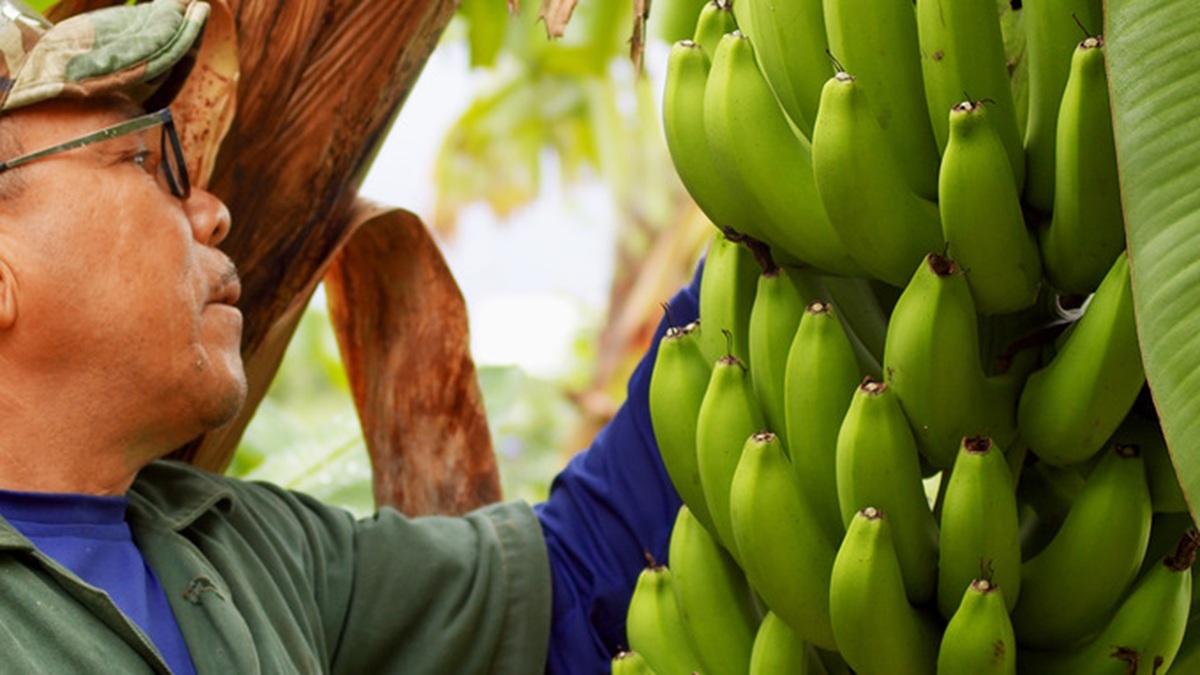
How Venezuelan farmers are learning to grow and live with a devastating plant disease
In the fields of Venezuela, where the banana has been for generations a symbol of sustenance and tradition, a shadow fell across the land. In 2023, Venezuela’s National Institute of Integral Agricultural Health (INSAI) declared a phytosanitary emergency: the fungus Fusarium Tropical Race 4 (TR4) (Fusarium oxysporum f. sp. cubense tropical race 4; syn. Fusarium odoratissimum) had arrived in producing areas in the states of Aragua, Carabobo and Cojedes.
This fungus, considered a devastating disease of banana and plantain (Musaceae) trees, can remain in the soil for more than two decades, threatening production and the lives of those who depend on it.
In the state of Aragua in the north of the country, the Renacer community had been growing bananas and plantains on 20 hectares since 2018. Then Fusarium arrived.
“When the disease hit, the entire plantation began to deteriorate. We refused to ‘die’ with the trees because that was our livelihood. The visits of INSAI confirmed that we had to chop down the banana trees. I cried a lot because I had worked with my banana trees for years,” recalls woman farmer, Lesbia Margarita García, with a broken voice.
In response, INSAI implemented measures to eliminate the affected plantations and improve the soil health by changing to other crops that allow agricultural production to recover. The Food and Agriculture Organization of the United Nations (FAO) offered assistance by providing corn seeds, tools, biosecurity inputs and training, with teams of experts helping farmers to start again.
“Planting corn, thanks to the INSAI-FAO programme, gave us a harvest that benefited everyone. We have been improving the soil,” says Lesbia Margarita with a smile. “Now we rotate crops, observe soil health and have learned how to use natural fertilizers. Expert assistance has been key.”
The pilot project works directly with affected producers in high-risk areas, promoting alternative crops such as cereals and vegetables, delivering inputs and tools to mitigate damage and applying biosecurity measures for safe and effective containment.
“Beyond the corn received, we have already planted cassava, chili peppers, beans and pumpkin. We hope that by the end of the year [2025] we will be diversified and that each season we will have something to sell. These lands do not give up,” says Lesbia Margarita with conviction.
The Renacer community is beginning to see fruits. Their products are reaching local markets, generating income and rebuilding their livelihoods.
Key actions to manage Fusarium TR4 are ongoing, including regular monitoring, continuous training, inter‑institutional coordination, updates to the national plan, information campaigns and producer impact assessments. INSAI is sustaining regulatory, surveillance measures and training —with FAO support—as part of a comprehensive long‑term strategy.
At the global level, FAO supports awareness raising, capacity building and international collaboration in the fight against Fusarium TR4 by facilitating the World Banana Forum and its Global Network on TR4.
“The objective is for countries to strengthen their operational and technical capacity, articulating actions between the public sector, the private sector and family farmers,” says Raixa Llauger, FAO Agriculture Officer in Mesoamerica. “FAO and local partners have promoted this approach in Venezuela.”
As an essential part of the activities, a comprehensive training programme was developed with activities that taught farmers how to identify the disease contain it and protect crops. In addition, FAO has distributed laboratory equipment, biosecurity tools and a multispectral drone to INSAI. Drones are an efficient and cost‑effective tool for phytosanitary surveillance, offering rapid, high‑resolution monitoring and early detection of plant pests and diseases.
Overall, the project strengthened biosecurity measures against the Fusarium fungus through the adoption of the National Action Plan and the establishment of partnerships with national and international institutions. In addition, the pilot initiative supporting smallholder farmers in key production areas and a nationwide awareness campaign with broad outreach improved surveillance, diagnosis and phytosanitary response capacities across the country.
March 18, 2026 – Twenty days after the latest Middle East conflict erupted, the United Nations is warning the war may no longer be contained, as fighting involving the United States, Israel, Iran and armed groups across Iraq, Lebanon and the Gulf continues to spread.
In a statement issued March 17, the spokesperson for the UN Secretary-General said the war must stop and urged all parties to respect Security Council Resolution 2817, which condemned attacks on Gulf countries and warned the escalation poses a serious threat to international peace and security.
The current round of fighting began on February 28 with joint U.S. and Israeli strikes on Iranian targets, followed by missile, drone and proxy attacks across the region, including strikes on Gulf states, shipping routes and military bases.
Death toll climbing across multiple fronts
Casualty figures remain incomplete, but international monitoring groups say the conflict has already killed more than 1,300 people in Iran alone, with some estimates placing the total regional death toll much higher.
U.S. officials confirm at least 13 American service members have been killed since the fighting began, while Israeli casualties have also been reported following missile and drone attacks, though no final number has been released.
Hundreds have also been killed in Lebanon during Israeli strikes linked to the widening conflict, and casualties have been reported in Gulf states after Iranian retaliation targeted military facilities and energy infrastructure.
In the latest escalation, Israeli strikes reportedly killed additional senior Iranian military leaders, signalling the conflict is moving deeper into direct confrontation rather than proxy fighting alone.
NATO allies staying out of the fight
While the United States continues military operations, several NATO countries including the United Kingdom, France, Germany, Canada and Italy have warned against further escalation and are not joining offensive action, instead calling for negotiations and de-escalation.
The lack of a unified Western coalition has raised concerns the war could become more unpredictable, with multiple actors involved but no clear diplomatic path to stop the fighting.
UN warns conflict spreading beyond original battlefield
The United Nations says the continued targeting of Gulf countries shows the crisis is no longer limited to one conflict zone and risks becoming a wider regional war if diplomacy fails.
The Secretary-General’s office again called for an immediate halt to hostilities, saying the situation is becoming increasingly dangerous as attacks continue across several countries at once.
For now, the warning from the UN is clear — the war has entered its third week, the death toll is rising, and the conflict may no longer be under control.
Angle by Deandrea Hamilton. Built with ChatGPT (AI). Magnetic Media — CAPTURING LIFE.





-
 Caribbean News1 week ago
Browne Wins Fourth Term in Antigua & Barbuda Landslide
-

 Finance2 days ago
TCI Financial Services Opens Debate on Cryptocurrency Rules
-

 Bahamas News1 week ago
BAHAMAS RATING UPGRADE: A WIN—BUT NOT A FREE PASS
-

 News1 week ago
Power Bills Shift As Fuel Costs Fluctuate Across TCI
-

 News1 week ago
Spirit Shutdown Raises New Questions for Grand Turk’s Long-Promised South Florida Link
-

 News1 week ago
ISU Strengthens Foundation for Addressing Informal Settlements in 2025
-

 News1 week ago
Beaches Turks and Caicos loyal guests celebrate Welcome Home Week 2026
-

 Caribbean News1 week ago
FIGHT FOR CONTROL OF STEWART TOURISM EMPIRE PLAYS OUT IN COURTS