
TCI News
TCI: Mad math may point to need for some subtraction and, God forbid, no real surplus!


#Providenciales, March 8, 2019 – Turks and Caicos – EDITORIAL – The math being used to encourage on time payment of taxes to the Turks and Caicos Islands Government for those companies which fall under the Hotel Restaurant Tourism Taxation (HRTT) ordinance seems to be madness.
With some HRTT Ordinance companies and what they owe to TCIG now exposed to the public in an effort to ‘set the record straight’ about the Amnesty Bill passed in the House of Assembly on Monday, Premier and Finance Minister, Sharlene Robinson laid bare the who and the what… and from our vantage point, the figures force you to ask, “what the heck?!”

Sure, the titan in this messy money matter is undeniably Beaches Turks and Caicos; but let’s view the whole picture of this debacle which in every case demonstrates that the compounded interest and penalties, for all 41 of these companies is a ‘killer’.
The littlest of the lot actually owes TCIG $760.00, but the penalty to the company takes the boosted bill to more than double. So, this business owner is likely happy now, because they can go in and pay off that $760 and they’ve got 30 days to do it.
It gets more bizarre though, when a few villas are showing that they owe government under $10,000; at least two of them have accumulated $6,000 in taxes but due to the penalties, their meager bill has turned into a heavy load. For one company which has $9,000 in unpaid taxes, their penalties alone are $42,000 over a six-year period.
The ledger shows that TCIG is actually owed about $29.7 million in taxes, but the penalties are nearly three times the taxes due; at a whopping $89.1 million.
Fifteen companies have paid their taxes, leaving the penalty amount with TCIG and therefore on the books. Left by those 15 companies: $842,164 in unpaid penalties.
Due to the Amnesty, that sum will be wiped clean from the records and the 15 companies are now back at zero balance.
As stated in the House of Assembly on Monday night, seven companies are referred to the Attorney General for prosecution regarding their arrears with TCIG.
In one case, the business owes just over $66,000 but their penalties take their overall bill with TCIG to $334,000; five times their taxes.

Imagine a stand-alone restaurant in the tourist district of Grace Bay having to fork over (pardon the pun) $1.4 million when their taxes are a mere fraction of that, at $345,000. Their accumulated penalty is a staggering $1.1 million. Or another restaurant on the Grace Bay strip, which would have had to pay government $280,000 with their taxes and penalties combined; now the amnesty reduces that bill with TCIG to $80,000.
It appears that strict penalty system has backfired and ended up being a deterrent to payment for some businesses and detrimental to the fiscal health of the country.
Perhaps, in all of this talk about who owes what, there needs to be a revamp of that system so that it rewards early payment, instead of grossly penalizing late payment.
The Amnesty is designed to wipe $89.1 million in penalty fees off the books and off the records of these 41 companies and TCIG.
It surely leaves Magnetic Media wondering whether reports of super surpluses for TCI, were betting on these astronomical penalties eventually being paid.
#magneticmedianews
#amnestyfor41companies

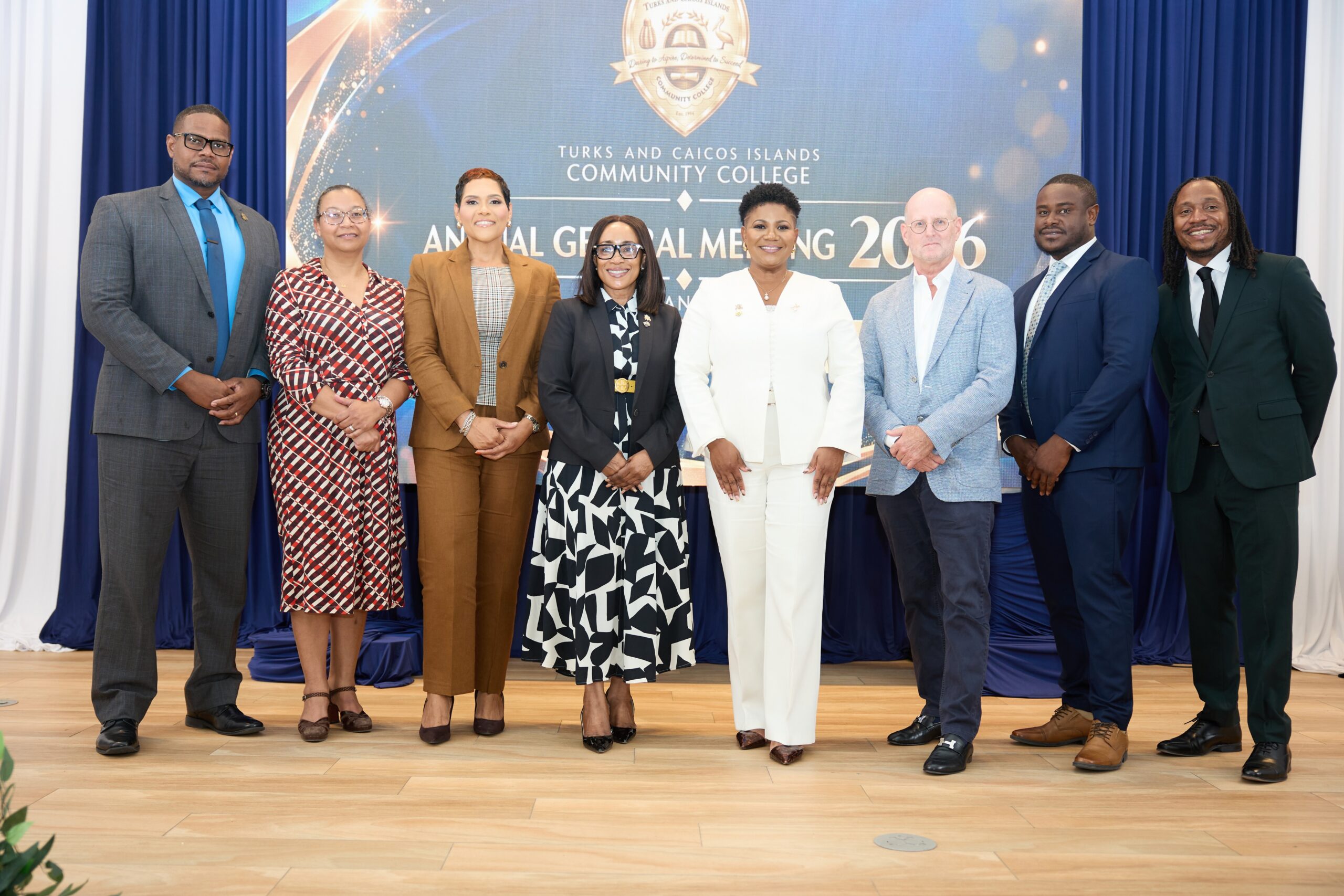
Turks and Caicos, November 23, 2026 – The Turks and Caicos Islands Community College (TCICC) officially launched the TCICC Foundation and Endowment at its Board of Governors’ second Annual General Meeting on Thursday, October 22, 2026, in Providenciales.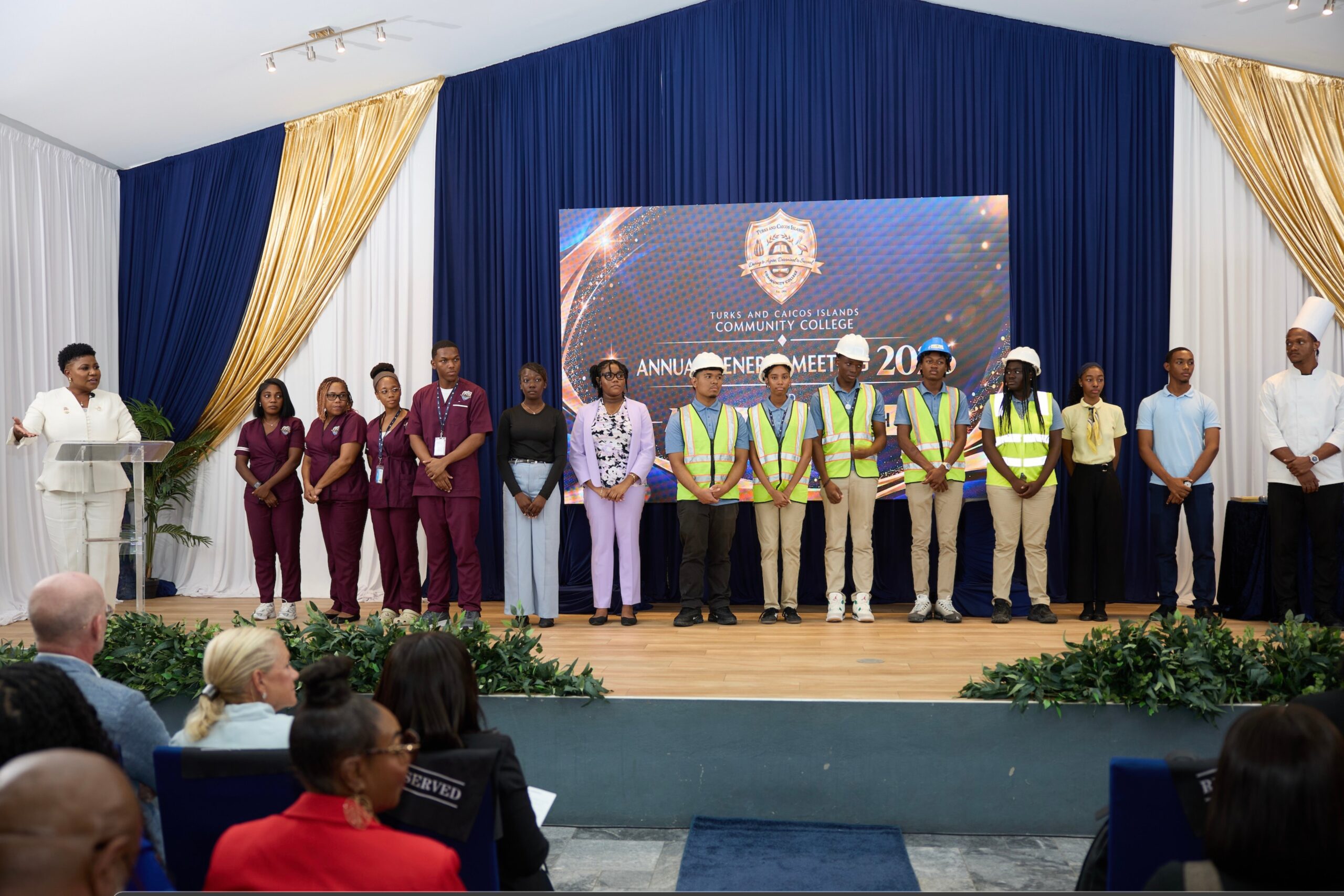
Held under the theme “Together We Advance: Strengthening Partnerships, Expanding Possibilities,” the event introduced an initiative to strengthen the College’s financial sustainability through philanthropy, student support and educational investment.
Mr. Leonardo Patrick emphasized the need for sustainable funding as enrollment and academic offerings expand.
President and CEO Dr. Candice Williams reported a 32 percent enrollment increase, from 469 students in Fall 2024 to 619 in Fall 2025, alongside a record 144 graduates and ISO 9001:2015 certification.
“TCICC is not the same institution it was a year ago. We are larger. We are stronger. We are more accountable. And we are moving forward with intention,” she affirmed.
Board Chair Sheba Wilson described the Foundation as a significant step toward institutional sustainability.
Keynote speaker Dr. Stan Hartling urged businesses to invest through mentorship, internships, apprenticeships and career opportunities.
Education Minister Hon. Rachel Marshall Taylor welcomed the initiative, highlighting opportunities for scholarships and stronger academic programs.
Dr. Williams closed by inviting students from TCICC’s seven faculties onto the stage, emphasizing the Foundation’s student-centered mission.
Annual memberships range from US$45 for students to US$18,000 for corporations, with additional categories available.
For membership, donations or Board participation, contact TCICC at (649) 339-3900.
Bahamas News
Nearly 1,500 UK Parliamentarians to Weigh In on Bahamas–Turks and Caicos Maritime Boundary Treaty
By Deandrea Hamilton | Editor
A historic maritime boundary treaty between The Bahamas and the Turks and Caicos Islands is heading for scrutiny by 650 elected members of the United Kingdom’s House of Commons and approximately 796 members of the House of Lords before it can become legally binding.
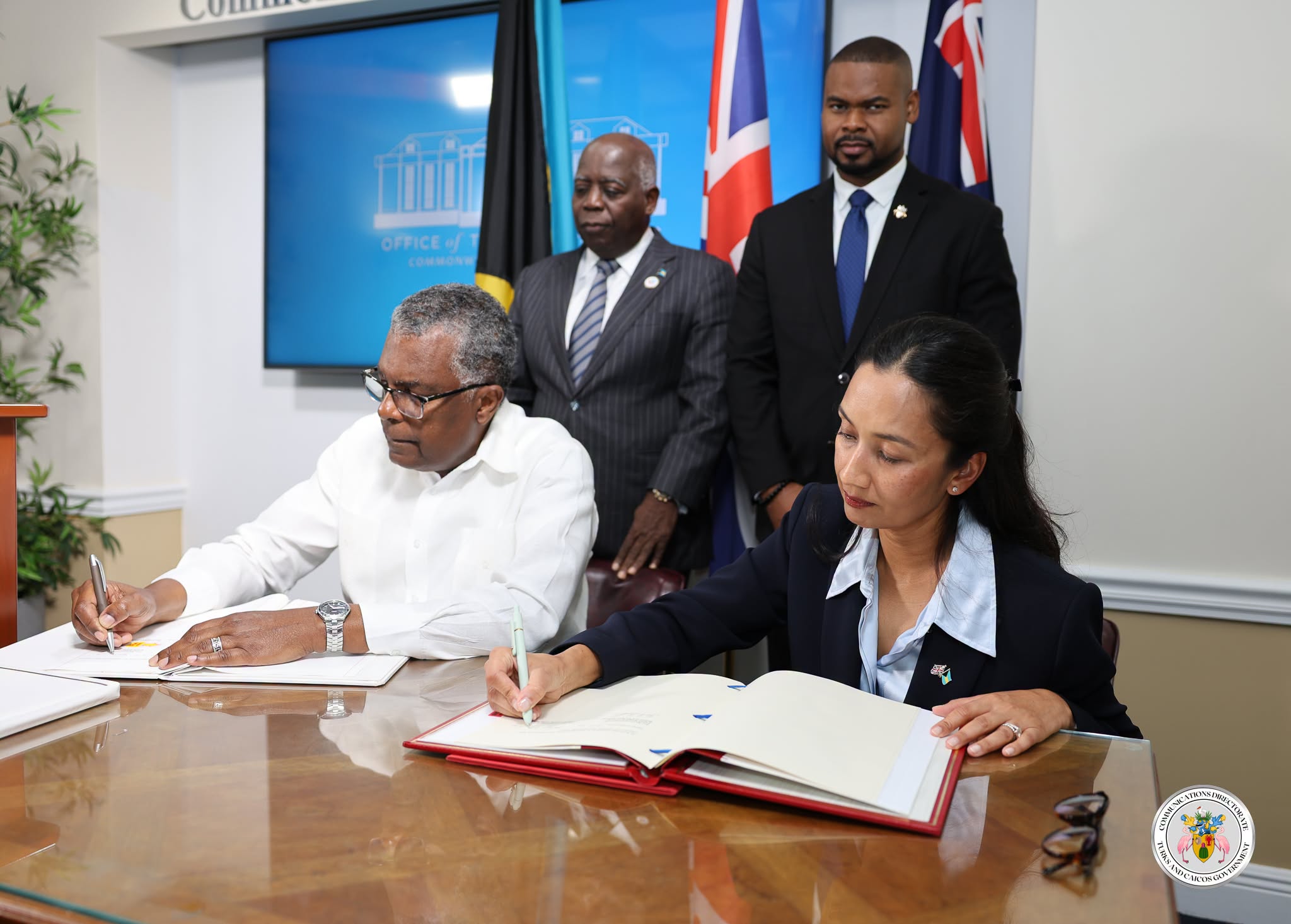
The agreement was signed in Nassau on Monday, November 16, 2026, by Bahamian Foreign Affairs and Immigration Minister Frederick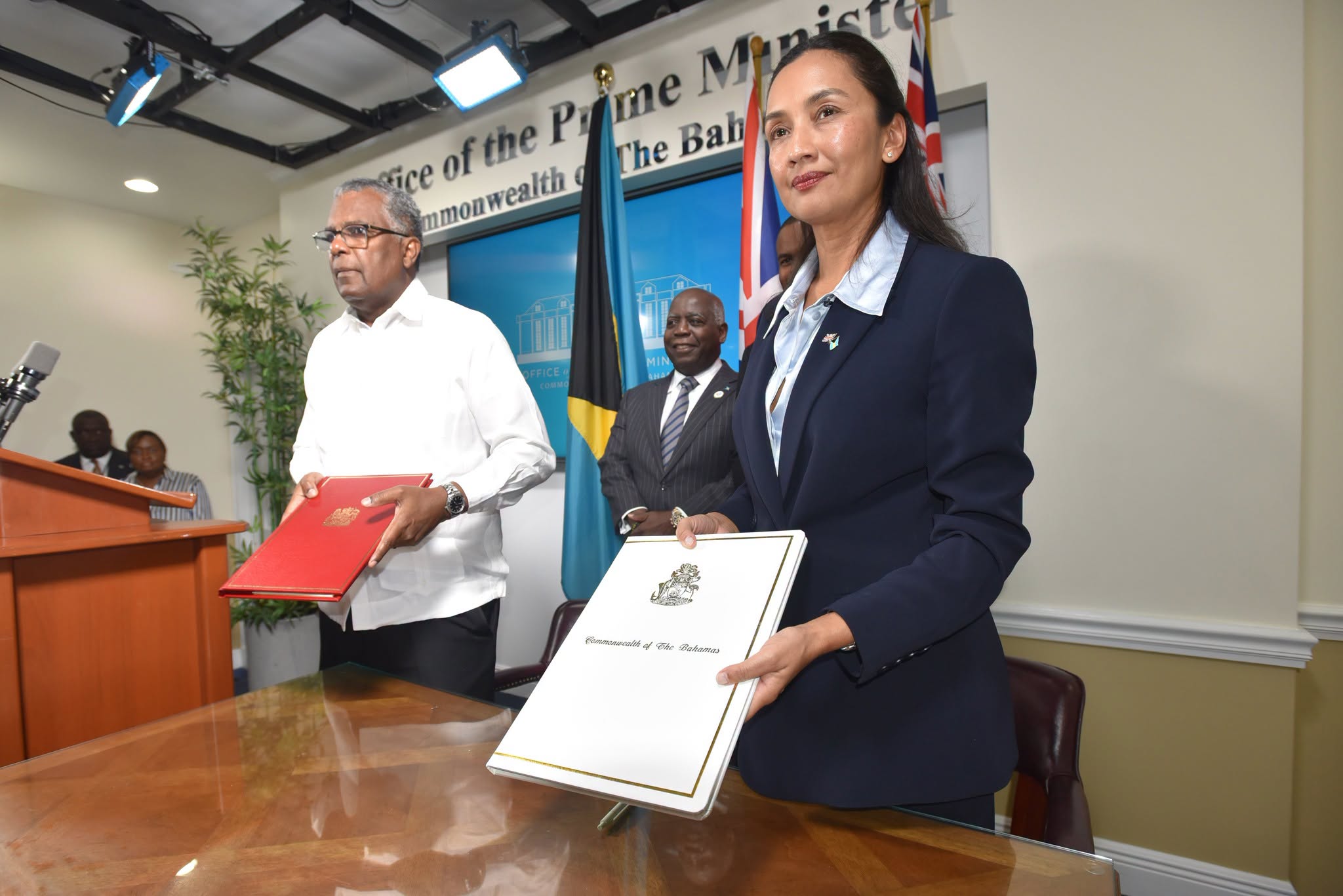 Mitchell and British High Commissioner Smita Rossetti, representing the United Kingdom. Looking on were Bahamian Prime Minister Philip Davis and Turks and Caicos Deputy Premier Jamel Robinson.
Although the treaty draws a delimitation line across the Atlantic Ocean, that line runs much deeper than the surface.
It establishes a boundary through the water column, across the seabed and into the subsoil beneath it, defining maritime rights and jurisdiction involving fisheries, underwater resources and security operations.
The boundary separates maritime areas between Mayaguana and Inagua in The Bahamas and the Caicos Islands.
But the signatures do not make the treaty immediately enforceable.
Under British parliamentary procedures, the agreement must be presented to both Houses for 21 sitting days, allowing parliamentarians to scrutinize its provisions and potentially object to ratification.
A parliamentary vote is not automatically required. However, the House of Commons can formally delay ratification, while the House of Lords may register objections.
The process reflects the Turks and Caicos Islands’ constitutional relationship with Britain, which retains responsibility for its international treaty arrangements.
Deputy Premier Jamel Robinson emphasized the territory’s involvement in the negotiations.
“Our Government has been actively engaged in the negotiations, ensuring that the interests of our people and our maritime communities were represented throughout the process.”
He added that the agreement strengthens the foundation for maritime security, responsible fisheries management and cooperation between the neighboring jurisdictions.
Negotiations began in 1992, with a technical agreement reached in 1996 that was never ratified. Talks resumed in 2023, following changes to The Bahamas’ archipelagic baselines in 2008.
Prime Minister Philip Davis welcomed the conclusion of negotiations spanning more than three decades.
“It gives fishermen and law enforcement officers on both sides an agreed line, and it will strengthen the close cooperation between our security services.”
Davis also acknowledged the longstanding friendship between the two island communities.
“Our peoples have been friends for generations, and today’s Agreement builds on that friendship.”
Once both governments complete their domestic procedures, the treaty will enter into force on the 30th day following the final notification.
For two Caribbean neighbors, the agreement settles a 34-year-old boundary question, but its final legal journey now passes through Westminster.

Ed Forbes | Concerned Citizen
Public safety must always be a priority, and government has a responsibility to ensure vehicles operating on public roads meet appropriate safety standards. However, new policies affecting small businesses and residents must also consider economic and social consequences.
The Department of Motor Vehicles’ recently published restrictions on golf carts and ATVs raise important questions.
I understand restricting golf carts on the busy roads of Providenciales, where growth and traffic have placed significant pressure on infrastructure. But should the same approach automatically apply to Grand Turk, North, Middle and South Caicos?
Grand Turk’s tourism economy relies partly on golf cart rentals. Cruise visitors use them to explore attractions, restaurants and local businesses. Restrictions could affect livelihoods beyond rental operators, particularly as cruise arrivals decline.
What happens to residents who purchased golf carts for personal transportation? Will existing owners be grandfathered? And how will Airbnb operators who include golf carts in guest packages be affected?
Why not regulate rather than eliminate nighttime use? Roadworthiness standards, functioning lights, mirrors, seat belts, insurance, inspections and driver-age requirements could improve safety.
Electric golf carts also support environmentally responsible transportation. Shouldn’t suitable green mobility be encouraged?
Commercial tours could face designated routes or restrictions on congested roads while approved vehicles remain available for independent transportation.
Government must explain the legal basis, implementation timeline and treatment of existing licenses, and whether affected communities were consulted.
Good public policy balances safety with economic realities. Different islands have different transportation needs.
Regulate, Don’t Eliminate. Protect Our People, Preserve Our Livelihoods and Keep Grand Turk Moving Forward.





-
 Bahamas News1 week ago
Sunset and friendship as guests join Governor General at 700ft table for inaugural The Longest Table event in The Bahamas
-
 News1 week ago
Experience Turks and Caicos Completes Revitalization of Grand Turk Bird Watching Trails, Advancing Sustainable Tourism Opportunities
-

 Bahamas News3 days ago
CIBC Caribbean Introduces Sip for the Cure
-
 Bahamas News3 days ago
Nearly 1,500 UK Parliamentarians to Weigh In on Bahamas–Turks and Caicos Maritime Boundary Treaty
-

 Independent writer3 days ago
Golf Cart Restrictions: What Happens to Grand Turk’s Tourism Economy?
-

 Education3 days ago
TCICC Foundation Officially Launched at Board of Governors’ Second Annual General Meeting