
TCI News
TCI: Haitian Gov’t called on to ‘do your job’, group says want to be seen as ‘humans’ and proud Haitians

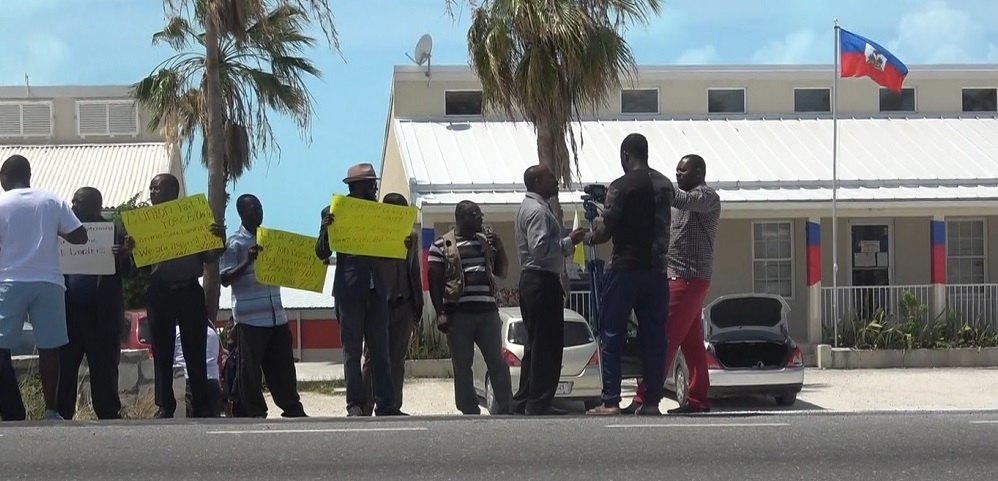
#Providenciales, Turks and Caicos – Friday May 18, 2018 – Haitian Flag day is a huge celebration for the people of Haiti, wherever they are in the world, but in the Turks and Caicos this year, things are markedly different due to stricter immigration laws and enforcement. Border Control protocols in the TCI are amped-up because Haitians continue to illegally breach the borders between the two countries.
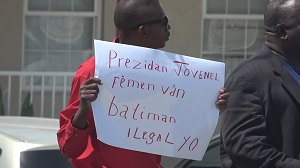 Haitians resident legally in Turks and Caicos assembled at the Haitian Consulate on Flag Day in a peaceful but potent protest to send a resounding message; that the government of Haiti needs to step-up efforts to control the outflow.
Udley Malcolm, Haitian resident and demonstrator said, “We all know this is Haitian Flag Day and usually in TCI we have a big celebration. As a Haitian origin, I am very proud. I love my brothers and sisters. Haiti is where I get my education, I have spent a lot of time in Haiti. We have nothing against our brothers and sisters but they are disturbing those who are here legally.”
The dozen Haitians taking part in the demonstration just yards away from the official Haitian office in Provo, have lived in these islands for years and say it is insensitive and senseless, in their minds, to celebrate while so many in Haiti are still suffering, even dying in their desperate attempts to break free of the poverty.
“Why would we celebrate this day if you are not happy with what is going on, how your brothers and sisters have been dying at the sea. How you gonna celebrate? We place the President and the Haitian parliament to do the job, to control the border, to help us…” Udley Malcolm, continued with, “… do the job so that we can be proud wherever we go, so that we can be proud as Haitians. But if they are not doing it, we are not going to celebrate. This is a call, do you job, do what you’re supposed to do so that when we come to Turks and Caicos, they can look at us as humans.”

Turks and Caicos Islanders are unapologetically frustrated at the cost to the country to capture, charge, detain and return home the Haitian people who mainly arrive by boat. The cost is quickly mounting to $5m in five years for the Turks and Caicos for repatriation of illegals, most of whom are Haitians. In the last week, there have been four illegal boats in five days. It is reported that Haitians sell everything to make the voyage and pay as much as $3,000USD per person and sometimes even bring on the potentially treacherous voyage infants and young children to escape the abject poverty which is depressing parts of Haiti.
 Still, there was a warning for Haitians considering the trip.
“It is not looking good for yourself because when you are coming here, you are coming on the sloop most times we have a lot of incidents on the sea. A lot of people – brother and sisters – are out there dying. Some of them are selling their goods and whatever they have, they are seeking a better life, I understand that… When you come into Turks and Caicos illegally, there is a big chance you are going to get arrested and you are going to lose your money. The Turks and Caicos Islands community is not going to look at you as a person because you are disturbing the peace. Because it is their money that they are supposed to be investing in roads and education, they are investing in repatriation and they are not happy about it and that is the bottom line.”
In the last 12 months, at least four western hemispheric nations have clamped down hard on illegal migrants: The Bahamas, Canada, the Turks and Caicos and the United States.
Protest organizer, John Phillip-Fontaine was passionately vocal about the reason for the protest.
“We don’t want to celebrate, we just want to send a message to the Haitian Government to tell them take up their responsibility. We are tired of the illegal sloop. You need to control your borders so that we can have some respect in Turks and Caicos.”
Phillip-Fontaine spoke to the acrimony the illegal landings are causing between Haitians and Turks and Caicos Islanders, “We feel bad. We really feel bad. But for us to do something about it, we have to get the Haitian government to control the borders. They have people who have been here for years but they are suffering because of what is going on… so we are sending a message strong to the Haitian Government through the Haitian Consulate because we believe they are here to represent the Haitian government.”

The protestors explained that the Consulate is aware of the feelings of legal Haitians resident in the Turks and Caicos, but John Phillip-Fontaine said that it appears the sloop surge is getting worse. About a dozen boats from Haiti to TCI between March and May.
The Haitian Consulate office was today closed due to the Haitian public holiday of Flag Day; but the men say they are hoping their message goes out over media and gets back to the home country leaders to stem the flow of illegal migrants.
The demonstrators also want to see that living conditions are finally improved for the millions of Haitians subject to the unbearable conditions that make them sell all and risk all in the hope of a better life in someone else’s country.
“Our flag is losing its value, and to keep the value of the flag we have to sit down today, especially a day like today – May 18… We are not happy and we are telling the Turks and Caicos government to bear with us, give us some time… we will slow this thing down. We know human trafficking is a big business all over the world but we don’t need this to spoil our children’s future.”
The group said they were referring to both the children of the Turks and Caicos and their own.

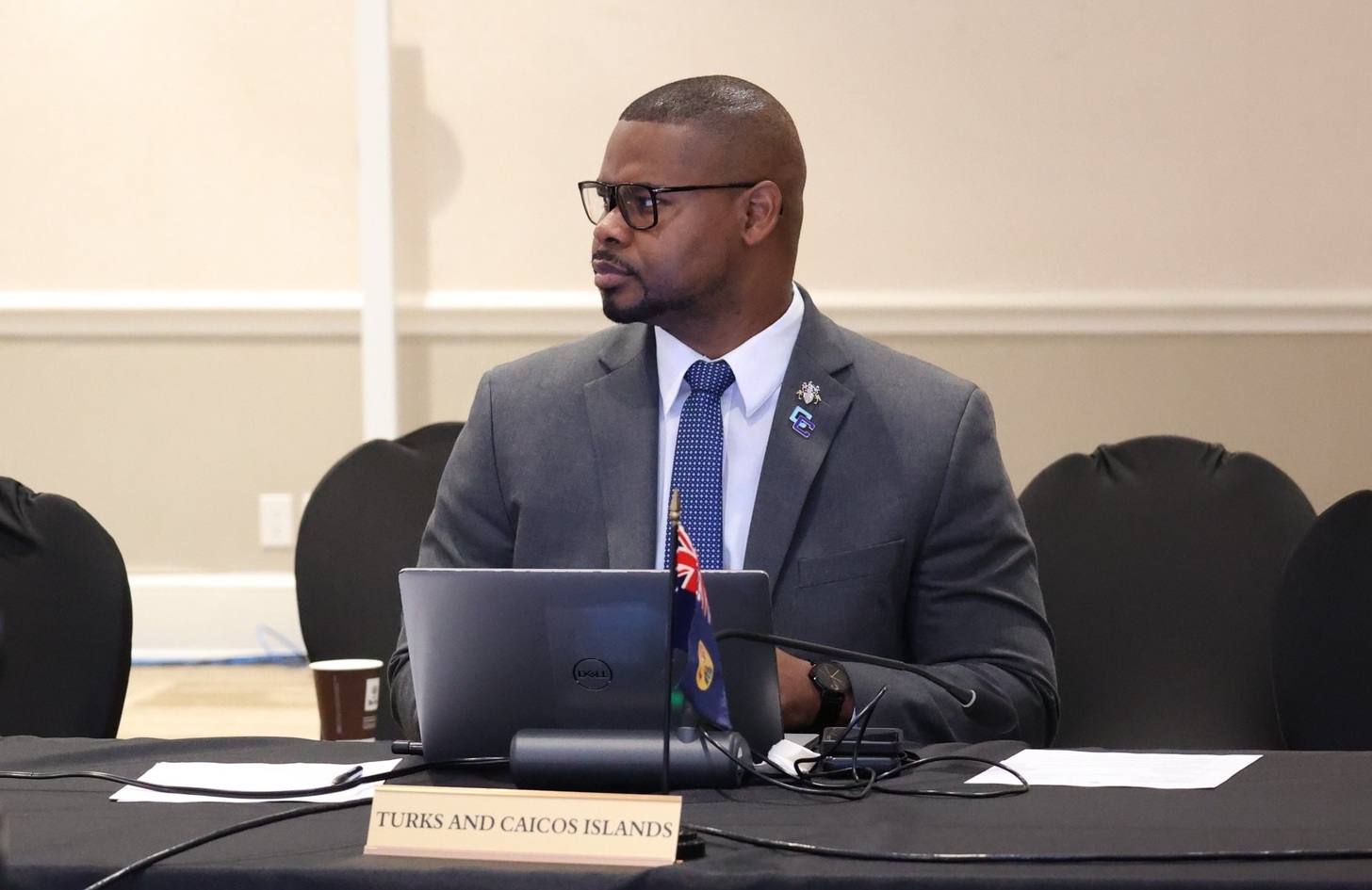
Turks and Caicos, March 18, 2026 – Public reaction across the Turks and Caicos Islands was immediate and, in some cases, heated after the Government confirmed in the House of Assembly on Friday, March 13, that it is exploring a move from Associate Member to full member of the Caribbean Community (CARICOM).
The announcement, delivered by Acting Premier and Minister of Immigration and Border Services Jamell Robinson, sparked strong concern among residents, particularly over fears that full membership could require the territory to accept free movement of labour or weaken its immigration controls.
Social media commentary over the weekend questioned why there had been no public consultation and whether the move signaled a shift in the country’s political direction.
However, a review of the official statement and follow-up remarks made by Robinson this week shows the proposal is not sudden, is not final, and would require approval from all fifteen CARICOM member states before the Turks and Caicos Islands could become a full member.
NOT A NEW IDEA
In his ministerial statement to Parliament, Robinson confirmed that discussions about full membership have been taking place within regional forums for some time.
“As an Associate Member of CARICOM, the Turks and Caicos Islands also participated in caucus meetings and discussions among Overseas Territories and Associate Members regarding regional cooperation and the continued advancement toward full membership within the CARICOM Community,” he told the House.
He added that full membership would allow the territory to engage more directly in decisions affecting the region.
“Full membership in CARICOM would present meaningful opportunities for the Turks and Caicos Islands. It would strengthen our ability to engage more fully in regional decision-making… and ensure that the Turks and Caicos Islands is better positioned to benefit from collective advocacy and coordinated action on issues of common concern.”
The idea of deeper integration is not new. Since the return of elected government in 2012, successive administrations have promoted stronger ties with CARICOM.
Former Premier Dr. Rufus Ewing regularly attended Heads of Government meetings and spoke openly about the importance of regional cooperation, even suggesting that long-term political development for the territory would likely place it closer to the Caribbean than to Britain.
Premier Sharlene Cartwright-Robinson also maintained active participation in CARICOM during her term, focusing on security cooperation, economic recovery, and regional partnerships, though her administration did not pursue full membership.
Under the current administration, Premier Charles Washington Misick has repeatedly said stronger regional integration is necessary for economic stability, security cooperation, and food supply resilience.
FREE MOVEMENT FEARS ADDRESSED
Much of the public backlash centered on the belief that full membership would force the Turks and Caicos Islands to accept the CARICOM free movement of labour provisions.
Speaking Monday to Cheryl Forman, host of First Edition on Radio Turks and Caicos, Robinson said that is not the position being taken by the Government.
“We’re looking for full membership, and just to be clear right off the bat, the Turks and Caicos is not looking to sign on to the free movement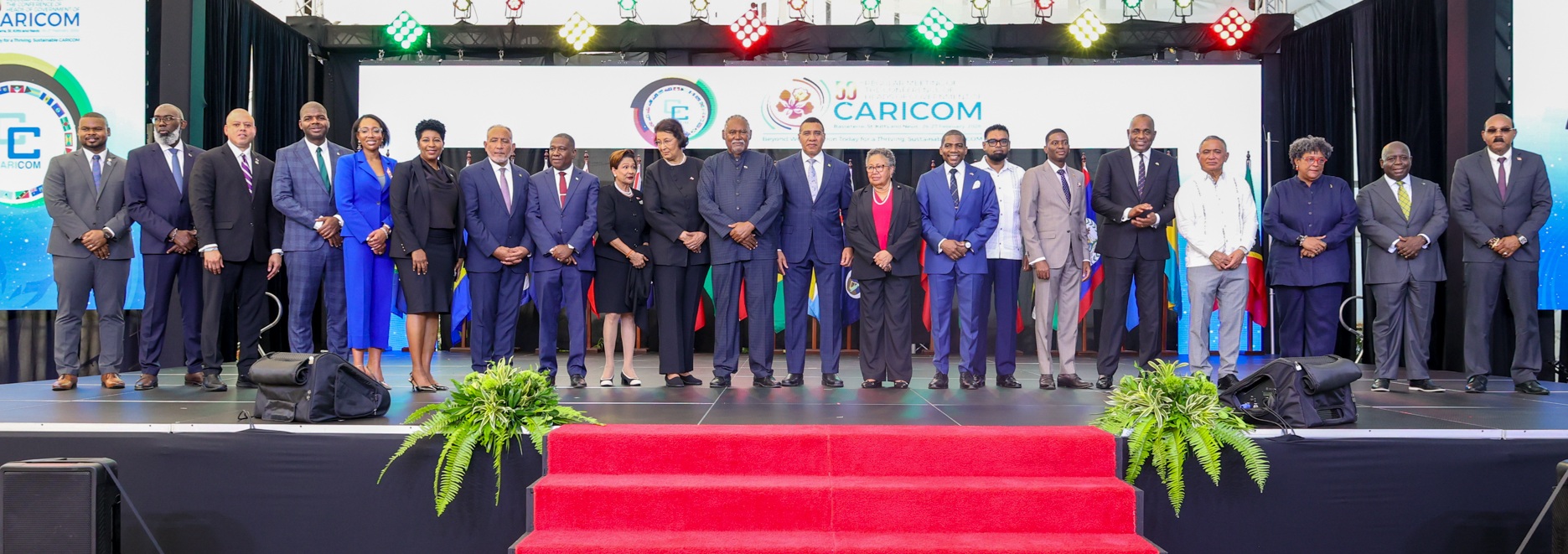 of labour portion of the Revised Treaty of Chaguaramas,” he said.
He noted that other British Overseas Territories and even some CARICOM members have negotiated exemptions.
“Just like Bermuda, just like the BVI… The Bahamas did not sign off on that portion. Free movement across the region does not even exist in the way people think. It applies only to certain skills and professions.”
Robinson stressed that any agreement would be negotiated and would not remove the territory’s ability to control immigration.
“The full membership process isn’t going to be a case where we lose our ability to determine our immigration and labour policies. Those are things that will form part of our negotiated position.”
WHY GOVERNMENT WANTS FULL MEMBERSHIP
Robinson outlined several reasons the administration believes deeper integration could benefit the territory.
One argument is that Associate Members can participate in discussions but do not have voting power.
“You can think of it as being part of a club. As an associate member, you don’t get all the benefits. You can sit in the room, but you don’t always have a final say in decisions that may impact you.”
He also said regional partnerships have already proven critical in national security.
“If it were not for the ability of our Premier to pick up the phone and speak to Prime Minister Davis in The Bahamas and Prime Minister Holness in Jamaica, our crime situation would be completely different,” Robinson said, referring to the deployment of tactical officers from both countries to assist local police operations.
He added that closer ties could also help reduce the cost of living through regional trade.
“In some cases, the very same products we import from the United States originate in the Caribbean, go to the US to be repackaged, and then come back to us. If we can trade more directly within the region, that could help bring down prices.”
Robinson also pointed to discussions within CARICOM about improving regional shipping, food production, and transportation links, including plans for Guyana to become a major agricultural supplier for the region.
NOT A GUARANTEE
Despite the public debate, Robinson emphasized that full membership is not automatic.
Any application must be negotiated and approved by all CARICOM member states, meaning the Turks and Caicos Islands cannot simply decide to join on its own terms.
That reality, he said, is why the Government is still developing its negotiating position, including work on population policy, immigration strategy, and labour planning before any final step is taken.
The debate now unfolding across the territory reflects more than a policy proposal.
It highlights a deeper question that has existed for more than a decade — whether the future of the Turks and Caicos Islands lies primarily with the United Kingdom, or increasingly with the Caribbean region to which it is geographically, economically, and culturally connected.
For now, full CARICOM membership remains only a possibility — but one that has clearly stirred strong emotions in a country still deciding how far regional integration should go.
Angle by Deandrea Hamilton. Built with ChatGPT (AI). Magnetic Media — CAPTURING LIFE.
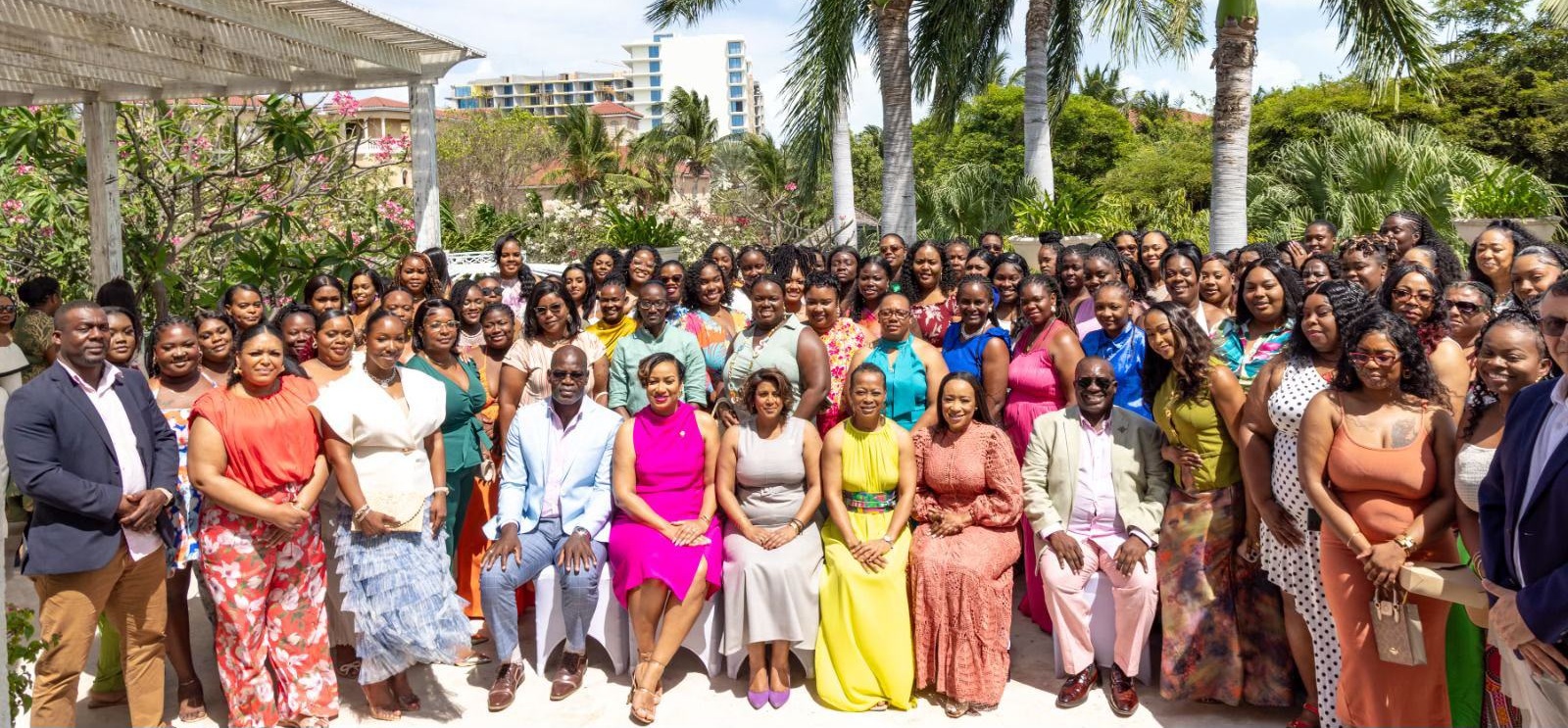
Turks and Caicos, March 18, 2026 – Women serving across the Turks and Caicos Islands’ national security agencies were honoured during a special International Women’s Day observance hosted by Governor Dileeni Daniel-Selvaratnam, highlighting the growing role of women in law enforcement, defence and border protection.
The Governor hosted the second annual Women in Uniform Brunch, bringing together female officers from the Royal Turks and Caicos Islands Police Force, the Turks and Caicos Islands Regiment, Border Force and His Majesty’s Prison Service for a morning of recognition, reflection and inspiration.
Delivering the keynote address was Vice Admiral Antonette Wemyss-Gorman, Chief of Defence Staff of the Jamaica Defence Force, who is widely regarded as one of the region’s most accomplished military leaders and one of the first women in the world to head a national armed force.
Her address focused on leadership, discipline and the importance of resilience in uniformed service, encouraging women to pursue advancement in fields traditionally dominated by men. Attendees responded with a standing ovation, as the Vice Admiral spoke about the responsibility of women in security services to lead with courage, professionalism and integrity.
The event formed part of the Turks and Caicos Islands’ observance of International Women’s Day 2026, celebrated globally under the theme of advancing equality, strengthening opportunity and recognising the contributions of women in every sector of society.
Governor Daniel-Selvaratnam said the service of women in uniform plays a critical role in strengthening institutions, protecting communities and building public trust, noting that their leadership continues to inspire the next generation of officers across the territory.
In addition to the keynote address, participants attended presentations on financial empowerment and personal wellbeing, aimed at encouraging women in service to invest in their personal development alongside their professional responsibilities.
Several officers were also recognised for outstanding contributions.
Assistant Superintendent of Prisons Meshelle Jennings received the Selfless Service Award, while Police Sergeant Desiree Hunt-Forbes was honoured for building community trust.
Turks and Caicos Islands Regiment Marine Kentoya Parker received the Integrity in Leadership Award, and Senior Border Force Officer Marylee Wilson and Prison Officer Aloida Henry were both recognised for resilient service.
Officials said the event reflects a continued commitment to supporting women across the territory’s security services, at a time when regional cooperation and strong leadership remain essential to maintaining safety and stability.
Angle by Deandrea Hamilton. Built with ChatGPT (AI). Magnetic Media — CAPTURING LIFE.

News
Statistics Authority Highlights Trade Data as Turks & Caicos Records $227M in Imports for Q4 2025

Turks and Caicos, March 18, 2026 – The Turks and Caicos Islands Statistics Authority is highlighting the importance of reliable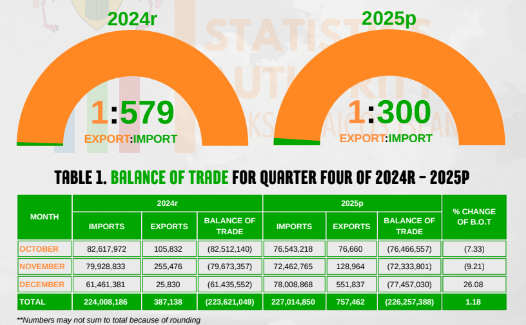 economic data following the release of its latest Trade Statistics Bulletin, which shows the country recorded approximately $227 million in imports during the fourth quarter of 2025.
The detailed report provides a clear breakdown of where goods entering the Turks and Caicos Islands are coming from, the types of products being imported, and the revenue generated from trade-related activity. The figures offer valuable insight into the level of economic activity across the country and the continued demand driven by tourism, construction, and consumer spending.
According to the bulletin, the United States remained by far the largest supplier of goods, accounting for more than $200 million in imports during the quarter. This represents the majority of all goods entering the Turks and Caicos Islands and reflects the territory’s long-standing dependence on U.S. markets for food, fuel, machinery, building materials, and consumer products.
The Dominican Republic was the second largest source of imports, supplying just over $4.1 million in goods, while The Bahamas ranked third, with approximately $1.8 million in imports recorded for the period. The report also noted increasing trade with countries such as China, Panama, Switzerland, Poland, and India, showing that businesses continue to expand their supply networks beyond traditional partners.
In terms of the types of goods being imported, the bulletin shows strong activity in categories such as food and live animals, mineral fuels, manufactured goods, machinery and transport equipment, and chemicals, all of which are essential to supporting the tourism industry, infrastructure development, and everyday life in the islands.
The report also tracks revenue collected from international trade, including fuel tax, customs processing fees, and motor vehicle licensing, providing another measure of economic performance during the quarter.
Officials say the quarterly Trade Statistics Bulletin is an important tool for government, businesses, and the public, offering accurate information presented through clear tables, charts, and graphics that make complex data easier to understand.
For a small, import-dependent economy like the Turks and Caicos Islands, access to reliable statistics remains critical. By continuing to publish detailed trade reports, the Statistics Authority helps ensure that decisions about growth, investment, and development are based on sound information.






-

 Bahamas News1 week ago
Economic and Financial Experts Assess US-China Relations; Offer Advice for The Bahamas
-
 Government5 days ago
$6M Digital Transformation Drive to expand E-Government, National ID and Biometric Borders
-
 News1 week ago
Beaches Resorts Announces Grand Opening of Treasure Beach Village at Beaches Turks and Caicos
-
 Bahamas News1 week ago
Experts Analyze Economic Landscape; Opportunities and Challenges
-

 Caribbean News1 week ago
Widow’s Testimony Recounts Night Haiti President Was Killed
-
 News5 days ago
NATIONAL SECURITY SHIFT: PREMIER CONFIRMS REGIMENT EXPANSION
-

 News1 week ago
North and Middle Caicos Students receive educational material from Sandals Foundation and Beaches Turks and Caicos resort
-
 Uncategorized4 days ago
WHERE ARE THE LOCAL ARTISTS?