
News
Harrowing ordeal, Indian man accuses TCI Immigration of inhumane treatment and theft at Detention Center

Turks and Caicos, Providenciales, June 13th 2017:
One man is taking legal action on the TCI Immigration Department, all the way from India, for improper treatment.
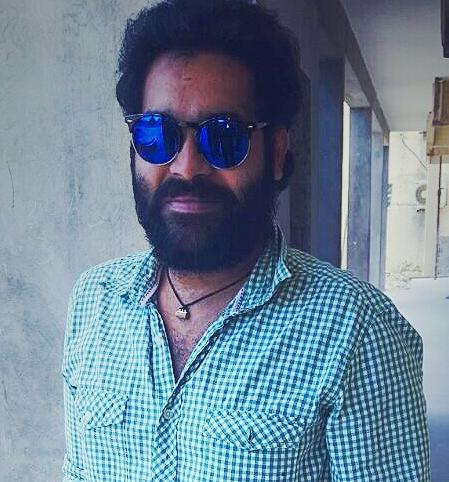
Mehul Chandrakant Solanki is back home in India now, after spending two unnecessary months enduring what he describes as an horrific ordeal and unfair treatment meted out at the South Dock Road Detention Centre in the Turks and Caicos.
Describing it as a clear abuse of power by the Immigration Officers, Mr. Solanki is vowing to ensure those still being held at the detention centre are not treated in the same way as he has taken up this case and says he has all the proof and documents to support his claims, including his contact with the High Commission of India to Jamaica, located in Kingston.
Mr. Solanki says he is well known in Provo and has worked there for almost three years. His story begins when he says he went to report his lost passport to the Police in Providenciales in early March, only to instead be handed over the Immigration Department and charged with overstaying. Solanki says the Immigration officers took his mobile phone, a Samsung Note; his wallet containing $2,140 and his bag containing his clothes. The items were said to be put in a sealed bag with a number on it.
Mr. Solanki requested that he contact someone to notify them of what had happened, but was denied any chance of doing so. He then asked whether they had contacted the High Commission’s office on his behalf, and was told that this was already done by the Immigration Office.
Some ten to 15 days passed without word from the Indian High Commission, and Mr. Solanki again asked for the chance to make a phone call. By March 27th, he got the opportunity to make a phone call, contacting the Commission, where it was said to him that no request was ever made, nor were they notified of his case. The Commission then assured him that a new emergency passport would be sent to him in seven days, arriving by early April.
Still, there was no word to Solanki on whether the new, temporary passport was received and questions about the document were ignored by TCI authorities.
Another call was granted to Mr. Solanki, who had by this time been in the center for nearly a month. His cell phone was required to make that phone call, but when a female officer, searched his belonging, there was no cell phone, and all of the money from his wallet was gone.

Mehul Chandrakant Solanki back home in India and still very distraught and angry after his harrowing ordeal in the TCI at the hands of Immigration Officers at the Detention Centre
During this time at the South Dock Road Detention Center, Mr. Solanki says the fisherman on remand for alleged poaching were being held.
Authorities have confirmed that the men were exposed to scabies at the holding centre and had to receive treatment and bedding was burned. The fishermen also needed clothing and it was at that time that Solanki noticed that the clothing being given to the Dominicans on remand, were in fact his.
Solanki says at no time did he give permission for his clothing to be given away.
To add insult to injury, Solanki discovered that his temporary passport had long been sent and received by the Immigration Department but that he was held despite and not notified about its arrival, which he explained to Magnetic Media, was April 19. Outrageously, Solanki was told that he would have to make the journey back home without his money, without his belongings and he was still being made to pay for his return trip to India.
Mehul Chandrakant Solanki was held for two months at the detention center for overstaying. Solanki left the Turks and Caicos on May 15, 2017 in a route which was considerably more expensive and tedious, taking him through the Dominican Republic, Curacao, Amsterdam, Mumbai and then home at a cost of $2,400 when another, shorter route through Jamaica would have been $900.
In his disturbing account, Mehul Solanki recalls the ‘mistreatment of a Polish woman and two other Chinese people’ captive at the detention centre and believes their voices also need to be heard, as their personal items were also stolen.
Mr. Solanki explained that his case is not only to get justice, but to make a statement to the TCI Immigration Department that they cannot misuse nor abuse their powers over immigrants even if they have overstayed their time.
Magnetic Media contacted the TCI Human Rights Commission, HRC, which shared that when they met Mr. Solanki at the Detention Centre in a visit on March 28th, he was happy and that he did not report being ill-treated or in need of anything. However, Solanki explained that the visit of the HRC came a day after he had gotten assurances of a replacement passport from the High Commission and at that time, he felt that everything was fine. The HRC said a contact number was left with Mr. Solanki in the event that things changed at the centre.
Weeks later, he was still at the South Dock Road detention centre and told our news room that he would have communicated the problems including that his cell phone/tablet had since been stolen. However, the HRC was not allowed on premises due to the scabies health risk and with his cell phone/tablet stolen he no longer had their phone number.
No complaint about the events at the detention centre was lodged at Human Rights office either explained to the organization, as Solanki said that he was given very little time to leave the TCI and that a formal complaint will come through his attorney.
News reports on cases of ‘overstaying in the Turks and Caicos’ are commonly carried in the media and a review of recent reports revealed a clear inconsistency in how foreigners are treated when they are in breach of that law.
Mehul Solanki explained that he was never charged in a court of law, was threatened with being jailed, that he was scoffed and laughed at when he asked for an opportunity to file a complaint and at one point had to scream at the top of his lungs just to get medical treatment when ‘bad food’ made him sick.
Mr.Solanki’s attorney will be present in the TCI in the coming days to attend to this matter.
Magnetic Media has reached out to the Minister of Border Control and Deputy Premier about the case.
#MehulChandrakantSolanki
#TCIImmigrationDepartment
#TCIImmigrationDepartmentUnfairTreatmentToDetainees
#UNInternationalMigrantLaw
#TCIBorderControl

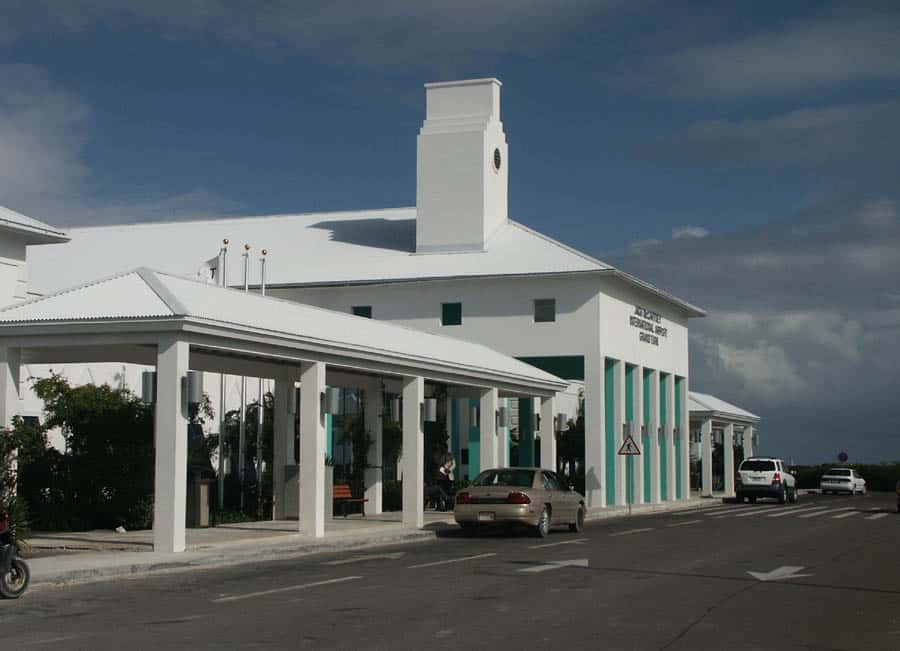
Turks and Caicos Islands – March 10, 2026 – Commercial flights between Grand Turk and South Caicos have been temporarily discontinued, leaving residents without a direct air link between the two islands since March 1.
The Turks and Caicos Islands Government confirmed the suspension in a statement Tuesday, explaining that the route — which operates under a government subsidy — is currently under review as officials reassess the tender process used to award the service.
The Ministry of Finance, Economic Development, Investment and Trade said the government is “working diligently to assess available options” to restore reliable air service between the islands as quickly as possible.
While the statement did not identify which airline had been operating the route, historically Caicos Express Airways and interCaribbean Airways have provided flights between South Caicos and Grand Turk using small twin-engine aircraft.
Officials acknowledged the disruption has caused concern among residents, noting that inter-island air travel is critical for access to essential services, business activity and government operations.
The government emphasized that the suspension does not affect flights between Grand Turk and Salt Cay, which continue to operate normally.
The review now underway will determine the next provider for the subsidized route. Authorities say the process must be conducted in a “fair, transparent and efficient manner” before service can resume.
For residents of the two islands, however, the immediate issue remains transportation — with many now forced to reroute through Providenciales or rely on limited sea travel until the air connection is restored.
Further updates are expected once the government completes its review and awards a new operating arrangement.
Angle by Deandrea Hamilton. Built with ChatGPT (AI). Magnetic Media — CAPTURING LIFE.

GLOBAL — Laws promising equality for women and girls exist in many countries around the world, yet millions still struggle to access justice when their rights are violated.
That stark reality is highlighted in a United Nations report titled “Ensuring and Strengthening Access to Justice for All Women and Girls,” released ahead of International Women’s Day and the 70th session of the Commission on the Status of Women, which begins March 9 in New York.
The report points to what experts call an “implementation gap” — the disconnect between laws that guarantee equality and the real-world ability of women and girls to enforce those rights.
While legal frameworks promoting gender equality have expanded globally, the report warns that many women continue to face significant barriers when seeking justice.
Among the most common obstacles are high legal costs, long distances to courts and services, language barriers, and low levels of legal literacy. Many women also face what researchers describe as “time poverty,” balancing work and caregiving responsibilities that make pursuing legal action difficult.
Bias and stigma within justice systems themselves can also discourage women from reporting abuse or seeking legal remedies.
The report notes that girls often face distinct and overlooked barriers. In many cases, justice systems lack child-centred procedures, making it difficult for girls to safely report harm or access legal protection. Issues such as child marriage and early pregnancy can further complicate their ability to assert their rights, particularly when they remain legally dependent on family members who may also be the source of harm.
Older women also face unique challenges, often shaped by lifelong patterns of discrimination and economic disadvantage. Gendered ageism can undermine their credibility, with complaints involving violence, neglect, health rights, pensions or property disputes sometimes dismissed or ignored.
The United Nations report also highlights structural weaknesses within justice systems, including limited budgets, shortages of trained personnel and poor coordination between institutions responsible for delivering justice services.
Another factor contributing to the enforcement gap is the continued male dominance within justice sector leadership, which researchers say can discourage women from engaging with institutions meant to protect them.
The findings come as the United Nations marks International Women’s Day under the theme “Rights. Justice. Action. For ALL Women and Girls,” a call for governments to move beyond commitments on paper and ensure that laws protecting women are fully enforced.
Global leaders say closing the gap between legislation and real-world outcomes remains one of the most urgent challenges in achieving gender equality and ensuring that women and girls everywhere can live safe, healthy and purposeful lives.
Developed by Deandrea Hamilton • with ChatGPT (AI) • edited by Magnetic Media.

CARIBBEAN — Jamaica has become the 13th CARICOM member state to accede to the African Export-Import Bank Establishment Agreement, further strengthening economic ties between Africa and the Caribbean.
The development was confirmed during the 50th CARICOM Heads of Government Meeting, where an Afreximbank delegation led by George Elombi and Kanayo Awani met with Jamaica’s Prime Minister Andrew Holness to advance cooperation.
Prime Minister Holness thanked the bank for its support following Jamaica’s recent hurricane, noting that Afreximbank financing helped restore critical infrastructure including water, electricity, sewage systems and roads, while also assisting reconstruction efforts aimed at building stronger resilience to future disasters.
The meeting also focused on broader development opportunities tied to Jamaica’s membership in the agreement. Discussions included rebuilding and modernising infrastructure such as railways, hospitals and other public facilities, while strengthening regional transportation and trade networks to improve the movement of people and goods across the Caribbean.
Afreximbank has been expanding its presence in the Caribbean as part of its strategy to connect Africa with the region often referred to as “Global Africa.” The bank has already committed billions of dollars in financing and trade support to Caribbean economies in recent years, including funding for infrastructure, trade facilitation and private sector investment.
By joining the agreement, Jamaica gains expanded access to Afreximbank’s financial instruments, technical support and trade networks designed to promote commerce between Africa and CARICOM states.
Regional leaders say the growing partnership could unlock new opportunities in areas such as trade, logistics, tourism, manufacturing and cultural exchange, strengthening economic cooperation between the two regions with deep historical and diaspora ties.
Angle by Deandrea Hamilton. Built with ChatGPT (AI). Magnetic Media — CAPTURING LIFE.





-
 Health1 week ago
Chile becomes the first country in the Americas to be verified by WHO for the elimination of leprosy
-

 Caribbean News4 days ago
Jamaica Joins Afreximbank Agreement, Strengthening Africa–Caribbean Partnership
-

 Bahamas News1 week ago
Dredging Is Not Just About Size — It Is About What Is Being Destroyed, Warns Save Exuma Alliance Regarding Yntegra’s Proposed Rosewood Resort
-

 News1 week ago
Police Commissioner Honoured with Distinguished Civic Service Award at TCHTA Star Awards
-
 News1 week ago
Flow TCI powers Inter-High Track and Field Championships
-

 Education1 week ago
Message from Hon. Rachel M. Taylor, Minister of Education, Youth, Sports & Culture
-

 News5 days ago
Treasure Beach Village Opens at Beaches; Tourism Leaders Expect Surge in Bookings
-

 News3 days ago
Rights Without Justice: How Weak Enforcement Fails Women and Girls