
News
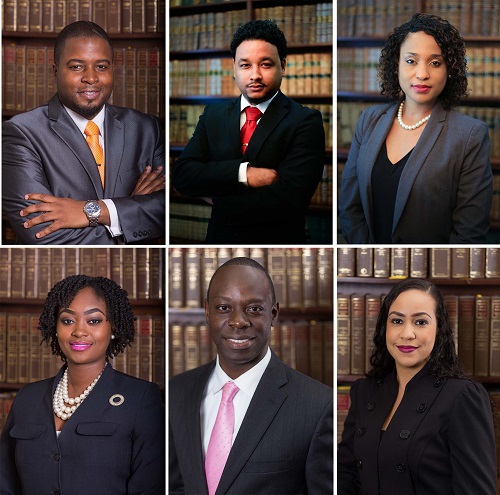
Callenders Names Six New Associates Broad Range of Specialty Practice Areas




September 12, 2025
PROVIDENCIALES, Turks & Caicos Islands – The Turks and Caicos Islands are home to a wealth of creativity, from artisans and craft vendors to musicians and performers. Beaches Turks and Caicos, the Caribbean’s leading all-inclusive family resort, has pledged its continued support for these individuals by providing meaningful platforms for them to share their skills and stories with guests from around the world.
The resort’s commitment is most evident in its weekly Cultural Night showcase, where visitors are immersed in the vibrant traditions of the islands. Guests enjoy live performances which feature local music genres such as ripsaw, while artisans display and sell handmade creations. This event not only enriches the guest experience but also strengthens economic opportunities for local entrepreneurs.
Entertainment Division Manager Garett Bailey emphasized the significance of Cultural Night, “we want to showcase everything the Turks and Caicos Islands culture has to offer. Our goal is for guests to leave with a deeper appreciation of the island’s art, music and traditions, while giving local talent the opportunity to share their creativity with visitors from across the globe.”
Beyond Cultural Night, Beaches Turks and Caicos also welcomes local craft vendors onto the resort every Wednesday and Friday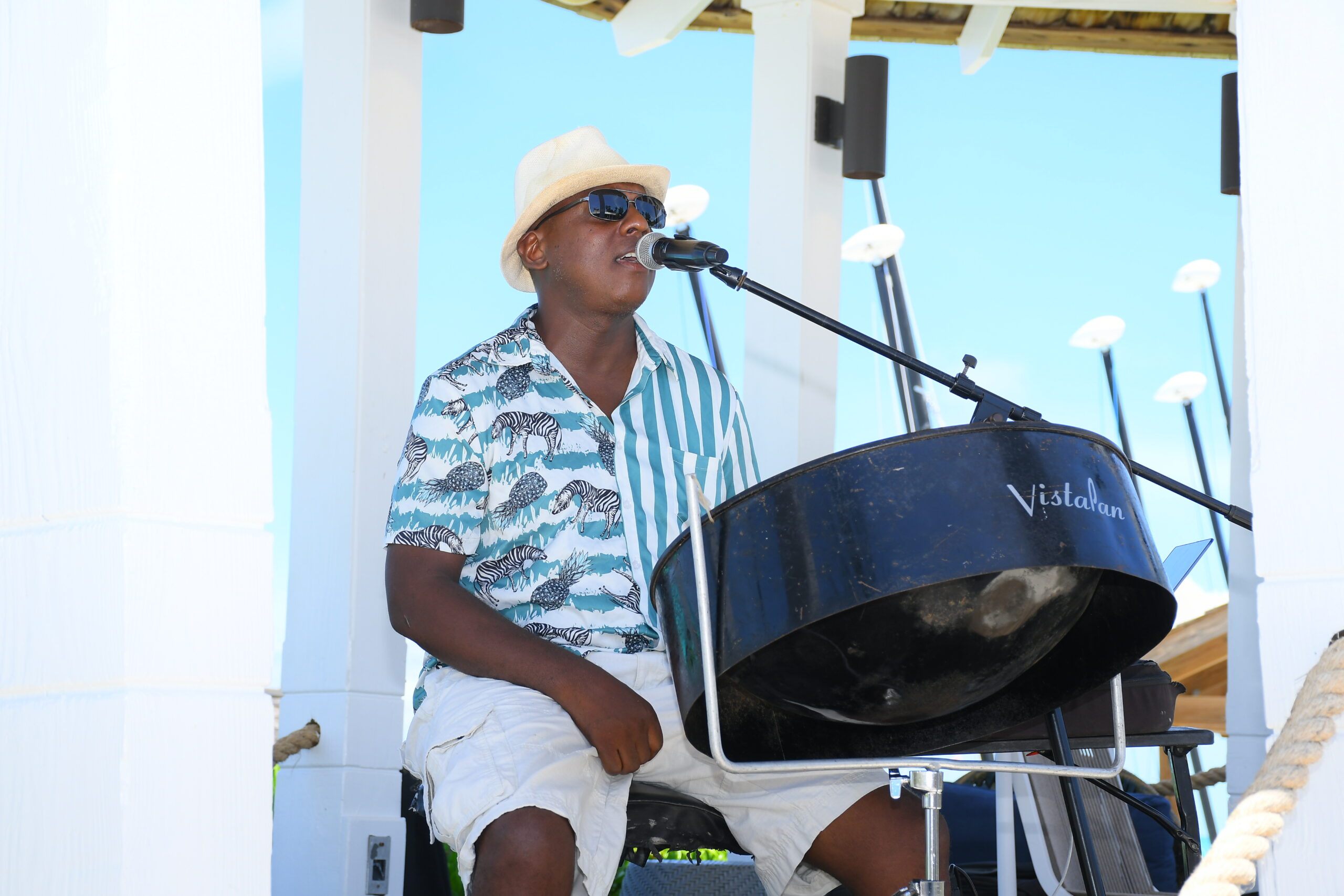 where they are offered a direct space to market their goods. Guests have easy access to the Turks and Caicos Cultural Marketplace, where they can purchase authentic local arts and crafts.
Managing Director, James McAnally, highlighted how these initiatives reflect the resort’s broader mission, “we are committed to celebrating and sharing the vibrant culture of these islands with our guests. By showcasing local artistry and music, we not only provide entertainment but also help sustain and grow the creative industries of the Turks and Caicos Islands. From our cultural showcases to nightly live music, we are proud to create authentic connections between our guests and the people of these islands.”
Local musician Keon Hall, who frequently performs at the resort, expressed gratitude for the ongoing partnership, “being able to share my music with Beaches’ guests has created lasting relationships. Some visitors return year after year and request songs from previous performances. This partnership continues to celebrate what we do and strengthens the bond between local artists and the resort.”
The resort’s support of local artisans and entertainers extends beyond business opportunity; it is about preserving heritage and sharing stories. Guests take home more than souvenirs; they leave with experiences that deepen their understanding of Turks and Caicos’ culture and history.
Public Relations Manager, Orville Morgan, noted the importance of this commitment, “for many visitors, these interactions represent their first genuine connection to the Turks and Caicos Islands. From artisans and musicians to farmers and transport operators, our local talent helps shape every guest experience. At Beaches, we are proud to give them the stage to share their stories and their heritage.”
Beaches Turks & Caicos remains dedicated to developing cultural connections and supporting the artisans, musicians and entrepreneurs whose creativity makes the Turks and Caicos Islands unique. Each guest experience is an opportunity to celebrate and sustain the spirit of the islands.
Caribbean News
“Barbecue” is Cooked! US Turns Over 11 Million Haitians into Potential Informants with $5 Million Bounty

August 12, 2025
The United States just set fire to the underworld in Haiti — and this time, the smoke might finally flush out the man many call the most feared in the Caribbean.
On Tuesday, the U.S. government slapped a $5 million bounty on the head of Jimmy “Barbecue” Chérizier, the ex-police officer turned gang boss accused of orchestrating massacres, torching neighborhoods, and strangling Haiti’s capital into chaos. This isn’t just a headline — it’s a full-blown game-changer.
That kind of cash — offered under the State Department’s Transnational Organized Crime Rewards Program — is enough to turn the country’s entire population, more than 11 million people, into potential informants overnight. Add the millions in the Haitian diaspora, and Chérizier isn’t just wanted. He’s surrounded.
The Number That Changes Everything
Five million U.S. dollars today equals about 655 million Haitian Gourdes. In a country where many scrape by on less than $5 a day, that’s not just life-changing — it’s life-defining. It’s enough to rebuild homes, put generations through school, or buy a one-way ticket far from the gunfire.
In a place where trust is scarce and survival is everything, that figure is more than tempting — it’s irresistible. For Chérizier, it means every friend could be a future informant, and every loyalist might be calculating the cost of staying loyal.
‘We Will Find Them’ — Jeanine Pirro, U.S. Attorney
Jeanine “Judge Jeanine” Pirro, the U.S. Attorney, set the tone with fire in her voice. “This indictment is the first of its kind,” she announced. “Jimmy Chérizier, also known as ‘Barbecue,’ is a notorious gang leader from Haiti who has orchestrated and committed various acts of violence against Haitians, including the 2018 La Saline attack in which approximately 71 people were killed. He both planned and participated in that massacre.
“Anyone who is giving money to ‘Barbecue’ cannot say, ‘I didn’t know.’ They will be prosecuted, and we will find them. They are supporting an individual who is committing human rights abuses, and we will not look the other way.”
Pirro wasn’t just going after Chérizier. She was sending a warning to the Haitian diaspora accused of feeding his war chest from abroad: the days of claiming ignorance are over.
‘No Safe Haven’ — Darren Cox, FBI
Then came Darren Cox, Deputy Assistant Director of the FBI, delivering the muscle of America’s most powerful investigative force. “There is no safe haven for Chérizier and his network,” Cox declared. “We are closing every link, every cell.” Since January, he said, the FBI has arrested three Top Ten fugitives, taken more than 19,000 criminals off the streets, and seized thousands of tons of narcotics — enough to save millions of lives across the U.S.
The FBI’s Miami and Houston offices have already bagged one of Chérizier’s Viv Ansanm associates inside the United States without firing a shot. “These efforts are a deliberate and coordinated plan,” Cox said, “to protect our communities and confront escalating threats from terrorist organizations like Viv Ansanm.”
‘Three-Year Investigation’ — Ivan Arvelo, HSI
Ivan Arvelo, Assistant Director of Homeland Security Investigations, brought the receipts. “This is the result of a three-year investigation into Chérizier’s procurement networks, cash pipelines, and operational financing that violates sanctions,” he explained. Arvelo described 400 structures destroyed, entire communities erased, and a gang exploiting U.S. dollars, technology, and immigration loopholes to keep its killing machine running. “We tracked how Americans unwittingly bankrolled brutality,” he said — proof that the net is tightening both inside Haiti and abroad.
‘The Worst of the Worst’ — Chris Lambert, State Department
Chris Lambert, representing the State Department’s International Affairs division, gave the political bottom line.
“Mass violence in Haiti must end,” Lambert said. “The instability resulting from Chérizier’s actions fuels illegal migration, regional instability, and transnational crime. We will continue to apply every tool available — including our rewards programs — to stop the spread of unchecked violence, especially to target the worst of the worst criminal leaders threatening the people of our hemisphere.”
Lambert confirmed what many have long known: Chérizier is not just a gang leader. He commands Viv Ansanm, officially designated in May as a Foreign Terrorist Organization. In the eyes of the U.S., that makes him not just Haiti’s problem — but everyone’s.
Why Haitians May Not Resist
In Haiti, money talks — loudly. And when you put 655 million Gourdes on the table, it shouts.
That’s the kind of figure that turns casual acquaintances into informants and makes even the most hardened loyalist wonder if the payout is worth more than the risk. It’s not a matter of “if” word gets out, it’s a matter of “who will be first to collect.”
For grieving families, it’s a chance at justice. For the desperate, it’s a chance at survival. For Haiti as a whole, it’s hope — wrapped in the most dangerous of temptations.
An Answer to Prayers
For years, Haiti’s headlines have been a scroll of horrors — kidnappings, executions, burned neighborhoods, bodies in the streets. Chérizier’s name has been attached to too many of them.
This move by the U.S. isn’t just strategy. It’s personal. It’s a signal to every Haitian — at home or abroad — that the days of impunity could be ending.
I’ll admit it: when I heard the news, I danced, I sang, and I nearly cried. Not because $5 million is a lot of money, but because of what it means — the possibility, at last, of stopping the man accused of helping turn Haiti into hell on earth.
Four officials, four angles, one mission: Pirro’s fire, Cox’s grit, Arvelo’s precision, Lambert’s conviction. Together, they’ve put the heat on “Barbecue” like never before.
BBQ is cooked. The only question now is: which one of over 11 million potential informants will serve him up?




