
News
Millennium Heights Owners united for Justice



March 19, 2026 – March is Colorectal Cancer Awareness Month, a time dedicated to highlighting the importance of prevention and early detection of one of the most common cancers affecting both men and women, according to the CDC.
March is Colorectal Cancer Awareness Month and according to the CDC, colorectal cancer is the third most common cancer for both men and women.
The good news is there are ways to help prevent it, like improving your gut health.
“A healthy gut and a diverse microbiome help decrease inflammation, and chronic inflammation we know can lead to increased risk of cancer, specifically colorectal cancer,” explained Julia Zumpano, RD, registered dietitian at Cleveland Clinic.
Zumpano said we can help improve our gut health by improving our diet.
She recommends eating foods that are high in fiber, such as whole grains, fruits, vegetables, legumes, nuts and seeds.
She also suggests adding fermented and probiotic foods into your diet. Some ideas include yogurt, kefir, kimchi and sauerkraut.
Zumpano notes that it can be overwhelming to eat a bunch of new foods at once, which is why it’s best to make a gradual transition.
“I would first begin by reducing processed foods and incorporating more fiber rich foods. And you’ll see your gut symptoms improve. So, if you have any symptoms like constipation or diarrhea, those things should improve. Now if you’re finding that you’re having gastrointestinal symptoms that aren’t going away despite making positive health changes, that’s when you should seek medical attention,” she advised.
Besides keeping a healthy diet, Zumpano said it’s also important to make sure you’re getting enough physical activity as exercise has been shown to help reduce a person’s risk for colorectal cancer.
By focusing on small sustainable lifestyle changes such as eating a fiber-rich diet, supporting gut health and staying physically active, people can take meaningful steps toward lowering the risk of colorectal cancer and improving their overall health.
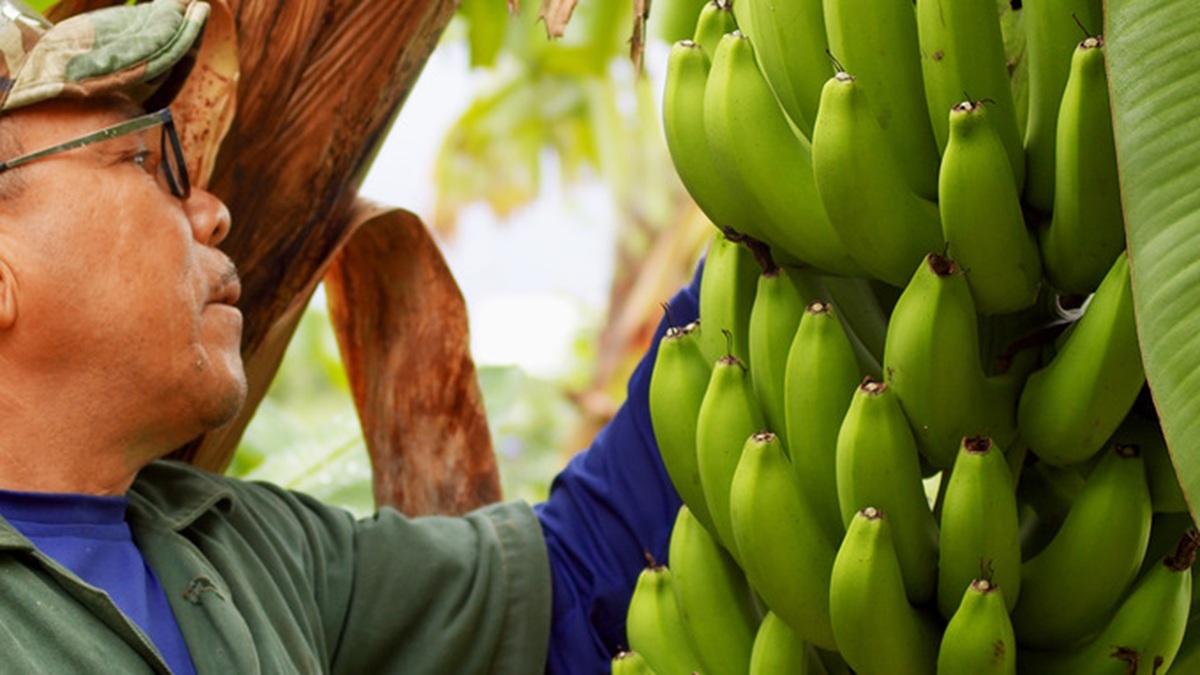
How Venezuelan farmers are learning to grow and live with a devastating plant disease
In the fields of Venezuela, where the banana has been for generations a symbol of sustenance and tradition, a shadow fell across the land. In 2023, Venezuela’s National Institute of Integral Agricultural Health (INSAI) declared a phytosanitary emergency: the fungus Fusarium Tropical Race 4 (TR4) (Fusarium oxysporum f. sp. cubense tropical race 4; syn. Fusarium odoratissimum) had arrived in producing areas in the states of Aragua, Carabobo and Cojedes.
This fungus, considered a devastating disease of banana and plantain (Musaceae) trees, can remain in the soil for more than two decades, threatening production and the lives of those who depend on it.
In the state of Aragua in the north of the country, the Renacer community had been growing bananas and plantains on 20 hectares since 2018. Then Fusarium arrived.
“When the disease hit, the entire plantation began to deteriorate. We refused to ‘die’ with the trees because that was our livelihood. The visits of INSAI confirmed that we had to chop down the banana trees. I cried a lot because I had worked with my banana trees for years,” recalls woman farmer, Lesbia Margarita García, with a broken voice.
In response, INSAI implemented measures to eliminate the affected plantations and improve the soil health by changing to other crops that allow agricultural production to recover. The Food and Agriculture Organization of the United Nations (FAO) offered assistance by providing corn seeds, tools, biosecurity inputs and training, with teams of experts helping farmers to start again.
“Planting corn, thanks to the INSAI-FAO programme, gave us a harvest that benefited everyone. We have been improving the soil,” says Lesbia Margarita with a smile. “Now we rotate crops, observe soil health and have learned how to use natural fertilizers. Expert assistance has been key.”
The pilot project works directly with affected producers in high-risk areas, promoting alternative crops such as cereals and vegetables, delivering inputs and tools to mitigate damage and applying biosecurity measures for safe and effective containment.
“Beyond the corn received, we have already planted cassava, chili peppers, beans and pumpkin. We hope that by the end of the year [2025] we will be diversified and that each season we will have something to sell. These lands do not give up,” says Lesbia Margarita with conviction.
The Renacer community is beginning to see fruits. Their products are reaching local markets, generating income and rebuilding their livelihoods.
Key actions to manage Fusarium TR4 are ongoing, including regular monitoring, continuous training, inter‑institutional coordination, updates to the national plan, information campaigns and producer impact assessments. INSAI is sustaining regulatory, surveillance measures and training —with FAO support—as part of a comprehensive long‑term strategy.
At the global level, FAO supports awareness raising, capacity building and international collaboration in the fight against Fusarium TR4 by facilitating the World Banana Forum and its Global Network on TR4.
“The objective is for countries to strengthen their operational and technical capacity, articulating actions between the public sector, the private sector and family farmers,” says Raixa Llauger, FAO Agriculture Officer in Mesoamerica. “FAO and local partners have promoted this approach in Venezuela.”
As an essential part of the activities, a comprehensive training programme was developed with activities that taught farmers how to identify the disease contain it and protect crops. In addition, FAO has distributed laboratory equipment, biosecurity tools and a multispectral drone to INSAI. Drones are an efficient and cost‑effective tool for phytosanitary surveillance, offering rapid, high‑resolution monitoring and early detection of plant pests and diseases.
Overall, the project strengthened biosecurity measures against the Fusarium fungus through the adoption of the National Action Plan and the establishment of partnerships with national and international institutions. In addition, the pilot initiative supporting smallholder farmers in key production areas and a nationwide awareness campaign with broad outreach improved surveillance, diagnosis and phytosanitary response capacities across the country.
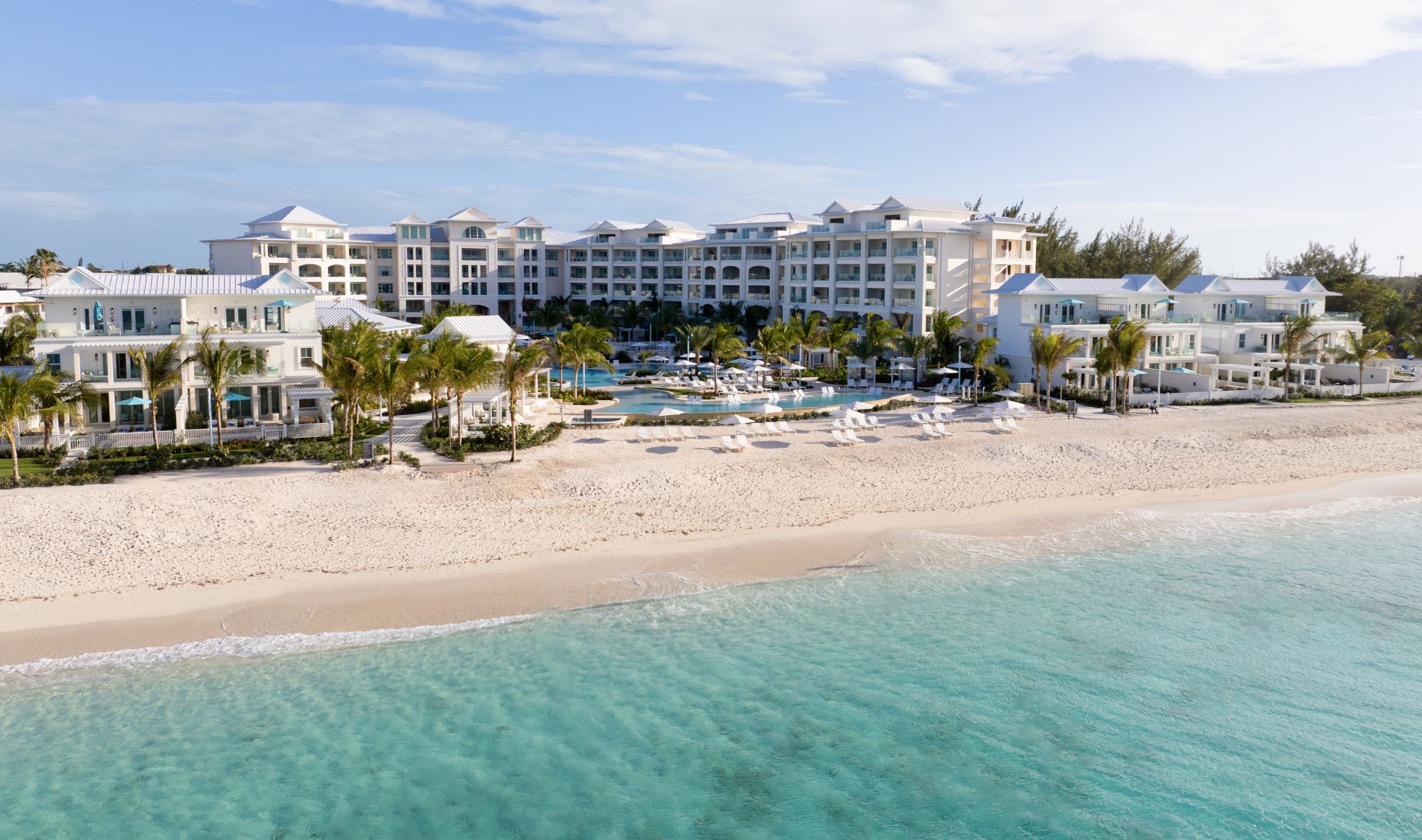
Montego Bay, Jamaica March 12, 2026 – Beaches Resorts has unveiled a bold new chapter in Caribbean family travel with the grand opening of Treasure Beach Village at Beaches Turks and Caicos, a US $150 million expansion that redefines oceanfront luxury on the western edge of the resort’s property.
The award-winning resort brand commemorated the milestone with an elegant and celebratory ribbon cutting ceremony on February 28,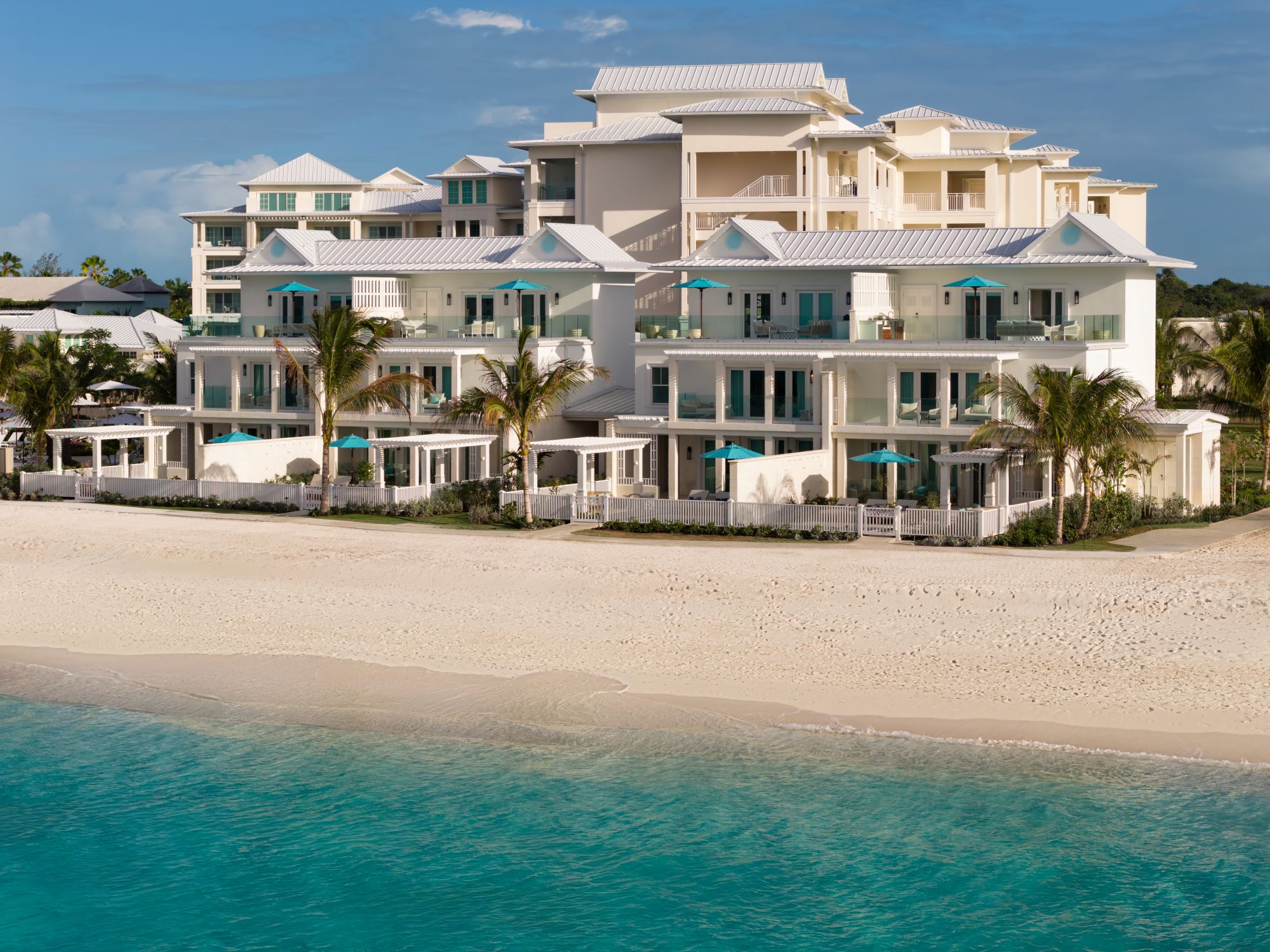 staged in the picturesque lobby of the new development overlooking the 15,000-square-foot lagoon-style pool and the turquoise waters of Grace Bay Beach.
Conceived as a landmark moment for both the brand and the destination, the ceremony gathered Turks and Caicos government officials, Sandals and Beaches Resorts executives and team members, regional business leaders, local suppliers, artisans, artists and members of the media in a powerful show of partnership.
The programme was vibrantly led by master of ceremonies Gary Sadler, executive vice president of sales and industry relations at Unique Vacations, and opened with remarks from James McAnally, regional managing director, Northern Caribbean and Curacao for Sandals and Beaches Resorts, and the Hon. Zhavargo Jolly, minister of tourism, agriculture, fisheries and the environment. Reflections followed from Executive Chairman Adam Stewart, before the ceremony culminated with a keynote address from the Hon. Charles Washington Misick, premier of the Turks and Caicos Islands, who joined other government officials and resort leaders for the official ribbon cutting that formally declared Treasure Beach Village open.
The event also featured a special performance by the Louise Garland Thomas High School Steel Pan Band and students of the Enid Capron Primary School Cultural Group, celebrating the culture and creativity of the islands. Guests then enjoyed a curated dining experience inside the Village’s newest restaurants, offering a first taste of the elevated culinary concepts now available to families from around the world.
Executive Chairman Adam Stewart in his delivery, underscored the legacy and deep-rooted connection between the brand and the destination.
“Turks and Caicos is an absolute gift to the world,” said Stewart. “Its beauty, its people and its ability to perform on the world stage make it extraordinary. My grandfather always told me it was one of the most beautiful places on earth. My father came to see it for himself and 30 years later Beaches Turks and Caicos stands as the most successful family resort in this hemisphere.”
Stewart added, “what began as a small hotel has grown from 150 rooms to nearly 900 keys and more than 1,000 rooms because of the vision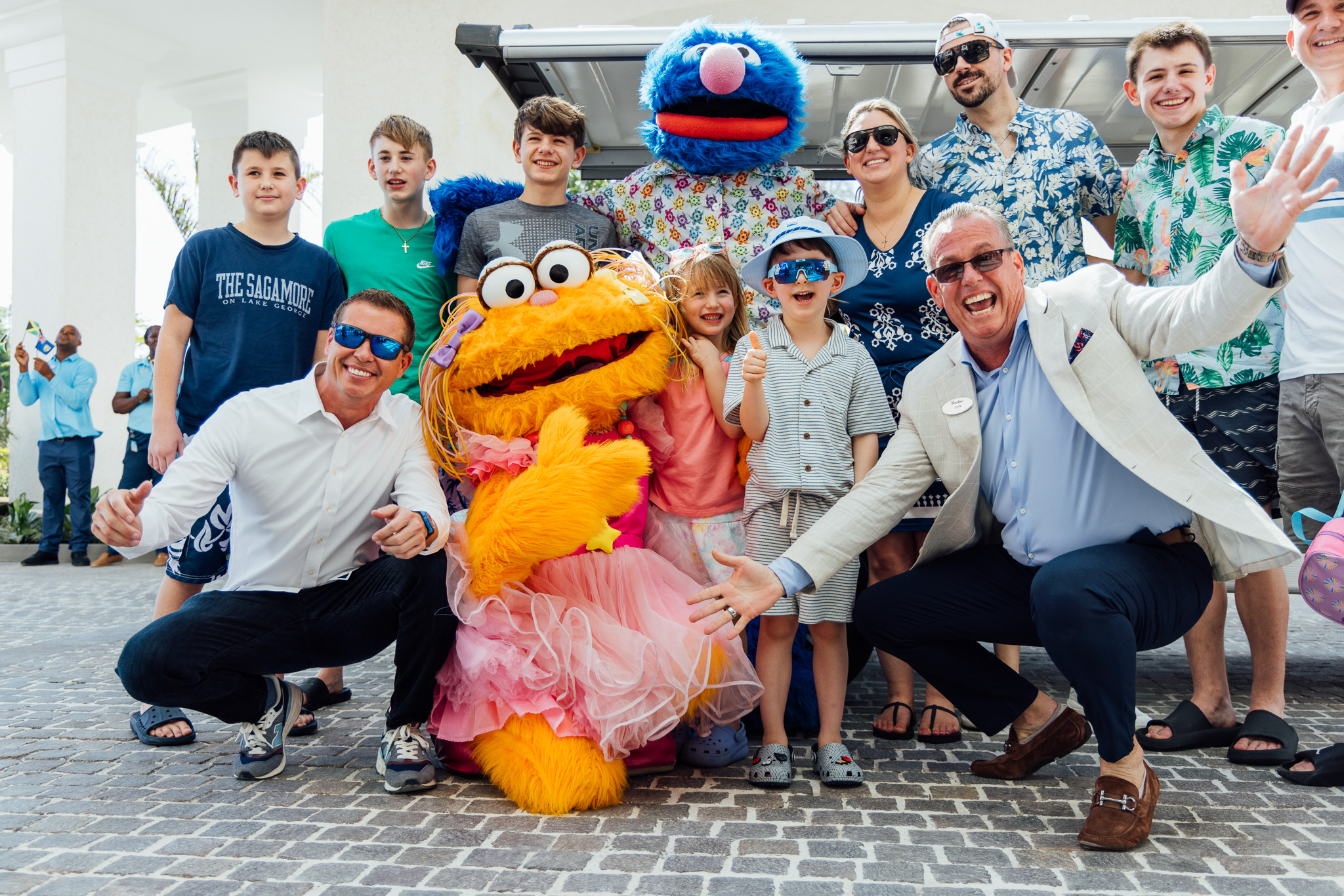 of our founder and his unwavering belief in Caribbean people. Today we are a team of 20,000 and 97 percent are Caribbean nationals. The Sandals story is a story of belief in what we can achieve together.”
In his keynote address, Premier Charles Washington Misick highlighted the national significance of the investment.
“Today we celebrate the opening of Treasure Beach and something even greater,” said Premier Misick. “This moment reflects a partnership between Sandals and the Turks and Caicos Islands that has been built over decades and strengthened by trust. Treasure Beach Village signals confidence in our country, in our stability and in our tourism product and it sets a new standard of quality and value.”
Integral to the celebration were several of the local artists whose commissioned works now define the character of Treasure Beach Village. From the earliest stages of design, the creative vision for the village centred on capturing the true treasures of the Turks and Caicos Islands through art and storytelling.
Among the standout installations is “Roses of Provo” by Stanford Hanfield, a breathtaking composition of more than 800 hand-cut conch shells transformed into a dramatic showpiece that honours the conch on the national flag and the enduring spirit of the islands. Murals by Ashley Aarons that celebrate local flora and fauna while paying homage to the founder’s love of the Caribbean. Through the lens of Rich McGhie, striking imagery of turtles, beaches and everyday island life captures the people who are the true treasures of Treasure Beach Village. Contributing artists Lucie Winton-Stubbs, Hezron Henry, Ancy Dorisca, Ayshe Stephen and Victoria Silvera further infuse the spaces with Caribbean soul, texture and authenticity.
Several of these artists were present for the ribbon cutting and were acknowledged for their exceptional contributions.
Following this, the award-winning resort welcomed its first guests to Treasure Beach Village on March 1, greeted by Executive Chairman Adam Stewart, Sandals executives, vibrant team members waving the Turks and Caicos and Jamaican flags, singing, dancing and inviting families to an experience brimming with island inspiration and exciting ‘Beaches Firsts’.
Suites Designed for Togetherness
The new oceanfront village featuring 101 multi-bedroom suites, unveils expansive new room categories, blending generous living spaces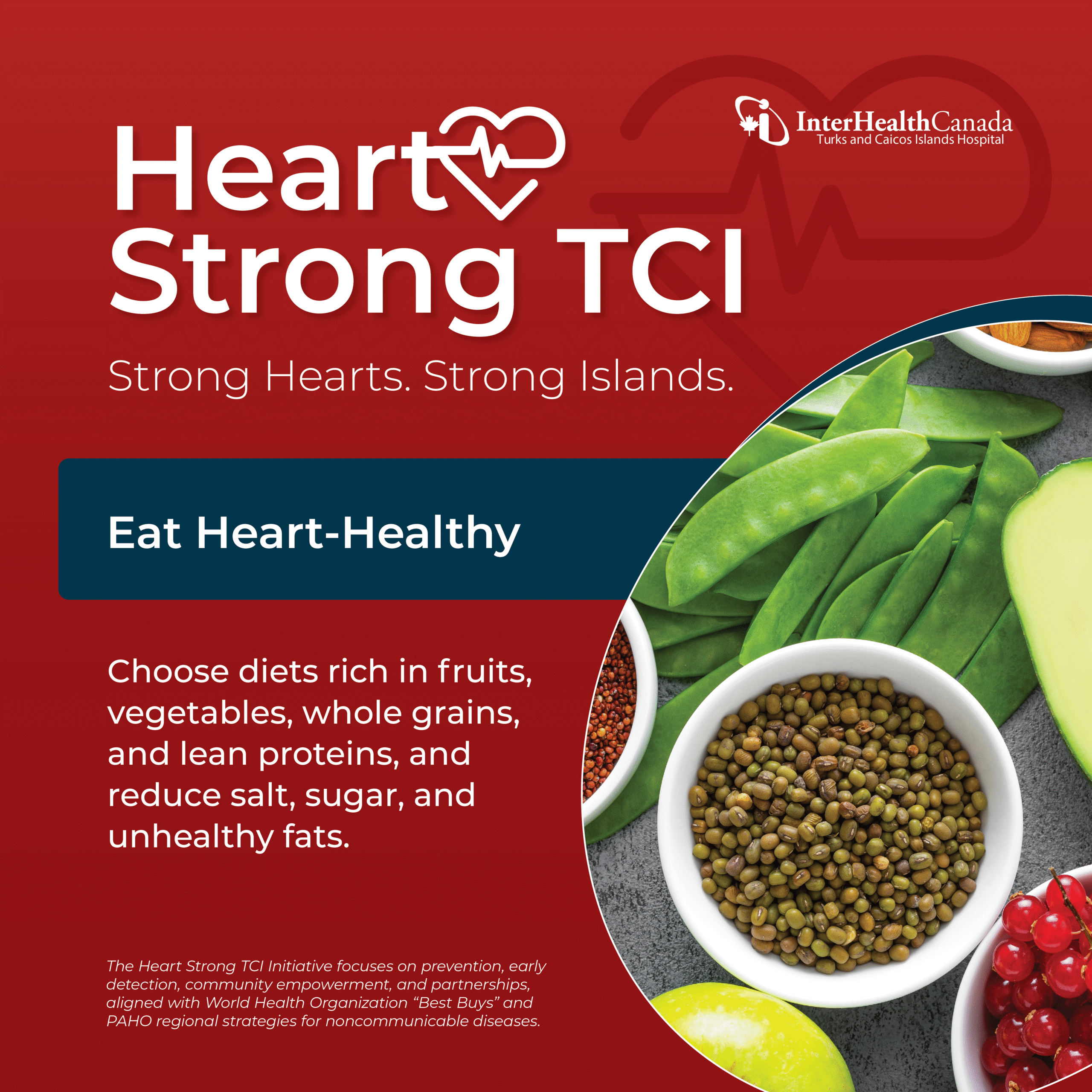 with the all-inclusive service synonymous with Beaches. Among the standouts are the oceanfront CrystalSky 4-Bedroom Reserve Villas, perched on the sand and unfolding across more than 2,600 square feet over three stories. Accommodating up to 10 guests and designed for elevated family living, the villas include a private pool and a rooftop deck with a telescope. Spanning more than 2,800 square feet over two stories, the Chairman’s Penthouse Suite hosts up to 10 guests in three bedrooms, anchored by a dramatic staircase that connects its expansive living spaces.
Oceanview Two-Story Suites feature two-bedroom and three-bedroom layouts with open designs, modern bunk beds, inviting dining nooks and al fresco living rooms designed to capture the sea breeze. A collection of thoughtfully designed Oceanview and Penthouse Concierge Suites welcome up to six guests with two bedrooms, expansive baths and bunk beds. A Caribbean palette of turquoise, coral and neutrals reflects the surrounding sea and sand, accented by artful touches inspired by life beneath the surface.
Dining That Brings Everyone to the Table
At Treasure Beach Village, six new dining concepts invite families to slow down and linger, including the arrival of Butch’s Island Chop House at a Beaches resort – the beloved Sandals Resorts steakhouse. A tribute to the brand’s late founder, Gordon “Butch” Stewart, the restaurant brings generations together over prime dry age steaks, fresh seafood and an elevated beverage experience for adults, including a mini-martini menu.
A first of its kind for the brand, Pinta Food Hall introduces global flavours across four distinct culinary stations, from smoky tacos and Asian stir-fries to an open-air Italian window and an à la carte grill – plus Beaches’ first-ever live churro station. Featuring Jamaica’s iconic Blue Mountain coffee, BRÜ Coffee Bar serves artisanal coffee by day and transitions into a craft cocktail spot by night.
Designed for Families, Shaped by the Sea
Sweeping views of Grace Bay’s turquoise waters set the tone for unhurried days ahead. Inside the lobby, coastal details take shape in an intricate sea-garden ceiling and a striking conch installation by local artisan Stanford Handfield, while a soft sand-and-sea palette creates an atmosphere that feels instantly welcoming.
At the heart of the village, a 15,000-square-foot lagoon-style pool sets the scene complete with three whirlpools. A waterslide and splash zone cater to younger guests, while a swim-up bar offers a gathering place for all ages. Nearby, Calypso Cones adds a playful poolside moment with refreshing snow cones under the Caribbean sun.
Treasure Beach Village also debuts Beaches’ first Starfish Cinema, an all-day, 32-seat theatre designed for daytime sitcoms and family movie nights, popcorn and refreshments included.
Treasure Beach Village is fully integrated into the Beaches Turks and Caicos experience, where all guests enjoy access to a total of 28 additional dining options, the 45,000-square-foot Pirates Island Water Park, unlimited land and water sports, daily entertainment for every generation, and complimentary Kids Camps led by trained childcare experts.
“As the next chapter in the Beaches Turks and Caicos story, Treasure Beach Village builds on everything families already love about this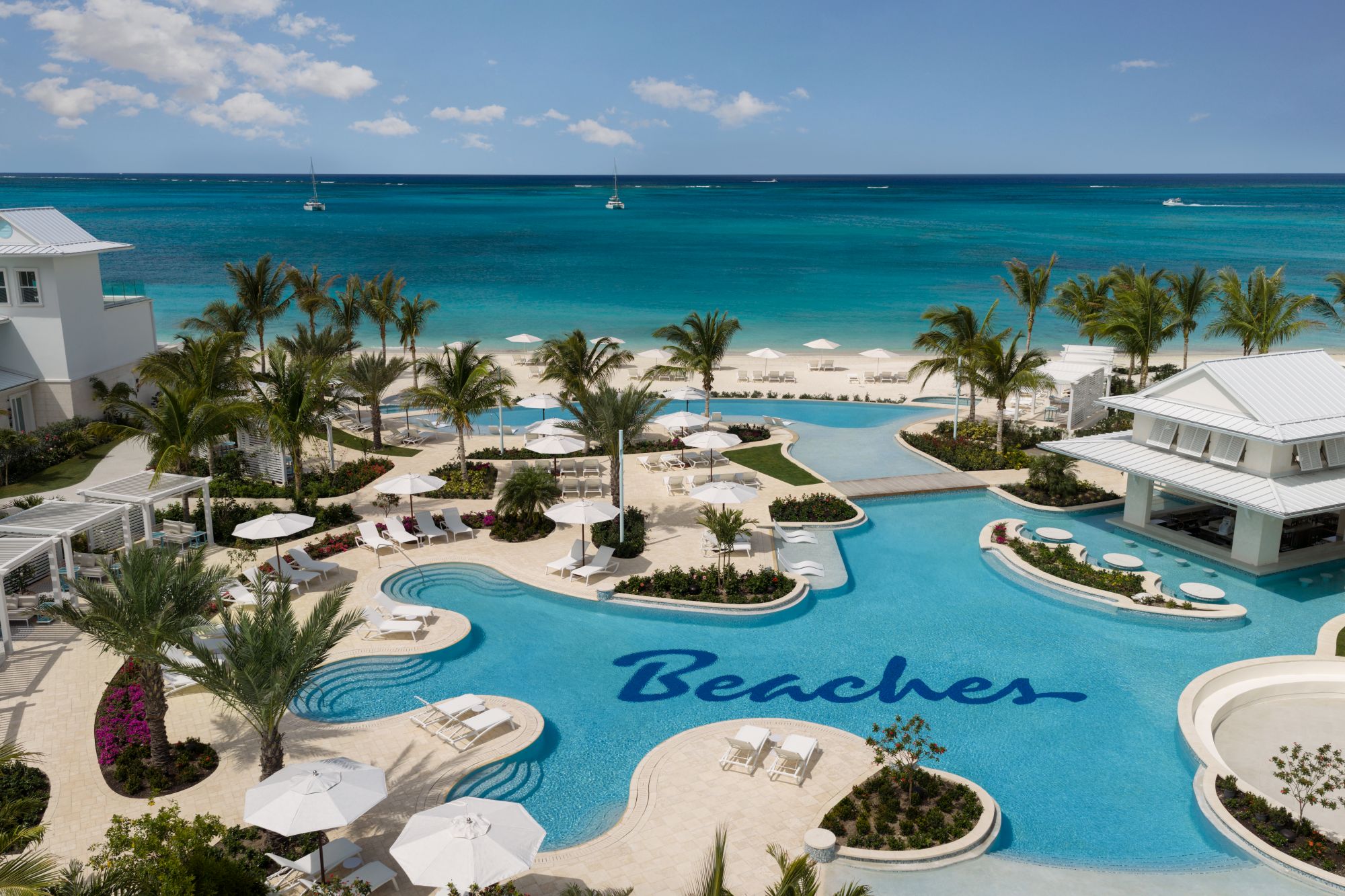 resort, adding incredibly spacious accommodations and freshly introduced experiences shaped by the way families travel today,” said Adam Stewart, executive chairman of Sandals and Beaches Resorts. “It is incredibly moving to meet guests who first visited Beaches as children and are now returning with little ones of their own. More than ever, families are coming together across generations, slowing down and truly valuing time with one another, and this new addition opens up even more possibilities for those shared moments.”
Bigger, Better, Beaches 2.0
The opening of Treasure Beach Village marks the beginning of Beaches’ next chapter. With nearly US $1 billion invested to double the brand’s footprint over the next several years, Beaches continues to expand across the Caribbean, introducing more space, more flexibility and more opportunities for families to reconnect in Exuma, The Bahamas; Jamaica; Barbados and Saint Vincent and the Grenadines.





-

 Bahamas News5 days ago
Economic and Financial Experts Assess US-China Relations; Offer Advice for The Bahamas
-

 Bahamas News5 days ago
Experts Analyze Economic Landscape; Opportunities and Challenges
-
 News5 days ago
Beaches Resorts Announces Grand Opening of Treasure Beach Village at Beaches Turks and Caicos
-

 Caribbean News5 days ago
Widow’s Testimony Recounts Night Haiti President Was Killed
-

 News5 days ago
North and Middle Caicos Students receive educational material from Sandals Foundation and Beaches Turks and Caicos resort
-

 News5 days ago
Sandals Foundation Reading Road Trip with Canadian Broadcasters Creates Cultural Mix at Enid Capron Primary School
-

 Education5 days ago
Department of Education hosts 3rd Annual Local Studies Competition
-
 News1 week ago
GOVERNMENT REVIEWING TENDER AFTER GRAND TURK–SOUTH CAICOS FLIGHTS STOP