Connect with us

News

Youngsters Urged To Join Police Youth Clubs

Published

on

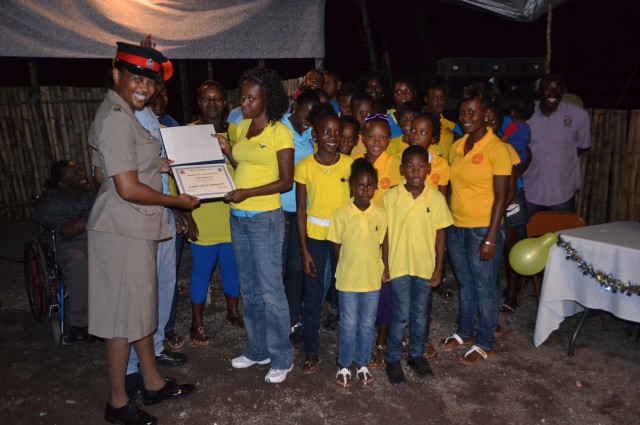
KINGSTON, Sept. 1 (JIS): The country’s young people are being encouraged to get involved in police youth clubs in order to bring about meaningful change in their lives and contribute to the progress of their communities.

Assistant Commissioner of Police (ACP) in charge of the Community Safety and Security Branch (CSSB), Bishop Dr. Gary Welsh, says the clubs serve a positive purpose, by impacting the communities of which they are a part, while also developing the leadership skills of members.

“They help to harness young talent, with emphasis on leadership capabilities, social entrepreneurship and the adoption of a culture of lawfulness. Accountability and action is reinforced with participants being shown that individually, they can make a difference but collectively, the reach is far greater,” he tells JIS News.
There are 543 registered police youth clubs across the island, however, 30 per cent of them have become dormant due to falloff in membership, as persons migrate, pursue higher education or work, or they simply lose interest due to lack of effective programmes to keep them engaged.

Over the years, the clubs, located in the island’s 19 police divisions have been a conduit through which the JCF moulds and provides a positive influence on the young people of this country, instilling discipline, responsibility and respect for law and order, in order to steer them away from a life of crime.

In fact, many of the members have gone on to become members of the police force.
The clubs have successfully identified and developed the competencies of the youth and they contribute to their communities through engagement in activities such as caring for the elderly, adopting and improving basic schools, and hosting and engaging in sporting events.

The entrepreneurial skills of the members are also harnessed through engagement in small or micro business enterprises.

In Clarendon, for example, police youth clubs have been assisted with start-up businesses in order to become more self-sufficient.

With kind assistance from the Custos of the parish, Hon. William Shagoury, several clubs have received chickens and pigs to embark on income generating ventures.

“We try and help by giving them some layers. They (club members) would be ready to start making money within a month and a half. We give them the feed, the (feeding) pans and a lesson in taking care of the chickens. They build the coops and once the chickens start laying they are able to make a start,” he tells JIS News.

Mr. Shagoury says the programme started eight years ago and some clubs have been doing well.

One of the outstanding features of the police youth clubs is that they help to bridge the gap between the police and citizens. As the police works with the youngsters in the communities, hostilities are reduced, and trust is built, which goes a far way in addressing crime and violence.

Senior Superintendent of Police (SSP), Cornwall “Bigga” Ford, tells JIS News that the revival of clubs in the West Kingston division, which he heads, is bringing about positive change in the communities where they operate.
Since SSP Ford took over the reins in April, the Denham Town, Admiral Town, Trench Town and Rose Town police youth clubs have been revitalised.

SSP Ford says he feels encouraged by the re-organisation of the clubs. “Since I’ve been there I have revived all of them. We are getting membership and we have identified police leaders. I am enthused. There are a lot of young people with high quality leadership skills,” he tells JIS News.

“They are helping to pull in other young people. They have worked in the stations and they served as counsellors in the summer youth camps so there is an impact,” he adds.

SSP Ford notes that the clubs, which promote positive inclusion and meaningful engagement for the young people go a far way in eradicating the “informer” label, which prohibits meaningful, trustworthy relationships between citizens and police.

He says that the police, working with youth club leaders in community development initiatives and sporting activities such as football, has resulted in the retention of club membership.

“We have a five-a-side internal competition for the police and we allow the youth clubs to insert two teams in it. They are one of the finalists in that. We do not treat them differently. We are trying all kinds of things,” he notes.

A book drive for back-to-school was also initiated, he informs.

SSP Ford says he plans on engaging the business community to provide much-needed equipment and resources for the survival of the clubs.

Meanwhile, as it relates to the inactive clubs, SSP Karina Powell-Hood, who is attached to the CSSB Branch, tells JIS News that an assessment will be carried out to determine whether they can be revived.

She says to remain active, clubs need to put programmes in place that are dynamic and can keep members engaged.
She notes that young people tend to gravitate to organisations that involve activities such as sports.

Magnetic Media is a Telly Award winning multi-media company specializing in creating compelling and socially uplifting TV and Radio broadcast programming as a means for advertising and public relations exposure for its clients.

Caribbean News

First Caymanian Drafted to NHL as Jaxon Cover Makes History    

Published

on

GEORGE TOWN, Cayman Islands – A young man who learned to play hockey on Cayman Islands’ only roller hockey rink has achieved

what once seemed impossible—becoming the first Caymanian ever selected in the National Hockey League Draft.

Eighteen-year-old Jaxon Cover was chosen 32nd overall by the Ottawa Senators, making him the final first-round selection in the 2026 NHL Draft and the first player from the Cayman Islands to hear his name called by an NHL franchise.

The achievement is remarkable not only because of where Cover comes from, but because of how recently he began playing on ice.

Growing up in Grand Cayman, Cover developed his skills playing roller and ball hockey, as the islands have no permanent ice rink. He did not lace up ice skates until he was 13 years old, yet within just five years had developed into one of the world’s top junior prospects.

Last season, the talented right winger starred for the London Knights of the Ontario Hockey League, recording 52 points on 20 goals and 32 assists in 67 games, performances that caught the attention of NHL scouts.

His mother, Nanalie Cover, described the family’s emotions as “very thankful, grateful and humbled,” adding that she hopes her son’s journey becomes “a symbol of what we can do, and what is possible for all, irrespective of where they originate.”

The Cayman Islands Government also hailed the milestone, saying Cover had “redefined the boundaries” of Caymanian sport and demonstrated the limitless potential of the nation’s young people.

Minister for Youth, Sports, Culture and Heritage Isaac Rankine called the draft selection “a proud and historic moment for the Cayman Islands,” saying Cover’s success will inspire a new generation of athletes to pursue their dreams, no matter how unconventional the path.

For a country better known for beaches than ice rinks, Jaxon Cover’s remarkable rise proves that talent, determination and opportunity can overcome even the most unlikely beginnings.

From a roller rink in the Caribbean to the bright lights of the NHL, Cayman has produced its first hockey trailblazer—and perhaps not its last.

Continue Reading

Caribbean News

Migration Is No Longer Just About Borders

Published

on

What Caribbean migration dialogues reveal about the region’s future


By Patrice Quesada, Coordinator, IOM Caribbean

Migration has become one of the defining issues shaping the Caribbean’s future—not simply because people are moving, but because our economies, labour markets, populations and climate realities are changing.

Over the past several weeks, I have participated in migration discussions at the global, regional and national levels. While each conversation was different, they all pointed to the same conclusion: the Caribbean is beginning to recognize migration not only as a border issue, but as a development issue.

The challenge now is moving from dialogue to action.

From Global Commitments to Caribbean Solutions

That shift was evident during the International Migration Review Forum held at the United Nations in New York, where Caribbean participation was particularly strong. Delegations from ten Caribbean countries, including ministerial representatives from Barbados and Belize, reinforced the region’s growing commitment to shaping international migration policy.

Two messages emerged clearly.

First, migration governance must be grounded in each country’s realities and supported by concrete national commitments. Second, migration cannot be viewed in isolation. It is closely linked to labour markets, demographic change, climate vulnerability and long-term development planning.

Every Caribbean Country Has Its Own Story

Across the region, governments are approaching migration through different lenses.

In Saint Lucia, the launch of the country’s draft migration policy reflected concerns about declining birth rates, labour shortages and continued emigration. The discussions recognised that labour needs, diaspora engagement, remittances, return migration and protection must all work together within one national strategy.

Jamaica demonstrated how migration planning can begin at the local level, with Clarendon becoming the country’s first parish to integrate migration considerations into its long-term development strategy.

Guyana, meanwhile, is managing migration in the context of rapid economic growth, balancing increased labour demand with worker protections and orderly migration systems.

Barbados has also begun incorporating migration into broader population planning as it addresses demographic decline and an ageing population.

The Bahamas has focused on disaster preparedness, bringing together government agencies to strengthen national plans for managing inter-island and cross-border movement during emergencies while safeguarding the rights and dignity of displaced people.

Different countries face different challenges—but all are recognising migration as an essential part of national planning.

The Caribbean’s Greatest Untapped Asset

One message resurfaced repeatedly throughout these discussions.

The Caribbean diaspora should no longer be viewed simply as a source of remittances.

Across the region, citizens living abroad continue to contribute through investment, entrepreneurship, professional expertise, advocacy and, in many cases, by returning home with new skills and experience.

The opportunity now is to engage the diaspora more deliberately as a strategic development partner.

Turning Dialogue into Action

Technical discussions held throughout May demonstrated that governments are beginning to move beyond policy conversations.

CARICOM, supported by the International Labour Organization and the Inter-American Development Bank, convened regional labour migration specialists to explore how migration can help address workforce shortages while ensuring fair recruitment and decent working conditions.

Together, these initiatives suggest the Caribbean is entering a new phase—one where migration is no longer viewed simply as movement across borders, but as a tool for economic resilience, demographic planning and sustainable development.

The conversations have begun.

The next challenge is ensuring they lead to meaningful action.

Continue Reading

Health

Cleveland Clinic Completes Its First Robotic Lung Transplant in US

Published

on

Cleveland Clinic staff performing their first U.S. robotic lung transplant surgery

Health system is one of only a handful in the world able to perform the complex robotic procedure

In May 2026, surgeons at Cleveland Clinic successfully completed the health system’s first robotic lung transplant in the United States, marking a significant advancement in minimally invasive organ transplants. Cleveland Clinic is among only a small number of centers worldwide offering this surgical approach and was the first in Ohio to complete this type of procedure. Robotic lung transplants have rarely been performed because they require advanced robotic capabilities and a skilled surgical team.

Gregory Jones, MD, a thoracic surgeon at Cleveland Clinic’s Heart Vascular and Thoracic Institute, led the surgical team for the single lung transplant procedure, which also included Kenneth McCurry, MD, a cardiothoracic surgeon and surgical director of lung transplantation and enterprise director of transplantation.

“This achievement reflects the collaboration and innovation across our transplant and surgical teams,” said Dr McCurry. “As these technologies continue to evolve, they will play an increasingly important role in improving patient outcomes and advancing the future of transplantation. Indeed, our kidney and liver transplant programs in Ohio have also been at the forefront of robotic organ transplantation with great success.”

In a traditional lung transplant, surgeons commonly gain access to the chest by dividing the breastbone or ribs to access the lungs. This is often associated with significant pain, which can prolong recovery. In a robotic lung transplant, surgeons use small incisions and robotic instruments and 3D visualisation to perform the procedure with a less invasive approach. This approach is designed to help reduce postoperative pain, shorten hospital stays, and accelerate recovery.

“This milestone reflects an important step forward in how we approach lung transplantation,” said Dr Jones. “It builds on our experience with both robotic surgery and transplant care and adds another option for some patients who may benefit from a minimally invasive approach.”

Robotic surgery has transformed many types of cardio-thoracic procedures over the past decade. By bringing this technology to lung transplantation, Cleveland Clinic is expanding access to advanced, minimally invasive transplant care.

The surgery was performed on a man in his 70s with pulmonary fibrosis, a progressive lung disease that causes scarring of the lungs and can make breathing increasingly difficult. Following the transplant, he was discharged from the hospital and is recovering well.

Cleveland Clinic’s Lung Transplant Program is a national leader in advanced lung transplant care, having performed more than 2,500 transplants since 1990. In 2025, Cleveland Clinic performed 146 lung transplants in the U.S. The program is known for its expertise in caring for complex transplant patients, many of whom have been turned down elsewhere, and for advancing new approaches in transplant care.

In addition to the US, Cleveland Clinic is also a leader globally in transplantation. A team at Cleveland Clinic Abu Dhabi performed the enterprise’s first robotic lung transplant last year. It was also the first procedure of its kind performed in the Gulf region.

Continue Reading

FIND US ON FACEBOOK

TRENDING