
Caribbean News
Inflation Trending Down

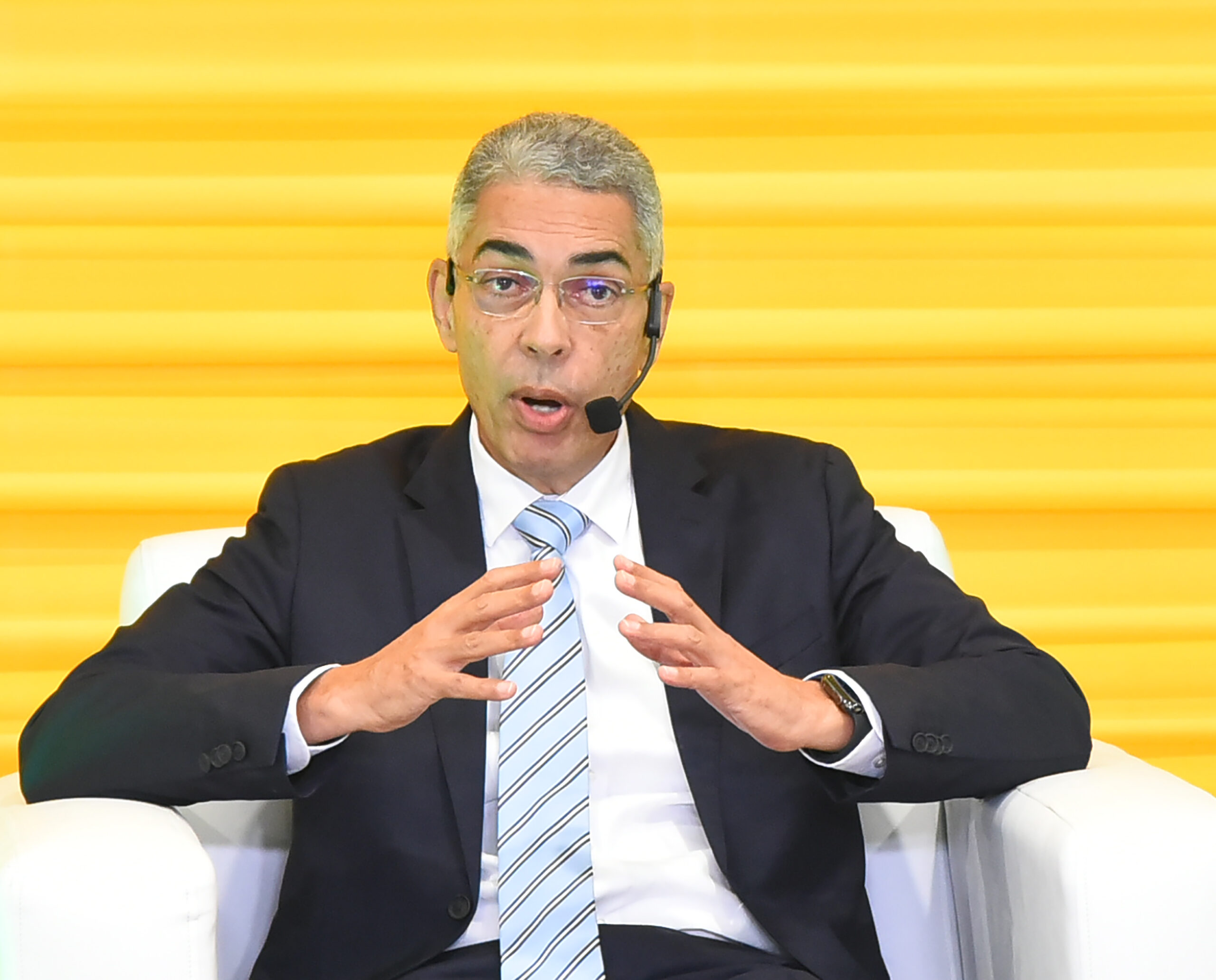
#Kingston, Jamaica, August 21, 2022 – The Bank of Jamaica (BOJ) is encouraged by the declining out-turns recorded in the last three Consumer Price Index (CPI) reports, Governor, Richard Byles, has said.
The CPI, which measures variations (inflationary movements) in commodity prices for consumers, is administered by the Statistical Institute of Jamaica (STATIN).
Mr. Byles noted that having peaked at 11.8 per cent in April 2022, the rate of inflation fell to 10.9 per cent in May and June, and to 10.2 per cent in July.
“Declining international commodity prices, relative stability in the exchange rate, tighter liquidity management by the BOJ, and higher interest rates have allowed for this trend,” the Governor informed.
He was speaking during the Bank’s digital quarterly media briefing on Friday (August 19).
Mr. Byles said notwithstanding this “good trend”, the BOJ believes these conditions have not sufficiently solidified to ensure that inflation is sustainably placed on a downward path towards the institution’s four to six per cent target range, adding that “there remains some significant risks of reversal”.
He emphasised that the fragile geopolitical conflict between Russia and Ukraine, and Europe’s knock-on commodity price risks “cannot be ignored”.
Additionally, Mr. Byles said reported labour shortages in several sectors of the economy and pressures from recent local inflation experiences “carry the potential for future wage adjustments that could be inflationary”.
Further, the Governor said high inflation in the United States and other trading partners has prompted a programme of faster monetary adjustment, noting that this could cause capital outflows from Jamaica and exchange rate depreciation, “if domestic monetary policy is not properly aligned”.
“These are some of the factors the Bank’s Monetary Policy Committee (MPC) considered when it met on August 16 and 17, 2022, and voted to increase the policy rate [on deposit-taking institutions’ (DTIs) overnight balances] by a further 50 basis points to six per cent, effective August 19, 2022,” he told journalists.
Mr. Byles informed that the Committee also decided to continue pursuing other measures to contain Jamaican dollar liquidity expansion and maintain relative foreign exchange market stability.
He said the MPC noted that the Bank’s strong international reserves reinforce its ability to support the foreign exchange market, as needed.
“This current decision has resulted in a cumulative increase in the policy rate of 550 basis points since October 2021 and has taken the policy rate to a level that the Committee considers appropriate,” Mr. Byles pointed out.
He added that if incoming data on inflation continues to track downwards, and the monetary adjustments in the US, in particular, are as expected, “the MPC agreed that it could pause its policy rate increases”.
Mr. Byles advised that the policy rate increases were complemented by the Bank’s adjusting the Net Open Position limits for DTIs, and selling approximately US$678 million to the foreign exchange market, since October 2021.
This, he said, was approximately 30 per cent more than the sum sold over the corresponding period to July 2021.
He also indicated that the Bank bought US$1.96 billion over the same period, primarily through the surrender system.
Mr. Byles said these policy actions contributed to the exchange rate being stabilised since the start of November last year.
“Without these actions, imported inflation, and hence the final prices faced by consumers, would have been much higher,” he further stated.
Mr. Byles said the BOJ anticipates that these measures will continue to cause interest rates on deposits to further increase, thereby making savings in Jamaican dollars more attractive, relative to foreign currency assets.
Photo Caption: Bank of Jamaica (BOJ) Governor, Richard Byles.
Contact: Douglas McIntosh

Caribbean News
Royal Caribbean Group and Sandals Resorts Announce Landmark Partnership to Accelerate Their Leading Vacation Experiences

Royal Caribbean Group Investment to Advance Sandals and Beaches’ Growth and Broaden the Group’s Vacation Portfolio
Montego Bay, Jamaica and Miami, September 24, 2026 – Royal Caribbean Group (NYSE: RCL) and Sandals Resorts today announced the signing of an agreement to form a partnership in the all-inclusive resort space with a 50% investment from Royal Caribbean Group. Building on Sandals and Beaches Resorts’ more than four decades of leadership in Caribbean hospitality, the joint venture will create new opportunities for continued resort growth while broadening the experiences across Royal Caribbean Group’s vacation platform.
The partnership brings together two of the travel industry’s most celebrated vacation companies, pairing Sandals and Beaches’ all-inclusive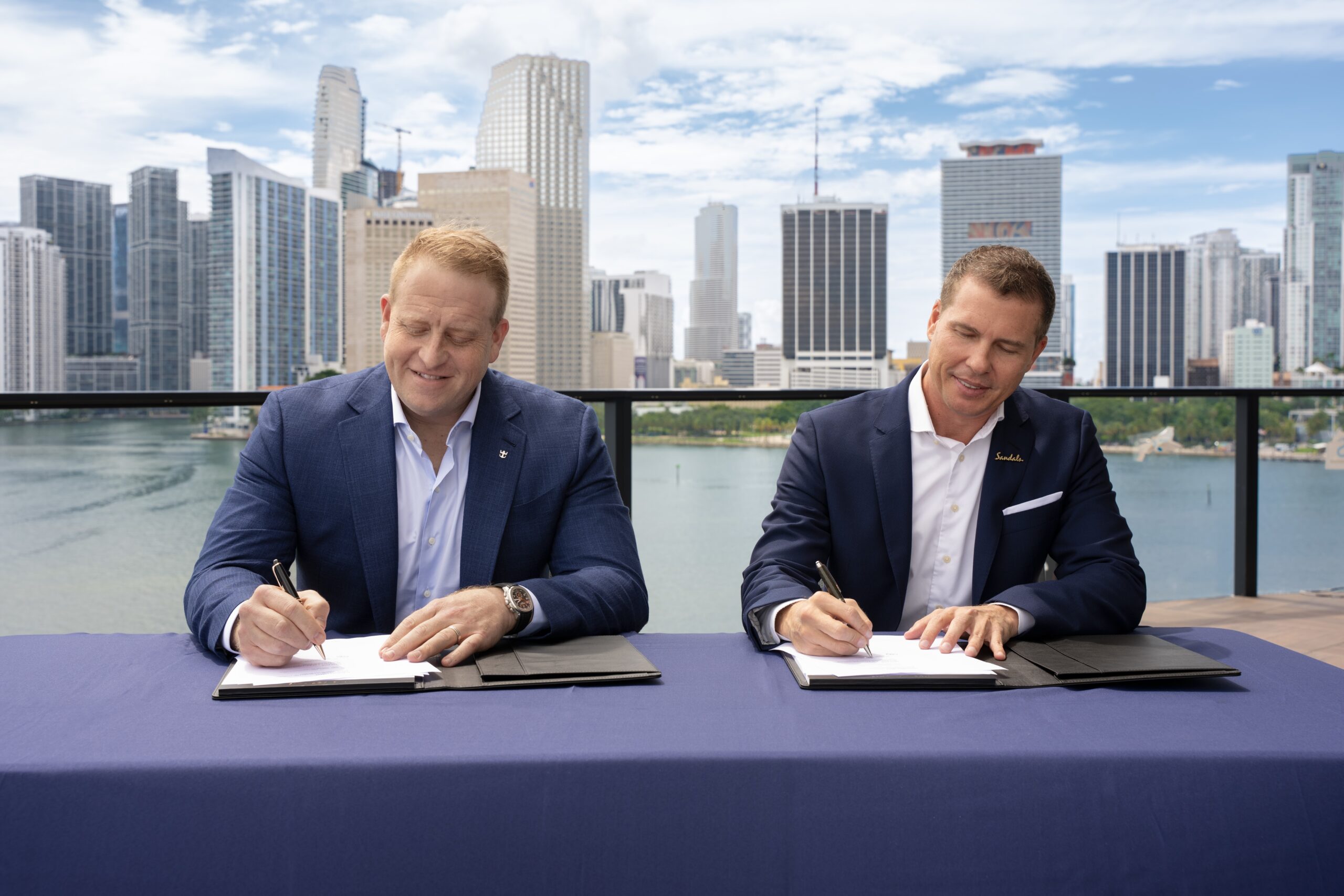 resort expertise with Royal Caribbean Group’s vacation platform, including industry-leading brands – Royal Caribbean, Celebrity Cruises and Silversea – a portfolio of private destinations, new river cruising offering, and an industry-first loyalty program. United in a shared history in the Caribbean and connected by a love for their communities, the companies will offer travelers an unparalleled collection of cruise, private destination and resort experiences, serving guests across more vacation occasions and establishing their undisputed leadership in Caribbean vacations.
The joint venture expands Royal Caribbean Group into an adjacent vacation category, growing its participation in the approximately $2 trillion global vacation market, and meets the growing global demand for Sandals and Beaches Resorts by accelerating their expansion. The partnership will include Sandals and Beaches’ collection of premier all-inclusive properties across the Caribbean, and the companies will explore opportunities to broaden distribution, deepen guest engagement, and make it easier for travelers to discover vacation experiences offered across both portfolios.
“For nearly 60 years, we’ve reimagined what a vacation can be, constantly expanding the ways we inspire our guests to explore, connect and create lifelong memories,” said Jason Liberty, Chairman and CEO, Royal Caribbean Group. “We have been building a vacation platform that brings joy to millions of people around the world and creates meaningful relationships that last with our guests. Our partnership with Sandals and Beaches Resorts is an important next step on that journey – bringing together two iconic leading vacation companies to further strengthen and grow one of the most admired resort portfolios in the world. The Stewart family has created powerful and beloved brands, and we are honored to build on that legacy. Together, we see tremendous opportunity to expand the reach of Sandals and Beaches Resorts and continue turning the vacation of a lifetime into a lifetime of vacations.”
“My father, Gordon ‘Butch’ Stewart, founded Sandals Resorts with the belief that a company built in the Caribbean could stand on the world stage alongside the most respected names in hospitality. Today is proof of how far that vision can go,” said Adam Stewart, Executive Chairman of Sandals Resorts and Beaches Resorts. “This partnership is the natural next step in building on that conviction. It gives us the ability to grow faster with a partner that shares our values of exceptional hospitality, long-term investment, and the power of enduring brands. Together, we will introduce more guests to Sandals and Beaches Resorts while creating even more extraordinary experiences for those who have made our resorts part of their lives for decades.” Stewart added, “As we continue to grow, we will remain true to what has always defined us: delivering authentic vacations that exceed expectations while creating opportunities for our team members, travel advisor partners and the communities we call home. The future has never been brighter, and I know this moment would make my father incredibly proud.”
The joint venture will be governed by a board under the shared leadership of Stewart and Liberty. Stewart will maintain a leadership role in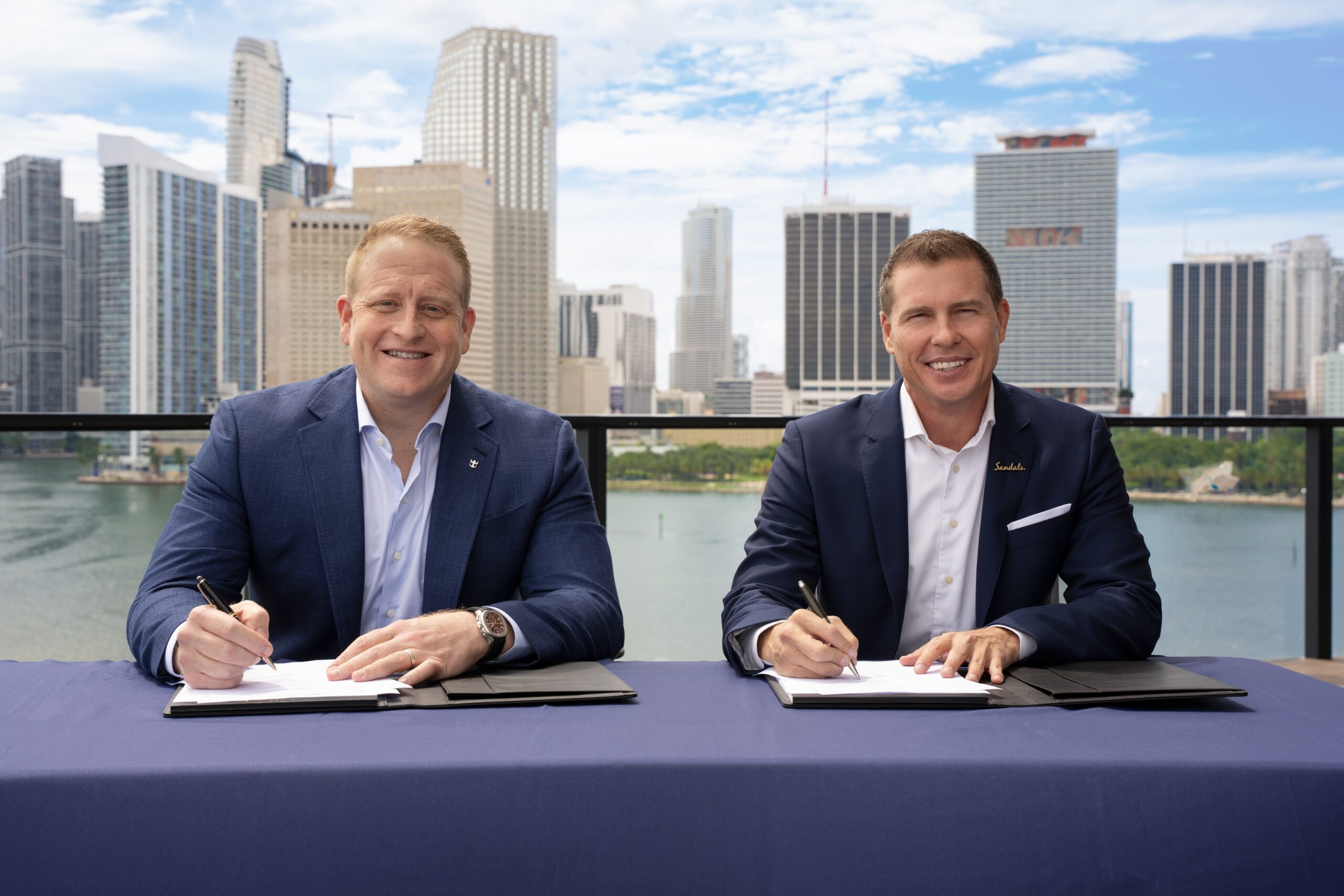 guiding the company’s long-term strategic growth as Executive Chairman of Sandals and Beaches Resorts. Existing reservations, loyalty programs, resort operations and cruise operations will continue as usual, with the partnership bringing additional resources to support future opportunities.
Under the terms of the agreement, Royal Caribbean Group will acquire a 50% equity interest in Sandals and Beaches Resorts for approximately $3 billion, representing a forward EBITDA multiple of approximately 10x. Royal Caribbean Group has secured committed debt financing from Morgan Stanley to fund the investment. The transaction is expected to close in early 2027, subject to customary approvals and closing conditions, and is expected to be accretive to earnings next year.
BofA Securities and PJT Partners acted as financial advisors, and Latham & Watkins and Jones Day acted as legal advisors to the Sandals Group. Perella Weinberg Partners and Morgan Stanley acted as financial advisors and Kirkland & Ellis LLP acted as legal advisor to Royal Caribbean Group.
PHOTO CAPTION: Jason Liberty, Chairman and CEO of Royal Caribbean Group, and Adam Stewart, Executive Chairman of Sandals Resorts, mark the signing of an agreement to form a landmark partnership that expands Royal Caribbean Group into the all-inclusive resort space and supports the future growth of Sandals and Beaches Resorts. The signing took place at Royal Caribbean Group’s new headquarters in Miami, with the city’s skyline in the background.
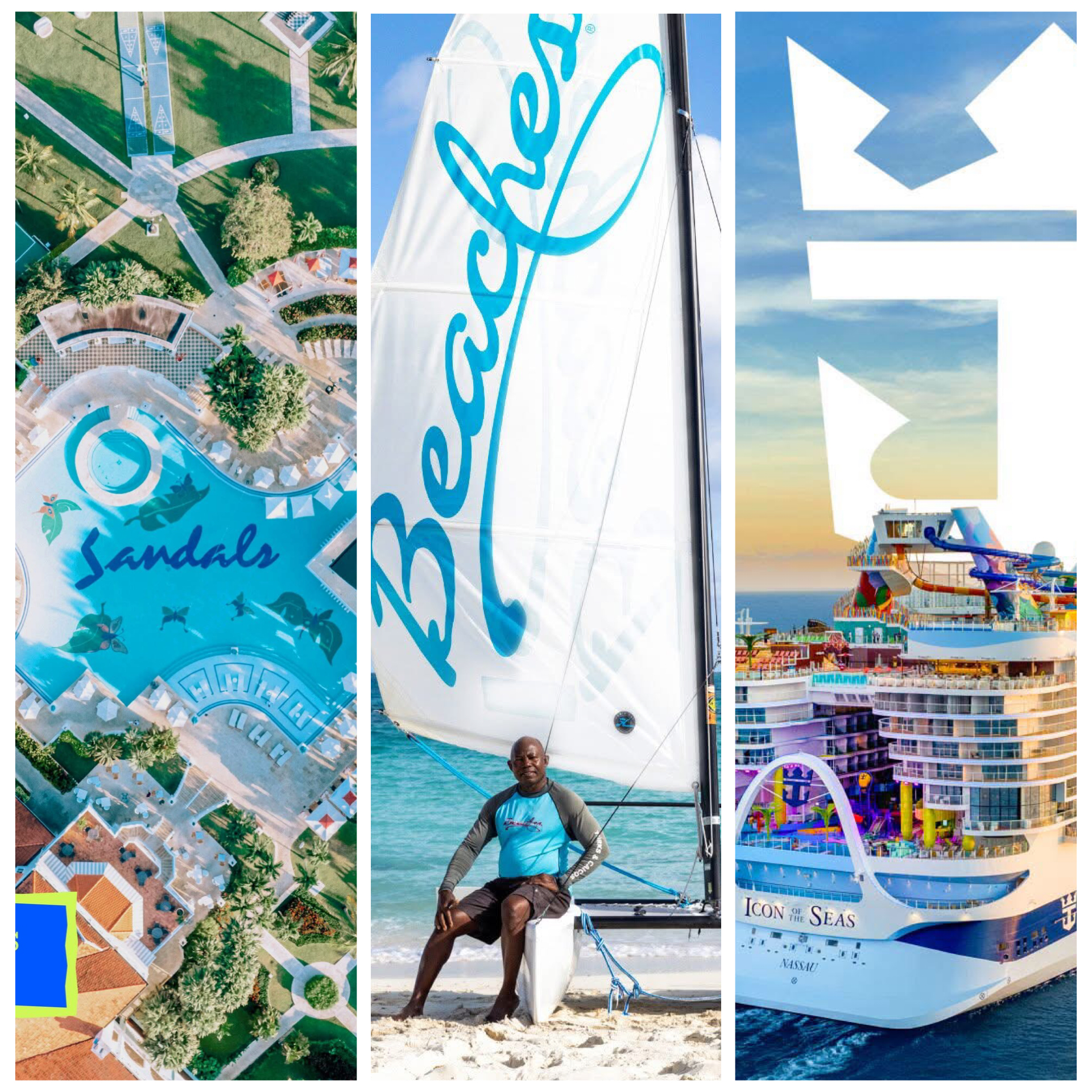
The Caribbean tourism deal first reported as a possibility on Tuesday is now a signed agreement. Royal Caribbean Group plans to pay approximately US$3 billion for a 50% stake in Sandals and Beaches Resorts, putting the value of the business at about US$6 billion. The purchase is expected to close in early 2027, subject to approvals.
Founded in Jamaica by the late Gordon “Butch” Stewart in 1981, the resort business has a presence across nine Caribbean destinations, including Jamaica, The Bahamas and Turks and Caicos. Sandals has described its workforce as nearly 20,000 people, most of them Caribbean nationals.
“My father, Gordon ‘Butch’ Stewart, founded Sandals Resorts with the belief that a company built in the Caribbean could stand on the world stage alongside the most respected names in hospitality,” said Adam Stewart in the announcement carried by PR Newswire. He will remain executive chairman, while the Stewart family retains a stake. The companies say existing reservations and resort operations will continue as usual.
Caribbean News
Pres Ali declares three days of national mourning following MV Barima tragedy July 21, 2026
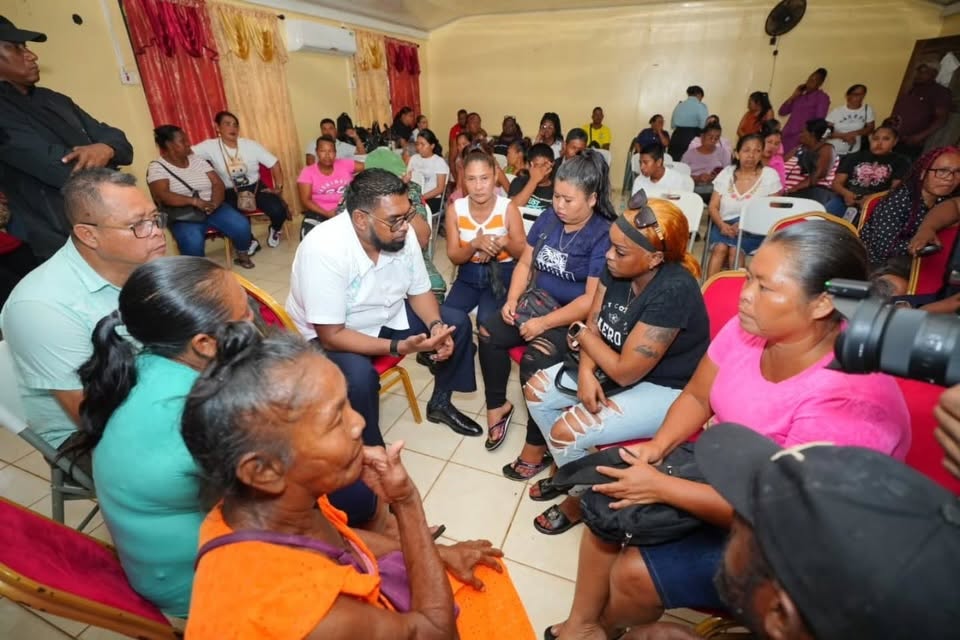
His Excellency Dr Mohamed Irfaan Ali has declared three days of national mourning following the tragic loss of lives in the M.V. Barima incident, as the nation continues to grieve alongside the families and communities affected.
The period of national mourning will be observed from Wednesday, July 22, through Friday, July 24, 2026, in honour of the victims of the tragedy. During this time, the National Flag will be flown at half-mast on all Government buildings and other appropriate locations across the country.
As part of the observances, Wednesday, July 22, has been designated a National Day of Prayer. A National Day of Prayer and Remembrance will be held at the Kingston Seawall in Georgetown, bringing together citizens in solidarity to honour the lives lost and offer support to grieving families.
The programme of remembrance will continue with a Night of Reflection and Prayer in Port Kaituma on Thursday, July 23, followed by another observance in Mabaruma on Friday, July 24.
The government is also encouraging religious organisations, civic groups and citizens throughout Guyana to organise candlelight vigils and moments of prayer during the three days as the nation collectively reflects on the tragedy and pays tribute to the victims. The declaration of national mourning underscores the government’s commitment to standing with the bereaved families and affected communities as Guyana mourns one of the country’s most heartbreaking maritime tragedies.





-

 Bahamas News2 days ago
The Bahamas Reaffirms Support for Ukraine at International Conference in Toronto
-

 News1 week ago
Indian Association of Turks and Caicos Islands Empowers Local Students Through Back-to-School Backpack & Supplies Drive
-

 Caribbean News1 week ago
Royal Caribbean Group and Sandals Resorts Announce Landmark Partnership to Accelerate Their Leading Vacation Experiences
-
 Bahamas News1 week ago
CIBC Caribbean Celebrates 2026 Unsung Heroes Finalists
-

 Health1 week ago
TCI Hospital Celebrates World Pharmacy Day 2026
-

 News4 days ago
Invest Turks and Caicos Islands Highlights Investment Growth and Workforce Opportunity at 5th Annual General Meeting
-
 Caribbean News1 week ago
Royal Caribbean Signs US$3-Billion Deal for Half of Sandals and Beaches
-

 News1 week ago
DDME Conducts Hurricane Preparedness Presentation to Digicel Staff