
Bahamas News
Flags at Half-Mast on Saturday January 29 to honour Sir Sidney Poitier

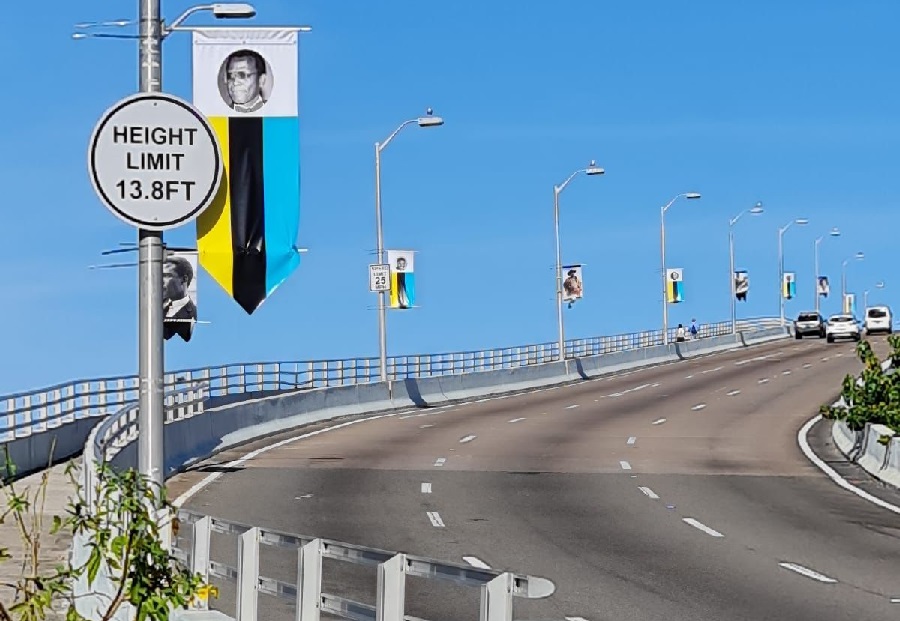
#TheBahamas, January 28, 2022 – The Cabinet Office wishes to advise the general public that the Bahamian flag has been flown at half-mast at home, and in our embassies around the world in remembrance of Sir Sidney Poitier’s life and rich legacy. It will return to full-mast, effective Saturday, 29th January, 2022.
Prime Minister Davis Pays Tribute to Sir Sidney Poitier in the House of Assembly
By Eric Rose
During his tribute to Bahamian icon the late Sir Sidney Poitier, on January 12, 2022, in the House of Assembly, Prime Minister and Minister of Finance the Hon. Philip Davis said that, as Bahamians mourn its nation’s loss, they marvel at how far Sir Sidney traveled, and the courage it must have required.
“When he was a teenager in New York, far from family and home, washing dishes, looking for opportunities, struggling to survive, and cold – and we all know how cold a New York winter can feel for Bahamians – he had the courage to dream of a much different future for himself,” Prime Minister Davis said. “Think of the imagination that must have required — he could not have had any role models for what he wanted to achieve, for that’s what it means to be the first.”
He also spoke on the firsts that Sir Sidney achieved during his life.
“He was the first black actor to be nominated for a Best Actor Academy Award, and the first to win one; the first to star as a romantic lead; the first to become the number one box office star in the United States; the first black actor to be knighted by the British Crown; the first to be awarded the Presidential Medal of Freedom, the highest civilian honour awarded in the United States; the first to become a hero to both black and white audiences,” Prime Minister Davis pointed out.
“And then there’s the one I can’t stop thinking about — when he insisted in 1969 that the crew for one of his films be at least 50 percent black, that was a first, too,” he added.
“When he opened doors to opportunity, he made sure those doors opened for others, too.”
He noted: “What an extraordinary life Sir Sidney had – he played icons and legends on the screen, from US Supreme Court Justice Thurgood Marshall to South Africa’s Nelson Mandela, and off-screen he was honored and praised by no less than Dr. Martin Luther King, who called him ‘a man of great depth, a man of great social concern’ who was ‘dedicated to human rights and freedom’.”
Prime Minister also reiterated how Sir Sidney projected Bahamian exceptionalism on the international stage.
“A Cat Islander. A Bahamian. An actor, a director, a writer, a producer. An activist, a diplomat, and a philanthropist. A history-maker. A barrier-breaker.
“Go with God, Sir Sidney,” Prime Minister Davis said. “You were a good and faithful servant. May the martyrs meet you at the gates and escort you to the Holy City, Jerusalem.
“On behalf of my wife, Ann Marie, my Cabinet and Parliamentary colleagues and the government and people of The Bahamas, I extend heartfelt condolences to Sir Sidney’s widow, Joanna Shimkus-Poitier, his children and his extended family in the entertainment industry.
“May he rest in peace.”

The Bahamas, June 26, 2026 – Imagine boarding a plane for another Bahamian island, only for it to crash in U.S. waters during what now appears to have been a remarkable twist of timing.
Jonathan Gardiner’s Election Day flight has dominated headlines for weeks, but Thursday’s decision by a New York federal judge suggests the story may be far bigger than the crash itself.
Gardiner was denied bail after U.S. District Judge Gregory Woods described him as a danger to the community, a significant flight risk and concluded that the government’s evidence is “very strong.”
For many Bahamians, however, the public narrative has remained fixed on the approximately $30,000 recovered after the crash, including an envelope reportedly containing $5,000 intended for an unnamed politician.
Gardiner’s attorneys have argued the cash was legitimate, saying roughly $20,000 had been withdrawn from his business account the day before the flight. They also maintain the prosecution’s case is circumstantial and have argued that his speedy trial rights are being violated.
But prosecutors say the charges stem from a three-year federal investigation into an alleged conspiracy to import cocaine into the United States—not an investigation that began because a plane crashed in Bahamian waters.
That distinction may prove critical.
The crash brought the case into public view, but it may not be what ultimately determines its outcome.
The judge’s ruling raises a question that now deserves greater attention: What evidence from that three-year investigation persuaded a federal judge that the government’s case is “very strong”?
The answer may not lie in the cash recovered after the crash, but in investigative material that has yet to be fully presented in open court.
As the case moves toward trial, Magnetic Media will continue looking beyond the headlines and following the evidence that underpins one of the most closely watched criminal prosecutions involving a Bahamian in recent years.
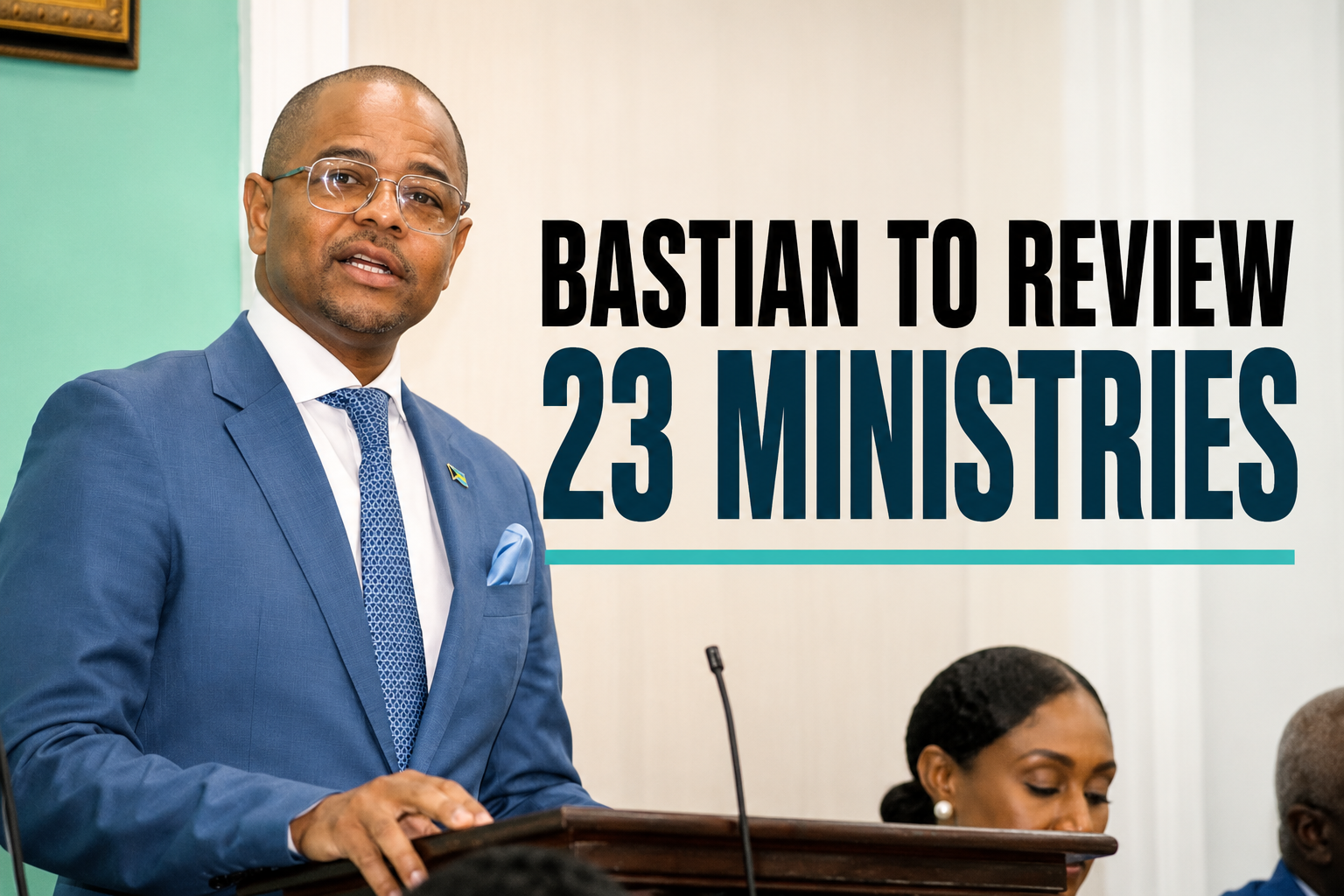
By Deandrea Hamilton | Magnetic Media
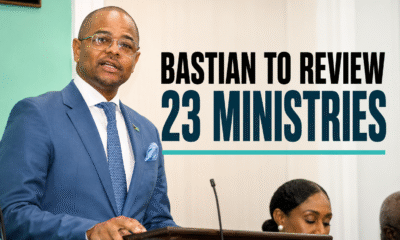
The Bahamas, June 26, 2026 – Just in case you thought Sebastian Bastian, The Bahamas’ first Minister of Innovation and National Development, was about to dust off Vision 2040 and carry on where others left off… think again.
In his maiden Budget Communication on Monday, June 15, Bastian unveiled what amounts to a blueprint to rebuild how the government works.
Not with another glossy vision document.
But with an execution machine.
The clearest indication came when the Minister acknowledged that while Vision 2040 was an important national achievement, it also exposed a weakness.
“So we are changing what we are building. The National Development Plan will no longer be a document we complete and set aside. It will be a living instrument — continuously reviewed, always current, resourced by full-time professionals, and grounded in real data — that shapes how this government, and every government after it, chooses its priorities. A plan is a document. What we are building is an institution.”
It is a remarkable shift in philosophy.
Instead of governments producing national plans every decade, Bastian wants professionals monitoring implementation in real time, measuring progress and ensuring administrations stay focused on delivering what they promised.
To Bastian, national development goes far beyond the roads, airports and buildings Bahamians can see. It also means creating the invisible infrastructure of government — smarter systems, better planning, reliable data, accountability and institutions that survive changes in political administrations.
His speech repeatedly returned to one central idea: government itself has become an obstacle to opportunity.
He described a Family Island entrepreneur waiting weeks or even months for approvals because government systems do not communicate with one another. He spoke of public servants trapped by outdated manual processes instead of serving people. And he highlighted an 18-year-old entering a workforce being reshaped by artificial intelligence before graduation.
As he explained:
“…our job is a practical one: to make government work better, to make The Bahamas easier to do business in, and to make sure our country and our people are ready for what comes next.”
For ordinary Bahamians, he said the objective is simple.
“…a government that is simpler, faster, and far easier to deal with… dealing with your government will get easier, year after year, by design.”
His ministry’s four pillars are ambitious: modernizing government, preparing the nation for artificial intelligence, developing Bahamian talent and driving long-term national development.
Among the initiatives announced were a National Artificial Intelligence Authority, the country’s first AI legislation, a National Digital ID, SmartGov productivity tools for public officers, connected government systems, a National AI Literacy Initiative, an independent National Planning and Development Institute and a Delivery Division dedicated to turning plans into action.
The speech stopped short in one important area.
While Minister Bastian thoroughly explained how government intends to transform itself, he did not establish the measurable targets by which Bahamians can judge whether that transformation is succeeding.
However, he did reveal the next milestone.
Beginning in August, the National Development Plan Secretariat will begin assessing the planning capacity of every ministry and department while establishing a national tracking system before the renewed development plan moves into execution.
With 23 ministries and offices in the Davis administration, Bahamians now have a timeline.
It would not be unreasonable for the public to expect Minister Bastian to return once that assessment is complete with the findings, benchmarks and measurable goals that define success.
After all, the Minister’s own philosophy leaves little room for anything less.
“Delivery does not happen by good intentions — it happens when you build the institutions to carry it: capacity for research and policy thinking; teams dedicated to implementation; structures that demand accountability; systems that measure progress; and continuity that outlives any election cycle.”
If this speech is any indication, Minister Sebastian Bastian is not asking Bahamians to judge him by promises.He is asking to be judged by performance.
The Bahamas, June 22, 2026 – What began as a shocking dog attack in Nassau’s Kemp Road community has now become a tragedy.
The 66-year-old man who was hospitalized after being mauled by a pack of dogs has died from his injuries, prompting renewed calls for action on what residents say has been a long-standing problem of stray and dangerous dogs in the area.
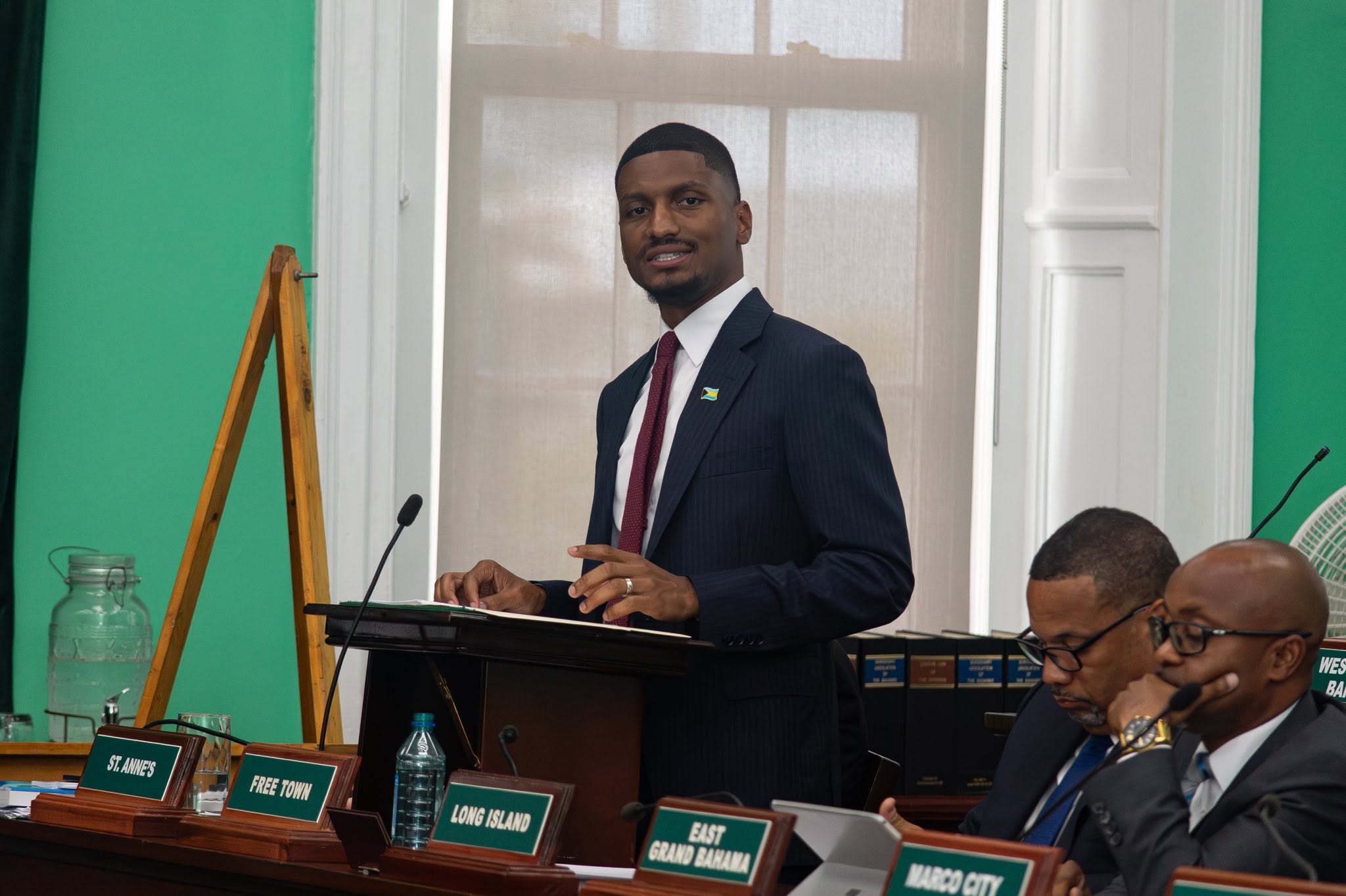
In the immediate aftermath of the attack, Free Town Member of Parliament Lincoln Deal II described the incident as deeply troubling and revealed that residents had repeatedly voiced concerns about packs of dogs roaming the community.
“For some time, residents have expressed concerns about packs of stray and dangerous dogs in the area and the risk they pose to the public, particularly children and senior citizens,” Deal said at the time.
The MP warned that the attack underscored the urgency of addressing those concerns before another serious incident occurred.
Today, with the victim’s death confirmed, those remarks carry even greater weight.
Deal said he had spoken with the victim’s family following the attack and pledged to engage the relevant authorities to determine what immediate steps could be taken to improve public safety in the affected area.
The incident has also reignited concerns about responsible pet ownership, enforcement of animal control regulations and the management of stray animals in residential communities.
While investigations continue, many residents are asking whether the fatal attack could have been prevented had earlier complaints been addressed more aggressively.
The tragedy has drawn widespread sympathy across New Providence and renewed discussion about the dangers posed by uncontrolled dogs, particularly to elderly residents and children.
For many in Kemp Road, the loss of a community member has transformed what was once viewed as a neighbourhood nuisance into a matter of life and death.
Authorities have not yet released additional details regarding the circumstances surrounding the attack or any actions that may be taken against the owners of the dogs involved.





-

 News1 week ago
Platinum Sponsor Beaches Turks & Caicos celebrates top Corporate Engagement title at DG’s 5K 2026
-

 News1 week ago
Beaches Turks & Caicos wrapped up another successful Provo Men’s Premier League season
-
 Bahamas News16 hours ago
He’s Not Dusting Off Yesterday’s Plan… He’s Trying to Rebuild Government
-
 Crime4 days ago
Rape Only Major Crime Category to Increase in Turks and Caicos
-
 Crime3 days ago
Human Trafficking Probe Revealed as Police Warn of Growing Teen Crime Concern
-

 News8 hours ago
DDME Hurricane Preparedness Expo, Huge success in The Nation’s Capital
-

 News14 hours ago
Turks and Caicos Islands Expands US Reach with New United Airlines Denver Route
-

 Bahamas News15 hours ago
Twist of Timing Shifts Focus in Jonathan Gardiner Case