
Bahamas News
Great Human Family Strengthened at World Expo says Bahamas Prime Minister

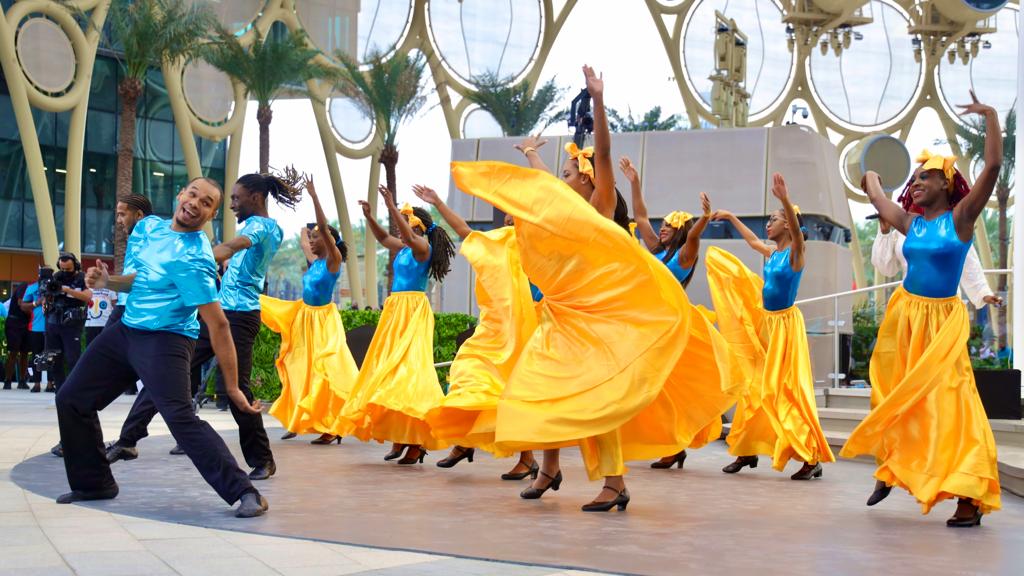
#Dubai, January 18, 2022 – To the Guests & Dignitaries – Highness, Sheikh Nahyan Mabarak Al Nahyan, Minister of Tolerance and Coexistence and Commissioner General of Expo 2020 Dubai, and Other Distinguished Guests – attending The Bahamas Day at World Expo 2020 staged in Dubai , Hon Philip Davis, Bahamas Prime Minister gave a riveting address which included these sentiments…
“Welcome To The Bahamas”! We consider Expo fundamentally to be about the relationship between the peoples of the world, the promotion of friendship and co-operation through culture, and the unyielding capacity of human beings to pursue a higher order of civilization, through innovation and adaptation. It is a chance for countries to get to know each other better or perhaps, introduce themselves to each other for the first time.
For small countries such as The Bahamas, it is sometimes difficult for our voices to be heard on the world stage. But we know that when we sing and dance and fully express our creative, cultural identity, we make a much bigger splash in the global imagination. And in turn, we know that it is also a chance for us to see others, to listen to them, and to learn. By building friendships, by exploring joint opportunities, and by working together to overcome the great global challenges of these times, this is how the ‘Spirit of Expo’ is kindled and will continue.
I pray that for all Bahamians who have joined us here, and those following our journey back home, this marvelous achievement at Expo will help us all to see things anew, to have our imaginations expanded, to have our tolerances strengthened, and to have a life-changing, once-in-a-lifetime experience of other cultures that we will talk about for the rest of our lives! The technology and other innovations on display are breathtaking. The immersive cultural experiences, so very stimulating. And the sense of feeling and the possibilities inspired so boundless, that, as I gaze out at the multitude of faces and races, I sense that the bonds of our great human family have already strengthened.”

Bahamas News
Public Hospitals Authority Foundation Donates Dialysis Machines to Princess Margaret Hospital (PMH)
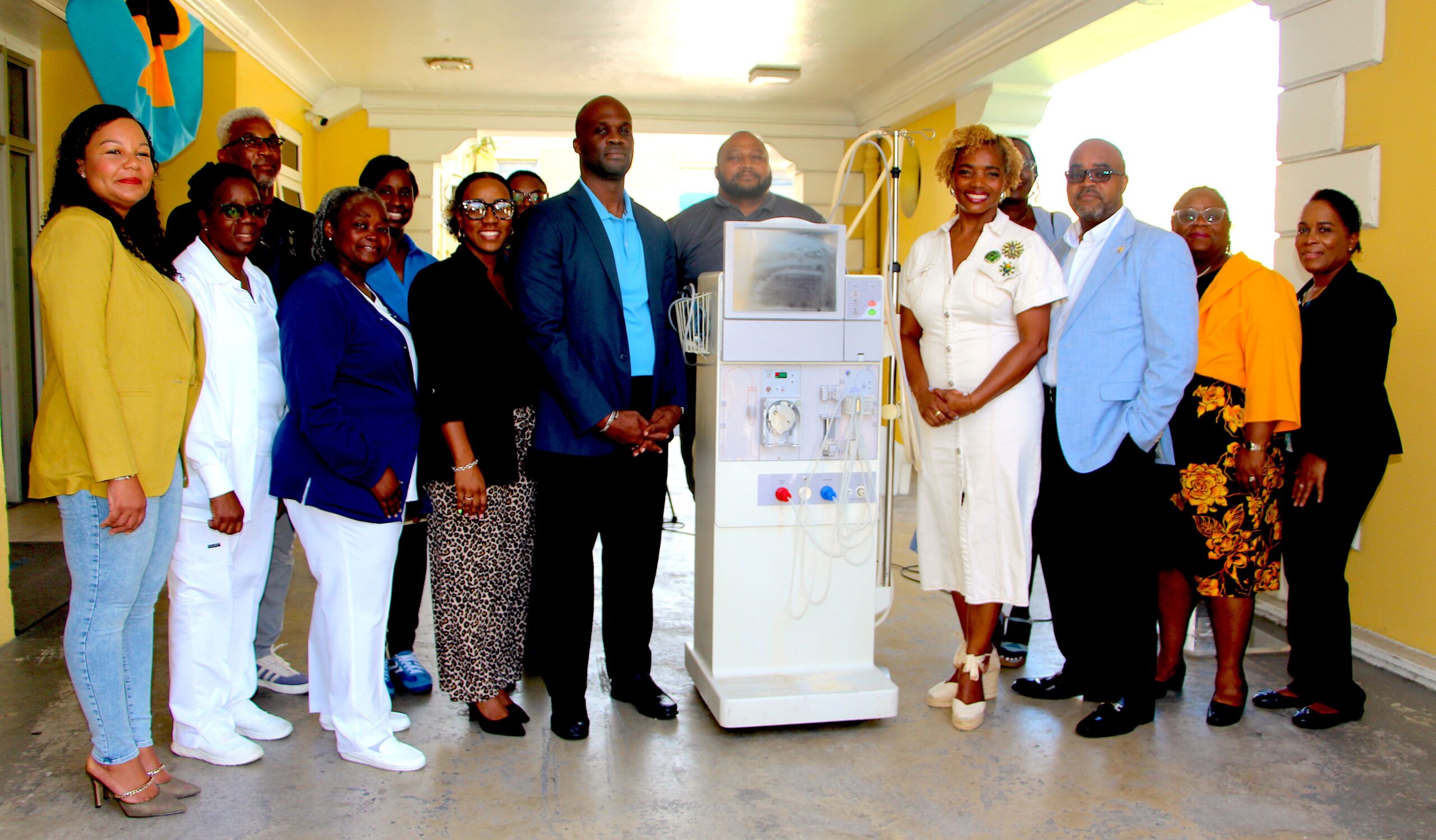
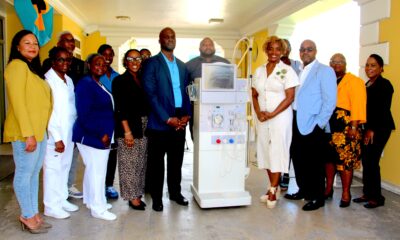
The Bahamas, September 21, 2026 – The Public Hospitals Authority (PHA) Foundation, a philanthropic organization launched in January 2024 to support public hospitals and healthcare clinics, donated eight additional dialysis machines for the PMH Renal Services unit.
Director of Foundations, Corporate and Community Relations for the Public Hospitals Authority and Executive Director of the foundation, Alana Major, said this initiative is a part of the foundation’s “Sun, Sea and Second Chances” campaign. PHA Foundation aims to secure 30 machines for Princess Margaret Hospital.
“As of today, with this donation, we are now up to 15 machines, so we are very excited about that,” Ms. Major said.
Other members of the foundation were present, including PHA Foundation Chairman Mr. Selvin Basden, who said the foundation is committed to doing its part in fulfilling the mandate of the Government of the Bahamas.
“One of the tenets of the Government is to ensure that access to healthcare is a human right. We are committed to ensuring that, at least from our part, we can deliver on that principle,” Mr. Basden said.
The PMH Renal Services Unit dialyzes about 150 to 170 patients annually. The unit provides care for patients who have been diagnosed with end-stage kidney disease and now need renal support. Patients who receive dialysis typically come to the unit three times a week, either on a Monday-Wednesday-Friday schedule or a Tuesday-Thursday-Saturday schedule.
Head of Department for Renal Services, Dr. Thurston Carroll, said she and the unit are excited to receive the donation, as it will replace machines that are not operating optimally.
“We are particularly excited about today’s donation because, although we have 20 stations within the dialysis unit, we have an aging fleet. These new machines and new water-treatment equipment will allow us to replace some of our aging equipment so that we can continue providing services to our patients.”
Foundation representatives noted that one or two organizations are already considering making bulk donations and if it happens, the foundation may be able to secure another 10 machines or another five machines in the very near future.
PMH Deputy Hospital Administrator Angelica Lockhart-Bastian and Hospital Administrator Mr. Tevard Bastian thanked the PHA Foundation for its donation to Princess Margaret Hospital.
Also in attendance were PHA Foundation Deputy Chairman Dr. Erecia Hepburn; Foundation guest Dr. Maria Oriakhi; Chief Biomedical Engineer Mr. Theodore Nottage; Administrative Officer Ms. Appapisa Neely; and Senior Assistant Hospital Administrator Mr. Valdez Bowe.
By Christina Williams
Bahamas Information Services
BIS Photos/Mark Ford
PHOTO CAPTION:
Group Photo, from left:
– Dr. Rhea Thurston Carroll, Director, Renal Services, PMH
– Nurse Kim Harris, Dialysis Nurse, Dialysis Unit, PMH
– Sister Darnell Roker, Nurse Manager, Dialysis Unit, PMH
– Mrs. Angelica Lockhart-Bastian, Deputy Hospital Administrator PMH
– Mr. Tevard Bastian, Hospital Administrator PMH
– Mrs. Alana Major, Director, Foundations, Community and Corporate Relations, PHA
– Mr. Selvin Basden, Chairman, PHA Foundation
– Dr. Erecia Hepburn, PHA Foundation Board
– Ms. Donette Danvers, Executive Assistant, Foundations, Community and Corporate Relations, PHA
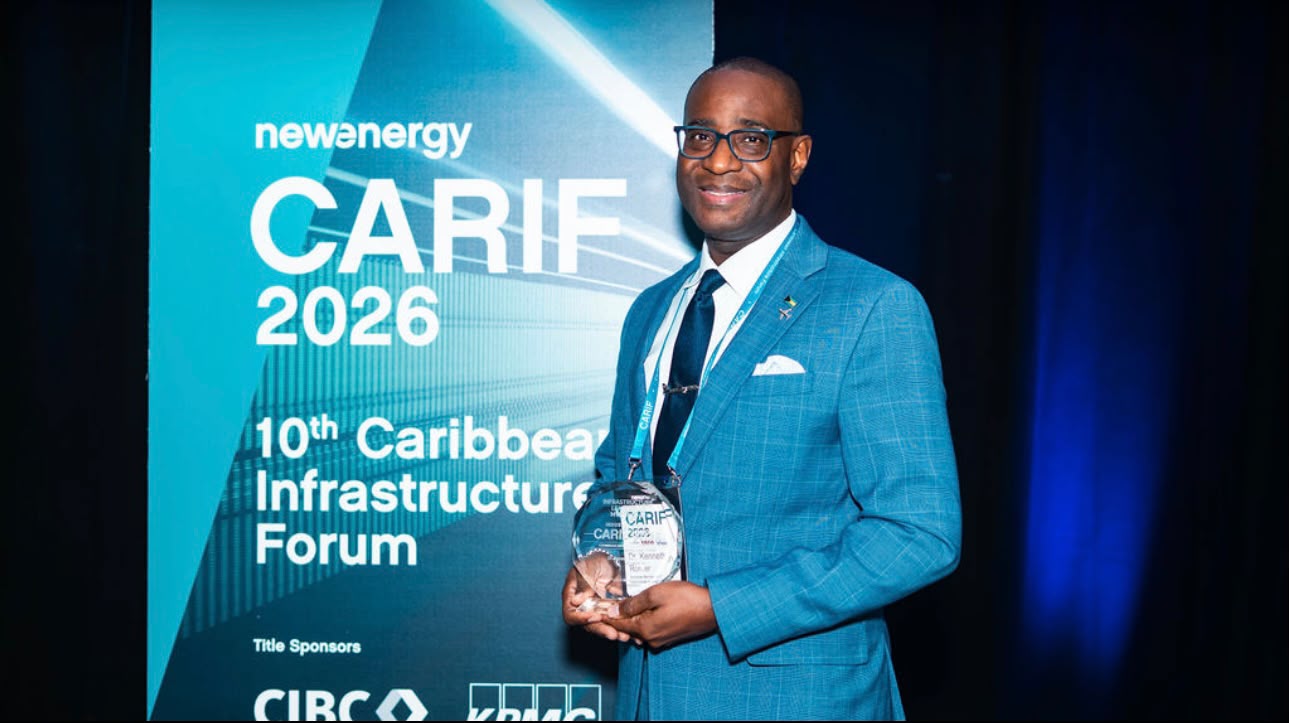
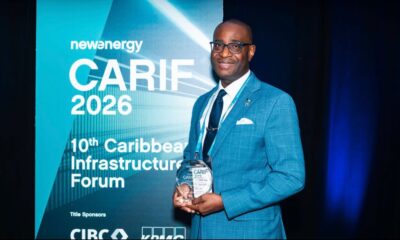
Miami, Florida – Director of Aviation and Deputy Director General of Tourism, Dr. Kenneth Romer was presented with The 2025-2026 Infrastructure Leadership MVP Award, during the 10th Annual Caribbean Infrastructure Forum (CARIF) held in Miami September 15-16, 2026.
According to event organizers, New Energy Events, the MVP Leadership Award is the highest individual honor in the industry and is presented to an individual who has demonstrated exceptional, strategic and visionary leadership in advancing infrastructure in the Caribbean. Chosen by an independent jury of regional industry leaders, “The recipient is recognized for their sustained impact, influence across sectors, and dedication to driving meaningful progress in policy, investment, or project delivery”, said Event Organizers.
Romer becomes only the third person from the Region, and the first from The Bahamas to receive the Leadership MVP Award, joining last year’s winner The Honourable Mia Mottley, Prime Minister of Barbados.
Represented among the Conference Speakers and present at the Award Ceremony was Minister of Energy, Utilities and Aviation, The Honourable JoBeth Coleby-Davis, who said that, “This award amplifies The Bahamas Government’s commitment to executing a vision that sets the benchmark for infrastructural investments opportunities across our archipelago while supporting exemplary Bahamian leaders like Dr. Romer, who are steering the Caribbean toward more resilient, investable, and innovative infrastructure”.
“While this award is deemed an individual honor, it is a recognition of the Bahamas’ position as a respected regional leader and more so, a reflection of the incredible talent that resides within our small, but indomitable nation that continues to punch above its weight class as the world marks the manner of our bearing”, said Dr. Romer.
Dr. Romer has been instrumental in driving post-pandemic tourism recovery alongside the transformation of airports across the Family Islands through the Government’s landmark Family Islands Renaissance initiative. Under his leadership as Director of Aviation and Deputy Director General of Tourism, the sector has embraced a strategic, forward-looking approach focused on modernizing over 19 runways and terminals, strengthening safety and resilience, expanding international and regional connectivity, and leveraging public-private partnerships to deliver world-class facilities.
Dr. Romer’s work has helped translate the National Aviation Strategic Plan into tangible infrastructure projects that are creating new opportunities for tourism, investment, entrepreneurship and economic growth across the archipelago.
In 2025, he became the first person from the Caribbean and LATAM Region to be appointed to the Board of the International Association of Airports Executives.

NASSAU, Bahamas –— This back-to-school season Caribbean Bottling Company (CBC), the local producers of Coca-Cola and Dasani products, is offering huge wins for parents and guardians in their Level Up and Win Lunchtime giveaway.
The promotion encourages consumers to share their best lunch bag creations featuring the following products, Honest Kids juice box, Minute Maid 12oz Fruit Cooler and Dasani 12oz. water. Now until September 30th, the public can post or privately share a photo or video of one of the listed products in their lunch bag.
At the end of the promotion, the top five lunch bags will be shared on social media, and consumers will have the opportunity to vote on their favorite lunchtime creations. Prizes include a $200 Kelly’s gift card, $150 John Bull gift card and six-months’ worth of each product.
Lauryn Clarke, Marketing Coordinator of Caribbean Bottling Company, shared what inspired this promotion.
” The back-to-school season is all about getting kids excited for the year ahead, and lunch boxes are a big part of that fun. We wanted to remind parents and guardians that hydration should be just as important as what is being learned in the classroom. This promotion is about encouraging families to pack a refreshing beverage their kids will enjoy and make hydration part of their everyday school routine,” Clarke said.
With a variety of brands and new flavors featured in this promotion, particularly Honest Kids’ newest flavor, Strawberry Peach Keen, and the new 12 oz. Minute Maid Fruit Coolers, CBC hopes this lunchtime giveaway will appeal to new consumers.
For more details on the Level Up and Win Lunchtime promotion, new products and events visit caribbean_bottling on social media.





-
 Independent writer1 week ago
Fifty Years of Ministerial Government: Honouring Our Past, Embracing Our Present and Preparing for Our Destiny
-
 Health7 days ago
Know the Possible Warning Signs of Prostate Cancer
-

 Independent writer2 days ago
Letter to The Editor
-
 Education5 days ago
TCI Schools Invited to Participate in 2026 National Student Council Election
-
 News5 days ago
Liberty Business launches in Turks and Caicos Islands
-
 Bahamas News1 day ago
Romer Receives Regional Leadership Award
-
 Bahamas News1 day ago
Public Hospitals Authority Foundation Donates Dialysis Machines to Princess Margaret Hospital (PMH)
-

 Bahamas News1 day ago
Lunch Bag Wins this Back-to-School