News
TCRF Reports Successful Trial in Treating Stony Coral Tissue Loss Disease

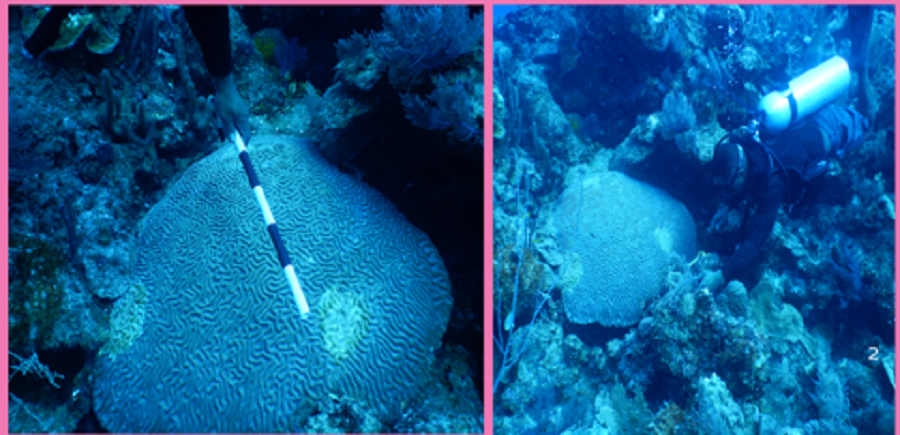
#TurksandCaicos, April 8, 2021 – Stony Coral Tissue Loss Disease (SCTLD) is a highly deadly, fast moving disease that affects approximately 30 species of hard corals on the reefs of the TCI. First observed on the reefs of South Caicos and West Caicos in early 2019, the disease spread quickly to reefs off NW Point, Grace Bay and continues to spread eastward past Pine Cay recently being observed on the reefs off North, Middle and East Caicos.
Scientists in Florida have been dealing with this disease since 2014 and through extensive research identified the antibiotic, amoxicillin, mixed with a specially developed, proprietary ointment base was the most effective option for stopping the progression of this disease. The antibiotic paste is pressed into the coral tissue at the edge of a disease lesion. The ointment base expands in sea water to fill the ridges and valleys of the coral skeleton slowly releasing the antibiotic into the coral tissue and minimizing the amount of antibiotic leaching into sea water.
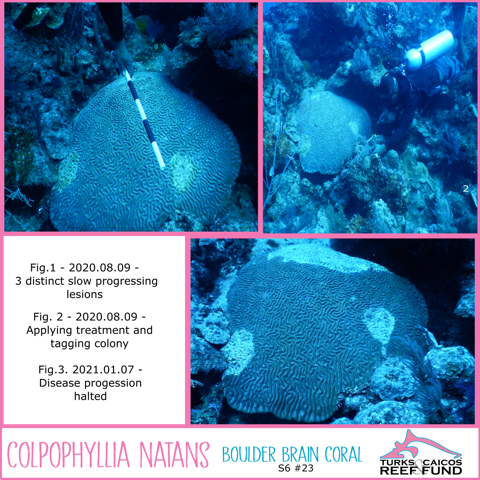
This is an incredibly labour-intensive, time-consuming and expensive way to deal with the disease but with Florida still seeing infection spread 7 years later, doing nothing is not an option. This disease has the power to severely reduce the populations of live stony coral cover. A recent paper from the School for Field Studies on South Caicos reports an approximate 60% reduction in live coral coverage since the disease outbreak in early 2019[1]. In 2020 TCRF were granted a permit by the TCI Government to test this treatment to determine its effectiveness on TCI reefs and to watch for any untoward effects on the marine environment. TCRF began trials of the antibiotic treatment and recently completed and filed its final report of those treatment trials with DECR.
The treatment trials were conducted at six locations around the TCI – 3 on the reefs of Providenciales, 2 on those of Grand Turk and 1 on the reefs of Salt Cay. With up to 8 months of monitoring on 122 assessed colonies we are seeing a 93% success rate. Most of the control colonies that were not treated died within a few days or weeks, some of them continue to display slow disease progression. Species specific efficacy ranged from 50% to 100% with most species seeing 67%++ efficacy. To this date no untoward effects have been observed – fish would occasionally nibble on the ointment during treatment, but seemed to ignore it after the first nibble. There are more studies on this happening regionally and TCRF hope to help the studies in any capacity that we can.
“We are very excited to see such a high efficacy rate for our treatment program,” said Alizée Zimmermann, Executive Director of the TCRF. “Our results are consistent to slightly better than seen in other parts of the Caribbean where this treatment is being used. It is now considered to be the standard of care for treating SCTLD by the scientists studying the disease.”

These results are very encouraging and the Department of Environment and Coastal Resources has recently granted TCRF a research permit to expand the treatment effort. The treatment effort with the antibiotic ointment will continue and will target large colonies. They will be tagged with special tags instructing any divers observing these colonies to take photos of the colony and send them to TCRF at SCTLD@tcreef.org. This will assist in our ongoing monitoring effort of the treatment program. The goal with the expanded treatment effort is to target and save old, reproductive colonies of the most susceptible species so as to preserve the reef’s genetic diversity and ability to repopulate.
In addition, TCRF is teaming up with Ocean Alchemists, the company that developed the special ointment base for the amoxicillin, to test a new, non-antibiotic treatment. This treatment option utilizes a proprietary formulation of naturally occurring products and it is impregnated into hemp rope which is then applied around the edge of a lesion. TCRF will be comparing the effectiveness of this new treatment option to the current standard of care, the amoxicillin ointment. Testing of the new treatment should begin within the next month.
“None of us want to use antibiotics in the marine environment, but the alternative would result in the loss of many decades to hundreds of years old coral colonies on the reefs that protect our islands from storm surge and wave action,” said Mrs. Zimmermann. “So we are excited to be involved in conducting research on potential alternative therapies that don’t involve antibiotics.”
About TCRF
Founded in 2010, the Turks & Caicos Reef Fund is the only active environmental advocacy organization in the TCI. It is an organization that provides funding for education, research and conservation programs to individuals, organizations and agencies that help to preserve and protect the environment of the Turks & Caicos Islands. Our goal is to have at least 85% of all funds raised through voluntary contributions from divers and snorkelers visiting the Turks & Caicos Islands directed to the Fund’s programs.
Anyone wishing to donate or assist the TCRF in any way can contact them through their website, www.TCReef.org. Scuba divers visiting the islands are encouraged to make a $10 donation through the purchase of a dive tag that can be attached to their dive gear to show their support. Snorkelers visiting the islands can show their support through the $5 purchase of a pink or blue silicone wristband. Visitors can also support TCRF by purchasing a $40 spf50 rash guard designed each year by a different local artist. A complete list of outlets for TCRF merchandise can be found on the organization’s website.




The Bahamas, August 27, 2026 – The Royal Bahamas Police Force wishes to inform members of the public that several individuals are scheduled to appear before the Magistrate’s Court on Thursday, 27th August 2026, at 12:00 noon.
The individuals and charges are as follows:
An 18-year-old female is scheduled to be arraigned on the following charges:
Three (3) counts of Murder
Three (3) counts of Attempted Murder
Three (3) counts of Possession of a Firearm with Intent to Endanger Life
Three (3) counts of Possession of an Unlicensed Firearm
Two (2) counts of Possession of Ammunition
Armed Robbery
Abetment to Armed Robbery
Stealing
Receiving
The charges stem from three separate shooting incidents and an armed robbery that occurred on Friday, 21st August 2026, and Saturday, 22nd August 2026.
The first shooting occurred in the area of Soldier Road and Baillou Hill Road, resulting in the death of a 51-year-old male.
The second shooting occurred in the area of Joe Farrington Road, resulting in the death of a 52-year-old male.
The third shooting occurred in the area of Gladstone Road, resulting in the death of a 36-year-old male.
The armed robbery occurred at a business establishment in the area of Carmichael Road and Baillou Hill Road.
A 21-year-old male is scheduled to be arraigned on one charge of:
- Murder
The charge stems from a shooting incident that occurred on Tuesday, 21st July 2026, in the area of Samson Street, Nassau Village, which resulted in the death of a 28-year-old male.
A 32-year-old male is scheduled to be arraigned on the following charges:
- Murder
- Attempted Murder
These charges stem from a shooting incident that occurred on Wednesday, 24th December 2025, in the area of Graham Drive, Yellow Elder, which resulted in the death of a 25-year-old male.
RBPF, PACD
by Deandrea Hamilton | Editor
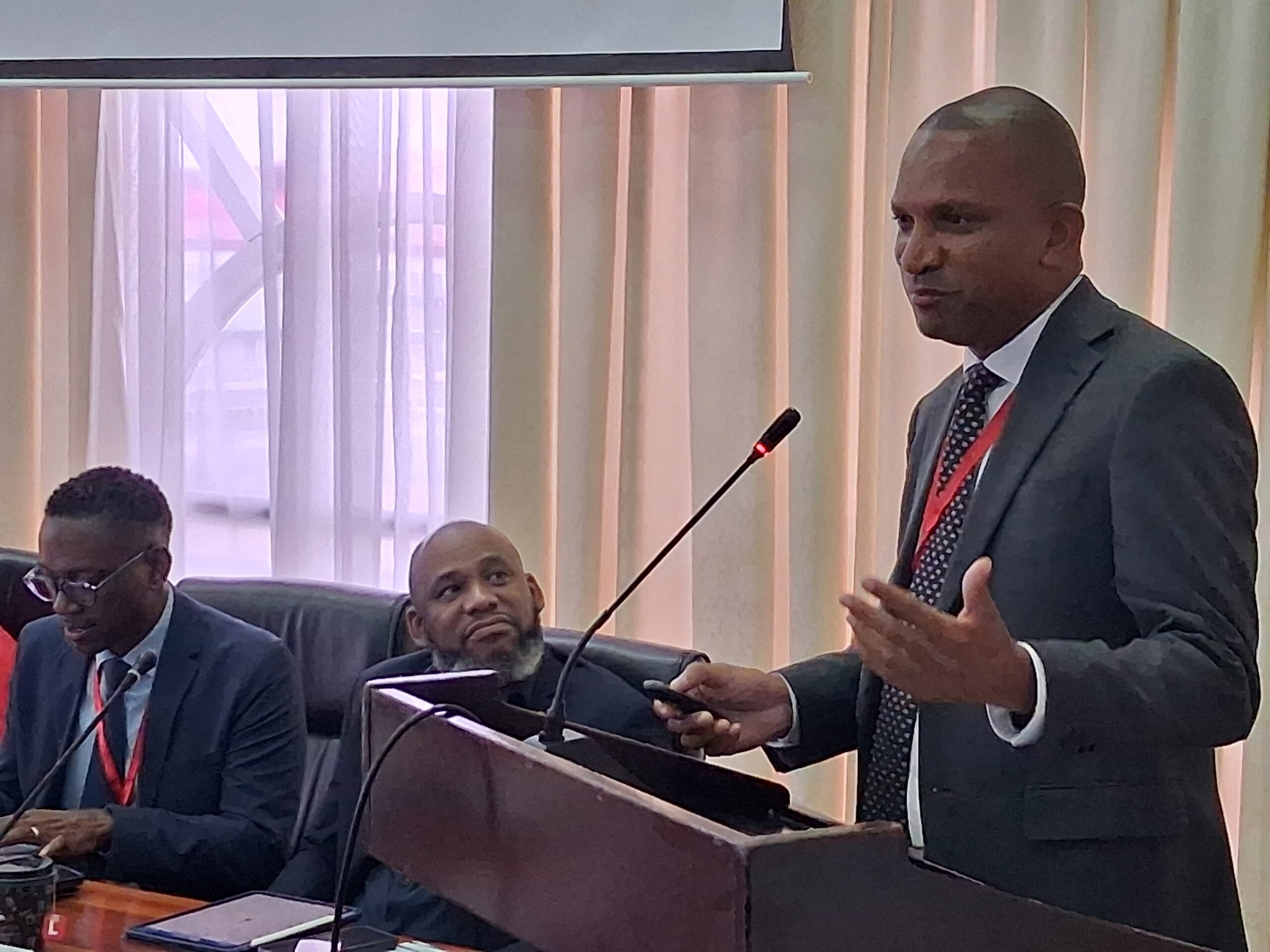
PROVIDENCIALES, TCI — In a country where government press conferences are virtually non-existent, ministers are often difficult for journalists to access and regular broadcast television news has disappeared, TCI Innovation, Technology and Energy Minister E. Jay Saunders has challenged Caribbean media to become “impossible to ignore.”
Speaking at the Caribbean Broadcasting Union gathering, Saunders argued that the Caribbean does not have a relevance problem but a “discoverability and positioning problem.”
Discoverability is precisely the issue in Saunders’ home country. Even Government’s own attempts at video news broadcasting have struggled against the realities of consistently producing a daily, weekly or even monthly newscast.
The difficulties confronting TCI media extend well beyond algorithms: limited advertising revenue, underfunding, shortages of trained professionals and insufficient human capacity leave newsrooms struggling for both staff and stamina.
Then there is the reality of operating in one of the region’s smallest societies. Politicians, journalists, advertisers, businesses and the subjects of stories often exist within the same tight economic and social circles. A controversial report that might create a ripple elsewhere can produce a tsunami in TCI, intensifying concerns among journalists about commercial and professional victimisation.
Saunders believes AI can help.
He urged Caribbean media to use the technology to transform one original story into television, radio, web, podcast, social and translated content without multiplying newsroom workload.
He also wants regional journalism structured so AI systems can find, understand and trust Caribbean sources, moving media beyond traditional SEO into Answer Engine Optimisation.
His ultimate message was emphatic: “Use AI not to make Caribbean media more artificial — but to make Caribbean voices more visible.”
For Turks and Caicos media, however, becoming visible may require more than technology. It requires an environment in which journalism can survive.
That last sentence is where I think we land the plane. It acknowledges that EJ actually has some us
Bahamas News
Bahama Brass Band Invitation Sparks Heritage Debate Ahead of TCI Constitutional Holiday
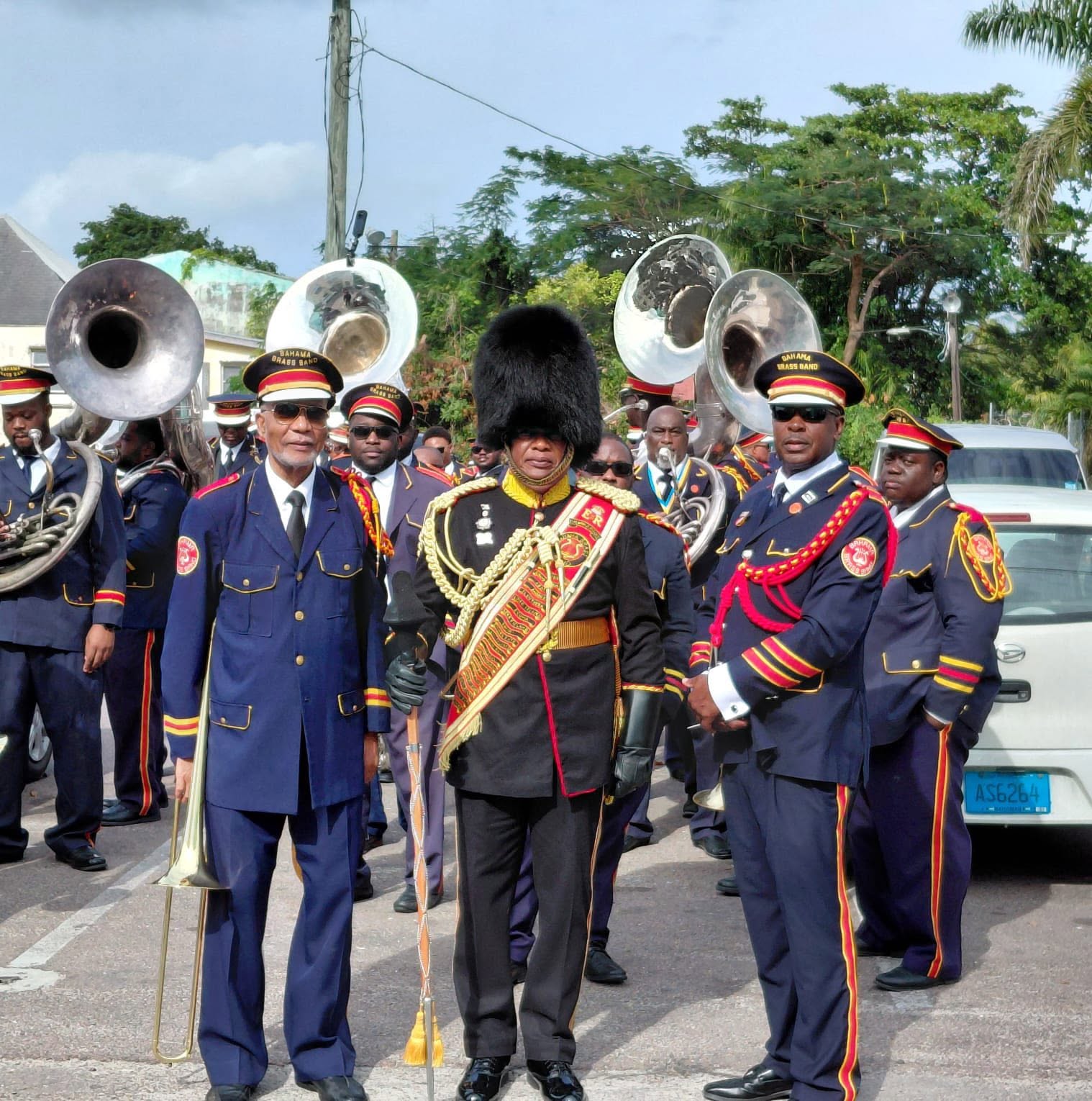
Turks and Caicos, August 20, 2026 – The planned participation of the Bahama Brass Band in the Turks and Caicos Islands’ inaugural Constitutional Holiday celebrations on August 30 has sparked public debate over culture, heritage and the historical contributions of Turks and Caicos Islanders abroad.
Organizers defended the invitation, saying the band’s inclusion is intended to highlight the deep historical ties between the two countries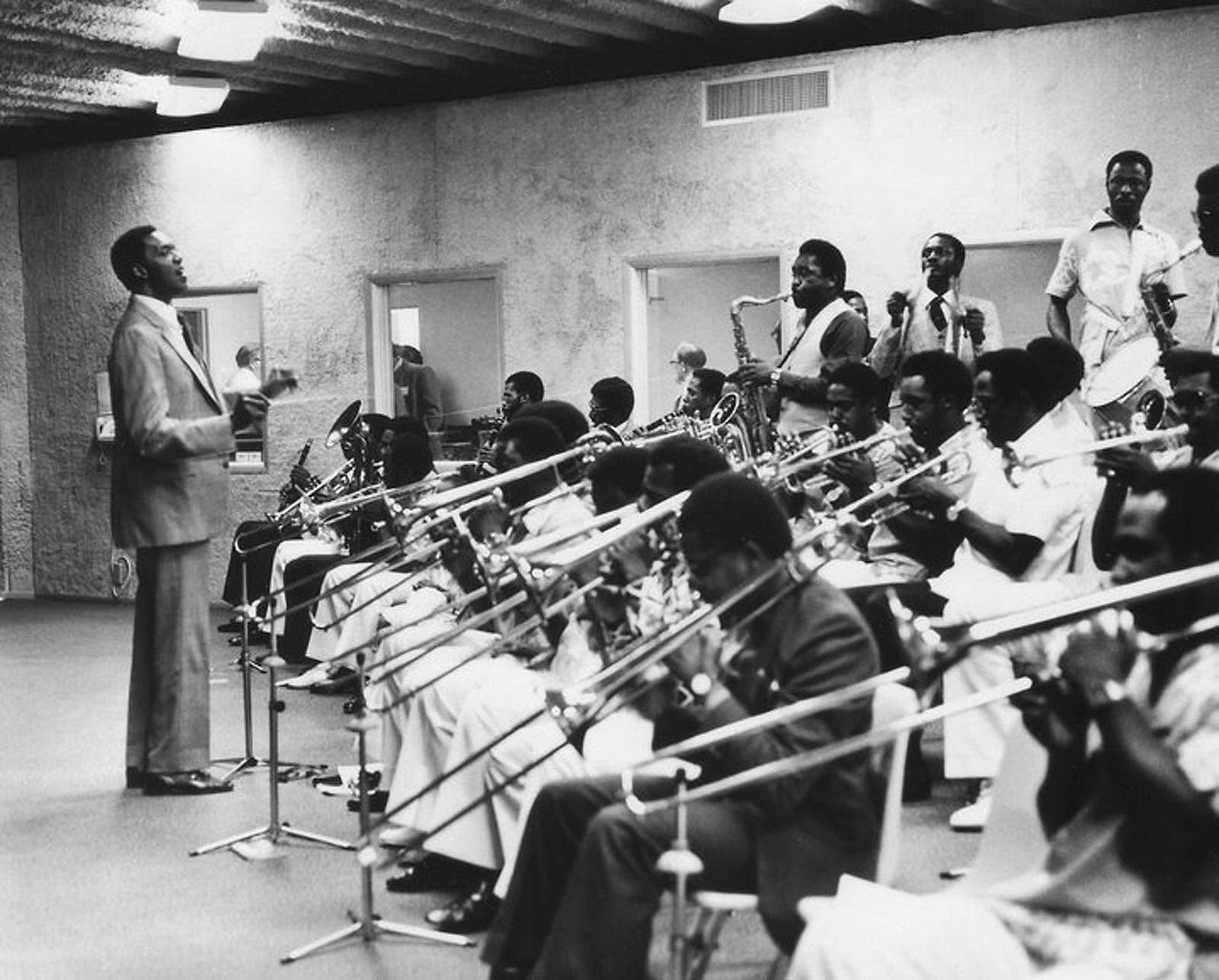 and honor Turks and Caicos men who helped establish and develop the institution in Grand Bahama.
According to the organizers, the Bahama Brass Band began in 1955 in Pine Ridge, Freeport, with Turks and Caicos Islanders, including the late Deacon Reuben Hall Sr. of Middle Caicos and Jenkins Williams and Mervin Hendfield of North Caicos, among those who helped build its foundation. The band eventually grew to more than 50 men.
The organizers also pointed to the participation of Turks and Caicos men in The Bahamas’ Independence celebrations on July 10, 1973, arguing that their contributions became part of Bahamian history while maintaining strong connections to their homeland.
Supporters say bringing the band home represents an opportunity to honor those pioneers, showcase their regional influence and expose younger generations to an important part of Turks and Caicos history.
However, concerns raised publicly described the invitation as potentially disrespectful to local culture and heritage. Organizers acknowledged those concerns, apologizing to anyone who felt overlooked or offended, while maintaining that no disrespect was intended.
The committee said the event should ultimately unite rather than divide, presenting the band’s history as evidence of the reach and resilience of Turks and Caicos heritage.
PHOTO CREDIT: Bahamas Brass Band