
Bahamas News
BAHAMAS: Mercy Corps & GBPA Bring RISE Initiative to a Successful Close

BAHAMAS, March 29, 2021 – It has been eighteen months since the passage of Hurricane Dorian and fifteen months since the Restoring Industries, Sustaining Employment (RISE) initiative journey began. While evidence of the catastrophic Category Five storm is still very much apparent, so too is the reemergence of more resilient pockets of economic activity throughout the length and breadth of Grand Bahama – a reemergence hundreds of business owners believe would have been considerably more challenging without the RISE program’s support.
The RISE initiative is a collaboration between implementing partners Mercy Corps, a global humanitarian organization, and The Grand Bahama Port Authority, Limited (GBPA), with the generous financial support of the American Red Cross and Bacardi Limited. As the initiative officially comes to a close, its impact can be seen and felt in the day-to-day operations of the businesses it has empowered and helped.
Mercy Corps Bahamas’ Country Director, Paula Miller, attributes the accomplishments of RISE to the generous financial support of its donors, GBPA as the implementing partner, and the adaptability and incredible resourcefulness of business owners. “This initiative would not have been possible for any single agency to do alone,” said Ms. Miller. “We have really enjoyed working together with GBPA, and it is inspiring to see Grand Bahama businesses re-opening despite a pandemic on top of a natural disaster. While this particular initiative is closing, we stand ready to support Grand Bahama in future initiatives if needed.”
The RISE pilot launched in December 2019, supporting local merchants in the run up to the business year’s most profitable shopping season. The program’s initial goal was to assist 100 local businesses that were impacted by Dorian with grants of up to $10,000 to support their recovery efforts. As the pilot program was monitored and its impact and success measured, the RISE team reevaluated its goals and revised its targets upward, aiming to provide $2.5 million in funding to nearly 300 micro and small businesses across Grand Bahama.
Derek Newbold, Sr. Manager of Business Development for GBPA and Invest Grand Bahama, expressed, “GBPA is profoundly appreciative of the partnership created through the RISE initiative, and its accomplishments on Grand Bahama. We are extremely proud of each participant’s progress within their respective businesses and what that means for the business community as a whole moving forward.
“Business owners across the island continue to manifest the tangible and meaningful impact of the RISE initiative,” Mr. Newbold continued. “For many, it helped them defy the odds of a post-Dorian recovery, while creating a bolstering effect to help soften the impact of the COVID-19 global pandemic. Equally important, we are impressed to hear participants speak of the value of the business resiliency training and mentorship aspects of the program, which many asserts have helped them emerge stronger and much more prepared to face similar challenges moving forward.”
Comments such as “I started budgeting for the first time” and “I learned I’m actually really good at social media marketing” are common sentiments shared among business owners helped through the RISE initiative.
“A lot of work went into measuring the impact of RISE,” said Allison Dworschak, Program Quality and Partnerships Lead for Mercy Corps. “The data we gathered during the program tells us a lot about the strength and resilience of the small business community in Grand Bahama. For example, 87 per cent of participants reopened and were regularly transacting after they received the funding and training. More than a quarter said that, without RISE, they wouldn’t have reopened at all. Another 12 per cent said they likely would have reopened eventually, but wouldn’t have retained staff.
Others leveraged the program to expand and grow. “The RISE program did a lot of good, but we are especially excited to have saved at least 300 local jobs,” continued Ms. Dworschak. “And looking at how the $2.5 million in grant funds were spent, we know the majority – 75 per cent – was reinvested locally into reconstruction, large equipment repairs and other local purchases. These numbers would be good in any small business disaster recovery program, but I think the RISE team and the community should be extremely proud of what these business owners have achieved, especially considering everything they’ve been up against since September 2019.”
GBPA and Mercy Corps are considering future ways to collaborate in the event of a new crisis. GBPA Executive Director Henry St. George commented, “When a restaurant that had been damaged by Hurricane Dorian was able to reopen having received a RISE grant, and then partnered with another recipient who was able to provide delivery services, and together they collaborated to distribute meals to the aged and vulnerable during the summer lockdown last year, then the impact of the program and the significance of the small business community was really visible.
“We are highly aware of the work still to be done in rebuilding our small business economy, but we are extremely proud of the RISE program and even more so of the men and women who participated in it,” added Mr. St. George. “Our partnership with NGO Mercy Corps has been a crucial pillar of our response to Dorian, and we are grateful to them and to both the American Red Cross and Bacardi.”
Release: GBPA
Photo Captions:
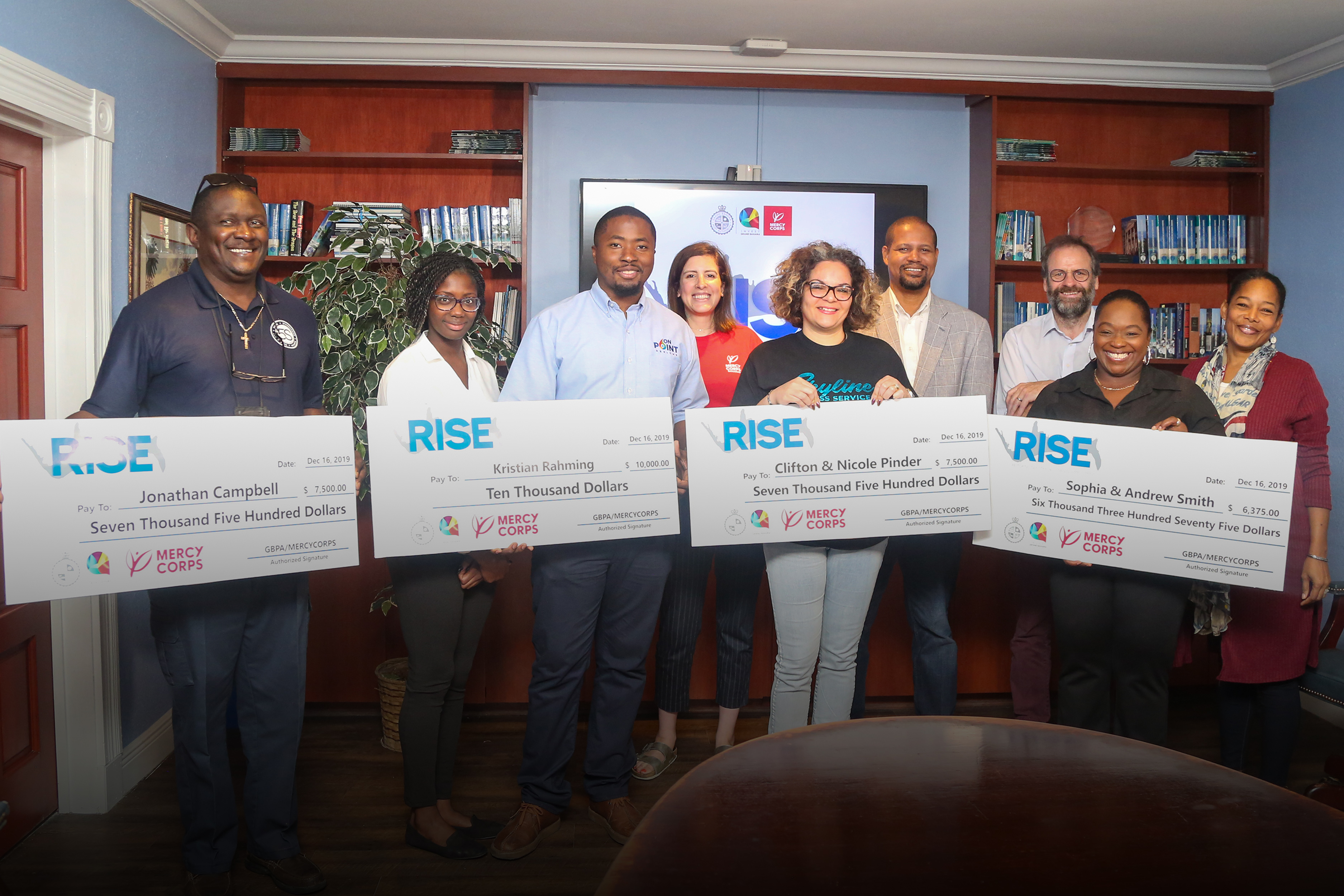
Header:The RISE pilot launched in December 2019, supporting local merchants in the run up to the business year’s most profitable shopping season. The program’s initial goal was to assist 100 local businesses impacted by Dorian with grants of up to $10,000 to support their recovery efforts. Pictured from left to right are grant recipients of the RISE Initiative Pilot Cohort: Jonathan Campbell – 5S Maintenance Service; Virginia Cooper, Program Officer – Mercy Corps; Kristian Rahming – OnPoint Designs & Printing; Kelsey Lundgren, Project Officer – Mercy Corps; Nicole Pinder – Skyline Express; Derek Newbold, Sr. Manager of Business Development – GBPA Group; Pete Sweetnam, In-Country Director – Mercy Corps; Sophia Smith – Escante Boutique; and LaShawn Dames, Business Services Manager & RISE Program Coordinator – GBPA.
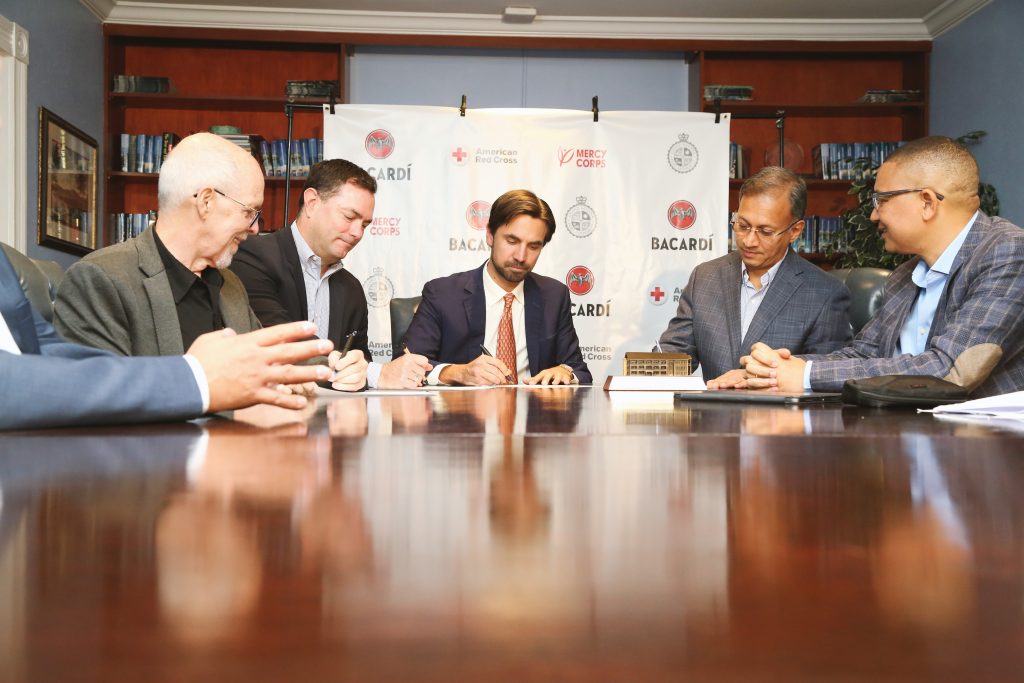
1st insert: Partners of the RISE economic recovery initiative have supported the post-Dorian recovery efforts of nearly 300 micro and small businesses across the Grand Bahama, with upwards of $2.5 million in grant and post-COVID assistance. Picture from left to right are the RISE Initiative executives; Al Panico, Field Representative – American Red Cross Society; Michael Bowers, VP Humanitarian Leadership – Mercy Corps; Henry St. George, Director – GBPA; Mahesh Madhavan, CEO – Bacardi Limited; and Ian Rolle, President – GBPA Group.
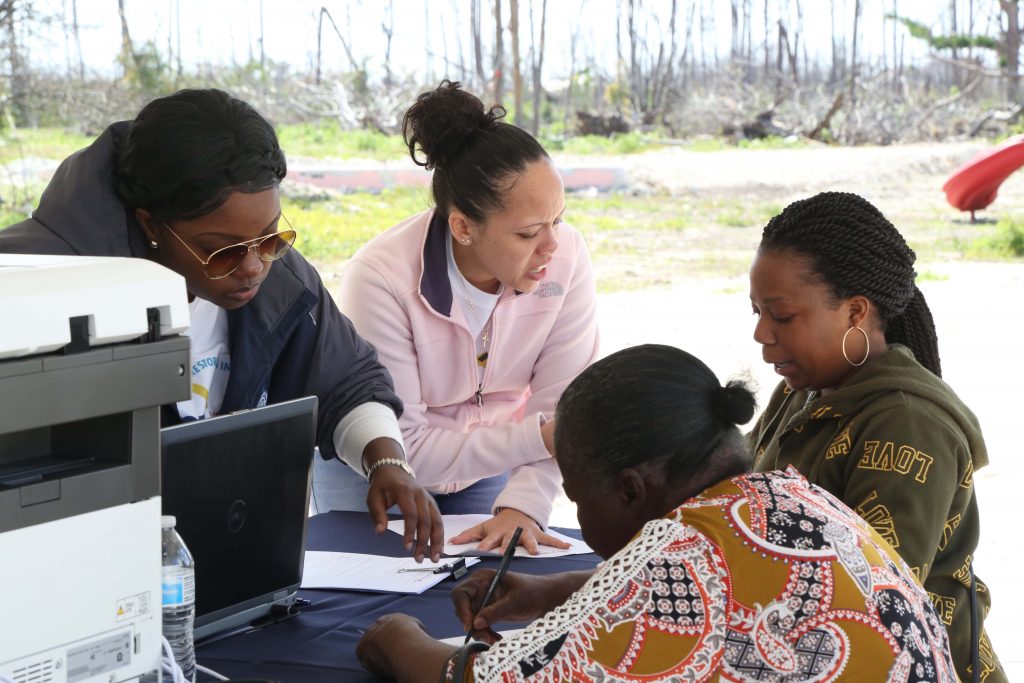
2nd insert: As the RISE initiative officially comes to a close, its impact can be seen and felt in the day-to-day operations of the businesses it has empowered and helped. Pictured are members of the RISE Team Kerline McPhee, GBPA Customer Relations Officer (top left) with Ashleigh Lockhart, MC Program Manager (top right), providing one-on-one support to East Grand Bahama residents during a site information session for the RISE Initiative (photo taken in early 2020 before the onset of COVID-19). The RISE team continued all program activities throughout 2020 despite the COVID-19 lockdowns, delivering greatly needed support to RISE program participants.

Bahamas News
Bahama Brass Band Invitation Sparks Heritage Debate Ahead of TCI Constitutional Holiday

Turks and Caicos, August 20, 2026 – The planned participation of the Bahama Brass Band in the Turks and Caicos Islands’ inaugural Constitutional Holiday celebrations on August 30 has sparked public debate over culture, heritage and the historical contributions of Turks and Caicos Islanders abroad.
Organizers defended the invitation, saying the band’s inclusion is intended to highlight the deep historical ties between the two countries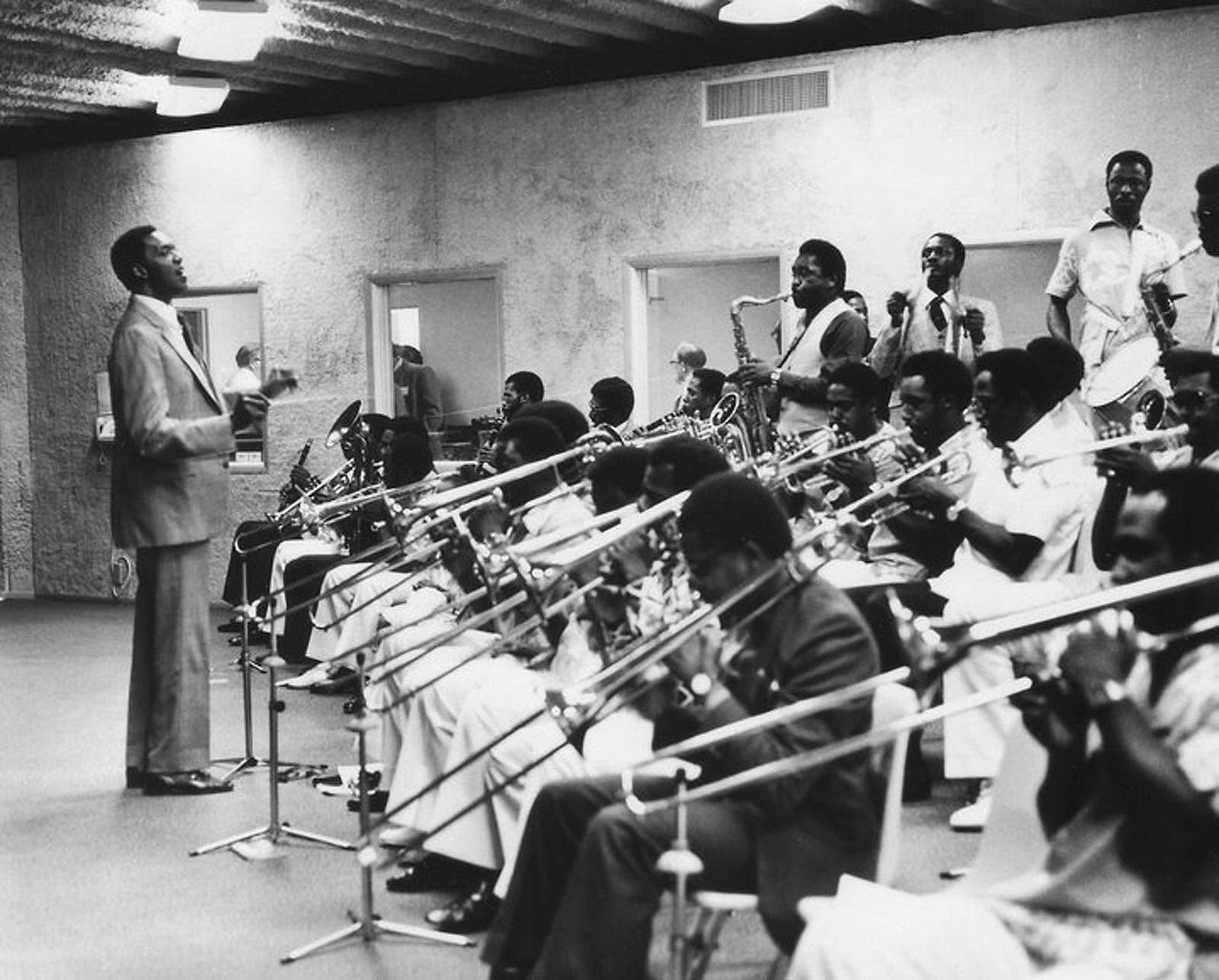 and honor Turks and Caicos men who helped establish and develop the institution in Grand Bahama.
According to the organizers, the Bahama Brass Band began in 1955 in Pine Ridge, Freeport, with Turks and Caicos Islanders, including the late Deacon Reuben Hall Sr. of Middle Caicos and Jenkins Williams and Mervin Hendfield of North Caicos, among those who helped build its foundation. The band eventually grew to more than 50 men.
The organizers also pointed to the participation of Turks and Caicos men in The Bahamas’ Independence celebrations on July 10, 1973, arguing that their contributions became part of Bahamian history while maintaining strong connections to their homeland.
Supporters say bringing the band home represents an opportunity to honor those pioneers, showcase their regional influence and expose younger generations to an important part of Turks and Caicos history.
However, concerns raised publicly described the invitation as potentially disrespectful to local culture and heritage. Organizers acknowledged those concerns, apologizing to anyone who felt overlooked or offended, while maintaining that no disrespect was intended.
The committee said the event should ultimately unite rather than divide, presenting the band’s history as evidence of the reach and resilience of Turks and Caicos heritage.
PHOTO CREDIT: Bahamas Brass Band
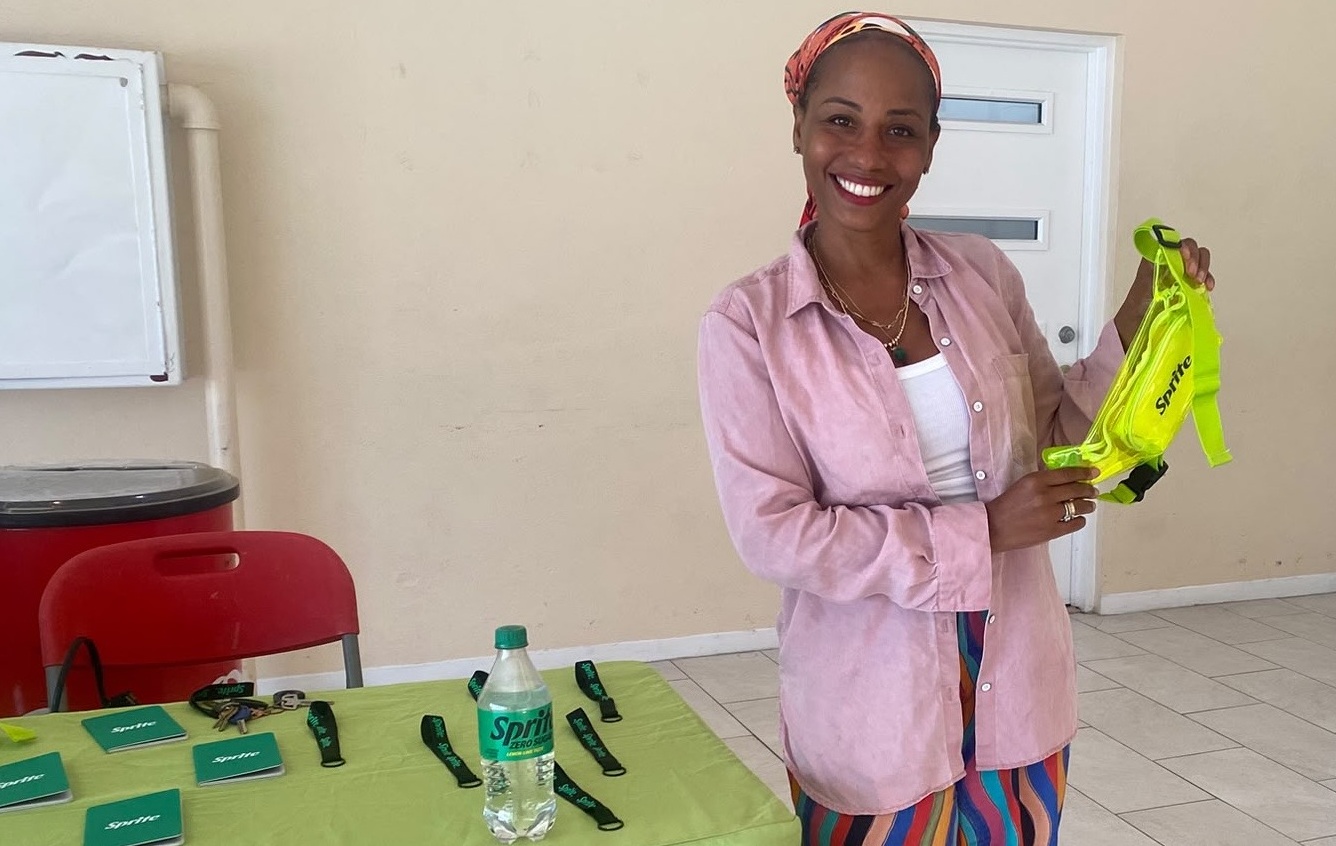
NASSAU, Bahamas — Caribbean Bottling Company (CBC), local producers of Dasani products, proudly sponsored the fifth annual, Caribbean Hoopfest.
The tournament brings together Bahamian high school basketball teams and visiting teams from the United States for a competitive showcase at the Kendal G. L. Isaacs Gymnasium. Following its inaugural year at the Kendal G. L. Isaacs gym and last year’s event at Loyola Hall, the tournament returned to the Kendal G. L. Isaacs gym this year.
During the weekend tournament, CBC kept athletes well hydrated with in-kind donations of Dasani Water, Powerade and Minute Maid Juices.
During the tournament’s final day, CBC provided additional support by offering Sprite No Sugar samples and inviting attendees to participate in its Spin the Wheel for a chance to win exciting prizes.
CBC was proud to support this incredible event, which provides young Bahamian athletes with valuable exposure to U.S. basketball scouts and coaches. This opportunity gives them the chance to earn scholarships, continue their education, and pursue their basketball careers in the United States.
Event organizer, Donald Francois shared his appreciation for CBC’s support.
“I want to express our sincere appreciation for Caribbean Bottling Company, who has been a tremendous supporter and an important part of the success of our program. Without CBC’s support, Caribbean Hoop Fest would not be able to function at the level it does today. And without Caribbean Hoop Fest, we would not have been able to provide the opportunities that have helped young Bahamian athletes gain exposure and pursue educational opportunities in the United States,” he expressed.
Since the program’s inception, several Bahamian student-athletes have been selected for scholarship opportunities, highlighting the tournament’s growing impact on the development and advancement of young basketball talent in The Bahamas.
They are: Kelvin McDowells – Guard, Wodson Antoine – Power Forward, Justin Lafleur – Guard and Sean John – Guard.
After another successful edition of the tournament, Francois shared what he hopes he and Caribbean Bottling Company can achieve in the future.
“Our vision is bigger than basketball. We want to use the platform of Caribbean Hoop Fest to educate, develop, and create opportunities for young people and their families throughout the Bahamas. With individuals and organizations committed to our mission, we believe we can continue to grow the program and make an even greater impact,” Francois said.
For more details on community support, events and new products visit Caribbean Bottling Company at www.cbcbahamas.com today.
NASSAU, Bahamas — More Bahamians are accessing HIV and sexually transmitted infection-related healthcare through National Health Insurance, a trend the NHI Authority says should be viewed positively.
NHIA stressed in an August 6 statement that its 2025 figures measure healthcare utilisation, not newly diagnosed infections. They include beneficiaries screened, treated, monitored or receiving follow-up care, including people diagnosed previously.
“Increased utilisation of these services should be viewed as a positive development,” NHIA said.
The Authority pointed to “greater enrolment and use of NHI, improved access to screening and testing, continued treatment and monitoring of existing conditions, and increased willingness to seek medical care.”
The development comes amid a mixed three-year HIV picture. New diagnoses rose from 130 in 2023 to 156 in 2024, before declining to 142 in 2025.
NHIA said increased utilisation demonstrates that more beneficiaries are accessing needed healthcare and actively managing their health, reinforcing the importance of screening, early diagnosis and continued treatment.





-

 News5 days ago
BermudAir Launches New York Area’s First Nonstop Service to South Caicos, Now Just a 3.5 Hour Flight from Newark
-

 News1 week ago
Salt Cay Water Shortage Unresolved as Residents Question Promised Relief
-
 Bahamas News5 days ago
CBC Supports Opportunities for Young Bahamian Basketball Players
-

 Bahamas News5 days ago
Bahama Brass Band Invitation Sparks Heritage Debate Ahead of TCI Constitutional Holiday
-
 Health1 week ago
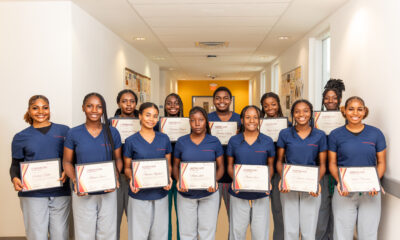
Turks and Caicos Islands Hospital Celebrates Successful Completion of 2026 Summer READY Programme
-

 News13 hours ago
Saunders Tells Caribbean Media: Be Seen, Be Heard – But What About TCI