Connect with us

Caribbean News

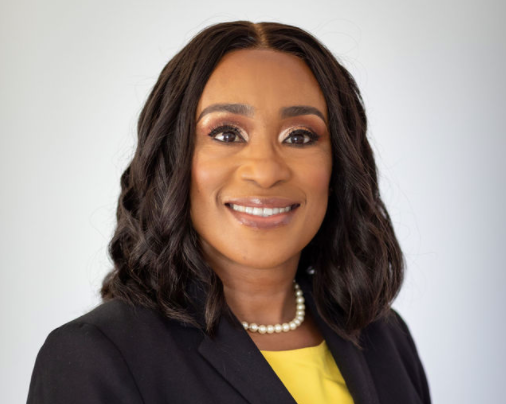
TCI: Hon. Rachel Taylor – Full Ministerial Statement

Published

on

#TurksandCaicos – Mr. Speaker, Members of this Honourable house, visitors in the gallery, my fellow Turks and Caicos Islanders, the Good Book says, in everything we must give thanks, and today, I rise to give the almighty thanks for permitting us to see another day, and all the blessings he has bestowed upon me. I also want to give thanks because the almighty has blessed me with health and strength to carry out my responsibilities in this Honourable House.

I must acknowledge that I am forever grateful to my Constituency Council led by Mr. Calvin Greene, my campaign team who toiled with me for four long years, the constituents of Electoral District 9, Five Cays, South Dock and Chalk Sound who resoundingly elected me on February 19thto represent their interests and those of all the people of the Turks and Caicos Islands. To all those who supported me in different capacities, I say thank you. I will represent with integrity, dignity and accountability. 

I wish to also thank my family for their continued support and guidance to take on the challenges of today and tomorrow. To Arnelle Alexis Taylor, I express my deepest gratitude to you, for you supported me not only as a daughter, but also played the role of my Campaign Manager. 

Mr. Speaker, I rise to provide an update on the progress of my Ministry. Over the past year, the pandemic has struck a devastating blow to the Education Sector, not only in these Beautiful by Nature Islands, but across the Globe. This month of March 2021, marks one year since our schools have been closed in the Turks and Caicos Islands, and our children have been forced to remote learning from home. 

Mr. Speaker, 

  • We have heard the cries of our children, they want to return to the classroom with their friends. 
  • We have heard the cries of our Teachers, who have expressed that they are not reaching our children in a meaningful way via online learning. 
  • We have heard the cries of our parents, who are seeking the best learning opportunities for their children. 

Mr. Speaker, it is my pleasure to update this Honourable House on matters related to the Education Sector and to address those cries from our children, the teachers and parents. 

Since assuming office, I have held a series of meetings with officials in the Department of Education, Private and Public School Principals and key stakeholders to chart a course to safely return our students to a safe environment where we can once again ensure effective learning. 

Arising out of those meetings and in consultations with the Ministry of Health, we have aimed to safely transition our students back to face to face learning blended with online classes through a phased approach captured in our revised Roadmap. 

Mr. Speaker, with effect 22nd March 2021 to April 31st 2021 we will implement the first phase of the Roadmap for the reopening of School. This will include the following: 

  1. All Schools throughout the Turks and Caicos Islands with a population of 200 students or less, will be permitted to return to Face to Face Learning. 
  2. Schools with a student population above 200 students, we will permit only 4th and 5th formers and Grade 6 students to return to face to face learning at this time, while the lower classes continue using online learning. 
  3. Due to the fact that students attending Tertiary Schools usually attend classes at scheduled time, all students at these institutions would be allowed to return to Face to Face Classes. 

Mr. Speaker, at the initial stage, face to face classes are given to students that are in the senior grades who are preparing to sit examinations, because the Ministry wants to ensure that these students are given as much support as possible to prepare for external examinations, entry into the labour market and for pathways to lifelong learning. 

We will also use this opportunity before the Easter break to get students readjusted to their classes. Also, teachers, school administrators and the Department of Education will have the opportunity to identify any potential issues and work diligently to resolve these kinks over the Easter Break. 

Mr. Speaker, during Phase 1 after the return of the Easter break, we will return all students to school, yes, I repeat,ALL SCHOOLS,ALL STUDENTSwill return to face to face learning.  

We are cognizant of the health protocols, and the requirement for Social Distancing and we have taken this into serious consideration. All Schools will be allowed to function with up to 200 students with a blended approach of face to face and online learning. The School Administrators would be permitted to use and adopt any strategy which suits them,but I re-emphasize at any onetime, only 200 students would be permitted in face-to face classes, while the remainder of students would continue to join classes remotely and alternate from time to time. 

Mr. Speaker, we are here to do the peoples work and we aim to deliver. 

As part of our strategy to make the full use of this Daylight Savings Time and also maximize this opportunity to enable our students to catch up, school hours are also modified. At present, students attending online classes in the Public Schools attend from 9a.m. to 1p.m. This will continue in instances where online learning remains the dominant form of lesson delivery, particularly in Phase 1. 

However, in instances where students will be attending face to face classes, the following school operating hours would be as follows: 

  • In primary schools: 8:30 am to 2:30 pm 
  • In secondary schools: 8:30 am to 3:00 pm. 

Mr. Speaker, these are exceptional times that have required all of us to take swift action and make drastic changes to our professional and personal lives to slow the spread of the novel coronavirus.  

Mr. Speaker, Phase 2 of the reopening of Schools will take place during the period May 3rd2021 to July 2nd2021 which leads us to the end of the school year. The Ministry will ensure that there is continuous liaison with the Ministry of Health with relevant updates from CDC and inspections by health officials, the necessary recommendations will be shared with the schools to ensure that they are all complying with the protocols. 

Our first priority remains the health and well-being of our dynamic community of students throughout the islands, faculties, and other stakeholders. As part of this mandate to return our students to the classroom, we will implement the Guidelines Developed by the Education Department for the safe return of students to the classrooms. Some of these guidelines call for the following: 

1)    Daily screening and maintaining of a register of all students as they enter the school compound. 

2)    All students must wear a mask, face shield at all times. 


3)    In the Public Schools, we will implement a bubble system, whereby students would remain within their classroom with their cohorts. We will implement a system of restricted movement of students throughout the campus.  Parents are encouraged to send their children with lunch to school. 

There will be an option for students to purchase from the canteen and school administrators are asked to put a system in place to facilitate the students lunch being taken to the classroom.

Physical activities and Physical Education would be encouraged under a controlled and closely supervised environment. Teachers are encouraged to promote in-class physical activities such as stretching and pause periods.

We congratulate all teachers who have taken on the responsibility to vaccinate themselves and encourage all other teachers to get vaccinated as soon as possible in the best interest of themselves and their students. Mr. Speaker, in joint efforts with the Deputy Governor and the Ministry of Education, we will be arranging weekly vaccination times dedicated for our teachers and all those who work alongside our children on the school compound in both government and private schools should they wish to be vaccinated. 

In reviewing some of the health protocols which are emerging in Europe and the United Kingdom, many schools and universities are working closely with public health experts to establish a COVID-19 rapid testing facility within their schools for students that is available on a voluntary basis. In the very near future, the Department of Education, in collaboration with the Ministry of Health, would encourage a similar protocol to be implemented. This will be addressed in the new budget. 

Mr. Speaker, my ministry will be installing plexiglass sneeze guards on the desks of each student and teacher in public schools for the new academic year as an extra protective measure for our teachers and students. The health and well-being of our people will always be paramount. 

Mr. Speaker, the Department of Education alongside the Ministry of Health will initiate the sensitization campaign to inform parents of the health measures which are in place to keep their students safe such as the School Health COVID-19 Protocols and Contingency Plans which were previously developed and are currently in place. Our Ministry of Health has completed assessments of schools and will continue to ensure that our schools are adhering to the protocols established by the Ministry of Health. 

In keeping with the Ministry of Health Protocols, we will provide additional PPEs, additional cleaning supplies and the necessary number of cleaners per school to ensure that the environment of our students are conducive to their health and well-being. 

My Government will seek to implement temporary contracts with bus service providers for students of Long Bay High and students on Middle and North Caicos adhering to the Ministry of Health Protocols for the safety of our students. We will not hold back our students, but instead work in unison to ensure that our students education are treated as a priority, and in so doing follow rigidly the protocols established. Parents and the wider community, we need your support, again I am pleading with you to get vaccinated this will indeed mitigate the bread of Covid 19. Together we can, and together we will! 

Mr. Speaker, I cannot end without speaking on the upcoming external examinations. We recognize and appreciate the significant stress that our students are feeling as they prepare to sit in some cases, life changing external examinations. 

Mr. Speaker, we have heard the cries of our School Principals, the cries of our teachers, and the cries of our students when they say, our children are not ready for these examinations. Our children have not had the benefit of consistent face-to-face for over a year. Our students have not covered the subject requirements,and to sit some of these external examinations would not be fair to our children when other countries have had the benefit of returning their students to classroom much earlier than we have. 

Mr. Speaker, Cambridge recently announced that it is their intention to proceed with the examination this year,EXCEPTfor a very small number of countries and regions within countries where directives from national and local authorities mean exams cannot go ahead, Cambridge will switch from exams to a teacher assessment approach using students’ work, their SBAs. 

Consequently Mr. Speaker, with effect immediately, my Government has taken the decision to formally write to Cambridge and advise them of the Government’s decision to defer IGCSE examinations this year and switch from exams to a teacher assessment approach using their SBAs. 

Mr. Speaker, The Caribbean Examination Council examinations will be sit by our students in June/July of this year and results will be made available to Ministers of Education the last week of September 2021. CXC intends to share with each country the broad topics to be assessed on Paper 2, five weeks in advance of the start of the examination. As a contingency measure, if students are unsuccessful in their exams, the Ministry will encourage these students to re-sit the examinations in 2022. 

Mr. Speaker, we must give our students the best opportunity to succeed and in these stressful times, this is the right thing to do. 

Similarly, Mr. Speaker, my Government has taken the decision to defer the Grade 6 Caribbean Primary Examination Assessment (CPEA) this year for All Schools except two. Instead, the Department of Education will focus on administering an internal assessment focusing on Literacy and Numeracy. We encourage school leaders, teachers and parents to continue to work with students using the CPEA guidelines and finish the curriculum. 

This is no time for us to rest on ourlaurels, our children are behind and we must give them a fighting chance to succeed. The deferral of the CPEA examinations means, that schools are no longer burden to complete the school-based assessments within the allocated timelines, but we want to encourage schools to continue along the path, complete the curriculum, because it will build the students competencies and skills.To do otherwise will be unfair to the children

Mr. Speaker, I had mentioned that two schools which are far advance in preparing our students to sit the CPEA exams. I wish to use this opportunity to congratulate these schools, the teachers and administrators, and most importantly the parents for their hard work. While the completion of the exams by these schools will not be used for the placement of students, the lessons learnt will be invaluable to other schools in the TCI and these schools will serve as a pilot and Champion schools to better assist other schools as we work to implement the CPEA next year. 

Mr. Speaker, my ministry intends to provide additional after school programmes for struggling students in public schools to provide greater one on one support that will aid in improving their literacy and numeracy skills. The Ministry will continue to review its budget ceiling and identify savings which can be re-allocated towards this initiative in the next budget cycle or the new academic year. No child will be left time. 

Mr. Speaker, the Education Department is aware of the struggles of our children and parents as it relates to having access to an electronic device. We are ever grateful to the many donors who have assisted with the many purchases. We are currently awaiting 300 laptops from the Pine Cay Project and an additional $17,000 worth of devices sponsored by the Shore Club. Our partnership with the private sector will improve as we work together for the betterment of our children. In the new financial budget, we will address procuring additional electronic devices for our children so that no child will be left behind. 

Mr. Speaker, our classrooms will see the installation of HD cameras over the Easter break in an effort to aid in the delivery of their online learning. Additionally, we will provide additional hot spots on site at the public schools that will boost the internet service. 

Mr. Speaker, as I conclude, I wish to reassure all parents, teachers, and students that in making these decisions, their health and safety was our primary consideration. All schools are currently operating under COVID-19 safety protocols which are aligned to the Guidelines issued by the Ministry of Education and Health. 

The Ministry of Education will continue to monitor the threat of the COVID-19 pandemic and make informed decisions in conjunction with the Ministry of Health. We will continue to keep all our parents informed about the progress being made. The road ahead may have bumps, but I am confident we will continue to make significant advances in our shared goals of returning to some sense of normalcy. 

My Ministry is fully committed to providing the resources and helping the education system to transition to one that can effectively navigate the new normal. This requires us to pivot the odds in our favour and to capitalize on the seeds of opportunity through consultations and strategic collaboration. 

Mr. Speaker, we cannot fail our students. As we make this shift from online learning back to face to face and blended instruction, we must work to ensure that students are receiving thesame high-quality instructionthey would have under normal circumstances. 

Mr. Speaker, I end by reminding us all that this month is known as Social Work Month. It isa time to celebrate the great profession of social work. As practitioners, social workers are trained to help people address personal and systemic barriers to optimal living. 

They are employed to effect positive change with individuals, families, groups and entire communities. I would like to commend my staff, the social workers, for their continuous support and dedication in this field. They have worked tirelessly during this pandemic; dedicating their time and resources to assist the community throughout the Turks and Caicos Islands. 

I have not forgotten the vulnerable among us. I have heard their cries as well. Their cry for social assistance and support. That is why Mr. Speaker, with effective immediately, my ministry has redirected savings identified from the Social Stimulus Program in the sum of $56,0000. $16,000 will be awarded to Social Services to purchase $200.00 food vouchers, that will be made available to the most vulnerable in our communities. 

Mr. Speaker, $40,000 will be given to Red Cross who will work with other NGOs in the TCI such as, Salvation Army, Soroptomist, Food for Thought and other groups of the cohort who are best placed to channel these resources to persons that are in need. I take this opportunity to thank them for the work they have done and continue to do. 

Mr. Speaker, I promised the vulnerable people of Five Cays, that we will get them the help they need. I promised the vulnerable people throughout the TCI that we will remove the bureaucratic red tapes and we will deliver on that promise. For the purpose of accountability, the Ministry will be provided with the necessary documentation from the NGOs and Social Services outlining their expenditure. 

Mr. Speaker, I am grateful for the opportunity to serve my country, especially as the Minister with responsibility for Education, Youth, Culture, Library and Social Services; I will work hard seeing that no one, no child, will be left behind. This is my promise to you. 

May God continue to bless our country, the Turks and Caicos Islands. 

Continue Reading

Caribbean News

Seven Days. Seven Nations. One Storm — Hurricane Melissa

Published

on

A week of wind, water, and heartbreak


From Haiti’s hillsides to Bermuda’s reefs, seven Caribbean nations have been battered, bruised, and forever marked by Hurricane Melissa — a storm that tested not only the region’s infrastructure but its unshakable spirit of unity.

Saturday–Sunday, October 25–26 – The First Strike: Hispaniola

Before the storm even earned its name, torrential rain and flash floods swept across Haiti and the Dominican Republic, claiming lives and tearing through rural communities.

In southern Haiti, rivers burst their banks, swallowing roads and homes; 23 people were confirmed dead by Sunday evening. Across the border, one death was reported in the Dominican Republic as swollen rivers cut off villages in Barahona and Pedernales.

By nightfall, the tropical system had strengthened — and the Caribbean knew it was facing something historic.

Monday, October 27 – Evacuations and Airlifts

In The Bahamas, Prime Minister Philip Davis issued a mandatory evacuation for the MICAL Islands — Mayaguana, Inagua, Crooked Island, Acklins, Long Cay, and Ragged Island.

Bahamasair added extra flights as the nation braced for what forecasters warned could become the strongest storm in nearly two decades.

Meanwhile, Jamaica, Turks & Caicos, and Cuba activated their national emergency operations centers.

Tuesday, October 28 – Jamaica and Haiti Hit Hard

By afternoon, Hurricane Melissa made landfall near St Elizabeth, Jamaica, as a Category 5 hurricane — winds of 185 mph, central pressure 892 mb, the lowest ever recorded so close to the island.

Roads collapsed, bridges washed away, and Black River Hospital lost its roof. Power failed for 72 percent of the island.

BOJ TV footage shows split asphalt, sparking lines, and flooded communities abandoned for safety.

Initially four were reported dead, that grew to seven deaths and heavy damage in 170 communities; Andrew Holness, Jamaican Prime Minister calling it “a national test of resilience.”

Haiti, still recovering from the weekend’s flooding, was hit again as outer bands dumped more rain on Les Cayes and Jacmel, deepening the humanitarian crisis.

Wednesday, October 29 – Crossing to Cuba

Weakened slightly to Category 4 (145 mph), Melissa tracked north-northeast at 8 mph, hammering eastern Cuba with hurricane-force winds

and mudslides. Over 15 000 people were evacuated from Santiago de Cuba and Holguín.

In Turks & Caicos, the Regiment deployed to Grand Turk, Salt Cay, South, North and Middle Caicos, preparing shelters and securing public buildings.

Thursday, October 30 – The Bahamas and the All Clear

Melissa’s speed increased, sparing the northern Caribbean its worst.

The Bahamas Airport Authority closed 13 airports from Mayaguana to Exuma International; none reported casualties, though infrastructure suffered.

In Turks & Caicos, the all-clear came early Thursday after minimal impact.  Premier Washington Misick expressed gratitude and pledged support for neighbors:

“We must act — not only with words, but with compassion and deeds.”

Friday, October 31 – Counting the Cost

By Friday, Melissa had weakened to Category 3 (120 mph) north of Cuba.

The Bahamas Department of Meteorology issued its final alert, lifting warnings for the southern islands.

Regional toll:

  • Haiti: 23 dead, thousands displaced.
  • Jamaica: 7 dead, 170 communities damaged; 72% without electricity
  • Cuba: 2 dead, 15, 000 evacuated.
  • Dominican Republic: 1 dead, flooding in southwest.
  • Bahamas: 0 dead, minor infrastructure damage and flooding in southeast.
  • Turks & Caicos: minimal to no impact.

Relief and Reconnection

The Cayman Islands became the first government to touch down in Jamaica post-storm. Premier Juliana O’Connor-Connolly led a contingent bringing a plane-load of essentials and pledged US $1.2 million in aid.

Reggae icon Shaggy arrived on a private jet with friends, delivering food, medical kits, and hygiene supplies.

Meanwhile, Starlink and FLOW Jamaica activated emergency satellite internet across Jamaica providing free connectivity through November.

From overseas, U.S. President Donald Trump, speaking during his Asia tour, announced that American search-and-rescue teams and disaster aid will support the region.

“They can depend on U.S. assistance as they recover from this historic storm,” he said.

Faith, Funds, and False Websites

The Government of Jamaica and the Sandals Foundation have both launched verified donation portals for recovery. Officials are warning against fake crowdfunding pages posing as relief sites and urging donors to use only official channels.

A Seventh Nation in the Crosshairs – Bermuda

As Hurricane Melissa left the Caribbean basin, Bermuda found itself next in line.

Forecasts indicated the storm would pass just west of the island late Thursday into Friday, likely as a Category 1 to 2 hurricane with sustained winds near 105 mph.

Though far weaker than when it ravaged Jamaica, officials issued a hurricane warning, urging residents to secure property and expect tropical-storm conditions.

By all appearances Bermuda is heeding the warnings

The Human Response

Across the Caribbean, solidarity surged.

The Global Empowerment Mission (GEM) in Miami began airlifting relief supplies, while churches, civic groups, and businesses in The Bahamas and Turks & Caicos organized drives for displaced families.

“Your dedication gave our islands the strength to face the storm,” Premier Misick said. “Together, as one Caribbean family, we will rise stronger.”

Resilience in the Wake

Melissa’s winds may have faded, but her impact endures. Engineers are inspecting bridges, hillsides, and water systems; volunteers are clearing debris and distributing aid in communities still cut off.

From Haiti’s ravaged river valleys to Jamaica’s sugar towns, from Cuba’s eastern hills to The Bahamas’ salt ponds and Bermuda’s reefs, the region once again stands at the crossroads of ruin and renewal — and leans, as always, toward hope and a faithful God

Continue Reading

Caribbean News

Haitian Pushback Halts Controversial Constitution Rewrite — What’s Next?

Published

on

Deandrea Hamilton | Editor


Haitian media, legal scholars and civic voices did what bullets and barricades couldn’t: they stopped a sweeping constitutional overhaul widely branded as anti-democratic.  Editorials and analyses tore into proposals to abolish the Senate, scrap the prime minister, shift to one-round presidential elections, expand presidential power, and open high office to dual-nationals—a package critics said would hard-wire dominance into the executive at a moment of near-lawless insecurity.

The Venice Commission—Europe’s top constitutional advisory body—didn’t mince words either. In a formal opinion requested by Haiti’s provisional electoral authorities, it pressed for clear legal safeguards and credible conditions before any referendum, including measures to prevent gang interference in the electoral process—an implicit rebuke of pushing a foundational rewrite amid a security collapse.

Facing that drumbeat, Haiti’s Transitional Presidential Council has now formally ended the constitutional-reform initiative. The decision, taken at a Council of Ministers meeting at the National Palace, effectively aborts the rewrite track that has haunted Haiti since the Moïse and Henry eras.

So what now? Per the Miami Herald, the pivot is back to basics: security first, elections next. That means stabilizing Port-au-Prince enough to run a vote, rebuilding the electoral timetable, and empowering the provisional electoral machinery—none of which is simple when gangs control vast chunks of the capital and state authority remains fragile. Recent headlines underline the risk: gunfire has disrupted top-level government meetings, a visceral reminder that constitutional theory means little without territorial control.

Bottom line: Haitian journalists and public intellectuals helped slam the brakes on a high-stakes centralization of power that lacked legitimacy and safe conditions. International constitutional experts added weight, and the transition authorities finally conceded reality. Now the fight shifts to making an election possible—clean rolls, secure polling, and credible oversight—under circumstances that are still hostile to democracy. If the state can’t guarantee basic safety, any ballot is theater. If it can, shelving the rewrite may prove the first real step back toward consent of the governed.

Continue Reading

Caribbean News

Political Theatre? Caribbean Parliamentarians Walk Out on House Speaker

Published

on

By Deandrea Hamilton | Magnetic Media


October 14, 2025 – It’s being called political theatre — but for citizens, constitutional watchdogs, and democracy advocates across the Caribbean, it feels far more serious. Within a single week, two national parliaments — in Trinidad and Tobago and St. Kitts and Nevis — descended into turmoil as opposition members stormed out in protest, accusing their Speakers of bias, overreach, and abuse of parliamentary procedure.

For observers, the walkouts signal a deeper problem: erosion of trust in the very institutions meant to safeguard democracy. When Speakers are viewed as political enforcers instead of neutral referees, parliaments stop functioning as chambers of debate and start performing as stages for power and spectacle — with citizens left wondering who, if anyone, is still accountable.

October 6: St. Kitts Parliament Erupts

The first walkout erupted in Basseterre on October 6, 2025, when Dr. Timothy Harris, former Prime Minister and now Opposition Leader, led his team out of the St. Kitts and Nevis National Assembly in a protest that stunned the chamber.

The flashpoint came as the Speaker moved to approve more than three years’ worth of unratified parliamentary minutes in one sitting — covering 27 meetings and three national budgets — without individual review or debate.

Dr. Harris called the move “a flagrant breach of the Constitution and parliamentary tradition,” warning that the practice undermines transparency and accountability. “No serious parliament can go years without approving a single set of minutes,” he said after exiting the chamber.

The Speaker defended the decision as administrative housekeeping, but critics were unconvinced, branding the move a “world record disgrace.” The opposition’s walkout triggered renewed calls for the Speaker’s resignation and sparked a wider public discussion about record-keeping, accountability, and respect for parliamentary norms in St. Kitts and Nevis.

October 10: Trinidad Opposition Follows Suit

Four days later, on October 10, 2025, the Opposition United National Congress (UNC) in Trinidad and Tobago staged its own walkout from the House of Representatives in Port of Spain.

The UNC accused the Speaker of partisan bias, claiming she had repeatedly blocked urgent questions, ignored points of order, and allowed government members to breach standing orders without consequence.

“The Speaker has failed in her duty to act impartially,” the Opposition declared in a statement. “Parliament is not the property of any political party or Presiding Officer.”

The dramatic exit was seen as a culmination of months of rising tension and frustration, with opposition MPs arguing that parliamentary rules were being selectively applied to silence dissenting voices.

Political analyst Dr. Marcia Ferdinand described the twin walkouts as “a warning sign that parliamentary democracy in the Caribbean is teetering on the edge of performative politics.”

“When chairs become political shields rather than constitutional referees,” she said, “democracy becomes theatre, not governance.”

A Pattern Emerging

While St. Kitts and Trinidad are very different political environments, both incidents point to the same regional fault line: the perception that Speakers — the guardians of parliamentary order — are no longer impartial.

In Westminster-style systems like those across the Caribbean, the Speaker’s authority depends not on power but on public confidence in fairness. Once that credibility erodes, parliamentary control collapses into confrontation.

Governance experts say the implications are serious: eroded trust between government and opposition, declining public confidence in state institutions, and growing voter cynicism that “rules” are flexible tools of political advantage.

Why It Matters

Parliamentary walkouts are not new in the Caribbean, but what makes these recent events different is their frequency and intensity — and the regional echo they’ve created. Social media has amplified images of lawmakers storming out, with citizens from Barbados to Belize questioning whether the same erosion of decorum could be happening in their own legislatures.

Analysts warn that if this perception takes hold, it risks diminishing the moral authority of parliamentary democracy itself.

“Once opposition MPs believe the rules are rigged, and once citizens believe Parliament is just performance,” said one Caribbean governance researcher, “you’ve lost the most valuable currency in democracy — trust.”

Restoring Balance

Political reformers across the region are calling for tighter Standing Order enforcement, independent parliamentary service commissions, and training to strengthen Speaker neutrality. Civil society leaders say the public must also play its part by demanding transparency and refusing to normalize partisan manipulation of parliamentary procedure.

Whether these twin walkouts become catalysts for reform — or simply another episode of Caribbean political theatre — will depend on what happens next inside those chambers.

For now, democracy watchers agree on one thing: when opposition leaders feel the only way to be heard is to walk out, the entire democratic house — not just its Speaker — is in danger of collapse.


Angle by Deandrea Hamilton. Built with ChatGPT (AI). Magnetic Media — CAPTURING LIFE.

Continue Reading

FIND US ON FACEBOOK

TRENDING