Connect with us

Bahamas News

BAHAMAS: After 40-year, nearly $3 billion in transactions career, Real estate legend launches Mario Carey Ventures

Published

on

By Diane Phillips

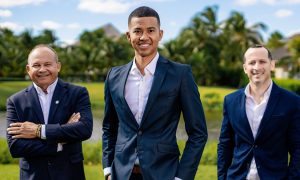
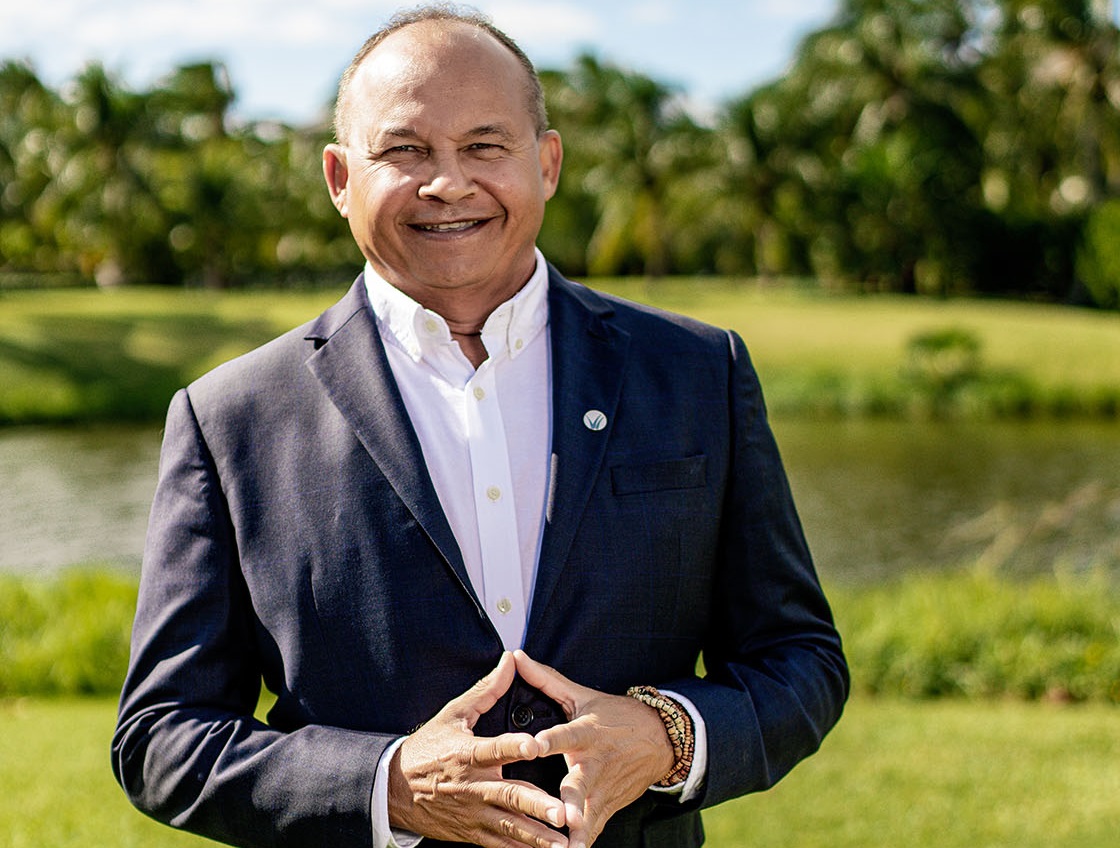
#Bahamas, March 3, 2021 – Many would have happily hung up their hat after a 40-year career with approximately $3 billion in transactions, but legendary Realtor Mario Carey has a better idea – the founder of the first international branch of Better Homes & Gardens is taking what he learned in one business and applying to a variety of others, combining visionary ideas with global expertise.

Carey announced the quiet launch of Mario Carey Ventures (MCV) this week in a press statement, more than two years after the concept was born and began to build momentum. Today it is involved in about one dozen projects ranging from new technology to social infrastructure like affordable housing and diversified farming, digital assets to resort development.

“Throughout my career, I kept envisioning business opportunities that were outside the real estate space,” said Carey. “At the same time, I was meeting people from all over the world and I realized that if I put the right team or teams together, MCV could provide opportunities that would promote nation-building, slow the brain drain and do what we have been talking about forever, diversify the economy.”

“I always remember that great Michael Jordan quote ‘Talent wins games but teamwork and intelligence win championships.’ If I wanted to go into the biotech space, for instance, or marine, I had to find people who would embrace the opportunity and share my vision that it had to benefit The Bahamas.”

Years of interacting with creative leaders, CEOs, celebrities and successful businesspeople paid off with Carey actively engaged in several high-level projects. But he was quick to recognized he needed someone as his chief global strategist and turned to Mark Shekter, co-founder and CEO of Think8 Global Institute.

Montreal-based Think8 has guided companies around the world to develop leadership, think creatively, advance solutions and drive ideas from thoughts to structured reality. The firm has worked with start-ups and multi-national corporations in sports, entertainment, energy, gaming, finance, retail and new technology. Think8’s innovative methodology is taught in University Masters Degree programs and national incubators to develop a new class of socially conscious entrepreneurs.

Carey calls Shekter “tough, but brilliant.” Shekter calls Carey “a true visionary.”

The match between Think8 and MCV works, says Carey, because it brings international experts along with Bahamian citizens and residents to the goal of advancing local opportunities.

“I am driven by the desire to raise capital and allocate human resources to monetize innovation and disruptive ideas that would diversify the economy, provide a reason for well-educated Bahamians to come home and find a place in their own country where they could succeed in a diversified economy.”

“The process of breathing life into good ideas is really what it is all about and not just one idea at a time, but allowing multiple ideas to blossom utilizing a baseline team overall and forming different teams with different skill sets for each concept. Mario Carey Ventures, or MCV, is, simply put, the launchpad from which ideas, solutions and causes move from seed to reality.

Carey, who was among only a handful of Bahamians to earn a university degree from Florida State University in real estate, said his practice exposed him to thinkers from all over the world. In recent years, being among the leading agents in high end markets like Ocean Club Estates, sports heroes, celebrities and management teams has reinforced his belief in what he calls “the hidden business ideas with the power to explode successfully.” MCV will help make that happen, he said, but with one caveat.

“Anything we touch has to have an element of nation-building for The Bahamas.”

Among the many concepts on the MCV table at its official launch are social entrepreneurship enterprises ranging from marine conservation to real estate funding in the affordable housing market.

His long years of networking are already attracting funding and expertise in biotech, digital asset maximization, Family Island development, and preservation and monetization of marine resources by capitalizing on existing potential where resources are plentiful and jobs are scarce.

MCV has also launched its own 501c3 charitable organization- Bahamian Prosperity Foundation- tapping into US tax deductible contributions for Bahamian causes. Carey cites as an example one of his program to provide some 42,000 hot meals to help ease the hunger problem during the pandemic, engaging the full support and dedication of his own staff and professionals at both Better Homes and Gardens MCR Bahamas Group and MCR, his luxury rental and property management company.

Known for his love of the sea and extensive deep diving, Carey has endorsed the concept of naming the waters the Lucayan Sea, backing the idea first proposed by former Royal Bahamas Defense Force Commander Captain Tellis Bethel, now serving in the role equivalent to inspector general for the uniformed law enforcement services.

“To protect something, it must have an identity and the concept of the Lucayan Sea, named in honour of the indigenous inhabitants of The Bahamas, is perfectly suited,” said Carey. “Naming our waters is a positive move that requires little on the part of any government, provides jobs with the expertise of cartography and mapping, opens historic, touristic and educational opportunities and can help unite us by paying tribute to a peaceful people while building pride in our waters.”

According to Carey, MCV has a strict code of conduct, stressing the core principles of trust, accessibility, and effectiveness.

“MCV is all about understanding where I can contribute the most to my country, fulfilling a lifelong dream of doing business that benefits the man,” he said. “we are excited about the next chapter.”

By Diane Phillips

Bahamas News

What 45 Shell Casings and New Murder Charges May Mean for Three Officers in the Azario Major Case  

Published

on

By Deandrea Hamilton | Editor

NASSAU, Bahamas (July 16, 2026) — The allegation is as shocking as it is consequential. Prosecutors now contend Azario Major was struck by additional gunfire after he was already dead.  That conclusion has prompted the Director of Public Prosecutions to upgrade the case against three police officers from manslaughter to murder ahead of a judge-only trial.

According to court filings and the DPP’s review of the forensic evidence, prosecutors allege that additional rounds entered Major’s body after death, a finding they say fundamentally changed their assessment of the case and justified the more serious charge of murder.

Investigators recovered 45 spent shell casings at the scene of the Boxing Day 2021 fatal shooting of Azario Major, a striking piece of forensic evidence that has remained central to the case from its earliest days.

Major, 31, was fatally shot by police outside Woody’s Bar on Fire Trail Road on December 26, 2021. While police initially maintained the shooting was justified, the circumstances surrounding the incident were heavily scrutinized during a Coroner’s Court inquest, where jurors ultimately returned a verdict of homicide by manslaughter.

The officers later challenged that finding, but the Supreme Court upheld the Coroner’s Court ruling, paving the way for criminal proceedings. They were subsequently arraigned on manslaughter charges and pleaded not guilty.

The DPP’s decision to elevate the charges to murder significantly raises the legal stakes. Unlike manslaughter, which does not necessarily require proof of an intent to kill, a murder conviction requires prosecutors to establish the legal elements of the more serious offence beyond a reasonable doubt. The prosecution’s case is now expected to focus heavily on forensic evidence, ballistic analysis and the sequence of gunfire during the fatal encounter.

The case is also notable because it will proceed without a jury. Barring further delays, the trial is expected to open on September 14 before Justice Guillimina Archer-Minns in a judge-alone trial, where a single judge—not a jury—will decide the fate of the three accused officers.

The proceedings will determine not only whether the three officers are guilty or innocent of murder, but whether prosecutors’ extraordinary allegation—that Azario Major was struck by additional gunfire after he was already dead—can be proven in court.

Continue Reading

Bahamas News

CARICOM Targets Affordability as Bahamas, TCI Continue to Feel the Pinch  

Published

on

By Deandrea Hamilton


Cheaper shipping. Lower energy costs. Better access to healthcare. Stronger consumer protections.

Those are among the measures CARICOM Heads of Government believe could finally begin reducing the stubbornly high cost of living for millions of people across the Caribbean.

Meeting in Saint Lucia, regional leaders agreed that making life more affordable must become one of the Community’s highest priorities. Their emerging strategy includes reducing freight costs through a regional ferry service, accelerating renewable energy projects to lessen dependence on imported fuel, expanding regional healthcare partnerships, strengthening consumer protection, and encouraging governments to adopt successful cost-of-living measures already being implemented across the Caribbean.

“Our discussions over the past four days were guided by one central objective – ensuring that CARICOM delivers results that people can see and feel in their everyday lives,” CARICOM Chairman and Saint Lucia Prime Minister Philip J. Pierre said.

Few places may welcome that relief more than The Bahamas and the Turks and Caicos Islands.

Although inflation has moderated in both countries from the sharp increases experienced following the pandemic, the cost of living remains stubbornly high. Families continue to complain about grocery bills that stretch household budgets, rising housing costs, expensive electricity, healthcare expenses and fuel prices that remain among the highest in the region.

Governments have responded.

In The Bahamas, successive reductions in Value Added Tax on selected goods and other targeted tax measures have sought to ease pressure on consumers. In the Turks and Caicos Islands, the Government this weekend opens applications for its $500 Cost of Living Relief Programme, acknowledging that many households continue to struggle despite the country’s economic success.

Yet affordability remains elusive.

The contradiction is difficult to ignore.

The Turks and Caicos Islands continues to post one of the region’s strongest tourism-driven economies, with robust investment, record visitor spending and sustained construction activity. The Bahamas has also strengthened its economic position, earning improved sovereign credit ratings as tourism, government revenues and fiscal performance continue to recover.

Yet those encouraging economic indicators have not translated into noticeably lower household expenses.

The reason is largely structural.

Both The Bahamas and the Turks and Caicos Islands produce relatively little of what they consume. Food, fuel, medicines, vehicles, building materials and countless household essentials are imported. Both countries also record significant trade deficits, illustrating their dependence on overseas suppliers. Every increase in global shipping costs, fuel prices or supply chain disruptions is eventually reflected in supermarket prices, utility bills and the cost of everyday living.

That is why CARICOM’s agenda matters.

If regional leaders succeed in lowering freight costs through an inter-island ferry network, expanding renewable energy, improving regional cargo movement, strengthening consumer protections and making healthcare more accessible through cooperation, the benefits could extend far beyond government balance sheets.

For Bahamians and Turks and Caicos Islanders, success will not be measured by another tourism record or another credit rating upgrade. It will be measured at the supermarket checkout, on the monthly electricity bill, at the gas pump and in the simple ability to afford a better quality of life.

Continue Reading

Africa

Bahamas’ Ghana Teacher Plan Draws Fire as Both Nations Face Shortages

Published

on

By Deandrea Hamilton | Editor

NASSAU, Bahamas (July 14, 2026) — The Bahamas Government says it needs the 300 teachers being sourced from Ghana to help close a critical staffing gap, even as criticism mounts over unresolved employment matters reportedly affecting approximately 2,000 Bahamas Union of Teachers members and as Ghana itself struggles with a massive shortage in the profession.

Deputy Prime Minister and Minister of Education, Science and Technology Chester Cooper said the shortage has been worsened by retirements, expiring contracts and the expansion of specialized subjects, including special education, technology, financial literacy, digital literacy and entrepreneurship.

Cooper said the Government has established a multi-agency task force and is attempting to attract recently retired teachers, new graduates and educators who previously left the profession.

“In keeping with government policy, Bahamians will be given first priority to fill all vacancies,” Cooper said.

However, the optics surrounding the decision are sketchy at best, with the BUT pressing the Government to settle long-standing matters affecting its members while Ghana grapples with a teacher shortage estimated at no fewer than 50,000 educators.

Ghana’s Minister of Education, Haruna Iddrisu, recently disclosed that the country needs between 50,000 and 90,000 additional teachers to adequately staff its schools.

UNICEF’s 2026 Teachers for All: Ghana report confirms that Ghana is not only experiencing an overall teacher shortage but also serious inequalities in how available teachers are distributed. It found that rural and underserved schools are particularly affected, while Ghana’s primary teacher workforce fell by more than 25 percent—from 131,094 in 2019–2020 to 93,818 in 2022–2023—as student enrolment increased.

The report stated:

“Not only is there a teacher shortage in Ghana, but inefficiencies also exist in the current distribution of available teachers.”

That finding raises questions about why a country with such a significant domestic deficit is prepared to facilitate the overseas recruitment of hundreds of educators.

Meanwhile, BUT President Belinda Wilson has argued that the Bahamian Government has substantial unfinished business with the teachers already serving in the public system.

According to Wilson, approximately 2,000 educators are awaiting the conclusion of salary negotiations, while hundreds reportedly have unresolved matters involving confirmations, salary reassessments, promotions, rental allowances, examination marking fees, disturbance allowances, hardship payments and coaching allowances.

The union has also complained that it was not properly consulted before the proposed recruitment became public and has demanded details about the qualifications, subjects, deployment locations and employment conditions being considered for the Ghanaian teachers.

The debate is also unfolding as the University of The Bahamas has produced approximately 219 education graduates over the past three years—76 in 2024, more than 60 in 2025 and 73 in 2026.

Cooper maintains that overseas recruitment is intended only to fill positions that cannot immediately be occupied by qualified Bahamians.

“For decades, we have benefitted from strategic international recruitment of educators from partner nations,” he said. “We emphasize that such recruitment is intended only to address vacancies that cannot be immediately filled by qualified Bahamians.”

Still, the questions remain: why are outstanding matters affecting thousands of Bahamian teachers unresolved, and why is The Bahamas sourcing educators from a country that acknowledges it is tens of thousands of teachers short itself?

Continue Reading

FIND US ON FACEBOOK

TRENDING