
Bahamas News
Royal Bahamas Defence Force Annual Carol Services

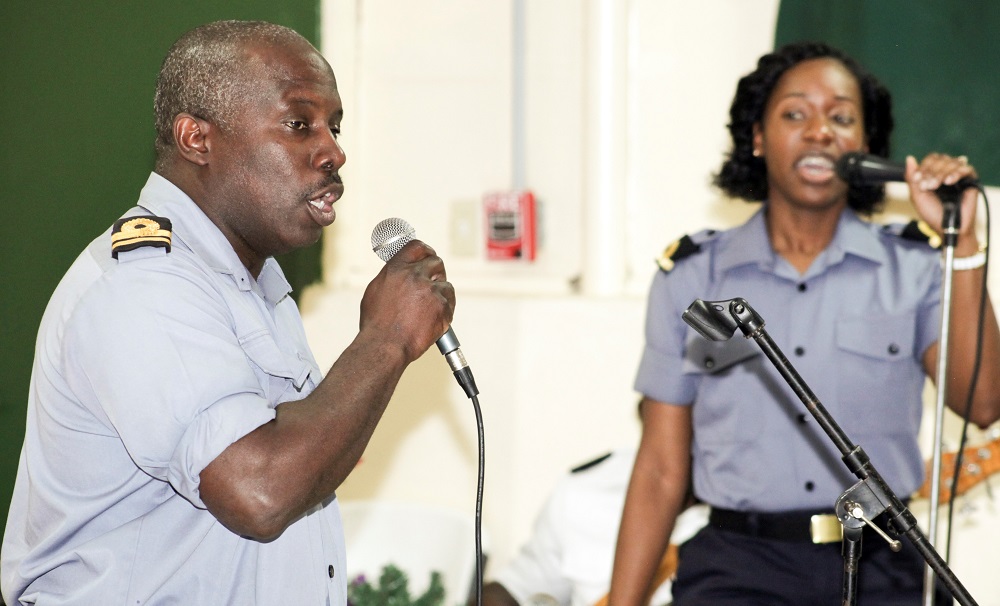
 #Bahamas, December 21, 2017 – Nassau – It was a day of fun, laughter and spiritual advice on December 18, 2017, as the Officers and Marines of the Royal Bahamas Defence Force paused to give thanks during the Annual Carol Service at the Defence Force Base. The ceremony, which also recognized the contributions of the Marines by their various departments and sub-sections for their outstanding services throughout the year. In attendance was the force’s first Bahamian Commander Defence Force, Leon L. Smith and his wife, Mrs. Helen Smith.
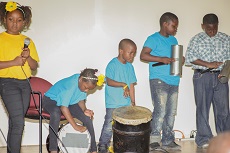
Leading Seaman Sharif Turnquest, a Physical Training Instructor (PTI) in the Training Department was the recipient of the Leon Smith Award, given to the overall Marine of the Year. Also featured were students of the Gambier Primary School, chaperoned by Ms. Naomi Pinder. The students gave a splendid musical selection, and the Ecclesia Dance Group from the Holy Spirit Church of God performed a dance routine of the song “Joyful, Joyful Lord We Adore Thee.”
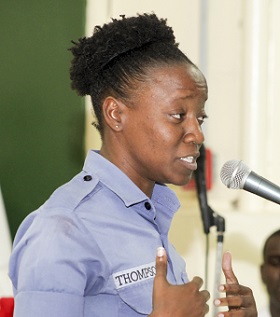
 The song competition among the Officers and Marines brought out most of the laughers, with Able Woman Marine Stephanie Darville taking top honors with her rendition of “See Amidst The Winter’s Snow.” Woman Marine Alancha Thompson’s spoken word entitled “Open the gift of Sonship” and Leading Seaman Nivado Ferguson’s “Hard Core Marines” brought a rousing round of applause from those in attendance.
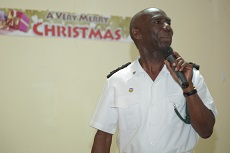
Pastor Prince Bodie, the force’s Chaplain encouraged the men and women to be appreciative and to give more of themselves to others during this festive season.
Commodore Tellis Bethel also extended his congratulations to all of the awardees and thanked them for their hard work and dedication throughout the year. He also encouraged the Officers and Marines to look forward to a more productive year in 2018.


Header: Carol Photo shows: Lieutenant Allen Dixon and Sub Lieutenant Danielle Morley performing a duet at the Defence Force’s Annual Carol Service on December 18, 2017. Marines from various departments and sub-sections were recognized for their achievements throughout the year.
Insert 1: Carol Photo Shows: Students from the Gambier Primary School performing a musical selection at the Defence Force’s Annual Carol Service on December 18, 2017.
Insert 2: Carol Photo Shows: RBDF Chaplain, Pastor Prince Bodie bringing a message to the Officers and Marines at the Annual RBDF Carol Service on December 18, 2017. Numerous Marines were recognized and awarded for their contributions throughout the year.
Insert 3: Carol Photo Shows: Ecclesia, a visiting dance group from the Holy Spirit Church of God performing a dance routine at the Annual Christmas Carol Service.
Insert 4: Carol Photo Shows: Able Woman Marine Stephanie Darville performing her rendition of “See Amidst The Winter’s Snow” at the Defence Force’s Annual Carol Service. She placed first in the song competition category.
Insert 5: Carol Photo Shows: Woman Marine Alancha Thompson performing the spoken word entitled “Open the Gift of Sonship” at the Defence Force’s Annual Carol Service.

Bahamas News
What 45 Shell Casings and New Murder Charges May Mean for Three Officers in the Azario Major Case

By Deandrea Hamilton | Editor
NASSAU, Bahamas (July 16, 2026) — The allegation is as shocking as it is consequential. Prosecutors now contend Azario Major was struck by additional gunfire after he was already dead. That conclusion has prompted the Director of Public Prosecutions to upgrade the case against three police officers from manslaughter to murder ahead of a judge-only trial.
According to court filings and the DPP’s review of the forensic evidence, prosecutors allege that additional rounds entered Major’s body after death, a finding they say fundamentally changed their assessment of the case and justified the more serious charge of murder.
Investigators recovered 45 spent shell casings at the scene of the Boxing Day 2021 fatal shooting of Azario Major, a striking piece of forensic evidence that has remained central to the case from its earliest days.
Major, 31, was fatally shot by police outside Woody’s Bar on Fire Trail Road on December 26, 2021. While police initially maintained the shooting was justified, the circumstances surrounding the incident were heavily scrutinized during a Coroner’s Court inquest, where jurors ultimately returned a verdict of homicide by manslaughter.
The officers later challenged that finding, but the Supreme Court upheld the Coroner’s Court ruling, paving the way for criminal proceedings. They were subsequently arraigned on manslaughter charges and pleaded not guilty.
The DPP’s decision to elevate the charges to murder significantly raises the legal stakes. Unlike manslaughter, which does not necessarily require proof of an intent to kill, a murder conviction requires prosecutors to establish the legal elements of the more serious offence beyond a reasonable doubt. The prosecution’s case is now expected to focus heavily on forensic evidence, ballistic analysis and the sequence of gunfire during the fatal encounter.
The case is also notable because it will proceed without a jury. Barring further delays, the trial is expected to open on September 14 before Justice Guillimina Archer-Minns in a judge-alone trial, where a single judge—not a jury—will decide the fate of the three accused officers.
The proceedings will determine not only whether the three officers are guilty or innocent of murder, but whether prosecutors’ extraordinary allegation—that Azario Major was struck by additional gunfire after he was already dead—can be proven in court.
By Deandrea Hamilton
Cheaper shipping. Lower energy costs. Better access to healthcare. Stronger consumer protections.
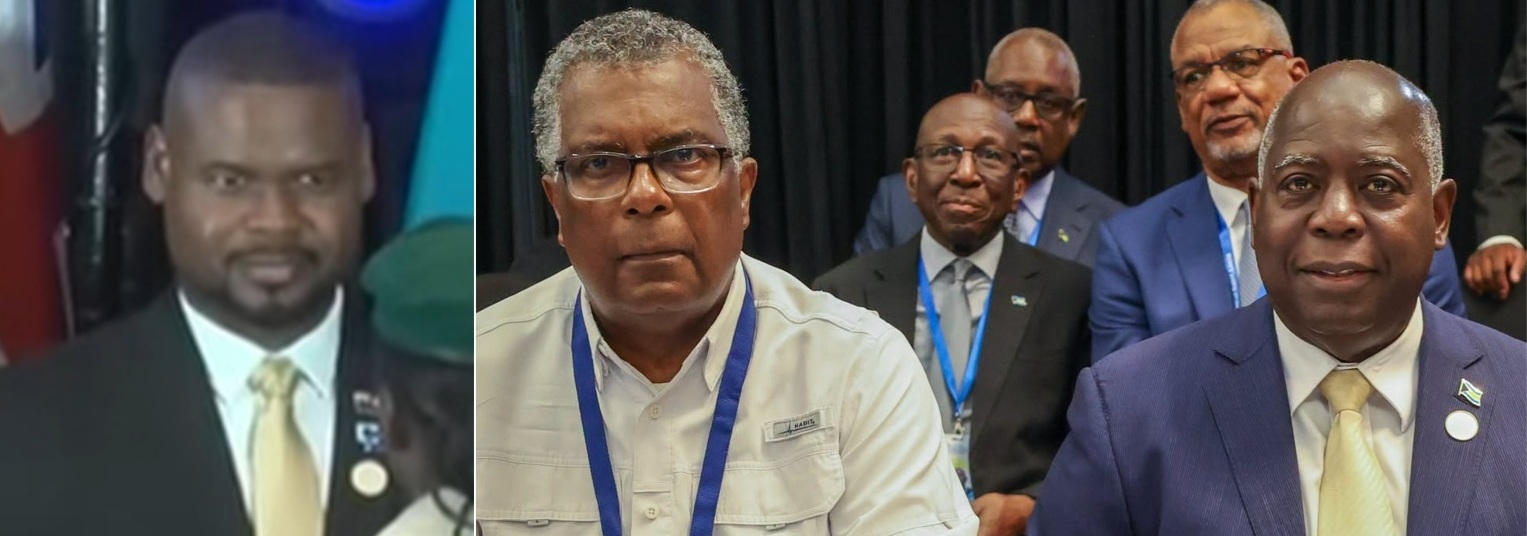
Those are among the measures CARICOM Heads of Government believe could finally begin reducing the stubbornly high cost of living for millions of people across the Caribbean.
Meeting in Saint Lucia, regional leaders agreed that making life more affordable must become one of the Community’s highest priorities. Their emerging strategy includes reducing freight costs through a regional ferry service, accelerating renewable energy projects to lessen dependence on imported fuel, expanding regional healthcare partnerships, strengthening consumer protection, and encouraging governments to adopt successful cost-of-living measures already being implemented across the Caribbean.
“Our discussions over the past four days were guided by one central objective – ensuring that CARICOM delivers results that people can see and feel in their everyday lives,” CARICOM Chairman and Saint Lucia Prime Minister Philip J. Pierre said.
Few places may welcome that relief more than The Bahamas and the Turks and Caicos Islands.
Although inflation has moderated in both countries from the sharp increases experienced following the pandemic, the cost of living remains stubbornly high. Families continue to complain about grocery bills that stretch household budgets, rising housing costs, expensive electricity, healthcare expenses and fuel prices that remain among the highest in the region.
Governments have responded.
In The Bahamas, successive reductions in Value Added Tax on selected goods and other targeted tax measures have sought to ease pressure on consumers. In the Turks and Caicos Islands, the Government this weekend opens applications for its $500 Cost of Living Relief Programme, acknowledging that many households continue to struggle despite the country’s economic success.
Yet affordability remains elusive.
The contradiction is difficult to ignore.
The Turks and Caicos Islands continues to post one of the region’s strongest tourism-driven economies, with robust investment, record visitor spending and sustained construction activity. The Bahamas has also strengthened its economic position, earning improved sovereign credit ratings as tourism, government revenues and fiscal performance continue to recover.
Yet those encouraging economic indicators have not translated into noticeably lower household expenses.
The reason is largely structural.
Both The Bahamas and the Turks and Caicos Islands produce relatively little of what they consume. Food, fuel, medicines, vehicles, building materials and countless household essentials are imported. Both countries also record significant trade deficits, illustrating their dependence on overseas suppliers. Every increase in global shipping costs, fuel prices or supply chain disruptions is eventually reflected in supermarket prices, utility bills and the cost of everyday living.
That is why CARICOM’s agenda matters.
If regional leaders succeed in lowering freight costs through an inter-island ferry network, expanding renewable energy, improving regional cargo movement, strengthening consumer protections and making healthcare more accessible through cooperation, the benefits could extend far beyond government balance sheets.
For Bahamians and Turks and Caicos Islanders, success will not be measured by another tourism record or another credit rating upgrade. It will be measured at the supermarket checkout, on the monthly electricity bill, at the gas pump and in the simple ability to afford a better quality of life.

By Deandrea Hamilton | Editor
NASSAU, Bahamas (July 14, 2026) — The Bahamas Government says it needs the 300 teachers being sourced from Ghana to help close a critical staffing gap, even as criticism mounts over unresolved employment matters reportedly affecting approximately 2,000 Bahamas Union of Teachers members and as Ghana itself struggles with a massive shortage in the profession.
Deputy Prime Minister and Minister of Education, Science and Technology Chester Cooper said the shortage has been worsened by retirements, expiring contracts and the expansion of specialized subjects, including special education, technology, financial literacy, digital literacy and entrepreneurship.
Cooper said the Government has established a multi-agency task force and is attempting to attract recently retired teachers, new graduates and educators who previously left the profession.
“In keeping with government policy, Bahamians will be given first priority to fill all vacancies,” Cooper said.
However, the optics surrounding the decision are sketchy at best, with the BUT pressing the Government to settle long-standing matters affecting its members while Ghana grapples with a teacher shortage estimated at no fewer than 50,000 educators.
Ghana’s Minister of Education, Haruna Iddrisu, recently disclosed that the country needs between 50,000 and 90,000 additional teachers to adequately staff its schools.
UNICEF’s 2026 Teachers for All: Ghana report confirms that Ghana is not only experiencing an overall teacher shortage but also serious inequalities in how available teachers are distributed. It found that rural and underserved schools are particularly affected, while Ghana’s primary teacher workforce fell by more than 25 percent—from 131,094 in 2019–2020 to 93,818 in 2022–2023—as student enrolment increased.
The report stated:
“Not only is there a teacher shortage in Ghana, but inefficiencies also exist in the current distribution of available teachers.”
That finding raises questions about why a country with such a significant domestic deficit is prepared to facilitate the overseas recruitment of hundreds of educators.
Meanwhile, BUT President Belinda Wilson has argued that the Bahamian Government has substantial unfinished business with the teachers already serving in the public system.
According to Wilson, approximately 2,000 educators are awaiting the conclusion of salary negotiations, while hundreds reportedly have unresolved matters involving confirmations, salary reassessments, promotions, rental allowances, examination marking fees, disturbance allowances, hardship payments and coaching allowances.
The union has also complained that it was not properly consulted before the proposed recruitment became public and has demanded details about the qualifications, subjects, deployment locations and employment conditions being considered for the Ghanaian teachers.
The debate is also unfolding as the University of The Bahamas has produced approximately 219 education graduates over the past three years—76 in 2024, more than 60 in 2025 and 73 in 2026.
Cooper maintains that overseas recruitment is intended only to fill positions that cannot immediately be occupied by qualified Bahamians.
“For decades, we have benefitted from strategic international recruitment of educators from partner nations,” he said. “We emphasize that such recruitment is intended only to address vacancies that cannot be immediately filled by qualified Bahamians.”
Still, the questions remain: why are outstanding matters affecting thousands of Bahamian teachers unresolved, and why is The Bahamas sourcing educators from a country that acknowledges it is tens of thousands of teachers short itself?





-

 Africa2 days ago
Bahamas’ Ghana Teacher Plan Draws Fire as Both Nations Face Shortages
-

 Bahamas News1 week ago
Prime Minister Commissions Completed Rooftop Solar Installations at UB
-

 News1 week ago
Beaches Turks & Caicos welcomes record 111 interns in 2026 summer programme
-

 News1 week ago
Beaches Turks & Caicos Opens Team Members State of the Art Welcome Centre
-
 News1 week ago
Multi-Agency Operation Targets Illegal Occupation of Crown land in Blue Hills
-
 Caribbean News1 week ago
From Pathways to Investment: Tackling the US $6 Billion Food Challenge for the Caribbean
-
 News2 days ago
Government Takes Case to Washington After U.S. Keeps TCI at Level 2
-

 News1 week ago
Turks and Caicos Islands Nominated for Best Caribbean Destination in 2026 Travvy Awards