
News
Turks & Caicos Center Stage At ‘Sandals Unveilings’ Sales Tour

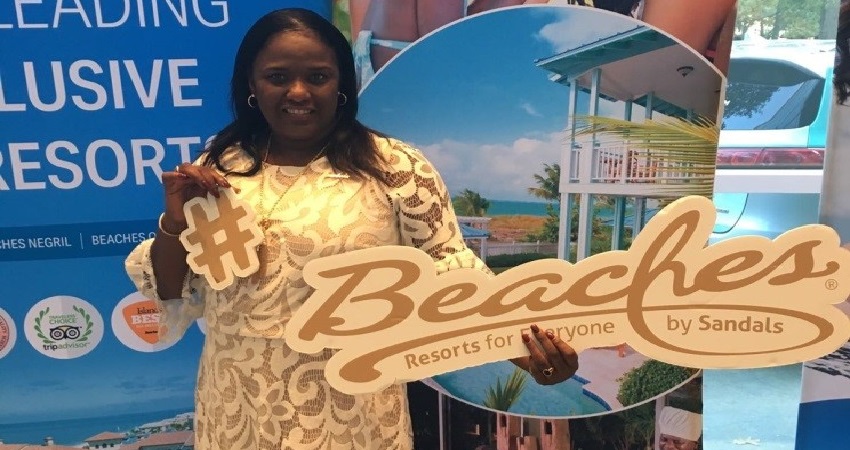
#UnitedStates, December 6, 2017 – The Turks and Caicos Islands was one of several Caribbean destinations put on display at the 2017 ‘Sandals Overdrive Unveilings’ across the United States and Canada which featured over 6,000 travel agents engaging with company executives on the latest company and brand news.
Turks and Caicos Native and Sales Manager at Beaches TCI Tanya Swann proudly represented the resort as one of several company representatives and executives at the sales glitz.
“As the Sales Manager for Beaches Turks and Caicos and a daughter of the soil I took pride in representing the Turks and Caicos as well as Beaches Turks who gave me this opportunity and this has been by far one of many highlights in my career.” Swann remarked.
Swann said her message to travel agents was that; “Turks & Caicos Islands is still beautiful with the Award Winning Best Beach in the World with it’s beautiful Turquoise Waters and that the last of the True Exotics, “Beaches Turks & Caicos Resort”, Caribbean‘s Leading Family All-Inclusive will be Better and Brighter come 14th December when it opens its doors to all their valuable guests.”
 The tour ran from September 25th until December 6th across 21 cities and featured trade shows, gala dinners, and networking events with valuable travel partners to promote the splendor of the Caribbean, the Sandals and Beaches brands and to emphasize the much anticipated re-opening of Beaches Turks and Caicos on December 14th.
The unveilings also highlighted new features including the much-anticipated opening of its latest resort, Sandals Royal Barbados. The unveilings provide a sneak peak of Sandals’ new wedding inspirations scheduled for roll-out later this year. Exciting upgrades to its flagship Sandals Montego Bay and the jewel of Jamaica’s southern coast, Sandals South Coast, as well as plans for Saint Lucia were also on display.
The Sandals Chairman shared that, “One of the main reasons for Sandals’ success these past 36 years, and why we continue to be named the Caribbean’s Leading Hotel Brand year after year, is our commitment to our travel partners. We have the biggest sales team globally and we are constantly on the road, engaging the trade. We take the time to actively educate them on our Caribbean destinations, our resorts and our products, thus providing them with the necessary tools to effectively sell to our mutual clients.”
Gary Sadler, senior vice president of global sales states ‘We recognize that our clients are not sitting and waiting for us, nor are they under our desks. It is therefore necessary for us to go where they are and the best way for us to get them to help the Caribbean particularly at this time, is for us to promote the Caribbean. We are aggressive about marketing the Caribbean and our Unveilings are doing just that.”
The tours were especially important this year following the destructive Hurricanes of the 2017 Hurricane Season which affected two properties in the resort chain. The tour reminded agents that recovery efforts were well underway and the Caribbean and Beaches and Sandals Resorts are open for business.
Swann said many travel agents expressed their ‘overwhelming love and concern’ for the region, the TCI and the team members at Beaches Turks and Caicos.

By Magnetic Media Newsroom
PROVIDENCIALES, Turks and Caicos Islands — The Turks and Caicos Islands Government says the breakdown of its relationship with InterHealth Canada presents an opportunity to reshape healthcare delivery, with plans to expand local medical services, strengthen primary care and reduce dependence on overseas treatment.
During a national briefing following InterHealth Canada’s notice terminating its hospital contract, Premier Charles Washington Misick acknowledged publicly for the first time that Government and InterHealth had been negotiating an exit from the arrangement for more than a year after what he described as an “irretrievably broken down” relationship.
Despite the contractual dispute, Misick and Health Minister Kyle Knowles stressed that healthcare services will continue uninterrupted during the transition.
“Allow us to do our job,” Knowles appealed, assuring residents that Government is actively managing the transition and safeguarding patient care.
The Premier outlined what amounts to a broader healthcare transformation built around four connected levels of care: strengthened community-based primary healthcare; expanded polyclinic services; enhanced hospital-based secondary care with greater specialist capacity; and overseas tertiary treatment only for cases that cannot be managed locally.
Among the proposals are the long-discussed establishment of intensive care units, expanded use of currently unfinished hospital space, recruitment of more resident specialist physicians and stronger contract management to oversee future healthcare agreements.
Knowles said the new polyclinic model will broaden services available outside the hospitals, including dentistry, ophthalmology, laboratory services, diagnostic imaging, gynaecology and preventative screening, helping to reduce pressure on emergency departments while improving early intervention.
Misick also acknowledged that while the hospital system significantly improved healthcare access after opening in 2010, Government believes further reform is necessary to improve affordability, sustainability and the range of services available within the Turks and Caicos Islands.
The briefing marked the Government’s most comprehensive explanation to date of its plans beyond the InterHealth contract, signalling that officials now see the transition as an opportunity to redesign healthcare delivery rather than simply replace one operator with another.
Education
Turks and Caicos Islands Students Excel at Cycle 13 WizdomCRM Regional AI Game National Awards Ceremony
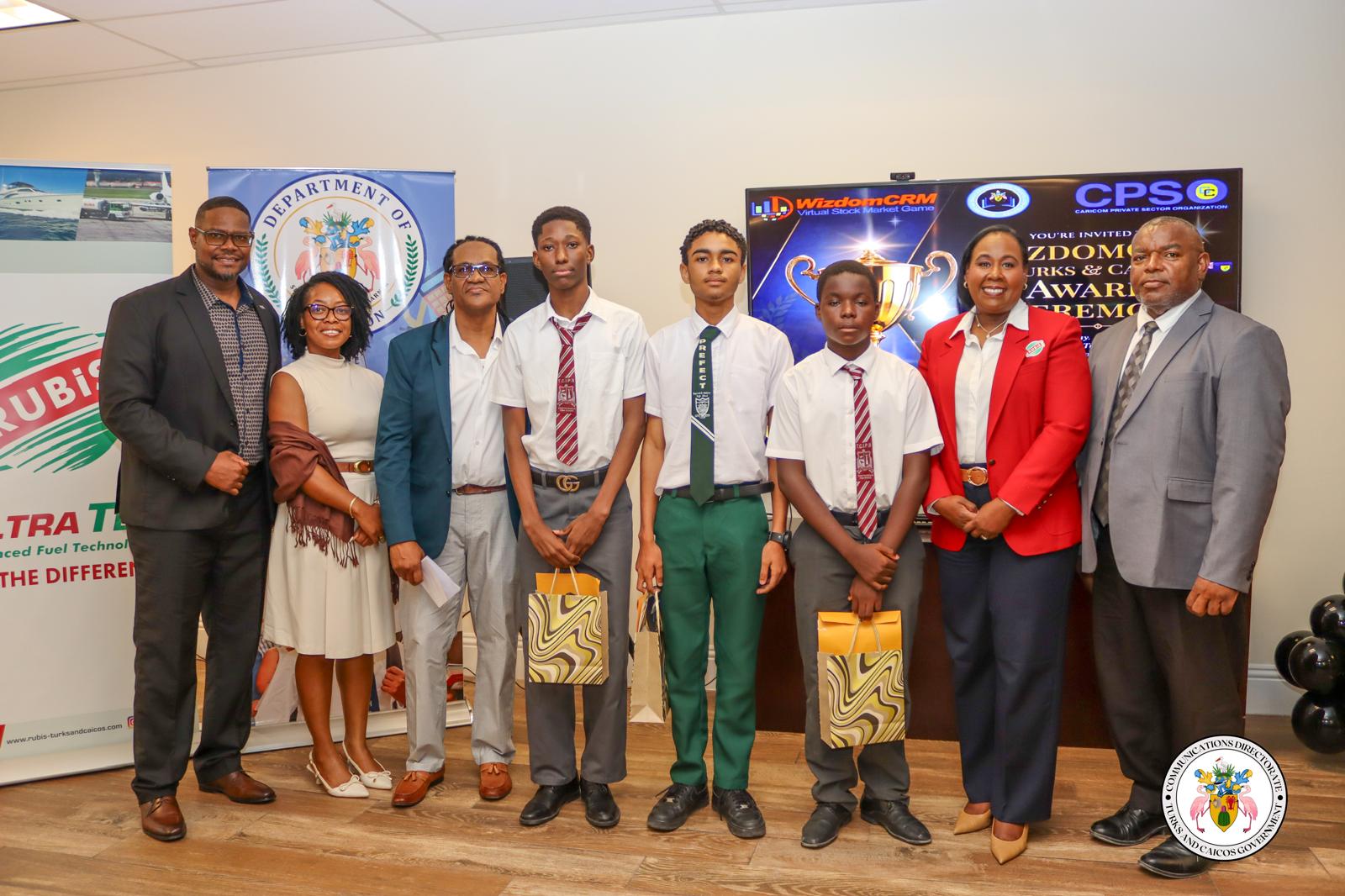
Providenciales, Turks and Caicos Islands – Wednesday, 22 July 2026: The Ministry of Education, Youth, Sports and Culture proudly congratulates the students of the Turks and Caicos Islands on their outstanding performance at the Cycle 13 WizdomCRM Regional Virtual Sustainable Stock Market AI Game National Awards Ceremony.
The ceremony was held on Thursday, 16 July 2026, at the Blue Haven Resort, under the theme “Champions Today. AI Leaders Tomorrow.” It was hosted by the Ministry in collaboration with WizdomCRM.
Students across the Caribbean took part in the investment challenge, each beginning with a virtual portfolio of USD $25,000 and working to grow it through simulated investments on regional and international stock markets. Throughout the competition, students were guided by Mr. Rabbit, WizdomCRM’s AI Tutor, and supported by E-Classroom sessions, building financial literacy, critical thinking and investment skills.
The Turks and Caicos Islands emerged as the region’s top-performing territory, claiming the top six regional positions, securing 14 of the Caribbean’s Top 20 places, and placing four schools on the regional leaderboard. Leading the region was Marc Roubentz-Perceus of TCIPS Comprehensive High School, who grew his portfolio to USD $370,336.63. He was followed by Joshua Creese of Raymond Gardiner High School in second place, and Stendro Chalas of TCIPS Comprehensive High School in third. Raymond Gardiner High School was also recognised as the Top School for Cycle 13.
Hon. Rachel M. Taylor, Minister of Education, Youth, Sports and Culture, said: “I congratulate every student who took part in Cycle 13. You
have demonstrated the confidence to compete with the very best students regionally, and you have shown our country what is possible. This success is not luck; it is the result of an ecosystem built by students, teachers, parents, school leaders and partners who continue to invest in educational excellence. As we look ahead, the Ministry is in active discussions with WizdomCRM to expand access to its AI-powered learning tools, including Super AI, the AI Tutor, the Plagiarism Checker and the Grammar Checker, so that our young people are equipped with the future-ready skills they need to succeed.”
The Ministry extends sincere appreciation to the dedicated teachers who mentored the students, and to Rubis Turks and Caicos, whose sponsorship provided the cash prizes awarded to the top three regional champions. The Ministry also thanks WizdomCRM, participating schools, parents and stakeholders for their partnership in this achievement, which reflects the Ministry’s continued commitment to innovation, digital learning and youth development across the Turks and Caicos Islands.
WIZDOM CRM – Top Performers Cycle 13
| Position | Name | School | Portfolio Value | Regional Placement |
| 1st | Marc Roubentz-Perceus | TCIPS Comprehensive High School | $ 370,336.63 | 1st |
| 2nd | Joshua Creese | Raymond Gardiner High School | $ 264,841.31 | 2nd |
| 3rd | Stendro Chalas | TCIPS Comprehensive High School | $ 247,738.09 | 3rd |
| 4th | Ojed’harlie Jolissaint | Wesley Methodist School | $ 227,389.60 | 4th |
| 5th | Tyshawn Wright | Raymond Gardiner High School | $ 189,064.18 | 5th |
| 6th | Jah’keem Missick | Raymond Gardiner High School | $ 173,654.58 | 6th |
| 7th | Curvin Handfield | Raymond Gardiner High School | $ 156,984.89 | 8th |
| 8th | Chadazea Darville | Wesley Methodist School | $ 147,428.43 | 9th |
| 9th | Vivaan Castleton | British West Indies Collegiate | $ 120,833.83 | 14th |
| 10th | Damendine Simplus | TCIPS Comprehensive High School | $ 118,660.55 | 15th |
| 11th | Dyvion Louis | Raymond Gardiner High School | $ 111,572.81 | 16th |
| 12th | Colin Moriarty | British West Indies Collegiate | $ 106,854.81 | 17th |
| 13th | Kensley Felix | TCIPS Comprehensive High School | $ 101,285.06 | 18th |
| 14th | Redjino Saint-Louis | Raymond Gardiner High School | $ 99,927.39 | 19th |
TEACHERS
- Fexnel Colvert – TCIPS Comprehensive High School
- Valerie Olice – Raymond Gardiner High School
- Warren French – Wesley Methodist School
- Phyllis Boucher – British West Indies Collegiate
Top Performing School: Raymond Gardiner High School
Government
Parnell Urges Premier to Step Aside, Proposes Bipartisan Board to Guide Healthcare Transition
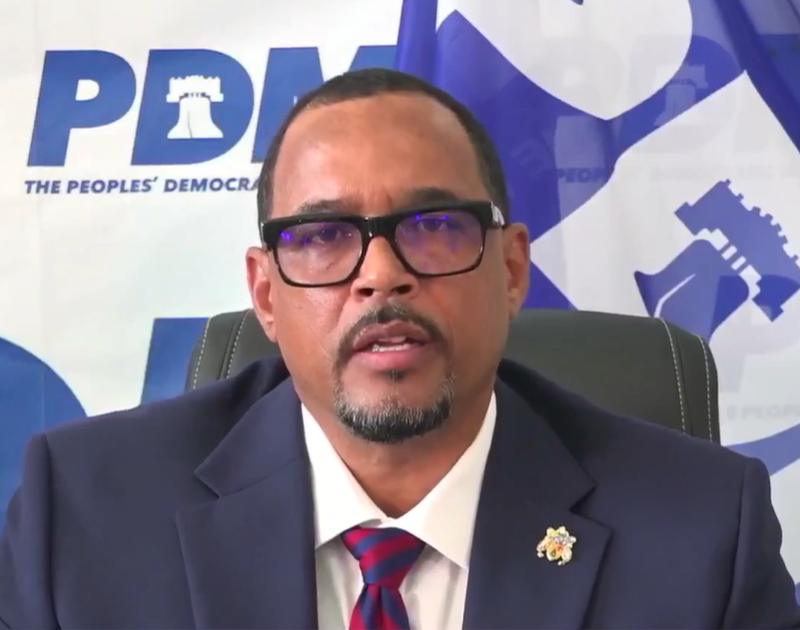
By Magnetic Media Newsroom
PROVIDENCIALES, Turks and Caicos Islands — Opposition Leader Douglas Parnell is calling on Premier Charles Washington Misick to step aside, arguing that the Government has failed to provide the leadership, transparency and public engagement needed as the Turks and Caicos Islands prepares for one of the most significant changes in its healthcare system.
Responding to Government statements following InterHealth Canada’s contract termination notice, Parnell said residents were only now learning officially that negotiations with the hospital operator had been underway for more than a year, despite several previous opportunities for Government to inform the public.
He questioned why no detailed explanation was provided during the State of the State Address, Budget Debate or recent healthcare announcements, including the opening of the new polyclinic.
Parnell argued that while the PDM supports reforming or replacing the existing hospital arrangement, the process must be transparent and centred on the public interest.
The Opposition Leader reminded residents that the PDM had challenged the InterHealth agreement while in government, pursuing arbitration and preparing further legal action over concerns about the contract before leaving office following the General Election.
To guide the next phase, Parnell proposed establishing a bipartisan Health Transition Board comprising Government and Opposition representatives to oversee the transition, monitor public accountability and manage the procurement process for any future healthcare provider.
He also outlined what the PDM believes should form the foundation of the next healthcare system, including guaranteed continuity of care, automatic employment protection for hospital workers, recruitment incentives for specialist physicians, expanded intensive care services, comprehensive mental health care, enhanced geriatric services and accelerated efforts to attract qualified Turks and Caicos Islanders in the medical profession back home.
Parnell also presented ten questions for Government covering outstanding payments, borrowing plans, legal implications, transition arrangements and the future structure of healthcare delivery.
He said the changes now unfolding require decisive leadership, openness and a carefully managed transition that places patients, healthcare workers and the long-term interests of the Turks and Caicos Islands first.





-

 News1 week ago
Ministry of Health Welcomes Appointment of New NHIB Chief Executive Officer and Highlights Progress of Organisational Transformation
-
 News1 week ago
Invest TCI Supports Certification of Local Flats Fishing Guides Through MSME Technical Assistance Under Historic TCFFA–TCICC Partnership
-

 News1 week ago
DDME’s Hurricane Hunt Scavenger Hunt Sparks Community Spirit and Storm Preparedness in Providenciales
-

 Education3 days ago
Turks and Caicos Islands Students Excel at Cycle 13 WizdomCRM Regional AI Game National Awards Ceremony
-

 Bahamas News1 week ago
What 45 Shell Casings and New Murder Charges May Mean for Three Officers in the Azario Major Case
-

 News1 week ago
Six Unauthorised Structures Demolished During Multi-Agency Planning Enforcement Operation
-
 Caribbean News4 days ago
Pres Ali declares three days of national mourning following MV Barima tragedy July 21, 2026
-
 News4 days ago
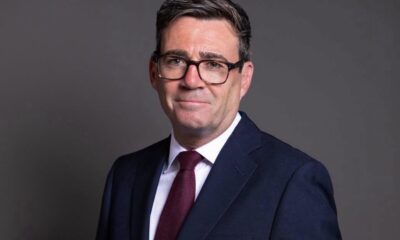
ANDY BURNHAM, NEW UK PM’S FIRST ORDER: LOWER THE COST OF LIVING