
News
Records office criticised, Police extends hours to reduce wait




TORONTO, Canada —Minister of Foreign Affairs and Immigration Fred Mitchell has reaffirmed The Bahamas’ support for Ukraine’s territorial integrity and the international effort to secure the return of Ukrainian children, detained civilians and prisoners of war.
Speaking at the two-day Second International Conference on Returning Ukrainian Children, Detained Civilians, and Prisoners of War, held in Toronto on September 28 and 29, Minister Mitchell thanked Canada, Norway and Ukraine for convening the conference and said The Bahamas was honoured to participate.
“I first want to add my thanks to Canada, Norway and Ukraine for convening this important conference,” Minister Mitchell said. “We are honoured to have been invited and to be here.”
Minister Mitchell said The Bahamas supported the position expressed by Antigua and Barbuda from the CARICOM Region, while also drawing on remarks delivered by Prime Minister Philip Davis at them United Nations.
He said The Bahamas’ own history made it impossible for the country to remain silent when them territorial integrity of another state is under attack.
“Just a couple of days ago, our Prime Minister spoke at the United Nations about a people with a history of struggle for identity, arising out of the struggle against slavery, and how we cannot be silent in the face of the attack on the territorial integrity of another state,” Minister Mitchell said.
He noted that Canada and other countries have stood alongside Caribbean nations as they confront their own regional challenges, including the situation in Haiti and difficulties facing Cuba.
“We are a region which is far away from Ukraine, but we identify with the struggle,” he said. “In this case, we want to be sure that our voices are heard in support of the defence of the territorial integrity and the people of Ukraine.”
Minister Mitchell said the principle of territorial integrity carries lessons well beyond the current conflict and deserves particular attention from smaller states.
“We think that the question of territorial integrity is a lesson for all to inwardly digest,” he said, adding that The Bahamas particularly appreciated Canada’s approach to its role as a “middle power” in international affairs.
The minister also reflected on the broader historical context surrounding Russia and Ukraine. Referring to a recent interview with Russian President Vladimir Putin that he encountered on social media, Mitchell described the discussion as an example of historical revisionism.
He recalled the days of writings and experiences of Soviet-era dissidents including Aleksandr Solzhenitsyn and Andrei Sakharov, as well as the struggles that took place during the Soviet period and the eventual collapse of the Soviet Union.
Minister Mitchell said the historical interpretation presented in Putin’s remarks offered a markedly different account of those developments and placed responsibility for the situation in Ukraine on what Putin described as Western intellectual elites and their actions.
“That was very interesting,” he noted.
Drawing on the work of political scientist Samuel Huntington, Minister Mitchell suggested that political systems can retain characteristics of their predecessors even after major upheavals or revolutions.
“The Czar has been replaced, but what do we have today?” he asked. “A kind of pre-emptory, antidemocratic, autocratic behaviour attacking another state?”
Minister Mitchell concluded by reaffirming The Bahamas’ support for the objectives of the Toronto conference and calling for practical opportunities for the country to contribute.
“So I am, on behalf of The Bahamas, supporting the aims of this important conference,” he said. “Please assure us, or let us know, what practical ways we can help.”
He said The Bahamas’ participation itself was an important first step.
“We hope that, in this instance, the fact that we are here and that our voice has been added to this cause is at least a good start.”
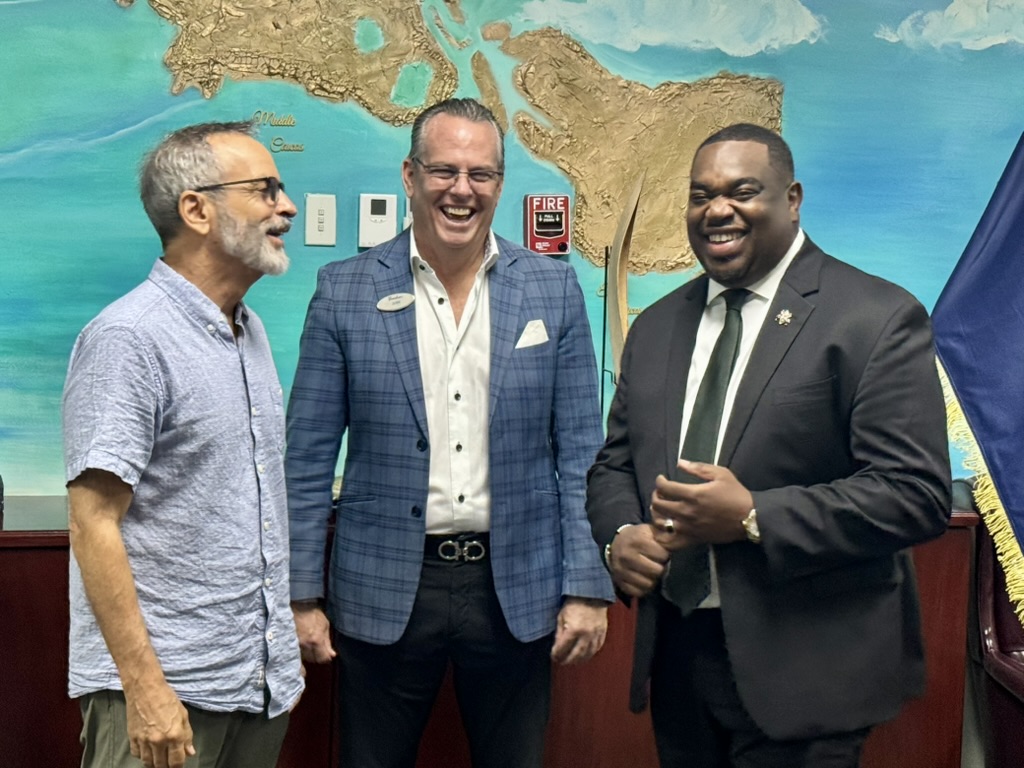
Turks and Caicos Islands, September 29, 2026 – Beaches Turks and Caicos, the Sandals Foundation, and Great Shape Inc.’s iCare programme have completed a record-breaking one-week humanitarian eye care mission in Providenciales, delivering free optical services to more than 4,800 individuals. The 2026 venture brought together 52 volunteer eye care professionals from the United and Canada who provided comprehensive screenings, advanced laser treatments, and thousands of pairs of glasses to residents across the Turks and Caicos Islands.
The mission’s services covered multiple areas of eye health as medical volunteers conducted over 1,000 health screenings paired with educational sessions on eye care and the risks associated with prolonged screen use. Among the most significant clinical achievements were 122 Selective Laser Trabeculoplasty (SLT) procedures, a treatment for open-angle glaucoma, and 13 panretinal photocoagulation (PRP) procedures, an outpatient laser therapy used to halt the growth of abnormal, fragile blood vessels on the retina that can cause bleeding and vision loss.
In addition to clinical interventions, the team distributed over 150 pre-made prescription glasses, more than 2,500 sunglasses, and over 1,400 reading glasses during the mission week. A further 700 custom prescription glasses are being completed and will be delivered to patients in the coming weeks. In addition to adults, students from 16 government and non-government schools throughout Providenciales also received vision testing and care.
Kyle Knowles, Minister of Health and Human Services for the Turks and Caicos Islands, praised the collaboration as “timely” and highlighted the unmatched visual support provided to the community. “We are grateful for this continued collaboration with the TCI government and the Sandals Foundation,” Knowles said. “We have seen where these eye care professionals come here and share their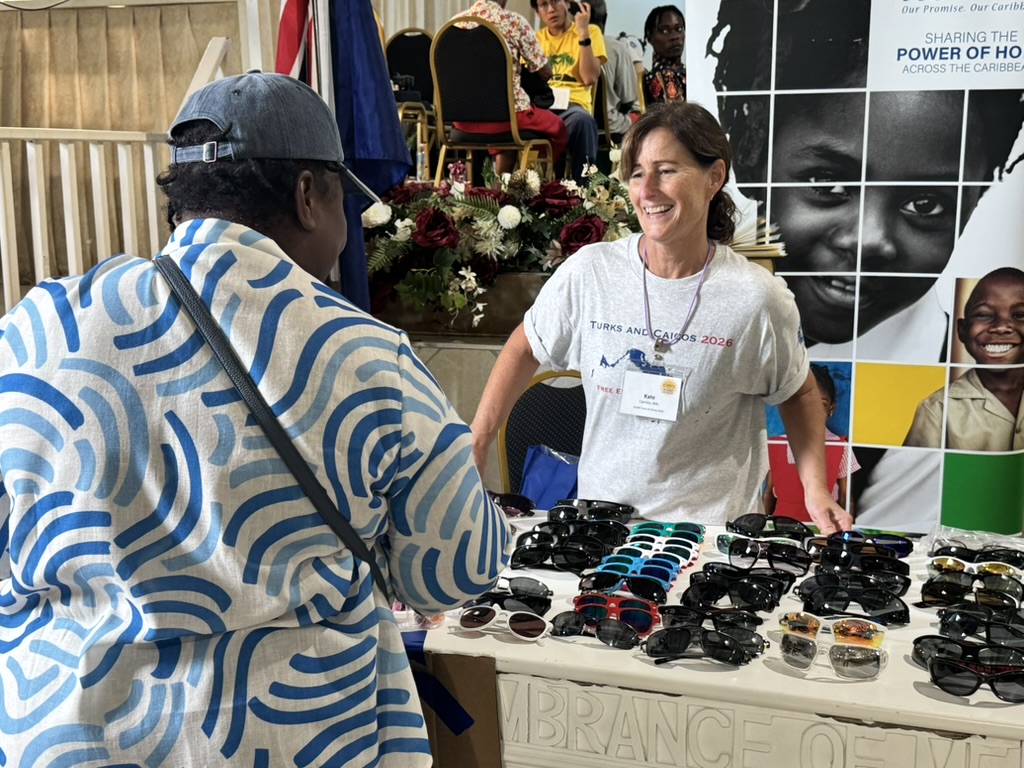 expertise with our schools and our communities, free of charge. This is what teamwork looks like here in the Turks and Caicos Islands.”
Deryk Meany, General Manager of Beaches Turks and Caicos, noted the historic scale of the mission. “We have witnessed a record number of optical services being offered this year which augurs well for the people and children of the Turks and Caicos Islands,” Meany said. “The support that the Sandals Foundation and Great Shape Inc.! has received from the government of the TCI is phenomenal. As an organization, we are conscious of the support that is needed and the opportunities that we have to share in this mission.”
Rachel Taylor, Minister of Education, Youth, Sports and Culture emphasized the value of early screening for students in an era of increasing digital device use. “To be able to provide early screening for our students is priceless,” Taylor said. “With the consistent use of gadgets by our children, the health screening and education is timely for us within the education ministry. We are grateful for this support from the Sandals Foundation and the Great Shape team. If there are challenges identified by the team, parents will be able to provide the necessary care for the children.”
For Nadienne Crossman, vice principal of the BEST Institute, the competence and warmth of the volunteer team was a highlight. “The services provided by these professionals was unmatched,” Crossman noted. “The team who visited our school allowed every student to feel comfortable while they were being tested. As teachers, when we got to the community site, we were treated with respect by everyone. To be able to see multiple specialists free of charge was outstanding. Sandals Foundation and the Great Shape team provided a safe space for us to care for our eyes.”
Steven Stern, Founder of iCare, credited the enthusiasm of volunteers and the seamless support from local partners. “The team for this project was enthusiastic with every client that we saw,” Stern said. “They were creative in using technology to assist with translation while they also learned so much about the TCI culture. The support from the Sandals Foundation and the government of the TCI was simply magical. We are looking forward to returning already.”
The Sandals Foundation coordinates logistics and covers costs for transportation, food, and beverages for the iCare clinic and its teams, while Beaches Resorts provides accommodation free of charge. The close of the 2026 mission stands as a testament to the power of cross-sector collaboration — uniting government, hospitality, and nonprofit expertise to safeguard vision and opportunity for an entire community.

Hydrating and focusing on nutrient-rich foods are key for recovery
If you’re sick with the flu, sometimes the last thing you want to do is eat or drink. But what passes your lips can support your recovery and help you feel better as your body fights off the virus.
Of course, no specific food will cure the flu, but what you consume can help relieve symptoms and ease that general feeling of ickiness.
So, let’s set a menu for recovery with registered dietitian Beth Czerwony, RD, LD.
The importance of hydration and nutrition
When you have the flu, your body works overtime to fight the infection. That depletes available resources and energy reserves, which can leave you tired, sweaty, achy and feverish.
Two main factors come into play:
- Dehydration: Sweating out a fever can drain your internal fluid reservoirs. Ditto for vomiting or diarrhea. As those losses add up, your risk of dehydration rises.
- Reduced nutrient intake: The loss of appetite that often comes with the flu can make it harder to get the energy, protein, vitamins and minerals your body needs to function and recover.
That’s why replenishing your body is so important during this time.
“Your body needs hydration and nourishment when you’re sick,” emphasizes Czerwony. “Your immune system is your body’s defense network against invaders like the flu. So, it pays to feed it well.”
Best foods and drinks when sick with the flu
Here’s what should be on your recovery menu when you’re trying to bounce back from the flu.
Water
A simple glass of water is the OG of hydration. It’s easy to get, easy to sip on and generally well-tolerated — always a plus if your tummy feels a bit topsy-turvy because of influenza symptoms.
“Your body needs hydration more than any specific food when you’re fighting the flu, especially early on,” says Czerwony. “Drinking more water is a great place to start.”
Electrolyte drinks
Electrolytes are essential minerals that help keep your body running efficiently. If you’re losing fluids due to illness, your electrolyte levels can quickly get out of balance and leave you worse for wear.
Drinking electrolyte-rich beverages (like sports drinks) can keep you hydrated and boost your electrolytes to help you feel better.
Herbal tea
A steamy cup of herbal tea does more than hydrate. It also may help soothe a sore throat and temporarily ease a stuffy nose. (Plus, let’s be realistic: There’s just something comforting about a sip of tea.)
Peppermint tea is a good option because its menthol can create a cooling sensation that makes breathing feel easier, says Czerwony. Herbal teas with echinacea, hibiscus or elderberry are also popular when you’re under the weather.
Soup
A bowl of soup provides both fluids and nutrients one spoonful at a time. Plus, like tea, the warmth may temporarily relieve congestion and help you breathe a bit easier.
Chicken soup has long been regarded as a feel-good remedy when you’re sick — and not just because Mom makes it with love. A widely cited study found that chicken soup may offer an anti-inflammatory effect that can ease respiratory issues.
Other soups, or even simple broth, can bring similar benefits by:
- Boosting hydration
- Replacing lost electrolytes
- Easing congestion
- Providing vitamins and nutrients
“Soup is gentle on your throat and easy on your stomach while also getting you key nutrients,” says Czerwony. “And maybe best of all, it basically feels like a warm hug in a bowl.”
Vitamin C-rich foods
Vitamin C is well-known as an immune system booster — and some research suggests it may slightly reduce the severity and duration of illness. It won’t cure the flu, but it may help you feel better.
Consider nibbling on these vitamin C-rich fruits and veggies:
- Citrus fruit (like oranges)
- Broccoli
- Cauliflower
- Cantaloupe
- Kiwi
- Potatoes
- Red bell peppers
- Strawberries
- Tomatoes
Fruit or vegetable juice
Eating whole fruits and vegetables is best to maximize nutritional benefits — but when you’re sick, that may be more than you can stomach. In that case, a glass of juice can help you get some key nutrients and fluids.
But Czerwony recommends drinking 100% juice, to limit added sugars.
Smoothies
Another way to drink your nutrients is to go the smoothie route. Just toss a combination of fruit, veggies, ice, milk, yogurt or juice into a blender to get a refreshing glass of key vitamins and minerals.
“A smoothie’s icy coolness may also bring relief if your throat feels raw or sore,” Czerwony notes.
Easy-to-tolerate foods
Sometimes when you’re sick, getting any food in qualifies as a victory. Certain foods tend to be gentle on your stomach as you work to regain your appetite. Options that could help you start eating include:
- Toast
- Crackers
- Bananas
- Applesauce
- Oatmeal
- Rice
- Eggs
- Yogurt
Comfort foods
You need nourishment when you’re down and out with the flu. So, if eating a certain comfort food usually makes you feel better … well, eat it. Don’t feel like you’re bound by certain “only-eat-this” rules.
“Choosing foods that just make you feel better can go a long way,” says Czerwony.
What to avoid when you have the flu
While it’s important to eat and drink when you have the flu, certain choices may be less helpful than others for recovery. The list includes:
- Alcohol: Can a shot of whiskey help cure the flu? No. The same goes for beer, wine or other liquor. “Alcohol won’t help you recover and may make it harder to rest, stay hydrated and feel your best,” advises Czerwony.
- Caffeinated products: If you’re sick, you need sleep — and caffeine can work against rest. It may also worsen nausea and stomach upset in some people. Consider limiting drinks like coffee, black tea, soda and energy drinks.
- Sugary foods: You may not feel like eating as much when you’re sick. Given that, try to limit sugary foods that fill your belly without offering much nutritional value to support recovery.
- Spicy foods: Turning up the heat with a spicy dish might irritate a sore throat or cause GI issues. It might be best to keep Scoville heat units to a minimum when your belly is feeling sensitive.
“If any food upsets your stomach or makes you feel worse, skip it until you’re feeling better,” advises Czerwony.
Final thoughts
Flu symptoms can last anywhere from a few days to two weeks. While eating and drinking won’t dramatically change that timeline, fueling up can help you feel a little better as you work back to 100%.
If your flu symptoms get worse, you have signs of dehydration or your appetite doesn’t return within a week, contact a healthcare provider for guidance.
“You can’t eat your way out of the flu, but you can give your body the support it needs to recover,” encourages Czerwony. “Odds are, you’ll feel better one sip, one spoonful and one small bite at a time.”





-
 News1 week ago
Indian Association of Turks and Caicos Islands Empowers Local Students Through Back-to-School Backpack & Supplies Drive
-

 Caribbean News6 days ago
Royal Caribbean Group and Sandals Resorts Announce Landmark Partnership to Accelerate Their Leading Vacation Experiences
-

 Bahamas News1 week ago
CIBC Caribbean Celebrates 2026 Unsung Heroes Finalists
-

 Health1 week ago
TCI Hospital Celebrates World Pharmacy Day 2026
-

 Bahamas News1 week ago
Romer Receives Regional Leadership Award
-

 Caribbean News1 week ago
Royal Caribbean Signs US$3-Billion Deal for Half of Sandals and Beaches
-

 News2 days ago
Invest Turks and Caicos Islands Highlights Investment Growth and Workforce Opportunity at 5th Annual General Meeting
-

 Health1 week ago
Urgent Care vs. the ER: How To Choose Where To Go