
News
50 Years of Ministerial Government: Cabinet Moves to Mark Milestone Rooted in 1976 Constitution

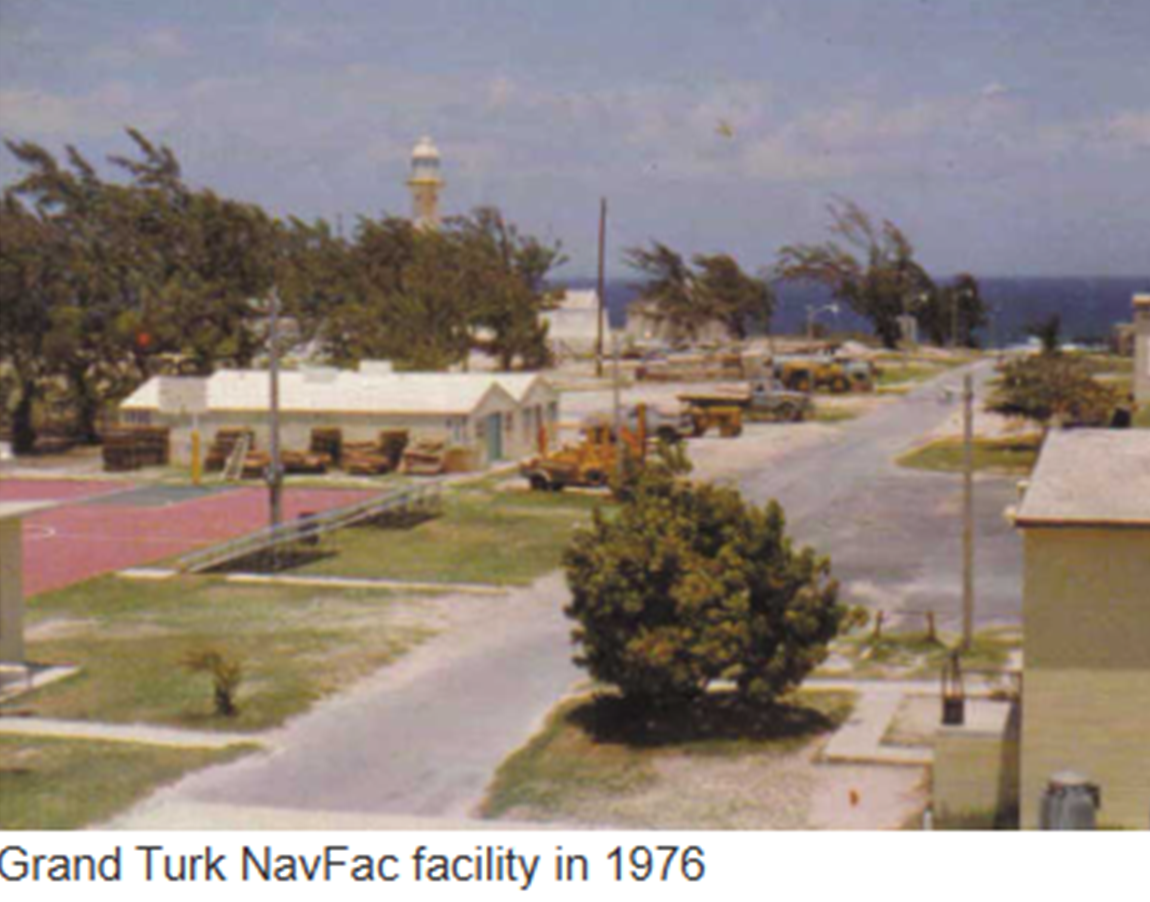
Turks and Caicos, March 30, 2026 – The Turks and Caicos Islands is preparing to mark a major political milestone, with Cabinet approving the establishment of a National Commemorative Committee to celebrate 50 years of ministerial government, a system first introduced under the 1976 Constitution.
The decision, confirmed in the February 10 Post Cabinet statement, signals a year of reflection on a governance model that fundamentally reshaped how the country is run — shifting from direct colonial administration toward locally led political leadership.
That shift was formalized in the Turks and Caicos Islands Constitution Order 1976, which laid the legal foundation for ministerial government and introduced a structured Executive and Legislative system.
At its core, the 1976 Constitution established an Executive Council, bringing together:
- a Governor,
- a Chief Minister elected by members of the Legislative Council,
- and Ministers appointed to assist in governing the Islands.
A Very Different Government Back Then
If today’s Cabinet feels crowded, the 1976 version would have seemed almost unbelievable. There were just three Ministers serving alongside the Chief Minister — a tight, compact leadership team responsible for the affairs of an entire country. No sprawling list of ministries, no long roster of portfolios — just a handful of individuals carrying the weight of governance.
Becoming a Minister wasn’t a direct vote of the people either. You first had to win a seat in the Legislative Council, and from there, the Chief Minister would recommend who should serve. The Governor then made the appointments. In other words, political trust and alignment mattered just as much as public support — and ultimate authority still rested above the local leadership.
And as for job security? There wasn’t much of it. Ministers served without fixed terms and could be removed if they lost their seat, resigned, or if the Governor revoked their appointment. Even the Chief Minister could be ousted through a vote of no confidence. Add to that the basic requirements — being at least 21, a British subject, and meeting residency rules — and it’s clear that ministerial government in 1976 was not only smaller, but far more tightly controlled.
This marked the first time elected representatives were formally given defined roles in the administration of national affairs.
Under the Constitution, the Governor retained overarching authority, but was required in many instances to act on the advice of the Executive Council, particularly in shaping policy and overseeing government operations.
The Chief Minister, meanwhile, was positioned as the central political leader, responsible for directing government business and advising on the appointment of Ministers.
Importantly, the Constitution also allowed for the assignment of responsibilities to Ministers, giving them oversight of specific areas of government — a structure that remains at the heart of today’s Cabinet system.
Section 13 of the Order made clear that Ministers could be assigned responsibility for the administration of departments or government business, embedding accountability and functional governance into the system.
The Legislative Council, established alongside the Executive, provided the law-making body, with elected and appointed members participating in debates, passing legislation, and representing the interests of the Islands.
Together, these provisions created the framework for what is now recognized as ministerial government — a hybrid system balancing local political leadership with constitutional oversight by the Governor.
The explanatory note of the 1976 Order describes it as introducing “new provisions for the Government of the Turks and Caicos Islands,” including the creation of a Legislative Council with elected members and Ministers appointed on the advice of the Chief Minister.
Fifty years on, that structure has evolved through subsequent constitutional changes, but its foundation remains rooted in the 1976 framework.
Cabinet’s decision to establish a commemorative committee suggests that the anniversary will not only celebrate political progress, but also invite reflection on how effectively the system has delivered on its promise of representation, accountability, and governance.
As the Islands approach this Golden Jubilee, attention is likely to turn not only to the achievements of ministerial government, but also to the ongoing question of how the system continues to serve a modern and rapidly developing Turks and Caicos Islands.
Developed by Deandrea Hamilton • with ChatGPT (AI) • edited by Magnetic Media.







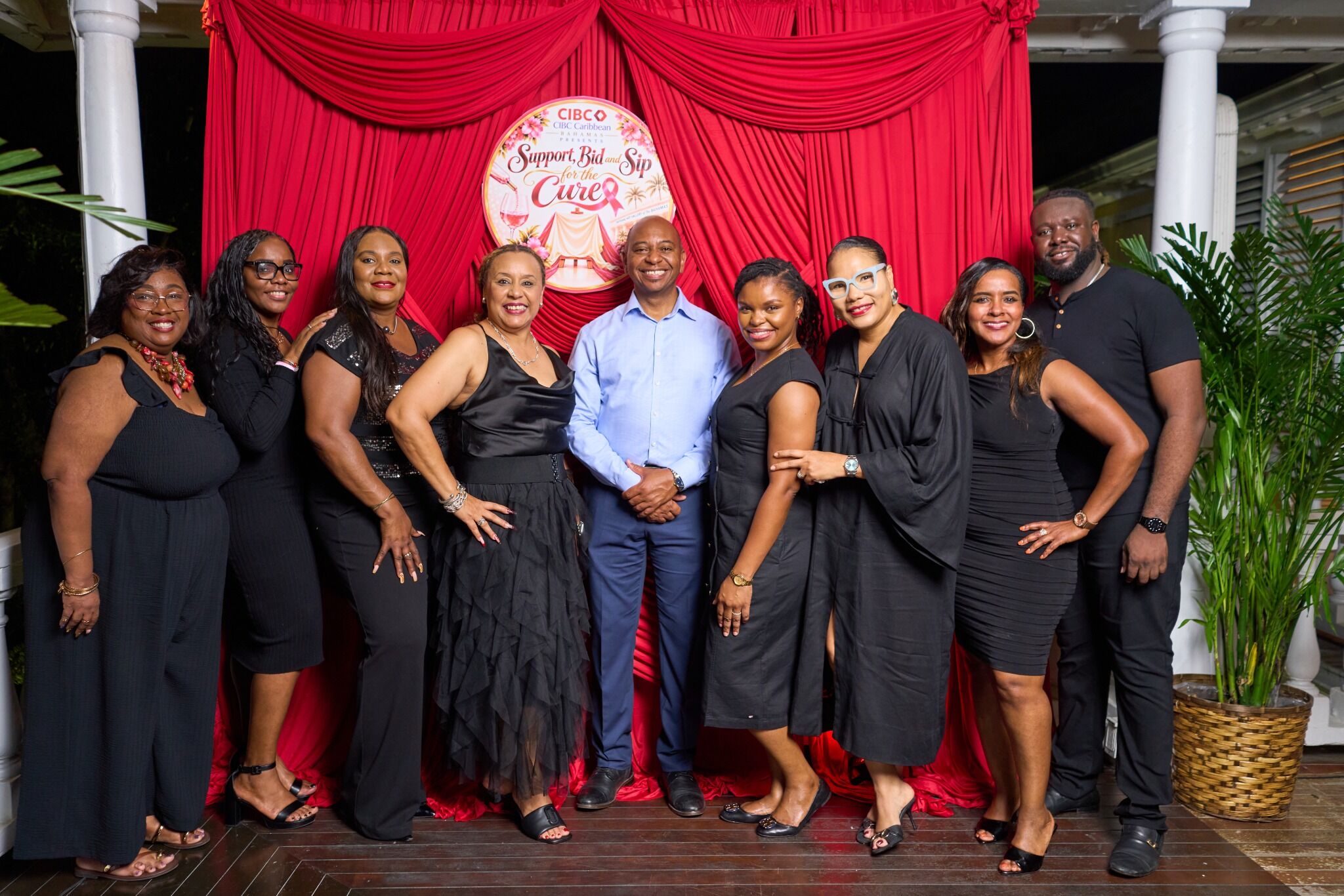
Nassau, Bahamas, 23 November 2026 – With 15 years of Walk for the Cure now successfully concluded, CIBC Caribbean is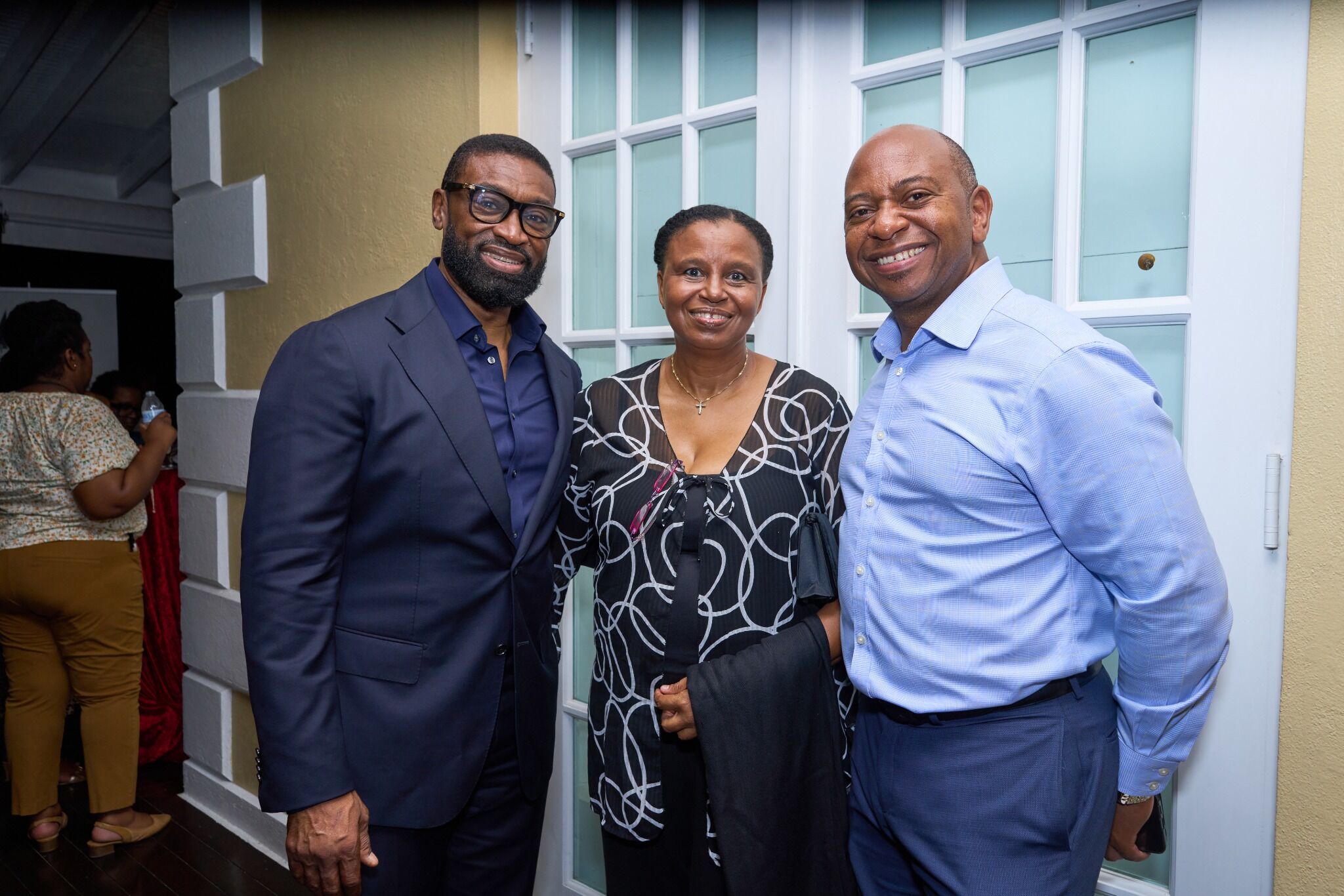 introducing new ways to build on its fundraising efforts in support of a worthy cause.
The latest addition is Sip for the Cure, which brings together art, culture and philanthropy to raise additional funds for cancer organizations across The Bahamas. Hosted by Das Quay, the recent event featured a silent auction, including an exclusive piece by renowned Bahamian artist His Excellency Jamaal Rolle, along with performances by the R.M. Bailey Senior High School Junkanoo Group and Rhythm in Motion Studios.
CIBC Caribbean Head of Country Terrance Gibson said the new initiative reflects the bank’s commitment to finding meaningful ways to engage supporters beyond the traditional walks.
“Walk for the Cure has shown us what is possible when people come together with a shared purpose. Sip for the Cure is an extension of that commitment, creating another opportunity for people to give and help make a difference in the lives of those affected by cancer,” Gibson said.
“While this event marks the close of another fundraising season, the need for support continues long after the last walk. Our hope is that Sip for the Cure will grow into an annual tradition, allowing us to build on what we have achieved and extend the reach of the support we provide.”
Held at the National Art Gallery of The Bahamas, the event followed four Walk for the Cure events hosted in New Providence, Grand Bahama, Abaco and Eleuthera throughout October. The event also provided an opportunity for CIBC Caribbean to recognize the individuals, businesses and community partners whose contributions have supported the flagship fundraiser over its 15-year history.
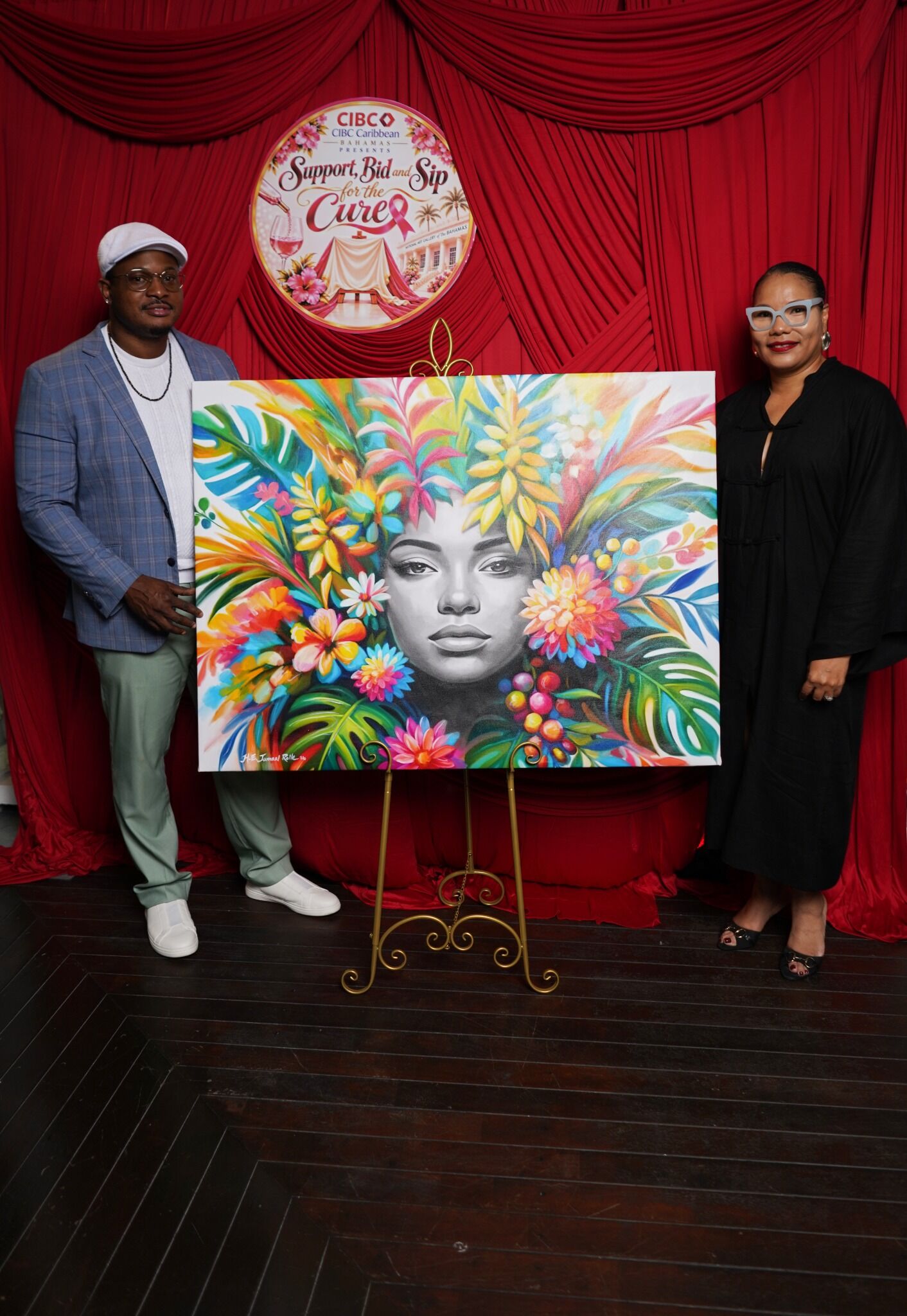
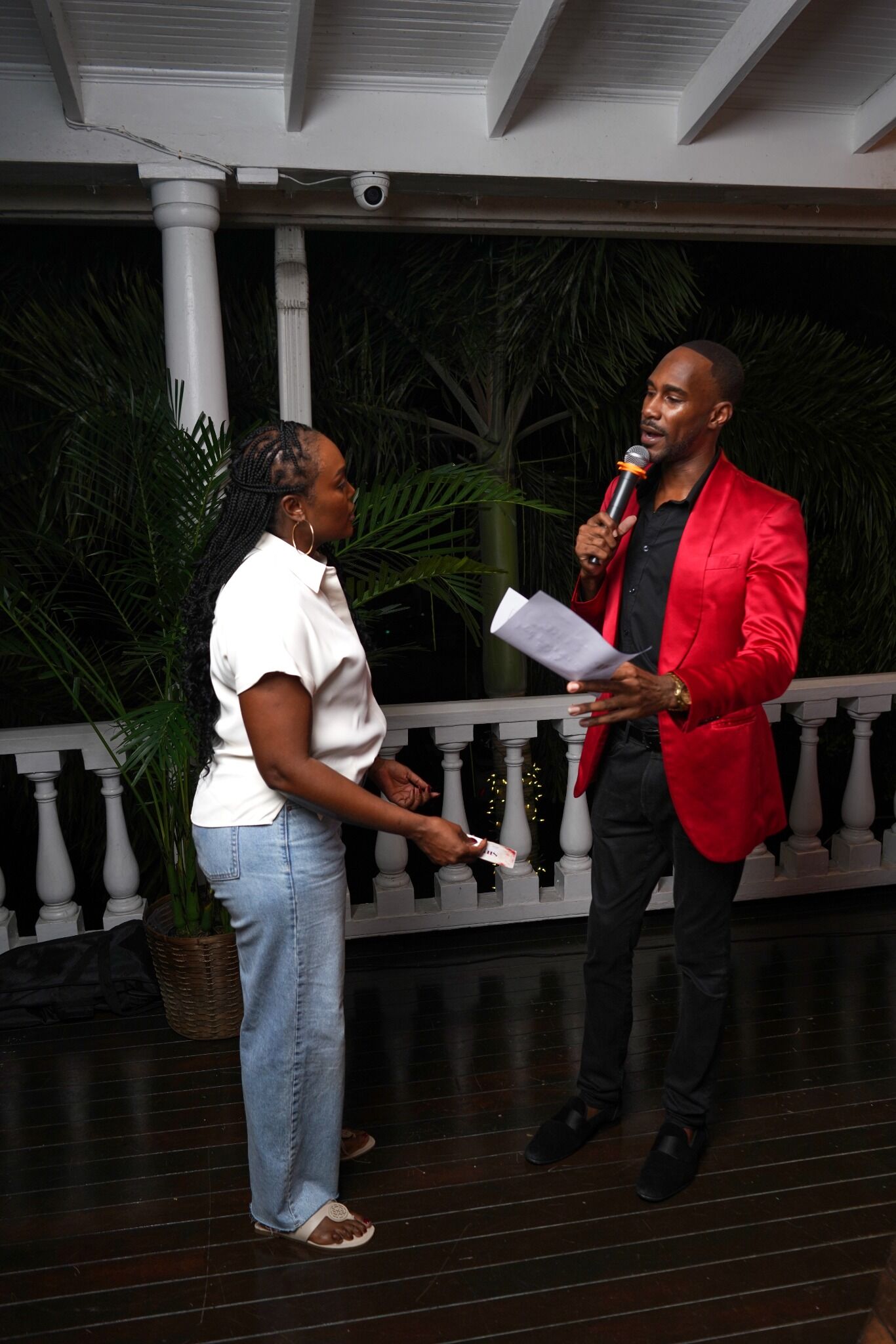
Photo Captions:
1st insert: From left are Charles Sealy II, Cheyvonne Bethell, and CIBC Caribbean Head of Country Terrance Gibson.
2nd insert: Pictured beside CIBC Marketing Manager F. Leann Albury-Mitchell are student artists Ayira Roache, left, and Chloe Sawyer, right.
3rd insert: Standing beside an exclusive piece by his Excellency Jamaal Rolle, left, is CIBC Caribbean Head of International Corporate Banking Tonia Cartwright, right.
Bahamas News
Sunset and friendship as guests join Governor General at 700ft table for inaugural The Longest Table event in The Bahamas
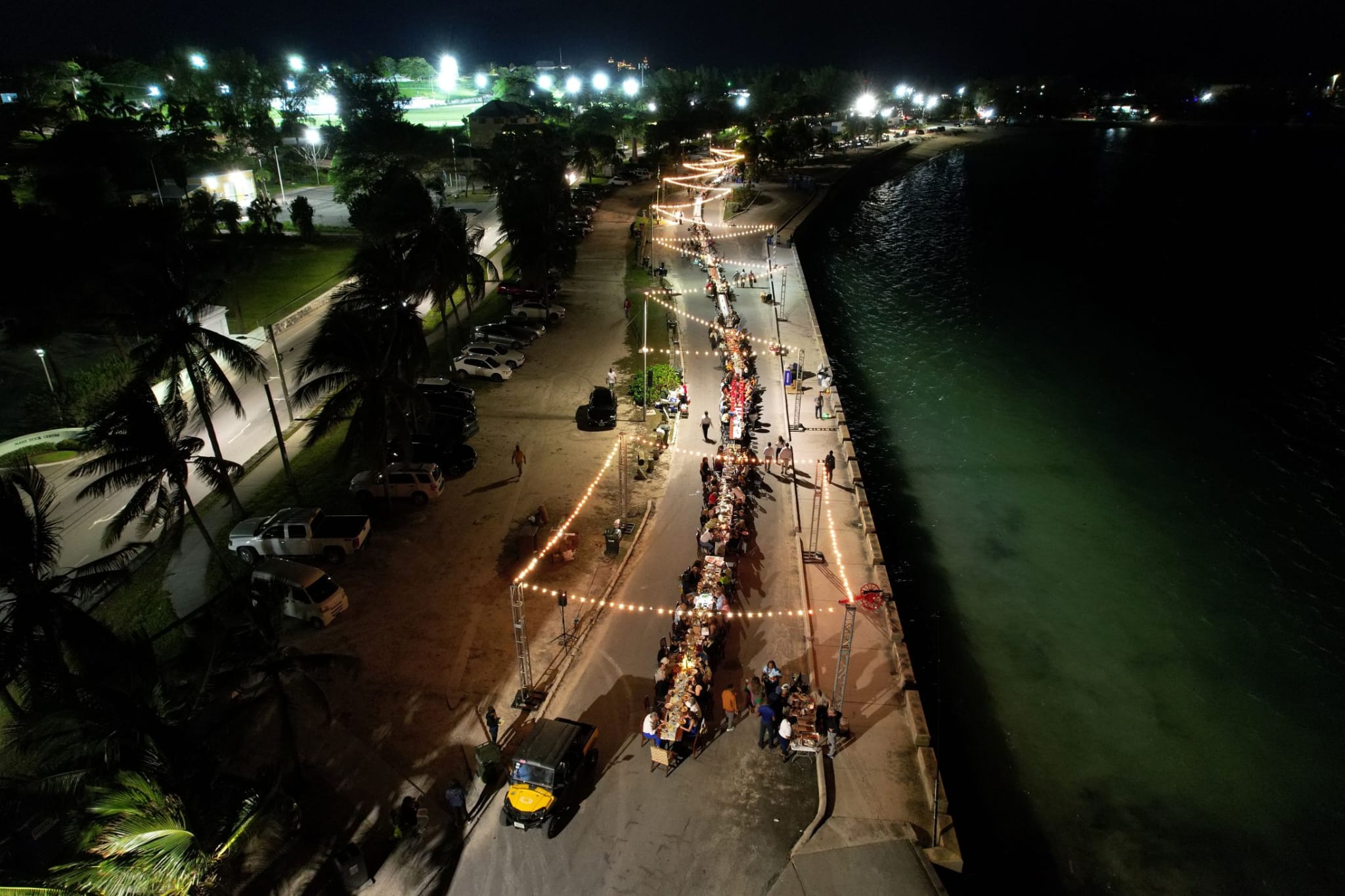
The Bahamas, November 18, 2026 – Hundreds of people made history on Saturday – sitting down alongside Governor General Dame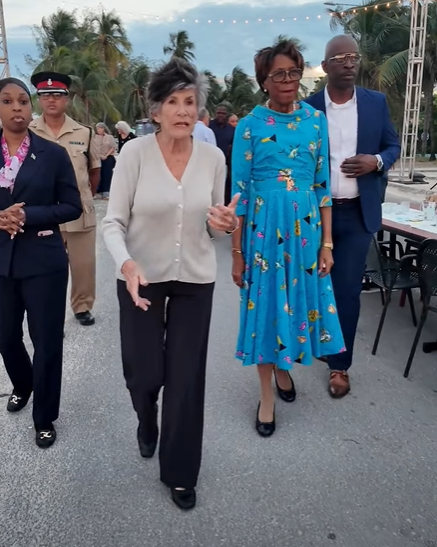 Cynthia Pratt at a 700ft-long table for the first time that The Longest Table has been held in The Bahamas.
A stunning sunset made a perfect backdrop for the occasion, as diners joined a community event to bring people together, held along the Western Esplanade on Saturday, November 14, 2026. The Governor General sat at the head of the table, and served as patron.
There was no charge for attendance – and the event was hailed as a roaring success, with organisers John Watling’s Distillery and Diane Phillips & Associates (DPA) delighted by the response from the community.
“It was a wonderful night,” said Pepin Argamasilla, managing partner of John Watling’s Distillery. “We said beforehand that this was all about strengthening our community, and that’s exactly what we saw at the table. People got to know their neighbours, walked along the table and met old friends and made new friends. There were beautiful stars above, and good company at our side. Everyone was asking when we will be doing it again – so that shows it was a success.”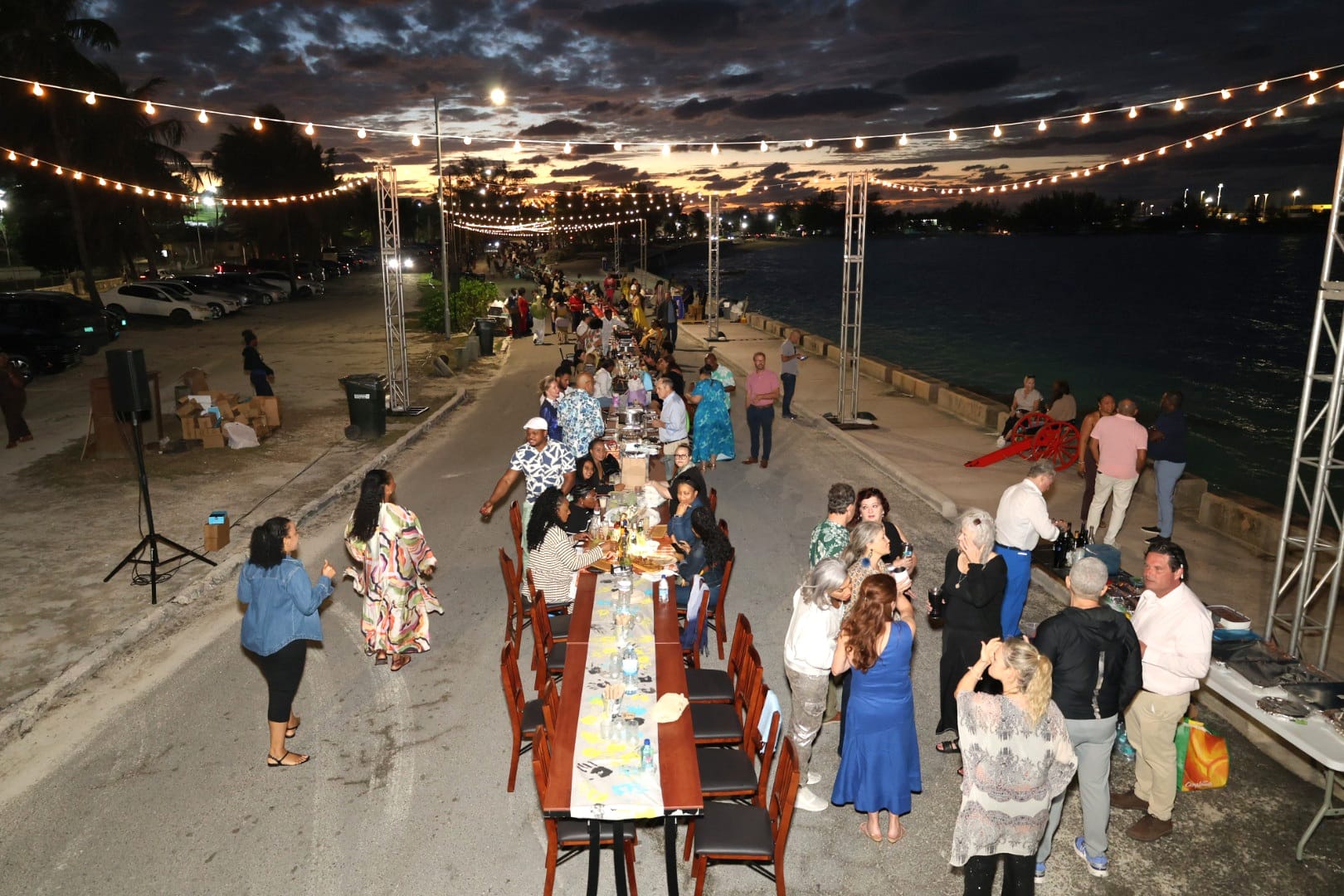
The concept is simple. Participants register to host or join tables, with each table captain organising food and refreshments for their guests. Organisers provided tables and chairs, while John Watling’s provided two complimentary cocktails for every adult guest.
Diane Phillips, founder of DPA, said there was huge interest from those wanting to take part.
“We are delighted that the Governor General, Dame Cynthia Pratt, graced us as the patron for The Longest Table – and there was so much interest from people wanting to take part. It was the kind of occasion that was a landmark moment, one of those occasions where you ask ‘were you there?’. These are the occasions that bring us closer as people in our nation.”
Paula Welch, chief operating officer of DPA, added: “Those at the table came from across different sections of society, all coming together as one for a magical evening. People came not knowing others at the table, and left as friends. It was a beautiful occasion – seeing everyone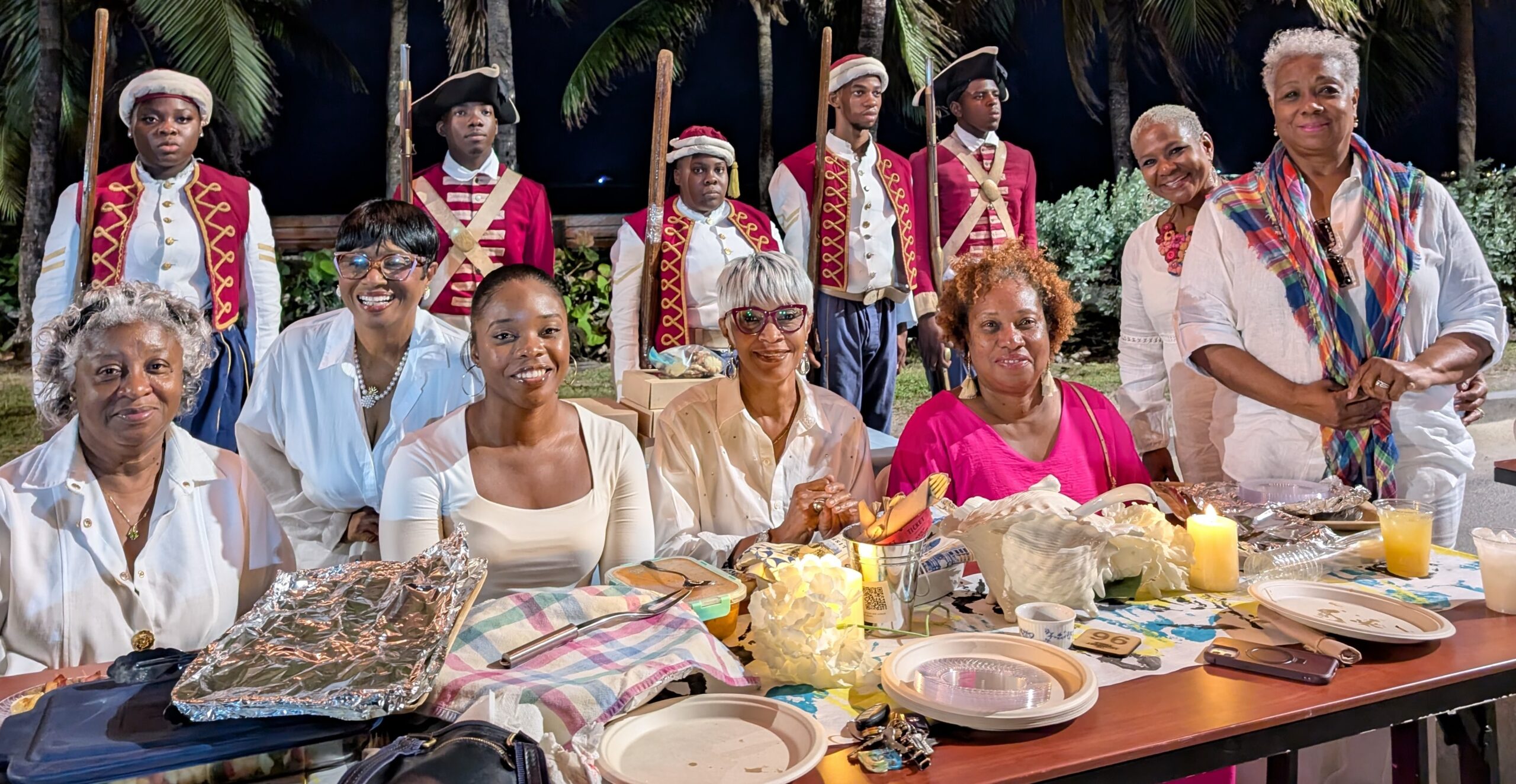 dining and talking under the stars was remarkable, and we thank all those who supported the event and made it possible.”
Guests even came from farther afield – with one visitor from the US using Muse AI to look up activities during her stay and finding The Longest Table. She found a seat next to one of the foremost Bahamian artificial intelligence companies – and made plenty of friends.
Her Excellency opened the evening by firing Bam Bam, the cannon from John Watling’s Distillery stationed close to the head of the table. The British West India Regiment from the Antiquities, Monuments and Museum Corporation (AMMC) also paraded during the event.
The Longest Table traces its origins to New York City, where Maryam Banikarim noticed a family dining outdoors on a Manhattan sidewalk following the COVID-19 pandemic. When another family did the same the following day, she began imagining entire communities gathering around shared tables. The movement has since spread across the United States and internationally to Argentina, France and Puerto Rico.
From donating tables to creating handcrafted numbers for each group, from putting up lights to gathering waste, there was no shortage of helpers, who offered their time and support for the occasion. Supporters included Baha Mar, Bahamas Waste, the Royal Bahamas Police Force, the Royal Bahamas Defence Force, the Antiquities, Monuments and Museum Corporation, QuenCom Audio Visual, Frank Burrows, Blairwood Academy, the Bahamas Public Parks and Beaches Authority, ABM Party Rentals, Lionshare Entertainment, Mel J’s Event Rentals, Da Pink Rentals, Signarama and a host of volunteers.
Organisers plan to bring The Longest Table back in January 2028. Subscribe at www.johnwatlings.com to receive updates, including the date once it is confirmed.
News
Experience Turks and Caicos Completes Revitalization of Grand Turk Bird Watching Trails, Advancing Sustainable Tourism Opportunities
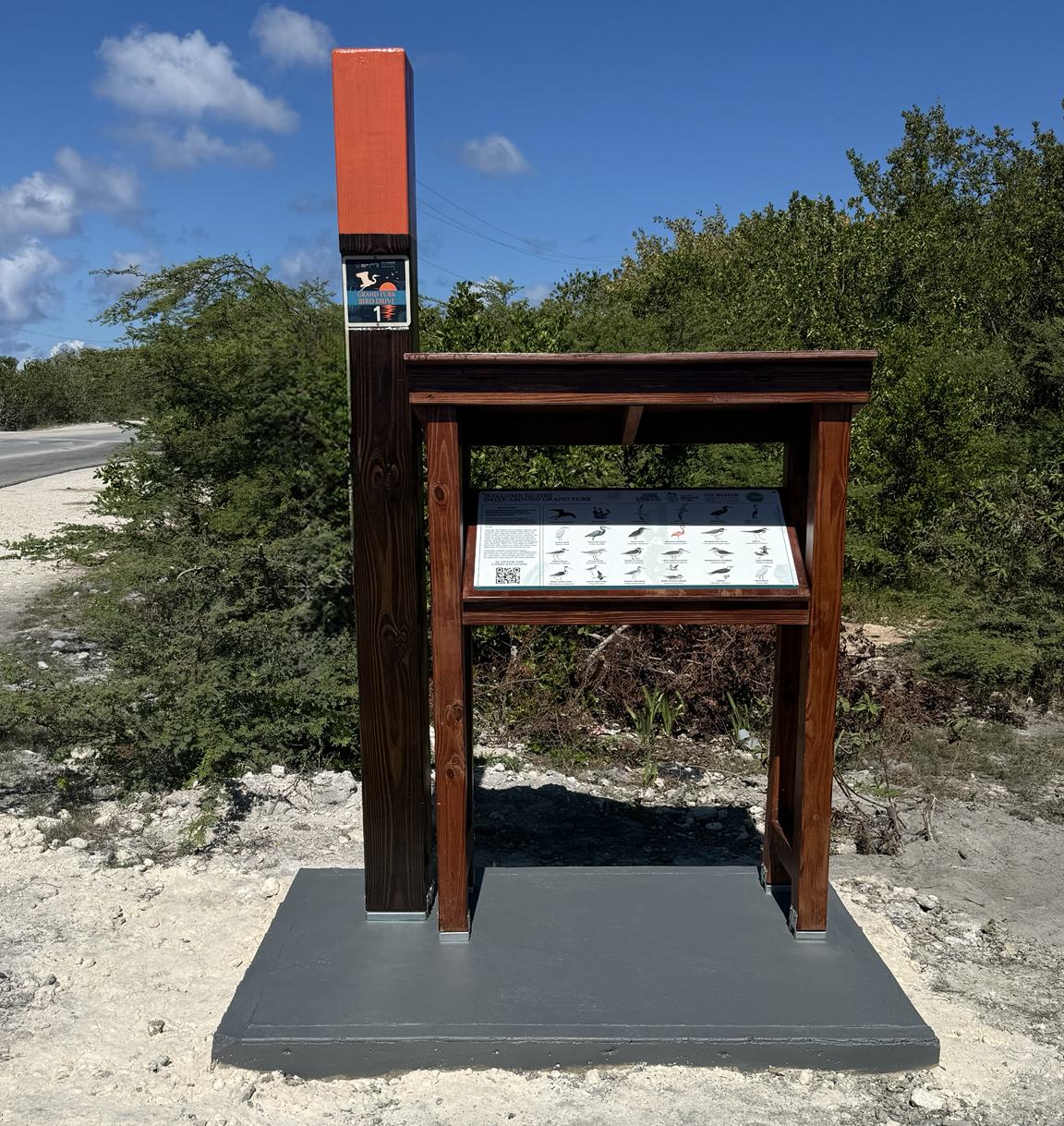
Grand Turk, Turks and Caicos Islands (November 16th, 2026) – Experience Turks and Caicos, through its Product Development Unit, is pleased to announce the successful completion of the revitalization of the Grand Turk Bird Drive and Grand Turk Town Salinas Walking Trail, marking another significant step in enhancing the destination’s nature-based tourism offerings and promoting sustainable tourism development.
The project was undertaken in collaboration with the Department of Environment and Coastal Resources (DECR), the Turks and Caicos National Museum Foundation, and the Turks and Caicos National Trust.
Originally established in 2005 through a partnership between the Turks and Caicos National Museum Foundation and the UK Overseas Territories Conservation Forum, the trails were designed to showcase Grand Turk’s rich birdlife, wetlands, and historical features. Following years of exposure to hurricanes and environmental conditions, the revitalization has restored these important attractions, making them more accessible and engaging for residents and visitors.
The enhancement included the installation of 35 colour-coded trail markers, comprising 20 markers along the Grand Turk Bird Drive and 15 along the Town Salinas Walking Trail. Both trails feature new welcome and endpoint informational signs, complete with bird imagery and educational content. Fully operational QR codes installed on the welcome signs provide convenient access to digital trail guides, allowing visitors to explore the trails independently.
The Grand Turk Bird Drive takes visitors through the island’s scenic Salinas, ponds, and wetlands, extending from Little Bluff in the north to Hawke’s Nest Pond in the south. Meanwhile, the Town Salinas Walking Trail offers an opportunity to discover the capital’s diverse birdlife while exploring its historical and cultural heritage.
Grand Turk’s Salinas and wetlands are internationally significant habitats, supporting both resident and migratory bird species. Among the birds that can be observed are Caribbean flamingos, reddish egrets, sanderlings, and red knots, making the island an attractive destination for birdwatching enthusiasts and nature lovers.
The Honourable Zhavargo Jolly, Minister of Tourism and Environment, welcomed the project’s completion, highlighting its contribution to tourism diversification and environmental stewardship.
“As the nation’s capital, Grand Turk is home to a rich history, culture and heritage that offer tremendous opportunities to further diversify and strengthen our tourism product. I am pleased to see the revitaliation of these birdwatching trails, which showcase another important part of what makes Grand Turk so special. I look forward to seeing more collaborations like this, bringing together our tourism, environmental and heritage partners to unlock the full potential of all that our nation’s capital has to offer, while creating meaningful opportunities for our people.”
Building on this achievement, Experience Turks and Caicos is also collaborating with BirdsCaribbean to develop a specialised birdwatching tour guide training programme. The initiative aims to equip residents and local tour operators with the knowledge and skills required to deliver professional birdwatching experiences and pursue certification as birdwatching tour guides.
Candesha Mills, Product Development Manager at Experience Turks and Caicos, emphasised the importance of connecting tourism product development with community empowerment.
“Our goal is to transform our natural attractions into meaningful tourism experiences that benefit both visitors and local communities. With the trails now revitalized, our next priority is building local capacity through specialized training, creating opportunities for residents to become certified birdwatching guides and develop new tourism products.”
The completed trails offer self-guided walking and driving experiences for residents, cruise passengers, and stayover visitors. Digital trail guides are accessible through QR codes at the starting points, while printed weatherproof guides are available through the Turks and Caicos National Museum on Front Street.
The revitalisation forms part of a broader collaborative initiative to strengthen birdwatching tourism across the Turks and Caicos Islands, with opportunities to enhance additional birdwatching sites throughout the archipelago.
Experience Turks and Caicos extends its appreciation to its project partners for their contributions and remains committed to developing sustainable tourism experiences that preserve the islands’ natural and cultural heritage while generating new economic opportunities for local communities.





-
 Bahamas News7 days ago
Sunset and friendship as guests join Governor General at 700ft table for inaugural The Longest Table event in The Bahamas
-
 News1 week ago
Experience Turks and Caicos Completes Revitalization of Grand Turk Bird Watching Trails, Advancing Sustainable Tourism Opportunities
-
 Bahamas News2 days ago
CIBC Caribbean Introduces Sip for the Cure