
News
CARICOM – A Regional Club With Benefits; Turks & Caicos Wants In

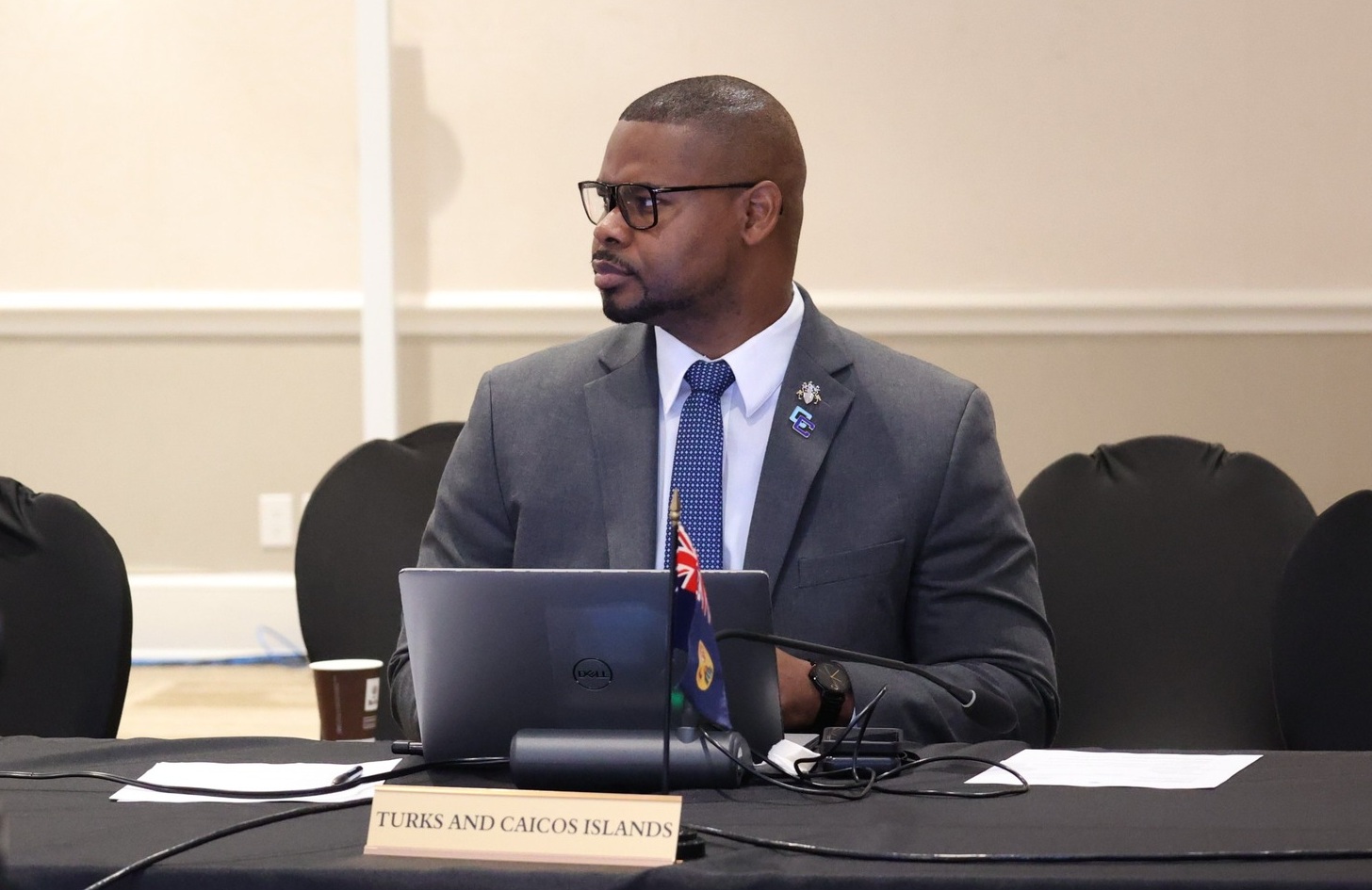
Turks and Caicos, March 18, 2026 – Public reaction across the Turks and Caicos Islands was immediate and, in some cases, heated after the Government confirmed in the House of Assembly on Friday, March 13, that it is exploring a move from Associate Member to full member of the Caribbean Community (CARICOM).
The announcement, delivered by Acting Premier and Minister of Immigration and Border Services Jamell Robinson, sparked strong concern among residents, particularly over fears that full membership could require the territory to accept free movement of labour or weaken its immigration controls.
Social media commentary over the weekend questioned why there had been no public consultation and whether the move signaled a shift in the country’s political direction.
However, a review of the official statement and follow-up remarks made by Robinson this week shows the proposal is not sudden, is not final, and would require approval from all fifteen CARICOM member states before the Turks and Caicos Islands could become a full member.
NOT A NEW IDEA
In his ministerial statement to Parliament, Robinson confirmed that discussions about full membership have been taking place within regional forums for some time.
“As an Associate Member of CARICOM, the Turks and Caicos Islands also participated in caucus meetings and discussions among Overseas Territories and Associate Members regarding regional cooperation and the continued advancement toward full membership within the CARICOM Community,” he told the House.
He added that full membership would allow the territory to engage more directly in decisions affecting the region.
“Full membership in CARICOM would present meaningful opportunities for the Turks and Caicos Islands. It would strengthen our ability to engage more fully in regional decision-making… and ensure that the Turks and Caicos Islands is better positioned to benefit from collective advocacy and coordinated action on issues of common concern.”
The idea of deeper integration is not new. Since the return of elected government in 2012, successive administrations have promoted stronger ties with CARICOM.
Former Premier Dr. Rufus Ewing regularly attended Heads of Government meetings and spoke openly about the importance of regional cooperation, even suggesting that long-term political development for the territory would likely place it closer to the Caribbean than to Britain.
Premier Sharlene Cartwright-Robinson also maintained active participation in CARICOM during her term, focusing on security cooperation, economic recovery, and regional partnerships, though her administration did not pursue full membership.
Under the current administration, Premier Charles Washington Misick has repeatedly said stronger regional integration is necessary for economic stability, security cooperation, and food supply resilience.
FREE MOVEMENT FEARS ADDRESSED
Much of the public backlash centered on the belief that full membership would force the Turks and Caicos Islands to accept the CARICOM free movement of labour provisions.
Speaking Monday to Cheryl Forman, host of First Edition on Radio Turks and Caicos, Robinson said that is not the position being taken by the Government.
“We’re looking for full membership, and just to be clear right off the bat, the Turks and Caicos is not looking to sign on to the free movement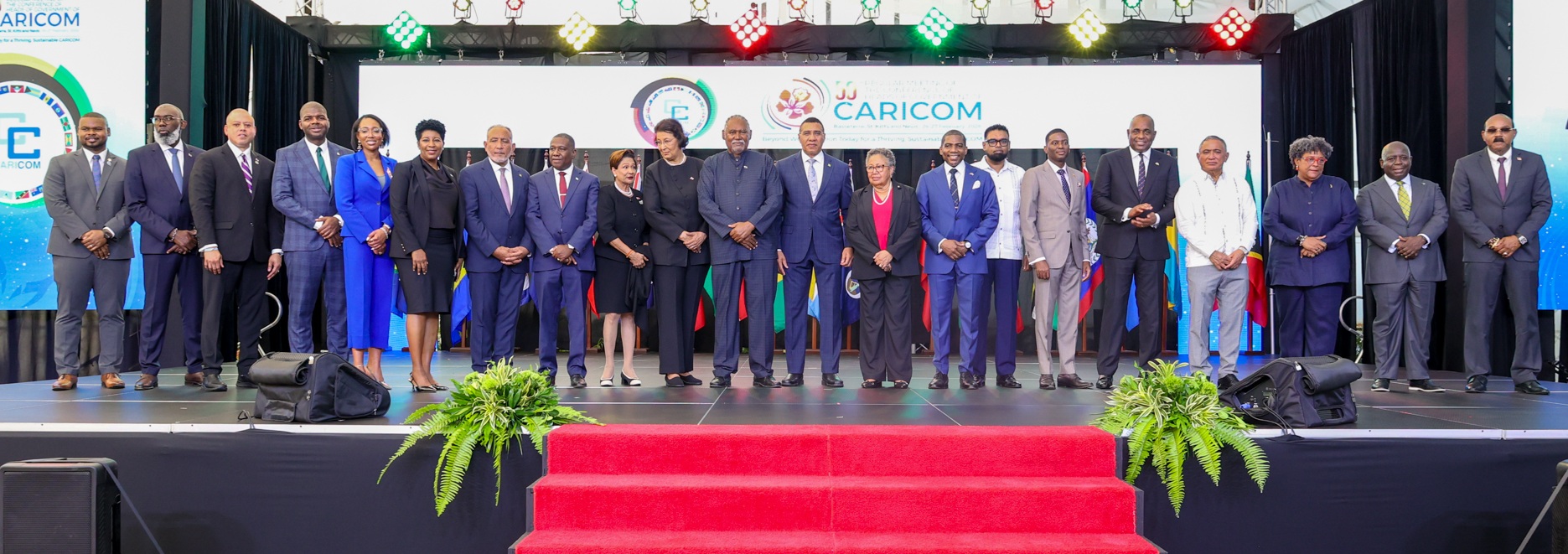 of labour portion of the Revised Treaty of Chaguaramas,” he said.
He noted that other British Overseas Territories and even some CARICOM members have negotiated exemptions.
“Just like Bermuda, just like the BVI… The Bahamas did not sign off on that portion. Free movement across the region does not even exist in the way people think. It applies only to certain skills and professions.”
Robinson stressed that any agreement would be negotiated and would not remove the territory’s ability to control immigration.
“The full membership process isn’t going to be a case where we lose our ability to determine our immigration and labour policies. Those are things that will form part of our negotiated position.”
WHY GOVERNMENT WANTS FULL MEMBERSHIP
Robinson outlined several reasons the administration believes deeper integration could benefit the territory.
One argument is that Associate Members can participate in discussions but do not have voting power.
“You can think of it as being part of a club. As an associate member, you don’t get all the benefits. You can sit in the room, but you don’t always have a final say in decisions that may impact you.”
He also said regional partnerships have already proven critical in national security.
“If it were not for the ability of our Premier to pick up the phone and speak to Prime Minister Davis in The Bahamas and Prime Minister Holness in Jamaica, our crime situation would be completely different,” Robinson said, referring to the deployment of tactical officers from both countries to assist local police operations.
He added that closer ties could also help reduce the cost of living through regional trade.
“In some cases, the very same products we import from the United States originate in the Caribbean, go to the US to be repackaged, and then come back to us. If we can trade more directly within the region, that could help bring down prices.”
Robinson also pointed to discussions within CARICOM about improving regional shipping, food production, and transportation links, including plans for Guyana to become a major agricultural supplier for the region.
NOT A GUARANTEE
Despite the public debate, Robinson emphasized that full membership is not automatic.
Any application must be negotiated and approved by all CARICOM member states, meaning the Turks and Caicos Islands cannot simply decide to join on its own terms.
That reality, he said, is why the Government is still developing its negotiating position, including work on population policy, immigration strategy, and labour planning before any final step is taken.
The debate now unfolding across the territory reflects more than a policy proposal.
It highlights a deeper question that has existed for more than a decade — whether the future of the Turks and Caicos Islands lies primarily with the United Kingdom, or increasingly with the Caribbean region to which it is geographically, economically, and culturally connected.
For now, full CARICOM membership remains only a possibility — but one that has clearly stirred strong emotions in a country still deciding how far regional integration should go.
Angle by Deandrea Hamilton. Built with ChatGPT (AI). Magnetic Media — CAPTURING LIFE.







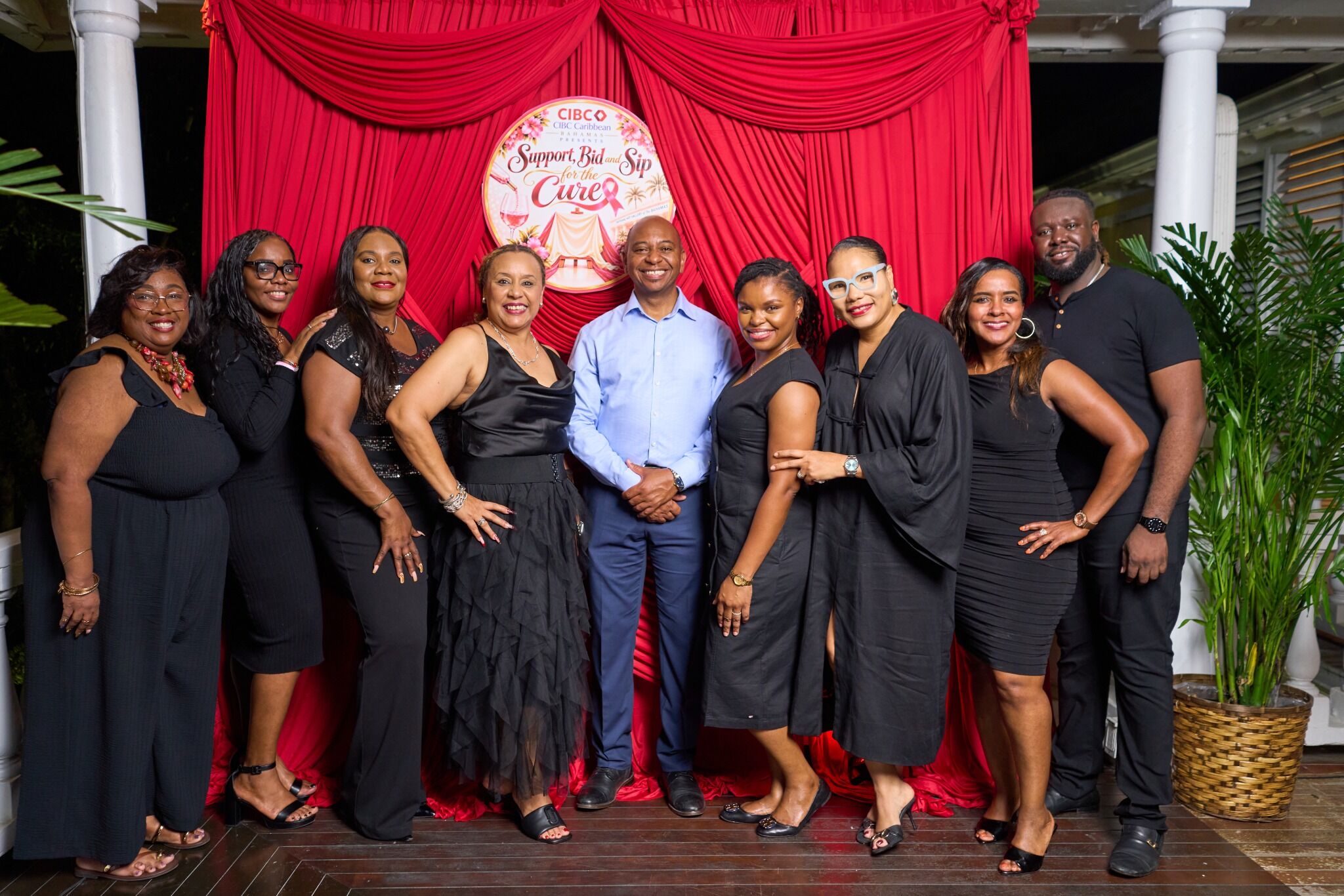
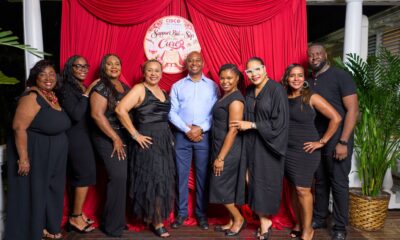
Nassau, Bahamas, 23 November 2026 – With 15 years of Walk for the Cure now successfully concluded, CIBC Caribbean is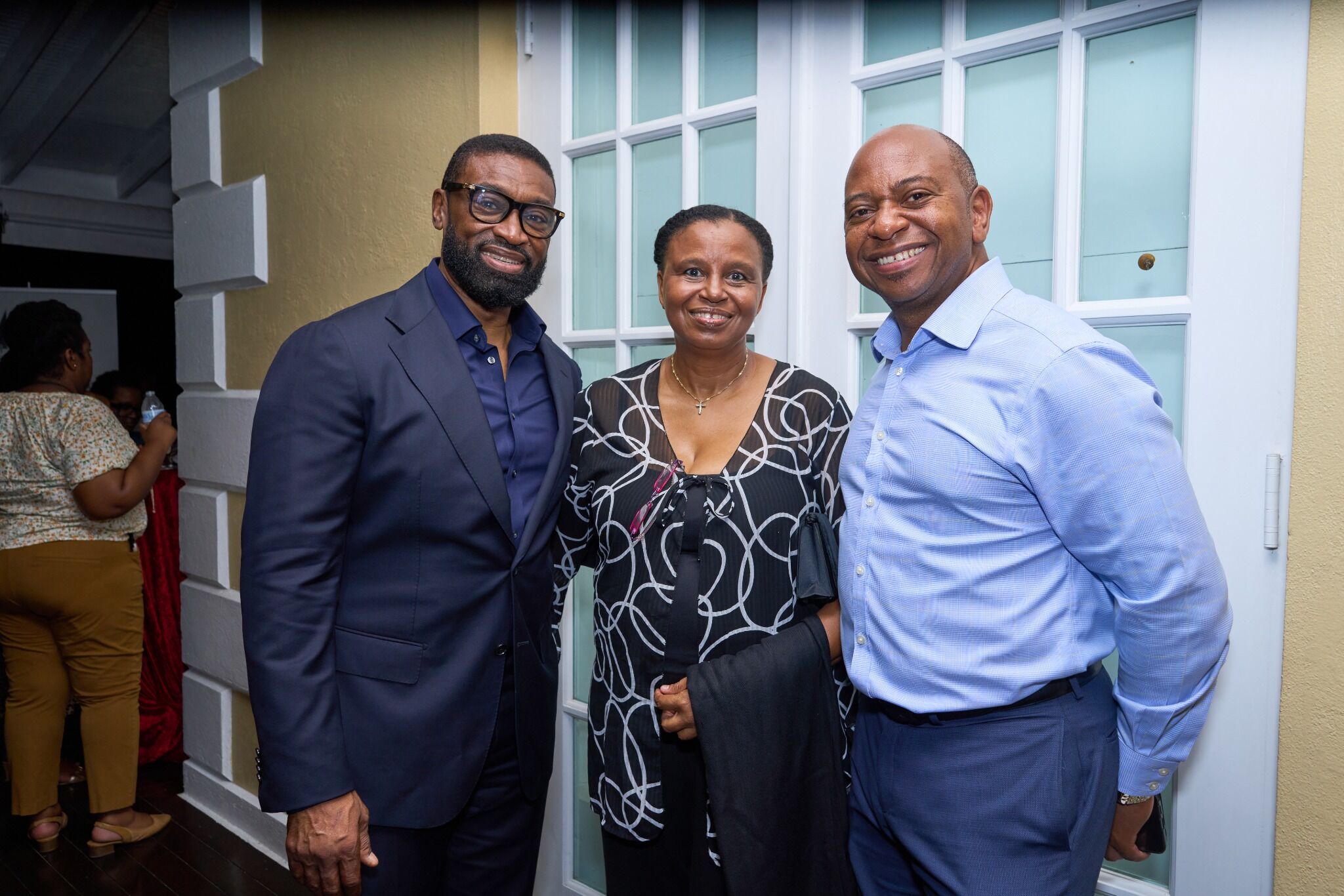 introducing new ways to build on its fundraising efforts in support of a worthy cause.
The latest addition is Sip for the Cure, which brings together art, culture and philanthropy to raise additional funds for cancer organizations across The Bahamas. Hosted by Das Quay, the recent event featured a silent auction, including an exclusive piece by renowned Bahamian artist His Excellency Jamaal Rolle, along with performances by the R.M. Bailey Senior High School Junkanoo Group and Rhythm in Motion Studios.
CIBC Caribbean Head of Country Terrance Gibson said the new initiative reflects the bank’s commitment to finding meaningful ways to engage supporters beyond the traditional walks.
“Walk for the Cure has shown us what is possible when people come together with a shared purpose. Sip for the Cure is an extension of that commitment, creating another opportunity for people to give and help make a difference in the lives of those affected by cancer,” Gibson said.
“While this event marks the close of another fundraising season, the need for support continues long after the last walk. Our hope is that Sip for the Cure will grow into an annual tradition, allowing us to build on what we have achieved and extend the reach of the support we provide.”
Held at the National Art Gallery of The Bahamas, the event followed four Walk for the Cure events hosted in New Providence, Grand Bahama, Abaco and Eleuthera throughout October. The event also provided an opportunity for CIBC Caribbean to recognize the individuals, businesses and community partners whose contributions have supported the flagship fundraiser over its 15-year history.


Photo Captions:
1st insert: From left are Charles Sealy II, Cheyvonne Bethell, and CIBC Caribbean Head of Country Terrance Gibson.
2nd insert: Pictured beside CIBC Marketing Manager F. Leann Albury-Mitchell are student artists Ayira Roache, left, and Chloe Sawyer, right.
3rd insert: Standing beside an exclusive piece by his Excellency Jamaal Rolle, left, is CIBC Caribbean Head of International Corporate Banking Tonia Cartwright, right.
Bahamas News
Nearly 1,500 UK Parliamentarians to Weigh In on Bahamas–Turks and Caicos Maritime Boundary Treaty
By Deandrea Hamilton | Editor
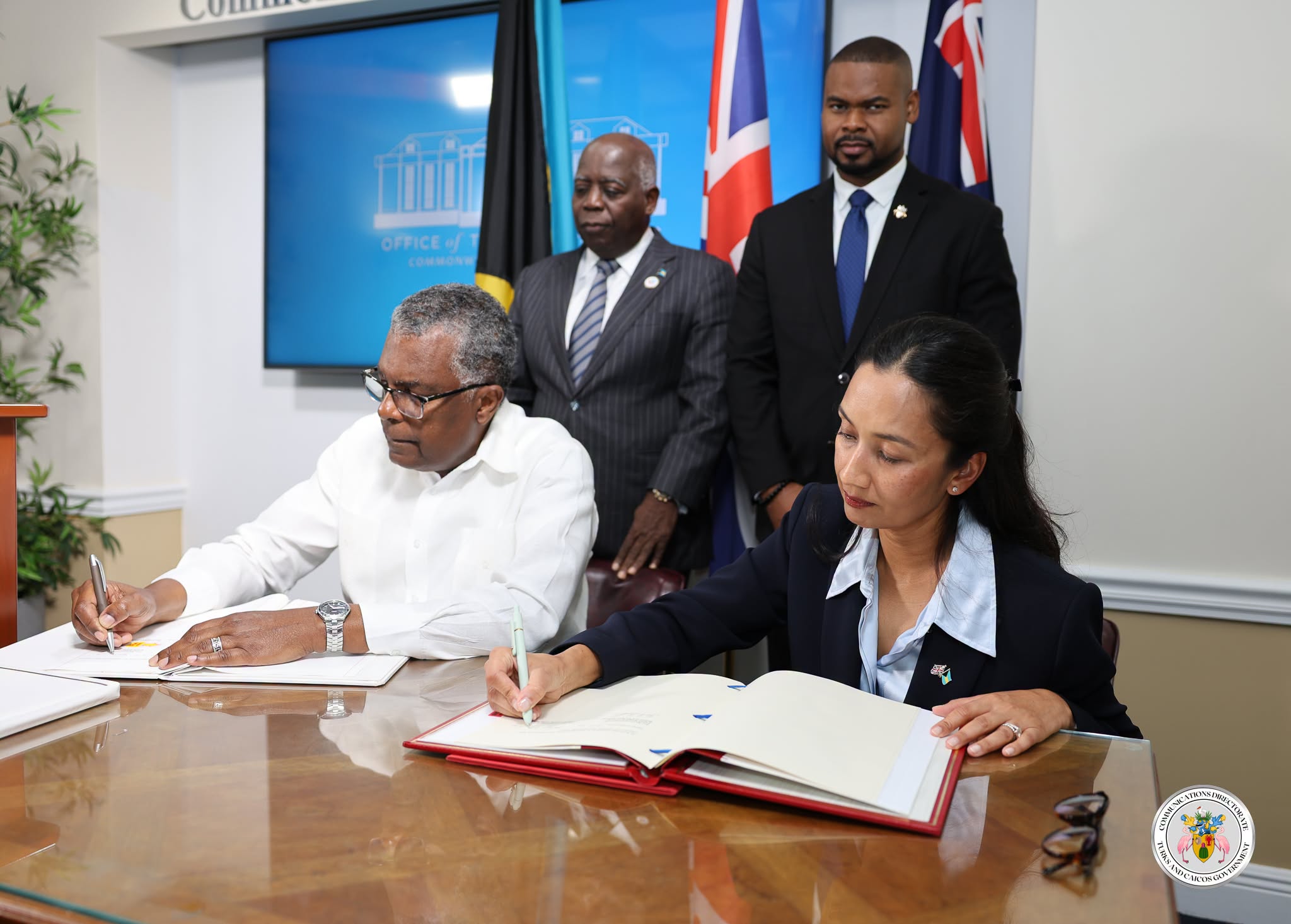
A historic maritime boundary treaty between The Bahamas and the Turks and Caicos Islands is heading for scrutiny by 650 elected members of the United Kingdom’s House of Commons and approximately 796 members of the House of Lords before it can become legally binding.
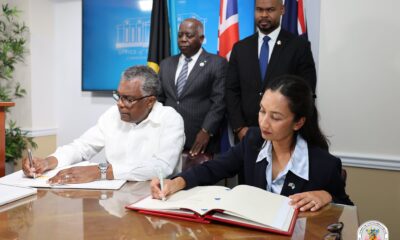
The agreement was signed in Nassau on Monday, November 16, 2026, by Bahamian Foreign Affairs and Immigration Minister Frederick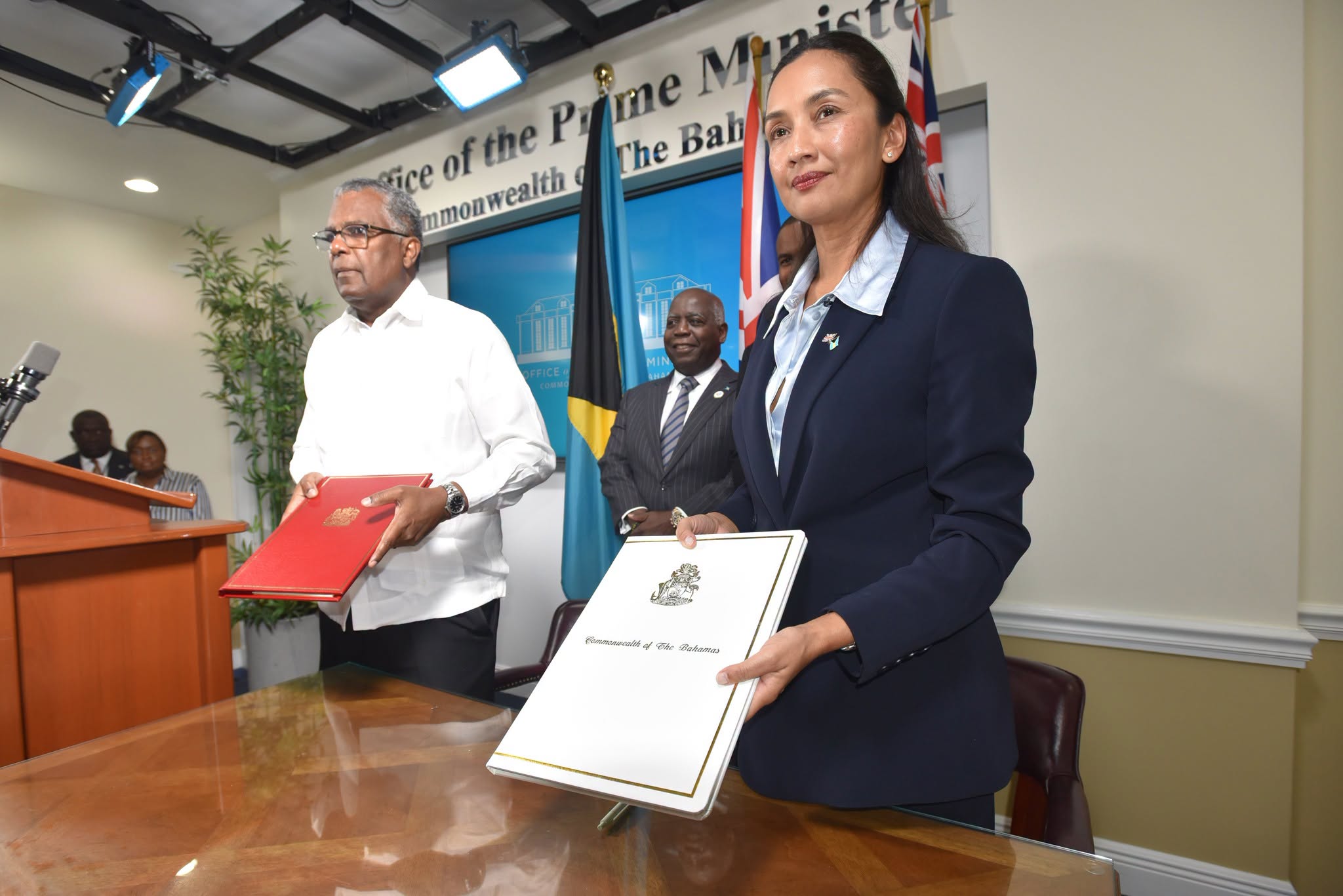 Mitchell and British High Commissioner Smita Rossetti, representing the United Kingdom. Looking on were Bahamian Prime Minister Philip Davis and Turks and Caicos Deputy Premier Jamel Robinson.
Although the treaty draws a delimitation line across the Atlantic Ocean, that line runs much deeper than the surface.
It establishes a boundary through the water column, across the seabed and into the subsoil beneath it, defining maritime rights and jurisdiction involving fisheries, underwater resources and security operations.
The boundary separates maritime areas between Mayaguana and Inagua in The Bahamas and the Caicos Islands.
But the signatures do not make the treaty immediately enforceable.
Under British parliamentary procedures, the agreement must be presented to both Houses for 21 sitting days, allowing parliamentarians to scrutinize its provisions and potentially object to ratification.
A parliamentary vote is not automatically required. However, the House of Commons can formally delay ratification, while the House of Lords may register objections.
The process reflects the Turks and Caicos Islands’ constitutional relationship with Britain, which retains responsibility for its international treaty arrangements.
Deputy Premier Jamel Robinson emphasized the territory’s involvement in the negotiations.
“Our Government has been actively engaged in the negotiations, ensuring that the interests of our people and our maritime communities were represented throughout the process.”
He added that the agreement strengthens the foundation for maritime security, responsible fisheries management and cooperation between the neighboring jurisdictions.
Negotiations began in 1992, with a technical agreement reached in 1996 that was never ratified. Talks resumed in 2023, following changes to The Bahamas’ archipelagic baselines in 2008.
Prime Minister Philip Davis welcomed the conclusion of negotiations spanning more than three decades.
“It gives fishermen and law enforcement officers on both sides an agreed line, and it will strengthen the close cooperation between our security services.”
Davis also acknowledged the longstanding friendship between the two island communities.
“Our peoples have been friends for generations, and today’s Agreement builds on that friendship.”
Once both governments complete their domestic procedures, the treaty will enter into force on the 30th day following the final notification.
For two Caribbean neighbors, the agreement settles a 34-year-old boundary question, but its final legal journey now passes through Westminster.
Ed Forbes | Concerned Citizen
Public safety must always be a priority, and government has a responsibility to ensure vehicles operating on public roads meet appropriate safety standards. However, new policies affecting small businesses and residents must also consider economic and social consequences.
The Department of Motor Vehicles’ recently published restrictions on golf carts and ATVs raise important questions.
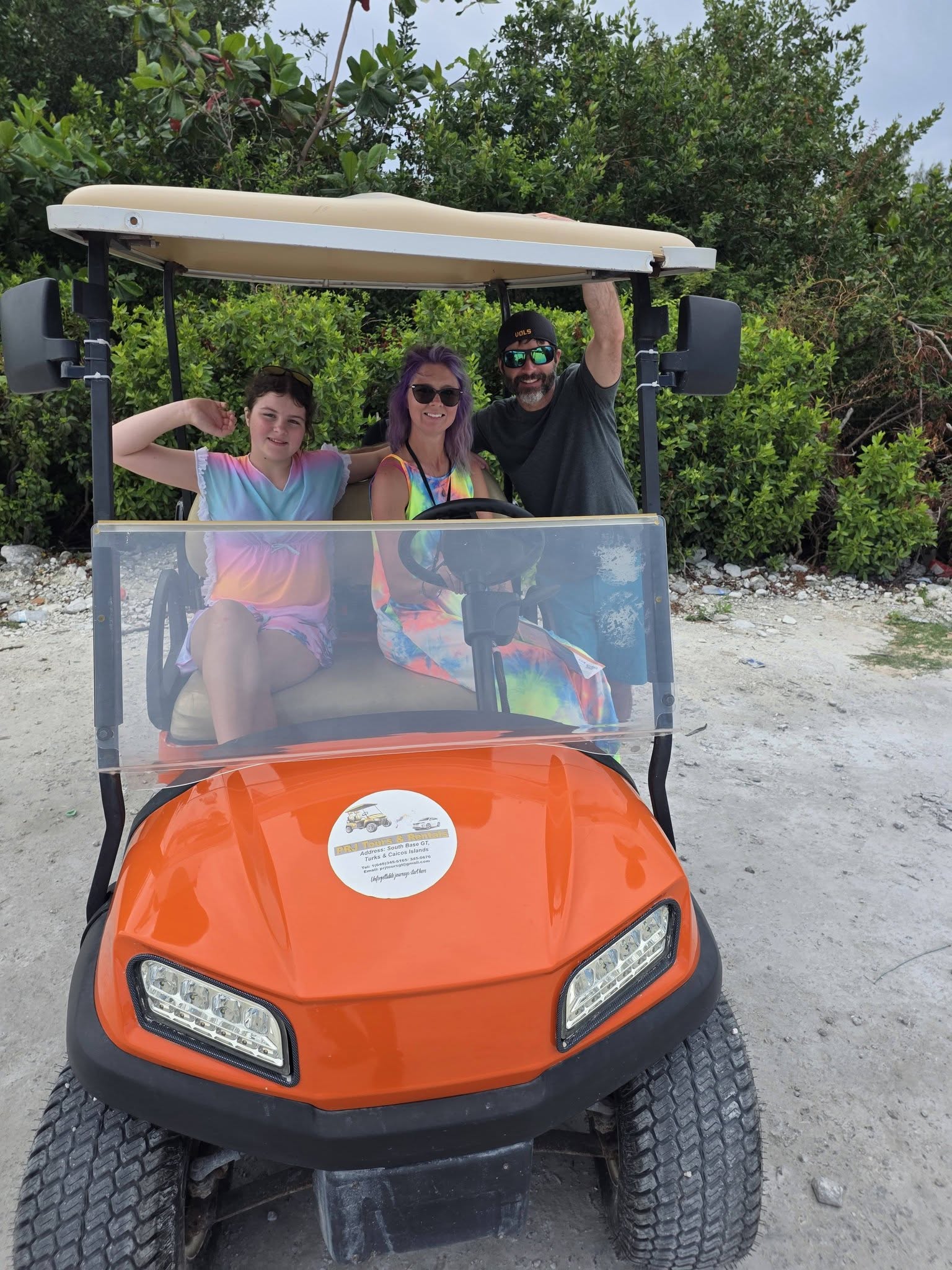
I understand restricting golf carts on the busy roads of Providenciales, where growth and traffic have placed significant pressure on infrastructure. But should the same approach automatically apply to Grand Turk, North, Middle and South Caicos?
Grand Turk’s tourism economy relies partly on golf cart rentals. Cruise visitors use them to explore attractions, restaurants and local businesses. Restrictions could affect livelihoods beyond rental operators, particularly as cruise arrivals decline.
What happens to residents who purchased golf carts for personal transportation? Will existing owners be grandfathered? And how will Airbnb operators who include golf carts in guest packages be affected?
Why not regulate rather than eliminate nighttime use? Roadworthiness standards, functioning lights, mirrors, seat belts, insurance, inspections and driver-age requirements could improve safety.
Electric golf carts also support environmentally responsible transportation. Shouldn’t suitable green mobility be encouraged?
Commercial tours could face designated routes or restrictions on congested roads while approved vehicles remain available for independent transportation.
Government must explain the legal basis, implementation timeline and treatment of existing licenses, and whether affected communities were consulted.
Good public policy balances safety with economic realities. Different islands have different transportation needs.
Regulate, Don’t Eliminate. Protect Our People, Preserve Our Livelihoods and Keep Grand Turk Moving Forward.




-
 Bahamas News1 week ago
Sunset and friendship as guests join Governor General at 700ft table for inaugural The Longest Table event in The Bahamas
-
 News1 week ago
Experience Turks and Caicos Completes Revitalization of Grand Turk Bird Watching Trails, Advancing Sustainable Tourism Opportunities
-
 Bahamas News2 days ago
CIBC Caribbean Introduces Sip for the Cure
-
 Bahamas News3 days ago
Nearly 1,500 UK Parliamentarians to Weigh In on Bahamas–Turks and Caicos Maritime Boundary Treaty
-
 Independent writer3 days ago
Golf Cart Restrictions: What Happens to Grand Turk’s Tourism Economy?