
Government
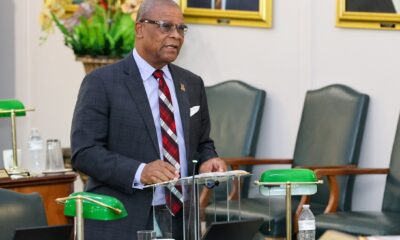
Turks and Caicos Premier Delivers Banner Year Budget Amid Pressing National Challenges







By Magnetic Media Newsroom
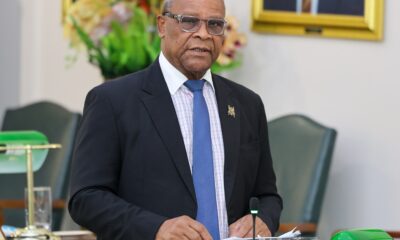
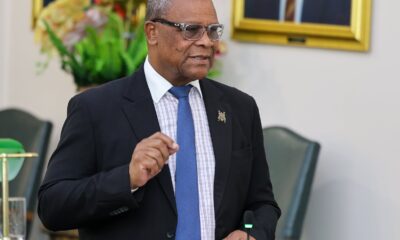
PROVIDENCIALES, Turks and Caicos Islands — The Turks and Caicos Islands Government says the breakdown of its relationship with InterHealth Canada presents an opportunity to reshape healthcare delivery, with plans to expand local medical services, strengthen primary care and reduce dependence on overseas treatment.
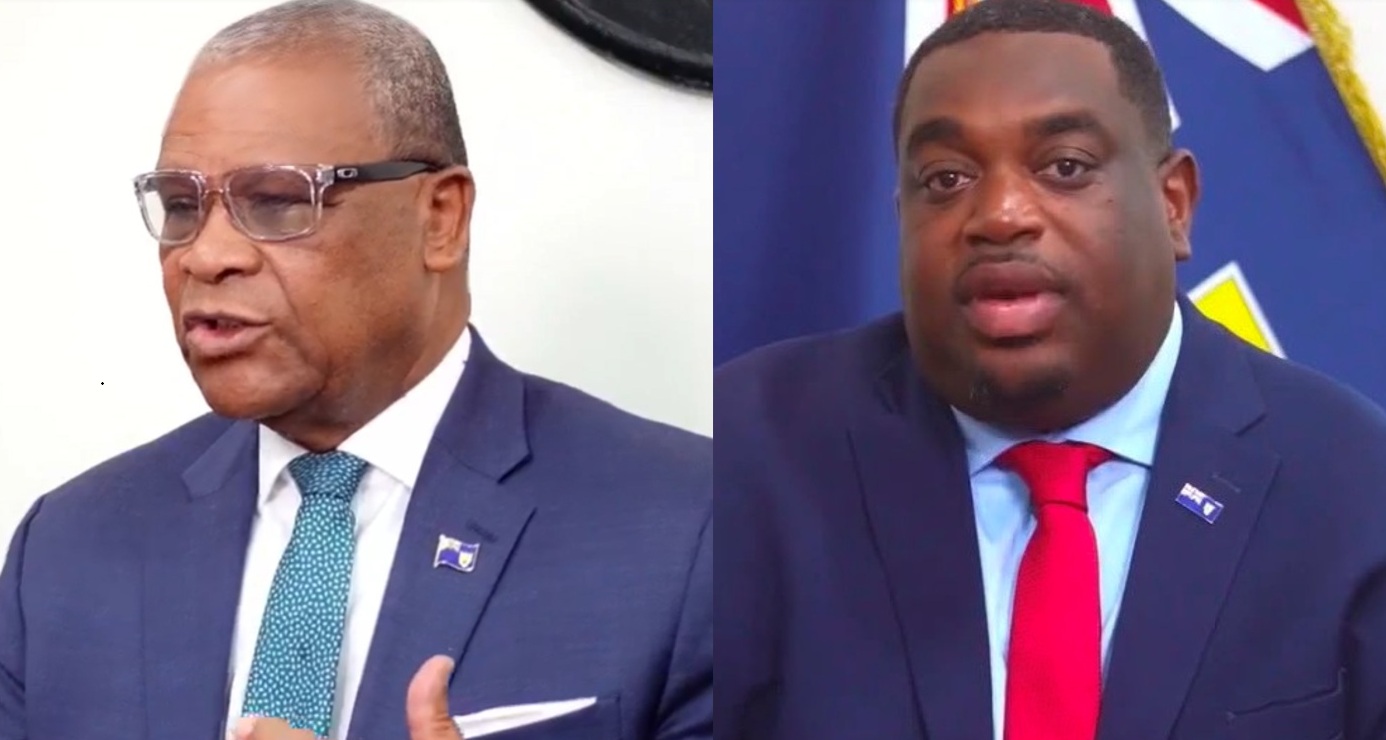
During a national briefing following InterHealth Canada’s notice terminating its hospital contract, Premier Charles Washington Misick acknowledged publicly for the first time that Government and InterHealth had been negotiating an exit from the arrangement for more than a year after what he described as an “irretrievably broken down” relationship.
Despite the contractual dispute, Misick and Health Minister Kyle Knowles stressed that healthcare services will continue uninterrupted during the transition.
“Allow us to do our job,” Knowles appealed, assuring residents that Government is actively managing the transition and safeguarding patient care.
The Premier outlined what amounts to a broader healthcare transformation built around four connected levels of care: strengthened community-based primary healthcare; expanded polyclinic services; enhanced hospital-based secondary care with greater specialist capacity; and overseas tertiary treatment only for cases that cannot be managed locally.
Among the proposals are the long-discussed establishment of intensive care units, expanded use of currently unfinished hospital space, recruitment of more resident specialist physicians and stronger contract management to oversee future healthcare agreements.
Knowles said the new polyclinic model will broaden services available outside the hospitals, including dentistry, ophthalmology, laboratory services, diagnostic imaging, gynaecology and preventative screening, helping to reduce pressure on emergency departments while improving early intervention.
Misick also acknowledged that while the hospital system significantly improved healthcare access after opening in 2010, Government believes further reform is necessary to improve affordability, sustainability and the range of services available within the Turks and Caicos Islands.
The briefing marked the Government’s most comprehensive explanation to date of its plans beyond the InterHealth contract, signalling that officials now see the transition as an opportunity to redesign healthcare delivery rather than simply replace one operator with another.
Government
Parnell Urges Premier to Step Aside, Proposes Bipartisan Board to Guide Healthcare Transition
By Magnetic Media Newsroom
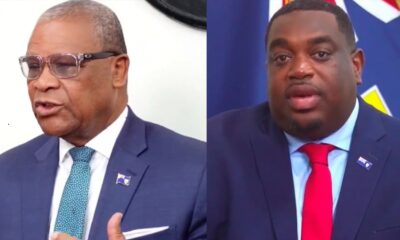
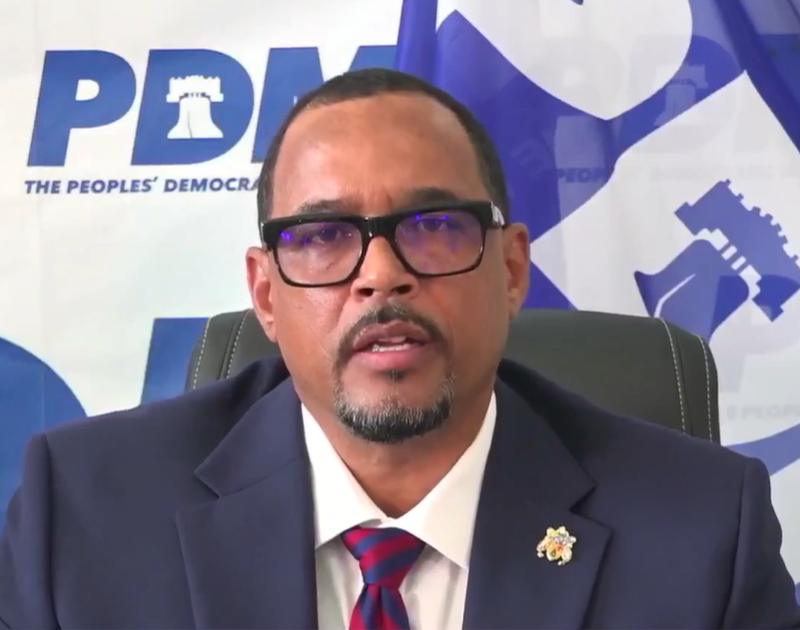
PROVIDENCIALES, Turks and Caicos Islands — Opposition Leader Douglas Parnell is calling on Premier Charles Washington Misick to step aside, arguing that the Government has failed to provide the leadership, transparency and public engagement needed as the Turks and Caicos Islands prepares for one of the most significant changes in its healthcare system.
Responding to Government statements following InterHealth Canada’s contract termination notice, Parnell said residents were only now learning officially that negotiations with the hospital operator had been underway for more than a year, despite several previous opportunities for Government to inform the public.
He questioned why no detailed explanation was provided during the State of the State Address, Budget Debate or recent healthcare announcements, including the opening of the new polyclinic.
Parnell argued that while the PDM supports reforming or replacing the existing hospital arrangement, the process must be transparent and centred on the public interest.
The Opposition Leader reminded residents that the PDM had challenged the InterHealth agreement while in government, pursuing arbitration and preparing further legal action over concerns about the contract before leaving office following the General Election.
To guide the next phase, Parnell proposed establishing a bipartisan Health Transition Board comprising Government and Opposition representatives to oversee the transition, monitor public accountability and manage the procurement process for any future healthcare provider.
He also outlined what the PDM believes should form the foundation of the next healthcare system, including guaranteed continuity of care, automatic employment protection for hospital workers, recruitment incentives for specialist physicians, expanded intensive care services, comprehensive mental health care, enhanced geriatric services and accelerated efforts to attract qualified Turks and Caicos Islanders in the medical profession back home.
Parnell also presented ten questions for Government covering outstanding payments, borrowing plans, legal implications, transition arrangements and the future structure of healthcare delivery.
He said the changes now unfolding require decisive leadership, openness and a carefully managed transition that places patients, healthcare workers and the long-term interests of the Turks and Caicos Islands first.
By Deandrea Hamilton | Magnetic Media
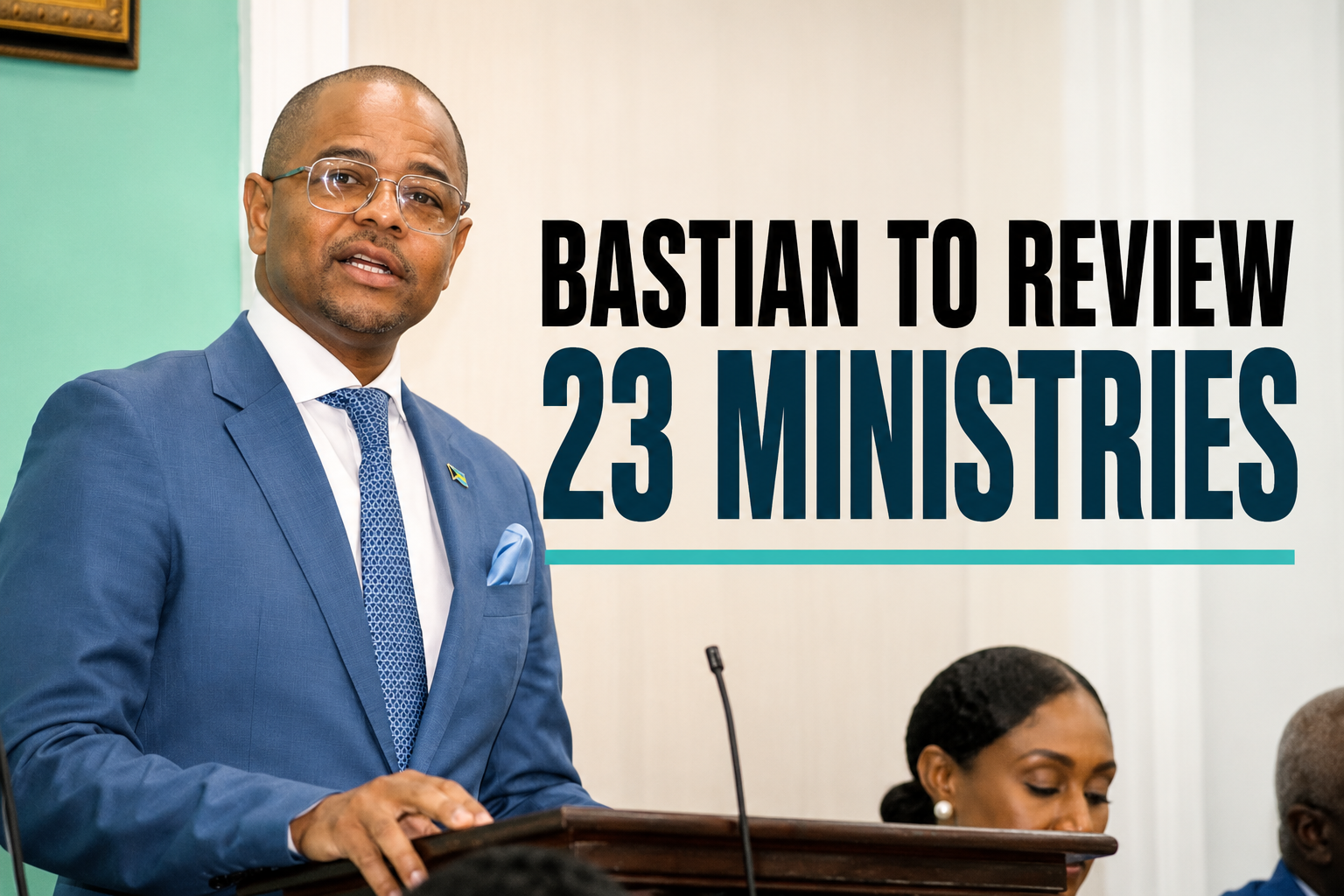
The Bahamas, June 26, 2026 – Just in case you thought Sebastian Bastian, The Bahamas’ first Minister of Innovation and National Development, was about to dust off Vision 2040 and carry on where others left off… think again.
In his maiden Budget Communication on Monday, June 15, Bastian unveiled what amounts to a blueprint to rebuild how the government works.
Not with another glossy vision document.
But with an execution machine.
The clearest indication came when the Minister acknowledged that while Vision 2040 was an important national achievement, it also exposed a weakness.
“So we are changing what we are building. The National Development Plan will no longer be a document we complete and set aside. It will be a living instrument — continuously reviewed, always current, resourced by full-time professionals, and grounded in real data — that shapes how this government, and every government after it, chooses its priorities. A plan is a document. What we are building is an institution.”
It is a remarkable shift in philosophy.
Instead of governments producing national plans every decade, Bastian wants professionals monitoring implementation in real time, measuring progress and ensuring administrations stay focused on delivering what they promised.
To Bastian, national development goes far beyond the roads, airports and buildings Bahamians can see. It also means creating the invisible infrastructure of government — smarter systems, better planning, reliable data, accountability and institutions that survive changes in political administrations.
His speech repeatedly returned to one central idea: government itself has become an obstacle to opportunity.
He described a Family Island entrepreneur waiting weeks or even months for approvals because government systems do not communicate with one another. He spoke of public servants trapped by outdated manual processes instead of serving people. And he highlighted an 18-year-old entering a workforce being reshaped by artificial intelligence before graduation.
As he explained:
“…our job is a practical one: to make government work better, to make The Bahamas easier to do business in, and to make sure our country and our people are ready for what comes next.”
For ordinary Bahamians, he said the objective is simple.
“…a government that is simpler, faster, and far easier to deal with… dealing with your government will get easier, year after year, by design.”
His ministry’s four pillars are ambitious: modernizing government, preparing the nation for artificial intelligence, developing Bahamian talent and driving long-term national development.
Among the initiatives announced were a National Artificial Intelligence Authority, the country’s first AI legislation, a National Digital ID, SmartGov productivity tools for public officers, connected government systems, a National AI Literacy Initiative, an independent National Planning and Development Institute and a Delivery Division dedicated to turning plans into action.
The speech stopped short in one important area.
While Minister Bastian thoroughly explained how government intends to transform itself, he did not establish the measurable targets by which Bahamians can judge whether that transformation is succeeding.
However, he did reveal the next milestone.
Beginning in August, the National Development Plan Secretariat will begin assessing the planning capacity of every ministry and department while establishing a national tracking system before the renewed development plan moves into execution.
With 23 ministries and offices in the Davis administration, Bahamians now have a timeline.
It would not be unreasonable for the public to expect Minister Bastian to return once that assessment is complete with the findings, benchmarks and measurable goals that define success.
After all, the Minister’s own philosophy leaves little room for anything less.
“Delivery does not happen by good intentions — it happens when you build the institutions to carry it: capacity for research and policy thinking; teams dedicated to implementation; structures that demand accountability; systems that measure progress; and continuity that outlives any election cycle.”
If this speech is any indication, Minister Sebastian Bastian is not asking Bahamians to judge him by promises.He is asking to be judged by performance.





-

 Education1 week ago
Department of Education Concludes Four-Day TCI National Standards Secondary School Curriculum Implementation Training
-

 Independent writer6 days ago
Fifty Years of Ministerial Government: Honouring Our Past, Embracing Our Present and Preparing for Our Destiny
-
 News1 week ago
UNDER 40 DAYS: COMMITTEE FORMED—BUT WHO IS ON IT?
-

 Health5 days ago
Know the Possible Warning Signs of Prostate Cancer
-

 News1 week ago
Invest TCI Brings Entrepreneurs and Bankers to the Table
-

 News3 days ago
Liberty Business launches in Turks and Caicos Islands
-
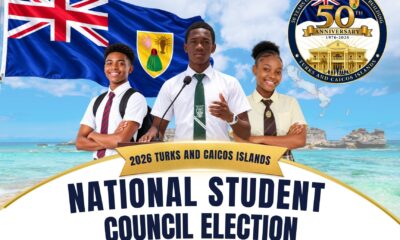
 Education3 days ago
TCI Schools Invited to Participate in 2026 National Student Council Election