
News
Turks and Caicos Islands Government Awarded the 2024 Transformative Solution Award


PRESS RELEASE
FROM THE DEPARTMENT OF
DIGITISATION AND E-GOVERNMENT
TECHNOLOGY AND INNOVATION
Providenciales, Turks and Caicos Islands – Wednesday, 18 October 2024: The Government of the Turks and Caicos Islands (TCIG) was honoured with the 2024 Transformative Solution Award during the Hyland Innovation Awards programme at Community LIVE 2024, held from 22 –26 September. Hyland, the leading global provider of intelligent content solutions, announced the winners of its annual Innovation Awards at the Community LIVE user event.
The Turks and Caicos Islands Government (TCIG) was facing several challenges with existing data and IT systems, including:
- Inefficient Manual Processes: Reliance on manual, paper-based processes in various departments led to slow processing times, high error rates, and a lack of transparency.
- Long Wait Times: Citizens experienced long wait times for services such as business licenses, citizenship applications, and accessing public records.
- Data Fragmentation and Security Concerns: Important records were fragmented across departments with limited accessibility and inadequate security measures.
- Record Vulnerability: Physical documents were susceptible to damage, loss, and theft, posing a risk to the integrity and availability of crucial records.
- Limited Public Access: Many government services were not accessible online, requiring citizens to visit government offices in person.
- Resource Constraints: Outdated IT infrastructure hindered the government’s ability to provide high-quality public services.
Using the Hyland Solution to address these challenges, the TCIG, in partnership with Patterson Pope (P2), implemented the Hyland OnBase platform. This allowed the government to develop a digital deployment platform to manage content and processes digitally and automated departmental workflows – streamlining operations or business license applications, immigration services and more. Other key components included:
- Electronic Forms and Approvals: Facilitated a seamless transition from paper-based to digital operations.
- Real-Time Reporting and Dashboards: Enabled data-driven decision-making.
- Secure Access and Audit Trails: Enhanced security measures to protect sensitive information.

- Onsite Document Scanning: Digitised 1,000,000 citizenship and naturalisation records, with ongoing scanning of 1,000,000 land registry records.

The implementation of the Hyland OnBase solution resulted in several transformative outcomes for the TCIG, including:
- Increased Efficiency and Productivity: Reduced processing times for various government services.
- Enhanced Accessibility and Convenience: Majority of services are now accessible online, reducing the need for in-person visits.
- Improved Data Management and Security: Centralised digital repository and enhanced security protocols.
- Reduced Record Vulnerability: Digitised records are protected against natural disasters and other threats.
- Cost Savings and Resource Optimisation: Significant cost savings by reducing reliance on physical documents.
- Positive Public Impact: Improved citizen experience and greater trust in government services.
- Support for Future Growth: Flexible and scalable platform supports ongoing innovation and improvement efforts.
These transformative changes have positioned the TCIG as a leader in e-governance within the region, showcasing a commitment to modernisation and excellence in public service delivery.





September is Prostate Cancer Awareness Month – which means it is time to watch out for the warning signs. Possible signs include slow urine flow and loss of bladder control — but if this common cancer is caught before it spreads, the prognosis is good.
Your prostate is only about the size of a walnut. But this small gland can cause big problems if left unchecked.
Warning signs of prostate cancer
“Most men with prostate cancer don’t have symptoms at first,” says urologist Christopher Weight, MD. But if you notice certain warning signs, like changes in your pee routine or pain, it’s a good idea to visit a urologist.
Prostate cancer is one of the most common cancers in men. But when it’s found early, it’s also one of the most treatable. Knowing the signs and talking with a healthcare provider about screening could save your life.
So, what should you look out for?
Slow or weak urine flow
Trouble starting to pee — called urinary hesitancy — is common as men get older. You may also notice slow flow or dribbling. Or your flow may stop altogether. The most common cause is benign prostatic hyperplasia. Still, if you experience these symptoms, it’s important to get your prostate checked.
Frequent need to urinate
A frequent and sometimes urgent need to urinate, especially at night, may be a sign of nerve damage or an infection. Or it could indicate that a tumor is putting pressure on your bladder and urethra.
Painful or burning urination
Pain or burning when you pee — called dysuria — is usually linked to a urinary tract infection (UTI). But in some cases, it can signal prostate cancer. This is especially true when it’s paired with other symptoms.
Blood in your urine
Another possible warning sign of prostate cancer is hematuria, or blood in your pee. Though this can be associated with other health issues, including a UTI, it’s worth checking out.
Prostate pain
Unexplained prostate pain — especially when sitting — can be an early sign of trouble. “It might also mean an infection, but only your urologist can say for certain,” Dr. Weight says.
Loss of bladder or bowel control
Bladder or bowel incontinence can happen with age or other medical conditions. But if you’re leaking urine or can’t control bowel movements, talk to a doctor to rule out prostate cancer.
Changes in sexual function
These symptoms can stem from many causes, but they may also signal prostate cancer. Talk to a urologist if you notice:
- Painful ejaculation
- Decreased volume of ejaculation
- Inability to keep an erection
- Blood in your semen (hematospermia)
Sexual health is a vital part of your overall well-being. So, if something feels off, it’s not just OK to speak up — it’s vital.
Later-stage signs
These symptoms often only appear when prostate cancer has spread:
- Ongoing pain in your lower back, hips or chest
- Numbness in your legs or feet
“Of course, there are endless other reasons that your back may hurt or that you have tingling in your toes that are entirely separate from any prostate troubles. But they can also be signs of later stages of prostate cancer,” Dr. Weight clarifies.
Importance of prostate cancer screening
“Since early-stage prostate cancer doesn’t cause symptoms, many men don’t know they have it,” Dr. Weight notes. “That’s why regular screening is so important — it helps catch prostate cancer early, when treatment is most effective.”
A healthcare provider may recommend screening if you’re between the ages of 55 and 69, or earlier if you have a family history or other risk factors.
Screening might feel uncomfortable to think about, but skipping it could mean missing a chance to catch prostate cancer early, when it’s easier to treat.
“A simple blood test, often followed by a physical exam if needed, gives your doctor important information about your prostate health,” Dr Weight says.
Early detection doesn’t just improve treatment options — it can also give you peace of mind.
Lower your risk of prostate cancer
“You can’t do anything about some of the risk factors for prostate cancer, like age or family history,” Dr. Weight recognizes. “But you can make lifestyle choices that support a healthier prostate.”
These small steps may make a difference:
- Get regular prostate screenings.
- Maintain a healthy weight.
- Exercise regularly.
- Eat a nutritious diet.
- Quit smoking.
“When prostate cancer is diagnosed before it spreads to other parts of the body, about 99% of people live at least five years after diagnosis,” he continues. “But the survival rate is much lower if the cancer has spread.”
That’s why it’s so important to stay proactive. Regular screenings, healthy habits and paying attention to changes in your body can make all the difference. Talk to a provider about the right plan for you.
CREDIT: CLEVELAND CLINIC
Independent writer
Fifty Years of Ministerial Government: Honouring Our Past, Embracing Our Present and Preparing for Our Destiny

An Editorial by Dr. Alicia Swann
In the days following our most recent national celebration, I have observed conversations filled with strong opinions and emotions. Some have expressed pride and gratitude, while others have questioned our flag, Constitution, identity, political system and future.
After listening, I feel compelled to share my thoughts—not to dismiss anyone’s feelings or deepen division, but to offer historical clarity and, most importantly, hope.
The concerns of Turks and Caicos Islanders are valid. Many are worried about the protection of our land and identity, opportunities for our children and whether our people will continue to have a meaningful place in the country our ancestors built. These concerns deserve honest discussion, factual information, prayerful reflection and responsible planning.
However, as the Turks and Caicos Islands commemorates fifty years of Ministerial Government and celebrates National Flag Day, we must remember that this occasion is not about the current administration, one political party or any individual leader.
Governments come and go, but the story of a people remains.
This celebration belongs to our ancestors—the true visionaries, pioneers and nation-builders who paved the way for us. It belongs to the salt rakers who laboured beneath the blazing sun, the fishermen who braved dangerous seas, the farmers, teachers, mothers, pastors and citizens who built communities and demanded a voice in their homeland.
Many never lived to enjoy the progress their sacrifices helped to create. Yet because they endured, we inherited a country filled with possibilities.
A Political Journey That Began Long Before 1976
Long before European colonisation, these islands were inhabited by the Lucayan-Taíno people. Following European arrival, Indigenous communities suffered enslavement, forced removal and disease.
From the seventeenth century, Bermudian salt rakers developed our natural salt ponds. Enslaved Africans provided much of the labour sustaining the salt and plantation economies, and their descendants became central to the formation of the Turks and Caicos Islander people.
Britain’s influence developed through colonial expansion and competition with Spain and France. At different stages, the islands were administered through The Bahamas and Jamaica.
Dissatisfaction with decisions made under Bahamian administration contributed to our separation from The Bahamas in 1848 and the establishment of a local Legislative Board. In 1873, TCI became a dependency of the British colony of Jamaica. Local elections were abolished and were not restored until the 1959 Constitution—approximately eighty-six years later.
When Jamaica gained independence in 1962, TCI remained under Britain. From 1965 until Bahamian independence in 1973, the Governor of The Bahamas also served as Governor of TCI. We then received our own resident Governor and continued our constitutional journey.
Haiti never governed the Turks and Caicos Islands, but it holds an important place in our regional history. Following its independence in 1804, Haiti became a powerful symbol of freedom from slavery. Historical records indicate that enslaved people escaped from these islands to freedom in Haiti during the 1820s. In later generations, Haitians, Jamaicans, Bahamians and other Caribbean people contributed to our churches, public service, construction, education, hospitality and economy.
Our history is connected to the wider Caribbean, but our identity remains distinctly Turks and Caicos Islander.
The Significance of 1976
The 1976 Constitution provided for a Chief Minister and other Ministers with responsibility for important areas of government. The Honourable James Alexander George Smith “JAGS” McCartney became our first Chief Minister.
JAGS represented more than a political party. He represented a national awakening—the belief that Turks and Caicos Islanders deserved dignity, representation and a meaningful voice in the management of their homeland.
Ministerial Government was not the achievement of one person alone. It was made possible by generations of representatives, civil servants, community organisers, clergy, educators, workers and citizens who believed our people were capable of shaping their destiny.
The fifty years that followed were not without difficulty. We experienced controversy, constitutional change and interruptions to elected government. Yet representative government returned, our institutions developed and our people continued moving forward.
This anniversary does not suggest that everything has been perfect. It demonstrates that our democracy and our people have endured.
Never Forget Our Resilience
Our ancestors survived slavery, colonial administration, poverty, migration, isolation, political interruption and devastating hurricanes. From an economy once dependent upon salt, sisal and fishing, we built one of the world’s most recognised tourism destinations.
Generations of Turks and Caicos Islanders travelled to neighbouring countries seeking opportunities unavailable at home. Some were not always welcomed or treated as equals. Today, people from many of those same countries come to our shores hoping to work, live and create better futures.
This should not inspire hatred or prejudice. Those who come lawfully and contribute positively deserve dignity and respect. However, it should remind us how far we have come and why we must never surrender our identity or rightful place within our country.
Hospitality and patriotism are not opposites. We can welcome others without losing ourselves.
Scripture reminds us:
“But if any provide not for his own, and specially for those of his own house, he hath denied the faith.”
—1 Timothy 5:8
Caring for our own does not mean mistreating others. It means ensuring that Turks and Caicos Islanders are educated, protected and empowered to participate meaningfully in the development of their homeland.
Government has an important responsibility, but nation-building requires more than government. Parents must teach our values, businesses must create opportunities, citizens must respect the law and young people must prepare themselves to lead.
Pride in Where We Are
Until such time as we become an independent and sovereign nation, we must thank God for where we are today.
There is nothing wrong with celebrating our constitutional progress, embracing our present flag or respecting our existing institutions. Doing so does not prevent us from desiring further advancement.
We cannot know where we are going unless we understand where we are now and how we arrived here. Our present flag represents our identity, history and constitutional relationship with Britain. It should be treated with dignity and respect.
Embracing the present is not abandoning the future; it is the pathway towards building it. We celebrate not because the journey is complete, but because God has brought us a mighty long way.
Passports, Citizenship and Our Future
Today, we remain a British Overseas Territory. Although the passport associated with our territory may identify the Turks and Caicos Islands, it is not a sovereign TCI passport issued under the authority of an independent Turks and Caicos nation. It exists within the British nationality system and derives its legal authority from the United Kingdom.
British Overseas Territories citizenship, British citizenship and Turks and Caicos Islander status are connected but legally distinct. None presently represents citizenship issued by a sovereign TCI nation.
This should not cause us to disrespect the passport or constitutional position we hold. Instead, it should encourage us to think responsibly about our future.
If we envision sovereignty, we must eventually determine who would become a citizen of an independent TCI, whether dual citizenship would be permitted and what rights and responsibilities citizenship would carry. We must also consider how to protect our limited land, create pathways to ownership and help Islanders build generational wealth.
Our immigration system must welcome lawful contribution and respect human dignity while protecting the country’s long-term interests and enforcing its laws fairly.
These complex questions must not be decided through hostility, secrecy, political favour or temporary emotion. They require public education, research and consultation involving every inhabited island, our diaspora, elders, young people, churches, businesses, experts, Parliament, relevant institutions and the United Kingdom Government.
After proper preparation and national consultation, the people—not merely a government—should ultimately determine our political future through a clear and credible referendum.
Preparing for Our Destiny
I envision a future in which the Turks and Caicos Islands advances beyond its present constitutional position, governs its own destiny and may one day raise the sovereign flag of an independent nation.
Is it possible? Yes.
Would it require sacrifice, disciplined planning and strong institutions? Absolutely.
Would it require God-fearing leaders with integrity who place the country above personal and political interests? Without question.
“When the righteous are in authority, the people rejoice: but when the wicked beareth rule, the people mourn.”
—Proverbs 29:2
Independence without integrity would merely replace one form of dependency with another. Sovereignty must be supported by ethical leadership, economic stability, an independent judiciary, effective border protection, disaster preparedness and an educated population.
Preparation does not mean declaring independence tomorrow. It means beginning the research, civic education, institution-building and national consultation today.
“Write the vision, and make it plain upon tables, that he may run that readeth it.”
—Habakkuk 2:2
Preparing the Next Generation
We must ensure that our children know the history of the Turks and Caicos Islands and understand the sacrifices that paved the way for them.
A generation that does not know its history may inherit a country without understanding its value.
Our history must be taught in our homes, schools, churches and communities. Our children should never have to depend entirely upon outsiders to explain who they are or where they came from.
We must also stop gatekeeping knowledge. Whatever wisdom, education, experience or influence God has given us was not given for our benefit alone. It was entrusted to us so that we may mentor and guide those coming behind us.
True leadership does not conceal knowledge to protect a position. It shares knowledge to prepare a successor.
Let us give our children more than possessions. Let us give them identity, history, wisdom, confidence and a country they are prepared to protect and lead.
We Have What It Takes
We are a small country, but smallness does not mean incapability. Our ancestors created communities with almost nothing and survived circumstances far more difficult than those we face today.
We can honour our present flag without surrendering our future. We can welcome others without losing ourselves. We can celebrate how far we have come while preparing responsibly for where we wish to go.
This is the true meaning of the anniversary: a celebration of our ancestors, constitutional progress, national resilience and continuing right to determine our destiny.
Our ancestors paved the way. We must now possess the courage, discipline, unity and faith to continue the journey.
Dr. Alicia Swann
Proud Turks and Caicos Islander, Civic Leader and Advocate
Education
Department of Education Concludes Four-Day TCI National Standards Secondary School Curriculum Implementation Training
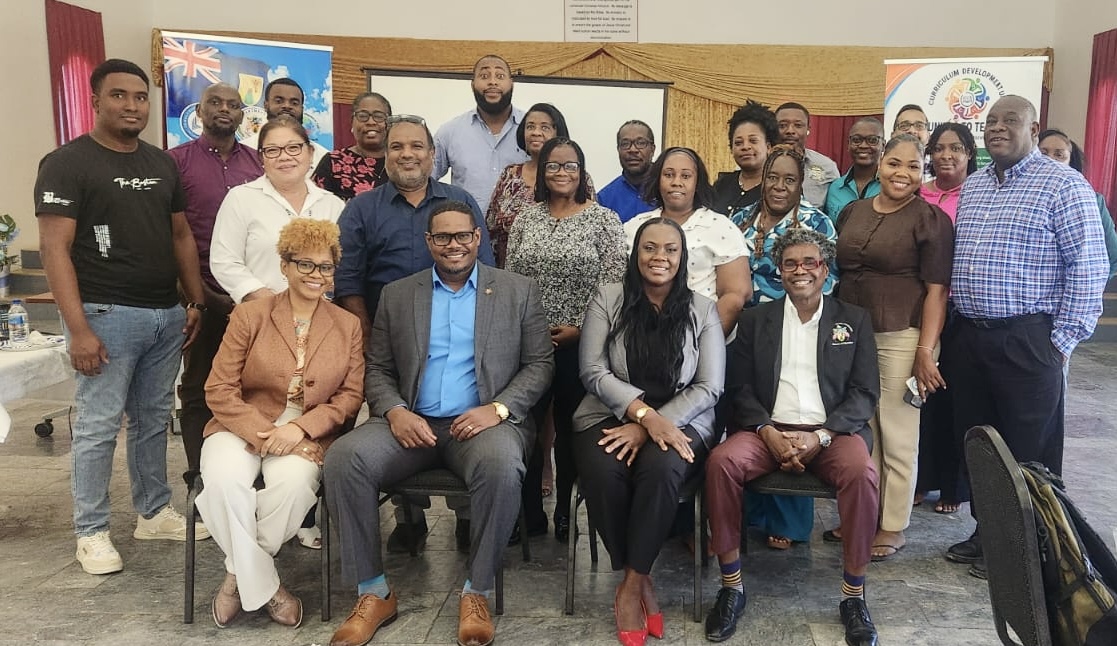
Providenciales, Turks and Caicos Islands: The Department of Education, through its Curriculum Development Unit, successfully concluded a four-day TCI National Standards Secondary School Curriculum Implementation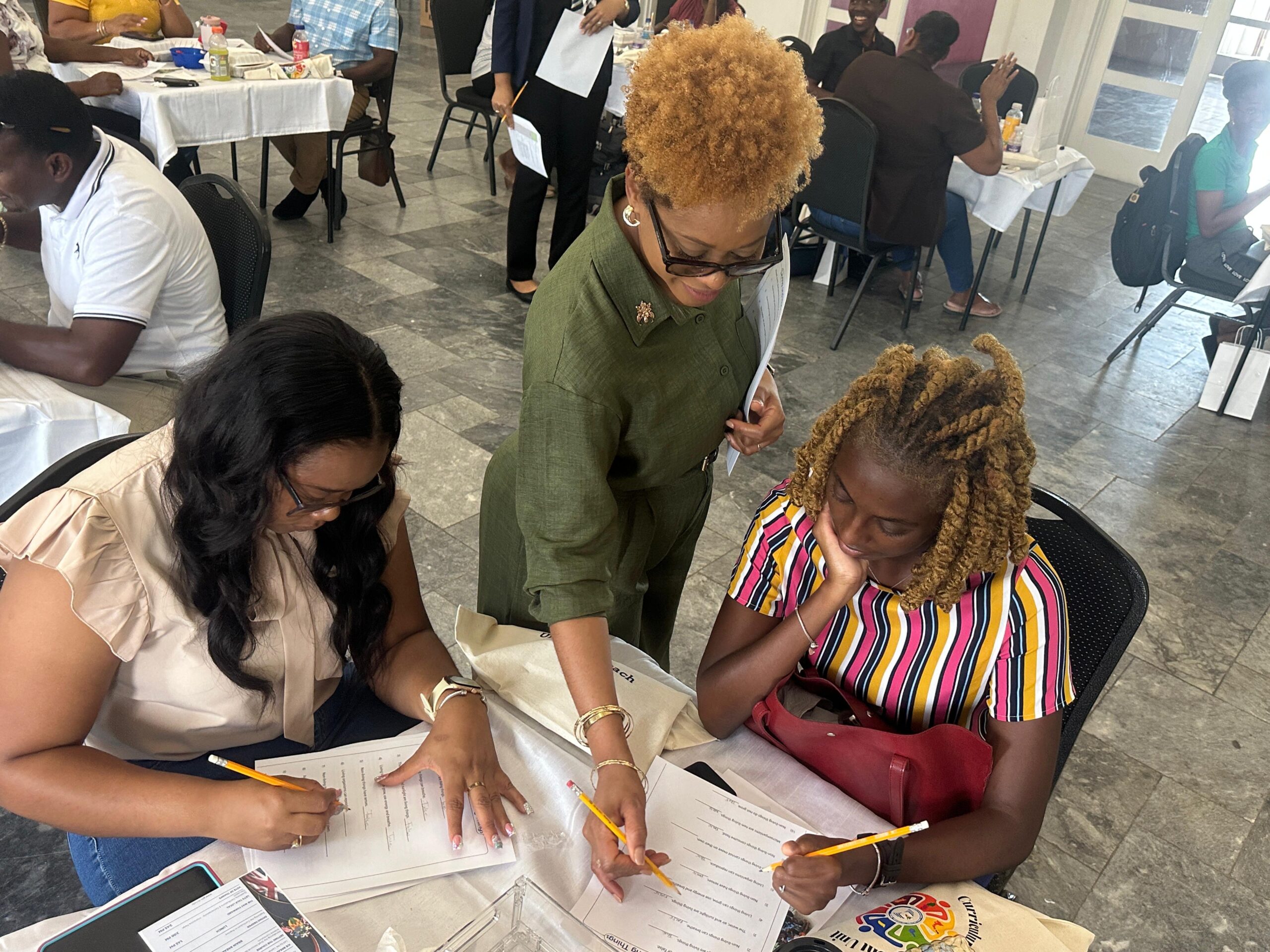 Training, bringing together secondary school teachers, curriculum officers, education officials, facilitators and key stakeholders in preparation for the piloting of the Turks and Caicos Islands’ draft national secondary curricula.
The training focused on Social Studies, Mathematics, English Language and General Science. Teachers explored the draft curricula, learning objectives, content, instructional approaches and assessment expectations, while considering how the standards can be translated into meaningful classroom practice. The curricula are grounded in research, educational data, national priorities, comparative curriculum analysis and the distinctive context of the Turks and Caicos Islands.
The Honourable Rachel Taylor, Minister of Education, Youth, Sports and Culture, commended Mrs Cleon Astwood, Head of the Curriculum Development Unit, and her team for their dedication and the significant progress made in developing the National Standards Curricula for secondary education. She also recognised the invaluable contribution of educators across the Turks and Caicos Islands, whose professional expertise, classroom experience, and feedback are essential to ensuring that the curricula are relevant, responsive, and aligned with the evolving needs of TCI learners.
“The development of our National Standards Curricula is an important investment in the future of our children and, ultimately, in the future of the Turks and Caicos Islands. Education must continue to evolve to meet the changing needs of our learners, our society, and our economy. Our teachers are at the heart of this process. Their knowledge, professional experience, and insight from the classroom are critical to ensuring that the curricula we develop are academically sound, relevant to our local context, and practical to implement. I commend our Curriculum Development Unit and our educators for the tremendous work being undertaken and for their continued commitment to strengthening the quality of education we provide to every child in the Turks and Caicos Islands.”
Educators were also addressed by Mr James Astwood, Permanent Secretary; Mr Mark Garland, Director of Education; and Ms Elisann Delancy, Deputy Director of Education, who emphasised embracing change, professional collaboration and continuous improvement.
A central focus of the training was the role teachers will play during the pilot phase. Teachers were encouraged to critically engage with the draft documents, paying attention to the clarity and appropriateness of objectives, sequencing and progression, instructional time, resources, gaps, omissions and areas requiring clarification or revision. Their classroom experiences and documented feedback will help strengthen the curricula before finalisation and national implementation.
The Social Studies session also emphasised Local Studies. A panel featuring Mrs Lisa Talbot of the Turks and Caicos National Museum, Dr Carlton Mills, Mrs Joan Astwood-Sutton and Ms Cynclair Musgrove provided historical and cultural perspectives to support accurate, culturally relevant classroom instruction.
Mrs Cleon Astwood noted: “Curriculum development cannot take place in isolation from the teachers who will ultimately bring these documents to life. As they pilot these documents, we expect them to question, test, reflect and provide meaningful feedback. Constructive professional dialogue is necessary if we are to produce strong, relevant curricula that genuinely meet the needs of our students and our education system.”
With the training concluded, participating teachers will now implement and evaluate the draft curricula in authentic classroom settings, document strengths and challenges, and submit recommendations to the Curriculum Development Unit. The Department of Education extends its appreciation to all teachers, school leaders, facilitators, historians, stakeholders and Ministry and Department officials who contributed to the successful four-day exercise.





-
 Education1 week ago
Department of Education Concludes Four-Day TCI National Standards Secondary School Curriculum Implementation Training
-

 Independent writer5 days ago
Fifty Years of Ministerial Government: Honouring Our Past, Embracing Our Present and Preparing for Our Destiny
-
 News1 week ago
UNDER 40 DAYS: COMMITTEE FORMED—BUT WHO IS ON IT?
-

 Health4 days ago
Know the Possible Warning Signs of Prostate Cancer
-

 News1 week ago
Invest TCI Brings Entrepreneurs and Bankers to the Table